

General & Laparoscopic Surgery · Jaipur Hospital
Appendix Surgery in Jaipur
Sudden belly pain? We assess, explain options, and plan your appendicectomy.
- Serving Jaipur since 1991 (35 years)
- NABH accredited
- 24×7 emergency & ICU
- Cashless: RGHS, MAA Yojana, CGHS + 22 insurers
- Operation time
- 30 to 60 minutes
- Anaesthesia
- General anaesthesia
- Recovery
- Back to desk work in 1 to 2 weeks for most patients
- Price
- ₹40,000 to ₹1,20,000typical range in India; ask us for an estimate
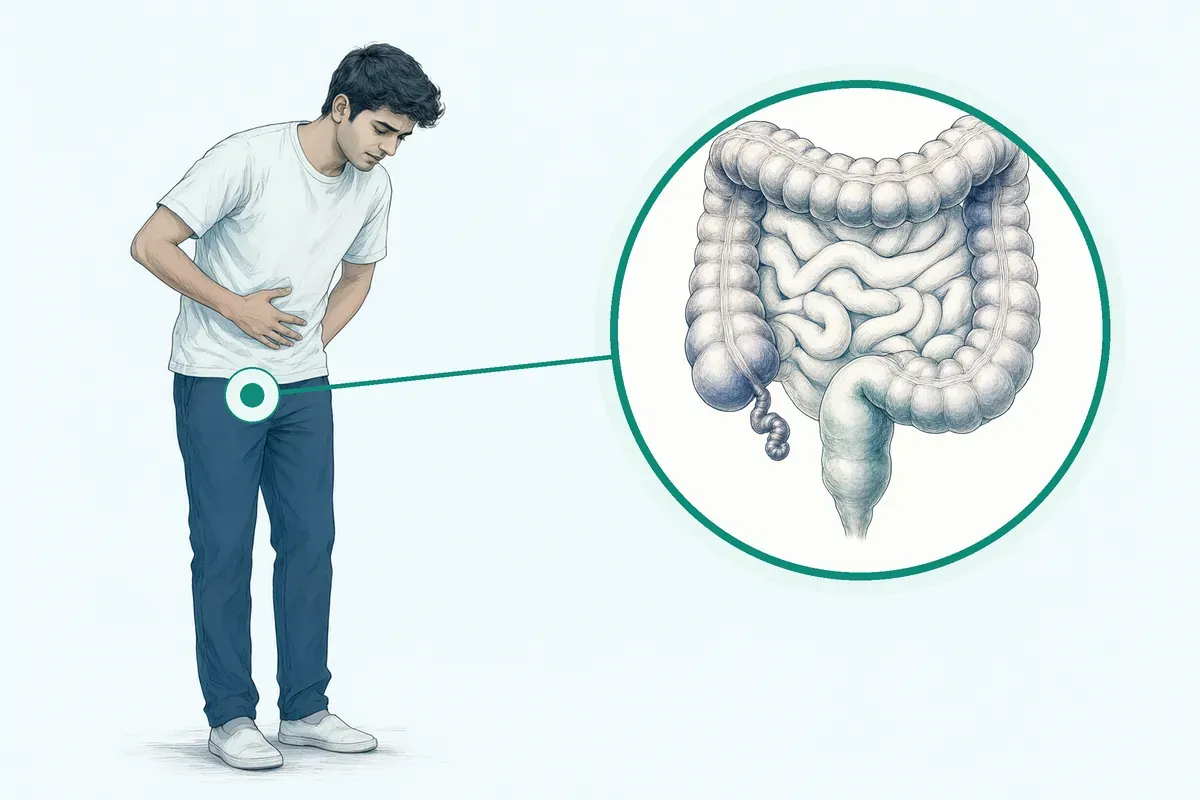
Sudden belly pain, fear of rupture
Sharp pain in the lower right belly that will not go away
Appendicitis often starts as a dull ache near the navel and moves to the lower right side. It can worsen quickly. If the appendix bursts, infection spreads inside the belly. Surgery is the standard treatment to remove the inflamed appendix before that happens.
-
Pain that moves and gets worse
Starts near the navel, shifts to lower right side, gets sharper with movement or coughing.
-
Risk of a burst appendix
A burst appendix spreads infection in the belly (peritonitis) or bloodstream (sepsis).
-
Nausea, fever, loss of appetite
Common signs that the inflammation is advancing and needs urgent assessment.
-
Uncertainty about antibiotics vs surgery
Some mild cases may settle with antibiotics, but many need surgery to prevent recurrence.
Acute appendicitis is among the most common causes of acute abdominal pain leading to emergency visits.
Why Jaipur Hospital
You are in pain, worried about a burst appendix, and anxious about time off work and the hospital bill.
Your care plan
Your first steps with us
- 1 Call or visit our 24×7 emergency for rapid assessment
- 2 Get blood tests and imaging done in-house
- 3 Discuss keyhole or open surgery with your surgeon
- 4 Recover at home with follow-up OPD visits
How the operation is done
Under general anaesthesia, the surgeon removes the appendix through small keyhole cuts or one open cut. The procedure usually takes 30 to 60 minutes. Most patients stay 1 to 2 nights.
-
Laparoscopic appendicectomy
The appendix is removed through 3 small keyhole cuts using a camera and long instruments.
-
Open appendicectomy
One small cut low on the right side; used when keyhole is not suitable or safe.
-
Antibiotics first
Some mild, uncomplicated cases are treated with antibiotics, with surgery if it comes back.
Why patients trust us
- 1991 Serving Jaipur for 35 years
- NABH Accredited hospital
- 3 General & Laparoscopic Surgery consultants
- 24×7 Emergency, ICU and ambulance
- 25 Cashless schemes and insurers
What research shows about this treatment
-
1 to 2 weeks
Most patients return to desk work within 1 to 2 weeks after laparoscopic appendicectomy.
-
27% needed surgery within a year
In a large trial, 27% of patients treated with antibiotics alone needed appendicectomy within one year.
-
8.7% complication rate
Laparoscopic appendicectomy had an overall complication rate of 8.7% compared to 11.1% for open surgery in studies.
If it is left untreated
If untreated, the appendix can burst within 36 hours, spreading infection through the belly (peritonitis) or bloodstream (sepsis), which can cause severe illness or death.
Life after treatment
Most people recover fully and do not need long-term changes after the appendix is removed.
-
Back to normal activity
Most people return to normal activity about a week after keyhole surgery; longer for heavy lifting.
-
No long-term health issues
The body does not need the appendix; removal does not cause long-term problems.
-
Small scars, less pain
Keyhole surgery usually means smaller scars and less pain after surgery than open surgery.
-
Follow-up for peace of mind
A routine OPD visit 1 to 4 weeks after discharge checks healing and answers questions.


Frequently asked questions
Questions patients ask about appendix surgery
What does laparoscopic appendicectomy involve?
In short
Laparoscopic appendicectomy at Jaipur Hospital removes the inflamed appendix through three small keyhole cuts. The operation usually takes 30 to 60 minutes under general anaesthesia. Most patients stay in hospital for one to two nights and return to desk work in one to two weeks.
In detail
The surgeon makes three small incisions between the belly button and the pubic hairline. A camera and long instruments are inserted through these ports. The abdomen is filled with carbon dioxide gas to create space.
The appendix is gently separated from the colon, its base is tied or stapled closed, and the appendix is removed through one of the cuts. The incisions are closed with stitches, staples, tape or glue.
Evidence shows laparoscopic appendectomy is associated with less pain after surgery, a smaller scar, shorter hospital stay and faster return to normal activity compared with open surgery.
Conversion to open surgery may happen if the appendix has burst, there is severe inflammation, an abscess, dense scar tissue from previous operations, bleeding problems or if the surgeon cannot see the organs clearly. This decision is made during the operation for safety.
A common belief
Many people think the appendix is pulled out through one large cut.
What actually happens
That open method is now used only when keyhole surgery is not safe, such as when the appendix has burst or there is severe scarring.
Your next step at Jaipur Hospital
You will meet the surgical team in the OPD for a preoperative assessment. They will explain the steps, the anaesthesia plan and the expected recovery. Bring any recent blood reports or imaging.
You can book a consultation at Jaipur Hospital by calling the numbers on our website or visiting the hospital on Tonk Road.
Which tests and scans do I need before laparoscopic appendicectomy?
In short
Before laparoscopic appendicectomy at Jaipur Hospital, you will usually need blood tests and imaging. Blood tests check for infection and inflammation. Ultrasound or CT scan of the abdomen confirms the diagnosis and shows whether the appendix has burst or an abscess is present.
In detail
Clinical assessment is the mainstay of diagnosis. The doctor will examine your abdomen for tenderness in the lower right side. Blood tests typically include a complete blood count to look for raised white cells and C-reactive protein for inflammation.
Imaging is valuable when the diagnosis is not clear from history and examination alone. Ultrasound is often the first scan, especially in children, young adults and pregnant women, because it does not use radiation.
CT scan gives more detailed pictures and is used when ultrasound is inconclusive or when the patient is older. In some studies, CT-proven uncomplicated appendicitis was required before randomising patients to antibiotics or surgery.
The scans also help the surgeon plan the operation and anticipate the need for conversion to open surgery. If you have had recent tests at another centre, bring the reports and images with you to avoid repeating them.
A common belief
Patients sometimes think one test is enough.
What actually happens
In practice, the diagnosis relies on putting together the story, the examination, blood results and imaging. No single test gives the full picture.
Your next step at Jaipur Hospital
The surgical team will order the necessary tests after seeing you in the OPD or emergency department. Most tests can be done in-house at Jaipur Hospital. Results are usually available within a few hours. You can book a consultation by calling the hospital or visiting the OPD on Tonk Road.
How painful is appendix surgery and the early recovery?
In short
Appendix surgery at Jaipur Hospital is done under general anaesthesia so you feel no pain during the operation. After laparoscopic surgery most patients have mild to moderate soreness at the small cuts and some shoulder tip pain from the gas used. This usually eases within 24 to 48 hours.
In detail
The procedure uses three small keyhole cuts. Carbon dioxide gas inflates the abdomen to give the surgeon space, which can irritate the diaphragm and cause shoulder pain.
Studies show that at six hours after laparoscopic appendicectomy over 80 percent of patients rate their pain at three or less on a ten point scale. Open surgery with a larger cut tends to cause more wound pain and a longer period of discomfort. Regular paracetamol or ibuprofen is usually enough; stronger tablets are prescribed only if needed.
A common belief
Many people expect severe pain because it is abdominal surgery.
What actually happens
In reality the keyhole approach keeps pain low. Open surgery with a bigger cut hurts more and takes longer to settle, but that is only needed in complicated cases.
Your next step at Jaipur Hospital
Expect to go home the same day or after one night if the appendix had not burst. Take the pain tablets as advised, walk around the house from day one and avoid heavy lifting for a week. Shoulder pain should settle in two days. If pain worsens or is not controlled by the medicines, call the hospital.
How long does recovery usually take after appendix surgery?
In short
After appendix surgery at Jaipur Hospital most people return to desk work in one to two weeks. If the appendix had not burst you may go home the same day or after one night. Full recovery takes about six weeks. Heavy lifting and strenuous exercise should wait until your surgeon clears you.
In detail
Studies show laparoscopic patients often go home on the day of surgery and resume normal activity in about a week. Open surgery or a burst appendix means a longer hospital stay of several days and a slower return to heavy work.
Walking starts on day one and helps prevent clots and bowel sluggishness. Shoulder pain from the gas settles in 24 to 48 hours. Bowel movements usually return to normal within a few days.
A common belief
Patients sometimes expect to be bedridden for weeks.
What actually happens
The keyhole approach means you walk the same day and recover fast. Open surgery or a burst appendix slows things down, but even then you are moving within days.
Your next step at Jaipur Hospital
Follow the discharge advice: keep the cuts clean, take pain tablets as needed, walk a little more each day and avoid lifting over five kilograms for two weeks. You can drive after 24 hours if you are not on strong painkillers and have no pain. A follow up appointment is usually scheduled within one to four weeks.
How is appendicitis distinguished from other causes of abdominal pain?
In short
At Jaipur Hospital, doctors diagnose appendicitis by combining your symptom history, a physical examination of the abdomen, blood tests for infection markers, and imaging such as ultrasound or CT scan. The classic pattern is pain that starts near the belly button and moves to the lower right side, with nausea, low-grade fever, and tenderness at McBurney's point. No single test is perfect, so the surgeon uses a structured assessment to separate appendicitis from conditions like gastroenteritis, ovarian cysts, kidney stones, or urinary infection.
In detail
Evidence shows clinical scoring systems that include examination findings and inflammatory markers improve diagnostic accuracy. Ultrasound is often used first, especially in children and young women, to avoid radiation. CT scan gives higher certainty and is common in adults.
MRI is an option for pregnant women. The diagnosis remains challenging in up to 30 percent of cases, and some patients undergo diagnostic laparoscopy when the picture is unclear. The surgical team reviews all results before recommending surgery.
A common belief
Many people think a single blood test or scan gives a yes or no answer.
What actually happens
In reality, up to 30 percent of cases are unclear and need a combination of clinical judgement and imaging, sometimes even a diagnostic laparoscopy.
Your next step at Jaipur Hospital
If you have severe abdominal pain that shifts to the lower right, do not wait — attend the emergency department. The team at Jaipur Hospital provides 24×7 assessment with on-site lab and imaging. Early diagnosis reduces the risk of a burst appendix.
How will the surgeon decide whether an operation is necessary?
In short
The surgeon decides on surgery after assessing your symptoms, physical examination, blood tests, and imaging such as ultrasound or CT scan. At Jaipur Hospital, the surgical team uses clinical scoring systems and imaging to confirm appendicitis and rule out other causes of abdominal pain. If the diagnosis is clear and the appendix is inflamed or infected, appendicectomy is the standard treatment. In some mild, uncomplicated cases, antibiotics alone may be offered after discussion.
In detail
Evidence shows the clinical diagnosis of acute appendicitis can be challenging and often requires a combination of history, examination, inflammatory markers, and imaging. Many patients present with an equivocal diagnosis. CT scan is highly accurate but not always needed.
The surgeon looks for signs of perforation, abscess, or tumour, which change the urgency and approach. If the appendix appears normal at laparoscopy, it may still be removed to prevent future diagnostic confusion, but the rate of negative appendicectomy is lower with modern imaging. The decision balances the risk of missing appendicitis against the risks of surgery.
A common belief
Diagnosis can be tricky — many patients have unclear findings.
What actually happens
Scoring systems and imaging help. If the appendix looks inflamed or infected, surgery is standard. In some mild cases without perforation or abscess, antibiotics may be an option. If the appendix looks normal during keyhole surgery, the surgeon may still remove it to avoid future confusion, but modern imaging makes this less common.
Your next step at Jaipur Hospital
If you have abdominal pain suggestive of appendicitis, come to the emergency department at Jaipur Hospital for immediate assessment. The team will arrange blood tests and imaging promptly. The surgeon will explain the findings and the recommended plan.
Why might my doctor recommend laparoscopic appendicectomy?
In short
Your doctor at Jaipur Hospital may recommend laparoscopic appendicectomy when the appendix is inflamed or infected and surgery is the safest option. Appendicitis is a common cause of severe lower abdominal pain. Removing the appendix treats the condition and prevents rupture, which can lead to peritonitis or sepsis.
In detail
Surgery is the standard treatment for appendicitis. In most cases, appendicectomy is the safest choice for children and adults.
The laparoscopic method is preferred because studies show it results in less postoperative pain, smaller scars, shorter hospital stay and faster return to normal activity compared with open surgery.
Antibiotics alone may be an option for some mild, uncomplicated cases caught early, but they carry a higher risk of recurrence and may still need surgery later. Your surgeon will assess whether your case is suitable for antibiotics or if surgery is needed now. If the appendix has already burst, surgery is usually required to clean the abdomen and drain any pus.
A common belief
Some people hear that antibiotics alone can treat appendicitis.
What actually happens
Studies show antibiotics work for many mild cases, but about 27 percent of patients still need surgery within a year, and the risk is higher if a stone is present in the appendix. Surgery remains the definitive treatment.
Your next step at Jaipur Hospital
The decision is made after clinical examination, blood tests and imaging such as ultrasound or CT scan. If surgery is advised, it is often done within 24 hours of diagnosis. You will receive antibiotics through an IV before the operation. After discharge, most people resume desk work in one to two weeks.
How should I prepare in the days before laparoscopic appendicectomy?
In short
In the days before laparoscopic appendicectomy at Jaipur Hospital, follow your surgeon's specific instructions. Most appendicectomies are done urgently within 24 hours of diagnosis, so there may be little time for preparation. If surgery is scheduled, you will be admitted and started on IV fluids and antibiotics.
In detail
Because appendicitis often presents as an emergency, preparation focuses on getting you ready for general anaesthesia quickly. You will need to stop eating and drinking eight hours before surgery. An IV line is placed to give antibiotics as soon as possible.
The surgical team reviews your regular medicines, supplements and herbal products. Some blood thinners or diabetes medicines may need adjustment. You will sign a consent form after the surgeon explains the procedure, the possibility of switching to open surgery, and the risks.
If you have an attendant, they can help with personal items and paperwork. The nursing team will guide you through pre-operative checks, including vital signs and allergy review. Shaving of the surgical area is done by the hospital staff if needed.
A common belief
People often think they have weeks to prepare like for elective surgery.
What actually happens
Appendicitis is usually an emergency. The preparation window is short, so the focus is on rapid assessment, resuscitation and getting you to theatre safely.
Your next step at Jaipur Hospital
On the day of surgery, you change into a hospital gown and remove jewellery, contact lenses and dentures. The anaesthetist will see you before the operation. After surgery, you stay one to two nights, longer if the appendix has burst. You will receive pain relief, IV fluids and antibiotics as needed. Walking is encouraged from the first day.
What are the common side effects and the less common serious complications of appendix surgery?
In short
Common side effects after appendix surgery at Jaipur Hospital include soreness at the small cuts, shoulder tip pain from the gas, mild nausea and feeling tired for a few days. Less common but serious complications are wound infection, an abscess inside the abdomen, bleeding, injury to the bowel or bladder, a hernia at a port site and blood clots in the legs or lungs.
In detail
In studies the overall complication rate for laparoscopic appendicectomy is about 8 to 9 percent and for open surgery about 11 percent. Wound infection occurs in roughly 4 to 5 percent of keyhole cases and up to 10 percent of open cases.
An intra abdominal abscess is more likely if the appendix had already burst. Bowel or bladder injury is rare but may need another operation. Blood clots are uncommon because patients walk soon after surgery. Antibiotics given before the operation lower the infection risk.
A common belief
Patients often worry about every possible risk.
What actually happens
The evidence shows laparoscopic surgery has a lower complication rate than open surgery. The biggest jump in risk comes when the appendix has already burst, not from the operation itself.
Your next step at Jaipur Hospital
Keep the dressings clean and dry, take all prescribed antibiotics and walk regularly to prevent clots. Watch for fever above 38.5 degrees, increasing belly pain, vomiting that stops you drinking, redness spreading from a cut or pus leaking out. Any of these need urgent review.
Which symptoms are expected after appendix surgery, and which need urgent medical attention?
In short
At Jaipur Hospital, expected symptoms after appendix surgery include mild to moderate pain at the incision sites, shoulder tip pain from the gas used during laparoscopy, mild nausea or vomiting for the first day, tiredness, and a small amount of clear fluid leaking from the cuts. These usually improve each day. Urgent signs are fever above 38.5°C, severe or worsening abdominal pain, persistent vomiting that prevents drinking, spreading redness or pus from a wound, heavy bleeding, and difficulty breathing or a cough that does not settle.
In detail
Shoulder pain comes from carbon dioxide irritating the diaphragm and typically resolves in 24 to 48 hours. Wound pain is managed with paracetamol or ibuprofen. Nausea from anaesthesia settles within a day. Studies show most laparoscopic patients report low pain scores by six hours.
Complications such as wound infection (around 4 to 5 percent), intra-abdominal abscess, or bowel injury are uncommon but need prompt treatment. A port-site hernia may appear weeks later as a bulge near a cut.
A common belief
Patients often mistake shoulder gas pain for a heart problem or think any fever is an emergency.
What actually happens
Knowing the difference avoids unnecessary panic and catches real complications early.
Your next step at Jaipur Hospital
Take pain relief regularly for the first 48 hours. Walk gently from day one. Keep dressings clean and dry. If you develop any urgent symptoms, call the hospital or attend the emergency department immediately. Do not wait for the follow-up appointment.
FAQ library
Questions and answers about appendix surgery
When you contact us
Get a clear plan and cost estimate
Contact Jaipur Hospital for a surgeon consultation, in-house tests, plain-word options, a cost estimate, cashless help, and follow-up care.
- A consultation with a general and laparoscopic surgeon in the OPD
- Your scans and reports reviewed, with tests done in-house if you need them (laboratory, X-ray and imaging)
- Your options explained in plain words, including whether you need surgery at all
- A cost estimate before you decide
- Help with cashless treatment under RGHS, MAA Yojana, CGHS and empanelled insurers and TPAs
- Follow-up visits after your treatment
Overview
Appendix Surgery: what to know
What is appendicitis and how does it happen
- Appendix
- Small tube on lower right abdomen
- Not needed
- Body works without it
- Inflammation
- Appendix gets infected or swollen
- Burst risk
- Can spread infection inside abdomen
The appendix is a small, tube-like organ attached to the large intestine on the lower right side of the abdomen. Your body does not need the appendix to live. Appendicitis happens when the appendix becomes inflamed or infected. This is one of the most common causes of sudden abdominal pain that brings people to the emergency department.
The exact cause of the inflammation is not fully understood. In some cases the appendix may burst, which can spread infection inside the abdomen and lead to serious illness.
Symptoms of appendicitis and warning signs that need urgent care the same day
- Fever with abdominal pain
- Vomiting with abdominal pain
The most common symptom is severe pain in the lower right belly. The pain often starts near the belly button and moves to the lower right side. It may get worse when you move, cough or take deep breaths.
Other signs can include:
- Loss of appetite
- Nausea
- Vomiting
- Fever
- Changes in bowel habits
If the appendix bursts, pain may spread across the whole abdomen and you may develop a high fever. A burst appendix can cause peritonitis or sepsis, which are life-threatening. Seek medical care the same day if you have severe abdominal pain that does not go away, especially with fever or vomiting.
Causes of appendicitis and who is at higher risk
- Cause unclear
- Exact reason not fully understood
- Age peak
- Most common between 10 and 30 years
- Appendicolith
- Hard stool piece raises complication risk
- Rupture time
- Can burst within 36 hours of symptoms
The cause of acute appendicitis remains poorly understood. It can affect people of any age, but the peak incidence occurs between 10 and 30 years. Lifetime risk varies by region.
Having a hard piece of stool called an appendicolith inside the appendix is linked to a higher chance of complications and a higher chance of needing surgery if antibiotics are tried first. If appendicitis is not treated, the appendix can rupture within 36 hours of the first symptoms. A ruptured appendix carries a much higher risk of serious infection and death.
How appendicitis is diagnosed: examination and tests
- Doctor examines you Asks symptoms and checks abdomen
- Blood tests Checks for infection and inflammation
- Imaging scans Ultrasound or CT to confirm
- Combined decision Surgery choice uses all findings together
Diagnosis begins with a clinical assessment by a doctor, who will ask about your symptoms and examine your abdomen. Blood tests are used to check for signs of infection and inflammation. Imaging such as ultrasound or a CT scan helps confirm the diagnosis and rule out other conditions. In some cases the diagnosis remains uncertain even after tests.
Scoring systems that combine examination findings and blood markers are sometimes used to estimate the probability of appendicitis. The final decision for surgery is based on the combined picture from history, examination, blood work and imaging.
Treatment options without surgery and when surgery is advised for appendix surgery
Surgery to remove the appendix is the standard treatment for appendicitis. In some mild, uncomplicated cases caught early, antibiotics alone may be offered as a first step. Studies show that many people treated with antibiotics avoid surgery for at least a year, but about 27 to 29 percent need an appendectomy within 90 days to one year.
People with an appendicolith have a higher risk of recurrence and complications with antibiotic treatment. Surgery is advised when the appendix has burst, when there is an abscess, when symptoms are severe, or when the diagnosis is clear and the risk of rupture is high. Your surgeon will discuss whether antibiotics first or immediate surgery is safer for you.
Preparing for appendix surgery at Jaipur Hospital
Do
- Bring medicine list and test reports
- Pack loose clothing and insurance card
- Bring an attendant
Before your operation, the surgical team will review your blood tests and imaging to confirm the diagnosis and check your fitness for general anaesthesia. You will meet the anaesthetist who will ask about any medicines you take regularly, especially blood thinners, diabetes tablets or insulin, and any allergies.
Bring a list of your current medicines and any recent test reports to the pre-admission visit. You must not eat or drink for about eight hours before the scheduled surgery time. If you take regular tablets, your doctor will tell you which ones to take with a sip of water on the morning of surgery and which ones to hold.
Pack comfortable loose clothing, your insurance or scheme card, and an attendant who can stay with you during the hospital stay. The emergency department at Jaipur Hospital runs 24×7, so if your pain gets worse before the planned date, come in straight away.
How appendix surgery is done at Jaipur Hospital
Your surgeon will advise which technique suits you after looking at your scans and examining you. The two main options are laparoscopic appendicectomy and open appendicectomy. In laparoscopic surgery, the surgeon makes three small keyhole cuts, inserts a camera and instruments, and removes the appendix through one of the cuts.
Carbon dioxide gas is used to create space inside the abdomen; this can cause shoulder pain for a day or two afterwards. In open surgery, one slightly larger cut is made low on the right side of the abdomen.
The surgeon may decide to switch from keyhole to open during the operation if the appendix has burst, if there is an abscess, if there is a lot of scar tissue from earlier surgery, if you have severe obesity, or if bleeding makes it unsafe to continue. This is not a complication; it is a safety decision.
The operation usually takes 30 to 60 minutes under general anaesthesia, so you are asleep throughout. Antibiotics are given through a drip before the cut is made and are usually continued for one to seven days after surgery depending on how severe the infection was.
A small drain tube may be left in place for a day if there was pus or a burst appendix.
Risks and possible complications of appendix surgery
- 8.7% Laparoscopic complication rate
- 11.1% Open complication rate
Complications do not happen often, but every operation carries some risk. In studies, the overall complication rate after laparoscopic appendicectomy was around 8.7% and after open appendicectomy around 11.1%.
The most common problems are:
- Wound infection
- A collection of pus inside the abdomen (intra-abdominal abscess)
- A temporary slowing of the bowel (ileus)
If the appendix has burst, the risk of an abscess or infection spreading to the bloodstream (sepsis) is higher. Shoulder pain from the gas used in keyhole surgery is common and usually settles in 24 to 48 hours.
There is a small chance of injury to nearby organs such as the bladder, colon or small intestine, which might need another operation to repair. A hernia can form at an incision site months or years later. Bleeding, blood clots and heart or lung problems related to anaesthesia are rare but possible.
In studies comparing antibiotics alone with surgery for mild appendicitis, about 27% to 29% of people treated with antibiotics needed an appendicectomy within one year, and the complication rate was higher in the antibiotic group, especially if a small stone (appendicolith) was present. Your surgeon will discuss the risks that apply to your situation.
Recovery and aftercare after appendix surgery
- Hospital stay One to two nights, longer if burst
- Shower Day after surgery
- Desk work One to two weeks
- Drive 24 hours after anaesthesia if no strong pain medicine
- Full recovery About six weeks
After the operation you will wake up in the recovery area and then move to a ward. Most people stay in hospital for one to two nights; if the appendix has burst, the stay is longer. You can start drinking liquids once you are fully awake and eat light food when you feel ready.
Pain at the incision sites is normal; you will be given pain medicine in hospital and a prescription for home. Shoulder pain from the gas usually goes away in a day or two. You may feel sick or vomit for the first day or two; tell the nurses if it does not settle.
Walking is encouraged from the day of surgery; you can climb stairs and move around as much as you feel able. You can usually shower the day after surgery. Most people return to desk work in one to two weeks; if your job involves heavy lifting, ask your surgeon when it is safe to go back.
You can drive 24 hours after anaesthesia if you are not taking strong pain medicine and are not in pain. Full recovery takes about six weeks.
Call the hospital or your surgeon if you develop a fever above 38.5°C, severe belly pain or swelling, vomiting that stops you keeping fluids down, redness or pus from the wounds, pain that medicine does not help, or breathing problems.
Results of appendix surgery: how well it works
Removing the appendix resolves appendicitis and you do not need the appendix for long-term health. In a large trial, 99.6% of patients who had surgery completed the operation successfully. Laparoscopic appendicectomy is associated with fewer wound infections, less pain, shorter hospital stay and better quality-of-life scores compared with open surgery for uncomplicated appendicitis.
For complicated appendicitis, studies show laparoscopic surgery reduces surgical site infections, overall morbidity and mortality compared with open surgery. The mortality risk for acute appendicitis is very low; it rises if the appendix has burst or become gangrenous.
About 70% to 73% of people with mild appendicitis treated with antibiotics alone avoid surgery for at least a year, but the rest need an operation later. If you have surgery, the problem does not come back because the appendix is gone. Long-term studies show no increase in bowel obstruction or hernia related to the laparoscopic operation itself.
Cost and insurance for appendix surgery in Jaipur
The typical price range for appendix surgery in India is ₹40,000 to ₹1,20,000.
The final amount depends on:
- Whether the operation is laparoscopic or open
- How many nights you stay in hospital
- Whether the appendix has burst and needs more complex care
- The type of room you choose
- Any extra medicines or tests
Jaipur Hospital is empanelled under RGHS, MAA Yojana, CGHS and a panel of private insurers and TPAs. If you are covered under one of these schemes, bring your card and any pre-authorisation letter. The hospital has an in-house pharmacy and diagnostic laboratory, so medicines and tests are available on site. For a personal estimate, contact the admissions team at Jaipur Hospital.