

ENT (Ear, Nose and Throat) · Jaipur Hospital
Functional Endoscopic Sinus Surgery in Jaipur
Blocked sinuses making breathing hard? Jaipur Hospital offers clear assessment and a simple plan.
- Serving Jaipur since 1991 (35 years)
- NABH accredited
- 24×7 emergency & ICU
- Cashless: RGHS, MAA Yojana, CGHS + 22 insurers
- Operation time
- 1 to 2 hours
- Anaesthesia
- General anaesthesia
- Recovery
- Back to desk work in 1 to 2 weeks
- Price
- ₹60,000 to ₹1,50,000typical range in India; ask us for an estimate
When sinuses stay blocked
Medicines have not cleared the congestion, pain, or pressure
You have used antibiotics, nasal sprays, or steroids but still feel blocked, get frequent infections, or have facial pain that affects sleep and work.
-
Constant stuffiness
Nose stays blocked despite daily sprays and rinses, making it hard to breathe or smell.
-
Recurring infections
Sinus infections return several times a year, each needing another course of antibiotics.
-
Facial pressure
Pain around the eyes, cheeks, or forehead that worsens when bending forward.
-
Poor sleep and fatigue
Blocked breathing at night leaves you tired and unable to focus at work.
-
Polyps keep returning
Nasal polyps shrink with steroids but grow back once medication stops.
Chronic rhinosinusitis with nasal polyps causes a high symptom burden and poor quality of life.
Why Jaipur Hospital
You are tired of waking up congested, missing work for repeated infections, and wondering if surgery will finally let you breathe normally.
Your care plan
Your first steps with us
- 1 Call or visit OPD for ENT consultation
- 2 Get CT scan and endoscopy done in-house
- 3 Review options and receive a cost estimate
- 4 Schedule surgery and plan your recovery
How the operation is done
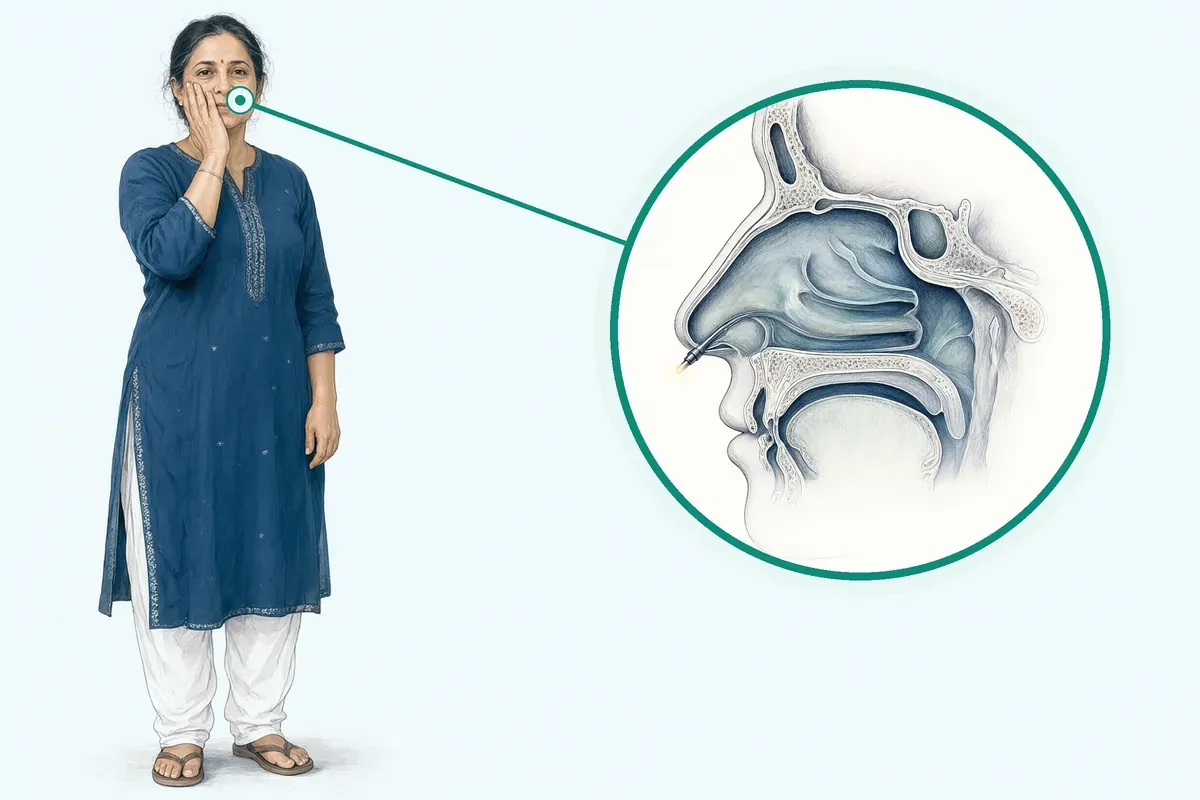
Surgery is performed through the nostrils using a thin endoscope, so there are no external cuts or visible scars.
-
Standard FESS
A rigid endoscope and microdebrider remove tissue to open the natural sinus drainage pathways.
-
Image-Guided FESS
A navigation system tracks instruments on a CT scan, used for complex or revision cases.
-
Balloon Sinuplasty
A small balloon dilates the sinus opening without cutting or removing tissue.
-
Extended FESS
Includes surgery on the frontal, sphenoid, or frontal recess sinuses when needed.
Why patients trust us
- 1991 Serving Jaipur for 35 years
- NABH Accredited hospital
- 2 ENT (Ear, Nose and Throat) consultants
- 24×7 Emergency, ICU and ambulance
- 25 Cashless schemes and insurers
What research shows about this treatment
-
Most people return to work in a week
Studies report most patients resume school or work within a week and normal routine within two weeks.
-
Heavy bleeding in about 3 in 100 surgeries
A recent study found the most common complication, significant bleeding, occurs in roughly 3 out of 100 cases.
-
Symptoms may return and need revision
Research notes that additional touch-up or revision surgery is sometimes necessary to optimise outcomes.
If it is left untreated
Untreated chronic sinusitis can lead to repeated infections, worsening polyps, and ongoing fatigue. Rarely, infection may spread to the eye or brain, causing vision changes or meningitis.
Life after treatment
Most people breathe more easily, have fewer infections, and need less medication after recovery.
-
Easier breathing
Most people find nasal airflow improves once the sinus passages are opened.
-
Fewer infections
Sinus infections usually become less frequent and less severe after surgery.
-
Less medication
Many patients need lower doses of nasal sprays or antibiotics than before.
-
Better sleep and energy
Improved breathing at night often means better rest and more daytime energy.
Frequently asked questions
Questions patients ask about functional endoscopic sinus surgery
What does functional endoscopic sinus surgery involve?
In short
Functional endoscopic sinus surgery (FESS) is a minimally invasive operation to open blocked sinus drainage pathways. At Jaipur Hospital, the procedure takes one to two hours under general anaesthesia. The surgeon works through the nostrils using a rigid endoscope and microdebrider, so there are no external cuts or visible scars.
In detail
During FESS, the surgeon inserts a thin tube with a camera and tiny instruments into each nostril to reach the sinuses. The exact steps depend on which sinuses are blocked and whether polyps or thickened bone need removal.
Techniques include standard FESS with a microdebrider, image-guided navigation for complex or revision cases, balloon sinuplasty to dilate openings without tissue removal, and extended FESS for frontal, sphenoid or frontal recess disease. Most patients stay one night in hospital.
A common belief
Many people think sinus surgery means facial incisions or packing that must be pulled out later.
What actually happens
Modern FESS avoids both. Balloon sinuplasty can even dilate the openings without removing tissue. The technique chosen depends on your CT scan and whether you have had previous surgery.
Your next step at Jaipur Hospital
You will have a preoperative consultation with the ENT team, routine blood tests, a CT scan of the sinuses and possibly an ECG. The surgeon will explain which technique suits your anatomy.
After surgery you can expect mild bleeding, stuffiness and discomfort for a few days. Desk work usually resumes in one to two weeks.
Which tests and scans do I need before functional endoscopic sinus surgery?
In short
Before functional endoscopic sinus surgery at Jaipur Hospital, you will need a CT scan of the sinuses, a diagnostic nasal endoscopy, and routine blood tests including a complete blood count and coagulation profile. An ECG and pulmonary function test may be added depending on your age and medical history.
In detail
The CT scan of the paranasal sinuses is the key imaging study. It shows the detailed anatomy of each sinus, the extent of disease, and the relationship to the eye, brain, and major blood vessels. The cost typically ranges from INR 2,000 to 7,000.
A nasal endoscopy in the clinic lets the surgeon see the nasal lining, polyps, and pus directly; this usually costs INR 1,500 to 3,500. Blood tests (CBC, coagulation profile) check for anaemia and clotting ability and cost around INR 500 to 2,000.
An ECG (INR 300 to 1,000) is often done for patients over 40 or with heart disease. Pulmonary function tests (INR 800 to 2,500) may be needed if you have asthma or other lung conditions. All these tests help the anaesthesia team and the surgeon plan a safe operation.
A common belief
Patients sometimes think a simple X-ray is enough.
What actually happens
A CT scan is essential because it shows the thin bones around the eye and brain in detail, which a plain X-ray cannot. The surgeon uses the CT like a map during the operation.
Your next step at Jaipur Hospital
The tests are usually done a few days before surgery. Bring any previous imaging or blood reports to your pre-operative visit. The anaesthesia team will review the results and may ask for additional clearance if you have other medical conditions. Once all reports are satisfactory, a surgery date is confirmed.
How painful is Functional Endoscopic Sinus Surgery and the early recovery?
In short
Functional Endoscopic Sinus Surgery at Jaipur Hospital is performed under general anaesthesia, so you do not feel pain during the operation. After surgery, most patients describe the discomfort as mild to moderate, similar to a blocked nose or sinus pressure, and it usually improves within a few days.
In detail
The procedure works inside the nostrils using an endoscope, so there are no external cuts. Evidence shows that most patients experience slight bleeding, stuffiness and discomfort for a few days after FESS, which is normal.
Pain is typically managed with simple analgesics prescribed by your surgeon. Because the surgery opens drainage pathways without large tissue removal, the pain is generally less than with older open sinus operations. Individual pain thresholds vary, and your surgical team will adjust medication to keep you comfortable during the first week.
A common belief
People often expect severe pain because it is sinus surgery.
What actually happens
In reality, the endoscopic approach avoids external cuts, and studies show heavy bleeding occurs in only about three out of every hundred cases. Simple painkillers and saline rinses usually keep discomfort under control.
Your next step at Jaipur Hospital
You will spend one night in hospital for monitoring. Before discharge, the nursing team will give you a pain relief plan and instructions for nasal saline rinses. Most people return to desk work in one to two weeks. If pain worsens or does not settle with prescribed medication, contact the hospital.
How long does recovery usually take after functional endoscopic sinus surgery?
In short
Recovery after functional endoscopic sinus surgery at Jaipur Hospital usually takes one to two weeks before you can return to desk work, and a few months before you feel fully healed. Most people resume their normal routine within two weeks, although the nose continues to clear internally for longer.
In detail
Evidence shows that you will spend a few hours in the recovery room after general anaesthesia, then stay one night in hospital. Slight bleeding, stuffiness and discomfort are normal for the first few days.
A follow-up visit a few weeks later allows the surgeon to clean dried mucus and blood from the nose.
Studies report that most patients go back to school or work in about a week, with full symptom improvement continuing over several months as the sinus lining heals.
A common belief
Patients often expect to feel normal in a few days, but the internal swelling and crusting take weeks to clear.
What actually happens
The external appearance does not change, so it is easy to forget the nose is still healing inside.
Your next step at Jaipur Hospital
Plan for one week off work if your job is sedentary, two weeks if it involves heavy lifting or dust exposure. Avoid blowing your nose, bending down and strenuous exercise for at least two weeks. Use saline rinses as instructed.
What makes me a suitable candidate for Functional Endoscopic Sinus Surgery?
In short
You may be a suitable candidate for Functional Endoscopic Sinus Surgery at Jaipur Hospital if you have chronic sinusitis or nasal polyps that do not improve with medicines. Your surgeon will confirm eligibility after a clinical examination and a CT scan of the sinuses. The decision depends on your symptoms, imaging findings, and response to previous medical treatment.
In detail
Evidence shows that Functional Endoscopic Sinus Surgery is usually recommended when mucus does not drain properly from the sinuses despite adequate medical therapy such as intranasal corticosteroids and antibiotics.
Typical indications include chronic rhinosinusitis with or without nasal polyps, recurrent acute sinusitis, and certain skull base or cerebrospinal fluid leak repairs.
Studies describe eligible patients as adults with bilateral disease persisting despite intranasal steroid use, often with a history of systemic corticosteroid courses or previous sinus surgery. Your surgeon will review your CT scan to assess anatomy and the extent of disease before advising surgery.
A common belief
Many people assume that any sinus blockage qualifies for surgery.
What actually happens
In reality, guidelines recommend trying medical treatment first. Surgery is usually considered only when symptoms persist despite proper medical therapy and imaging shows clear disease.
Your next step at Jaipur Hospital
The next step is an OPD consultation with our ENT team for nasal endoscopy and a CT scan if not already done. Bring any previous imaging and medication records.
The surgeon will explain whether Functional Endoscopic Sinus Surgery is appropriate and discuss the typical hospital stay of one night.
Could the sinus problem affect hearing, balance, breathing, speech, or swallowing?
In short
Sinus disease at Jaipur Hospital primarily affects nasal breathing, sense of smell, and facial comfort. It can also cause ear fullness or mild hearing changes because the Eustachian tube opens into the back of the nose. Balance, speech, and swallowing are not directly affected by sinus disease itself, though severe infection spreading to nearby structures is rare.
In detail
The sinuses are air-filled spaces around the nose. When they are blocked, you feel nasal congestion, facial pressure, and reduced smell. The Eustachian tube, which equalises middle ear pressure, opens into the nasopharynx.
Swelling in this area can block the tube, leading to a feeling of ear fullness, popping, or mild conductive hearing loss. This is usually temporary and improves when sinus inflammation settles. Balance is controlled by the inner ear and is not directly affected by sinusitis.
Speech resonance may sound nasal due to congestion, but true speech or swallowing problems are not typical of sinus disease. If infection spreads to the orbit or intracranial space, neurological symptoms can appear, but this is uncommon.
A common belief
Patients often worry about dizziness or trouble swallowing.
What actually happens
Those symptoms point to other causes. Ear fullness from sinus swelling is common and typically clears with sinus treatment.
Your next step at Jaipur Hospital
If you notice ear fullness, hearing changes, or persistent nasal blockage, an ENT assessment is appropriate. The surgeon will examine the nose, ears, and may order a CT scan. Treatment of the sinus condition often resolves the ear symptoms.
Why might my doctor recommend functional endoscopic sinus surgery?
In short
Your doctor may recommend functional endoscopic sinus surgery if you have chronic sinusitis or nasal polyps that do not improve with medications, nasal sprays, or saline irrigation. It is also used to repair skull base abnormalities or cerebrospinal fluid leaks. Jaipur Hospital evaluates each case after conservative treatments have failed to provide relief.
In detail
FESS is typically recommended when standard medical treatments such as antibiotics, nasal corticosteroids, and saline irrigation fail to control persistent or recurrent sinus symptoms. Conditions include chronic rhinosinusitis with or without nasal polyps, allergic fungal sinusitis, or structural blockages.
The surgery restores drainage and airflow, easing nasal congestion, facial pain, and blocked sinuses. In studies, most people notice major improvements in breathing and quality of life, even if some symptoms remain. It is the standard procedure for serious sinus conditions that do not respond to conservative care.
A common belief
Some patients expect antibiotics to heal chronic sinusitis permanently.
What actually happens
But if the drainage pathways are structurally blocked, medicines only give temporary relief. Others think surgery is a first option, but guidelines reserve it for cases that do not respond to medical management. It is not for occasional colds or allergies alone.
Your next step at Jaipur Hospital
If you have ongoing sinus symptoms despite medical treatment, your ENT specialist will review your history, examine your nose, and may order a CT scan. You will discuss whether surgery is the next step. Pre-operative tests and a medication review are done before scheduling.
How should I prepare in the days before functional endoscopic sinus surgery?
In short
In the days before functional endoscopic sinus surgery at Jaipur Hospital, follow your surgeon's specific instructions. Typically, you will be asked to stop blood-thinning medicines, avoid smoking, and use any prescribed nasal sprays or antibiotics as directed. Arrange for an attendant to stay with you overnight in hospital.
In detail
Your surgeon will review all your regular medicines. Blood thinners such as aspirin, clopidogrel, warfarin, or newer anticoagulants usually need to be stopped several days before surgery, but only after checking with the prescribing doctor.
Herbal supplements like ginkgo, garlic, ginger, and vitamin E can also increase bleeding risk and should be disclosed. If you smoke, stopping at least two weeks before surgery improves healing and reduces infection risk.
You may be given a course of antibiotics or a steroid nasal spray to start before the operation. On the day before surgery, eat light meals, stay hydrated, and sleep well. Confirm the reporting time and fasting instructions with the hospital. Pack comfortable clothes, your regular medicines (except those stopped), and any test reports.
A common belief
Many patients forget to mention herbal products or over-the-counter painkillers like ibuprofen, which can increase bleeding.
What actually happens
Even a single dose of aspirin a week before surgery can affect clotting. Give your surgeon a complete list of everything you take.
Your next step at Jaipur Hospital
Complete all pre-operative tests at least two to three days before the surgery date so the anaesthesia team can review them. Inform the hospital immediately if you develop a fever, cold, or any infection before the planned date. Your attendant should be available to help you after discharge.
What are the common side effects and the less common serious complications of functional endoscopic sinus surgery?
In short
Common side effects after functional endoscopic sinus surgery at Jaipur Hospital include a blocked nose, mild bleeding, crusting and a reduced sense of smell for a few weeks. Less common but serious complications can involve injury to the eye or optic nerve, a cerebrospinal fluid leak, or heavy bleeding needing a return to theatre.
In detail
Evidence shows that most sinus surgery involves some blood loss, but it is generally well tolerated and transfusion is rare. Nasal packing is not always needed.
Serious risks include damage to nearby structures such as the eye, optic nerve or skull base, which can cause double vision, visual loss or a fluid leak that may lead to meningitis.
Alteration of smell or taste, persistent tearing and septal perforation are also documented but uncommon. Your surgeon will discuss the risks that apply to your anatomy.
A common belief
People often worry about visible scars or brain damage, but the surgery is done through the nostrils with no external cuts.
What actually happens
The serious complications are real but uncommon, and the surgical team uses navigation and careful technique to minimise them.
Your next step at Jaipur Hospital
After discharge, slight oozing and congestion are normal for several days. Seek urgent care if you have bright red bleeding that does not stop, clear watery fluid dripping from one side of the nose, sudden vision changes, severe headache with neck stiffness, or high fever.
Which symptoms are expected after Functional Endoscopic Sinus Surgery, and which need urgent medical attention?
In short
Expected symptoms after Functional Endoscopic Sinus Surgery at Jaipur Hospital include slight bleeding, nasal stuffiness, mild discomfort, and a sensation of blockage for a few days. Urgent symptoms are heavy bleeding that does not stop, clear watery discharge from one side of the nose, severe headache, vision changes, double vision, or fever.
In detail
Evidence indicates that most patients have slight bleeding, stuffiness and discomfort for a few days, which is normal. Nasal packing, if used, is usually removed after a week. A follow-up visit a few weeks later allows removal of dried mucus and blood.
Serious complications are rare but require immediate care: heavy bleeding may need packing or transfusion; clear unilateral discharge can signal a cerebrospinal fluid leak, which risks meningitis; vision changes or double vision may indicate orbital injury; fever with severe headache suggests infection. Persistent tearing usually resolves but occasionally needs further surgery.
A common belief
Patients often dismiss clear watery discharge as just a runny nose.
What actually happens
In reality, it can be a cerebrospinal fluid leak, which is a direct path to meningitis. Similarly, vision changes are not just swelling; they can mean orbital injury. Knowing the difference saves time and prevents serious outcomes.
Your next step at Jaipur Hospital
Keep the emergency numbers handy. If you experience any urgent symptom, go to the 24×7 emergency department at Jaipur Hospital or call the hospital. Do not blow your nose forcefully. Use saline rinses as instructed. Attend the scheduled follow-up for cleaning and review.
FAQ library
Questions and answers about functional endoscopic sinus surgery
When you contact us
Get a clear plan for your sinuses
Contact Jaipur Hospital for an OPD consultation, in-house scans, a plain-word explanation of your options, a cost estimate, and help with cashless insurance.
- A consultation with an ENT surgeon in the OPD
- Your scans and reports reviewed, with tests done in-house if you need them (laboratory, X-ray and imaging)
- Your options explained in plain words, including whether you need surgery at all
- A cost estimate before you decide
- Help with cashless treatment under RGHS, MAA Yojana, CGHS and empanelled insurers and TPAs
- Follow-up visits after your treatment
Overview
Functional Endoscopic Sinus Surgery: what to know
What chronic sinusitis is and how it happens
- Blocked drainage
- Swollen lining closes sinus openings
- Nasal polyps
- Soft growths from inflamed lining
- Ongoing infection
- Mucus build-up leads to inflammation
Chronic sinusitis means the lining of your sinuses stays swollen and blocked for 12 weeks or longer, even after treatment. The sinuses are air-filled spaces behind your forehead, cheeks and eyes. Normally they make thin mucus that drains through small openings into your nose. When the lining swells, the openings close, mucus builds up and bacteria or fungi can grow.
This leads to ongoing infection and inflammation. Functional Endoscopic Sinus Surgery (FESS) is a minimally invasive surgery for serious sinus conditions that opens these drainage pathways again.
In chronic sinusitis with nasal polyps, soft, non-cancerous growths form from the inflamed lining and block the nose further. Patients with severe disease often have a high symptom burden and poor health-related quality of life. They may need repeated courses of oral steroids and repeated sinus surgery. Medicines like antibiotics or nasal sprays usually help at first.
But if they are not doing the trick, you may need surgery to remove tissue or bone causing issues. You may also need medicine to manage chronic inflammation.
Symptoms of chronic sinusitis and warning signs for urgent care
- Sudden severe headache Different from usual sinus pain
- High fever with stiff neck Possible spread of infection
- Confusion or drowsiness May mean brain involvement
- Double vision or vision loss Infection near eye socket
- Swelling or redness around eyes Infection spread to eye socket
- Clear watery fluid from one nostril Possible cerebrospinal fluid leak
Common symptoms include:
- A blocked nose that makes it hard to breathe
- Thick yellow or green discharge from the nose or down the back of the throat
- Facial pain or pressure around the eyes, cheeks and forehead
- A reduced or lost sense of smell
You may also have headaches, ear fullness, cough that is worse at night, and tiredness.
Go to the emergency department the same day if you notice any of these warning signs: sudden severe headache that is different from your usual sinus pain, high fever with a stiff neck, confusion or drowsiness, double vision or sudden vision loss, swelling or redness around one or both eyes, or clear watery fluid dripping from one side of the nose when you bend forward. These can mean the infection has spread to the eye socket or the brain, which needs immediate treatment.
Causes and who is at higher risk
- Inflammation and allergy
- Chronic inflammation, allergies, asthma drive disease
- Structural problems
- Deviated septum narrows drainage paths
- Immune over-reaction
- Over-reaction to fungi or bacteria in the nose
The exact cause is not always known. Chronic inflammation, allergies, asthma, and repeated infections all play a part. Structural problems like a crooked nasal septum (deviated septum) can narrow the drainage paths and make blockage more likely. Some people have an immune system that over-reacts to fungi or bacteria in the nose. Others have conditions like cystic fibrosis or primary ciliary dyskinesia that affect mucus clearance.
You are at higher risk if you have:
- Allergic rhinitis
- Asthma
- Nasal allergies to aspirin or painkillers (NSAID-exacerbated respiratory disease)
- A history of nasal trauma or previous sinus surgery
Smoking and exposure to air pollution also increase the risk. In studies of severe nasal polyps, eligible patients were 18 years or older, had symptoms despite using nasal steroid sprays, and often had a history of oral steroid use or previous surgery.
How chronic sinusitis is diagnosed: examination and tests
- ₹1,500 to ₹3,500 Nasal endoscopy
- ₹2,000 to ₹7,000 CT scan of sinuses
- ₹500 to ₹2,000 Blood tests
- ₹300 to ₹1,000 ECG
Your ENT surgeon will ask about your symptoms and how long you have had them. They will look inside your nose with a headlight or a thin flexible tube with a camera (nasal endoscopy) to see swelling, pus, polyps or a deviated septum. This test usually costs between ₹1,500 and ₹3,500.
A CT scan of the sinuses gives a detailed picture of the sinus anatomy, shows which sinuses are blocked, and helps plan surgery if needed. The scan typically costs ₹2,000 to ₹7,000. Blood tests such as a complete blood count and coagulation profile check your fitness for anaesthesia and surgery; these cost about ₹500 to ₹2,000.
An ECG (₹300 to ₹1,000) and sometimes lung function tests (₹800 to ₹2,500) may be needed, especially if you are older or have heart or lung disease. A consultation with an ENT surgeon before surgery usually costs ₹500 to ₹2,000.
Treatment options without surgery and when Functional Endoscopic Sinus Surgery is advised
First-line treatment is medical. It includes saline nasal washes, steroid nasal sprays or drops, and sometimes a short course of oral steroids. Antibiotics are given if there is a bacterial infection. Allergy treatment with antihistamines or immunotherapy may help if allergies drive the inflammation.
Newer biologic medicines like dupilumab (a monoclonal antibody that blocks IL-4 and IL-13 signalling) have been approved for severe nasal polyps and can reduce polyp size, sinus opacification and symptom severity in many patients. Another biologic, benralizumab, has also shown significant improvement in polyp score and nasal blockage in clinical trials.
Surgery is advised when medical treatment has not controlled your symptoms after a reasonable trial, usually at least 8 to 12 weeks of proper medical therapy.
Your provider may recommend Functional Endoscopic Sinus Surgery if mucus is not draining from your sinuses as it should, if you have large polyps blocking the nose, if you have a structural abnormality at the skull base, or if you have a cerebrospinal fluid leak.
FESS restores drainage and airflow in your sinuses and can help you breathe better, which improves overall quality of life. Most people who get it notice major symptom improvements. However, surgery is not a heal for sinusitis; you can expect to continue with your sinus medications even after successful surgery, although your need for them should lessen.
In some instances, additional revision surgery may be necessary to optimise the outcome. Before deciding, ask your surgeon about the benefits and make sure you know the expected results.
Preparing for Functional Endoscopic Sinus Surgery
Do
- Pre-operative tests
- Review medicines with surgeon
- Fast for six hours
- Bring insurance and medicine list
- Arrange attendant overnight
Before surgery you will have a pre-operative assessment. This usually includes a CT scan of the sinuses, nasal endoscopy, routine blood tests such as a complete blood count and coagulation profile, an electrocardiogram (ECG), and sometimes pulmonary function tests if you have a history of breathing problems.
Your surgeon will review any medicines you take, especially blood thinners, aspirin, or nasal sprays, and tell you which ones to stop or continue. You must not eat or drink anything for at least six hours before general anaesthesia. Bring your insurance cards, any referral letters, a list of current medicines, and comfortable clothes to wear home. An attendant should plan to stay with you overnight in the hospital.
How Functional Endoscopic Sinus Surgery is done
- General anaesthesia given Operation takes one to two hours
- Surgeon works through nostrils No cuts on the face
- Chosen technique applied Depends on blocked sinuses
- Septoplasty if needed Straightens deviated septum
- Nose packed if required Absorbable material or spacer
The operation is performed under general anaesthesia and usually takes one to two hours. The surgeon works entirely through the nostrils using a rigid nasal endoscope, so there are no cuts on the face and no visible scars. The exact steps depend on which sinuses are blocked and how severe the disease is. Your surgeon will advise which technique suits you:
- Standard FESS: A rigid endoscope with a microdebrider removes diseased tissue and bone to open the natural drainage pathways.
- Image-Guided FESS: A navigation system linked to your pre-operative CT scan helps the surgeon in complex or revision cases where anatomy is distorted.
- Balloon Sinuplasty: A small balloon is inflated to widen the sinus openings without removing tissue; this is used for selected cases.
- Extended FESS: Includes surgery on the frontal, sphenoid, or frontal recess sinuses when they are involved.
During the procedure the surgeon may also straighten a deviated nasal septum (septoplasty) if it blocks access or contributes to symptoms. At the end, the nose may be packed with absorbable material or a spacer that is removed after about a week; not every case needs packing. You will spend a few hours in the recovery room before moving to a ward for an overnight stay.
Risks and possible complications of Functional Endoscopic Sinus Surgery
- 3 out of 100 surgeries Significant bleeding
- Rarely needed Blood transfusion
- Rare Eye or optic nerve injury
- Rare Cerebrospinal fluid leak
FESS is considered a safe procedure with few risks. In studies the most common complication is significant bleeding, which occurs in about 3 out of 100 surgeries. Blood transfusion is rarely needed and only given in an emergency. Because the sinuses sit close to the eye and the brain, there are rare but serious risks.
Injury to the eye or optic nerve can cause visual loss or double vision; the potential for recovery in such cases is not good. Injury to the tear duct can cause persistent tearing, which usually resolves on its own but occasionally needs further surgery.
A leak of cerebrospinal fluid (the fluid around the brain) is rare; if it happens it requires surgical closure, a longer hospital stay, and carries a risk of meningitis. Other uncommon risks include alteration of sense of smell or taste.
If a septoplasty is done at the same time, additional risks include bleeding or infection at the septum, numbness of the front teeth, a hole in the septum (septal perforation), or very rarely a change in the external shape of the nose.
Ophthalmic complications are well documented and mainly occur due to the shared anatomy between the sinuses and the eye. Your surgeon takes several safety measures: detailed study of your CT scan, precise knowledge of sinus anatomy, and experienced surgical technique.
Recovery and aftercare after Functional Endoscopic Sinus Surgery
After surgery you will spend time in the recovery room where nurses monitor your condition. Before discharge your surgeon will explain what to expect: slight bleeding, stuffiness, and discomfort for a few days are normal. You will be given instructions for nasal saline irrigations, any prescribed nasal sprays, and pain relief.
Avoid blowing your nose, heavy lifting, and bending forward for the first week. Most people return to desk work or school in one to two weeks and resume a normal routine within two weeks. Full healing of the sinus lining can take a few months.
You will have a follow-up visit a few weeks after surgery so the surgeon can clean dried mucus or blood from the nose and check your progress.
Contact the hospital if you have heavy bleeding that does not stop with gentle pressure, clear watery fluid dripping from one side of the nose (possible cerebrospinal fluid leak), worsening vision or double vision, severe headache with neck stiffness, or fever above 38°C.
Results of Functional Endoscopic Sinus Surgery
In studies most people who have FESS notice major improvement in symptoms such as nasal congestion, facial pain, and blocked sinuses. The surgery restores drainage and airflow in the sinuses, which helps you breathe better and improves overall quality of life. FESS is a safe and effective surgery for chronic sinus issues.
Depending on the condition, it may resolve some or even all of your symptoms. However, surgery is not a heal for the underlying inflammatory disease; you can expect to continue with sinus medications after successful surgery, although usually at a lower dose. In some instances additional "touch-up" or revision surgery may be needed to optimise the outcome.
Recurrence of nasal polyps can happen; if symptoms improve and then return, it may be a sign that a polyp has grown back and needs removal again. Patients with severe chronic rhinosinusitis with nasal polyps often require recurring systemic corticosteroid use and repeated sinus surgery over time.
Cost and insurance for Functional Endoscopic Sinus Surgery in Jaipur
The typical price range for Functional Endoscopic Sinus Surgery in India is ₹60,000 to ₹1,50,000. This range covers the surgery, anaesthesia, and one night in hospital.
The final cost varies with the surgeon’s expertise, the type of hospital room chosen, the technique used (standard, image-guided, balloon, or extended FESS), whether a septoplasty is needed, pre- and post-operative care, and any additional diagnostic tests.
Common pre-operative tests and their approximate costs in India are: CT scan of the sinuses ₹2,000 to ₹7,000, nasal endoscopy ₹1,500 to ₹3,500, routine blood tests ₹500 to ₹2,000, ECG ₹300 to ₹1,000, and pulmonary function tests ₹800 to ₹2,500. An ENT consultation before surgery typically costs ₹500 to ₹2,000.
FESS is often covered under health insurance plans in India, but coverage varies by provider and plan. Typical coverage includes pre-operative consultations, diagnostic tests, surgery, anaesthesia, hospital stay, post-operative care, and follow-up visits. Some policies may not cover the full cost if the procedure is deemed elective or cosmetic, even with a functional purpose.
Expenses for non-essential tests, medicines not prescribed by the attending surgeon, and complications from pre-existing conditions might not be covered. Waiting periods for pre-existing conditions can also delay coverage. Jaipur Hospital is empanelled under RGHS, MAA Yojana, CGHS, and a panel of private insurers and TPAs. The hospital has an in-house pharmacy, diagnostic laboratory, and imaging facilities, and offers 24×7 emergency and ambulance services.