

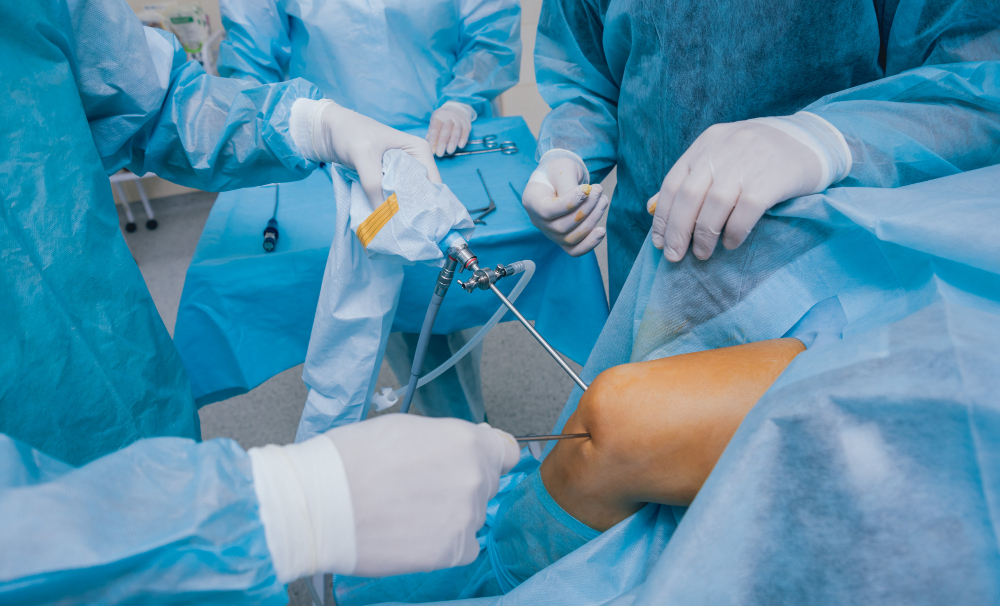
Arthroscopy (Keyhole) Surgery in Jaipur
Not every joint problem needs open surgery. Arthroscopy, commonly known as keyhole surgery, allows orthopaedic surgeons to diagnose and treat many joint conditions through tiny incisions, using a small camera and specialised instruments. At Jaipur Hospital, our orthopaedic team performs knee and shoulder arthroscopy for a range of injuries, offering a minimally invasive alternative to traditional open surgery wherever suitable.
What is Arthroscopy?
Arthroscopy is a surgical technique in which a thin tube with a camera (arthroscope) is inserted into a joint through a small incision. The camera projects images onto a screen, allowing the surgeon to examine the joint in detail and perform repairs using narrow surgical instruments inserted through additional small incisions. Because the incisions are small, arthroscopy generally causes less tissue damage than open surgery.
Procedures We Perform
- Knee arthroscopy for diagnosis and treatment of internal knee injuries
- Meniscus repair or trimming for torn cartilage in the knee
- Anterior and posterior cruciate ligament (ACL/PCL) reconstruction
- Shoulder arthroscopy for rotator cuff and labral tears
- Cartilage repair procedures
- Removal of loose bodies or damaged tissue within a joint
Conditions Treated with Arthroscopy
Arthroscopic surgery is commonly used for meniscus tears, ligament injuries (such as ACL tears), rotator cuff tears, shoulder instability, cartilage damage, and persistent joint pain or swelling that has not been diagnosed clearly through imaging alone. It is also useful for removing loose bone or cartilage fragments causing joint locking or catching.
Advantages of Keyhole Surgery
Because arthroscopy uses small incisions instead of a large surgical opening, patients typically experience less post-operative pain, reduced scarring, and a shorter hospital stay compared to open surgery. Many arthroscopic procedures are performed on a day-care or short-stay basis, and rehabilitation can often begin sooner, helping patients regain joint function more quickly.
Recovery After Arthroscopy
Recovery time depends on the specific procedure performed. Diagnostic arthroscopy or minor repairs may allow patients to resume light activities within a couple of weeks, while ligament reconstruction or more extensive repairs typically require a structured physiotherapy programme over several weeks to months for full recovery of strength and joint stability.
Why Choose Jaipur Hospital for Arthroscopy
Jaipur Hospital’s orthopaedic department is equipped with the surgical technology needed for arthroscopic knee and shoulder procedures, performed by experienced surgeons. Our team combines accurate diagnosis, minimally invasive surgical technique, and personalised rehabilitation planning to help patients recover joint function safely and effectively. We are empanelled under Ayushman Bharat, CGHS, ECHS, and multiple insurance TPAs for cashless treatment.
Before Your Arthroscopy Procedure
Before recommending arthroscopic surgery, our orthopaedic surgeons carry out a detailed clinical examination along with imaging such as MRI to confirm the diagnosis and plan the procedure precisely. This helps ensure that arthroscopy is genuinely the right option for your condition, and that the surgical plan addresses the specific injury identified on imaging, whether that is a torn meniscus, a damaged ligament, or a shoulder tendon tear.
If you have persistent knee or shoulder pain, or a suspected ligament or cartilage injury, consult our orthopaedic specialists at Jaipur Hospital to find out if arthroscopic surgery is right for you.
Need Emergency Assistance?
Have Any Query Regarding our Services, Contact us at the Jaipur Hospital or fix an appointment.
Get in Touch
- Gopalpura Flyover, Mahaveer Nagar, Main Tonk Road, Jaipur – 302018
- +91-7414-001-001
- jaipur.hospital@gmail.com
Need Emergency Assistance?
Have Any Query Regarding our Services, Contact us at the Jaipur Hospital or fix an appointment.
Get in Touch
- Gopalpura Flyover, Mahaveer Nagar, Main Tonk Road, Jaipur – 302018
- +91-7414-001-001
- jaipur.hospital@gmail.com
Department FAQs - Arthroscopy Surgery
1. What is the difference between arthroscopy and open surgery?
Arthroscopy uses small incisions and a camera to view and treat the joint from inside, while open surgery requires a larger incision to directly access the joint. Arthroscopy generally causes less tissue trauma and often allows a quicker recovery for suitable cases.
2. Which joints can be treated with arthroscopy?
Arthroscopy is most commonly used for the knee and shoulder, but it can also be used for the ankle, elbow, hip, and wrist joints, depending on the condition being treated.
3. Is arthroscopy a day-care procedure?
Many diagnostic and minor arthroscopic procedures can be performed on a day-care or short-stay basis, while more extensive repairs such as ligament reconstruction may require a slightly longer hospital stay. Your surgeon will advise based on your specific procedure.
4. How soon can I return to sports after knee arthroscopy?
Return to sport depends on the type of surgery performed. Simple meniscus trimming may allow return to light activity within a few weeks, while ACL reconstruction typically requires several months of structured physiotherapy before returning to competitive sport.
5. Does arthroscopic surgery leave scars?
Since arthroscopy is performed through a few small incisions, scarring is minimal compared to open surgery. Most incision marks fade significantly over time.