

ENT (Ear, Nose and Throat) · Jaipur Hospital
Septorhinoplasty in Jaipur
You struggle with blocked breathing and nasal shape. Jaipur Hospital offers an in-person assessment, clear options, and a simple surgical plan.
- Serving Jaipur since 1991 (35 years)
- NABH accredited
- 24×7 emergency & ICU
- Cashless: RGHS, MAA Yojana, CGHS + 22 insurers
- Operation time
- 2 to 3 hours
- Anaesthesia
- General anaesthesia
- Recovery
- Back to desk work in 2 weeks, final shape in 6 to 12 months
- Price
- ₹1,00,000 to ₹2,50,000typical range in India; ask us for an estimate
Struggling to breathe through your nose
Trouble breathing and a nose shape that feels off
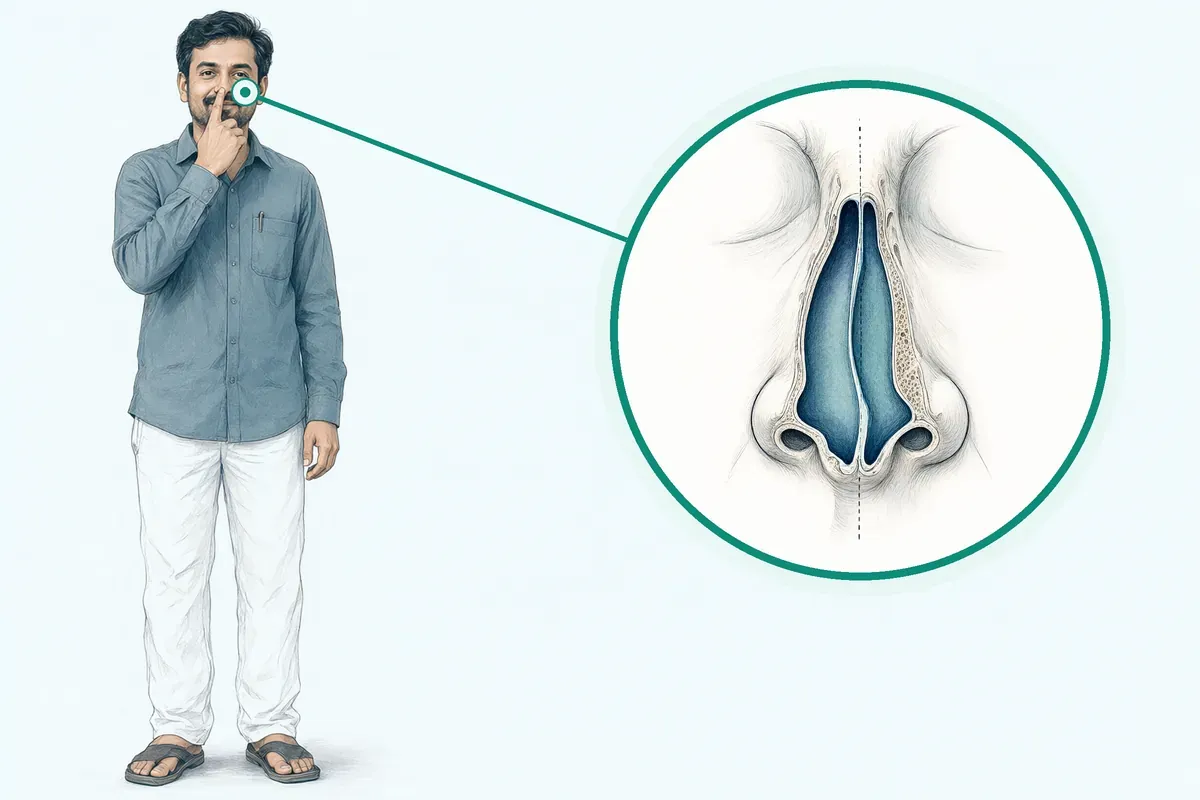
A crooked septum can make breathing difficult through one or both nostrils. When combined with outer shape concerns, it affects daily comfort and sleep.
-
Blocked nasal airflow
Air struggles to pass through your nostrils, making ordinary breathing feel laboured during daily activities.
-
Disrupted night sleep
Nasal blockage often leads to mouth breathing, heavy snoring, or restless sleep at night.
-
Uneven nasal appearance
An injury or congenital bend can leave the outer bridge or tip visibly crooked.
A crooked septum can happen because of an injury, or you can be born with it.
Why Jaipur Hospital
You may worry about surgical pain, long time off work, and the total cost for your family.
Your care plan
Your first steps with us
- 1 Book an OPD consultation with our surgical team.
- 2 Review your scans and discuss your surgical plan.
- 3 Undergo your planned procedure in our modular operation theatre.
- 4 Attend scheduled follow-up visits as your nose heals.
How septorhinoplasty is performed
The operation typically takes 2 to 3 hours under general anaesthesia. Your surgeon straightens the internal septum and reshapes the external nasal framework.
-
Open Septorhinoplasty
Your surgeon will discuss a columellar incision that provides full exposure for complex structural adjustments.
-
Closed Septorhinoplasty
Your surgeon will discuss internal incisions only, leaving no visible external scar on the nose.
-
Preservation Rhinoplasty
Your surgeon will discuss maintaining the dorsal structure to achieve a natural contour without resection.
-
Structural Grafting
Your surgeon will discuss using cartilage grafts to provide firm support and precise shape correction.
Why patients trust us
- 1991 Serving Jaipur for 35 years
- NABH Accredited hospital
- 2 ENT (Ear, Nose and Throat) consultants
- 24×7 Emergency, ICU and ambulance
- 25 Cashless schemes and insurers
Clinical findings on nasal surgery
-
43 to 50 points
In clinical studies, nasal obstruction scores showed an absolute reduction of 43 to 50 points for 12 months after rhinoplasty.
-
0.56%
A meta-analysis of autologous rib cartilage use in rhinoplasty found a pooled infection rate of 0.56%.
-
3.08%
In research studying cartilage grafting, the combined warping rate was reported at 3.08%.
If it is left untreated
Leaving a deviated septum untreated can lead to persistent breathing obstruction and disrupted sleep, while any surgery carries risks such as bleeding, infection, and numbness.
What to expect during recovery
Most people return to desk work in 2 weeks, with final nasal shape settling over 6 to 12 months.
-
Hospital stay
You typically stay in the hospital for 1 to 2 nights while our medical team monitors your initial recovery.
-
First two weeks
Mild discomfort usually fades in a few days, and most people resume desk work within two weeks.
-
Long-term healing
Internal tissues and cartilage settle gradually, with the final nasal shape usually visible within 6 to 12 months.
Frequently asked questions
Questions patients ask about septorhinoplasty
What does septoplasty involve?
In short
Septoplasty is surgery to straighten a deviated septum inside the nose. At Jaipur Hospital, our surgical team performs this under general anaesthesia, usually taking 30 to 90 minutes. The surgeon makes an internal incision, lifts the mucosal lining, reshapes the bone and cartilage, and replaces the lining. Splints or soft packing may be placed inside the nose to support healing.
In detail
The procedure corrects the internal nasal structure that blocks airflow. According to clinical sources, the surgeon creates an incision on one side of the nose, lifts the mucosa covering the septum, and reshapes or removes the deviated portions of bone and cartilage.
The mucosa is then repositioned. Splints or dissolvable stitches hold the tissue in place and reduce the risk of scar tissue. Turbinate reduction may be done at the same time if enlarged turbinates also restrict breathing.
A common belief
Many people think septoplasty changes the outside shape of the nose.
What actually happens
It does not. It only fixes the internal wall. If you also want a shape change, that is a separate procedure called rhinoplasty, which can be combined.
Your next step at Jaipur Hospital
You will have a preoperative assessment including a nasal examination and review of your medical history. The surgeon will explain which medicines to stop before surgery, such as aspirin or ibuprofen, and when to stop eating and drinking.
After the operation, you usually stay in hospital for a few hours or overnight. Initial recovery takes about one to two weeks.
Which tests and scans do I need before septoplasty?
In short
Before septoplasty, you usually need a nasal examination and sometimes a CT scan of the sinuses. At Jaipur Hospital, the ENT surgeon performs anterior rhinoscopy or diagnostic nasal endoscopy in the OPD. A CT scan may be ordered to assess the deviation and rule out sinus disease. Basic blood tests and a preoperative anaesthesia check are also routine.
In detail
The clinical examination with a headlight or endoscope is the primary tool to see the septum's position and turbinate size.
A CT scan of the paranasal sinuses in coronal and axial planes gives a detailed view of the bony and cartilaginous deviation, any spur, and the status of the sinus drainage pathways.
It also helps plan the surgery if combined procedures like turbinate reduction or sinus surgery are considered. Routine preoperative blood work typically includes complete blood count, bleeding and clotting times, blood sugar, and viral markers. An anaesthesia fitness assessment is done before general anaesthesia. The specific tests depend on your age, medical history, and the planned anaesthesia type.
A common belief
Not everyone needs a CT scan.
What actually happens
If the deviation is clear on examination and you have no sinus symptoms, the surgeon may proceed with just the clinical assessment and blood tests. The scan is mainly for complex cases or when sinus surgery might be combined.
Your next step at Jaipur Hospital
Most tests can be done at the hospital's in-house laboratory and radiology department. The CT scan and blood tests are usually completed within a day. The anaesthesia review happens at the pre-anaesthesia clinic. Bring any previous reports.
How painful is septorhinoplasty and the early recovery?
In short
At Jaipur Hospital, septorhinoplasty is done under general anaesthesia so you feel no pain during the operation. After surgery, most patients describe mild to moderate discomfort, often like a sinus infection, with pressure around the eyes, forehead, cheeks, and upper teeth. This usually fades within a few days and is managed with prescribed pain relief.
In detail
During the procedure you are asleep and feel nothing. Once the anaesthesia wears off, you may feel pain and pressure around the eyes and across the forehead, cheeks, and upper teeth. Evidence shows these sensations are normal and generally fade within a few days.
Your medical team will monitor you while the anaesthesia wears off and give pain medicine as needed. Swelling and bruising around the eyes add to the feeling of tightness but improve steadily over the first week.
The splints or soft packing inside the nose can cause a blocked sensation, which adds to discomfort until they are removed.
A common belief
Some patients expect severe pain, but studies show the discomfort is usually manageable and short-lived.
What actually happens
The blocked feeling from nasal splints often bothers people more than actual pain. Following the care instructions, especially head elevation and cold packs, makes a big difference.
Your next step at Jaipur Hospital
Take pain medicine exactly as prescribed. Keep your head elevated, use cold packs as advised, and avoid blowing your nose. Most people return to desk work in about two weeks. If pain worsens suddenly, or you have heavy bleeding, fever, or vision changes, contact the hospital immediately.
How long does recovery usually take after septorhinoplasty?
In short
At Jaipur Hospital, initial recovery after septorhinoplasty takes about one to two weeks. You can usually return to desk work in two weeks. Swelling and bruising around the eyes peak in the first few days and largely settle by two weeks. The final nasal shape continues to refine for six to twelve months as tissues heal and swelling fully resolves.
In detail
Operation time is typically two to three hours under general anaesthesia. Hospital stay is one to two nights. After discharge, you will have splints or soft packing inside the nose for about a week.
Evidence shows initial septoplasty recovery usually takes a week or two, but overall healing of bone and cartilage continues for several months. Head elevation, cold packs, and avoiding strenuous activity reduce swelling.
Heavy lifting, contact sports, and bending over are restricted for at least three to four weeks. Nasal breathing improves gradually as swelling subsides and splints are removed. The nasal tip may feel stiff or numb for several months.
A common belief
Patients often think recovery is over when the splints come out.
What actually happens
In reality, the nose is still healing inside. The tip stays numb or stiff for months, and subtle shape changes continue for a year. Rushing back to heavy exercise or contact sports can disrupt healing. Follow the timeline your surgeon gives you.
Your next step at Jaipur Hospital
Plan for at least one week off work, two weeks if your job is physical. Keep follow-up appointments for splint removal and nasal cleaning. Avoid blowing your nose, wearing glasses that rest on the bridge, and sun exposure on the healing skin. Contact the hospital if you have heavy bleeding, fever, or worsening pain.
Is the blockage caused by allergy, sinus disease, polyps, or a bent septum?
In short
Nasal blockage can be caused by a deviated septum, allergies, sinus disease, or nasal polyps, and often more than one factor is present. At Jaipur Hospital, the ENT team examines your nose and may order imaging to identify the exact cause before recommending septorhinoplasty or other treatment.
In detail
A deviated septum is a structural bend in the cartilage and bone dividing the nostrils. Allergies cause swelling of the nasal lining. Sinus disease leads to thickened mucosa and discharge. Polyps are soft, non-cancerous growths from chronic inflammation.
Each condition narrows the airway in a different way. Clinical examination with a headlight or endoscope shows the septum's position and the state of the mucosa. A CT scan of the paranasal sinuses reveals sinus disease, polyps, and the septum's shape in detail.
Because symptoms overlap, the surgeon correlates your history, examination, and imaging to decide whether septorhinoplasty, medical treatment, or a combination is needed.
A common belief
Many people assume allergies are the only cause and use sprays for years.
What actually happens
A bent septum or polyps will not improve with sprays alone, so the right diagnosis saves time and money.
Your next step at Jaipur Hospital
If you have persistent blockage, book an ENT consultation at Jaipur Hospital. The doctor will perform a nasal examination and advise if endoscopy or a CT scan is required. You will receive a clear diagnosis and a treatment plan tailored to the cause.
Could a deviated septum affect hearing, balance, breathing, speech, or swallowing?
In short
A deviated septum primarily affects nasal breathing, but it can also influence hearing and speech indirectly. At Jaipur Hospital, the ENT team evaluates the whole upper airway because nasal obstruction may lead to Eustachian tube dysfunction, causing ear fullness or mild hearing changes. It does not directly affect balance or swallowing.
In detail
The septum separates the two nasal passages. When it is deviated, airflow is reduced, leading to mouth breathing, dry throat, and altered voice resonance.
The Eustachian tube opens into the back of the nose; chronic nasal blockage can impair its ventilation function, resulting in negative middle ear pressure, fluid accumulation, and a sensation of blocked ears or mild conductive hearing loss.
This is more common in children but occurs in adults too. Balance is controlled by the inner ear and is not directly affected by septal deviation. Swallowing involves the oropharynx and oesophagus, which are separate from the nasal cavity.
However, post-nasal drip from associated sinusitis or allergy can cause throat irritation and a feeling of lump in the throat. Treating the septal deviation often improves nasal breathing, reduces mouth breathing, and may resolve the secondary ear and voice symptoms.
Your next step at Jaipur Hospital
If you experience ear fullness, popping, or voice change alongside nasal blockage, mention these at your ENT visit. The surgeon may perform tympanometry or a hearing test if Eustachian tube dysfunction is suspected.
Why might my doctor recommend septoplasty?
In short
A doctor may recommend septoplasty when a deviated septum causes breathing difficulty that affects daily life. At Jaipur Hospital, the ENT team evaluates whether the crooked septum is the main reason for your blocked nose, snoring, or recurrent sinus infections. Surgery aims to improve airflow and quality of life.
In detail
A deviated septum can be present from birth or result from injury. When the septum blocks one or both nasal passages, you may experience chronic congestion, difficulty breathing during exercise, noisy breathing at night, or frequent sinus infections.
Medical management such as nasal sprays may be tried first. If symptoms persist and the deviation is confirmed on examination, septoplasty is offered to restore nasal function.
Studies show significant improvement in nasal obstruction scores after surgery, with reductions of 43 to 50 points on a 100-point scale maintained at 12 months.
A common belief
Not every stuffy nose is caused by a deviated septum.
What actually happens
Allergies, enlarged turbinates, or nasal valve collapse can also block breathing. The doctor must confirm the septum is the main problem before recommending surgery.
Your next step at Jaipur Hospital
The surgeon will examine your nose, possibly using an endoscope, and may order a CT scan to assess the deviation. If surgery is advised, you will receive instructions on stopping certain medicines and fasting. Recovery typically allows return to desk work in one to two weeks.
How should I prepare in the days before septoplasty?
In short
In the days before septoplasty, follow your surgeon's specific instructions. At Jaipur Hospital, you will be told which medicines to stop, especially blood thinners like aspirin, ibuprofen, or naproxen, usually one to two weeks before surgery. Avoid herbal supplements that may increase bleeding. Arrange for an attendant to stay with you after discharge.
In detail
Preparation focuses on reducing bleeding risk and ensuring safe anaesthesia. The surgeon reviews your medical history and provides a list of medicines to pause.
Common items to stop include aspirin, non-steroidal anti-inflammatory drugs, and certain herbal products such as ginkgo, garlic, or ginseng, which can affect clotting. Smoking should be stopped at least two weeks before and after surgery to improve healing.
You will receive fasting instructions for the night before surgery. Plan for someone to drive you home and stay with you for the first 24 hours after discharge. Pack loose, front-buttoning clothes to avoid pulling anything over your head. Keep the hospital's contact numbers handy.
A common belief
Patients often forget that common painkillers and herbal products can thin the blood.
What actually happens
Even supplements like vitamin E, fish oil, or turmeric in high doses may affect clotting. Tell your surgeon about everything you take, not just prescription medicines.
Your next step at Jaipur Hospital
Complete any pending blood tests or CT scans a few days before the surgery date. Confirm your admission time with the hospital. Stop the listed medicines as directed. Do not eat or drink after the fasting deadline.
What are the common side effects and the less common serious complications of septorhinoplasty?
In short
After septorhinoplasty at Jaipur Hospital, common side effects include nasal blockage from splints or swelling, mild bruising under the eyes, a dull headache and temporary numbness of the nasal tip. Less common but serious complications are significant bleeding, infection, septal perforation, persistent breathing difficulty or a change in nasal shape that may need revision surgery.
In detail
Evidence from large reviews of nasal surgery shows that minor swelling, bruising and stuffiness happen in most patients and settle within two weeks. Studies on rib cartilage grafts report warping in about three percent of cases and infection in less than one percent.
Septal perforation rates are low but documented. Pneumothorax from rib harvest is extremely rare. The surgical team uses careful technique, sterile practice and sometimes tranexamic acid to minimise bleeding and bruising. You will be monitored in the ward for the first few hours to catch any early bleeding.
A common belief
People often think any bleeding is an emergency.
What actually happens
A little oozing is expected. But bright red blood that keeps dripping needs immediate review. Infection and septal perforation are rare but real risks.
Your next step at Jaipur Hospital
You will go home with written instructions on what to watch for.
Call the hospital or attend the emergency department if you have bright red bleeding that does not stop with gentle pressure, fever above 38°C, worsening pain not relieved by medication, or sudden vision changes. A follow-up visit is scheduled at one week for splint removal and wound check.
Which symptoms are expected after septorhinoplasty, and which need urgent medical attention?
In short
At Jaipur Hospital, expected symptoms after septorhinoplasty include a blocked nose from splints or packing, mild to moderate pain or pressure around the eyes and forehead, swelling and bruising around the eyes, light blood-stained discharge, and temporary numbness at the nasal tip. These usually improve within the first week.
In detail
Evidence shows that nasal packing increases postoperative oedema and ecchymosis, so a blocked sensation and bruising are normal. Pain is often compared to a sinus infection and fades in a few days. Light spotting on the dressing is common.
Urgent symptoms that need immediate hospital contact are heavy bright red bleeding that does not stop with gentle pressure and head elevation, fever above 38°C, severe worsening pain not relieved by prescribed medicine, clear watery fluid dripping from one side of the nose (possible cerebrospinal fluid leak), sudden vision changes or double vision, and signs of infection such as increasing redness, heat, or pus at the incision site.
A common belief
Patients often panic over light spotting or a blocked nose, which are expected.
What actually happens
They may also ignore clear fluid dripping from the nose, thinking it is just mucus. That fluid can be a cerebrospinal fluid leak and needs urgent care. Knowing the difference saves time and prevents complications.
Your next step at Jaipur Hospital
Keep your head elevated, use cold packs as directed, and take medicines on schedule. Do not blow your nose. Change the external dressing if it becomes soaked.
If any urgent symptom appears, call the hospital or go to the emergency department without waiting for the next appointment.
FAQ library
Questions and answers about septorhinoplasty
When you contact us
Consult our surgical team in Jaipur
Get in touch with Jaipur Hospital to schedule an OPD evaluation and discuss suitable options for your nose.
- A consultation with an ENT surgeon in the OPD
- Your scans and reports reviewed, with tests done in-house if you need them (laboratory, X-ray and imaging)
- Your options explained in plain words, including whether you need surgery at all
- A cost estimate before you decide
- Help with cashless treatment under RGHS, MAA Yojana, CGHS and empanelled insurers and TPAs
- Follow-up visits after your treatment
Overview
Septorhinoplasty: what to know
What is septorhinoplasty and deviated nasal septum
Inside your nose, a wall of bone and cartilage sits right in the centre. This wall is called the nasal septum. It separates the inside of your nose into two chambers, or nostrils. A straight septum lets air flow through both sides without effort. When this wall bends or leans to one side, doctors call it a deviated or crooked septum.
A crooked septum can narrow one or both nostrils. When airflow gets blocked, breathing through your nose becomes hard work. Septoplasty is a surgical procedure that fixes this crooked internal wall. It is one of the most common operations done by otolaryngologists, who are ear, nose, and throat doctors.
The procedure reshapes the cartilage and bone inside your nose so you can breathe better. Septoplasty alone targets only internal structures and does not change the outside look or shape of your nose.
Many people also wish to alter the external appearance or structure of their nose. Rhinoplasty is a procedure that focuses on reshaping the outside of the nose. It is generally an aesthetic procedure, while septoplasty restores nasal function. If you have breathing trouble along with an external deformity, your surgeon can combine both steps into one operation called septorhinoplasty.
At Jaipur Hospital, our surgical team evaluates both your breathing passages and your outer nasal frame. Combining these steps allows your surgeon to clear the airway and correct external contour during the same operation.
Common surgical techniques include:
- Open septorhinoplasty
- Closed septorhinoplasty
- Preservation rhinoplasty
- Structural grafting
Your surgeon will advise which technique suits your nasal anatomy.
Symptoms of a deviated septum and when to seek urgent care
- Heavy nasal bleeding Does not stop after gentle pressure
- High fever with facial swelling Chills and severe swelling
- Redness or throbbing pain Around nose, cheeks, or eyes
- Vision changes or fluid leak Clear watery fluid from one nostril
- Breathing difficulty or chest discomfort Makes resting difficult
A deviated septum causes noticeable changes in everyday breathing. Many people find that one side of the nose stays blocked most of the time. In clinical studies of nasal airway surgery, patients had moderate to severe nasal obstructive symptoms before treatment. You may struggle to get enough air during exercise or while lying down to sleep.
Blocked airflow often leads to restless nights. It can contribute to mouth breathing, loud snoring, and sleep apnea. Some people experience regular facial pressure or headaches across the forehead, cheeks, and eyes. When nasal passages remain narrow, normal mucus drainage slows down, which can feel like a lingering sinus cold. Airway obstruction can lower your daily quality of life.
Certain warning signs mean you should not wait for a routine clinic visit. You should visit our 24x7 emergency department at Jaipur Hospital or call your doctor immediately if you notice severe warning signs:
- Sudden, heavy nasal bleeding that does not stop after applying gentle pressure
- High fever or chills accompanied by severe facial swelling
- Increasing redness, tenderness, or throbbing pain around the nose, cheeks, or eyes
- Sudden changes in vision or clear, watery fluid draining steadily from one nostril
- Difficulty breathing or chest discomfort that makes resting difficult
Causes of a crooked septum and risk factors
- Born with tilted septum
- Nasal bones grow unevenly before birth
- Physical trauma
- Blows from sports, accidents, or falls
A crooked septum can develop before birth or occur later in life. Many people are simply born with a septum that tilts to one side as the nasal bones grow. In other people, a normal straight septum shifts out of place due to an unexpected physical injury.
Physical trauma is the leading cause of acquired nasal deviation. Direct blows during contact sports, road traffic accidents, simple falls, or accidental bumps at home can fracture or bend the delicate nasal bone and cartilage. Even minor injuries in early childhood can cause the cartilage to grow crooked over time.
Certain groups face a higher risk of experiencing nasal obstruction from a deviated septum:
- People who engage in active contact sports or outdoor work without protective gear
- Individuals who have had a past fracture or blow to the facial bones
- People born with congenital nasal asymmetry or structural cartilage weakness
- Patients who have had past nasal surgeries where cartilage support shifted over time
At Jaipur Hospital, our surgical team evaluates whether your breathing trouble stems from past trauma or developmental growth. Identifying the exact cause helps your surgeon plan the safest corrective approach.
How a deviated septum is diagnosed in the OPD
- ₹1,500 to ₹4,000 Diagnostic nasal endoscopy
- ₹200 to ₹750 Sinus X-ray
- ₹1,500 to ₹4,000 CT scan
Not every breathing problem is caused by a crooked septum. Other nasal issues can mimic similar blockages. Because of this, a qualified doctor must examine you in person to find out exactly what causes your symptoms. At Jaipur Hospital, your evaluation begins in our otolaryngology OPD.
Your doctor will review your medical history, past injuries, and daily symptoms. During the physical check, your doctor inspects the outside of your nose for bends, asymmetry, or collapsed areas. Next, your doctor looks inside each nostril using a bright light and a small nasal instrument.
This allows your doctor to check the position of the septum, the condition of the mucosal lining, and the size of the turbinates.
Diagnostic tests are often recommended to assess the deeper nasal passages before any procedure:
- Diagnostic nasal endoscopy: A thin, lighted scope is gently guided inside to view the entire septum and sinus openings; this test typically costs ₹1,500 to ₹4,000
- Sinus X-ray: A routine view of the facial bones, usually costing between ₹200 and ₹750
- Imaging tests (such as a CT scan): High-resolution scans that show bone deviation and sinus anatomy, typically costing ₹1,500 to ₹4,000
These tests confirm whether a septoplasty can help you breathe easier. They also help your surgeon see if combining septoplasty with rhinoplasty or turbinate reduction is needed.
Non-surgical treatment options and when surgery is advised
- 43 to 50 points out of 100 NOSE score improvement
- 2 to 3 hours Operation time
- 1 to 2 nights Hospital stay
- 2 weeks Desk work return
When nasal obstruction is mild, non-surgical measures are often explored first. While medicines cannot straighten a bent bone or cartilage, they can reduce tissue swelling inside your nose. Saline nasal sprays help clear crusts and soothe irritated mucous membranes. Decongestants and anti-inflammatory sprays available at your local chemist may temporarily ease breathing by shrinking swollen turbinates. In research studies, herbal supplements have also been incorporated into practice with minimal risk.
Non-surgical methods have clear limits. If your nasal blockage is caused by an actual physical bend in the cartilage, medicines cannot move the bone back to the centre. Healthcare providers recommend surgery when your crooked septum causes ongoing breathing difficulty that medicines cannot relieve. If you have trouble breathing because of a deviated septum, septoplasty may be an option.
Surgery is also advised when a crooked septum triggers recurrent sinus infections, severe sleep disruption, or when combined aesthetic changes are desired. In clinical trials assessing rhinoplasty, nasal obstruction scores improved by 43 to 50 points out of 100 over a 12-month follow-up. When you wish to fix internal airflow and reshape the external nose together, septorhinoplasty provides a combined solution.
At Jaipur Hospital, septorhinoplasty typically takes 2 to 3 hours under general anaesthesia. Patients typically stay 1 to 2 nights in the hospital, with an attendant staying to assist. Desk work can usually be resumed in 2 weeks, while final nasal shape emerges over 6 to 12 months.
The typical price in India ranges from ₹1,00,000 to ₹2,50,000, depending on surgical complexity and hospital stay. Your surgeon will discuss your symptoms in detail and advise whether surgery is right for you.
Preparing for septorhinoplasty at Jaipur Hospital
Do
- Stop blood-thinning medicines
- Follow fasting hours strictly
- Wear front-opening clothing
- Bring prescriptions and ID
- Plan for adult attendant
Before your septorhinoplasty, your surgeon will review your medical history. You will discuss all the medicines and supplements you take at home. Your healthcare provider will let you know which medicines to stop before surgery. Medicines such as aspirin, ibuprofen, and naproxen may increase your risk of bleeding during surgery. In studies, herbal supplements may be incorporated into practice with minimal risk to the patient.
Your surgeon will order diagnostic tests to check your nasal passages and general health. In studies, common diagnostic tests include a sinus X-ray, imaging tests like CT or MRI scans, and nasal endoscopy. In study reports, a sinus X-ray costs ₹200 to ₹750, imaging tests cost ₹1,500 to ₹4,000, and an endoscopy costs ₹1,500 to ₹4,000. Jaipur Hospital has an in-house diagnostic laboratory, 24-hour laboratory, X-ray, and ECG facilities.
Your healthcare team will give you clear instructions about fasting. They will tell you the exact time to stop eating and drinking before your operation. You should follow these fasting hours strictly so your stomach is empty for general anaesthesia.
On the day of surgery, arrive at the hospital at the scheduled time. Wear loose, comfortable clothing that opens in the front so you do not pull fabric over your nose.
Bring your:
- Doctor prescriptions
- Past test reports
- Government identity cards
- Health insurance documents
You should plan for an adult attendant to accompany you and stay at the hospital during your admission.
How septorhinoplasty is done
When you arrive for your operation, our surgical team will prepare you for the modular operation theatre. A healthcare provider called an anaesthesiologist will place you under general anaesthesia. General anaesthesia is typically used for this surgery, and local anaesthesia to numb the nose may also be an option.
You will be asleep during the surgery, so you will not feel any pain. The operation typically takes 2 to 3 hours.
Septorhinoplasty combines septoplasty to improve your breathing and rhinoplasty to change the external shape of your nose. In studies, septoplasty can also be combined with turbinoplasty or turbinate reduction. If a turbinate reduction is performed alongside septoplasty, the surgeon removes parts of swollen bone and tissue that slow airflow through your nasal passages.
Your surgeon will advise which surgical technique suits your nose. These surgical techniques include:
- Open Septorhinoplasty: The surgeon makes an incision across the columella, which is the tissue between your nostrils, allowing full exposure of internal structures for complex shape changes.
- Closed Septorhinoplasty: The surgeon makes internal cuts only inside the nostrils, leaving no external scar on your skin.
- Preservation Rhinoplasty: A dorsal preservation technique that maintains your natural nasal contour without disturbing the underlying bony and cartilaginous bridge.
- Structural Grafting: The surgeon places cartilage grafts to give shape and structural support to your nose.
During the procedure, your surgeon creates an incision, lifts the thin mucous membrane covering your septum, and reshapes the bone and cartilage. In techniques such as preservation rhinoplasty, surgeons manage the bony nasal vault using a pushdown procedure or a letdown procedure to adjust the nasal bridge. If structural grafting is needed, autologous rib cartilage is a common source of graft material.
After reshaping, the surgeon repositions the mucous membrane over your septum. The tissue may be held together using dissolving stitches. Your surgeon inserts soft packing or internal splints inside your nostrils. This material holds nasal tissue in place, reduces swelling, prevents nosebleeds, and lowers the risk of scar tissue.
Risks and possible complications of septorhinoplasty
- 5.2% Cartilage warping (recipient)
- 2.5% Infection (recipient)
- 2.9% Scar problems (donor)
- 0.1% Pneumothorax (donor)
As with any surgical operation, septorhinoplasty carries certain risks. These include bleeding, infection, and numbness around the nose.
In studies where rib cartilage grafts were used to support the nasal bridge, specific complications were tracked at both the chest donor site and the nose recipient site. In one systematic review of 10 studies with 491 patients, the combined rate for cartilage warping was 3.08%.
The combined rate for cartilage resorption was 0.22%, the combined rate for infection was 0.56%, and the combined rate for pneumothorax was 0%. In these studies, overall long-term complications and donor-site problems were low.
In another systematic review of 21 eligible studies, pooled donor-site complications from rib cartilage harvesting included scar-related problems in 2.9% of patients, pleural tear in 0.6%, wound infection in 0.6%, seroma in 0.6%, severe donor-site pain in 0.2%, and pneumothorax in 0.1%.
In that same pooled analysis, recipient-site complications in the nose included graft warping in 5.2% of patients, infection in 2.5%, graft resorption in 0.9%, graft displacement or extrusion in 0.6%, and graft fracture in 0.2%. No cases of thromboembolic events were reported in these reviewed studies.
Certain surgical steps can temporarily affect post-surgery swelling. Studies show that nasal packing increases postoperative oedema and ecchymosis, which are swelling and bruising. Periosteal elevation before bone cutting also increases swelling and bruising.
In clinical trials, giving medicines such as oral or intravenous tranexamic acid or intravenous methylprednisolone reduced bleeding during surgery and significantly lowered eyelid and eye-area swelling and bruising.
Recovery and aftercare for septorhinoplasty
- Hospital stay 1 to 2 nights with attendant
- Return to desk work About 2 weeks
- Final nasal shape settles 6 to 12 months
After your surgery, your medical team will monitor you closely in the recovery area while the anaesthesia wears off. Patients typically stay in the hospital for 1 to 2 nights. Jaipur Hospital has an Intensive Care Unit and inpatient rooms where an attendant can stay with you.
In the first few days after surgery, you can expect mild to moderate discomfort. Many patients compare this feeling to having a severe sinus infection. You may feel dull pain and pressure around your eyes, across your forehead, cheeks, and upper teeth. These feelings are common and generally fade within a few days.
In studies, keeping your head elevated after surgery decreases swelling and bruising. Intraoperative cooling also helps decrease swelling and bruising.
Your surgeon will give you a list of discharge instructions to help you heal properly at home. Recovery typically requires about two weeks away from work. You can typically return to desk work in 2 weeks.
Overall healing of the nasal bones and cartilage continues for several months, and the final shape of your nose typically settles in 6 to 12 months. You can collect any prescribed ointments, nasal sprays, and medicines from our in-house chemist before you leave.
Call our surgical team or visit our 24x7 emergency department immediately if you notice warning signs during your recovery.
You should contact the hospital if you experience:
- Severe bleeding from your nose that does not stop
- Sudden or worsening pain
- High fever
- Chills
- Increasing redness or heat across your face
- Foul-smelling drainage from your nostrils
- Sudden difficulty breathing
Results and long-term outcomes in studies
Septorhinoplasty aims to improve the airflow inside your nasal passages and reshape your external nose. Breathing more easily can improve your overall quality of life. In clinical reports, opening blocked nasal passages can also help with related sleep issues, such as loud snoring or sleep apnea.
In medical studies, doctors evaluate outcomes using validated scoring tools. One standard tool is the Nasal Obstruction Symptom Evaluation (NOSE) scale, which rates nasal blockage on a 100-point scale. In study reports where patients had moderate to severe nasal blockage before surgery, nasal obstruction scores improved substantially after surgery.
In clinical trials, NOSE scores decreased by 43 to 50 points out of 100 points over 12 months of follow-up. Researchers noted that absolute reductions were 50 points at 3 to 6 months, 43 points at 6 to 12 months, and 49 points at 12 months or longer.
Studies have also examined how often the original nasal shape problem or dorsal hump returns after surgery. In a study by Ishida and colleagues of patients who underwent midlevel septal strip resection, a 15% partial hump recurrence rate was reported. In a series by Saban, a lower hump recurrence rate of 3.4% was reported.
In another series of 520 patients by Tuncel and Aydogdu using a subdorsal resection technique, a 12% rate of hump recurrence was observed. Researchers note that studies show high variability in outcomes beyond 12 months and further research is needed.
Cost of septorhinoplasty and insurance in Jaipur
The cost of septorhinoplasty typically ranges from ₹1,00,000 to ₹2,50,000 in India. You can ask Jaipur Hospital for an estimate based on your specific nasal evaluation.
Several factors change the final cost of surgery. These include the extent of your nasal deviation, whether structural grafting is needed, the experience of your ENT or plastic surgeon, and the surgical technique selected. The cost also varies depending on whether functional septoplasty is combined with cosmetic rhinoplasty or turbinate reduction.
Other factors that influence your final bill include the choice of room category, hospital facility charges, operation theatre charges, anaesthesia fees, diagnostic imaging tests like CT scans, and post-surgery medicines from the chemist.
In Indian study data on related nasal procedures, traditional septoplasty had a reported cost range of ₹25,000 to ₹85,000 with an average cost of ₹45,000. In the same study data, functional septorhinoplasty had a reported cost range of ₹45,000 to ₹70,000 with an average of ₹57,500.
Endoscopic septoplasty had a reported cost range of ₹65,000 to ₹80,000 with an average of ₹75,000. Turbinate reduction had a reported cost range of ₹40,000 to ₹60,000 with an average of ₹50,000. Revision septoplasty had a reported cost range of ₹45,000 to ₹65,000 with an average of ₹52,500.
In general septoplasty data from India, the average surgeon's fee was ₹24,077, hospital facility charges averaged ₹7,778, operation theatre charges averaged ₹10,928, anaesthesia charges averaged ₹5,463, and post-operative medicines averaged ₹1,754.
Jaipur Hospital is empanelled under major government health schemes, including:
- Rajasthan Government Health Scheme (RGHS)
- Mukhyamantri Ayushman Arogya (MAA) Yojana
- Central Government Health Scheme (CGHS)
We also work with a panel of private health insurance companies and Third Party Administrators (TPAs) to assist patients seeking cashless admission or reimbursement for functional nasal surgery.