

Neurosurgery and Neurology · Jaipur Hospital
Slip Disc Surgery in Jaipur
Severe back or leg pain can disrupt work and rest. Jaipur Hospital provides clinical assessment, scan reviews, and clear treatment options.
- Serving Jaipur since 1991 (35 years)
- NABH accredited
- 24×7 emergency & ICU
- Cashless: RGHS, MAA Yojana, CGHS + 22 insurers
- Operation time
- 1 to 2 hours
- Anaesthesia
- General or Spinal anaesthesia
- Recovery
- Desk work in 2 to 4 weeks, heavy lifting 3 months
- Price
- ₹1,00,000 to ₹2,50,000typical range in India; ask us for an estimate
Back pain affecting daily life
Sharp pain that stops your routine
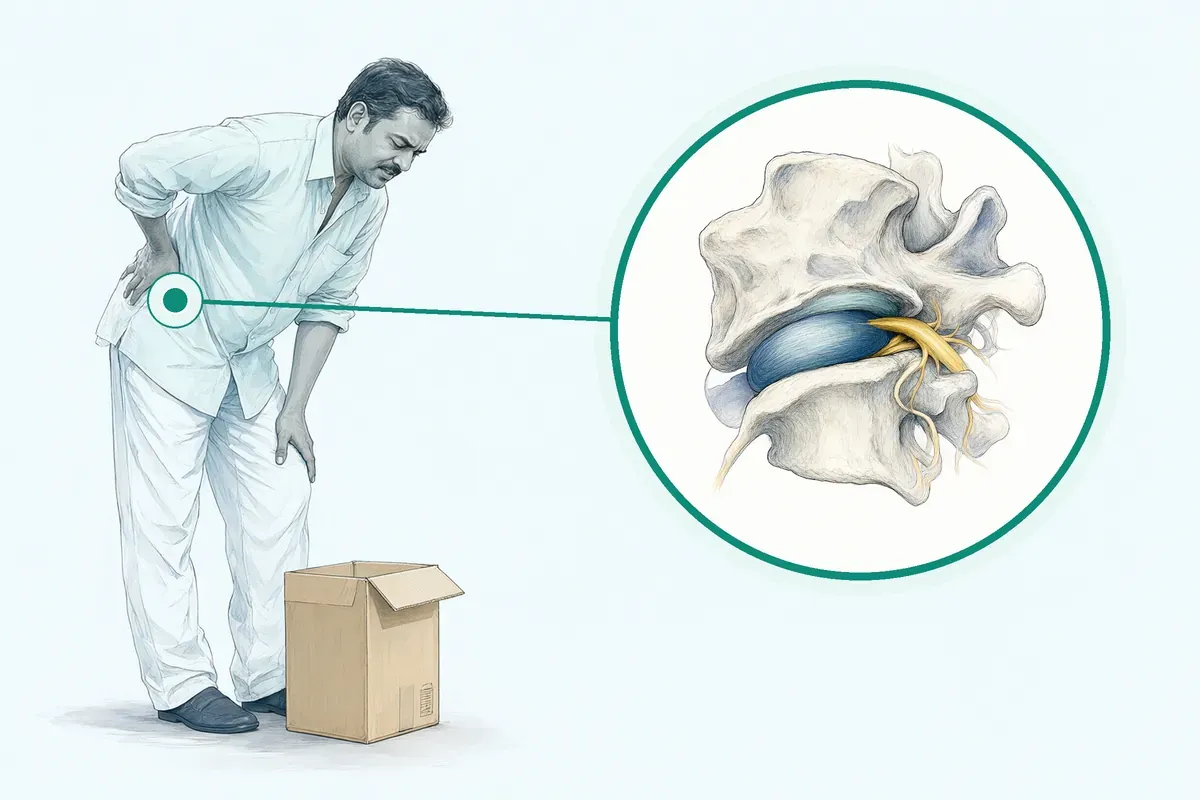
Nerve compression in your spine can cause shooting leg pain, numbness, and difficulty standing. Daily office work or household chores can become very hard.
-
Shooting leg pain
Pressure on spinal nerves often sends sharp discomfort down your hip, thigh, or calf.
-
Numbness and tingling
A compressed nerve can cause tingling sensations or reduced feeling in parts of your foot.
-
Trouble sitting or walking
Sitting for office work or walking short distances can become uncomfortable and tiring.
Lumbar disc herniation is highly associated with inflammation in the context of low back pain.
Why Jaipur Hospital
You may worry about taking weeks off work, surgical risks, or hospital expenses.
Your care plan
Your first steps with us
- 1 Visit our OPD with your previous spine scans and reports
- 2 Review surgical and non-surgical choices with your surgeon
- 3 Undergo surgery in our modular operation theatre if needed
- 4 Follow your recovery plan to return gradually to daily tasks
Surgical methods for nerve decompression
The procedure typically takes 1 to 2 hours under general or spinal anaesthesia. Hospital stay is usually 1 to 2 nights. Your surgeon will discuss suitable options.
-
Microscopic Microdiscectomy
Uses a 2 to 3 cm incision with high magnification to remove disc material.
-
Endoscopic Discectomy
Uses a 7 to 8 mm portal under local or general anaesthesia.
-
Tubular Microdiscectomy
Uses an 18 mm dilator tube with a muscle splitting approach.
-
Laser Discectomy
Involves percutaneous decompression for contained herniated discs.
Why patients trust us
- 1991 Serving Jaipur for 35 years
- NABH Accredited hospital
- 1 Neurosurgery and Neurology consultants
- 24×7 Emergency, ICU and ambulance
- 25 Cashless schemes and insurers
Clinical findings on disc surgery
-
84.3%
Good or excellent results occurred in 84.3% of microdiscectomy patients studied.
-
79.5%
Good or excellent results were documented in 79.5% of endoscopic microdiscectomy patients.
-
7 studies
A meta-analysis of 7 studies with 1389 patients found no significant difference in complication rates between endoscopic and open microdiscectomy.
If it is left untreated
Leaving severe nerve compression untreated can lead to persistent nerve impairment, continuing pain, or bowel and bladder dysfunction that may require earlier surgical intervention.
Planning your recovery
With proper medical care, most patients plan their gradual return to normal daily routines and light tasks.
-
Desk work timeline
Patients typically plan a return to desk work in 2 to 4 weeks.
-
Managing heavy lifting
Returning to heavy lifting typically takes 3 months following surgical advice.
-
Attendant support
Your family attendant stays nearby during your 1 to 2 nights in hospital.
Frequently asked questions
Questions patients ask about slip disc surgery
What does microdiscectomy for slipped disc involve?
In short
Microdiscectomy for a slipped disc involves removing the part of the disc pressing on a nerve. At Jaipur Hospital, the surgeon uses a microscope or an endoscope through a small incision. The operation usually takes one to two hours under general or spinal anaesthesia.
In detail
The surgeon makes a small cut in the back and uses a microscope for a clear view or an endoscope with a tiny camera. The goal is to take out only the herniated fragment that is compressing the nerve root.
Studies show that microdiscectomy, endoscopic discectomy and classical open surgery all have similar good or excellent results in about 79 percent of patients over several years of follow-up.
- Studies show that microdiscectomy, endoscopic discectomy and classical open surgery all have similar good or excellent results in about 79 percent of patients over several years of follow-up.
A common belief
Many people think a large cut and long bed rest are needed.
What actually happens
Modern microscopic and endoscopic methods use much smaller incisions and allow faster return to daily activities.
Your next step at Jaipur Hospital
You will have an MRI and a clinical check before surgery. Plan for a hospital stay of one to two nights. Desk work can often resume in two to four weeks, while heavy lifting is avoided for about three months.
Which tests and scans do I need before microdiscectomy for slipped disc?
In short
The main test is an MRI of the lumbar spine to confirm the level, size and type of disc herniation. At Jaipur Hospital, the surgeon also reviews plain X-rays for alignment and instability. Blood tests including haemoglobin, coagulation profile, blood sugar and infection markers are done for anaesthesia fitness. An ECG and chest X-ray may be needed depending on age and medical history.
In detail
MRI is the central imaging tool for diagnosing lumbar disc herniation and planning surgery. It shows the herniation morphology such as protrusion, extrusion or sequestration, nerve root compression, and rim enhancement which correlates with inflammatory activity and resorption potential.
X-rays in standing position assess dynamic instability or spondylolisthesis. Pre-anaesthesia blood work ensures you are fit for general or spinal anaesthesia. If you have prior imaging, bring those films for comparison. The surgeon may order a fresh MRI if the last one is outdated or symptoms have changed significantly.
A common belief
Patients sometimes think a CT scan is enough, but MRI shows the soft disc and nerves much better.
What actually happens
Also, an old MRI may not reflect current symptoms if things have changed. Your surgeon will decide if a new scan is needed.
Your next step at Jaipur Hospital
All tests can be done at the in-house diagnostic laboratory and radiology department at Jaipur Hospital. Reports are usually available within a few hours. The pre-anaesthesia check is scheduled before admission. Plan to bring any previous scans and a list of current medicines.
How painful is slip disc surgery and the early recovery?
In short
During slip disc surgery at Jaipur Hospital you feel no pain because the operation is done under general or spinal anaesthesia. After surgery, most patients describe the wound pain as moderate and well controlled with regular tablets or injections for the first 24 to 48 hours. Leg pain from nerve compression often improves quickly.
In detail
The surgical techniques used, such as microscopic microdiscectomy with a 2 to 3 cm incision or endoscopic discectomy through a 7 to 8 mm portal, cause less muscle trauma than older open methods. This typically means less post-operative back pain.
You receive a multimodal pain plan: paracetamol, an anti-inflammatory if safe for you, and a short course of stronger analgesics if needed. Early mobilisation, usually within a few hours, also reduces stiffness and discomfort.
Studies show good or excellent pain relief in roughly 79 to 84 percent of patients after microdiscectomy or endoscopic procedures.
Your next step at Jaipur Hospital
Expect to take oral pain medicine regularly for the first two to three days, then as needed. Most people manage at home with tablets after discharge. If pain suddenly worsens, spreads, or comes with fever or wound discharge, contact the hospital immediately.
How long does recovery usually take after slip disc surgery?
In short
Recovery after slip disc surgery at Jaipur Hospital follows a typical timeline: desk work in two to four weeks, light daily activity at home within a few days, and heavy lifting or strenuous sport avoided for three months. Hospital stay is usually one to two nights.
In detail
The operation itself takes one to two hours. Most patients walk within hours of surgery and go home the next day. Pain at the incision settles over the first week.
Nerve symptoms like leg pain or numbness may improve immediately or take weeks as the nerve heals. Physiotherapy starts with gentle core exercises and posture advice, progressing as comfort allows.
Studies show good or excellent long-term outcomes in about 79 to 84 percent of patients after microdiscectomy or endoscopic discectomy, with little change in results between four and eight years.
A common belief
People expect months of bed rest, but early mobilisation is now standard.
What actually happens
The small incisions used in microscopic or endoscopic surgery mean faster wound healing and quicker return to daily activities than older open operations.
Your next step at Jaipur Hospital
Your surgeon gives a personalised activity chart at discharge. Follow the lifting restriction strictly for three months to protect the disc. Return-to-work timing depends on your job type.
Do the scan findings explain my symptoms for slip disc surgery?
In short
MRI or CT scans at Jaipur Hospital show the disc herniation, its size, and whether it presses on a nerve root or the spinal cord. Your surgeon matches these images with your pain pattern, numbness, and weakness to confirm that the scan findings explain your symptoms.
In detail
Evidence shows that imaging alone does not decide treatment; many people have disc bulges without pain. The clinical guideline stresses correlating radiculopathy signs — pain radiating down the leg in a specific nerve distribution — with the level of compression seen on MRI.
Sequestrated fragments often enhance with gadolinium rim enhancement, indicating active inflammation that correlates with severe radiculopathy. Your surgeon uses this correlation to recommend surgery only when the compressed nerve matches your symptom map.
A common belief
Patients often assume any disc bulge on MRI needs surgery.
What actually happens
Evidence shows many asymptomatic people have bulges. Surgery is considered only when the imaging, examination, and symptoms all point to the same nerve.
Your next step at Jaipur Hospital
Bring all previous scans and reports to your consultation. The neurosurgery or orthopaedics team will review them, examine you, and explain the match between imaging and symptoms. If the correlation is unclear, further tests such as nerve conduction studies may be advised.
What changes in strength, sensation, speech, vision, or bladder control need urgent assessment after slip disc surgery?
In short
After slip disc surgery at Jaipur Hospital, report new or worsening leg weakness, foot drop, numbness in the saddle area (inner thighs, buttocks, perineum), difficulty passing urine or opening bowels, or loss of sexual sensation immediately. Speech and vision changes are not typical of lumbar spine surgery but should also be reported.
In detail
Evidence identifies cauda equina syndrome as a surgical emergency requiring decompression within hours. Post-operative haematoma or recurrent disc fragment can compress nerves. The guideline lists neurological deficit and bowel or bladder dysfunction as factors for earlier intervention.
Leg weakness progressing over hours, new foot drop, or saddle anaesthesia suggest nerve root or cauda equina compression. Speech or vision changes may indicate an unrelated neurological event and need urgent evaluation.
A common belief
Some patients think mild numbness or incisional pain is an emergency.
What actually happens
The true red flags are progressive weakness and changes in bladder, bowel, or saddle sensation. These signal nerve compression that can become lasting without rapid treatment.
Your next step at Jaipur Hospital
If any of these symptoms appear, go to the 24×7 emergency department at Jaipur Hospital without delay. The neurosurgery team is on call for urgent imaging and re-exploration if needed. Your attendant should bring your discharge summary and medication list. Do not wait for the next OPD.
Why might my doctor recommend microdiscectomy for slipped disc?
In short
A doctor may recommend microdiscectomy when a slipped disc causes nerve compression that does not improve with conservative care. At Jaipur Hospital, surgery is considered for patients with intractable pain, progressive neurological deficit, or bowel or bladder dysfunction. The aim is to relieve pressure on the nerve and reduce leg pain and weakness.
In detail
Guidelines indicate surgical candidates are those with imaging-confirmed lumbar disc herniation and radiculopathy who have failed nonoperative management. Conservative treatment includes physical therapy, medications, corticosteroid injections and lifestyle modifications.
Evidence shows carefully selected patients who undergo surgery achieve greater improvement in bodily pain, physical function and disability scores than those managed nonoperatively, with advantages persisting in long-term follow-up.
Surgery may also be offered earlier if there is significant nerve impairment such as motor weakness or cauda equina symptoms.
A common belief
Some patients expect surgery to fix back pain completely, but the main benefit is relief of leg pain from nerve compression.
What actually happens
Studies show surgery gives better leg pain and function scores than nonoperative care, but back pain improvement is less predictable.
Your next step at Jaipur Hospital
Your surgeon will review your symptoms, examination findings and MRI to decide if you meet surgical criteria. If conservative measures have been tried for six to twelve weeks without adequate relief, or if you have red-flag signs, surgery may be advised. The typical hospital stay is one to two nights.
How should I prepare in the days before microdiscectomy for slipped disc?
In short
In the days before microdiscectomy at Jaipur Hospital, follow the anaesthesia team's instructions on fasting, usually nothing by mouth for six hours before surgery. Stop blood thinners only if told by your surgeon or anaesthetist. Arrange an attendant to stay with you during the one to two night hospital stay. Prepare loose clothing and essential toiletries. Complete any pending blood tests or ECG.
In detail
Preparation focuses on minimising surgical and anaesthesia risks. The hospital provides 24-hour laboratory, X-ray, and ECG facilities for last-minute checks. You will be admitted on the day of surgery or the evening before. The surgical site will be marked and confirmed.
Physiotherapy may teach you log-rolling and early mobilisation techniques beforehand. Smoking cessation is strongly advised as it impairs wound healing and disc health.
A common belief
People often stop all medicines on their own.
What actually happens
Some medicines must continue, especially for blood pressure or diabetes. Always check with the anaesthesia team first.
Your next step at Jaipur Hospital
Confirm your admission time with the admissions desk. Bring your insurance card, identification, and any referral letters. The typical price range is one lakh to two lakh fifty thousand rupees; check your policy coverage. Plan for two to four weeks off desk work and three months before heavy lifting.
What are the common side effects and the less common serious complications of slip disc surgery?
In short
Common side effects after slip disc surgery at Jaipur Hospital include wound soreness, mild bruising, temporary numbness near the incision, and occasional muscle spasms. Less common serious complications are infection, nerve injury, dural tear with fluid leak, haematoma needing drainage, and recurrent disc herniation.
In detail
Large studies comparing microscopic and endoscopic discectomy found no statistically significant difference in complication rates between the two approaches. Dural tears occur in a small minority of cases and are usually repaired during the same operation.
Deep wound infection is rare but may need antibiotics or further surgery. Nerve root injury is uncommon; temporary numbness or weakness can happen from nerve manipulation and often recovers.
Recurrent herniation at the same level is reported in a small percentage of patients over the long term. Your surgeon discusses the risks that apply to your specific anatomy and health.
A common belief
Many patients worry most about paralysis, but major nerve injury is rare.
What actually happens
The more frequent issues are minor wound problems or a dural tear that the surgeon fixes straight away. Studies show similar complication rates for microscopic and endoscopic methods.
Your next step at Jaipur Hospital
You will sign a consent form listing these risks after the surgeon explains them. After discharge, watch for increasing redness, swelling, wound discharge, fever, new leg weakness, or difficulty passing urine. These need urgent review.
Which symptoms are expected after slip disc surgery, and which need urgent medical attention?
In short
Expected symptoms after slip disc surgery at Jaipur Hospital include mild to moderate wound pain, bruising, temporary numbness near the incision, and occasional muscle spasms. Leg pain from the original nerve compression often improves quickly but may fluctuate. Urgent signs are new or worsening leg weakness, foot drop, loss of bladder or bowel control, fever above 38°C, wound redness spreading, or calf swelling and pain.
In detail
Incisional discomfort and back stiffness are normal for the first weeks. Numbness around the scar can last months. Recurrent leg pain that matches the pre-operative pattern may signal re-herniation. Cauda equina symptoms (saddle numbness, urinary retention, bowel incontinence) are a surgical emergency. Deep vein thrombosis presents as a swollen, tender calf and needs immediate evaluation.
A common belief
Patients sometimes ignore new leg weakness thinking it is just post-op soreness.
What actually happens
New weakness is never normal. Also, saddle numbness or inability to pass urine needs immediate care, not a wait-and-see approach.
Your next step at Jaipur Hospital
Keep the wound dry and check it daily. Take prescribed pain relief regularly for the first few days. If any urgent symptom appears, go to the emergency department at Jaipur Hospital or the nearest hospital without delay. Do not wait for the next clinic appointment.
FAQ library
Questions and answers about slip disc surgery
When you contact us
Consult our neurosurgery team in Jaipur
Contact Jaipur Hospital to schedule an OPD evaluation and review your treatment options.
- A consultation with a neurosurgeon in the OPD
- Your scans and reports reviewed, with tests done in-house if you need them (laboratory, X-ray and imaging)
- Your options explained in plain words, including whether you need surgery at all
- A cost estimate before you decide
- Help with cashless treatment under RGHS, MAA Yojana, CGHS and empanelled insurers and TPAs
- Follow-up visits after your treatment
Overview
Slip Disc Surgery: what to know
What is a slip disc and how does it happen
- Normal disc
- Tough outer ring, soft inner centre, no blood supply
- Tear in outer ring
- Inner material pushes out through a tear
- Immune reaction
- Body sees disc tissue as foreign and inflames nerves
Your spine is made of bones cushioned by spinal discs. The intervertebral disc is the largest organ in the human body without its own direct blood supply. It has a tough outer ring called the annulus fibrosus and a soft inner centre called the nucleus pulposus. Under normal conditions, this inner material stays sealed inside and is hidden from your immune system.
A slip disc occurs when the soft inner disc material pushes out through a tear in the outer ring. When this inner cushion leaks into the spinal canal, it enters an area rich in blood vessels. Your body recognises the escaped disc tissue as foreign and sends immune cells to the area. This sudden immune contact triggers inflammation around nearby spinal nerves.
Spinal disc herniation can take different forms depending on how far the fragment moves. A disc bulge or protrusion happens when the outer ring stretches but does not break open completely. In an extrusion, the inner gel breaks through the outer wall. In a sequestration, a loose piece breaks away entirely from the main disc. These displaced fragments press on spinal nerves, which causes pain and nerve symptoms.
Slip disc symptoms and warning signs that need urgent care
- Loss of bowel or bladder control
- Numbness around groin, buttocks, inner thighs
- Progressive leg weakness
A slip disc in the lower back is strongly linked to nerve inflammation, leading to low back pain. When the protruding fragment presses against a nerve root, pain travels down into your buttock, thigh, leg, or foot. In research studies, doctors track this condition by checking bodily pain scores, physical function scales, and walking difficulty using disability indices.
Many patients also experience numbness, tingling sensations, or muscle weakness in the leg or foot. The level of your spine most frequently affected by a disc herniation is the L4–L5 joint. Irritation at this level can make it hard to lift your foot or walk normally.
Certain warning signs indicate that you must seek medical care on the same day. You should visit an emergency department immediately if you notice:
- Loss of control over your bowel or bladder
- Sudden or worsening numbness around your groin, buttocks, or inner thighs
- Progressive weakness in your legs, such as foot drop or stumbling when you stand
- Severe, unrelenting nerve pain that does not settle with rest
Jaipur Hospital maintains a 24×7 emergency department with round-the-clock laboratory and imaging services for patients experiencing severe nerve compression.
Causes of slip disc and who is at higher risk
- Mechanical strain
- Heavy loading and sudden twisting overload spinal joints
- Age-related changes
- Discs lose collagen and nutrient supply over time
- Excess weight
- Continuous mechanical stress on spinal discs
A slip disc happens when mechanical strain or age-related changes compromise the outer ring of the spinal disc. In a healthy disc, cells express special surface signals that keep inflammatory cells away. When tears develop in the protective ring, this immune barrier breaks down.
Disc protrusions without complete rupture are more frequently observed in younger individuals whose discs contain abundant dense collagen fibres. In contrast, free fragment sequestrations tend to occur when a piece separates completely from the parent disc and loses its regular nutrient supply.
In clinical studies evaluating disc changes over time, patients in the 41 to 50 year age group frequently showed high rates of disc fragment alterations.
Excess body weight and physical deconditioning also put continuous mechanical stress on spinal discs. Physical strain, repeated heavy loading, and sudden twisting movements can overload the spinal joints. Once disc tissue ruptures through the posterior longitudinal ligament, local inflammatory reactions become the main driver of tissue changes.
How slip disc is diagnosed using examination and imaging
- Physical exam
- Reflexes, muscle power, and nerve sensation tested
- MRI scan
- Shows protrusion, extrusion, or free fragment
- Contrast MRI
- Rim enhancement shows new vessels and immune cells
When you visit the OPD at Jaipur Hospital, your doctor examines your back and tests your reflexes, muscle power, and nerve sensation. Clinical guidelines developed by specialist spine groups stress the value of careful physical examinations to confirm nerve root compression. Your doctor evaluates where your leg pain travels and checks for any sign of muscle weakness.
Magnetic resonance imaging, or MRI, is the standard diagnostic scan used to confirm a slip disc and check nerve compression. An MRI shows whether disc material is protruding, extruded, or separated as a free fragment. In addition, MRI scans allow doctors to track how the disc tissue behaves over time.
Specialised MRI studies often use gadolinium contrast dye to examine blood supply around the damaged disc. When contrast dye is injected, it lights up the border of the herniation on the scan, creating a sign called rim enhancement. In diagnostic studies, this rim enhancement confirms that new micro-vessels and immune cells have reached the edges of the displaced disc fragment.
The thickness of this enhanced rim on your MRI helps your medical team evaluate how your body is responding to the disc injury.
Non-surgical treatment options and when slip disc surgery is advised
- 25 of 36 Patients with shrinkage in study
- 82 percent average Free sequestered pieces shrinkage
- within 9 months Sequestered discs resolved
Most patients with a slip disc start with non-surgical medical care.
Non-surgical options include:
- Physical therapy
- Medications to control swelling
- Corticosteroid injections
- Daily lifestyle modifications such as weight management and guided exercise
Patients can collect prescribed medications from an in-house pharmacy or local chemist. Symptoms can improve without an operation as the displaced piece naturally shrinks.
Natural shrinkage occurs because your body's immune cells, particularly macrophages, move in to clear away the displaced disc fragments. In scientific research, three mechanisms explain this shrinkage: gradual water loss within the fragment, retraction under spinal tension, and breakdown by inflammatory enzymes.
In a published clinical study of 36 patients, 25 had their disc herniation shrink in size over time, with free sequestered pieces shrinking by an average of 82 percent. In another trial, sequestered discs resolved within 9 months of conservative care, whereas simple disc protrusions showed little regression after 12 months.
Surgery is considered when non-surgical care does not relieve your symptoms, or when severe nerve pain persists. Your surgeon will also advise an operation if you develop significant muscle weakness, or loss of normal bowel and bladder control.
In clinical research comparing patients who chose surgery against those who continued non-surgical care, carefully selected surgical patients reported greater improvements in bodily pain, physical function, and daily activities.
Preparing for slip disc surgery
Do
- Complete pre-surgery tests
- Discuss all current medicines
- Follow fasting instructions
When non-surgical treatments fail to relieve nerve pain, or if you have severe pain or significant nerve impairment, your surgeon may discuss slip disc surgery with you. Patients with intractable pain, neurological deficit, or bowel or bladder dysfunction remain candidates for earlier surgical intervention. Before any procedure is scheduled, our surgical team evaluates your overall health to plan your care safely.
Preparing for your operation starts with pre-surgery investigations. Your surgeon will typically advise routine blood tests, an ECG, and chest imaging at our in-house diagnostic laboratory to verify your fitness for anaesthesia. You must discuss all your current medicines with your doctor at the OPD, including any herbal supplements or blood-thinning tablets you take.
Your doctor will advise you which tablets to take with a sip of water and which ones to skip before admission.
You will be instructed on fasting before the operation. You typically need to stop eating solid food and drinking milk or liquids for several hours before admission to ensure your stomach is completely empty for anaesthesia. Following these fasting hours carefully helps prevent complications during your procedure.
On the day of admission, bring your identification documents, previous MRI scans, doctor prescription slips, and your insurance card or government health scheme card. One family attendant can accompany you to assist during your hospital stay and stay by your side in the recovery ward.
How slip disc surgery is performed
Slip disc surgery covers microscopic or endoscopic disc removal to relieve nerve compression. On the day of surgery, you are admitted to the hospital, and our surgical team reviews your final consent and checks your vitals. In the modular operation theatre, anaesthesia is administered. The procedure typically uses general anaesthesia or spinal anaesthesia.
Your surgeon will advise which surgical approach suits your spine anatomy and clinical condition:
- Microscopic microdiscectomy: A less invasive technique performed through an incision of 2 to 3 cm using high magnification to relieve the compressed nerve.
- Endoscopic discectomy: A less invasive technique performed through a small 7 to 8 mm portal under local or general anaesthesia.
- Tubular microdiscectomy: An approach that uses an 18 mm dilator tube to separate the back muscles gently.
- Laser discectomy: A percutaneous decompression technique intended for contained disc herniations.
During the procedure, the operating team carefully reaches the affected disc fragment and removes the displaced piece pressing against your spinal nerve. The operation time is typically 1 to 2 hours. Once the nerve is free from pressure, the small skin opening is closed with sutures and covered with a clean dressing before you are transferred to the recovery room.
Risks and complications of slip disc surgery
Any spinal operation carries potential risks that you should understand before deciding on treatment.
Surgical complications can include:
- Wound infection
- Bleeding
- Leakage of spinal fluid
- Irritation to the nerve root
Novel therapies aim to avoid side effects associated with surgery, such as nerve tissue damage.
In clinical research, complication rates have been compared across different approaches. In a meta-analysis of 7 studies with 1389 patients comparing percutaneous endoscopic lumbar discectomy and open lumbar microdiscectomy, no statistically significant difference was found between the endoscopic group and the microdiscectomy group in terms of complication rate. The existing evidence indicates that no superiority exists between the two surgical approaches in terms of complication rate.
Careful patient selection helps manage these risks. Our surgical team monitors your neurological function, wound healing, and mobility closely during your stay to address any unexpected reactions promptly.
Recovery and aftercare after slip disc surgery
- Hospital stay 1 to 2 nights typical
- Light desk work 2 to 4 weeks
- Avoid heavy lifting 3 months
Your hospital stay is typically 1 to 2 nights, allowing our team to monitor your healing and assist your early movement. Microdiscectomy can also be performed on an outpatient basis. In a meta-analysis of 7 studies, patients treated with percutaneous endoscopic discectomy were associated with a shorter hospital stay compared to the open microdiscectomy group. A physiotherapist will guide you on how to turn in bed, stand up, and walk safely.
Once you return home, you must keep the surgical wound dry and clean until your follow-up visit. You can take prescribed pain relievers from the chemist to manage post-surgery soreness. Most patients typically return to light desk work in 2 to 4 weeks. However, activities involving heavy lifting must be avoided for 3 months to protect your spine.
Call Jaipur Hospital or visit our 24x7 emergency department immediately if you experience unexpected symptoms. These include a high fever, redness or discharge from the surgical cut, worsening leg weakness, severe pain that does not ease with medication, or any loss of bowel or bladder control.
Slip disc surgery results in clinical studies
In clinical studies, carefully selected patients who underwent surgery for a lumbar disc herniation achieved greater improvement than nonoperatively treated patients. In intent-to-treat analyses for randomised trial cohorts, advantages were seen for surgery across primary and secondary outcomes other than work status.
The overall comparison of secondary outcomes, such as sciatica bothersomeness, satisfaction with symptoms, and self-rated improvement, was significantly greater with surgery over long-term follow-up. In an as-treated study analysis, significant treatment effects for surgery versus nonoperative care were recorded for bodily pain, physical function, and the Oswestry Disability Index. In both operative and nonoperative groups, there was little to no degradation of outcomes from 4 to 8 years.
Surgical studies have evaluated patient outcomes across different techniques. In a study comparing procedures, good or excellent results occurred in 84.3% of microdiscectomy patients, 79.5% of endoscopic microdiscectomy patients, and 78.3% of classical operation patients.
In that study series, patients who had microdiscectomy, endoscopic microdiscectomy, or the classical operation all had approximately 79% good or excellent results, with 30,809 patients reporting good or excellent results overall.
Studies also show that the problem does not come back more often with one technique over another. In a meta-analysis of 7 studies involving 1389 patients, no statistically significant difference was found between endoscopic discectomy and open microdiscectomy in terms of postoperative Oswestry Disability Index or reoperation rate.
The existing evidence indicates that no superiority exists between the two surgical approaches in terms of functional outcome or reoperation rate.
Cost and insurance for slip disc surgery in Jaipur
The typical price range for slip disc surgery in India is ₹1,00,000 to ₹2,50,000. You can ask us for an estimate based on your specific clinical needs. The total cost varies depending on your chosen room category, the specific surgical technique advised by your surgeon, the length of your hospital stay, investigations, and post-surgery medications.
Insurance policies may not cover the surgery if it is considered elective or non-essential. However, when severe nerve compression or functional deficit requires hospital admission, health insurance often covers the procedure.
Jaipur Hospital works with:
- RGHS
- MAA Yojana
- CGHS
- A panel of private insurers and TPAs
If you are covered under one of these government schemes or a private health policy, our admissions team can guide you on the necessary documents and approvals for your treatment.