

ENT (Ear, Nose and Throat) · Jaipur Hospital
Tonsillectomy in Jaipur
Frequent sore throats or blocked sleep? We assess, explain options, and give you a clear plan.
- Serving Jaipur since 1991 (35 years)
- NABH accredited
- 24×7 emergency & ICU
- Cashless: RGHS, MAA Yojana, CGHS + 22 insurers
- Operation time
- 30 to 60 minutes
- Anaesthesia
- General anaesthesia
- Recovery
- Throat pain 10 to 14 days, normal diet in 2 weeks
- Price
- ₹40,000 to ₹90,000typical range in India; ask us for an estimate
Throat pain and poor sleep
Recurring infections and blocked breathing disrupt daily life
Repeated sore throats mean missed school or work. Swollen tonsils can block the airway at night, causing snoring and tired days. Antibiotics may stop working.
-
Frequent sore throats
Multiple infections each year despite medication, leading to missed days and repeated antibiotic courses.
-
Sleep breathing problems
Enlarged tonsils block the airway, causing snoring, gasping, and poor sleep quality.
-
Difficulty swallowing
Large tonsils make it painful or hard to eat solid foods.
-
Voice changes
Chronic inflammation alters voice tone, often sounding nasal or muffled.
Tonsils are part of the immune system but can become chronically inflamed and obstruct the airway.
Why Jaipur Hospital
You are tired of throat pain, sleepless nights, and the worry of another infection before a big exam or work week.
Your care plan
Your first steps with us
- 1 Call or visit OPD for ENT consultation
- 2 Get examined and review scans in-house
- 3 Discuss surgery options and receive cost estimate
- 4 Schedule surgery and follow-up for recovery
How the operation is done
Under general anaesthesia, the surgeon removes the palatine tonsils through the mouth. The procedure usually takes 30 to 60 minutes. You may go home the same day or stay one night.
-
Coblation Tonsillectomy
Low-temperature plasma removes tissue with less heat damage, often resulting in less pain and faster recovery.
-
Microdebrider Intracapsular
Partial removal preserves the tonsil capsule, typically causing less post-operative pain.
-
Cold Steel Dissection
Traditional method using surgical instruments with ties or bipolar diathermy for bleeding control.
-
Harmonic Scalpel
Ultrasonic energy cuts and coagulates simultaneously to minimise bleeding during surgery.
Why patients trust us
- 1991 Serving Jaipur for 35 years
- NABH Accredited hospital
- 2 ENT (Ear, Nose and Throat) consultants
- 24×7 Emergency, ICU and ambulance
- 25 Cashless schemes and insurers
What research shows about this treatment
-
1 to 2 weeks
Most people reach full recovery in about two weeks, with throat pain improving over the first week.
-
about 3 in 100
About three percent of children having tonsillectomy are at risk for bleeding during recovery.
-
5 to 15 percent
Studies show 5-15% of patients contact health services for post-operative pain, higher in adults than children.
If it is left untreated
Untreated recurrent infections can lead to more frequent illness and antibiotic resistance. Persistent airway obstruction may worsen sleep apnea, affecting growth in children and increasing cardiovascular risk in adults.
Life after treatment
Most people experience fewer throat infections and better sleep once healed.
-
Fewer infections
Most people have significantly fewer sore throats after recovery.
-
Better sleep
Airway obstruction usually improves, reducing snoring and daytime tiredness.
-
Easier swallowing
Food passes more comfortably once the enlarged tissue is removed.
-
Less medication
Reduced need for repeated antibiotic courses and pain relievers.


Frequently asked questions
Questions patients ask about tonsillectomy
What does tonsillectomy involve?
In short
Tonsillectomy is the surgical removal of the palatine tonsils. At Jaipur Hospital, the operation takes 30 to 60 minutes under general anaesthesia. The surgeon removes the tonsil tissue through the mouth without any external cuts. You may go home the same day or stay one night depending on your recovery.
In detail
The surgeon uses one of several techniques such as coblation, microdebrider intracapsular, cold steel dissection or harmonic scalpel. Each method removes the tonsils while controlling bleeding. Evidence shows that steroids and NSAIDs given during surgery reduce pain and nausea afterwards.
Local anaesthetic injected into the tonsil bed before surgery can also lower pain scores for the first few days. The choice of technique depends on the indication and the surgeon's judgement.
Your next step at Jaipur Hospital
You will meet your surgeon in the OPD for a detailed assessment and to discuss the technique. Pre-operative blood tests and a fitness check are routine. Plan for 10 to 14 days of throat pain and a soft diet.
Which tests and scans do I need before tonsillectomy?
In short
Before tonsillectomy at Jaipur Hospital, you may need blood tests to check haemoglobin and clotting, especially if you have a bleeding tendency. A sleep study (polysomnography) is often required if obstructive sleep apnoea is suspected. Routine imaging is not standard unless the surgeon identifies a specific concern during examination.
In detail
The pre-operative assessment focuses on anaesthesia safety and surgical planning. Blood tests typically include a complete blood count, coagulation profile, and sometimes blood grouping. For children with suspected sleep apnoea, a sleep study measures the apnoea-hypopnoea index to confirm the diagnosis and severity.
Adults with significant snoring or witnessed apnoeas may also need a sleep study. If there is any doubt about a mass or unusual anatomy, the surgeon may order a CT scan or MRI, but this is not routine.
The anaesthesia team reviews all results to plan the general anaesthetic. Your surgeon will tell you exactly which tests apply to your case during the pre-operative visit.
A common belief
Patients often expect a long list of scans.
What actually happens
In reality, routine imaging is not standard for straightforward tonsillectomy. The key tests are for anaesthesia safety and confirming sleep apnoea when that is the reason for surgery.
Your next step at Jaipur Hospital
Arrange any advised tests a few days before your scheduled surgery date so results are available for the anaesthesia review. Fasting instructions will be given once the surgery time is fixed.
How painful is the tonsillectomy procedure and the early recovery?
In short
At Jaipur Hospital, you will be asleep under general anaesthesia during tonsillectomy, so you feel no pain during the operation. After surgery, throat pain is expected and typically lasts 10 to 14 days. Pain is usually most intense in the first week and improves gradually as the throat heals.
In detail
Studies show that tonsillectomy is one of the most painful surgical procedures. Pain scores are often highest on postoperative days three and four. Adults generally report more pain and a longer recovery than children.
The surgical team uses a multimodal pain plan that may include intravenous dexamethasone during surgery, regular paracetamol, and a COX inhibitor such as ibuprofen. Evidence confirms ibuprofen is safe after tonsillectomy and does not increase bleeding risk.
Rescue medication such as clonidine or an opioid may be prescribed for breakthrough pain. Good hydration and soft, cool foods also help reduce discomfort.
A common belief
Some people expect only mild discomfort.
What actually happens
In reality, the pain can be strong, especially around days three and four. Scheduled pain medicine and steady hydration make it manageable.
Your next step at Jaipur Hospital
Take pain medicines on schedule, not only when pain is severe. Drink fluids frequently to avoid dehydration, which worsens pain. Eat soft, cool foods for the first week and avoid crunchy or spicy items. Plan for at least 10 days off work or school.
How long does recovery usually take after tonsillectomy?
In short
At Jaipur Hospital, full recovery after tonsillectomy usually takes about two weeks. Throat pain typically lasts 10 to 14 days, and most people return to a normal diet by the end of the second week. Children often recover a little faster than adults.
In detail
Recovery follows a general pattern. The first one to two days are spent resting at home with regular pain medicine and fluids. Days three to five are often the most painful as the throat lining heals.
Between days five and ten, the white slough separates and pain may flare again; this is also the period when bleeding risk is highest. By days ten to fourteen, pain decreases significantly and solid foods are tolerated.
Studies show pain duration averages 11 to 12 days depending on the indication for surgery. Adults report more pain contacts with healthcare services than children. The surgical technique used can also influence recovery speed; intracapsular methods tend to cause less postoperative pain than total removal.
A common belief
Some expect to recover in a few days.
What actually happens
The reality is that days three to five are often the worst, and a second pain peak can happen around day seven when the healing slough comes off.
Your next step at Jaipur Hospital
Plan for at least 10 days off work or school. Take pain medicines on schedule, drink fluids often, and eat soft, cool foods for the first week. Avoid crunchy, spicy, or hot foods. Stay home to reduce exposure to infections.
What symptoms suggest an infection, voice strain, reflux, or another cause after tonsillectomy?
In short
After tonsillectomy at Jaipur Hospital, a sore throat and mild ear pain are normal for up to two weeks. Signs that may point to infection include a fever above 38.5°C, worsening throat pain after day five, foul breath that does not improve with hydration, or pus-like coating on the healing wound. Voice strain usually sounds like hoarseness that gets worse with talking and better with rest. Reflux may cause a burning sensation, sour taste, or cough worse at night.
In detail
The surgical site develops a white or yellow fibrin slough which is normal healing tissue, not pus. True infection is uncommon but needs antibiotics. Ear pain happens because the glossopharyngeal nerve shares pathways with the throat; it is referred pain, not an ear infection.
Voice changes can come from the endotracheal tube used during general anaesthesia or from guarding the throat while speaking. Reflux is common after surgery because pain medication and lying flat relax the lower oesophageal sphincter.
Studies show that pain intensity peaks around days three to four, so a sudden increase after day five is a more reliable infection marker than the baseline discomfort.
A common belief
Patients often mistake the normal white slough for pus and start antibiotics unnecessarily.
What actually happens
Ear pain is frequently treated with ear drops, but it is referred throat pain. Reflux is overlooked because the burning is blamed on the surgery itself. Recognising the pattern helps you avoid extra medicines and get the right help.
Your next step at Jaipur Hospital
Monitor your temperature daily for the first week. Sip water frequently to distinguish dehydration pain from infection. Sleep with your head elevated on two pillows to reduce reflux.
If you notice bright red bleeding, difficulty breathing, inability to swallow saliva, or a fever that does not settle with paracetamol, go to the emergency department. For any persistent voice change beyond three weeks, book a consultation at Jaipur Hospital for a laryngeal examination.
Could the problem affect hearing, balance, breathing, speech, or swallowing?
In short
Enlarged or infected tonsils can affect breathing, speech, and swallowing. At Jaipur Hospital, large tonsils may block the airway during sleep, causing snoring or obstructive sleep apnoea. They can also make swallowing solid food difficult and give the voice a "hot potato" quality. Hearing and balance are not directly affected by tonsils, but chronic infection can spread to the middle ear via the Eustachian tube.
In detail
Evidence shows that tonsillar hypertrophy is a common cause of sleep-disordered breathing in children and adults. The tonsils sit near the Eustachian tube opening; recurrent infections can lead to glue ear or middle ear effusion, causing temporary hearing loss.
Speech may sound nasal or muffled if the tonsils are very large. Balance is rarely involved unless infection spreads deeper.
A common belief
People often think tonsils only cause sore throats.
What actually happens
In fact, they can silently disrupt sleep and affect ear health through the Eustachian tube. A child with glue ear or an adult with sleep apnoea may need tonsillectomy even without frequent sore throats.
Your next step at Jaipur Hospital
If you notice snoring, pauses in breathing during sleep, difficulty swallowing solids, or recurrent ear infections, an ENT assessment is warranted. The surgeon will examine the tonsils, check the ears, and may order a sleep study.
Why might my doctor recommend tonsillectomy?
In short
Your doctor may recommend tonsillectomy at Jaipur Hospital for two main reasons: recurrent throat infections that disrupt daily life, or enlarged tonsils causing breathing problems during sleep such as obstructive sleep apnoea. The surgery aims to reduce infection frequency and improve airway patency.
In detail
Healthcare providers follow established criteria when suggesting surgery. For recurrent infections, the Paradise criteria (7 episodes in one year, 5 per year for two years, or 3 per year for three years) guide the decision.
For sleep-disordered breathing, enlarged tonsils can block the airway, causing snoring, pauses in breathing, and poor sleep quality. Studies show tonsillectomy successfully treats both chronic infections and nighttime airway obstruction.
While tonsils are part of the immune system, evidence confirms that removing them does not weaken your overall immunity. Other throat tissues continue to fight germs. Medical management is tried first, but if it does not help enough, surgery may be the next step.
A common belief
Some people believe tonsils are vital for immunity and removing them makes you prone to illness.
What actually happens
Research shows your body still fights infections well after tonsillectomy because other lymphoid tissue takes over. Also, surgery is not the first option; medicines and watchful waiting are tried first.
Your next step at Jaipur Hospital
If you or your child have frequent sore throats, difficulty swallowing, or loud snoring with breathing pauses, discuss these symptoms with an ENT specialist. The surgeon will review your history, examine the throat, and may order a sleep study for suspected apnoea.
How should I prepare in the days before tonsillectomy?
In short
In the days before tonsillectomy at Jaipur Hospital, follow your surgeon's specific instructions. You may need to stop certain medicines such as blood thinners or NSAIDs several days prior. Arrange for an attendant to stay with you after discharge. Stock soft, cool foods and fluids at home for the recovery period.
In detail
Preparation focuses on reducing bleeding risk and ensuring a smooth recovery. Your surgeon will review all medicines, supplements, and herbal products you take. Common items to pause include aspirin, ibuprofen, vitamin E, fish oil, and herbal remedies like ginkgo or garlic that can affect clotting.
Stop these only when told by your doctor. If you develop a cold, fever, or any infection before surgery, inform the hospital as the procedure may be postponed. Plan for 10 to 14 days off work or school.
Prepare a recovery area with a humidifier, ice packs, and prescribed pain medicines. Ensure you have a responsible adult to drive you home and stay with you for the first 24 hours.
A common belief
Many patients forget to stop herbal supplements or over-the-counter painkillers that increase bleeding risk.
What actually happens
Others do not plan for the full two-week recovery and struggle with meals and hydration. Preparation is as important as the surgery itself.
Your next step at Jaipur Hospital
Confirm your surgery time and fasting instructions the day before. Pack loose, comfortable clothing and any regular medicines you will need after surgery.
What are the common side effects and the less common serious complications of tonsillectomy?
In short
At Jaipur Hospital, common side effects after tonsillectomy include throat pain, ear pain, bad breath, white patches in the throat, mild fever, and voice changes for a few weeks. Less common serious complications include postoperative bleeding, dehydration needing admission, infection, and reactions to anaesthesia.
In detail
Throat pain and referred ear pain are expected and usually settle within two weeks. White slough at the surgical site is normal healing tissue, not infection. About three percent of children experience bleeding during recovery; the rate in adults can be higher.
Bleeding most often occurs in the first 24 hours or around days five to ten when the slough separates. Dehydration from poor fluid intake may require readmission for intravenous fluids. Infection is uncommon but can cause worsening pain, high fever, or foul smell.
Anaesthesia reactions are rare. The surgical team monitors for these issues before discharge and gives clear instructions on when to seek urgent care.
A common belief
Many patients mistake the white healing slough for pus and think they have an infection.
What actually happens
Also, bleeding can happen up to two weeks after surgery, not just on the first day.
Your next step at Jaipur Hospital
Drink fluids regularly, take pain medicine on time, and eat soft foods to lower the risk of dehydration and bleeding.
If you see bright red blood from the mouth or nose, vomit blood, have difficulty breathing, or develop a high fever, go to the emergency department immediately.
Which symptoms are expected after tonsillectomy, and which need urgent medical attention?
In short
At Jaipur Hospital, expected symptoms after tonsillectomy include throat pain, ear pain, bad breath, white or yellow patches in the throat, mild fever up to 38 degrees Celsius, voice changes, and mild snoring for a few weeks. Urgent symptoms are bright red bleeding from the mouth or nose, vomiting blood, inability to swallow liquids, signs of dehydration, high fever above 38.5 degrees Celsius, and difficulty breathing.
In detail
Throat and ear pain are normal and managed with scheduled analgesics. The white patches are fibrin slough, part of normal healing, not infection. Bad breath and voice changes resolve as the throat heals. A low-grade fever in the first few days is common.
Dehydration is a frequent reason for readmission, especially in children who refuse to drink because of pain. Bleeding occurs in about three percent of children and can be higher in adults; it may happen up to two weeks after surgery.
Any active bleeding, vomiting of blood, or inability to keep fluids down needs immediate evaluation. High fever or worsening pain after the first few days may indicate infection.
A common belief
Patients often panic over the white patches, thinking it is infection.
What actually happens
It is normal healing. The real danger is bleeding or dehydration, which can happen up to two weeks later.
Your next step at Jaipur Hospital
Drink small amounts of fluid every hour while awake. Take pain medicine on time so you can swallow.
If you notice bright red blood, vomit blood, cannot swallow liquids, have not passed urine for eight hours, or have difficulty breathing, go to the emergency department at once. For any other concerns, call Jaipur Hospital for advice.
FAQ library
Questions and answers about tonsillectomy
When you contact us
Get your assessment and plan
Contact Jaipur Hospital for an OPD consultation with an ENT surgeon to review your case and receive a clear cost estimate.
- A consultation with an ENT surgeon in the OPD
- Your scans and reports reviewed, with tests done in-house if you need them (laboratory, X-ray and imaging)
- Your options explained in plain words, including whether you need surgery at all
- A cost estimate before you decide
- Help with cashless treatment under RGHS, MAA Yojana, CGHS and empanelled insurers and TPAs
- Follow-up visits after your treatment
Overview
Tonsillectomy: what to know
What tonsillectomy treats and how the condition develops
- Tonsils
- Round, fleshy masses in the back of your throat
- Sleep apnoea
- Blocked airway during sleep
- Frequent infections
- Repeated sore throats and inflammation
- Immune system
- Removing tonsils does not weaken immunity
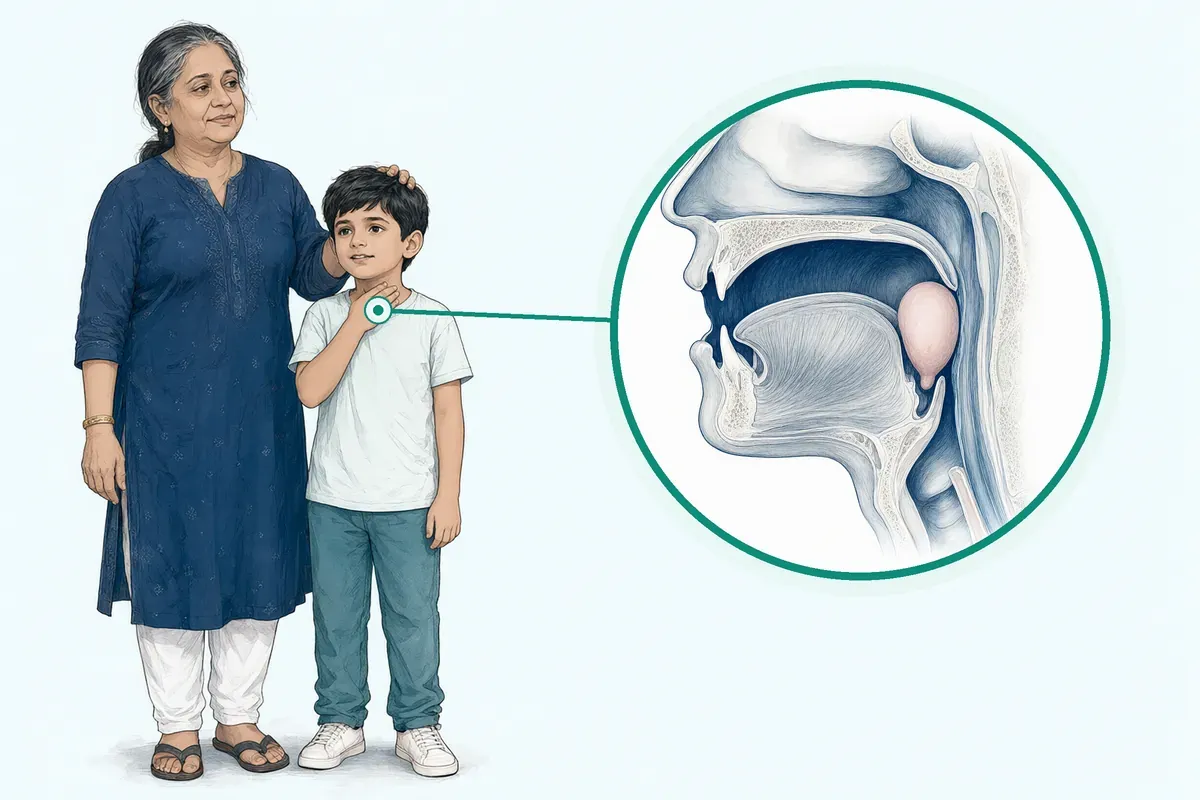
Tonsillectomy is the surgical removal of your tonsils. Tonsils are round, fleshy masses in the back of your throat. Unless you have had them removed, you have two — one on each side. They are a part of your immune system. Sometimes, they can become inflamed and cause painful sore throats.
They can also swell and block part of your airway. This may make it harder to breathe during sleep. The surgery is done to treat sleep-related breathing issues or frequent infections. Healthcare providers recommend this surgery for two main reasons. Nowadays, providers do them more often to treat sleep apnea. Tonsillectomy is one of the most common operations.
It is also one of the most painful surgical procedures. Many people worry that removing their tonsils will have a negative impact on their immune systems. But having a tonsillectomy doesn't weaken your immune system. Your body can still fight off germs. Even if you have your tonsils removed, the tissues in your throat can still become infected and sore.
Symptoms of tonsil problems and warning signs needing same-day care
- Vomiting blood or coffee-ground material
- Signs of dehydration
- Difficulty breathing or shortness of breath
Common symptoms include a very bad sore throat that lasts for more than a week. The throat pain can make it hard to swallow liquids or solid food. You may notice white or yellow patches on the tonsils. The tonsils may look red and swollen.
Swollen tonsils can block part of your airway and make it harder to breathe during sleep. This can cause loud snoring, gasping, or pauses in breathing at night. You might wake up with a dry mouth or headache. Children may breathe through their mouth during the day. Bad breath that does not go away can also be a sign. Ear pain is sometimes felt because the nerves are shared.
Warning signs that need urgent care the same day include bright red bleeding from the throat or nose. Vomiting blood or material that looks like coffee grounds is an emergency. A high fever that does not come down with medicine needs a doctor quickly.
Signs of dehydration such as no urine for eight hours, dry mouth, or no tears when crying need immediate attention. Difficulty breathing or shortness of breath is an emergency. Severe pain that stops you from drinking any fluids must be checked right away.
Causes of recurrent tonsillitis and who is at higher risk
Tonsillitis is usually caused by viruses or bacteria that infect the tonsils. The tonsils get bigger during childhood and can shrink as you get older. That is why children are more likely to need a tonsillectomy. While adults sometimes need tonsillectomies, it is more common in children. Frequent infections make the tonsils stay enlarged.
Enlarged tonsils can block the airway during sleep. This leads to obstructive sleep apnea. At five or more events per hour on the apnea-hypopnea index, the overall population prevalence ranges from 9% to 38% and is higher in men.
At 15 or more events per hour, the prevalence in the general adult population ranges from 6% to 17%, being as high as 49% in advanced ages. OSA prevalence is greater in obese men and women. A family history of frequent throat infections or sleep apnea can increase risk. Exposure to second-hand smoke or frequent colds can also make tonsil problems more likely.
How tonsil conditions are diagnosed: examination and tests
- Throat examination
- Light and tongue depressor used to view tonsils
- Sleep study
- Measures apnea-hypopnea index for sleep apnoea
- Blood tests
- Done before surgery to check fitness for anaesthesia
If you or your child has symptoms related to enlarged tonsils, speak to a healthcare provider. The doctor will look at your throat using a light and a tongue depressor. They will feel your neck for swollen lymph nodes. The doctor will ask how many sore throats you have had in the past one to three years.
The 7-5-3 rule helps healthcare providers decide whether a child needs surgery for tonsillitis. It is also called the Paradise criteria. It means seven episodes in one year, or five episodes each year for two years, or three episodes each year for three years. For sleep apnea, the doctor may ask about snoring, pauses in breathing, and daytime sleepiness.
A sleep study may be advised to measure the apnea-hypopnea index. Blood tests are not usually needed for diagnosis but may be done before surgery to check fitness for anaesthesia. Sometimes, medical management is all the treatment that is needed.
Non-surgical treatment options and when tonsillectomy is advised
Treatment without surgery includes pain relievers, salt water gargles, and antibiotics if a bacterial infection is confirmed. Steroids may be given for severe swelling. A single intraoperative dose of intravenous dexamethasone significantly improved both pain and the incidence of postoperative nausea and vomiting. For sleep apnea, a CPAP machine or weight loss may be tried first.
If medical management is not helping enough, removing your tonsils may do the trick. Your child may be a good candidate for this procedure if they meet the Paradise criteria or have sleep apnea that affects growth, behaviour, or heart health. Surgeons perform tonsillectomies less often than they used to, but the procedure is still common today.
The decision for surgery is made after discussing the frequency of infections, the impact on daily life, and the risks of anaesthesia. Before surgery, your healthcare provider will check to make sure you are healthy enough for surgery. This may involve getting blood tests. Your provider will give you instructions to help you prepare.
Preparing for tonsillectomy surgery
Do
- Stop certain medicines several days before
- Fast the night before surgery
Before surgery, your healthcare provider will check to make sure you are healthy enough for the operation. This may involve getting blood tests. Your provider will give you instructions to help you prepare. For example, you may need to stop taking certain medicines several days before surgery. You may need to fast the night before. Follow these guidelines closely.
Tell your surgeon about every medicine you take, including pain relievers, blood thinners, and herbal products. Some medicines can affect bleeding or anaesthesia. If you or your child uses an inhaler for asthma, bring it on the day of surgery. Pack loose, comfortable clothes and a favourite toy or blanket for a child. An attendant should plan to stay with the patient for the first 24 hours after discharge.
How tonsillectomy is done
The operation is done under general anaesthesia. Since you are asleep, you will not feel pain during the procedure. The surgeon removes the palatine tonsils through the mouth. There are no cuts on the skin. The procedure usually takes 30 to 60 minutes. Your surgeon will advise which technique suits you. Options include:
- Coblation Tonsillectomy: Low-temperature plasma removes tissue with less heat damage. Studies link this to less pain and faster recovery.
- Microdebrider Intracapsular: Partial removal preserving the tonsillar capsule. This is associated with less post-operative pain.
- Cold Steel Dissection: Traditional dissection with ties or bipolar diathermy for bleeding control.
- Harmonic Scalpel: Ultrasonic energy cuts and coagulates at the same time.
On the day of surgery, you check in at the admission counter. The anaesthesia team reviews your health. After the operation, staff move you to a recovery area where they check vital signs and watch for any early complications. Tonsillectomy is usually a daycare procedure or needs one night in hospital.
Risks and possible complications of tonsillectomy
- About 3 in 100 Bleeding risk in children
- First 24 hours or up to two weeks later Bleeding timing
- Higher in patients without recurrent tonsillitis history Dehydration readmission
Complications are rare but they can happen. The most common risk is bleeding. In studies, about 3 in 100 children having a tonsillectomy are at risk for bleeding during recovery. Bleeding can happen in the first 24 hours or up to two weeks later. Dehydration is another reason some patients need readmission.
In one study, patients without a history of recurrent tonsillitis needed readmission for dehydration more often than those with that history. Other possible risks include infection, voice changes, and reactions to anaesthesia. Codeine and tramadol are not used in children under 12 years because of the risk of serious breathing problems.
Ibuprofen is safe to use after tonsillectomy without an increased risk of bleeding. After surgery, call your healthcare provider if you see bright red blood from the mouth or nose, have a fever above 38.3°C, cannot drink liquids, or have severe pain not helped by prescribed medicines.
Recovery and aftercare after tonsillectomy
Throat pain lasts 10 to 14 days. A normal diet usually returns in 2 weeks. Recovery is more difficult for adults than for children. In the first one to two days, the throat is very sore. You may have ear pain, which is referred pain from the throat. Drink fluids often. Sips of water, diluted juice, or electrolyte solutions help.
Cold or room-temperature liquids are easier to swallow. From day three to five, pain may peak. A white or yellow coating forms where the tonsils were. This is normal healing, not infection. Continue regular pain medicine as prescribed. Paracetamol and ibuprofen are the mainstays. Steroids given during surgery help reduce pain and nausea in the first days.
Local anaesthetic injected during surgery can reduce pain for up to three days. From day five to ten, scabs fall off. You may see a small amount of blood in saliva.
Eat soft, cool foods such as:
- Curd rice
- Khichdi
- Dalia
- Mashed potato
- Ice cream
Avoid crunchy, spicy, hot, or acidic foods. You can try solid foods once your comfort level allows. Most people need at least 10 days off work or school. Staying at home helps reduce the risk of catching a cold or other infection. Full recovery takes about two weeks.
Results of tonsillectomy: how well it works
Tonsillectomy is done to treat sleep-related breathing issues or frequent infections. In studies, it successfully treats both chronic infections and night-time airway obstruction such as obstructive sleep apnoea. Providers now do the surgery more often for sleep apnoea. The Paradise criteria (7-5-3 rule) help decide when surgery is appropriate for recurrent tonsillitis.
Patients qualified for tonsillectomy due to recurrent tonsillitis reported lower pain intensity after surgery than those with other indications. Healing scores did not differ significantly between the recurrent tonsillitis group and other indications group. Removing the tonsils does not weaken your immune system. Your body can still fight off germs.
However, the tissues in your throat can still become infected and sore after surgery. Tonsil tissue left behind during intracapsular techniques can regrow, but usually not to the original size. If symptoms return, speak to your healthcare provider.
Cost and insurance for tonsillectomy in Jaipur
The typical price range for tonsillectomy in India is ₹40,000 to ₹90,000. The cost varies depending on the medical condition of the patient, the severity of the inflammation, the experience of the surgeon, and the technique used. Hospitals in larger cities may have higher overhead costs such as rent, equipment, and salaries, which can affect the price.
Jaipur Hospital is a NABH-accredited multispeciality hospital established in February 1991. It is located at S16A-17, Mahaveer Nagar, Near Gopalpura Flyover, Main Tonk Road, Jaipur, Rajasthan 302018. The hospital accepts RGHS, MAA Yojana, CGHS, and a panel of private insurers and TPAs. It has modular operation theatres, a 24×7 emergency department, in-house pharmacy, and in-house diagnostic laboratory and imaging. Ask the hospital for an estimate based on your specific case.