

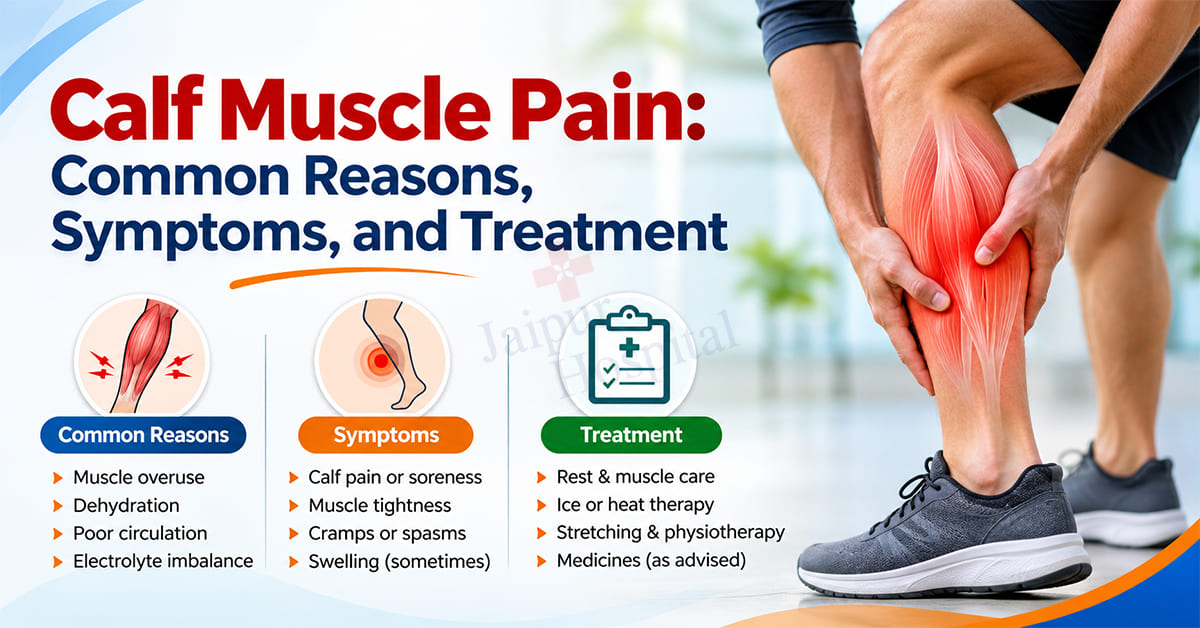
What Is Calf Muscle Pain?
Calf muscle pain refers to a feeling of tightness, soreness or discomfort at the back of lower back, the part between the knee and the ankle. The calf is made using two muscles – the gastrocnemius because of which it has a rounded shape and the soleus which is present beneath it. These muscles together help in running, walking, climbing the stairs, jumping and standing on the toes.
Calf pain may develop after an exercise, injury, or a medical reason. It may be in the form of tightness, mild ache or sharp pain. It can be improved with self-care but if the condition doesn’t get better then it is best to consult a specialized doctor.
Symptoms of Calf Muscle Pain
Calf muscle pain symptoms appear on the basis of the actual cause behind it and severity of the situation. Common symptoms are as follows:
- Sharp pain or aching while walking, standing, or running.
- Stiffness or muscle tightness.
- Sudden cramping with intense pain lasting up to several minutes.
- Tenderness, and swelling in the affected area.
- Bruising caused due to muscle strain or tear.
- Weakness while climbing stairs, or standing.
You can read also:- Lifestyle Diseases: Causes, Symptoms, Risk Factors, and Easy Prevention Tips
Common Calf Muscle Pain Reasons
Here is a list of the most common calf muscle pain reasons:
1. Muscle strain: This happens when the muscle fibres get overstretched or torn during running, jumping or sudden acceleration.
2. Muscle cramps: Cramps are sudden, involuntary contractions of the calf muscles which may occur during the exercise, a prolonged activity or exercise.
3. Overuse and physical activity: Walking for long duration, increased exercise intensity, or standing for extended time period can lead to pain in the calf muscles due to extra stress.
4. Dehydration and electrolyte imbalance: Improper fluid intake, loss of fluid due to searing, vomiting or diarrhoea can lead to muscle cramping or pain.
5. Achilles tendon problems: The Achilles tendon connects the calf muscles to the heel bone. Any irritation or overuse in this can lead to pain or stiffness in the calf muscles.
6. Poor blood circulation: Reduction in the blood flow to the legs can lead to pain while walking.
7. Deep vein thrombosis (DVT): DVT is a blood clot in a deep vein which occurs usually in the leg. It can cause pain, swelling, warmth, or skin discolouration often affecting one leg.
Effective Treatment Options for Calf Muscle Pain
The calf muscle treatment is provided by the Orthopaedics Department according to the cause behind it. While mild cramps can be treated at home, serious injuries may need immediate medical attention. Common treatments are as follows:
1. Rest and activity modification: Reduction in activity may be advised like running, jumping or prolonged walking. Gentle movement is allowed considering the condition.
2. Ice application: Ice therapy can be given by applying an ice pack for about 15 to 20 minutes. This helps in reducing pain and swelling in the calf muscles.
3. Gentle stretching: In case of a muscle cramp, simple stretching or straightening of the leg can be helpful. You can gently straighten the leg and bring the toes towards the body until the calf feels stretched.
4. Compression and elevation: You can use a comfortable elastic bandage which may help in controlling the swelling after an injury occurred. In case of swelling, you can keep your leg raised as it helps.
5. Pain-relief medicines: Doctor may prescribe pain killers to help with the issue. However, don’t take medicines without a prescription or consulting a medical practitioner.
6. Physiotherapy: Physiotherapist may help in relieving the pain by helping in doing progressive stretching, strengthening and balancing exercises.
You can read also:- Ketogenic Diet: Benefits, Foods, Risks and How It Works
How to Prevent Calf Muscle Pain
There are certain things that you can do at home which can help in relieving the pain. You can control and get relief from calf pain at home by practicing the following:
- Warm up before exercise: You should always do a warm up exercise before you move on with doing your regular exercise like running, sports, or any other intense activity.
- Stretch regularly: Stretches when done after exercising can help in maintaining flexibility and in preventing calf muscle pain.
- Increase activity gradually: If you want to perform some activity, begin slowly and then increase the intensity. Avoid jumping, running or doing high level workout suddenly.
- Stay hydrated: You should drink plenty of fluids to keep yourself hydrated especially in hot weather or when you are exercising or doing any physical work.
- Wear suitable footwear: You should wear comfortable shoes or slippers as any inappropriate footwear can hurt your feet and cause pain.
- Allow recovery time: If you are feeling pain in your body part, let it rest and give enough time to it to heal.
- Avoid sitting still for too long: Don’t sit for too long, take regular breaks and go for a walk in between as it helps in keeping yourself active. Further, prolonged sitting can cause swelling or make your legs feel heavy.
In case, you have been experiencing regular cramps then you should consult a doctor immediately.
Conclusion
Calf muscle pain is common in people of all age groups and can happen to anyone. The most common causes include muscle cramps, intense exercise, or sudden activity. Although it can be cured at home by following basic treatment methods like stretching, applying heat therapy and taking rest but if the pain still persists then you should immediately consult a doctor. Jaipur Hospital is known for its specialised doctor who timely diagnose the underlying cause behind the issue and provide the correct treatment. We have a team of best doctors in Jaipur who work towards providing best customized care and treatment to the patients. If you have been facing calf muscle pain for a long time then book an appointment now.
FAQs
1. What are the most common calf muscle pain reasons?
Ans. The calf muscle pain reasons which can lead to uneasiness and pain making walking or doing daily activities difficult include muscle strain, cramps, tendon irritation, dehydration, injury or prolonged standing. It may also be related to circulation problems or certain nerve conditions.
2. Can calf muscle pain go away on its own?
Ans. Yes. If the calf muscle pain is due to minor muscle strains or cramps then they are likely to get resolved on their own or with little home care. However, if the pain continues and is intense then medical examination is necessary.
3. When should I see a doctor for calf muscle pain?
Ans. If the pain is chronic, severe, and does not improve with home precautions and care then you may consult a doctor. Further, if you notice swelling, redness, or any discoloration then immediately take medical help.
4. Can dehydration cause calf muscle pain?
Ans. Dehydration can lead to muscle cramps especially after you have exercised intensely or after heavy sweating. The calf muscle pain can occur due to recurring muscle cramps.
5. How can I prevent calf muscle pain?
Ans. You should always do a warm up exercise, and stretches before doing intense workout. Drink plenty of fluids, wear comfortable footwear, and take rest.