

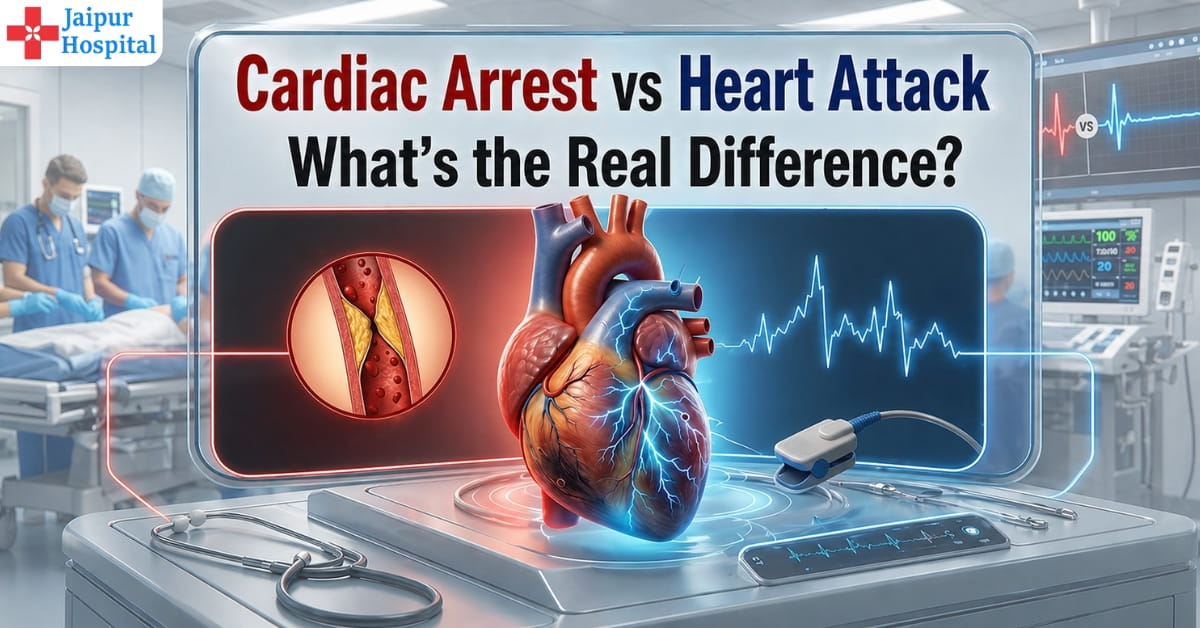
It is common for people to confuse cardiac arrest with a heart attack, even though they are different emergencies. Let’s take a look at how knowing the difference between them could help when responding to the medical emergency of a heart attack or cardiac arrest.
What is a Heart Attack? (Myocardial Infarction)
Heart attacks happen when blood flow to the heart muscle is reduced due to a blockage. Most often this blockage is the result of fatty deposits and/or plaque that accumulate along the inner walls of the coronary arteries.
During a heart attack, what happens?
(1) The blood flow to the heart muscle is decreased or totally cut off;
(2) The heart muscle(s) cannot receive enough supply of oxygen; and
(3) If heart muscle is not re-perfused (supplied with blood/oxygen) the heart muscle begins to die. Heart attacks can be caused by the following conditions:
Heart Attack Causes-Various Conditions:
1. Coronary artery disease (the most common cause);
2. Blood clots;
3. High cholesterol;
4. Smoking;
5. High blood pressure, etc.
The heart usually keeps beating even during the course of having an heart attack.
What is Cardiac Arrest?
Cardiac arrest occurs suddenly and poses a serious risk to your life. Cardiac arrest occurs when the heart suddenly comes to a halt as a result of an electrical failure.
What happens in the event of a cardiac arrest?
In the case of Cardiac Arrest:
– The electrical system of the heart fails
– The heart will no longer effectively pump blood, and
– The patient will meet with death as they collapse and become unresponsive.
Common Causes of Cardiac Arrest:
– Abnormal heart rhythms (arrhythmia),
– A previous history of heart attacks,
– Severe trauma/shock to the body,
– Heart Failure, OR
– A genetic heart condition.
Key Point:
Once a heart has completely failed, regardless of the cause, emergency intervention must be taken immediately!
Cardiac Arrest vs Heart Attack: Key Differences Explained
Being able to tell the difference between a heart attack and Cardiac arrest will allow you to understand the situation better and to quickly provide the correct response. The following is a basic breakdown of the two conditions with bullet point definitions and explanations:
Heart Attack (Myocardial Infarction)
A heart attack happens when there is a complete blockage of blood flow to the heart muscle caused by plaque build-up in the arteries. Even when blood flow is interrupted, the heart usually continues to contract (beat) until it can no longer.
- Cause: An obstruction of blood flow to the heart
- Heart Activity: The heart continues to contract / beat
- Onset: Symptoms develop over the course of several minutes or possibly hours
- Consciousness: Patient is generally alert and complaining of chest discomfort
- Urgency: Requires immediate attention by a healthcare provider
Cardiac Arrest
Cardiac Arrest occurs when the heart stops beating very quickly (in less than a second), due to an electrical malfunction of the heart. This type of condition cannot be treated unless an immediate intervention is applied.
- Cause: Heart is electrically malfunctioning
- Heart Failing: Not contracting/ beating or pumping blood
- How quickly can a person go into cardiac arrest: Usually 0 – 2 seconds after losing consciousness
- Level of Consciousness: Patient is unconscious; doesn’t respond to any stimuli
- Urgency of Cardiac Arrest: Requires life saving efforts (CPR and emergency medical services must be initiated immediately)
You can read also:- Liver Detox: Benefits, Process & Natural Ways to Cleanse Your Liver
Important Insight
It is possible that a heart attack may also result in cardiac arrest if it disrupts the normal rhythm of the heart; therefore, it is crucial for both heart attacks and cardiac arrest to be identified and treated as quickly as possible.
Identifying symptoms early could mean the difference between life and death.
Symptoms of Heart Attack:
- Pressure or pain in the chest (squeezing)
- Pain in the arm, neck, jaw, or back
- Shortness of breath
- Not sweating
- Nausea or vomiting
- Fatigue
Symptoms of Cardiac Arrest:
- Sudden collapse
- No pulse
- No breathing
- Loss of consciousness
If the person collapses suddenly and does not breathe, he or she is in cardiac arrest; if he or she does not have a pulse or breathe, he or she is also in cardiac arrest; if there is no pulse or breathing, but the person is not conscious, he or she is in cardiac arrest.
Warning Signs and Symptoms of Both Conditions
Mild chest discomfort can be a sign of heart attack. These signs may develop hours or even days in advance of a significant event.
Signs of cardiac arrest require immediate action:
- Sudden loss of responsiveness
- Loss of breath (gasping, etc.)
- No pulse
What Should You Do?:
1. Call for emergency help immediately
2. Provide CPR (if you are trained)
3. Use an AED (if available)
You can read also:- Trapped Gas in Chest: Causes, Symptoms & Best Treatment Options
Prevention Tips to Protect Your Heart Health
The first step in preventing both of those illnesses is making healthy lifestyle choices.
- Eat heart-healthy foods; lots of fruits and vegetables, as well as whole grains, and limit or avoid processed foods and foods with a high level of salt and saturated or trans fats as much as possible. Keep up a regular exercise program and try to do at least 30 minutes a day of walking, dancing, biking, swimming or doing something active.
- Give priority to learning and practicing stress-reduction techniques such as breathing exercises or meditation, and also give priority to achieving a proper work/life balance. As stress is one of the leading contributors to both of these illnesses, it is vital that you find ways to reduce the level of stress in your life.
- Avoid smoking and severely limit your alcohol consumption. Smoking is one of the top causes of CHD and Stroke. If you do decide to drink, please do so responsibly.
- Be proactive with your health, understand your risks, and have regular medical exams to monitor important health markers (blood pressure, cholesterol and glucose).
- Understand your family history of illness; your genetic predisposition to many illnesses can influence your development of these diseases.
Conclusion
The differences between cardiac arrest & heart attack is not only about medical knowledge but about knowing what to do in case of an emergency; therefore both can have very serious consequences.
Knowing the symptoms of the 2 conditions is essential to able to provide prompt & appropriate medical attention in times of emergencies. At Jaipur Hospital we support that; knowledge is the first step toward prevention.
Heart related emergencies are often preventable when diagnosed properly, treated correctly & modified by changes to your lifestyle. If you or someone you know experiences any warning signs then Please, get help immediately; early treatment may result in saving a life! Your heart health is important. Start taking care of it today for a healthier tomorrow.
Frequently Asked Questions (FAQs)
Q.1. How Are Heart Attacks & Cardiac Arrest Different?
Ans. Heart attacks occur when blood flow is impeded due to blockages in the arteries. Cardiac arrest occurs when there is a malfunction in the electrical system of the heart and it stops beating unexpectedly.
Q.2. Can a heart attack trigger a cardiac arrest?
Ans. A heart attack that is large enough may cause your heart to misfire and enter into cardiac arrest.
Q.3. Which is worse, cardiac arrest or a heart attack?
Ans. Cardiac arrest occurs when the heart has stopped beating and is, therefore, a more immediately life threatening event than a heart attack because it requires immediate attention for survival.
Q.4. What should you do immediately if someone has a cardiac arrest?
Ans. Call emergency services right away, begin CPR (Cardiopulmonary Resuscitation), and use an AED (Automated External Defibrillator) if one is available. Every minute of delay reduces the chances of survival.
Q.5. Can a heart attack lead to cardiac arrest?
Ans. Yes. During a heart attack, the heart’s electrical activity can become disrupted, triggering an abnormal heart rhythm (arrhythmia) that leads to cardiac arrest. This is why heart attack symptoms should never be ignored.