

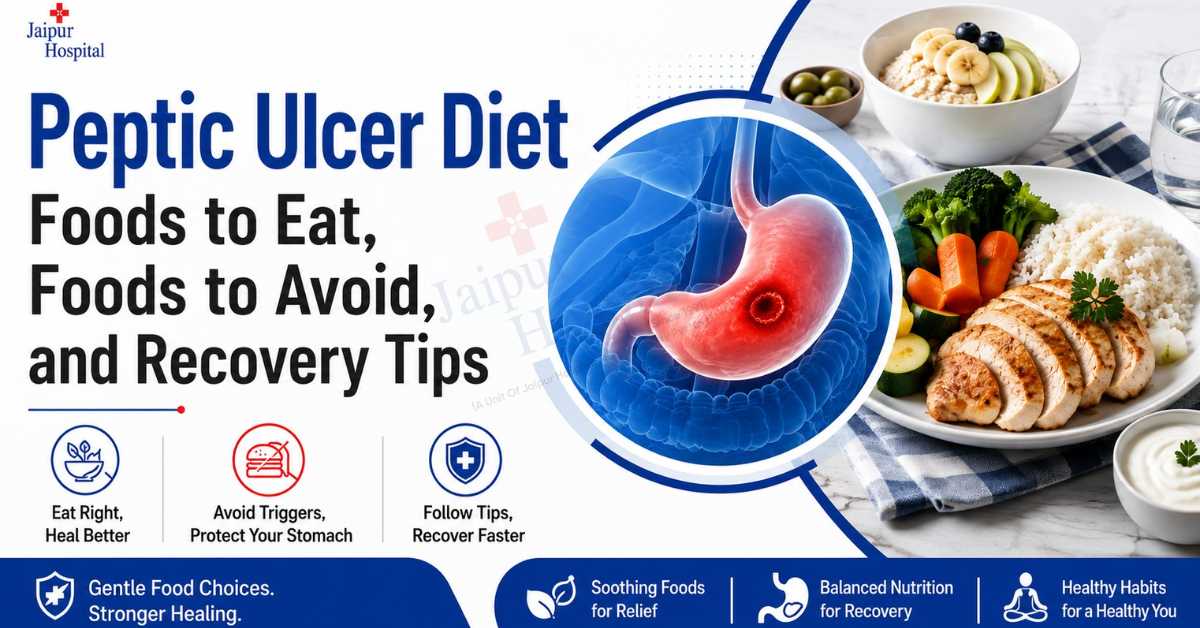
A Peptic Ulcer Diet has a vital importance for reducing the irritation of the stomach and easing symptoms and promoting faster healing. Although the main treatment for peptic ulcers includes medications, the right diet can provide protection for the stomach lining and help relieve pain. If you are in search of what foods to consume and steer clear of in the process of recovering after peptic ulcers, you are in the right place.
What Is Peptic Ulcer and Why is Diet Is Important?
A peptic ulcer is an open sore that appears in the lining of the stomach or in the upper part of the small intestine. Gastroenterology Department Peptic ulcers usually appear as a result of H. pylori infection or long-term use of nonsteroidal anti-inflammatory medications.
Best Foods to Eat on a Peptic Ulcer Diet
Selecting the appropriate food is one of the best ways that a person can heal the ulcer condition.
1. High fiber foods
Eating foods that are rich in fiber will help the patients avoid ulcer formation.
Some recommended foods include:
- Oatmeal
- Brown rice
- Whole wheat bread
- Apple
- Pear
- Carrot
- Sweet potato
2. Fruits and vegetables
Fruits and vegetables are filled with different nutrients, vitamins and antioxidants which are helping in healing.
Some recommended foods:
- Banana
- Papaya
- Apple
- Berry
- Spinach
- Broccoli
- Pumpkin
- Refrain from eating very sour fruits.
3. Lean proteins
Proteins will help in repairing damaged tissues.
Some recommended proteins:
- Chicken
- Fish
- Eggs
- Tofu
- Lentils
- Beans
4. Foods containing probiotic bacteria
Probiotics promote a healthy balance of gut flora and aid in the treatment of the H. Pylori infection.
Some examples:
- Live-culture yogurt
- Kefir
- Buttermilk
5. Healthy Fats
Healthy fats are gentler to the digestive system than fried foods.
Recommended healthy fats:
- Olive oil
- Avocado
- Nuts
- Seeds
6. Fluids
People with ulcer disease need to drink a lot of fluids such as:
- Water
- Coconut water
- Herbal tea
- Plain soups
You can read also:- Cervicogenic Headache: Causes, Symptoms, Diagnosis And Treatment Options
Foods to Avoid with a Peptic Ulcer
Many kinds of food lead to irritation of the lining of the stomach and worsen the symptoms of peptic ulcers. It’s equally important to know which foods should be avoided and which are beneficial.
Here are the types of foods to avoid:
- Hot foods that have lots of chilli in them
- Deep-fried foods
- Fat or oily foods
- Processed foods
- Foods with alcohol content
- Cigarettes and tobacco
- Soda drinks
- Too much coffee
- Chocolate if it is a trigger.
- Citrus fruits in case they stimulate stomach activity.
Sample Peptic Ulcer Diet Meal Plan
A proper Peptic Ulcer Healing Diet is easy to follow.
Breakfast
- Oatmeal with banana
- Low-fat yogurt
- Herbal tea
- Mid-Morning Snack
- Apple slices
- A handful of unsalted almonds
Lunch
- Grilled chicken
- Brown rice
- Steamed vegetables
- Fresh salad
Evening Snack
- Papaya
- Buttermilk (if tolerated)
- Dinner
- Vegetable soup
- Chapati
- Steamed fish or lentils
At Bedtime
- Warm low-fat milk (only if it does not aggravate symptoms)
- Eating smaller meals more frequently every three to four hours may help ease discomfort better than having a few big meals.
Lifestyle Tips to Support Peptic Ulcer Recovery
Eating a balanced Peptic Ulcer diet is highly effective when implemented in conjunction with maintaining a healthy lifestyle.
Have Small Frequent Meals: Eating larger meals means that the stomach has to release more acid than if you eat small meals.
Stop Smoking: Smoking makes ulcer treatment slower and increases the risk of other problems.
Minimize Alcohol: Alcohol is irritating to the stomach and needs to be avoided in order to heal.
Eliminate Stress: Stress does not cause ulcers, but it can worsen the situation.
The following methods can help reduce stress: Walking, yoga, deliberate breathing, meditation, and good sleep
You can read also:- Fatty Liver Grade 2: Causes, Symptoms, Diet, Treatment And Prevention
Common Diet Mistakes That Can Delay Ulcer Healing
There are multiple times when a person hastens recovery with their improper dietary practices.
Some examples are:
- Missing meals
- Eating spicy dishes
- Drinking too much coffee
- Consuming fast food
- Taking pain-killers without a prescription
- Drinking alcohol while undergoing treatment for ulcers
- Thinking that milk will restore normal function to an ulcer.
When Should You Consult a Physician Regarding Your Peptic Ulcer?
It’s important to keep in mind that most ulcers do heal if they are treated properly, but some conditions require immediate medical intervention.
See a physician in case of:
- Severe or prolonged abdominal pain
- Blood in vomit
- Dark stools
- Acute weight loss
- Difficult swallowing
- Frequent vomiting
- Ongoing symptoms despite medication
As these may suggest that the person develops complications requiring quick treatment.
Conclusion
In order to alleviate the symptoms, promote healing in the stomach lining, and achieve a faster recovery with the help of medical professionals, it is crucial to follow the Peptic Ulcer Diet. This diet includes eating healthy food, avoiding foods that can irritate the stomach, being well hydrated, and taking in guidance from the doctor.
If you are experiencing pain in the stomach, acids, and symptoms of peptic ulcer, it is important to consult the team of expert gastroenterologists in the Gastroenterology Department of Jaipur Hospital. The hospital has various modern techniques to diagnose any such health problem, provides best treatment options and doctors.
Frequently Asked Questions (FAQs)
Q.1 Can you treat a peptic ulcer without medication entirely?
Ans. No, while eating food can lessen the ulcer’s pain, it is necessary to take medicines to heal it.
Q.2 In case I have a peptic ulcer, can I consume spicy food?
Ans. It is best to avoid spicy food in case it worsens one’s condition. Some people may tolerate some mild spices, but spicy food may cause irritation.
Q.3. Is it true that milk is useful for peptic ulcers?
Ans. While milk may relieve the ulcer for some time, it could lead to increased production of stomach acids afterward. Thus, milk should never be used to treat ulcers.
Q.4 What symptoms should I pay attention to in the case of a bleeding peptic ulcer?
Ans. Symptoms of a bleeding ulcer include vomiting blood, black stools, fainting, feeling weak, and severe abdominal pain.
Q.5. Is it true that peptic ulcer is the same as stomach ulcer?
Ans. Stomach ulcer is a type of peptic ulcer, meaning that peptic ulcers can be found both in the stomach as well as in some parts of the small intestine.