

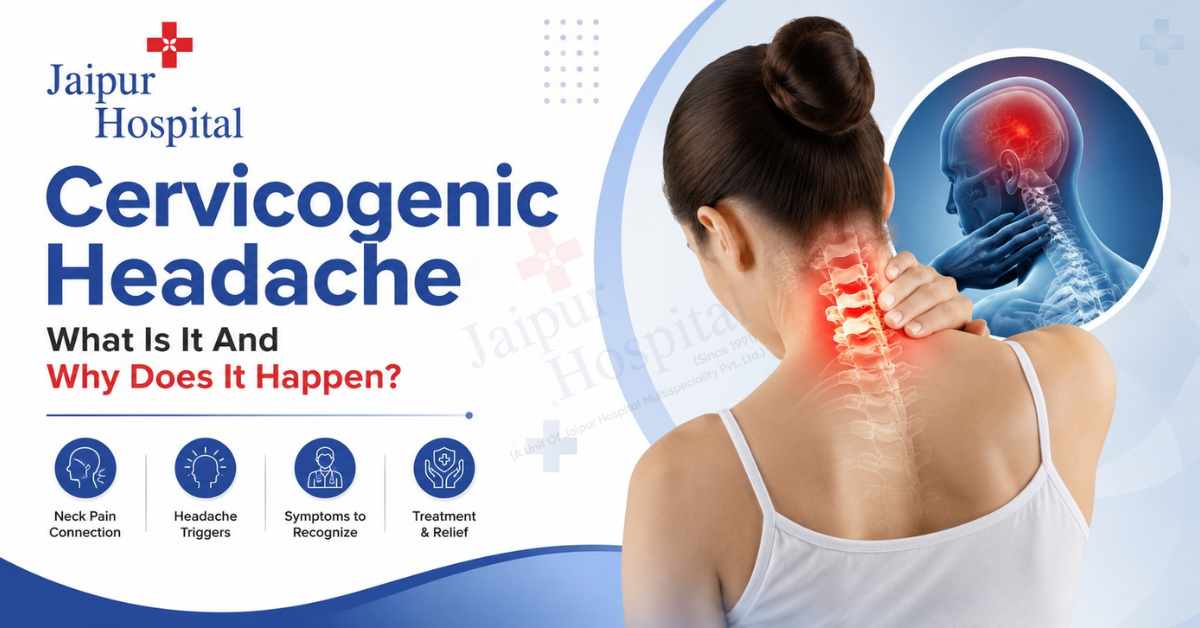
Cervicogenic headaches occur when headaches originate in the neck rather in the head. A lot of people think they have migraine headaches or tension headaches but in fact, they might be caused by issues in the spine, muscles, joints, or nerves in the neck.
This type of headache starts in the neck after poor posture, neck injuries, arthritis, or muscle tension. At the Orthopedic Department, The pain commences in the neck and spreads to the one side of the head, making regular tasks difficult and uncomfortable. The best part about it is that with proper diagnosis and treatment of this kind of headache, a person may experience much better results.
What Causes Cervicogenic Headache?
Cervicogenic headaches are caused by pain originating from structures in the neck, particularly the cervical spine and surrounding tissues. Various causes can lead to this condition.
1. Neck Joint Problems
Diseases or injuries in the cervical spine area can cause pain.
2. Muscle Tension
Neck muscle tension caused by stress, poor posture, or prolonged computer use can contribute to cervicogenic headaches.
3. Problems With Cervical Discs
Cervical disk problems may cause pinching of the neighboring nerves and lead to repeated headaches.
4. Whiplash or Neck Injury
Injuries to the cervical spine sustained from road accidents, sports, and injuries resulting from sudden neck movements can trigger chronic headaches.
5. Bad Posture
Looking down at electronic devices for prolonged periods or sitting at a computer without proper ergonomic support can place continuous strain on the cervical spine and contribute to cervicogenic headaches.
6. Arthritis
Age-related degenerative changes, including arthritis in the upper cervical joints, can contribute to cervicogenic headaches.
What Are The Common Cervicogenic Headache Symptoms?
Being able to recognize the symptoms of Cervicogenic Headache can ensure prompt treatment.
Some of the symptoms are:
- Pain that begins in the neck and radiates into the forehead
- Pain on one side of the head
- Sore neck with limited movement ability
- Pain that feel worse when moving the neck
- Soreness or pain in the shoulder and upper part of the back
- Tenderness in the muscles around the neck
- Pain behind the eye
- Headache after sitting too long
You can read also:- Fatty Liver Grade 2: Causes, Symptoms, Diet, Treatment And Prevention
How Is Cervicogenic Headache Diagnosed?
Because various headaches exhibit comparable characteristics, adequate diagnosis is crucial.
A doctor may do:
Medical Records
The physician finds out information regarding the locale, length, and recurrence of the headache in addition to any past cervical injuries.
Physical Examination
The doctor examines the neck in order to determine the degree of stiffness, muscle soreness, and lack of movement.
Tests
If required, the physician may order tests such as:
- X-ray
- MRI
- CT
so as to identify possible causes of the headache related to the neck area.
Diagnostic Nerve Blocks
In some cases, injection of localized anesthetic around the cervical nerves helps to establish whether the neck is the source of pain.
What Are The Best Treatment Options For Cervicogenic Headache?
Treatment is determined by the underlying reason for and seriousness of the symptoms.
Physical Therapy
Physical therapy is one of the most effective forms of treatment. A physiotherapist will help to improve the motion of the neck, strengthen the muscles, and relieve stiffness.
Medications
Doctors may prescribe the following:
- Pain relievers
- Anti-inflammatory medication
- Muscle relaxants
- Prescription medication if it is necessary to deal with chronic pain
- The medication should always be taken under strict medical supervision.
Cervicogenic Headache Exercises
To get relief from pain, there are certain Cervicogenic Headache exercises that help in improving flexibility.
Some examples of these exercises are:
Chin Tuck
This exercise helps to strengthen the deep cervical muscles for better alignment.
Neck Stretch
Gentle stretching makes the stiff neck muscles feel better.
Shoulder Blade Squeeze
Strengthening the upper back is important to maintain the correct neck positioning.
Cervical Range-of-Motion
By moving the neck in a controlled manner, flexibility and stiffness in the neck can be improved.
It is important to get advice from your physiotherapist or doctor before doing these exercises.
Good posture is essential.
Doing anything while sitting with proper posture reduces the strain on your neck considerably.
Heat and/or cold therapy
Using hot pack helps relax tight muscles, so cold pack comes in handy after any acute injury.
Interventional Pain Procedures
About persistent pain, different specialists can recommend:
- Trigger point injections
- Cervical nerve blocks
- Radiofrequency ablation in some cases
Surgical options
Surgery is very rarely required and only in the cases of severe nerve compression or structural damage that is not responding well to conservative treatment.
You can read also:- What Is Stomach Heat? Symptoms, Causes, Treatment & Prevention
How Can You Prevent Cervicogenic Headache?
Here are some simple lifestyle adjustments you can make to reduce your risk of neck-related headaches.
- Keep an eye on your posture and sit up straight.
- Do not look down at your mobile device for an extended amount of time.
- Take rest breaks for a few minutes every 30-60 minutes.
- Use an ergonomic desk.
- Make sure your neck is supported properly during sleep.
- Exercise regularly to strengthen neck and shoulder muscles.
- Reduce your stress levels, possibly with yoga, meditation, or deep breathing.
- Engage in physical activities to keep your spine healthy.
When Is It Necessary to Consult a Doctor?
- Seek medical help if
- Headaches recur frequently and become severe.
- Pain in the neck limits your daily activities.
- There is no improvement in headaches with home treatment.
- Headache occurs after a neck injury.
- You feel numbness, weakness, dizziness, or have problems with balance.
- The headache is accompanied by fever, confusion, or sudden feeling of extreme pain.
- Prompt medical intervention will help identify the problem correctly and avoid complications.
Conclusion
A Cervicogenic Headache is often misdiagnosed as being a migraine or tension headache, but it has its roots in disorders of the neck. Hence the right diagnosis, Cervicogenic Headache Treatment, and therapies in combination with proper exercises and posture correction can usually help most people manage this condition successfully.
At Jaipur Hospital, the Neurology Department, Orthopaedics Department, and Physiotherapy & Rehabilitation Department work together to provide the diagnosis and treatment of cervicogenic headaches using the latest diagnostic technology.
Frequently Asked Questions (FAQs)
Q.1) What are the initial indicators of Cervicogenic Headache?
Ans. Cervicogenic Headache shows early indicators like head or neck pain, headache experienced on the back of the head, and increasing pain on a single side of the head caused by neck movements.
Q.2) Which workouts can be useful in case of Cervicogenic Headache?
Ans. Famous workouts for people suffering from Cervicogenic Headache include neck exercises with the chin tucked in, exercises aimed at improving mobility of cervical spine, and neck stretching.
Q.3) What is the difference between Cervicogenic Headache and migraine?
Ans. Cervicogenic Headache appears first in the neck and is caused by incorrect posture or neck movement, whereas migraine refers to the condition that is mainly characterized by pulsating pain.
Q.4) Is surgery a way to eliminate Cervicogenic Headache?
Ans. In the majority of cases, anti-Cervicogenic Headachemethodologies help prevent the disease and recover, and no surgery is needed.
Q.5) When to contact a doctor for Cervicogenic Headache?
Ans. You should know when it is appropriate to visit a doctor and consult the doctor when headaches happen more and more often, are unbearable, appear after an accident, or when the condition is accompanied by other symptoms.