

Anaesthesia and Critical Care · Jaipur Hospital
Emergency and Trauma Resuscitation in Jaipur
Critical injury needs fast, organised care. Jaipur Hospital gives you a clear assessment and a step-by-step plan.
- Serving Jaipur since 1991 (35 years)
- NABH accredited
- 24×7 emergency & ICU
- Cashless: RGHS, MAA Yojana, CGHS + 22 insurers
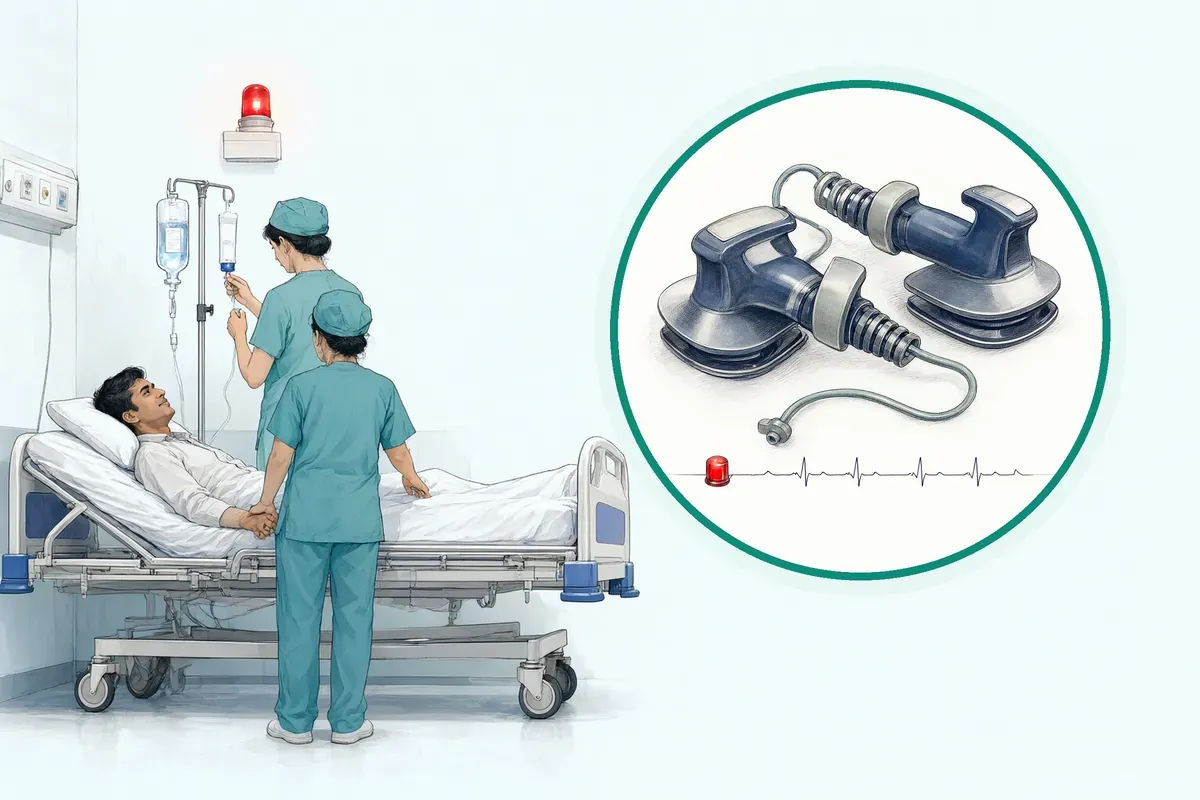
- Procedure time
- Golden hour (first 60 minutes)
- Anaesthesia
- Rapid sequence intubation / Ketamine
- Recovery
- ICU transfer for stabilisation
- Price
- ₹15,000 to ₹50,000 (initial resuscitation)typical range in India; ask us for an estimate
Every minute counts after trauma
You or your loved one has a severe injury and needs immediate resuscitation
Severe bleeding, shock and organ failure can develop within minutes. Disorganised care wastes the golden hour. You need a team that acts on protocol, not guesswork.
-
Uncontrolled bleeding
Torso haemorrhage is a leading cause of preventable death in trauma and emergency surgery.
-
Coagulopathy on arrival
Many trauma patients already have early trauma-induced coagulopathy, which raises mortality risk.
-
Delayed blood products
Every minute of delay in massive transfusion cooler arrival increases mortality odds by 5%.
-
Fluid overload risk
Aggressive crystalloid resuscitation can disrupt clots, dilute clotting factors and cause hypothermia.
Damage control resuscitation with early blood products and permissive hypotension reduces bleeding and improves survival in haemorrhagic shock.
Why Jaipur Hospital
You are terrified for your family member and need to know the team has a proven plan, not just good intentions.
Your care plan
Your first steps with us
- 1 Call 108 or bring patient directly to emergency
- 2 Primary survey ABCDE and immediate resuscitation
- 3 Activate massive transfusion protocol if needed
- 4 Transfer to ICU for stabilisation and further care
How emergency trauma resuscitation is done
The team follows ATLS primary survey, activates massive transfusion protocol for bleeding, and uses damage control surgery to stop haemorrhage before definitive repair.
-
Primary Survey (ABCDE)
Airway, breathing, circulation, disability, exposure — the first assessment done within minutes of arrival.
-
Massive Transfusion Protocol
Activates 1:1:1 ratio blood products (red cells, plasma, platelets) to replace lost blood and correct coagulopathy early.
-
Damage Control Surgery
Abbreviated laparotomy or thoracotomy to control bleeding and contamination, followed by ICU resuscitation and delayed definitive repair.
-
Point-of-Care Ultrasound (POCUS)
Bedside eFAST and RUSH exams to detect free fluid, tamponade and shock cause without leaving the resuscitation bay.
Why patients trust us
- 1991 Serving Jaipur for 35 years
- NABH Accredited hospital
- 1 Anaesthesia and Critical Care consultants
- 24×7 Emergency, ICU and ambulance
- 25 Cashless schemes and insurers
What research shows about damage control resuscitation
-
9.8 percentage points lower 30-day mortality
Prehospital plasma transfusion reduced 30-day mortality from 33.0% to 23.2% in the PAMPer trial.
-
5% higher mortality odds per minute delay
Each minute from massive transfusion activation to first cooler arrival increased mortality odds by 5% in 680 patients.
-
Pooled odds ratio 0.70 for permissive hypotension
Permissive hypotension showed a survival benefit over conventional resuscitation in pooled trauma trials.
If it is left untreated
Without protocol-based resuscitation, uncontrolled bleeding leads to irreversible shock, multi-organ failure and death. Early coagulopathy worsens with crystalloid overload. Delayed massive transfusion activation is directly linked to higher mortality.
Life after emergency resuscitation
Most patients who survive the first 24 hours move to ICU stabilisation, then to ward recovery. Rehabilitation needs depend on injury pattern.
-
ICU stabilisation
Vital signs normalise, bleeding stops, and organs recover with monitoring and support.
-
Step-down to ward
Most people transfer to a general ward once haemodynamics are stable and drains are managed.
-
Rehabilitation planning
Physiotherapy and specialty follow-up start early for fractures, nerve injury or organ dysfunction.
-
Attendant involvement
Family attendants stay with the patient, receive daily updates and help with care decisions.
Frequently asked questions
Questions patients ask about emergency and trauma resuscitation
Which problems are assessed under emergency and trauma resuscitation?
In short
Emergency and trauma resuscitation at Jaipur Hospital assesses life-threatening problems using the primary survey ABCDE approach. This covers airway obstruction, breathing failure, circulatory collapse from haemorrhage or shock, neurological disability, and exposure for hidden injuries. The team identifies conditions needing immediate intervention within the golden hour.
In detail
The primary survey follows ATLS protocol: Airway with cervical spine protection, Breathing with ventilation assessment, Circulation with haemorrhage control and shock management, Disability with neurological status, and Exposure with environmental control.
Evidence shows torso haemorrhage remains a leading cause of potentially preventable death in trauma and acute care. Damage control principles reduce mortality compared with primary definitive surgery in abdominal emergencies.
Massive transfusion protocol uses 1:1:1 ratio blood products when massive haemorrhage requires massive transfusion to maintain adequate circulation and haemostasis. Point-of-care ultrasound (eFAST, RUSH exam) rapidly identifies shock, tamponade, or internal bleeding.
A common belief
Many people think trauma care starts with scans or surgery.
What actually happens
In reality, the first 60 minutes focus only on finding and fixing what will kill the patient fastest. Studies show delays in massive transfusion activation increase mortality by 5% per minute.
Your next step at Jaipur Hospital
If you or an attendant faces a trauma emergency, call 108 or Jaipur Hospital's 24×7 ambulance service. The emergency department operates round the clock with modular operation theatres and ICU for immediate stabilisation. Initial resuscitation typically costs ₹15,000 to ₹50,000.
How will the doctor decide which tests I need?
In short
The doctor at Jaipur Hospital decides tests based on your clinical examination, mechanism of injury, vital signs, and prior records. The primary survey ABCDE findings guide immediate investigations like eFAST, chest X-ray, pelvic X-ray, and blood work including haemoglobin, coagulation profile, and blood group.
In detail
Test selection follows ATLS protocol. Point-of-care ultrasound (eFAST, RUSH exam) rapidly identifies shock, tamponade, or internal bleeding. Evidence shows massive transfusion protocol activation uses Assessment of Blood Consumption score or clinician gestalt. Laboratory algorithms serve as transfusion guidelines.
For follow-up, tests monitor haemoglobin trends, coagulation correction, organ function, and healing. REBOA use correlates with a mean systolic pressure increase of 53 mm Hg. The surgeon balances radiation exposure, cost, and clinical yield.
Permissive hypotension targets (systolic BP 50 to 70 mm Hg) differ from conventional resuscitation (systolic BP 65 to 100 mm Hg), influencing monitoring intensity.
A common belief
Patients often expect a fixed panel of tests.
What actually happens
In reality, test choice is dynamic: massive transfusion activation uses clinical scores or gestalt, and lab algorithms guide transfusion. Permissive hypotension targets (systolic 50 to 70) need different monitoring than conventional resuscitation (systolic 65 to 100). Tests match your physiology, not a checklist.
Your next step at Jaipur Hospital
Expect blood tests, imaging, and possibly ECG in the first visit. Results are discussed the same day for urgent markers. The in-house lab and radiology operate 24×7. Further tests depend on initial findings.
How soon should I expect improvement after emergency trauma resuscitation?
In short
Improvement after emergency trauma resuscitation varies by injury severity at Jaipur Hospital. The first goal is physiological stabilisation in the ICU within the first 24 to 48 hours. Haemodynamic stability, correction of coagulopathy, and normalising lactate levels are early markers. Definitive repair surgeries follow once the patient is stable, which may take days.
In detail
Evidence shows that damage control resuscitation aims to reverse the lethal triad of coagulopathy, hypothermia, and acidosis. Studies report that early separation of survival curves appears within hours of massive transfusion protocol activation.
However, patients with severe traumatic brain injury or multi-organ failure may have a prolonged ICU stay. The median time to haemostasis is prolonged by delays in massive transfusion cooler arrival.
Permissive hypotension and tranexamic acid use are associated with reduced blood product utilisation and earlier stabilisation. Recovery of organ function, wound healing, and rehabilitation progress over weeks. The surgical team reassesses daily and plans staged reoperations as physiology permits.
A common belief
People often expect a quick fix after one surgery.
What actually happens
Damage control resuscitation is a phased approach: stop bleeding first, fix organs later, then rehab.
Your next step at Jaipur Hospital
After ICU transfer, the team monitors vital signs, coagulation, and organ function continuously. The attendant receives daily updates. Once stable, the patient moves to a ward for further recovery and rehabilitation. Discharge timing depends on injury pattern and complications.
How can I decide whether to seek advice about advanced trauma life support?
In short
You should seek advanced trauma life support immediately if you or someone else has a life-threatening injury such as severe bleeding, difficulty breathing, unconsciousness, or major trauma from a road crash or fall. Jaipur Hospital runs a 24×7 emergency department that follows the ATLS primary survey (ABCDE) to stabilise patients within the golden hour.
In detail
The ATLS protocol used at Jaipur Hospital begins with a rapid primary survey: securing the airway, supporting breathing, controlling circulation with massive transfusion protocol if needed, checking disability, and exposing the patient for full assessment.
Evidence shows that early activation of massive transfusion and damage control surgery reduces time to haemostasis and mortality. Point-of-care ultrasound (eFAST) helps detect internal bleeding quickly. The team uses rapid sequence intubation or ketamine anaesthesia for airway control. Delays in protocol activation or blood product delivery are linked to worse outcomes, so early presentation is critical.
A common belief
Many people wait to see if pain subsides, but delays in massive transfusion activation and blood product delivery increase mortality risk.
What actually happens
Early damage control surgery and eFAST ultrasound detect hidden bleeding that you cannot feel.
Your next step at Jaipur Hospital
If you suspect a serious injury, call 108 or Jaipur Hospital's ambulance on 0141-2551500 without delay. Do not wait to see if symptoms improve. The emergency team will start resuscitation on arrival and transfer you to the ICU for stabilisation. Initial resuscitation typically costs ₹15,000 to ₹50,000.
How will my medical history and current medicines affect the care plan?
In short
Your medical history and current medicines directly influence resuscitation decisions, anaesthesia choice, transfusion needs, and surgical planning. Jaipur Hospital's emergency team reviews allergies, anticoagulants, chronic diseases, and previous surgeries during the primary survey to tailor immediate care.
In detail
During trauma resuscitation, the team must know if you take blood thinners (warfarin, DOACs, antiplatelets) as these increase bleeding risk and may require specific reversal agents or massive transfusion protocol activation.
Chronic conditions like heart failure, kidney disease, or liver disease affect fluid resuscitation targets and drug dosing. Allergies to anaesthetics, antibiotics, or blood products guide drug selection. Previous abdominal or chest surgeries alter anatomy for damage control laparotomy or thoracotomy.
The ATLS protocol includes rapid history taking (AMPLE: Allergies, Medications, Past illnesses, Last meal, Events) alongside the ABCDE survey. Point-of-care ultrasound and lab tests (coagulation profile, blood group) are done simultaneously. Your surgeon and anaesthetist adjust the plan based on this information.
A common belief
Patients often forget to mention blood thinners or allergies in an emergency.
What actually happens
This can lead to uncontrolled bleeding or drug reactions. Carrying a written list and wearing a medical alert bracelet helps the team act fast with the right reversal agents and blood products.
Your next step at Jaipur Hospital
Carry a list of your medicines, allergies, and major illnesses in your wallet or phone. Inform the ambulance crew and ED team immediately. If you have a chronic condition, discuss an emergency plan with your doctor at Jaipur Hospital.
Which symptoms should prompt me to see a specialist?
In short
Symptoms needing a trauma or emergency specialist at Jaipur Hospital include severe chest or abdominal pain, difficulty breathing, sudden weakness or numbness, uncontrolled bleeding, head injury with vomiting or confusion, and major burns. These suggest conditions that may need resuscitation, surgery, or ICU care.
In detail
Trauma patients often present with early trauma-induced coagulopathy associated with mortality. The aetiology is multifactorial. Symptoms like cold clammy skin, rapid weak pulse, low blood pressure, or altered mental status signal shock.
In India, 19 people die every hour from road traffic injuries, and 70% of fatalities involve head injury. Falls, self-harm, and interpersonal violence also contribute significantly to injury deaths.
A specialist evaluates whether damage control surgery, massive transfusion, or REBOA as an adjunct to sustain circulation until definitive haemostasis is needed.
A common belief
People often wait hoping symptoms improve.
What actually happens
But evidence shows trauma patients exsanguinate before haemorrhage control, and door-to-resuscitation time exceeds 15 minutes in 21% to 52% of hospitals. Early specialist assessment changes outcomes.
Your next step at Jaipur Hospital
Do not wait for a routine appointment if these symptoms appear. Use the 108 ambulance service or Jaipur Hospital's 24×7 emergency line. The hospital accepts RGHS, MAA Yojana, CGHS, and private insurance. An attendant should accompany the patient.
How will the results change my care plan?
In short
Test results at Jaipur Hospital directly shape your care plan by confirming or ruling out life-threatening conditions, guiding transfusion needs, determining surgery timing, and setting rehabilitation goals. Abnormal coagulation or falling haemoglobin may trigger massive transfusion protocol or reoperation.
In detail
Evidence shows every minute from massive transfusion activation to cooler arrival increases mortality odds by 5%. Results like prothrombin time ratio (median 1.2 vs 1.3 in plasma vs standard care) guide blood product ratios. Damage control surgery decisions depend on physiological derangement correction.
Tranexamic acid use decreases mortality in massive transfusion patients. Permissive hypotension studies show pooled odds ratio 0.70 for survival benefit. REBOA raises mean systolic pressure by 53 mm Hg as a bridge.
Your surgeon integrates each result: imaging for residual haemorrhage or collections, labs for coagulopathy correction, and clinical scores for ICU step-down or ward transfer.
- Evidence shows every minute from massive transfusion activation to cooler arrival increases mortality odds by 5%.
A common belief
Many assume results just go in a file.
What actually happens
Actually, every minute of massive transfusion delay raises mortality odds by 5%. Prothrombin time ratios guide 1:1:1 product ratios. Permissive hypotension data shows survival benefit with odds ratio 0.70. Results drive real-time decisions, not just records.
Your next step at Jaipur Hospital
Results are reviewed daily in ICU and at ward rounds. The team adjusts fluids, blood products, antibiotics, and physiotherapy accordingly. You and your attendant receive clear explanations at each stage.
What should I do if symptoms persist or worsen after emergency trauma resuscitation?
In short
If symptoms persist or worsen after discharge, contact the emergency department at Jaipur Hospital immediately or call the 24×7 ambulance service. Warning signs include increasing pain, fever, wound discharge, shortness of breath, confusion, or bleeding. The attendant should bring the patient back for urgent reassessment.
In detail
Evidence shows that trauma patients remain at risk for delayed complications such as infection, organ failure, missed injuries, or recurrent haemorrhage. Studies note that early trauma-induced coagulopathy can evolve after initial resuscitation.
Damage control surgery patients require planned reoperations, and any new symptoms may indicate anastomotic leak, intra-abdominal abscess, or compartment syndrome. The massive transfusion protocol may need reactivation if bleeding recurs. Point-of-care ultrasound and laboratory monitoring help detect deterioration early.
The ICU and ward teams provide discharge summaries with specific warning signs tailored to the injury pattern and procedures performed.
A common belief
Some patients wait for their next clinic visit.
What actually happens
Delayed complications like infection or internal bleeding need urgent evaluation, not a scheduled appointment.
Your next step at Jaipur Hospital
Keep the discharge summary and medication list handy. Attend all scheduled follow-up appointments for wound review, imaging, and blood tests. If any warning sign appears, do not wait for the next appointment — go to the emergency department or call the ambulance.
How can I decide whether to seek advice about cardiac arrest and CPR response?
In short
You should seek emergency care immediately if a person is unresponsive, not breathing normally, or has no pulse. Jaipur Hospital provides 24×7 resuscitation with rapid sequence intubation, defibrillation, and ACLS protocols. Early CPR by bystanders and fast ambulance transport improve survival.
In detail
Cardiac arrest requires immediate chest compressions and defibrillation. The emergency team at Jaipur Hospital follows advanced cardiac life support guidelines: high-quality CPR, airway management with rapid sequence intubation, rhythm analysis, and drug therapy. Evidence shows that every minute of delay reduces survival.
The hospital's 24×7 ambulance service (dial 108 or 0141-2551500) brings trained EMTs who start CPR en route. Prehospital notification allows the ED to prepare the resuscitation bay, defibrillator, and airway equipment. Post-resuscitation care includes targeted temperature management and ICU transfer for stabilisation.
The hospital's modular operation theatres and in-house lab support rapid intervention for reversible causes like massive pulmonary embolism or cardiac tamponade.
A common belief
Waiting to see if the person wakes up wastes critical minutes.
What actually happens
Bystander CPR and early defibrillation double or triple survival chances. The ambulance brings EMTs who continue CPR en route, and the ED is ready before you arrive.
Your next step at Jaipur Hospital
If someone collapses and is unresponsive, call 108 or Jaipur Hospital's ambulance at 0141-2551500 immediately. Start chest compressions if you are trained. The emergency team will continue advanced life support on arrival.
How can my family discuss concerns and receive clear updates?
In short
Your family can speak with the emergency consultant or ICU intensivist during designated update times. Jaipur Hospital assigns a treating consultant who communicates the care plan, prognosis, and any changes. An attendant staying with the patient receives real-time information from the bedside nurse.
In detail
In the emergency phase, the consultant gives an initial briefing after the primary survey and resuscitation. Once the patient moves to ICU, the intensivist provides structured updates at least twice daily and after any procedure.
The hospital follows a family communication protocol: one designated family spokesperson receives medical information to ensure consistency. The attendant at the bedside can ask the nurse for immediate clarifications. For medico-legal cases, the hospital coordinates with police while maintaining patient confidentiality.
The in-house social worker assists with counselling, scheme enrolment (RGHS, CGHS, MAA Yojana), and discharge planning. Written summaries are provided at transfer or discharge.
A common belief
Families often crowd the ED or call multiple doctors, causing confusion.
What actually happens
A single spokesperson and fixed update times ensure accurate, timely information. The social worker helps with insurance schemes and counselling during the stay.
Your next step at Jaipur Hospital
Ask the ED reception for the consultant's name and update schedule. Nominate one family member as the contact person. The attendant should stay in the ICU waiting area for timely updates.
FAQ library
Questions and answers about emergency and trauma resuscitation
When you contact us
Get expert trauma resuscitation
Contact Jaipur Hospital emergency any time — our team is ready to assess, stabilise and guide you through the next steps.
- A consultation with an anaesthesia and critical care specialist in the OPD
- Your scans and reports reviewed, with tests done in-house if you need them (laboratory, X-ray and imaging)
- Your options explained in plain words, including whether you need surgery at all
- A cost estimate before you decide
- Help with cashless treatment under RGHS, MAA Yojana, CGHS and empanelled insurers and TPAs
- Follow-up visits after your treatment
Overview
Emergency and Trauma Resuscitation: what to know
What Emergency and Trauma Resuscitation Is
- first sixty minutes Golden hour
- 1:1:1 Transfusion ratio
Emergency and trauma resuscitation is the immediate medical response to life-threatening injury or shock. It begins the moment a critically ill patient arrives at the hospital. The goal is to restore breathing, stop severe bleeding, and support circulation before organ damage becomes irreversible. This process follows the Advanced Trauma Life Support (ATLS) protocol, a structured approach used worldwide.
The first sixty minutes after injury are often called the golden hour because timely intervention during this window can determine survival.
At Jaipur Hospital, the emergency team activates a massive transfusion protocol when a patient is bleeding heavily. This protocol delivers blood products — red cells, plasma, and platelets — in a balanced 1:1:1 ratio to replace what the body has lost and to correct coagulopathy early.
Damage control resuscitation focuses on permissive hypotension, which means allowing a lower-than-normal blood pressure temporarily to avoid disrupting forming clots, while the surgical team prepares for damage control surgery if needed. Point-of-care ultrasound (eFAST and RUSH exam) is used at the bedside to detect free fluid in the abdomen, pericardial tamponade, or other causes of shock without delaying care.
Symptoms and Warning Signs That Need Urgent Care
- Unconscious or confused
- Breathing problems
- Shock signs
- Severe bleeding or deformity
- Neurological warning signs
A person needing emergency resuscitation may be unconscious, confused, or unable to respond normally. Breathing may be shallow, irregular, or absent. The skin can appear pale, cold, or clammy. A weak or rapid pulse, low blood pressure, and reduced urine output are signs of shock. Visible severe bleeding, deformity from fractures, penetrating wounds, or a distended abdomen after trauma all require immediate evaluation.
Warning signs that need same-day urgent care include:
- Any loss of consciousness after a fall or road traffic injury
- Persistent vomiting
- Severe headache
- Weakness on one side of the body
- Difficulty speaking
- Seizures
In the context of injury, worsening abdominal pain, shortness of breath, or dizziness on standing may indicate ongoing internal bleeding. If you or an attendant notice these signs, call 108 or bring the patient to the emergency department without delay.
Causes and Who Is at Higher Risk
- Falls and violence
- Falls, deliberate self-harm, and interpersonal violence contribute significantly to injury-related deaths
- High-risk groups
- High-speed collision victims, pedestrians, industrial workers, older adults who fall at home
- Medical risk factors
- Blood-thinning medicines and pre-existing liver disease increase bleeding severity
Road traffic injuries are a leading cause of severe trauma in India. Highways account for a disproportionate share of fatal crashes. Falls, deliberate self-harm, and interpersonal violence also contribute significantly to injury-related deaths. Trauma patients often arrive with early trauma-induced coagulopathy, a condition where the blood loses its ability to clot properly due to shock and tissue injury.
People at higher risk include:
- Those involved in high-speed collisions
- Pedestrians struck by vehicles
- Workers in industrial or construction settings
- Older adults who fall at home
Patients on blood-thinning medications or with pre-existing liver disease may bleed more severely from the same injury. The burden of trauma is rising with urbanisation, increased vehicle use, and expanding highway networks.
How Emergency and Trauma Resuscitation Is Diagnosed
- Airway Check and secure airway
- Breathing Assess breathing
- Circulation Control bleeding and support circulation
- Disability Check neurological status
- Exposure Full body examination
Diagnosis in the resuscitation bay is rapid and simultaneous with treatment. The primary survey follows the ABCDE sequence: Airway, Breathing, Circulation, Disability (neurological status), and Exposure (full body examination). This identifies immediate threats to life within minutes.
Point-of-care ultrasound (eFAST) checks for free fluid in the abdomen, around the heart, and in the chest. The RUSH exam evaluates the heart, inferior vena cava, and lungs to classify the type of shock.
Blood tests include:
- Haemoglobin
- Blood group and cross-match
- Coagulation profile (PT, INR, fibrinogen)
- Arterial blood gas
- Lactate
- Electrolytes
Portable X-rays of the chest and pelvis are obtained early. CT scanning follows once the patient is stable enough to leave the resuscitation area. The Assessment of Blood Consumption score or clinician gestalt helps predict the need for massive transfusion and triggers the protocol.
Treatment Options Without Surgery and When Surgery Is Advised
Non-surgical treatment begins with airway protection, often using rapid sequence intubation or ketamine-based sedation. Breathing is supported with oxygen or mechanical ventilation. Circulation is restored with blood products guided by the massive transfusion protocol; crystalloids are limited to avoid clot disruption, dilutional coagulopathy, and hypothermia. Tranexamic acid is given early to reduce mortality in patients requiring massive transfusion.
Permissive hypotension is maintained until bleeding is controlled, targeting a lower systolic pressure than conventional resuscitation. REBOA (Resuscitative Endovascular Balloon Occlusion of the Aorta) may be used as a bridge to definitive care in select cases of torso haemorrhage.
Surgery is advised when there is uncontrolled internal bleeding, penetrating injuries to the abdomen or chest, or physiological derangement that does not respond to resuscitation. Damage control surgery involves an abbreviated laparotomy or thoracotomy to stop haemorrhage and control contamination, followed by ICU stabilisation and delayed definitive repair.
The decision for surgery is made by your surgeon based on the injury pattern, response to resuscitation, and imaging findings.
Preparing for emergency and trauma resuscitation surgery
Do
- Medicine strips
- Recent test reports
- Insurance or scheme cards
Emergency and trauma resuscitation begins the moment you arrive at Jaipur Hospital. There is no time for routine pre-operative preparation. The surgical team follows the ATLS primary survey (ABCDE) to secure your airway, support breathing, and restore circulation immediately. If you are conscious, the team will ask about allergies, current medicines, and past surgeries while they work.
If you have an attendant, they should bring any medicine strips, recent test reports, and your insurance or scheme cards (RGHS, MAA Yojana, CGHS, or private TPA details) to the emergency desk. Fasting is not possible in an emergency; the anaesthetist uses rapid sequence intubation or ketamine to protect your airway while reducing the risk of aspiration.
The team activates the massive transfusion protocol and prepares for damage control surgery if bleeding is found. Your role is to stay as calm as you can and let the team do their work.
How emergency and trauma resuscitation surgery is done
- Primary survey (ABCDE) Airway, Breathing, Circulation, Disability, Exposure — standard ATLS approach
- Airway management Rapid sequence intubation or ketamine anaesthesia if airway compromised
- Massive transfusion protocol Blood products (red cells, plasma, platelets) issued in 1:1:1 ratio
- Damage control surgery if needed Abbreviated laparotomy or thoracotomy to stop bleeding, temporary abdominal closure, then ICU transfer
On arrival, the emergency team performs the primary survey (ABCDE): Airway, Breathing, Circulation, Disability, Exposure. This is the standard ATLS approach used worldwide. If your airway is compromised, the anaesthetist secures it with rapid sequence intubation or ketamine anaesthesia. For major bleeding, the massive transfusion protocol is activated.
Blood products (red cells, plasma, platelets) are issued in a 1:1:1 ratio to replace what you have lost and to correct coagulopathy early. Point-of-care ultrasound (eFAST or RUSH exam) is used at the bedside to check for free fluid in the abdomen, around the heart, or in the chest.
If there is ongoing haemorrhage that cannot be controlled by resuscitation alone, the surgeon may perform damage control surgery. This means an abbreviated laparotomy or thoracotomy to stop the bleeding and control contamination, followed by temporary abdominal closure. You are then transferred to the ICU for continued resuscitation, warming, and correction of metabolic derangements before any definitive repair is planned.
REBOA (resuscitative endovascular balloon occlusion of the aorta) is an adjunct that may be used to sustain central blood pressure until definitive haemostasis is achieved, though evidence for its routine use is still evolving. Your surgeon will decide which techniques are needed based on your injuries and physiology.
Risks and possible complications of emergency and trauma resuscitation
- Massive transfusion risks
- Transfusion reactions, volume overload, electrolyte disturbances, dilutional coagulopathy if products not balanced
- Crystalloid resuscitation risks
- Can worsen bleeding by disrupting clots and causing hypothermia
- Damage control surgery risks
- Intra-abdominal infection, fistula formation, need for multiple re-operations
Emergency resuscitation carries risks related to the severity of your injuries and the treatments needed to keep you alive.
Massive transfusion can lead to:
- Transfusion reactions
- Volume overload
- Electrolyte disturbances (such as high potassium or low calcium)
- Dilutional coagulopathy if blood products are not balanced
Aggressive crystalloid resuscitation before blood products arrive can worsen bleeding by disrupting clots and causing hypothermia.
Damage control surgery leaves the abdomen open temporarily, which carries a risk of:
- Intra-abdominal infection
- Fistula formation
- The need for multiple re-operations
Permissive hypotension (allowing a lower-than-normal blood pressure during active bleeding) is used to reduce bleeding until surgical control is achieved; studies show it may improve survival and reduce blood product use, but it is not suitable for patients with brain or spinal cord injuries.
REBOA can raise central blood pressure but has not shown a clear reduction in haemorrhage-related mortality in systematic reviews. Early trauma-induced coagulopathy is common in severely injured patients and is independently associated with higher mortality. The team monitors you closely in the ICU to detect and treat these complications as they arise.
Recovery and aftercare after emergency and trauma resuscitation
After the initial resuscitation and any damage control surgery, you are transferred to the ICU for stabilisation. The ICU team continues damage control resuscitation: correcting coagulopathy, rewarming, managing ventilation, and supporting organ function.
Once physiology is stable, you return to the operating theatre for definitive surgery (for example, bowel anastomosis, vascular repair, or fracture fixation) usually within 24 to 48 hours. The length of ICU stay depends on the extent of injury, organ dysfunction, and response to treatment. When you no longer need intensive monitoring, you move to a ward.
Physiotherapy starts early to prevent chest infections and muscle wasting. Your attendant will be guided on wound care, drain care, and mobilisation. Before discharge, the team reviews medications, follow-up appointments, and any rehabilitation needs.
You should call the hospital or return to the emergency department if you develop:
- Fever
- Increasing wound pain or discharge
- Shortness of breath
- Sudden swelling
- Any new neurological symptoms
The hospital provides 24×7 emergency cover for any post-discharge concerns.
Results of emergency and trauma resuscitation
Outcomes after emergency and trauma resuscitation depend on the nature and severity of the injury, the time to definitive haemostasis, and the presence of early coagulopathy. In studies of massively transfused trauma patients, 30-day mortality ranged from 23% to 49% depending on the population and timing of intervention.
The PAMPer trial showed a nearly 30% reduction in mortality with prehospital plasma transfusion, while the COMBAT trial showed no survival improvement, indicating that benefit may depend on transport time and patient selection. A pooled analysis found that higher ratios of plasma and platelets to red cells were associated with improved outcomes.
Tranexamic acid given early has been shown to decrease mortality in trauma patients requiring massive transfusion. Delays in massive transfusion protocol activation and cooler delivery are independently associated with prolonged time to haemostasis and increased mortality; every minute of delay after activation increases the odds of death by about 5%.
Damage control surgery is an increasingly recognised life-saving tactic in physiologically deranged patients, though high-quality evidence from randomised trials remains limited. Permissive hypotension strategies have shown a pooled odds ratio of 0.70 for mortality in haemorrhagic shock, suggesting a potential survival benefit.
Your individual prognosis will be discussed with you and your family by the treating consultants once the initial critical phase has passed.
Cost and insurance for emergency and trauma resuscitation in Jaipur
The typical cost range for initial emergency and trauma resuscitation at Jaipur Hospital is ₹15,000 to ₹50,000. This covers the first hours of ATLS-based resuscitation, airway management, massive transfusion protocol activation, blood products, point-of-care ultrasound, and damage control surgery if needed.
The final amount depends on the number of blood units transfused, the need for operative intervention, ICU stay duration, implants or prostheses, and any specialised investigations.
Jaipur Hospital is empaneled under:
- RGHS
- MAA Yojana
- CGHS
- A panel of private insurers and TPAs
If you are covered under any of these schemes, bring your scheme card or insurance details to the emergency desk. The hospital's insurance coordination team will assist with pre-authorisation and claim processing. For patients without coverage, the hospital provides a detailed estimate after the initial assessment and discusses payment options. The in-house pharmacy and diagnostic laboratory ensure that medicines and tests are available round the clock without delay.