

General & Laparoscopic Surgery · Jaipur Hospital
Liver Cyst and Hydatid Cyst Surgery in Jaipur
Liver cysts causing pain or worry. We assess, explain options and plan safe removal.
- Serving Jaipur since 1991 (35 years)
- NABH accredited
- 24×7 emergency & ICU
- Cashless: MAA Yojana + 32 insurers
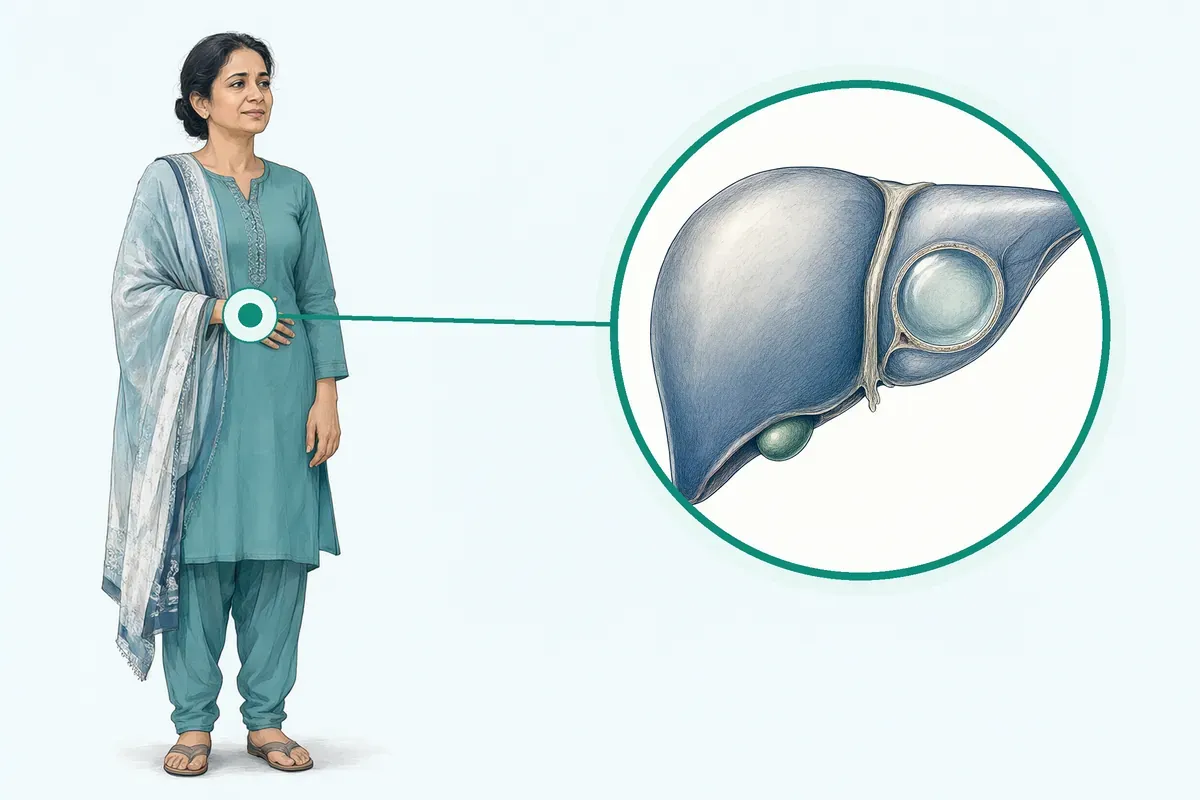
- Operation time
- 2 to 3 hours
- Anaesthesia
- General anaesthesia
- Recovery
- Light activity in 2 weeks, full recovery in 4 to 6 weeks
- Price
- ₹80,000 to ₹2,00,000typical range in India; ask us for an estimate
Cysts that press, ache or leak
A cyst in the liver can grow without symptoms until it presses on organs, causes pain or risks rupture
Many liver cysts are found by chance. Hydatid cysts come from a parasite and can leak or infect other areas. Simple cysts may only need watching. Larger or complicated cysts often need surgery to prevent bile leak, infection or sudden rupture.
-
Found by chance on a scan
Ultrasound or CT done for another reason often shows a liver cyst that causes no pain.
-
Dull ache or fullness
A growing cyst stretches the liver capsule, causing a heavy feeling or pain in the upper right abdomen.
-
Risk of bile leak or rupture
A cyst that communicates with the bile duct can leak bile. Rupture can spread infection or cause anaphylaxis.
-
Hydatid cysts need specific care
Parasite cysts require anti-parasite medicine before and after any procedure to lower recurrence risk.
Hydatidosis is a zoonosis caused by Echinococcus in the larval stage; humans are accidental intermediary hosts where cystic lesions develop, primarily in the liver.
Why Jaipur Hospital
You worry whether the cyst will burst, whether surgery will leak bile, and how long you will be off work.
Your care plan
Your first steps with us
- 1 Call or visit OPD for surgeon consultation
- 2 Review scans and plan the right approach
- 3 Undergo laparoscopic or open surgery
- 4 Recover at home with follow-up visits
Insurance and schemes
How cashless works
Cashless treatment under MAA Yojana and with 32 insurers.
-
Tell us when you book
Say you are insured or have a scheme card, and send a photo of the card on WhatsApp so our insurance desk can check it in advance.
-
We get the approval
Once your doctor advises admission, the insurance desk sends the pre-authorisation request to your insurer or TPA; for planned surgery, approval can come before you are admitted.
-
Settled at discharge
The approved amount is settled between the insurer and the hospital; you pay only what the policy does not cover.
How the operation is done
Under general anaesthesia, the surgeon removes or unroofs the cyst through small ports, uses scolicidal agents for hydatid cysts, and may place omentum in the cavity to prevent bile leak. Operation takes 2 to 3 hours; stay is 3 to 5 nights.
-
Laparoscopic Cyst Fenestration
Der roofing of the cyst with minimal dissection; day-care possible for simple cysts.
-
Laparoscopic Hydatid Cystectomy
Pericystectomy with scolicidal agents to avoid spillage; general anaesthesia required.
-
Open Surgery
Used for giant cysts, complex anatomy, or intraoperative complications.
-
Percutaneous Drainage (PAIR)
Image-guided aspiration, injection of scolicidal agent, and re-aspiration for selected uncomplicated cysts.
Why patients trust us
- 1991 Serving Jaipur for 35 years
- NABH Accredited hospital
- 3 General & Laparoscopic Surgery consultants
- 24×7 Emergency, ICU and ambulance
- 32 Cashless insurers, plus MAA Yojana
What research shows about this treatment
-
6.9 days mean stay
In a surgical series the mean hospital stay was 6.9 days; laparoscopic cases stayed fewer days than open cases.
-
3.9% recurrence laparoscopic
The recurrence rate for laparoscopic hydatid cyst surgery was 3.9% in a meta-analysis of 212 patients.
-
0% mortality in series
No deaths were recorded in the laparoscopic or open surgery groups across several studies.
If it is left untreated
If left untreated, a hydatid cyst can rupture into the bile duct causing jaundice or fistula, burst into the abdomen causing anaphylaxis or spread daughter cysts, or grow large enough to compress the vena cava and nearby organs.
Life after treatment
Most people return to light activity in two weeks and full activity in four to six weeks with regular ultrasound follow-up.
-
Back to daily routine
Light activity usually resumes in two weeks; full recovery in four to six weeks.
-
Regular scan checks
Ultrasound follow-up every six months for two years, then yearly, to watch for recurrence.
-
Low bile leak risk
Omentum placement in the cavity helps seal the surface and reduces bile leak.
Meet the team
Your general & laparoscopic surgery doctors
Explore our general and laparoscopic surgery department in Jaipur: every treatment, the doctors and what to expect at your visit.



Frequently asked questions
Questions patients ask about liver cyst and hydatid cyst surgery
What does hydatid and liver cyst surgery involve?
In short
Hydatid and liver cyst surgery at Jaipur Hospital removes fluid-filled cysts from the liver using keyhole or open methods. The operation takes two to three hours under general anaesthesia. Most patients stay three to five nights. Light activity returns in two weeks and full recovery takes four to six weeks. The typical cost range in India is ₹80,000 to ₹2,00,000.
In detail
The surgeon chooses the technique based on cyst type, size, location and number. Simple cysts may need laparoscopic fenestration, where the cyst roof is removed. Hydatid cysts require careful cystectomy with scolicidal agents to kill parasites and prevent spillage.
Large, deep or multiple cysts, or those near major vessels, may need open surgery. Percutaneous drainage (PAIR) is an option for selected uncomplicated cysts in patients unfit for surgery.
Omentoplasty, using a fold of abdominal fatty tissue to fill the cavity, is often added to lower the risk of bile leak and infection.
A common belief
Many people think the cyst is just drained.
What actually happens
Simple drainage leads to almost certain recurrence. Definitive treatment removes or destroys the cyst lining and manages the cavity to stop bile leaks.
Your next step at Jaipur Hospital
You will meet the surgical team for a detailed assessment and imaging review. They explain the chosen approach, risks and expected recovery. Pre-operative albendazole is usually started at least three days before surgery and continued for weeks after.
Which tests and scans do I need before hydatid and liver cyst surgery?
In short
Before surgery at Jaipur Hospital, you need an ultrasound of the abdomen, a CT scan or MRI of the liver, and blood tests including complete blood count, liver function, coagulation profile and hydatid serology (ELISA or indirect haemagglutination). The surgeon may also request MRCP to check bile duct involvement. CT and MRI are done at an outside imaging centre; the team reviews the images.
In detail
Ultrasound is the primary screening tool. CT gives better detail on cyst location, number, size and calcifications. MRI with T2-weighted sequences shows microcysts and helps differentiate hydatid cysts from tumours. Serology supports the diagnosis but can give false positives from cross-reactivity.
Confirmation comes from finding protoscoleces in aspirated fluid. Preoperative staging studies are essential to avoid missing small lesions and to decide resectability. The anaesthesia team uses blood results to plan safe general anaesthesia.
A common belief
Some patients think a single ultrasound is enough.
What actually happens
For surgery planning, cross-sectional imaging (CT or MRI) is essential to see the cyst relationship to vessels and bile ducts, which ultrasound often misses.
Your next step at Jaipur Hospital
Arrange the scans and blood work a few days before your surgical consultation. Bring all reports and images on a CD or film. The surgeon will explain the findings and the surgical plan. Pre-operative albendazole is usually started at least three days before the procedure.
How painful is liver cyst and hydatid cyst surgery and the early recovery?
In short
At Jaipur Hospital, liver cyst and hydatid cyst surgery is done under general anaesthesia so you feel nothing during the operation. After surgery there is discomfort at the small incision sites and sometimes shoulder-tip pain from the gas used in laparoscopy. The team gives regular pain relief so most people manage well.
In detail
Laparoscopic surgery uses several small cuts instead of one large cut. Studies show postoperative pain scores are significantly lower after laparoscopic surgery than after open surgery. Pain is usually mild to moderate and settles in the first few days.
Shoulder-tip pain from the carbon dioxide gas is common but temporary. The nursing team gives pain medicine on a schedule, not only when you ask for it.
If a larger open operation is needed, pain is stronger and lasts longer, but the same pain-relief plan is used. Most patients move around the ward on the first day after laparoscopic surgery.
A common belief
A common belief is that keyhole surgery causes no pain at all.
What actually happens
The small cuts still hurt, and the gas used to see inside can cause shoulder pain. Open surgery hurts more and for longer. The team plans pain relief for either approach.
Your next step at Jaipur Hospital
Take the prescribed pain tablets on time for the first 48 hours. Walk short distances as soon as you can. Shoulder-tip pain improves with movement and warm packs. If pain suddenly worsens or you develop fever, tell the nurse or doctor at once.
How long does recovery usually take after laparoscopic liver cyst or hydatid cyst surgery?
In short
After laparoscopic liver cyst or hydatid cyst surgery at Jaipur Hospital, most people return to light activity within 2 weeks and achieve full recovery in 4 to 6 weeks. The typical hospital stay is 3 to 5 nights. Office work can often resume at 2 weeks; heavy lifting and strenuous exercise should wait until 6 weeks.
In detail
Studies report a mean hospital stay of about 7 days, with significantly shorter stays after laparoscopic than open surgery. Postoperative pain scores are significantly lower after laparoscopy, allowing earlier mobilisation.
At Jaipur Hospital the enhanced recovery pathway encourages walking from day one, early oral intake, and multimodal pain relief. Light activity such as walking and desk work is usually comfortable by 2 weeks.
Full healing of the port sites and internal tissues takes 4 to 6 weeks. Follow-up ultrasound is recommended every six months for the first two years, then yearly, because recurrence has been reported up to ten years after treatment.
A common belief
People expect a long bed rest after liver surgery.
What actually happens
Laparoscopic ports heal fast. The main delay is internal healing, which takes about 6 weeks before heavy strain is safe.
Your next step at Jaipur Hospital
Plan for 2 weeks off work if your job is sedentary, 4 to 6 weeks if it involves heavy lifting. Avoid driving while on opioid pain medication. Attend the scheduled follow-up visits for wound check and ultrasound.
What do abnormal liver blood tests mean for liver cyst or hydatid cyst?
In short
Abnormal liver blood tests may show raised enzymes such as ALT, AST, ALP or GGT, or a high bilirubin. At Jaipur Hospital, the surgical team uses these results together with imaging to decide if a cyst is pressing on the bile ducts, causing inflammation, or if there is another liver problem. The pattern of abnormality helps guide the next step.
In detail
Liver function tests are a standard part of the work-up before any cyst surgery. A simple cyst often leaves these tests normal. A large cyst or a hydatid cyst that presses on the biliary tree can raise ALP and GGT.
If the cyst leaks or ruptures, ALT and AST may rise sharply and bilirubin can increase if a bile duct is blocked. In hydatid disease, eosinophilia sometimes appears in the blood count.
Serology such as ELISA or indirect haemagglutination supports the diagnosis but can give false positives. Imaging — ultrasound first, then CT or MRI at an outside centre — shows the cyst size, location, number and whether the bile ducts are dilated. The surgeon correlates the blood pattern with the imaging to decide if surgery, drainage, or medical treatment is needed.
A common belief
People often panic over a single high number.
What actually happens
One raised enzyme does not equal liver failure. We look at the whole picture — imaging, symptoms, and the trend over time — before deciding on treatment.
Your next step at Jaipur Hospital
If your recent liver blood tests are abnormal, bring the reports to your consultation. The surgeon will review them, order imaging if needed, and explain what the numbers mean for your cyst. Follow-up blood tests are repeated after treatment to confirm the liver is settling.
How will the surgeon decide whether an operation is necessary for my liver cyst or hydatid cyst?
In short
The surgeon at Jaipur Hospital decides based on cyst type, size, location, number, imaging features, symptoms and the risk of complications. Simple cysts under observation may need no surgery. Hydatid cysts larger than 10 cm, cysts with daughter cysts, superficial cysts at risk of rupture, or cysts that communicate with the bile duct are usual indications for surgery. Medical treatment or PAIR drainage may be chosen for selected cases.
In detail
Evidence lists operative indications: cysts ≥ 10 cm, especially with multiple daughter cysts; superficially located solitary cysts at risk of rupture; complicated cysts that obstruct or compress neighbouring structures, communicate with the biliary tree, or become super-infected.
For hydatid cysts, the WHO imaging classification (type 1 to 5) guides the choice between surgery, PAIR, or medical treatment alone. Laparoscopic surgery is suitable only for selected cases — usually type 1 or accessible type 2 cysts.
Deep-seated cysts, posterior cysts near the vena cava, more than three cysts, or calcified walls make laparoscopy unsuitable. Open surgery is used for giant cysts, complex anatomy, or if laparoscopic surgery becomes unsafe. The surgeon also considers your general health, liver function, and whether you have taken albendazole pre-operatively.
A common belief
Many patients think any cyst must be removed.
What actually happens
In fact, simple asymptomatic cysts often need no treatment. The decision balances the risk of the cyst against the risk of surgery, using clear imaging criteria.
Your next step at Jaipur Hospital
Bring all your imaging reports and blood tests to the consultation. The surgeon will explain which category your cyst falls into and why surgery, drainage, or observation is advised.
You will discuss the approach — laparoscopic or open — and the expected hospital stay of 3 to 5 nights.
Why might my doctor recommend hydatid and liver cyst surgery?
In short
A doctor at Jaipur Hospital may recommend surgery when a liver cyst causes symptoms, grows large, or carries a risk of complications. Hydatid cysts are parasitic and can rupture, spread infection or trigger severe allergic reactions. Simple cysts that press on nearby organs, bleed or become infected also need removal. Surgery aims to remove the cyst safely and prevent these problems.
In detail
Guidelines suggest operative treatment for cysts ten centimetres or larger, especially with multiple daughter cysts. Superficial cysts at risk of rupture, and complicated cysts that obstruct or compress neighbouring structures, communicate with the bile ducts, or become super-infected are clear indications.
For hydatid disease, surgery remains the primary curative approach for resectable cysts. Medical therapy with albendazole alone is reserved for small, uncomplicated cysts or patients unfit for surgery. PAIR drainage is an alternative for selected uncomplicated cysts when expertise is available.
A common belief
Some believe medicine alone can heal all cysts.
What actually happens
Albendazole works well for small, early hydatid cysts. Large or complex cysts rarely respond to drugs alone and carry higher rupture risk if only watched.
Your next step at Jaipur Hospital
Your surgeon reviews imaging, blood tests and your overall health to decide if the benefits outweigh the risks. If surgery is advised, pre-operative albendazole is usually started three days before. The team discusses the technique, hospital stay and recovery timeline.
How should I prepare in the days before hydatid and liver cyst surgery?
In short
In the days before surgery at Jaipur Hospital, you start pre-operative albendazole, usually at least three days prior, and continue it after surgery as advised. Stop blood-thinning medicines only if the surgeon or anaesthetist tells you to. Arrange an attendant to stay with you during the three to five night hospital stay. Follow the fasting instructions given by the anaesthesia team.
In detail
Peri-operative albendazole prophylaxis is standard for hydatid cysts to reduce cyst viability and lower spillage risk. It is continued for three to eight weeks after uncomplicated surgery and three to six months for complicated cases.
The anaesthesia team reviews your medicines, supplements and herbal products at the pre-anaesthesia check. You may need to stop certain supplements that affect bleeding. The surgical team marks the site and confirms the plan. Bowel preparation is not routinely required for laparoscopic liver surgery.
A common belief
Patients often stop their regular medicines on their own.
What actually happens
Some supplements increase bleeding risk. Always show the anaesthetist everything you take, including herbal products, so they can advise safely.
Your next step at Jaipur Hospital
Complete your pre-anaesthesia check-up, submit all investigation reports, and sign the consent form. Pack comfortable clothes, your regular medicines, and any prescribed albendazole. Confirm the admission time with the hospital.
What are the common side effects and the less common serious complications of liver cyst and hydatid cyst surgery?
In short
At Jaipur Hospital, common side effects after liver cyst and hydatid cyst surgery include mild pain at the incision sites, shoulder-tip pain from the gas, tiredness and temporary bloating. Less common serious complications are bile leak, bleeding, infection, cyst recurrence and allergic reaction if cyst fluid spills.
In detail
Studies report that most patients have no major complications. Bile leak (biloma) occurred in some series, especially when the residual cavity was not covered with omentum. Biliary fistula, defined as bile leakage lasting more than 10 days, was seen only in procedures without omentoplasty.
Intraoperative spillage of hydatid fluid can cause anaphylactic shock or peritoneal recurrence; scolicidal agents and soaked gauzes are used to minimise this. Recurrence rates in studies range around 3 to 6 percent at one year.
Bleeding needing transfusion is less frequent with laparoscopy than with open surgery. Wound infection is also lower after laparoscopy. The team monitors you closely for any bile leak or fever in the first few days.
A common belief
Many people think laparoscopic surgery has no risks.
What actually happens
Bile leak and recurrence still happen, though less often than with open surgery. Spillage of hydatid fluid can cause a severe allergic reaction or spread the disease. The team uses scolicidal agents and omentoplasty to lower these risks.
Your next step at Jaipur Hospital
Expect to feel tired for a week or two. Walk daily and eat light meals. Watch for increasing abdominal pain, fever, yellow skin or eyes, or swelling at the wounds. These need urgent review. You will be seen in the surgical OPD at 1 to 2 weeks.
Which symptoms are expected after laparoscopic liver cyst or hydatid cyst surgery, and which need urgent medical attention?
In short
Expected symptoms after laparoscopic liver cyst or hydatid cyst surgery at Jaipur Hospital include mild to moderate wound pain, shoulder-tip pain for 24 to 48 hours, fatigue, low-grade fever in the first 48 hours, and bruising around the ports. Urgent symptoms are severe or worsening abdominal pain, high fever (above 38.5°C), jaundice, persistent vomiting, increasing abdominal distension, redness or discharge from the wounds, and shortness of breath. Contact the hospital immediately if these occur.
In detail
Studies show bile leak, biloma and biliary fistula are more common when omentoplasty is not used. Recurrence rates in series range from 3.6% to 11% depending on cyst type. Anaphylactic reaction is rare but possible if hydatid fluid spills.
The team at Jaipur Hospital uses scolicidal gauze, careful cyst evacuation and peri-operative albendazole to reduce these risks. Postoperative pain scores are significantly lower after laparoscopy, and surgical-site infection rates are lower than with open surgery. Follow-up ultrasound every six months for two years, then yearly, is recommended because late recurrence can occur.
A common belief
Patients often dismiss worsening pain as normal healing.
What actually happens
Pain that gets worse after day 2, especially with fever or jaundice, can mean a bile leak or infection. Early review prevents a bigger problem.
Your next step at Jaipur Hospital
Take prescribed pain tablets regularly for the first 48 hours. Walk short distances several times daily. Keep the dressings clean and dry. If any urgent symptom appears, call the hospital or attend the 24×7 emergency department.
FAQ library
Questions and answers about liver cyst and hydatid cyst surgery
When you contact us
Clear plan and cost estimate
Contact Jaipur Hospital for a surgeon consultation, scan review, plain-language options, a cost estimate and cashless help under MAA Yojana and empanelled insurers and TPAs.
- A consultation with a general and laparoscopic surgeon in the OPD
- Your scans and reports reviewed, with tests done in-house if you need them (laboratory, X-ray and imaging)
- Your options explained in plain words, including whether you need surgery at all
- A cost estimate before you decide
- Help with cashless treatment under MAA Yojana and empanelled insurers and TPAs
- Follow-up visits after your treatment
Overview
Liver Cyst and Hydatid Cyst Surgery: what to know
What liver cysts and hydatid cysts are
- Simple cyst
- Fluid-filled sac, usually benign
- Hydatid cyst
- Caused by tapeworm larvae
- Alveolar echinococcosis
- Behaves like a tumour
A liver cyst is a fluid-filled sac that forms inside the liver. Most simple cysts are benign and cause no trouble. A hydatid cyst is different: it is caused by the larval stage of a tapeworm called Echinococcus.
Humans become accidental hosts when they swallow the parasite's eggs, and the larvae travel through the blood to settle mainly in the liver and lungs. The cyst grows slowly and has an inner germinal layer that can produce daughter cysts. Another form, alveolar echinococcosis, behaves like a tumour and invades nearby structures. Many cysts stay quiet for years and are found by chance during a scan for another reason.
Symptoms and warning signs that need urgent care the same day
- Sudden severe pain May mean cyst rupture
- Fever and vomiting Signs of infection or leak
- Allergic reaction Breathing difficulty or low BP
Most people have no symptoms for a long time because the cyst grows slowly. When symptoms appear, the most common are vague abdominal pain and fatigue. You may also feel a lump or fullness in the upper abdomen. If the cyst presses on the bile ducts, jaundice can develop.
Sudden severe pain, fever, vomiting, or an allergic reaction with breathing difficulty or a drop in blood pressure can mean the cyst has ruptured or leaked. These are warning signs that need medical attention the same day. A ruptured cyst can spill contents into the abdomen and cause anaphylaxis or spread the infection.
Causes and who is at higher risk
- Zoonotic spread
- Eggs from dog faeces contaminate soil, water, vegetables
- Alveolar type
- From foxes and dogs, species E. multilocularis
- Higher risk
- Rural areas with livestock and dogs near people
- Simple cysts
- Not caused by a parasite, exact cause unclear
Hydatid disease is a zoonosis: the tapeworm lives in dogs and other canines, and eggs pass out in their faeces.
People pick up the eggs from:
- Contaminated soil
- Water
- Vegetables
- Direct contact with dogs
The liver is the main organ affected. Alveolar echinococcosis comes from a different species, Echinococcus multilocularis, carried by foxes and dogs. Anyone can be infected, but the risk is higher in rural areas where livestock and dogs live close to people. Immunosuppressed persons may be more likely to develop active disease.
Simple liver cysts are not caused by a parasite; their exact cause is often unclear, but they are common and usually harmless.
How liver cysts and hydatid cysts are diagnosed
- Clinical exam and blood tests First assessment
- Ultrasound First imaging test for size and structure
- CT or MRI Detail on location, vessels, bile ducts, daughter cysts
- Antibody tests ELISA or indirect haemagglutination support diagnosis
- Fluid analysis Protoscoleces confirm hydatid disease
Diagnosis starts with a clinical examination and blood tests. Ultrasound is the first imaging test and often shows the cyst's size, number, and internal structure. CT and MRI give more detail about the cyst's location, relationship to blood vessels and bile ducts, and whether daughter cysts or calcifications are present.
MRI is especially useful to see microcysts and to tell hydatid cysts apart from tumours. Blood tests for antibodies (ELISA, indirect haemagglutination) support the diagnosis, though they can sometimes be positive because of other infections. Finding protoscoleces in fluid taken from the cyst confirms hydatid disease. Before any procedure, the team checks for other cystic liver lesions to be sure of the diagnosis.
Non-surgical treatment options and when surgery is advised for liver cysts and hydatid cysts
Small, uncomplicated hydatid cysts that are inactive may be watched with regular ultrasound scans. Anti-parasitic medicine (albendazole) alone can be used for some active but uncomplicated cysts. The PAIR procedure (percutaneous aspiration, injection of a scolicidal agent, and re-aspiration) is an image-guided option for selected cysts when surgery is not suitable or is declined.
Albendazole is usually given before and after any intervention to reduce the viability of the cyst contents. Surgery is advised when the cyst is large (generally 10 cm or more), contains multiple daughter cysts, is superficially placed and at risk of rupture, or has become complicated by infection, bile duct communication, or pressure on nearby organs.
Surgery is also the choice when expertise for PAIR is not available or the cyst has relapsed after earlier treatment. For simple liver cysts that cause symptoms, laparoscopic unroofing (fenestration) is the usual surgical approach.
Preparing for liver cyst and hydatid cyst surgery
Do
- Blood tests Haemoglobin, liver, kidney, clotting
- Imaging at outside centre Ultrasound or CT confirms cyst details
- Tell doctor about medicines Blood thinners, diabetes tablets may need change
- Start albendazole early At least three days before operation
- Fast six hours No food or drink before anaesthesia
- Bring documents Reports, imaging, medicines list, insurance card
Your surgeon will explain the operation and answer your questions.
You will have blood tests to check:
- Haemoglobin
- Liver function
- Kidney function
- Clotting
An ultrasound or CT scan done at an imaging centre outside the hospital confirms the cyst size, location and whether it communicates with the bile ducts. If you take blood thinners, diabetes tablets or any regular medicine, tell your doctor; some may need to be stopped or adjusted a few days before surgery.
Albendazole is usually started at least three days before the operation and continued afterwards to reduce the risk of spread if cyst fluid leaks.
You must not eat or drink for at least six hours before general anaesthesia.
Bring your:
- Test reports
- Imaging films or CDs
- A list of current medicines
- Your insurance or MAA Yojana card
- Comfortable clothes for discharge
An attendant should stay with you during the admission. The hospital has an in-house pharmacy and laboratory, so any last-minute tests or medicines can be arranged on the same day.
How liver cyst and hydatid cyst surgery is done
The operation is performed under general anaesthesia and usually takes two to three hours. Your surgeon will choose the technique that fits your cyst type, size, location and whether it is a simple liver cyst or a hydatid cyst caused by Echinococcus.
- Laparoscopic cyst fenestration (deroofing): The surgeon removes the roof of a simple cyst through small incisions, allowing the fluid to drain into the abdomen where it is absorbed. This is suitable for superficial, uncomplicated cysts and may be done as a day-case procedure.
- Laparoscopic hydatid cystectomy (pericystectomy): For hydatid cysts, the surgeon places gauze soaked in scolicidal solution around the cyst, aspirates the fluid, injects a scolicidal agent and then removes the laminated membrane and germinal layer while avoiding spillage. The residual cavity may be filled with omentum (omentoplasty) to reduce bile leak and infection.
-
Open surgery: A larger incision is used for:
- Giant cysts
- Cysts deep in the liver parenchyma
- Posterior cysts near the vena cava
- Multiple cysts (more than three)
- Calcified cysts
- If laparoscopic surgery becomes unsafe during the operation
- Percutaneous drainage (PAIR): Under ultrasound or CT guidance at an imaging centre, a needle is passed through the skin into the cyst, fluid is aspirated, a scolicidal agent is injected and re-aspirated after 20 to 30 minutes. This is reserved for patients who are poor surgical candidates, have recurrent cysts or decline surgery.
On the day of surgery you are taken to the modular operation theatre. After anaesthesia, the surgeon makes the planned incisions, performs the chosen procedure and places a drain if needed. You wake up in the recovery area and are then shifted to a ward. The typical hospital stay is three to five nights.
Risks and possible complications of liver cyst and hydatid cyst surgery
- 67.9% No complications
- 7.1% Biloma without omentoplasty
- 0% Biloma with omentoplasty
All operations carry risks.
The most common complications reported in studies are:
- Bile leak (biloma)
- Wound infection
- Persistent cyst cavity
- Recurrence
In one series, 67.9% of patients had none of these complications.
Bile leak or biliary fistula (leakage lasting more than ten days) occurred only in patients who did not have omentoplasty. Biloma was more frequent without omentoplasty (7.1% versus 0%). Wound infection rates were lower after laparoscopic surgery than after open surgery.
Intraoperative spillage of cyst contents can cause anaphylactic shock or peritoneal spread; scolicidal gauze and careful technique are used to minimise this.
Laparoscopic surgery has been associated with a higher rate of extrahepatic and peritoneal recurrence compared with primary open surgery. Posterior hepatic cysts are considered a contraindication to laparoscopic management. Conversion to open surgery may be needed if the anatomy is difficult or bleeding occurs. No mortality was recorded in several recent series. Your surgeon will discuss the risks that apply to your cyst type and location.
Recovery and aftercare after liver cyst and hydatid cyst surgery
After surgery you will have a drain in place for one to two days. Pain is usually controlled with regular tablets; laparoscopic surgery is associated with lower pain scores than open surgery. You can start sipping water on the same evening and eat a normal diet by the next day.
The average hospital stay in studies was about seven days; at Jaipur Hospital the typical stay is three to five nights.
You can resume light activity within two weeks. Full recovery takes four to six weeks. Avoid heavy lifting or strenuous exercise for six weeks. Keep the wound clean and dry; the stitches or clips are removed at the follow-up visit, usually after ten to fourteen days.
Albendazole is continued for three to eight weeks after uncomplicated surgery and for three to six months if the cyst was complicated.
Follow-up ultrasound is recommended every six months for the first two years, then once a year. Recurrences have been reported up to ten years after treatment, so long-term monitoring is advised.
Contact the hospital if you develop:
- Fever
- Increasing abdominal pain
- Redness or discharge from the wound
- Jaundice
- Shortness of breath
The 24×7 emergency department is available for any urgent concern.
Results of liver cyst and hydatid cyst surgery
- 6.3% One-year recurrence
- 12.5% persistence, 3.6% recurrence Persistence and recurrence
- About 5% PAIR recurrence
- Around 3.9% Laparoscopic recurrence
Surgery remains the definitive treatment for symptomatic or complicated liver cysts and hydatid cysts. In a meta-analysis of 1,028 patients, there were no statistically significant differences between laparoscopic and open surgery for complications, recurrence, mortality or healing rates.
Recurrence rates vary with cyst type and surgical technique. One study reported a one-year recurrence rate of 6.3%. Another series found persistence in 12.5% and recurrence in 3.6% of patients, with higher rates after segmentectomy or lobectomy compared with omentoplasty. PAIR had a recurrence rate of about 5% in some reports. Laparoscopic recurrence was around 3.9%. Recurrence depends heavily on patient selection and cyst stage.
Mortality after surgery for hydatid disease ranges from 0% to 3.5% in the literature; several recent series recorded zero deaths. Laparoscopic surgery results in less blood loss, shorter operative time, less postoperative pain and a shorter hospital stay than open surgery. Your surgeon will explain what outcome you can expect based on your cyst characteristics.
Cost and insurance for liver cyst and hydatid cyst surgery in Jaipur
The typical price range for this surgery in India is ₹80,000 to ₹2,00,000.
The final cost depends on:
- The technique (laparoscopic or open)
- The complexity of the cyst
- The length of stay
- Whether omentoplasty or a drain is needed
- Any additional medicines or investigations
Ask the hospital for an estimate based on your imaging and clinical details.
Jaipur Hospital is empanelled under MAA Yojana and works with a panel of private insurers and TPAs for cashless admission. Bring your scheme card or insurance policy documents at the time of admission. The hospital has an in-house pharmacy and diagnostic laboratory (X-ray; CT and MRI are done at an imaging centre outside the hospital). For billing queries, the admissions desk can coordinate with your TPA or insurer.
