

Obstetrics and Gynaecology · Jaipur Hospital
Bleeding in Early Pregnancy in Jaipur
Bleeding and worry in early pregnancy. Clear assessment and a plan from our gynaecology team.
- Serving Jaipur since 1991 (35 years)
- NABH accredited
- 24×7 emergency & ICU
- Cashless: MAA Yojana + 32 insurers
- Session length
- 30 to 60 minutes (initial evaluation)
- Anaesthesia
- Not needed for evaluation
- Recovery
- Depends on final management (expectant, medical, surgical)
- Price
- ₹2,000 to ₹8,000 (evaluation package)typical range in India; ask us for an estimate
Bleeding brings fear and questions
Bleeding in early pregnancy feels frightening and uncertain
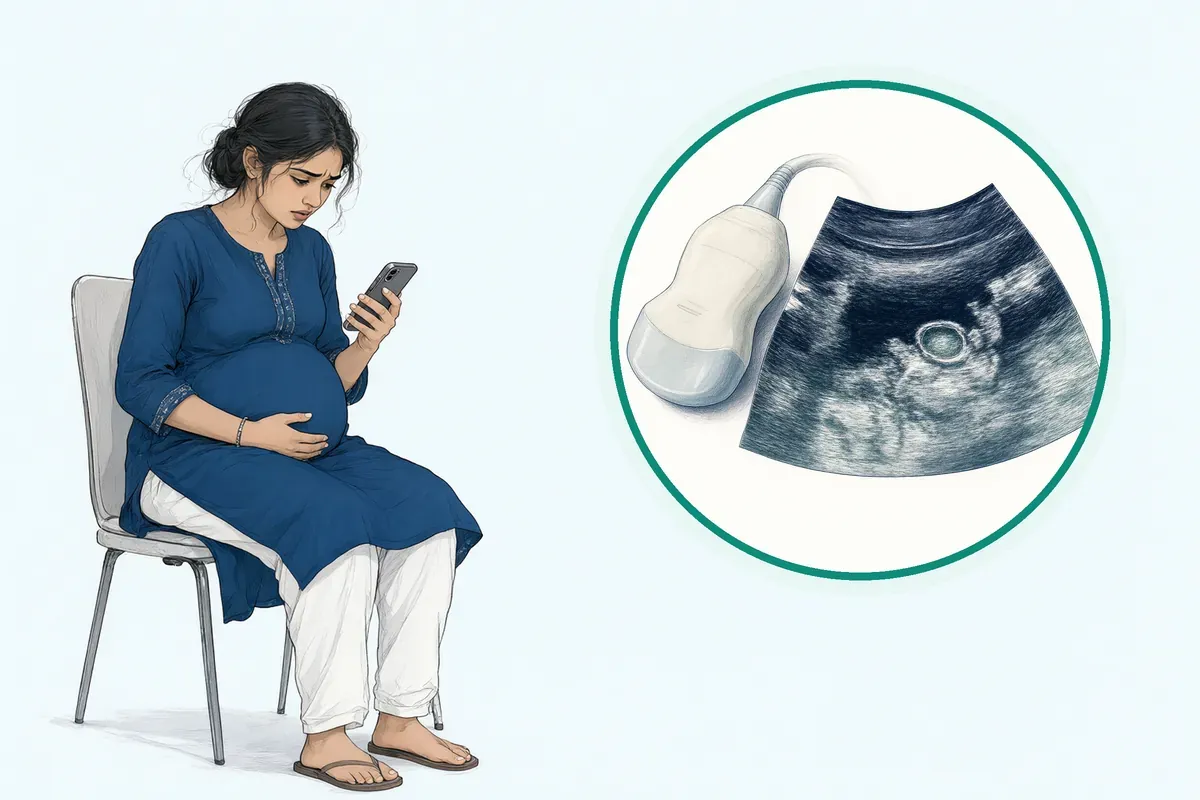
You may see spotting or heavier bleeding with or without cramps. You do not know if the pregnancy is still viable or what happens next. Waiting for answers adds stress.
-
Spotting or heavy bleeding
Light spotting is common but heavy bleeding with clots may signal a problem.
-
Cramps like a period
Pain in the lower abdomen can accompany bleeding and raise concern.
-
Not knowing the outcome
Uncertainty about whether the pregnancy continues is the hardest part.
-
Fear of ectopic pregnancy
Bleeding can also mean a pregnancy outside the uterus, which needs urgent care.
About one in four pregnant women experience bleeding before 12 weeks.
Why Jaipur Hospital
You are scared about the bleeding, worried about the baby, and need answers without delay.
Your care plan
Your first steps with us
- 1 Call or visit OPD for initial assessment
- 2 Have transvaginal ultrasound and hCG blood test
- 3 Discuss options: wait, medicine, or minor surgery
- 4 Follow up until bleeding stops and recovery is confirmed
Insurance and schemes
How cashless works
Cashless treatment under MAA Yojana and with 32 insurers.
-
Tell us when you book
Say you are insured or have a scheme card, and send a photo of the card on WhatsApp so our insurance desk can check it in advance.
-
We get the approval
Once your doctor advises admission, the insurance desk sends the pre-authorisation request to your insurer or TPA; for planned surgery, approval can come before you are admitted.
-
Settled at discharge
The approved amount is settled between the insurer and the hospital; you pay only what the policy does not cover.
How the assessment is done
We use ultrasound and serial hCG levels to check viability, location and whether tissue remains. Management follows the confirmed diagnosis.
-
Transvaginal Ultrasound
Checks for a gestational sac, embryo, cardiac activity and measures crown-rump length.
-
Serial Beta-hCG Monitoring
Blood tests 48 hours apart show if hormone levels rise appropriately for a viable pregnancy.
-
Expectant Management
Watchful waiting for spontaneous expulsion if you are stable and prefer to avoid intervention.
-
Medical or Surgical Evacuation
Misoprostol tablets or a brief MVA/D&C procedure to remove remaining tissue if needed.
Why patients trust us
- 1991 Serving Jaipur for 35 years
- NABH Accredited hospital
- 3 Obstetrics and Gynaecology consultants
- 24×7 Emergency, ICU and ambulance
- 32 Cashless insurers, plus MAA Yojana
What research shows about this treatment
-
83.8% vs 67.1%
Complete expulsion after one misoprostol dose was higher with mifepristone pretreatment than misoprostol alone.
-
8.8% vs 23.5%
Uterine aspiration was needed less often after mifepristone plus misoprostol than after misoprostol alone.
-
1 to 2 weeks
Physical recovery after miscarriage usually takes up to two weeks, sometimes longer.
If it is left untreated
Untreated heavy bleeding can lead to anaemia or infection. An ectopic pregnancy can rupture and cause life-threatening internal bleeding.
Life after treatment
Most women recover physically within weeks and go on to have healthy pregnancies. Emotional healing may take longer.
-
Physical recovery
Bleeding and cramping usually settle within one to two weeks after the uterus is empty.
-
Future pregnancy
Most women who have an early loss go on to have successful pregnancies later.
-
Emotional support
Grief and anxiety are common; talking to a counsellor or support group helps many women.
-
Return to routine
You can resume normal activities once bleeding stops and your doctor confirms recovery.
Meet the team
Your obstetrics and gynaecology doctors
Explore our gynaecology and maternity hospital in Jaipur: every treatment, the doctors and what to expect at your visit.



Frequently asked questions
Questions patients ask about bleeding in early pregnancy
What is early pregnancy bleeding evaluation, and why has it been recommended?
In short
Early pregnancy bleeding evaluation at Jaipur Hospital uses transvaginal ultrasound and serial beta-hCG blood tests to check the pregnancy's location, viability, and growth. It is recommended when you have vaginal bleeding or cramping in the first trimester to distinguish between a threatened miscarriage, an incomplete or missed miscarriage, or an ectopic pregnancy.
In detail
The assessment combines two main tools. Transvaginal ultrasound looks for a gestational sac, yolk sac, embryo, and cardiac activity, and measures the crown-rump length.
Serial beta-hCG monitoring checks the 48-hour doubling trend; a rise below the expected 33 to 49 percent suggests a non-viable or ectopic pregnancy. The discriminatory zone of 1,500 to 3,000 mIU/mL is the level above which an intrauterine pregnancy should be visible on ultrasound.
If no sac is seen above this level, early pregnancy loss or ectopic pregnancy is suspected.
Ultrasound criteria such as a mean sac diameter of 25 mm or more with no embryo, or a crown-rump length of 7 mm or more with no cardiac activity, confirm early pregnancy loss. A speculum exam may also identify non-obstetric causes like cervicitis or a cervical polyp.
A common belief
Many people think bleeding always means miscarriage, but about one in four women bleed in early pregnancy and many go on to have a healthy baby.
What actually happens
The evaluation tells the difference between a threatened miscarriage, a completed or missed loss, or an ectopic pregnancy.
Your next step at Jaipur Hospital
The initial evaluation takes 30 to 60 minutes in the OPD and needs no anaesthesia. Bring any previous ultrasound reports, beta-hCG values, and a list of current medicines. No fasting is required.
After the assessment, your surgeon will discuss the findings and the next steps, which may be expectant, medical, or surgical management.
Do I need a referral or an appointment for early pregnancy bleeding evaluation?
In short
You do not need a referral to attend the gynaecology OPD at Jaipur Hospital for early pregnancy bleeding evaluation. You can book an appointment directly by phone or walk in during OPD hours, though a scheduled slot reduces waiting time.
In detail
The hospital runs a gynaecology OPD where specialist doctors see patients for bleeding in early pregnancy. The initial evaluation takes 30 to 60 minutes and includes a transvaginal ultrasound, blood test for beta-hCG and a clinical assessment.
If you have previous ultrasound reports, beta-hCG values or a note from another doctor, bring them along; they help the team understand the timeline and avoid repeating tests.
The 24x7 emergency department is also available if you have heavy bleeding, severe pain or feel unwell, and no appointment is needed for emergency attendance.
A common belief
Some patients wait for a referral from another clinic, which delays diagnosis.
What actually happens
Direct access to the gynaecology OPD or emergency department at Jaipur Hospital means you can be assessed on the same day.
Your next step at Jaipur Hospital
Call the hospital on 0141-2551500 or 7414 001 001 to book a convenient OPD slot. If you are unsure whether your symptoms need emergency care, the phone staff can guide you. Bring your ID, any insurance or MAA Yojana card, and previous reports.
What happens during early pregnancy bleeding evaluation?
In short
At Jaipur Hospital, the evaluation takes 30 to 60 minutes in the OPD. You will have a transvaginal ultrasound to check the pregnancy location, sac size, embryo, and heartbeat, a blood test for quantitative beta-hCG, and a speculum exam if needed to see the cervix and any passing tissue. No anaesthesia is used.
In detail
The transvaginal ultrasound measures the mean gestational sac diameter and crown-rump length. Criteria for early pregnancy loss include a mean sac diameter of 25 mm or more with no embryo, or a crown-rump length of 7 mm or more with no cardiac activity.
The beta-hCG level is compared with the discriminatory zone of 1,500 to 3,000 mIU/mL; above this level an intrauterine sac should be visible. Serial beta-hCG tests 48 hours apart check the doubling rate; a rise below 33 to 49 percent suggests non-viable or ectopic pregnancy.
A speculum exam can confirm incomplete miscarriage if products of conception are visible, or find non-obstetric causes like cervicitis or a polyp. Rh factor testing is done if your status is unknown. Vital signs are checked for haemodynamic stability.
A common belief
Some people expect a long hospital stay or painful tests.
What actually happens
This is an OPD visit with a quick scan and a blood draw. The answers come the same day.
Your next step at Jaipur Hospital
Results are discussed on the same day. The surgeon will explain whether the pregnancy is viable, non-viable, or ectopic, and outline the options: expectant management, medical treatment with misoprostol, or surgical evacuation by MVA or D&C. If surgery is chosen, admission is arranged. Bring prior reports and medicine list.
How often should I have pregnancy check-ups after an episode of bleeding in early pregnancy?
In short
After bleeding in early pregnancy, the follow-up schedule depends on the findings. If the evaluation at Jaipur Hospital shows a viable pregnancy, you will usually be seen again in one to two weeks for a repeat ultrasound and hCG check. If the outcome is a miscarriage managed expectantly or medically, a follow-up visit is advised within two weeks to confirm complete expulsion. Your gynaecologist will set the exact timing.
In detail
Evidence shows that serial beta-hCG monitoring over 48 hours is used to discriminate viable from non-viable pregnancy when the initial ultrasound is inconclusive. Once viability is confirmed, routine antenatal visits follow the standard schedule.
For threatened miscarriage, progesterone's role is to enhance uterine quiescence, but bed rest does not improve outcomes. After a completed miscarriage, an ultrasound or hCG test may be done to confirm all tissue has passed.
Rh-negative women may need Rh immunoglobulin within 72 hours, especially after 12 weeks. Psychological support is also important, as anxiety, depression and post-traumatic stress symptoms can occur after pregnancy loss.
A common belief
Some women think they need weekly scans.
What actually happens
That is not standard. Scans and hCG are repeated only when the result changes management. Too many visits add stress without benefit.
Your next step at Jaipur Hospital
Keep the follow-up appointments your gynaecologist recommends. Bring any records of previous scans and blood tests. The evaluation package typically costs ₹2,000 to ₹8,000 in India.
Please book a consultation at Jaipur Hospital to establish a personalised follow-up plan based on your clinical situation and gestational age.
How could early pregnancy bleeding or its treatment affect future pregnancy?
In short
Most women who have an early pregnancy loss go on to have successful pregnancies. At Jaipur Hospital, the team explains that a single miscarriage does not increase the risk of another. If surgical evacuation is needed, the risk of uterine scarring is low with modern techniques. Rh-negative women receive anti-D immunoglobulin to protect future pregnancies.
In detail
Studies show that after one miscarriage, the chance of a healthy next pregnancy is similar to women who have not miscarried. Recurrent miscarriage (two or more) occurs in about 1.9 percent of women for two losses and 0.7 percent for three or more.
If recurrent loss happens, the doctor arranges tests for thyroid, diabetes, antiphospholipid syndrome, and uterine shape. Progesterone support may be considered in the next pregnancy if there is a history of threatened miscarriage.
Surgical management with manual vacuum aspiration or dilation and curettage carries a small risk of infection or uterine injury, which the team minimises with sterile technique and ultrasound guidance.
A common belief
Some fear that one miscarriage means they cannot carry a baby later.
What actually happens
Evidence shows the next pregnancy is usually normal. Only after two or more losses are extra tests needed.
Your next step at Jaipur Hospital
After the miscarriage is complete, a follow-up visit is scheduled in two to three weeks. The doctor discusses when to try again, usually after one normal menstrual period. Contraception is advised if you wish to delay.
What can early pregnancy bleeding evaluation find out?
In short
The evaluation at Jaipur Hospital confirms whether the pregnancy is inside the uterus, checks for a heartbeat, measures the embryo size, and tracks beta-hCG trends to decide if the pregnancy is viable, non-viable, or ectopic. It also identifies incomplete miscarriage when tissue is already passing.
In detail
Transvaginal ultrasound provides direct images of the gestational sac, yolk sac, embryo, and cardiac activity.
Crown-rump length and mean sac diameter are measured against established cut-offs: no embryo with a mean sac diameter of 25 mm or more, or no cardiac activity with a crown-rump length of 7 mm or more, diagnose early pregnancy loss.
Serial beta-hCG levels show the 48-hour doubling pattern; a rise below 33 to 49 percent depending on the starting level suggests early pregnancy loss or ectopic pregnancy.
The discriminatory zone of 1,500 to 3,000 mIU/mL is the threshold above which an intrauterine sac should be seen. If the sac is absent above this level, ectopic pregnancy is a concern.
A speculum exam can reveal products of conception in the cervical os, confirming incomplete miscarriage, or find non-obstetric causes such as cervicitis or a polyp. Rh factor testing is done if your status is unknown, to guide anti-D immunoglobulin use if needed.
A common belief
A single ultrasound or one blood test cannot give a definite answer in early weeks.
What actually happens
That is why serial hCG tests and repeat scans over 48 hours are often needed to confirm viability or loss.
Your next step at Jaipur Hospital
Results are usually available on the same day. The surgeon will explain whether the pregnancy is viable, non-viable, or ectopic, and outline the management options: expectant waiting, medical treatment with misoprostol, or surgical evacuation by MVA or D&C. Bring prior scan and blood reports to help the comparison.
Which reports, scans, and medicine details should I bring for early pregnancy bleeding evaluation?
In short
Bring any previous transvaginal ultrasound reports, all beta-hCG blood test results with dates, your blood group report if known, and a list of current medicines including any progesterone or hormonal tablets. If you have had a prior miscarriage or ectopic pregnancy, bring those records too.
In detail
The evaluation relies on comparing current findings with earlier data. Serial beta-hCG trends need at least two values 48 hours apart to calculate the doubling rate.
Prior ultrasound measurements of gestational sac diameter, crown-rump length, and cardiac activity status help the surgeon decide if the pregnancy has grown appropriately. Rh factor testing is recommended if your status is unknown, so an old blood group card avoids a repeat test.
A speculum exam may be done to check for products of conception or non-obstetric causes like cervicitis or a polyp. Knowing your current medicines helps avoid interactions if medical management with misoprostol is considered.
A common belief
Patients often come with only the latest report.
What actually happens
The trend over days is what tells us if the pregnancy is viable, so every past value matters.
Your next step at Jaipur Hospital
Carry the papers in a folder or on your phone. The OPD visit takes 30 to 60 minutes. No fasting is required. After the assessment, the surgeon will explain the findings and the management options.
How long will early pregnancy bleeding evaluation take?
In short
The initial evaluation at Jaipur Hospital takes 30 to 60 minutes in the OPD. It includes a transvaginal ultrasound, a beta-hCG blood test, and a speculum exam if needed. No anaesthesia is required, and you can go home the same day unless surgical management is chosen.
In detail
The ultrasound itself takes about 10 to 15 minutes. The blood sample is drawn quickly, and the report is usually available within a few hours. The speculum exam adds a few minutes.
The surgeon then reviews the images, the hCG trend, and the clinical findings to classify the pregnancy as viable, non-viable, or ectopic. If serial hCG monitoring is needed, a repeat blood test is scheduled 48 hours later.
The total time in the hospital for the first visit is typically under an hour. If expectant or medical management is advised, follow-up visits are shorter. Surgical evacuation by MVA or D&C requires admission and a few hours in the hospital.
A common belief
People often think it takes half a day.
What actually happens
It does not. The assessment is quick, and you get a plan before you leave.
Your next step at Jaipur Hospital
Plan for about one hour for the first visit. Bring earlier reports and a medicine list. No fasting is needed. After the assessment, the surgeon will explain the next steps and timelines.
Which tests and scans are appropriate at this stage of pregnancy for bleeding evaluation?
In short
At Jaipur Hospital, the standard evaluation for first-trimester bleeding includes a transvaginal ultrasound to check viability, location, crown-rump length and cardiac activity, and a quantitative beta-hCG blood test. If the hCG level is above the discriminatory zone of 1,500 to 3,000 mIU/mL and no intrauterine pregnancy is seen, ectopic pregnancy or early pregnancy loss is suspected. A speculum exam may be done to rule out cervicitis, vaginitis or polyps.
In detail
Transvaginal ultrasound is the primary imaging tool because it gives clearer views of the early gestation sac and embryo than abdominal ultrasound.
Diagnostic criteria for early pregnancy loss include a mean gestational sac diameter of 25 mm or more with no embryo, or a crown-rump length of 7 mm or more with no cardiac activity.
Serial beta-hCG monitoring every 48 hours helps when the initial scan is inconclusive; a viable pregnancy typically shows a rise of at least 33% to 49% over 48 hours depending on the starting level. Rh factor testing is done if your status is unknown.
The hospital has an in-house laboratory for hCG and an X-ray unit, but CT and MRI scans are done at outside imaging centres if needed. No DEXA scanner is available.
A common belief
Some patients ask for a CT or MRI.
What actually happens
Those are not used for early pregnancy bleeding. Ultrasound and hCG are the standard. CT and MRI are done elsewhere only if the doctor suspects a rare complication.
Your next step at Jaipur Hospital
The evaluation takes 30 to 60 minutes in the OPD. Ultrasound results are immediate; hCG reports are usually ready within hours. The typical package ranges from ₹2,000 to ₹8,000 in India.
Please book a consultation at Jaipur Hospital so the gynaecology team can select the right tests for your gestational age and symptoms.
Can I request a female clinician or a chaperone for an intimate examination?
In short
Yes. At Jaipur Hospital, you can ask for a female gynaecologist or a female nurse chaperone for any intimate examination. The OPD team arranges this when you book or when you arrive. Your comfort and privacy are respected during transvaginal ultrasound, speculum examination, and any procedure.
In detail
Transvaginal ultrasound and speculum examination are standard parts of early pregnancy bleeding evaluation. A female sonographer or gynaecologist can perform the scan. A female nurse is always available to stay in the room as a chaperone if the examining doctor is male.
You may also bring your own attendant. The hospital follows a policy of informed consent and dignity for every examination.
A common belief
Some patients feel uncomfortable asking.
What actually happens
The hospital policy supports your request without question. A female sonographer, doctor, or nurse chaperone is always available.
Your next step at Jaipur Hospital
Mention your preference when you call for the appointment or tell the receptionist on arrival. The team will note it and ensure a female clinician or chaperone is present. No extra charge applies.
FAQ library
Questions and answers about bleeding in early pregnancy
When you contact us
Clear answers and a plan
Contact Jaipur Hospital for an OPD consultation with a gynaecologist, ultrasound and hCG review, and a cost estimate before you decide.
- A consultation with a gynaecologist in the OPD
- Your scans and reports reviewed, with tests done in-house if you need them (laboratory, X-ray and imaging)
- Your options explained in plain words, including whether you need surgery at all
- A cost estimate before you decide
- Help with cashless treatment under MAA Yojana and empanelled insurers and TPAs
- Follow-up visits after your treatment
Overview
Bleeding in Early Pregnancy: what to know
What bleeding in early pregnancy is and how it happens
- about one in four Women who bleed before 12 weeks
- about 15 percent Recognised pregnancies ending in miscarriage
Bleeding in early pregnancy means any vaginal bleeding before 20 weeks of gestation. It is common: about one in four pregnant women experience bleeding before 12 weeks. The bleeding can range from light spotting to a flow like a period.
A small amount of bleeding early in pregnancy is common and does not necessarily mean that you will have a miscarriage. However, bleeding is the most common sign of miscarriage.
Miscarriage is defined as spontaneous pregnancy loss before 20 weeks' gestation. Early pregnancy loss is a common event, with scope for long-term personal and societal impact. The pooled risk of miscarriage is about 15 percent of all recognised pregnancies. In many cases the cause is not found.
The differential diagnosis includes:
- Threatened abortion
- Early pregnancy loss
- Ectopic pregnancy
Non-obstetric causes such as vaginitis, cervicitis, or a cervical polyp can also cause bleeding.
When a pregnancy is viable, the embryo implants in the uterus and the body produces human chorionic gonadotropin (hCG). This hormone can be detected in the blood as early as eight days after ovulation. In a normal pregnancy, hCG levels rise steadily in the first weeks.
If the pregnancy is not developing normally, the rise may be slower or the level may fall. Progesterone prepares the uterus for implantation and suppresses uterine contractions. Inadequate progesterone secretion in early pregnancy has been linked to miscarriage. The immune system also plays a role: regulatory T cells and natural killer cells help create a pregnancy-compatible environment. Disruption of this balance can contribute to pregnancy loss.
Symptoms and warning signs that need urgent care the same day
- Heavy bleeding Soaks more than two maxi pads per hour for over two hours
- Fever May indicate infection
- Chills May indicate infection
- Severe pain Needs same-day evaluation
- Dizziness, fainting or rapid heartbeat Suggest heavy blood loss
The main symptom is vaginal bleeding. It may be spotting, a light flow, or heavy bleeding. You may also have cramping pain in the lower abdomen or back. Pain and heavy bleeding are associated with an increased risk of early pregnancy loss.
Other symptoms include a gush of fluid from the vagina, even if you do not have pain or bleeding, and passage of tissue from the vagina.
Contact your doctor or go to the emergency department the same day if you have any of the following:
- Heavy bleeding that soaks through more than two maxi pads per hour for more than two hours in a row
- Fever
- Chills
- Severe pain
- Signs of dizziness, fainting, or rapid heartbeat (these suggest heavy blood loss)
These signs can mean heavy blood loss, infection, or an ectopic pregnancy. Ectopic pregnancy occurs in 1 to 2 percent of pregnancies and accounts for a disproportionate share of maternal deaths. It is a medical emergency. If you are Rh negative, tell the doctor, as you may need Rh immunoglobulin within 72 hours.
Causes and who is at higher risk
- Body weight
- Very low or very high body-mass index
- Environmental factors
- Air pollution and pesticide exposure
- Medical history
- Previous miscarriages
- Ethnicity
- Black ethnicity
Many factors can contribute to bleeding and miscarriage. Chromosomal abnormalities in the embryo are the most common cause of early pregnancy loss, but they are not something you can prevent. Hormonal factors such as low progesterone have been linked to miscarriage.
Immune system factors, including the balance of regulatory T cells and natural killer cells, also affect whether a pregnancy continues.
Risk factors for miscarriage include:
- Female age younger than 20 years or older than 35 years
- Male age older than 40 years
- Very low or very high body-mass index
- Previous miscarriages
- Smoking
- Alcohol use
- Stress
- Working night shifts
- Air pollution and exposure to pesticides
- Black ethnicity
Threatened miscarriage affects about one in five women. The uncertainty around the prognosis of threatened miscarriage makes it challenging for healthcare professionals. Bed rest does not improve outcomes, and there is insufficient evidence supporting the use of progestins for threatened miscarriage.
However, some evidence suggests progestogens may reduce the risk of miscarriage in threatened miscarriage, though the quality of evidence is moderate. Your doctor will assess your individual situation.
How bleeding in early pregnancy is diagnosed: examination and tests
- History and dating Last menstrual period and prior ultrasounds
- Speculum examination Checks for non-obstetric causes and products of conception
- Pelvic exam Checks cervical dilation
- Transvaginal ultrasound Checks pregnancy location, sac size, embryo and cardiac activity
When you come with bleeding in early pregnancy, the doctor will take a history of your last menstrual period and any prior ultrasounds to establish gestational dating. A speculum examination helps identify non-obstetric causes such as vaginitis, cervicitis, or a cervical polyp. If products of conception are visible, the diagnosis of incomplete abortion can be made.
A pelvic exam checks whether the cervix has begun to dilate; cervical dilation means a miscarriage may be more likely.
Transvaginal ultrasound is the main imaging test. It checks the location of the pregnancy, the size of the gestational sac, the presence of an embryo, and cardiac activity. If cardiac activity is not found, it may be too early to detect it, but in some cases it means the embryo has stopped developing.
Ultrasound findings diagnostic of early pregnancy loss include a mean gestational sac diameter of 25 mm or greater with no embryo, and no foetal cardiac activity when the crown-rump length is 7 mm or more.
Blood tests measure quantitative beta-hCG. The discriminatory level (1,500 to 3,000 mIU per mL) is the level above which an intrauterine pregnancy should be visible on transvaginal ultrasound. Failure to detect an intrauterine pregnancy with hCG above this level raises concern for early pregnancy loss or ectopic pregnancy.
Serial hCG tests every 48 hours track the doubling time; a slower rise suggests early pregnancy loss or ectopic pregnancy. By about 10 weeks, hCG plateaus and serial ultrasound becomes the preferred tool. Rh factor testing is done if your Rh status is not known. Vital signs are checked for hemodynamic instability.
Treatment options without surgery, and when surgery is advised for bleeding in early pregnancy
Management depends on the diagnosis, your symptoms, and your preference. If the pregnancy is viable and the cervix is closed (threatened miscarriage), expectant management is the usual approach: watchful waiting with follow-up. Bed rest is not recommended as it does not improve outcomes.
If early pregnancy loss is confirmed (missed or incomplete miscarriage) and you are stable, three options are available:
- Expectant management: waiting for the tissue to pass naturally. This can take up to two weeks or longer. You will have bleeding, some of which may be heavy, and cramping pain, diarrhoea, and nausea can happen. You may pass tissue that looks like a blood clot mixed with grey-white material, or a clear fluid-filled sac.
- Medical management: medication (misoprostol, sometimes with mifepristone) to help expel the tissue. In studies, complete expulsion after one dose of misoprostol occurred in about 67 percent of women with misoprostol alone, and about 84 percent with mifepristone pretreatment. Medical management commonly results in treatment failure in some women, requiring a second dose or surgery.
- Surgical management: vacuum aspiration (manual vacuum aspiration or D&C) to remove the tissue. Vacuum aspiration uses a suction device inserted through the cervix and can often be done in the clinic. D&C dilates the cervix and uses an instrument to remove tissue, usually done in the hospital.
Surgery is advised if you are bleeding heavily, have signs of infection, or if expectant or medical management does not complete the process.
Risks of any procedure include:
- Bleeding
- Infection
- Injury to internal organs
Bleeding requiring transfusion occurred in about 2 percent with mifepristone-misoprostol and 0.7 percent with misoprostol alone. Pelvic infection was diagnosed in about 1.3 percent.
After any management, an ultrasound or hCG test may be done to confirm all tissue has passed. To prevent infection, nothing should be placed in the vagina for one to two weeks (no tampons, no intercourse). A follow-up visit is recommended a few weeks later. Rh-negative women should receive Rh immunoglobulin within 72 hours if indicated.
Emotional healing often takes longer than physical healing; support from a counsellor or support group can help. Most women who have an early pregnancy loss go on to have successful pregnancies.
Your first visit and tests for bleeding in early pregnancy
- History and questions Bleeding details, pain, last period, previous pregnancies
- Speculum examination Checks for non-obstetric causes and incomplete miscarriage
- Transvaginal ultrasound Checks pregnancy location, sac size, crown-rump length, cardiac activity
- Bring previous reports and medicines list Scan reports, blood results, current medicines
The initial evaluation takes 30 to 60 minutes and is done in the OPD. Your doctor will ask about the amount and type of bleeding, any pain, your last menstrual period and any previous pregnancies or miscarriages.
A speculum examination helps identify non-obstetric causes such as cervicitis or a cervical polyp, and can confirm an incomplete miscarriage if products of conception are visible. A transvaginal ultrasound checks the location of the pregnancy, the size of the gestational sac, crown-rump length and whether cardiac activity is present.
If the pregnancy is far enough along, the ultrasound may detect a heartbeat; if not, it may be too early or the embryo may have stopped developing. A blood test measures beta-hCG. A low or falling level can mean the pregnancy is not viable.
Several ultrasound scans and hCG tests over a few days are often needed to confirm the diagnosis. Your doctor will also check your blood group; if you are Rh negative, Rh immunoglobulin may be recommended depending on how many weeks pregnant you are. Bring any previous scan reports, blood test results and a list of medicines you take. An attendant can stay with you during the visit.
How treatment works for bleeding in early pregnancy
Treatment depends on the ultrasound and hCG findings and on your symptoms. If the pregnancy is viable and the bleeding is light, expectant management is usually advised: you wait and watch for the bleeding to settle, with follow-up scans and hCG tests as needed. Bed rest does not improve outcomes. If the pregnancy is not viable, three options are discussed.
Expectant management means waiting for the tissue to pass naturally if you are stable and there is no sign of infection. Medical management uses misoprostol, sometimes with mifepristone beforehand, to help the uterus expel the tissue.
In studies, pretreatment with mifepristone followed by misoprostol led to complete expulsion in about 84% of women after one dose, compared with about 67% with misoprostol alone. Surgical management (manual vacuum aspiration or dilation and curettage) is offered if there is heavy bleeding, signs of infection, or if expectant or medical management does not complete the process.
Vacuum aspiration uses a suction device passed through the cervix and can often be done in the OPD. Dilation and curettage dilates the cervix and removes tissue with an instrument, usually in the operation theatre. Your surgeon will explain how each option is done, the risks and benefits, and help you decide. If you choose surgical management, admission is arranged; otherwise care continues in the OPD.
Risks and possible complications of early pregnancy loss management
- about 2% Transfusion with mifepristone-misoprostol
- less than 1% Transfusion with misoprostol alone
- about 1.3% Pelvic infection with medical management
All three management options carry risks. Bleeding that needs a blood transfusion occurred in about 2% of women who had mifepristone plus misoprostol and in less than 1% with misoprostol alone. Pelvic infection was diagnosed in about 1.3% of women in each medical management group. Surgical procedures carry risks of bleeding, infection and injury to internal organs.
Heavy bleeding (soaking more than two maxi pads per hour for over two hours), fever, chills or severe pain mean you should contact the hospital immediately. Vital signs showing instability or peritoneal signs on examination need urgent evaluation.
Miscarriage also has psychological consequences: studies show increased risk of anxiety, depression, post-traumatic stress disorder and suicide in the weeks and months after loss. Partners can also be affected. Miscarriage, especially recurrent miscarriage, is a marker for higher risk of preterm birth, foetal growth restriction, placental abruption and stillbirth in future pregnancies.
Recovery and aftercare after early pregnancy loss
Avoid
- Do not use tampons
- Do not have sexual intercourse
Physical recovery usually takes up to two weeks, but can take longer. With expectant or medical management you will have bleeding, which may be heavy at times, along with cramping pain, diarrhoea and nausea. You may pass tissue that looks like a blood clot mixed with grey-white material, or a clear fluid-filled sac.
An ultrasound or hCG blood test may be done after the miscarriage to confirm all tissue has passed. To reduce infection risk, do not put anything in the vagina for one to two weeks: no tampons, no sexual intercourse, no penetration with fingers or sex toys. A follow-up visit with your doctor a few weeks later is recommended.
Emotional healing often takes longer than physical healing; feelings of sadness and grief are common and may differ from your partner's. If you or your partner are finding it hard to cope, talk to your doctor or a counsellor, and consider reaching out to a support group.
You can become pregnant again as soon as two weeks after an early miscarriage; if you do not wish to conceive right away, use contraception. If you want to try again, discuss timing with your doctor and allow time to recover emotionally and physically. Waiting for one menstrual period can make dating the next pregnancy easier.
Results: how well treatment works and chance of another miscarriage
In studies, medical management with mifepristone and misoprostol achieved complete expulsion without further intervention in about 84% of women after one dose, compared with about 67% with misoprostol alone. Uterine aspiration was needed less often in the mifepristone group (about 9%) than in the misoprostol-alone group (about 24%).
Expectant management success varies; some women pass the tissue naturally, others go on to need medical or surgical treatment. Surgical evacuation completes the process in nearly all cases at the time of the procedure.
Early pregnancy loss is common: about one in four pregnant women bleed in the first trimester, and the pooled risk of miscarriage is about 15% of recognised pregnancies. Most early pregnancy losses are one-time events; most women go on to have successful pregnancies afterwards. Repeated miscarriages are rare.
After two or more miscarriages, testing can be done to look for a cause, but even when no cause is found, most women still have successful pregnancies. Progestogen treatment for threatened miscarriage probably reduces the risk of miscarriage compared with placebo or no treatment, though the evidence is moderate quality. Vaginal progesterone probably has little or no effect on miscarriage rate once foetal viability is established.
Cost and insurance for early pregnancy bleeding evaluation in Jaipur
The typical evaluation package in India ranges from ₹2,000 to ₹8,000. This covers the initial consultation, transvaginal ultrasound and beta-hCG blood tests; the final cost depends on how many scans and blood tests are needed and whether medical or surgical management is chosen. Surgical management adds the cost of admission, anaesthesia, theatre charges and medicines.
Jaipur Hospital is empanelled under MAA Yojana and has a panel of private insurers and TPAs for cashless treatment. If you are covered, bring your scheme or insurance card and any pre-authorisation letter. The hospital’s in-house pharmacy and diagnostic laboratory are available for medicines and tests.
For a personal estimate, contact the hospital on 0141-2551500, 0141-2554139 or 7414 001 001, or email [email protected]. खर्च, बीमा और संपर्क की जानकारी देखें।
