

General Medicine · Jaipur Hospital
Thyroid and Endocrine Disorders in Jaipur
Unexplained fatigue, weight changes, or neck swelling? Get clear assessment and a step-by-step plan.
- Serving Jaipur since 1991 (35 years)
- NABH accredited
- 24×7 emergency & ICU
- Cashless: RGHS, MAA Yojana, CGHS + 22 insurers
- Consultation length
- 20 to 30 minutes
- Anaesthesia
- Not needed
- Recovery
- Long-term hormone replacement or suppression
- Price
- ₹800 to ₹2,500 per consultation₹2,000 to ₹8,000 for thyroid profile packagestypical range in India; ask us for an estimate
When your body feels off
Symptoms that do not add up
You feel tired despite rest, your weight shifts without reason, or you notice a lump in your neck. These signs often point to thyroid or other endocrine issues that need proper testing.
-
Fatigue and weight changes
Persistent tiredness, unexplained weight gain or loss, and mood shifts disrupt daily life.
-
Neck swelling or lump
A visible goitre or nodule raises concern about thyroid structure and function.
-
Irregular periods or fertility issues
Hormone imbalance can affect menstrual cycles and make conception harder.
-
Heart rhythm or bone concerns
Untreated thyroid disease may lead to palpitations, atrial fibrillation, or osteoporosis over time.
About 42 million people in India suffer from thyroid diseases.
Why Jaipur Hospital
You worry that vague symptoms will be dismissed, that tests will be confusing, or that lifelong medication will be expensive and hard to manage.
Your care plan
Your first steps with us
- 1 Book an OPD consultation with a physician
- 2 Complete blood tests and ultrasound in-house
- 3 Review results and agree on a management plan
- 4 Attend regular follow-ups for dose adjustment and monitoring
How we assess and manage thyroid and endocrine disorders
Your physician takes a focused history, examines your neck, and orders targeted blood tests and imaging. Based on results, a long-term plan is set with clear monitoring intervals.
-
Thyroid Function Testing & Antibodies
TSH, Free T3, Free T4, and Anti-TPO levels identify hypo- or hyperthyroidism and autoimmune cause.
-
Levothyroxine Titration & Monitoring
Dose is adjusted by TSH targets, with special protocols for pregnancy and elderly patients.
-
Antithyroid Drugs & Radioiodine Referral
Carbimazole or PTU for Graves disease; coordination for I-131 ablation if indicated.
-
Nodule Evaluation (FNAC Coordination)
TI-RADS ultrasound risk stratification guides fine-needle aspiration; Bethesda reporting assesses malignancy risk.
Why patients trust us
- 1991 Serving Jaipur for 35 years
- NABH Accredited hospital
- 1 General Medicine consultants
- 24×7 Emergency, ICU and ambulance
- 25 Cashless schemes and insurers
What research shows about thyroid management
-
Levothyroxine remains standard of care
Guideline panels found no consistently strong evidence that combination therapy or thyroid extracts improve outcomes over levothyroxine monotherapy.
-
Most patients manage well with medication
With careful management and regular follow-ups, most people lead a normal, healthy life on hormone replacement.
-
Untreated hyperthyroidism raises heart risk
Long-standing untreated hyperthyroidism is associated with atrial fibrillation in 10 to 15 percent and heart failure in 5.8 percent of patients.
If it is left untreated
Left untreated, hypothyroidism can become life-threatening (myxoedema coma) and increase risks of heart disease, osteoporosis, and pregnancy complications. Untreated hyperthyroidism raises the chance of atrial fibrillation and heart failure.
Life with a managed thyroid condition
Most people stabilise on the right dose and return to normal energy, weight, and mood with routine check-ups.
-
Steady energy and weight
Once TSH is in target range, fatigue and unexplained weight changes usually improve.
-
Regular monitoring, fewer surprises
Scheduled blood tests catch dose changes early, so symptoms stay controlled.
-
Pregnancy safety
Close dose adjustment during pregnancy protects both mother and baby's development.
-
Nodule peace of mind
Structured ultrasound follow-up means most benign nodules just need watching, not surgery.
Frequently asked questions
Questions patients ask about thyroid and endocrine disorders
Which problems are assessed under thyroid and endocrine disorders?
In short
Our team assesses conditions of the thyroid, pituitary, adrenal, and metabolic bone systems at Jaipur Hospital. These include an underactive thyroid, an overactive thyroid, goitre, thyroid nodules, and endocrine gland disorders. In studies, about 42 million people in India suffer from thyroid diseases, making careful assessment essential.
In detail
Assessment focuses on hormone production and gland structure. An underactive thyroid, or hypothyroidism, occurs when your gland cannot make enough hormone. In studies, Hashimoto's disease is the main cause. Excessive hormone production causes hyperthyroidism, commonly triggered by Graves' disease, toxic multinodular goitre, or toxic adenoma.
Thyroiditis can also cause temporary hormone release into the circulation. In studies, differentiated thyroid cancer and thyroid nodules are common problems. Your clinical team evaluates these using thyroid function testing, anti-TPO antibody checks, and imaging.
Fine needle aspiration cytology is coordinated when needed, using TI-RADS ultrasound stratification and Bethesda reporting to evaluate malignancy risk and guide appropriate care.
Your next step at Jaipur Hospital
If you notice changes in your neck or energy levels, an outpatient OPD consultation takes 20 to 30 minutes. Consultations typically cost ₹800 to ₹2,500, and thyroid profile packages range from ₹2,000 to ₹8,000 in India. You do not need anaesthesia for these evaluations.
How will the doctor decide which tests I need for thyroid and endocrine disorders?
In short
Your doctor decides which tests you need by examining your neck and reviewing your specific symptoms at Jaipur Hospital. A clinical assessment usually guides whether you require basic hormone levels, antibody screens, or imaging. Outpatient blood tests measure circulating hormones without requiring any anaesthesia.
In detail
Diagnostic workup starts with blood testing. Tests measure thyroid-stimulating hormone (TSH), free thyroxine (T4), and total or free triiodothyronine (T3). For suspected autoimmune conditions, anti-TPO antibody testing is considered. In studies, 53% of people with subclinical hypothyroidism showed anti-TPO positivity.
If your doctor detects a thyroid nodule or an enlarged gland, an ultrasound is typically arranged. Ultrasound features are evaluated using TI-RADS risk stratification. When nodules meet clinical criteria, fine-needle aspiration biopsy is coordinated, and cytopathology results are reported using the Bethesda system. For thyrotoxicosis, radioactive iodine uptake scans help determine the precise underlying cause, ensuring tests match your clinical presentation accurately.
- In studies, 53% of people with subclinical hypothyroidism showed anti-TPO positivity.
Your next step at Jaipur Hospital
Blood draws take less than 10 minutes using a sterile needle, with morning samples preferred because TSH fluctuates during the day. Typical thyroid profile packages range from ₹2,000 to ₹8,000 in India. Your doctor will advise on exact testing at your 20 to 30 minute consultation.
How soon should I expect improvement after the chosen treatment for thyroid disorders?
In short
You should typically expect to notice an improvement in your symptoms within a few weeks of beginning medical therapy. At Jaipur Hospital, our medical team monitors your blood levels closely to confirm that hormone replacement or antithyroid therapy is working safely and effectively for your body.
In detail
Evidence shows that when starting daily levothyroxine tablets for an underactive thyroid, circulating hormone levels gradually stabilise, but symptom relief usually takes several weeks. Many people notice improvements in fatigue, weight changes, and skin dryness over this timeframe.
However, finding your exact maintenance dose requires careful titration based on repeat thyroid-stimulating hormone tests. For hyperthyroidism, antithyroid drugs such as carbimazole or propylthiouracil gradually reduce excessive thyroid hormone synthesis over weeks. Because individual responses vary, recovery involves long-term hormone monitoring. In studies, regular clinical follow-up ensures that abnormal hormone concentrations normalise without provoking adverse cardiac or metabolic complications.
A common belief
People often expect instant relief within twenty-four hours, but thyroid hormones act gradually across tissues.
What actually happens
Finding your exact balance requires steady daily medication and periodic blood tests.
Your next step at Jaipur Hospital
Expect routine blood checks every few weeks initially until your hormone targets stabilise, followed by periodic testing every 6 to 12 months. Consultations typically take 20 to 30 minutes in our outpatient department. General consultation fees range from ₹800 to ₹2,500. We welcome you to book a consultation at Jaipur Hospital to begin your personalised treatment plan.
What do my TSH, T3, and T4 results mean for thyroid function?
In short
Your TSH, T3, and T4 blood test results show how actively your thyroid gland is producing essential hormones. At Jaipur Hospital, our medical team interprets these laboratory values together to determine whether your body has an underactive, overactive, or balanced thyroid state.
In detail
Thyroid-stimulating hormone, or TSH, is released by the pituitary gland to signal the thyroid to produce thyroxine (T4) and triiodothyronine (T3). Evidence shows that an elevated TSH combined with low free T4 typically indicates hypothyroidism, where the gland fails to produce adequate hormone.
In contrast, a low TSH accompanied by elevated T3 and T4 levels points towards hyperthyroidism, seen in conditions like Graves disease or toxic multinodular goitre. In studies across India, variations in normative ranges occur with age, pregnancy, and autoimmune antibody status. A complete blood profile provides the clinical basis for prescribing precise levothyroxine or antithyroid drug therapy.
Your next step at Jaipur Hospital
Blood draws take less than 10 minutes and are usually scheduled in the morning because hormone levels fluctuate through the day. Typical thyroid profile packages range from ₹2,000 to ₹8,000 across India.
How can I decide whether to seek advice about hypothyroidism management?
In short
You can decide to seek advice about hypothyroidism management if you experience ongoing fatigue, unexpected weight gain, or dry skin. Jaipur Hospital offers comprehensive outpatient evaluations to check your symptoms. Because signs of an underactive thyroid develop slowly over time, a formal medical assessment gives you clear answers.
In detail
Hypothyroidism happens when the gland does not release enough thyroid hormone into the bloodstream. Symptoms are often subtle at first and can include depression, brain fog, and feeling exhausted.
Medical evidence shows that Hashimoto's disease is the most common cause, especially in women aged 30 to 50. Left untreated over long periods, an underactive thyroid can lead to heart complications or very rare life-threatening conditions like myxoedema coma.
Doctors evaluate these symptoms by gently feeling your neck and running blood tests for thyroid-stimulating hormone and thyroxine. Testing confirms whether your body requires hormone replacement therapy.
A common belief
People often write off slow weight gain and sluggishness as normal ageing or daily stress.
What actually happens
But leaving an underactive thyroid untreated can strain your heart and lead to serious long-term complications.
Your next step at Jaipur Hospital
A blood test takes only a few minutes and provides reliable measurements of your hormone balance. Results guide whether daily levothyroxine tablets are needed to relieve your symptoms. You can visit our OPD to begin this routine diagnostic evaluation.
Could several medical conditions or medicines be contributing to my symptoms?
In short
Several medical conditions or medicines could indeed be contributing to your symptoms. At Jaipur Hospital, our medical team conducts a detailed assessment of your health history and prescriptions. Overlapping conditions often mimic thyroid problems, which is why a thorough clinical review is necessary to pinpoint the exact cause.
In detail
Symptoms like fatigue, weight changes, mood swings, and irregular bowel movements occur across multiple disorders. For instance, any thyroid gland dysfunction can trigger anxiety and depression, but psychiatric or systemic illnesses may produce similar complaints.
In addition, evidence demonstrates that certain medications cause thyroiditis or disrupt hormone release, including lithium, amiodarone, interferon alfa, and interleukin-2. Taking the wrong dose of thyroid replacement can also cause troublesome side effects such as diarrhoea, headaches, nausea, or sleeping difficulties.
A complete diagnostic evaluation, including serum hormone tests and a full medication audit, helps distinguish primary thyroid disease from drug-induced changes or unrelated co-morbidities.
A common belief
Many patients assume that feeling tired or anxious must always stem from a failing thyroid gland alone.
What actually happens
However, common prescription drugs like lithium or amiodarone, as well as incorrect tablet dosages, frequently trigger identical symptoms.
Your next step at Jaipur Hospital
During your consultation, please bring all your current medication strips and prior reports for review. Our doctors will assess whether drug interactions or other systemic factors are causing your symptoms. Diagnostic blood work can be completed directly in our OPD laboratory. To explore the root causes of your symptoms, we invite you to book a consultation at Jaipur Hospital.
Which symptoms should prompt me to see a specialist for thyroid and endocrine disorders?
In short
You should arrange an evaluation if you develop unexplained fatigue, weight changes, anxiety, or swelling in your neck. At Jaipur Hospital, our team reviews these signs to check for underlying thyroid and endocrine disorders. In studies, symptoms typically develop slowly and can become worse over time.
In detail
Symptoms depend on whether hormone levels are low or high. With an underactive thyroid, you may experience extreme tiredness, dry skin, depression, brain fog, or unexpected weight gain. With an overactive thyroid, elevated hormones increase catecholamine signalling.
This causes palpitations, heat intolerance, heavy sweating, tremors, lid lag, anxiety, and weight loss despite a good appetite. Proximal muscle weakness can also appear. Any thyroid gland dysfunction can lead to anxiety and low mood.
If left untreated over long periods, an underactive thyroid can lead to further health complications. A specialist reviews your complete medical history and conducts a physical examination to identify the underlying problem.
Your next step at Jaipur Hospital
Recognising early symptoms helps prevent long-term complications affecting the heart or bones. A typical outpatient consultation takes 20 to 30 minutes with our medical team. Routine blood testing requires only a small sample from your arm and takes under 10 minutes. Please contact our reception desk to book a consultation at Jaipur Hospital if you have these symptoms.
How will the thyroid and endocrine test results change my care plan?
In short
Your test results determine whether you need hormone replacement, antithyroid medicines, regular observation, or specialist procedures at Jaipur Hospital. Our medical team uses objective lab values to create a tailored management plan. In studies, clear blood and imaging findings guide optimal clinical decisions.
In detail
If blood tests reveal an underactive thyroid with elevated TSH, standard treatment is daily levothyroxine to replace missing hormones. Routine tests are repeated until TSH levels even out, as being on the wrong dose can cause side effects like sickness, headaches, diarrhoea, or sleep trouble.
If results show hyperthyroidism, options like carbimazole or propylthiouracil are evaluated, or coordination for radioiodine ablation is considered. In pregnancy, reference ranges differ trimester by trimester, and treatment requires careful adjustments to prevent pre-eclampsia or miscarriage.
Ultrasound and biopsy results categorised under Bethesda criteria show whether a nodule is benign or requires surgical referral for suspected cancer.
Your next step at Jaipur Hospital
Once results arrive, your doctor reviews the findings during an outpatient follow-up. Blood testing is typically repeated every 6 to 12 months for established thyroid conditions, or annually for mild symptoms. Management is outpatient-based and requires no anaesthesia.
We encourage you to book a consultation at Jaipur Hospital to discuss your test results and next steps.
What should I do if symptoms of a thyroid disorder persist or worsen?
In short
If your symptoms persist or worsen, you should consult your doctor promptly for an evaluation and repeat blood tests. At Jaipur Hospital, our medical team checks your hormone levels to determine whether your current tablet dosage requires adjustment or further diagnostic investigation is needed.
In detail
Thyroid symptoms can persist or worsen when circulating hormone levels remain unbalanced or when medication absorption fluctuates. Evidence indicates that an incorrect dose of levothyroxine can cause persistent fatigue or trigger side effects such as diarrhoea, headaches, nausea, or sleeping difficulties.
If an underactive thyroid is left untreated over long periods, it can lead to severe complications, including high blood pressure, heart problems, or rarely myxoedema coma. Similarly, worsening hyperthyroidism can provoke palpitations, anxiety, or atrial fibrillation.
Repeat testing of thyroid-stimulating hormone and free thyroxine allows your doctor to titrate medication accurately and rule out secondary systemic issues.
A common belief
Many people assume their tablets are ineffective and abruptly double their dose, which can cause heart palpitations or headaches.
What actually happens
Dose titration must always be guided by laboratory measurements.
Your next step at Jaipur Hospital
Do not alter your medicine dosage or stop taking tablets without medical guidance. If you experience worsening palpitations or severe fatigue, visit our OPD promptly. Thyroid profile packages typically cost between ₹2,000 and ₹8,000 in India. We encourage you to book a consultation at Jaipur Hospital so our clinical team can reassess your treatment.
Does a thyroid nodule need an ultrasound or needle biopsy?
In short
A thyroid nodule typically requires an ultrasound scan first, followed by a fine-needle aspiration biopsy if suspicious features are found. At Jaipur Hospital, our diagnostic team uses imaging criteria to evaluate nodule size, structure, and risk before deciding if a biopsy is necessary.
In detail
Thyroid nodules are common clinical findings, but only a small proportion represent malignant tumours. Evidence and clinical guidelines demonstrate that ultrasound risk stratification, such as TI-RADS, assesses features including hypoechogenicity, irregular margins, and microcalcifications.
If a nodule meets specific size and ultrasound risk thresholds, fine-needle aspiration cytology is recommended. This procedure uses a thin, sterile needle to collect cellular samples without requiring general anaesthesia. Cytological assessment categorises malignancy risk using standardised Bethesda reporting.
In studies, this staged approach avoids unnecessary biopsies for benign nodules while accurately identifying lesions that require surgical consideration or closer surveillance.
A common belief
Patients often fear that discovering a neck lump means an immediate painful biopsy.
What actually happens
In clinical practice, ultrasound grading safely filters out low-risk nodules that simply require periodic observation.
Your next step at Jaipur Hospital
Ultrasound and outpatient needle sampling are quick procedures performed during standard diagnostic sessions. Outpatient consultations take 20 to 30 minutes, with typical consultation fees ranging between ₹800 and ₹2,500. Thyroid evaluation packages typically range from ₹2,000 to ₹8,000.
FAQ library
Questions and answers about thyroid and endocrine disorders
When you contact us
Start with a clear assessment
Contact Jaipur Hospital to book an OPD consultation, get tests done in-house, and receive a written plan with cost estimate and insurance help.
- A consultation with a physician (internal medicine) in the OPD
- Your scans and reports reviewed, with tests done in-house if you need them (laboratory, X-ray and imaging)
- Your options explained in plain words, including whether you need surgery at all
- A cost estimate before you decide
- Help with cashless treatment under RGHS, MAA Yojana, CGHS and empanelled insurers and TPAs
- Follow-up visits after your treatment
Overview
Thyroid and Endocrine Disorders: what to know
What thyroid and endocrine disorders are
- 42 million People with thyroid disease
- 9.4% of adults Subclinical hypothyroidism
- 0.1% to 0.2% Thyroid cancer frequency
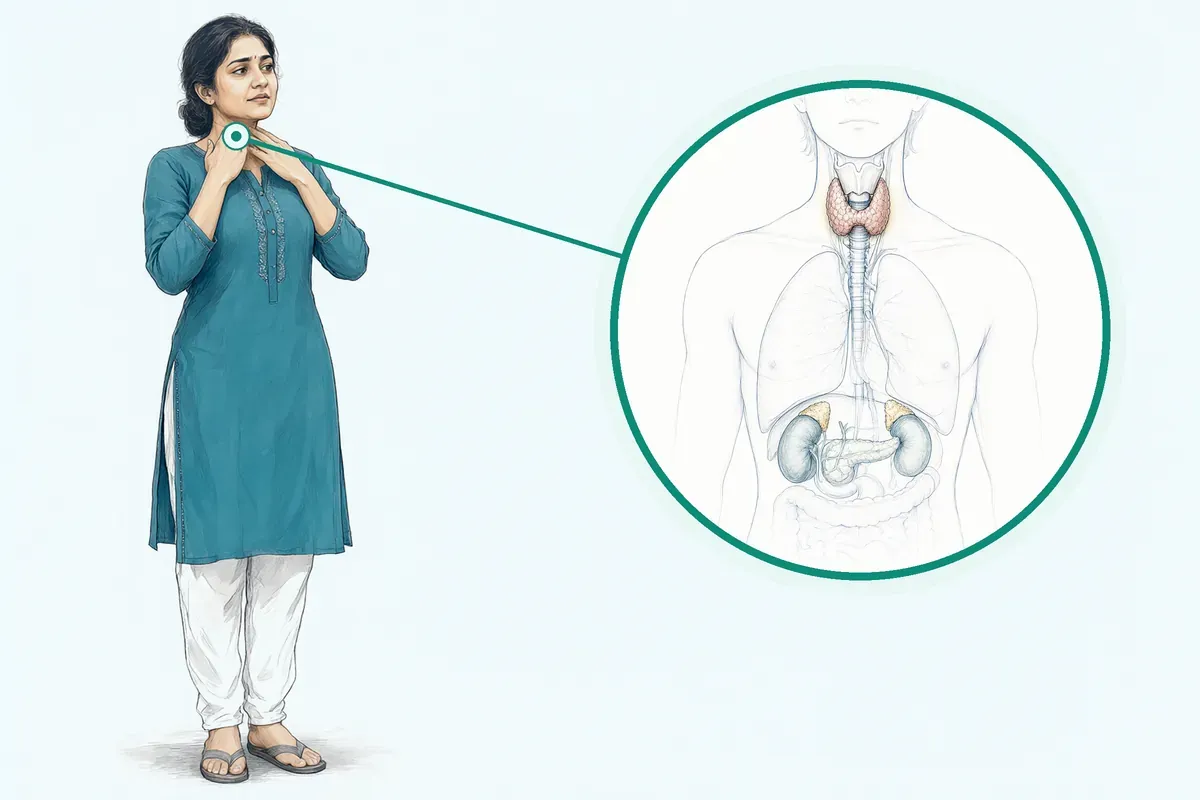
The thyroid is a small gland in the front of your neck. It makes hormones that control how your body uses energy. When the gland does not make enough hormone, the condition is called hypothyroidism. When it makes too much hormone, the condition is called hyperthyroidism. Both are common. In India, about 42 million people live with thyroid diseases.
Hypothyroidism is more frequent in women, especially after age 60 and after menopause. Subclinical hypothyroidism, where blood tests show a raised TSH but thyroid hormone levels are still normal, is also common. In one community study, 9.4% of adults had subclinical hypothyroidism.
Thyroid nodules are lumps in the gland. They are very common. Most are benign, but a small number can be cancer. Differentiated thyroid cancer is being diagnosed more often. The commonest type is papillary cancer, followed by follicular cancer. Thyroid cancer is still rare. The nationwide frequency of thyroid cancer among all cancers is 0.1% to 0.2%.
The endocrine system also includes:
- Pituitary
- Adrenal glands
- Bones
Disorders of these glands can affect growth, blood pressure, sugar control, and bone strength. Jaipur Hospital evaluates and manages all of these conditions in the outpatient department.
Symptoms of thyroid disorders and when to seek urgent care
- Fast or irregular heartbeat
- Chest pain or shortness of breath
- Confusion, agitation, high fever
- New symptoms in pregnancy
Hypothyroidism symptoms usually develop slowly over time.
Common symptoms include:
- Feeling extremely tired
- Weight gain
- Dry skin
- Fatigue
- Brain fog
- Depression
You may also feel cold when others do not, have constipation, muscle aches, or heavy periods.
Hyperthyroidism can cause:
- A fast or irregular heartbeat
- Palpitations
- Heat intolerance
- Sweating
- Tremor
- Weight loss despite eating more
You may feel anxious, irritable, or have trouble sleeping. Muscle weakness, especially in the thighs and upper arms, can occur. Some people develop a staring look or lid lag because the eyelids pull back. Psychiatric symptoms range from anxiety to more severe disturbances.
A thyroid nodule may cause a visible swelling in the neck. You might feel a lump when you swallow. Most nodules cause no symptoms.
Warning signs that need medical attention the same day:
- A very fast or irregular heartbeat that does not settle
- Chest pain or shortness of breath
- Sudden confusion, severe agitation, or high fever (these can be signs of thyroid storm, a rare but life-threatening complication of uncontrolled hyperthyroidism)
- Severe swelling in the neck that makes breathing or swallowing difficult
- If you are pregnant and develop new palpitations, weight loss, or a neck swelling
Untreated hypothyroidism can become life-threatening over long periods. A rare, severe form called myxoedema coma can occur, especially in older people. Untreated hyperthyroidism can lead to atrial fibrillation in 10% to 15% of patients and heart failure in about 5.8%. In pregnancy, untreated thyroid disease raises the risk of high blood pressure, premature birth, and miscarriage.
Causes and who is at higher risk
- 12% Palpable goiter in adults
- 23% Goiter in schoolgirls
- 16.7% Anti-TPO antibodies in adults
- 1 in 2,640 newborns Congenital hypothyroidism
The most common cause of hypothyroidism is an autoimmune condition called Hashimoto's disease. The immune system attacks the thyroid gland so it cannot make enough hormone. It is most common in women and usually starts between ages 30 and 50.
Other causes include:
- Thyroiditis
- Iodine deficiency
- Certain medications
The most common causes of hyperthyroidism are Graves disease, toxic multinodular goiter, and toxic adenoma. Graves disease is an autoimmune disorder where antibodies stimulate the thyroid to make too much hormone. Toxic multinodular goiter is the second most common cause and is frequent in older people living in iodine-deficient areas. A single overactive nodule is called a toxic adenoma.
Thyroiditis means inflammation of the thyroid. It can cause a temporary release of stored hormone, leading to thyrotoxicosis.
It can be triggered by childbirth (postpartum thyroiditis) or by medicines such as:
- Lithium
- Interferon alfa
- Interleukin-2
- Amiodarone
In pregnancy, high levels of beta-hCG can stimulate the thyroid in the first trimester. Rare causes include a TSH-secreting pituitary tumour, metastatic thyroid cancer, and struma ovarii.
Risk factors for hypothyroidism include being female, age over 60, family history of thyroid disease, and having another autoimmune condition. People with hypothyroidism have an increased risk of infertility and pregnancy complications such as gestational hypertension and postpartum haemorrhage.
Risk factors for Graves disease include female sex and a personal or family history of autoimmune disorders. In India, goiter prevalence is high in some regions. About 12% of adults have a palpable goiter. In a study of schoolgirls across India, 23% had a goiter. Anti-TPO antibodies are found in about 16.7% of adults. Congenital hypothyroidism occurs in about 1 in 2,640 newborns in India.
How thyroid and endocrine disorders are diagnosed
- Consultation and neck examination 20 to 30 minutes
- Radioactive iodine uptake scan for hyperthyroidism To find the cause
- Ultrasound and FNAC for nodules TI-RADS and Bethesda systems used
Diagnosis starts with a consultation of 20 to 30 minutes. Your doctor will ask about your symptoms and examine your neck to feel if the thyroid is swollen or has nodules.
Blood tests are the main investigation.
They measure:
- Thyroid-stimulating hormone (TSH)
- Free thyroxine (FT4)
- Free triiodothyronine (FT3)
Thyroid antibody tests, especially anti-TPO, help confirm an autoimmune cause. Morning samples are preferred because TSH levels fluctuate during the day. The blood draw takes a few minutes; a technician cleans the arm, draws blood with a sterile needle, and sends the sample to the laboratory.
For hyperthyroidism, a radioactive iodine uptake scan may be done to find the cause.
If a nodule is felt or seen on ultrasound, it is assessed using a standard risk system (TI-RADS). Ultrasound guides a fine-needle aspiration cytology (FNAC) if needed. The sample is reported using the Bethesda system, which estimates the risk of malignancy. Molecular markers may be used in some cases.
For pituitary, adrenal, or bone disorders, additional hormone tests and imaging are ordered based on the clinical picture.
Screening during pregnancy is often recommended because thyroid hormones are crucial for foetal brain development. If you have a known thyroid condition, your doctor may suggest testing every 6 to 12 months. For routine screening or mild symptoms, it might be done annually or as advised.
Non-surgical treatment and when surgery is advised
Hypothyroidism is treated with hormone replacement. The usual medicine is levothyroxine tablets. You take it once daily, usually in the morning on an empty stomach. The dose is adjusted by checking TSH levels at regular intervals until they are in the target range. Most people need to take the medicine for life. If you stop, symptoms return.
It usually takes a few weeks to notice improvement. With careful management and regular follow-ups, you can lead a normal, healthy life.
During pregnancy, the levothyroxine dose often needs to change. You will need further tests and close monitoring.
Hyperthyroidism is managed with antithyroid drugs such as carbimazole or propylthiouracil (PTU). Methimazole is preferred except in the first trimester of pregnancy or if there is an adverse reaction. Treatment is usually given for 12 to 18 months. If the condition relapses or drugs are not suitable, radioiodine (I-131) ablation or surgery may be advised. Jaipur Hospital coordinates radioiodine referral when indicated.
Beta-blockers may be used to control symptoms like palpitations and tremor while the antithyroid drugs take effect.
For thyroid nodules, benign nodules are usually watched with repeat ultrasound. Surgery is advised if the nodule is large and causes pressure symptoms, if FNAC shows suspicious or malignant cells, or if the nodule is overactive and not controlled by medicine.
For differentiated thyroid cancer, surgery is the primary treatment, often followed by radioiodine remnant ablation and thyrotropin suppression therapy with levothyroxine. Long-term surveillance uses imaging and serum thyroglobulin.
Levothyroxine remains the standard of care for hypothyroidism. Studies have found no consistently strong evidence that combination therapy or thyroid extracts are superior to levothyroxine alone.
Side effects of levothyroxine usually mean the dose is too high. They can include feeling sick, diarrhoea, headaches, or sleep problems. If you have any side effects, tell your doctor. The wrong dose over time can increase the risk of heart problems and bone thinning.
All consultations and follow-ups are outpatient. The typical consultation fee is ₹800 to ₹2,500. Thyroid profile packages range from ₹2,000 to ₹8,000. Ask us for an estimate based on the tests you need.
Your first visit and tests for thyroid and endocrine disorders
Do
- Previous blood reports Bring any earlier thyroid test results
- Imaging records Carry past ultrasound or scan reports
- Current medicines list Include all tablets and supplements you take
- Tell doctor if pregnant Thyroid needs change during pregnancy
At Jaipur Hospital your first consultation usually takes 20 to 30 minutes. Your doctor will ask about your symptoms, medical history, any medicines you take, and whether anyone in your family has a thyroid condition. A physical examination of your neck is typical to check for swelling or nodules.
Blood tests are the main way to assess thyroid function; they measure thyroid-stimulating hormone (TSH), free T3 and free T4, and often anti-thyroid peroxidase (anti-TPO) antibodies to look for autoimmune causes. Morning samples are preferred because TSH levels vary through the day. The blood draw takes only a few minutes and is done in our in-house laboratory.
If a nodule is felt or suspected, an ultrasound of the neck may be arranged to assess its size and features using TI-RADS risk stratification. Bring any previous blood reports, imaging, and a list of current medicines. If you are pregnant or planning pregnancy, tell your doctor because thyroid hormone needs change during pregnancy and monitoring is different.
How treatment works for thyroid and endocrine disorders
Treatment depends on the specific disorder and its cause. For hypothyroidism the usual approach is hormone replacement with levothyroxine tablets taken once daily on an empty stomach. Your doctor will start a dose and then adjust it by checking TSH every few weeks until it reaches the target range.
This titration continues until levels are stable; after that, checks are typically every 6 to 12 months. Most people need to continue the medicine for life. For hyperthyroidism caused by Graves disease, toxic multinodular goitre or toxic adenoma, antithyroid drugs such as carbimazole or propylthiouracil are often used first to control hormone production.
Radioiodine (I-131) ablation or surgery may be considered if medicines are not suitable or if the condition relapses; our team coordinates referral for radioiodine and surgical opinion when indicated. In pregnancy the choice and dose of antithyroid drug are adjusted, usually avoiding certain drugs in the first trimester.
For thyroid nodules, ultrasound-guided fine-needle aspiration cytology (FNAC) is arranged when the nodule meets size or risk criteria; results are reported using the Bethesda system to guide whether observation, repeat biopsy or surgery is recommended. Pituitary, adrenal and metabolic bone disorders are managed with the appropriate hormone replacement or suppression regimens, with regular laboratory and imaging follow-up. Your doctor will explain which option suits your condition and preferences.
Risks and possible complications of thyroid and endocrine treatment
- Wrong levothyroxine dose
- Can cause nausea, diarrhoea, headaches, sleep problems, palpitations, or bone loss
- Antithyroid drug risks
- Rash, joint pain, rare drop in white blood cells or liver injury
- Radioiodine effects
- Temporary neck discomfort; most people become hypothyroid long-term
- Surgery risks
- Voice change, low calcium, or bleeding
Being on the wrong dose of levothyroxine can cause side effects such as nausea, diarrhoea, headaches or sleep disturbance. Over-replacement may lead to features of thyrotoxicosis including palpitations and bone loss over time. Under-replacement leaves hypothyroid symptoms untreated and, if severe and prolonged, can rarely lead to myxoedema coma, a life-threatening emergency.
Antithyroid drugs can cause rash, joint pain, or, rarely, a drop in white blood cells (agranulocytosis) or liver injury; your doctor will explain warning signs and when to seek urgent care. Radioiodine therapy may cause temporary neck discomfort or a transient rise in thyroid hormone levels; long-term, most people become hypothyroid and need levothyroxine.
Surgery for thyroid nodules or cancer carries the usual risks of any neck operation including voice change, low calcium, or bleeding; these are discussed in detail if surgery is being considered. Untreated hyperthyroidism is associated with atrial fibrillation in about 10 to 15 percent of patients and heart failure in about 6 percent in long-term studies.
Untreated hypothyroidism in pregnancy raises the chance of pre-eclampsia, premature birth, miscarriage and developmental problems for the baby. Regular follow-up and dose adjustment are the main ways to minimise these risks.
Recovery and aftercare for thyroid and endocrine disorders
- Levothyroxine start Blood tests every 4 to 6 weeks during dose adjustment
- Antithyroid drugs Thyroid function tests every few weeks initially
- Nodule surveillance Repeat ultrasound and review at 6 to 12 months
- After radioiodine or surgery Lifelong thyroid function monitoring
After starting levothyroxine it usually takes a few weeks to notice an improvement in symptoms such as fatigue and weight gain. Blood tests are repeated at 4 to 6 week intervals during dose titration, then at longer intervals once TSH is stable.
If you are on antithyroid drugs for hyperthyroidism, you will have thyroid function tests every few weeks initially, with dose changes based on results. For nodules on surveillance, repeat ultrasound and clinical review are typically scheduled at 6 to 12 months. After radioiodine or surgery, lifelong thyroid function monitoring is standard.
Contact the hospital or your doctor if you develop new or worsening symptoms such as rapid or irregular heartbeat, chest pain, severe headache, fever with sore throat (which may signal a blood count problem on antithyroid drugs), or sudden neck swelling or difficulty breathing. Bring your latest blood reports to every visit.
Take levothyroxine on an empty stomach with water, and wait 30 to 60 minutes before food or other medicines. Do not stop or change any thyroid medicine without discussing it with your doctor.
Results of treatment for thyroid and endocrine disorders
Guideline panels conclude that levothyroxine should remain the standard of care for hypothyroidism; studies have not shown consistent superiority of combination therapy or thyroid extracts over levothyroxine monotherapy for health outcomes. With careful management and regular follow-up, most people with hypothyroidism lead a normal and healthy life.
For hyperthyroidism, antithyroid drugs achieve remission in a substantial proportion of patients with Graves disease, though relapse can occur after stopping treatment; radioiodine and surgery provide definitive control of thyrotoxicosis but usually result in long-term hypothyroidism requiring lifelong replacement.
In differentiated thyroid cancer, surgery followed by radioiodine remnant ablation and TSH suppression with levothyroxine yields excellent long-term outcomes for most patients; targeted therapies such as sorafenib and lenvatinib have improved progression-free survival in radioactive iodine-refractory advanced disease in clinical trials.
For thyroid nodules managed conservatively, most benign nodules remain stable or shrink over time; malignancy rates in nodules meeting biopsy criteria vary by Bethesda category. Population data from India show that thyroid disorders are common, affecting an estimated 42 million people, with hypothyroidism more frequent in women and increasing with age.
These figures describe groups in studies; your individual outcome depends on the specific diagnosis, adherence to treatment, and regular monitoring.
Cost and insurance for thyroid and endocrine disorders in Jaipur
A consultation at Jaipur Hospital typically costs ₹800 to ₹2,500. Thyroid profile packages (TSH, free T3, free T4, anti-TPO) usually range from ₹2,000 to ₹8,000; the exact amount depends on the number of tests and whether additional pituitary, adrenal or bone markers are needed. These are typical ranges in India; ask us for an estimate for your specific panel.
The hospital is empanelled under RGHS, MAA Yojana, CGHS and a panel of private insurers and TPAs; coverage for consultations, laboratory tests and any procedures depends on your policy terms and pre-authorisation requirements. There is an in-house pharmacy and diagnostic laboratory, so tests and medicines can be obtained on the same campus.
The service is outpatient; no hospital stay is required for routine management. If surgery or radioiodine therapy becomes necessary, those costs are separate and will be discussed at the time of referral.