

Orthopaedics · Jaipur Hospital
Avascular Necrosis (AVN) of the Hip Treatment in Jaipur
Hip pain from bone death? Jaipur Hospital assesses your stage and gives a clear plan.
- Serving Jaipur since 1991 (35 years)
- NABH accredited
- 24×7 emergency & ICU
- Cashless: MAA Yojana + 32 insurers
- Operation time
- Core decompression 1 hourTHR 1.5 to 2 hours
- Anaesthesia
- Spinal or general anaesthesia
- Recovery
- Core decompression 6 to 12 weeksTHR 3 to 6 months for full recovery
- Price
- ₹80,000 to ₹1,50,000 (core decompression)₹2,50,000 to ₹5,00,000 (THR)typical range in India; ask us for an estimate
Hip bone loses blood supply
My hip hurts and I am told the bone is dying
Avascular necrosis means the femoral head loses its blood supply. The bone can soften and collapse, making walking painful and limiting daily life.
-
Pain that limits walking
Pain in the groin or thigh that worsens with weight-bearing and may wake you at night.
-
Stiffness and limp
Reduced hip movement makes it hard to put on shoes, sit cross-legged or climb stairs.
-
Risk of joint collapse
Without treatment the femoral head often collapses within months to years, leading to arthritis.
-
Both hips can be affected
The other hip may have silent disease; missed diagnoses on the opposite side are not uncommon.
AVN is the death of bone tissue caused by disruption of blood flow within the bone.
Why Jaipur Hospital
You worry that hip pain will stop you working, caring for your family, or sleeping through the night.
Your care plan
Your first steps with us
- 1 Call or visit OPD for surgeon consultation
- 2 Get X-rays and blood tests done in-house
- 3 Review MRI at an imaging centre with your surgeon
- 4 Agree a plan and schedule surgery or monitoring
How the operation is done
Surgery is chosen by disease stage. Early stages use drilling to lower pressure; late stages replace the joint. Anaesthesia is spinal or general.
-
Core Decompression
Drilling into the femoral head to reduce pressure and stimulate healing, usually for early stages before collapse.
-
Core Decompression with Bone Grafting
Adds structural support using your own bone or donor bone to the drilled channel.
-
Vascularised Fibular Graft
Transplants living bone with its blood supply for advanced pre-collapse stages; involves donor-site morbidity.
-
Total Hip Replacement
Definitive treatment for a collapsed femoral head; replaces ball and socket with prosthetic components.
Why patients trust us
- 1991 Serving Jaipur for 35 years
- NABH Accredited hospital
- 4 Orthopaedics consultants
- 24×7 Emergency, ICU and ambulance
- 33 Cashless schemes and insurers
What research shows about this treatment
-
20% to 35%
Of people who have core decompression, this proportion eventually need a total hip replacement.
-
15 to 20 years
Prosthetic hips usually last this long before components may need revision.
-
4.7%
Hip dislocation occurred in this share of patients assigned to total hip arthroplasty in a large trial.
If it is left untreated
Without treatment the condition usually worsens and the femoral head collapses over months or years, leading to severe arthritis and the need for joint replacement.
Life after treatment
Most people return to daily activities with less pain; high-impact sports are usually discouraged to protect the joint.
-
Walk without a limp
Most people regain a comfortable walking pattern within weeks to months depending on the procedure.
-
Sleep through the night
Night pain that disrupts sleep typically settles as the hip heals.
-
Return to light work
Desk work often resumes in a few weeks; heavy labour takes longer and is guided by your surgeon.
-
Low-impact exercise
Swimming, cycling and elliptical training are usually encouraged to maintain fitness without stressing the hip.
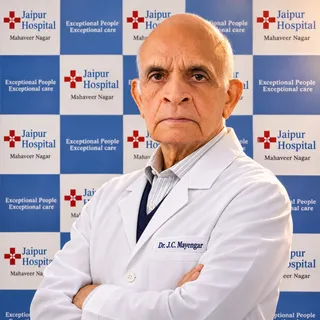
Meet the team
Your orthopaedics doctors
Explore our orthopaedic hospital in Jaipur: every treatment, the doctors and what to expect at your visit.



Frequently asked questions
Questions patients ask about avascular necrosis (avn) of the hip treatment
What is avascular necrosis of hip treatment?
In short
Avascular necrosis of the hip treatment at Jaipur Hospital depends on the stage of the disease. Early stages may be managed with core decompression, sometimes combined with bone grafting. Advanced stages with femoral head collapse usually need total hip replacement. The surgical team selects the procedure after imaging and clinical assessment.
In detail
Avascular necrosis is the death of bone tissue caused by disrupted blood flow. In early stages, core decompression drills into the femoral head to reduce pressure and stimulate healing. Bone grafting adds structural support.
Vascularised fibular graft brings living bone with its own blood supply for larger lesions before collapse. Once the femoral head collapses, total hip replacement gives the most predictable pain relief.
Studies show core decompression outcomes decline as the lesion advances, and around 20 to 35 percent of patients who have core decompression eventually need a hip replacement. Prosthetic hips typically last 15 to 20 years.
A common belief
Many people think one operation fits all stages.
What actually happens
In fact, core decompression works only before collapse. After collapse, joint replacement is the reliable option. The surgeon matches the procedure to your imaging findings.
Your next step at Jaipur Hospital
You will need an X-ray and usually an MRI to stage the disease. The surgeon then explains which operation fits your stage, the expected hospital stay, and the rehabilitation timeline. Core decompression is often daycare or one night; total hip replacement needs three to four nights.
Which specialist should I see for avascular necrosis of the hip?
In short
You should see an orthopaedic surgeon who specialises in hip disorders. At Jaipur Hospital, the orthopaedics department evaluates and treats avascular necrosis from early stages through to joint replacement. The surgical team includes surgeons experienced in core decompression, bone grafting and total hip replacement.
In detail
Avascular necrosis is a surgical condition of the hip joint. An orthopaedic surgeon is the appropriate specialist to stage the disease, discuss treatment options and perform any needed procedure.
Because AVN is often associated with medical comorbidities such as sickle cell disease or lupus, the orthopaedic surgeon may coordinate with a physician or rheumatologist for medical management. The orthopaedics department at Jaipur Hospital provides both joint-preserving procedures and total hip replacement under one roof.
A common belief
Some patients first see a general physician or physiotherapist.
What actually happens
While they can help with symptoms, only an orthopaedic surgeon can stage the disease and perform the procedures that may save or replace the joint.
Your next step at Jaipur Hospital
Book an appointment in the orthopaedics OPD at Jaipur Hospital. Bring any previous X-rays, MRI reports and a list of your medicines. The surgeon will examine your hip, review imaging and explain the stage and options.
If you are covered under MAA Yojana, various government health care schemes or a private insurer, the hospital's TPA desk can assist with authorisation.
What treatment options are available for my situation with avascular necrosis of the hip?
In short
Treatment options at Jaipur Hospital depend on the stage of avascular necrosis. Early stages may be offered core decompression, core decompression with bone grafting, or vascularised fibular graft. Once the femoral head has collapsed, total hip replacement is the standard option. The surgeon selects the procedure after staging with X-ray and MRI.
In detail
Core decompression drills into the femoral head to reduce pressure and stimulate healing. Adding bone graft gives structural support. Vascularised fibular graft brings living bone with its own blood supply for advanced pre-collapse stages.
Evidence shows core decompression outcomes are most suitable in early stages; around 20 to 35 percent of people who have core decompression eventually need hip replacement. For collapsed femoral head, total hip replacement gives the most predictable pain relief.
Prosthetic hips usually last 15 to 20 years. Hip resurfacing is contraindicated if the avascular area exceeds one third of the femoral head. Osteotomy is suited only for small pre-collapse or early post-collapse lesions in patients without an ongoing cause. The hospital does not use robotic or navigated systems for joint replacement; standard instruments and alignment guides are used.
A common belief
People often want the smallest operation.
What actually happens
But core decompression cannot fix a collapsed joint. Doing the wrong procedure for the stage wastes time and lets the hip worsen.
Your next step at Jaipur Hospital
The surgeon will explain which option fits your stage, age, activity level, and any underlying cause. Core decompression is daycare or one night with 6 to 12 weeks recovery. Total hip replacement needs 3 to 4 nights and 3 to 6 months for full recovery. Typical cost ranges are ₹80,000 to ₹1,50,000 for core decompression and ₹2,50,000 to ₹5,00,000 for hip replacement.
What can I safely do at home to manage symptoms of avascular necrosis of the hip?
In short
At home, you can manage symptoms of avascular necrosis of the hip by using a walking aid such as a cane or crutches to reduce load on the joint, taking prescribed pain medication as directed, and applying heat or cold packs for comfort. Jaipur Hospital advises that these measures control symptoms but do not alter disease progression.
In detail
Evidence shows that restricted weight bearing with a cane or crutches helps control pain but does not change the natural history of the condition. Physical therapy provides only symptomatic relief and does little to stop progression.
Low-impact activities such as swimming, cycling, or using an elliptical trainer can maintain fitness without overloading the hip. Avoid high-impact exercise, prolonged standing, and heavy lifting. Keep a symptom diary to share with your surgeon at follow-up.
A common belief
Rest and physiotherapy only mask symptoms.
What actually happens
They do not stop the femoral head from collapsing. Relying on them alone can delay definitive treatment.
Your next step at Jaipur Hospital
Continue any prescribed medications for underlying conditions such as steroid-sparing agents or anticoagulation if advised. Do not start new supplements or herbal products without discussing them with your doctor. Arrange a follow-up appointment to monitor the stage of AVN with repeat imaging.
How does the term AVN relate to avascular necrosis of hip treatment?
In short
AVN is the common medical abbreviation for avascular necrosis, a condition where the blood supply to the femoral head is disrupted, causing bone tissue to die. At Jaipur Hospital, the orthopaedic team uses this term interchangeably with avascular necrosis when diagnosing and planning stage-based treatment from core decompression to total hip replacement.
In detail
The term AVN appears in medical records, imaging reports, and surgical planning to describe the same disease process: osteonecrosis of the femoral head. Evidence confirms that AVN, also known as osteonecrosis, is the death of bone tissue caused by disrupted blood flow within the bone.
The stage of AVN, determined by X-ray and MRI findings, directly decides whether the surgeon recommends core decompression, bone grafting, vascularised fibular graft, or total hip replacement.
Early stages without collapse are treated with joint-preserving procedures, while a collapsed femoral head usually requires total hip replacement for reliable pain relief and function.
A common belief
Patients sometimes think AVN is a milder or separate diagnosis.
What actually happens
It is not. The stage of AVN, not the name used, decides whether you need core decompression or a hip replacement.
Your next step at Jaipur Hospital
If your reports mention AVN, bring them to the OPD for a staging assessment. The surgeon will review your images, examine the hip, and explain which procedure matches your stage. Recovery after core decompression is typically six to twelve weeks, while total hip replacement needs three to six months.
Is my joint pain caused by wear, inflammation, crystals, or another problem?
In short
Hip pain in avascular necrosis comes from the death of bone in the femoral head and the resulting collapse of the joint surface, not from simple wear, inflammation, or crystals alone. At Jaipur Hospital, the orthopaedic team distinguishes AVN pain from osteoarthritis, inflammatory arthritis, or gout by combining your history, examination, and MRI findings.
In detail
Avascular necrosis has specific causes such as steroid use, heavy alcohol intake, trauma, sickle cell disease, or clotting disorders, and it produces a characteristic pattern on MRI long before X-ray changes appear.
Evidence notes that AVN of the hip can cause debilitating pain in and around the hip joint.
The surgeon checks for risk factors, examines the hip for restricted movement, and orders an MRI if X-rays are normal, because missed diagnoses, especially of the contralateral hip, are not uncommon.
Other conditions like osteoarthritis, rheumatoid arthritis, or crystal arthropathy have different imaging features and blood markers. The correct diagnosis decides whether the treatment is joint preservation, medical management, or joint replacement.
A common belief
Many people assume all hip pain is arthritis.
What actually happens
AVN needs a different approach because joint-preserving surgery works only in early stages, while late AVN needs replacement.
Your next step at Jaipur Hospital
Attend the OPD with any previous X-rays or blood reports. The surgeon will take a focused history, examine the hip, and advise an MRI if needed. Once the cause is confirmed, the stage-based plan is discussed.
Will physiotherapy, a brace, or an aid be useful as part of care for avascular necrosis of the hip?
In short
Physiotherapy is a core part of care before and after any AVN procedure to maintain muscle strength, joint range, and safe gait. A brace is rarely used for hip AVN. Walking aids such as crutches or a walker are needed temporarily after core decompression and for several weeks after total hip replacement. At Jaipur Hospital, the physiotherapy team works with the surgeon to set a progressive exercise and weight-bearing programme.
In detail
Evidence indicates that after core decompression people may need crutches or a walker for the first two weeks. After total hip replacement, walking aids are used for a few weeks until muscle control returns.
Physical therapy provides symptomatic control and helps with gait retraining, though it does not alter the natural history of untreated AVN. A brace does not offload the femoral head effectively and is not standard practice.
The surgeon prescribes specific precautions such as avoiding extreme flexion, adduction, and internal rotation after hip replacement to prevent dislocation. Low-impact activities like swimming, cycling, and elliptical training are encouraged long-term.
A common belief
Patients often buy a brace hoping it will offload the hip.
What actually happens
It does not work for the femoral head. The right aid is a walking frame or crutches, used for the correct duration.
Your next step at Jaipur Hospital
At the OPD, the surgeon and physiotherapist will assess your current mobility, prescribe preoperative exercises if surgery is planned, and explain the postoperative aid timeline. Bring any walking aid you already use.
Which symptoms or changes should prompt me to seek medical advice for avascular necrosis of the hip?
In short
You should seek medical advice if you have hip or groin pain that worsens with weight-bearing, stiffness that limits movement, or a limp that does not improve with rest. Pain may start mildly and become constant, even at rest or at night. Jaipur Hospital recommends early evaluation because early-stage treatment works better.
In detail
Avascular necrosis often begins with pain in the hip, groin, or buttock that increases when you stand or walk. As the disease progresses, the femoral head can collapse, causing severe pain, marked stiffness, and shortening of the leg.
Evidence shows missed diagnoses, especially of the opposite hip, are not uncommon. Restricted weight-bearing with a cane or crutches only controls symptoms and does not alter disease progression. Physical therapy also gives only symptomatic control. Early medical review allows staging while the femoral head is still intact, when joint-preserving procedures are possible.
A common belief
People often wait until pain is severe.
What actually happens
By then the femoral head may have collapsed, limiting options to hip replacement. Early pain is the window for joint-saving surgery.
Your next step at Jaipur Hospital
If you notice persistent hip pain, reduced range of motion, or a new limp, attend the orthopaedic OPD at Jaipur Hospital. The surgeon will take a history, examine the hip, and usually order an X-ray first.
If X-rays are negative, an MRI is advised to detect early changes. Early consultation improves the chance of preserving your hip joint.
What will the doctor ask and check at the first visit for avascular necrosis of the hip?
In short
At the first visit, the orthopaedic surgeon at Jaipur Hospital will ask about your symptoms, when the pain started, what makes it worse or better, and any past hip injury. The doctor will review your medication history, especially steroid use, alcohol intake, and any medical conditions such as sickle cell disease or lupus. A physical examination checks hip range of motion, gait, and leg length.
In detail
The surgeon needs to understand the stage and cause. Evidence shows missed diagnoses of the opposite hip are not uncommon, so both hips are examined. The doctor will ask about risk factors: long-term corticosteroids, heavy alcohol, smoking, clotting disorders, and previous trauma.
If you have been on steroids, osteoporosis screening may be indicated. The surgeon will also ask about your daily activities, work demands, and expectations. This information helps decide whether joint-preserving surgery is possible or whether hip replacement is needed. The examination looks for stiffness, muscle wasting, and any limb shortening.
A common belief
Patients often think only the painful hip matters.
What actually happens
The surgeon checks both sides because the other hip can have silent disease. The doctor also looks for the cause, not just the symptom.
Your next step at Jaipur Hospital
Bring any previous X-rays or MRI reports. If imaging is not recent, the surgeon will order an X-ray first; if X-rays are negative, an MRI is advised to detect early changes. The MRI is done at an imaging centre outside the hospital.
After reviewing the scans, the surgeon explains the stage, discusses treatment options, and outlines recovery timelines and typical cost ranges.
Can avascular necrosis of the hip improve without a procedure or operation?
In short
In some cases, when avascular necrosis affects only a small section of the femoral head, the condition may resolve on its own without treatment. However, in the vast majority of cases, the condition worsens over time and the femoral head collapses over a few months or years. Small asymptomatic lesions are monitored with serial examination. The orthopaedic team at Jaipur Hospital will advise if observation is appropriate for you.
In detail
Studies show that small, early lesions without symptoms can be watched closely with repeat imaging. If symptoms develop or the lesion grows, surgical treatment is indicated. Non-surgical measures such as restricted weight-bearing with crutches or physiotherapy only control symptoms; they do not alter disease progression.
Medications like bisphosphonates have unclear long-term effects on preventing collapse. Anticoagulation with enoxaparin has shown some benefit in early AVN in one study, but this is not standard practice.
If you have an underlying cause such as steroid use or alcohol intake, addressing that is essential regardless of the stage.
A common belief
Many people try rest, physiotherapy or medicines hoping to avoid surgery.
What actually happens
These only mask symptoms. They do not restore blood flow or stop the bone from collapsing.
Your next step at Jaipur Hospital
The surgeon will assess the lesion size, stage and your symptoms. If observation is chosen, you will need regular follow-up X-rays or MRI scans at set intervals. Any new or worsening pain should be reported immediately. Most patients with symptomatic AVN eventually need surgery.
FAQ library
Questions and answers about avascular necrosis (avn) of the hip treatment
When you contact us
Get a clear plan for your hip
Contact Jaipur Hospital for an OPD consultation, scan review, cost estimate and help with cashless schemes.
- A consultation with an orthopaedic surgeon in the OPD
- Your scans and reports reviewed, with tests done in-house if you need them (laboratory, X-ray and imaging)
- Your options explained in plain words, including whether you need surgery at all
- A cost estimate before you decide
- Help with cashless treatment under MAA Yojana, various government health care schemes and empanelled insurers and TPAs
- Follow-up visits after your treatment
Overview
Avascular Necrosis (AVN) of the Hip Treatment: what to know
What Avascular Necrosis of the Hip Is and How It Happens
- Bone death
- Blood supply to femoral head is cut off
- Progressive
- Worsens over months or years
- May resolve
- Small lesions can heal on their own
Avascular necrosis (AVN), also called osteonecrosis, is the death of bone tissue caused by a disruption of blood flow within a bone. In the hip, the blood supply to the femoral head is cut off. Without blood, the bone cells die and the femoral head can weaken and collapse. The condition often worsens over time.
Without treatment, the affected bone in the hip joint collapses over a few months or years. Once the joint has collapsed, the most effective treatment is total hip replacement surgery. In some cases, when AVN affects only a small section of the femoral head, the condition resolves on its own without treatment.
Symptoms of AVN Hip and Warning Signs That Need Urgent Care
- Sudden severe pain after fall May mean fracture through weakened bone
- Cannot bear weight Unable to put any weight on the leg
- Infection signs Fever, redness or swelling around hip
- Numbness or weakness Sudden numbness or weakness in leg or foot
AVN of the hip can cause pain, which can be debilitating, in and around the hip joint. The pain may be felt in the groin, thigh or buttock. It often starts slowly and gets worse over time. You may notice stiffness or a limp.
Restricted weight bearing with a cane or crutches has not been shown to affect the natural history of the disease and is useful only in controlling symptoms. Physical therapy provides only symptomatic control and also does little to alter disease progression.
Warning signs that need urgent care the same day:
- Sudden, severe hip pain after a fall or twist, which may mean a fracture through the weakened bone
- Inability to put any weight on the leg
- Signs of infection such as fever, redness or swelling around the hip
- Sudden numbness or weakness in the leg or foot
Causes of AVN Hip and Who Is at Higher Risk
- Corticosteroids
- Long-term high-dose use
- Alcohol
- Heavy intake
- Medical conditions
- Sickle cell disease, lupus, clotting disorders
- Smoking
- Increases risk of nontraumatic osteonecrosis
The exact cause is not always known. Common risk factors include long-term use of high-dose corticosteroid medicines and heavy alcohol intake. Abstinence from excessive alcohol intake and taking the lowest possible dose of a corticosteroid when indicated are the two chief means of AVN prevention.
Other medical conditions linked to AVN include sickle cell disease, systemic lupus erythematosus and other disorders that affect blood flow or clotting. If the AVN is associated with alcohol use, the clinician is urged to assist the patient in alcohol abstinence.
Patients with prolonged steroid use should have osteoporosis screening. Smoking tobacco products increases the risk of nontraumatic osteonecrosis of the femoral head, particularly in those who never received oral corticosteroids. There are some data regarding cholesterol-lowering statin therapy as a means of decreasing the risk of AVN for those receiving corticosteroids. If no obvious cause is seen, medical consultation is a reasonable measure to help discern less common etiologies.
How AVN Hip Is Diagnosed: Examination and Tests
- History and examination Symptoms, medicines, hip movement checked
- X-ray first In-house X-ray at Jaipur Hospital
- MRI if X-ray negative Done at outside imaging centre
- Blood tests Check for sickle cell, clotting, lipids
Your surgeon will ask about your symptoms, medical history and any medicines you take. The hip is examined for pain, range of movement and limp. Because AVN of the hip is often associated with pronounced medical comorbidities such as sickle cell disease or systemic lupus erythematosus, medical consultation is prudent, particularly during the perioperative period.
X-rays are usually the first imaging test. If radiographs are negative, an MRI scan is ordered. MRI can detect AVN at an early stage before changes appear on X-ray. Missed diagnoses, especially of the contralateral hip, are not uncommon. The doctor advises and reviews the scan; it is done at an imaging centre outside the hospital.
Jaipur Hospital has an in-house X-ray facility but no CT or MRI scanner. Blood tests may be done to check for underlying conditions such as sickle cell disease, clotting disorders or lipid levels.
Non-Surgical Treatment for AVN Hip and When Surgery Is Advised
Small asymptomatic lesions do not warrant surgical intervention and are closely monitored with serial examination. If symptoms ensue, repeat imaging and surgical treatment are indicated. Non-surgical measures focus on symptom control and protecting the joint. These may include activity modification, using a walking aid such as a cane or crutches, and pain relief medicines.
Restricted weight bearing has not been shown to affect the natural history of the disease and is useful only in controlling symptoms. Physical therapy provides only symptomatic control and does little to alter disease progression. Some studies have looked at medicines such as bisphosphonates or anticoagulants, but long-term effects for the prevention of femoral head collapse are unclear. Electrical stimulation has been studied but long-term studies are lacking and results have been disappointing.
Surgery is advised based on the stage of the disease, the size of the lesion and your symptoms. Core decompression is the most commonly performed prophylactic surgical intervention for early stages (precollapse). It involves drilling into the femoral head to reduce pressure and stimulate healing. Bone grafting may be added to enhance mechanical support and augment healing.
Vascularised fibular graft is an option for more advanced pre-collapse lesions but involves considerable morbidity. Osteotomy may delay arthroplasty but is well suited for small precollapse or early postcollapse lesions in patients without an ongoing cause of AVN. Total hip replacement is the definitive treatment for collapsed femoral head (late stages).
Prosthetic replacement offers the most predictable means of pain relief in advanced AVN. In the U.S., AVN is the underlying cause of around 10% of all total hip replacement procedures.
Preparing for Avascular Necrosis Hip Surgery
Do
- Review medicines with doctor Blood thinners, steroids, diabetes drugs may need change
- Complete pre-op tests Blood tests, chest X-ray, ECG, MRI scan
- Fast before surgery No food or drink for at least six hours
- Bring essentials Medicines, reports, insurance cards, attendant
Before any operation for avascular necrosis of the hip, your surgeon will review your medical history and current medicines. If you take blood thinners, steroids or medicines for diabetes, your doctor will advise whether to stop or adjust them before surgery. You will need routine blood tests, a chest X-ray and an ECG to check fitness for anaesthesia.
An MRI scan is usually required to confirm the stage of the disease and plan the procedure; this is done at an imaging centre outside the hospital and the report is reviewed by your surgeon. You must not eat or drink for at least six hours before the operation.
Bring your regular medicines, the imaging reports, your insurance or scheme cards and an attendant who can stay with you. The hospital provides a gown and basic toiletries; you may bring comfortable clothes and non-slip footwear for discharge.
How Avascular Necrosis Hip Surgery Is Done
The operation depends on the stage of the disease and the condition of the femoral head. Your surgeon will advise which technique suits you.
- Core decompression: In early stages before collapse, the surgeon drills one or more small channels into the femoral head to reduce pressure and stimulate healing. This takes about one hour.
- Core decompression with bone grafting: Structural support is added using bone taken from your own body (autograft) or from a donor (allograft).
- Vascularised fibular graft: For advanced pre-collapse stages, a segment of the fibula with its blood supply is transplanted into the femoral head to bring living bone and a new blood source. This is a longer, more complex procedure.
- Total hip replacement: When the femoral head has collapsed, the damaged ball and socket are replaced with artificial components. This is the definitive treatment for late-stage disease and takes one and a half to two hours.
All procedures are done under spinal or general anaesthesia. On the day of surgery you are taken to the modular operation theatre. After the operation you move to the recovery area and then to a ward. Core decompression is usually daycare or one night in hospital; total hip replacement typically needs three to four nights.
Risks and Possible Complications of Avascular Necrosis Hip Surgery
- Core decompression
- Infection, bleeding, fracture, clots, cartilage damage
- Osteotomy
- Makes later hip replacement harder, risk of nonunion
- Total hip replacement
- Dislocation 3% to 9%, infection, clots, cardiac problems
- Blood disorders
- Higher complication risk, lower implant survival
Every operation carries risks. With core decompression, complications are rare but can include infection, bleeding, pain at the bone marrow harvest site and, less often, bone fracture, blood clots or damage to the joint cartilage. A feared complication is a subtrochanteric fracture of the femur; placing the drill tract as high as possible reduces this risk.
Osteotomies make later hip replacement more difficult and carry an appreciable risk of nonunion. For total hip replacement, dislocation is one of the most common complications. Registry studies show dislocation is a main cause of revision after primary hip replacement.
In trials comparing total hip replacement with hemiarthroplasty, dislocation occurred in about 4.7% of total hip replacement patients versus 2.4% with hemiarthroplasty; other studies report dislocation rates around 3% to 9%. Cup positioning outside recognised safe zones can increase wear, impingement, liner fracture and revision risk.
Serious adverse events such as infection, blood clots or cardiac problems occur in a substantial minority of patients undergoing major hip surgery. If you have a blood disorder such as sickle cell disease, the risk of complications may be higher and implant survival may be lower. Your surgical team takes specific steps to minimise each of these risks.
Recovery and Aftercare After Avascular Necrosis Hip Surgery
- Total hip replacement Hip precautions: avoid low chairs, crossing legs, twisting
- Long term Avoid impact sports; swim, cycle, elliptical recommended
After core decompression you can usually put weight on the operated leg but may need crutches or a walker for the first two weeks. Most people return to regular activities within two weeks. After total hip replacement, you will start walking with a frame or crutches on the first or second day.
Physiotherapy begins in hospital and continues at home or in the hospital's physiotherapy department. You will be taught precautions to protect the new hip, such as avoiding low chairs, crossing your legs and twisting the operated leg. Stitches or clips are removed after about two weeks. Full recovery after total hip replacement takes three to six months.
Impact sports such as running and jumping are discouraged even after successful treatment because they shorten implant life; swimming, cycling and elliptical training are recommended to maintain fitness. Contact the hospital if you develop increasing pain, swelling, redness, wound discharge, fever, sudden inability to bear weight or shortness of breath.
Results of Avascular Necrosis Hip Treatment
Outcomes depend on the stage at which treatment starts. In the vast majority of untreated cases the condition worsens and the femoral head collapses over months or years. Once the joint has collapsed, total hip replacement is the most effective treatment.
Core decompression aims to stop progression; however, around 20% to 35% of people who have core decompression eventually need a total hip replacement, and studies report that 25% to 30% ultimately require replacement. Results are most suitable for healthy people treated at an early stage.
In early disease (stage I) core decompression with bone grafting gives satisfactory outcomes; in stage II outcomes are poorer with improvement in about 50% of patients. The addition of cancellous bone grafting slightly enhances outcomes when a subchondral fracture is present. Vascularised fibular grafts can alter disease progression in pre-collapse lesions and even in mildly collapsed hips.
Total hip replacement provides the most predictable pain relief in advanced disease. Prosthetic hips usually last 15 to 20 years; cementless designs with modern bearings may last longer. In young patients (50 years or less) hip replacement shows good mid-term results with high implant survival at 7 to 10 years when ceramic-on-ceramic or highly cross-linked polyethylene bearings are used. Recipients typically need to avoid high-impact exercise and may eventually need further surgery to replace worn components.
Cost and Insurance for Avascular Necrosis Hip Treatment in Jaipur
The typical cost range in India for core decompression is ₹80,000 to ₹1,50,000; for total hip replacement it is ₹2,50,000 to ₹5,00,000. The final amount depends on the type of implant, the surgical approach, the length of stay and any additional procedures such as bone grafting. Jaipur Hospital is a NABH-accredited multispeciality hospital established in 1991.
It accepts MAA Yojana, various government health care schemes and a panel of private insurers and TPAs. The hospital has a 24×7 emergency department, ICU, in-house pharmacy, laboratory and X-ray (CT, MRI and DEXA are done at outside centres), modular operation theatres and a physiotherapy department. For a personalised estimate, contact the hospital on 0141-2551500, 0141-2554139 or 7414 001 001, or email [email protected].
