

Orthopaedics · Jaipur Hospital
Heel Pain and Plantar Fasciitis Treatment in Jaipur
Sharp heel pain on first steps. We assess, explain options and give you a clear plan.
- Serving Jaipur since 1991 (35 years)
- NABH accredited
- 24×7 emergency & ICU
- Cashless: MAA Yojana + 32 insurers
- Treatment length
- Consultation 15 minsshockwave 15 mins · release surgery 30 to 45 mins
- Anaesthesia
- Not needed (conservative)local or spinal (surgery)
- Recovery
- Conservative 6 to 12 weekssurgery 4 to 8 weeks for full activity
- Price
- ₹1,000 to ₹3,000 (consultation)₹2,000 to ₹5,000 per shockwave session · ₹40,000 to ₹80,000 (release surgery)typical range in India; ask us for an estimate
Heel pain limits daily life
Sharp heel pain that greets you every morning
The pain is often worst with the first steps after rest. It can make walking, standing at work or climbing stairs difficult. Many people try rest and shoe changes but the pain returns.
-
First-step pain
Stabbing pain under the heel when you get out of bed or stand after sitting.
-
Pain after activity
Ache that builds during long periods of standing or walking.
-
Stiffness and limping
Foot feels tight; you may limp to avoid putting weight on the heel.
-
Failed home remedies
Rest, ice and over-the-counter medicines give only short relief.
Plantar heel pain affects 4% to 7% of the community and accounts for about 8% of running injuries.
Why Jaipur Hospital
You worry the pain will stop you from working, walking your child to school or simply standing in the kitchen without grimacing.
Your care plan
Your first steps with us
- 1 Call or visit OPD for a surgeon consultation.
- 2 Get examined; X-ray or lab tests done in-house if needed.
- 3 Start physiotherapy, orthotics or shockwave as advised.
- 4 If surgery is chosen, daycare release with guided recovery.
How the operation is done
Endoscopic plantar fascia release uses a small camera and instruments through tiny cuts to divide the tight band. It is done under local or spinal anaesthesia as a daycare procedure.
-
Physiotherapy and Orthotics
Stretching, strengthening, custom insoles and night splints to offload the fascia.
-
Extracorporeal Shockwave Therapy (ESWT)
Non-invasive high-energy waves applied to the heel to stimulate healing over several sessions.
-
Endoscopic Plantar Fascia Release
Minimally invasive release of the tight fascia through small portals for refractory cases.
Why patients trust us
- 1991 Serving Jaipur for 35 years
- NABH Accredited hospital
- 4 Orthopaedics consultants
- 24×7 Emergency, ICU and ambulance
- 33 Cashless schemes and insurers
What research shows about this treatment
-
Improvement maintained up to 12 months after shockwave
Studies found pain relief from ESWT was evident at 12 weeks and maintained for up to one year.
-
About 1 in 10 people do not improve with non-surgical care
Roughly 10% of patients still have symptoms after months of conservative treatment and may be considered for surgery.
-
Number needed to treat for dry needling was 4 at 6 weeks
In a trial, four patients needed dry needling for one to achieve a meaningful pain reduction at six weeks.
If it is left untreated
Untreated plantar fasciitis can become chronic and disabling. The fascia may thicken and develop tears. A heel spur can form. Altered gait may lead to knee, hip or back pain.
Life after treatment
Most people return to normal walking and standing within weeks to months, following the guided plan.
-
Easier mornings
First steps out of bed become less painful as the fascia heals.
-
Standing at work
Long shifts on your feet feel manageable again.
-
Return to activity
Walking, light jogging or sports resume gradually with physiotherapy guidance.
-
No limp
Gait normalises, reducing strain on knees and back.
Meet the team
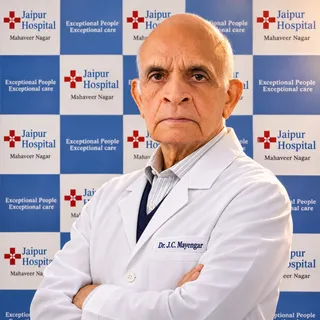
Your orthopaedics doctors
Explore our orthopaedic hospital in Jaipur: every treatment, the doctors and what to expect at your visit.



Frequently asked questions
Questions patients ask about heel pain and plantar fasciitis treatment
What is heel pain and spur treatment?
In short
Heel pain and spur treatment at Jaipur Hospital follows a stepwise plan that starts with physiotherapy and custom orthotics and moves to shockwave therapy or endoscopic release surgery if needed. The aim is to reduce pain, improve foot function and let you return to daily activity.
In detail
Plantar fasciitis is a degenerative tissue condition of the plantar fascia rather than an inflammation, often causing first-step pain after rest. A heel spur may develop but the spur itself is not always the source of pain.
Conservative care includes stretching, strengthening, custom insoles and night splints. Extracorporeal shockwave therapy uses high-energy waves to stimulate healing. For refractory cases, endoscopic plantar fascia release is a minimally invasive option that eases tension in the fascia.
Evidence shows shockwave can improve pain scores at 12 weeks with benefit maintained up to 12 months, while high-load strength training may give quicker pain reduction than stretching alone.
A common belief
Many people think a heel spur must be removed, but the spur is often not the pain source.
What actually happens
The fascia itself is the problem, and most patients improve without surgery.
Your next step at Jaipur Hospital
A consultation takes about 15 minutes and costs ₹1,000 to ₹3,000. The surgeon will examine your foot, review any imaging and suggest the appropriate step. Most people start with conservative measures for 6 to 12 weeks.
If shockwave is advised, each session is 15 minutes at ₹2,000 to ₹5,000. Surgery is daycare, 30 to 45 minutes, with full activity in 4 to 8 weeks.
Which specialist should I see for heel pain and plantar fasciitis?
In short
For heel pain and plantar fasciitis you should see an orthopaedic surgeon with a focus on foot and ankle conditions. At Jaipur Hospital the orthopaedics department provides this care, supported by the physiotherapy team for conservative management.
In detail
An orthopaedic surgeon assesses the whole lower limb, rules out other causes such as stress fracture, nerve entrapment or inflammatory arthritis, and decides the treatment step.
The surgeon can order imaging, prescribe physiotherapy and custom orthotics, administer shockwave therapy and perform endoscopic plantar fascia release if required. The physiotherapy team delivers stretching, strengthening, gait retraining and night splint guidance. This combined approach ensures you receive the appropriate step in the stepwise pathway without unnecessary delay.
A common belief
Some people go to a general physician or try only insoles.
What actually happens
A surgeon can confirm the diagnosis, exclude mimics and offer the full range from physiotherapy to shockwave to endoscopic release in one place.
Your next step at Jaipur Hospital
A consultation with the orthopaedic surgeon takes 15 minutes and costs ₹1,000 to ₹3,000. The surgeon will examine your foot, review any scans and outline a plan. If physiotherapy is advised, sessions can start the same week.
Shockwave sessions are 15 minutes each at ₹2,000 to ₹5,000. Surgery is daycare with 4 to 8 weeks to full activity.
What treatment options are available for heel pain and plantar fasciitis?
In short
Treatment options at Jaipur Hospital follow a stepwise pathway: physiotherapy and custom orthotics first, then extracorporeal shockwave therapy, and finally endoscopic plantar fascia release surgery for refractory cases. The surgeon selects the step based on your symptoms, duration and response to previous care.
In detail
Conservative care includes stretching, high-load strength training, custom insoles and night splints. Evidence shows high-load strength training may reduce pain quicker than stretching alone.
Shockwave therapy uses high-energy waves to stimulate healing; studies show improved pain scores at 12 weeks with benefit maintained up to 12 months. If conservative measures and shockwave fail, endoscopic plantar fascia release is a minimally invasive daycare procedure that eases tension in the fascia.
The surgeon may also address tight calf muscles with gastrocnemius recession if that contributes. Each step is discussed with you before proceeding.
A common belief
Some places offer steroid injections or PRP as first line.
What actually happens
At Jaipur Hospital we do not use platelet injections because evidence does not support them, and steroid relief is often short-lived. Our pathway builds from exercise to shockwave to surgery only when necessary.
Your next step at Jaipur Hospital
A consultation is 15 minutes at ₹1,000 to ₹3,000. Physiotherapy typically runs 6 to 12 weeks. Shockwave sessions are 15 minutes each at ₹2,000 to ₹5,000.
Endoscopic release surgery is 30 to 45 minutes, daycare, at ₹40,000 to ₹80,000, with full activity in 4 to 8 weeks. The surgeon will outline the expected timeline for your case.
What can I safely do at home to manage symptoms of plantar fasciitis?
In short
At home you can manage plantar fasciitis symptoms with daily calf and plantar fascia stretches, rolling the foot over a frozen water bottle, wearing supportive shoes indoors, and using a night splint to keep the fascia gently stretched while you sleep. These steps reduce first-step pain and load on the heel.
In detail
Evidence supports stretching and high-load strength training as core home care. A progressive exercise protocol performed every second day gave superior self-reported outcomes at three months compared with stretching alone. Heel raises with a towel under the toes load the fascia in a controlled way.
Night splints maintain lengthened fascia overnight, easing morning pain. Ice massage for 10 to 15 minutes after activity reduces local swelling. Avoid walking barefoot on hard floors; use cushioned slippers or sandals with arch support.
Weight management helps because higher BMI is a strong risk factor, especially in non-athletic people. Over-the-counter NSAIDs may ease pain short term but do not change the tissue degeneration.
A common belief
Many people only rest and take painkillers.
What actually happens
Rest alone does not remodel the degenerated fascia. Evidence shows high-load strength training every second day works better than stretching alone at three months. Ice and NSAIDs only mask pain; they do not fix the tissue.
Your next step at Jaipur Hospital
Start with gentle stretches three times a day and ice after prolonged standing. If pain does not improve in two to three weeks, book a consultation at Jaipur Hospital.
The surgeon will check your foot, prescribe a structured physiotherapy plan, and advise on custom insoles or night splints. A consultation takes 15 minutes and costs ₹1,000 to ₹3,000.
How does the term "plantar fasciitis" relate to heel pain and spur treatment?
In short
Plantar fasciitis is the most common cause of heel pain. It is a degenerative condition of the thick band running from heel to toes, not simple inflammation. The term describes the tissue causing the pain. A heel spur may develop as a reaction to chronic tension on the fascia, but the spur itself is rarely the primary pain source. Treatment targets the fascia first.
In detail
Imaging in plantar fasciopathy shows a thicker, hypoechogenic fascia with increased vascular signal and perifascial fluid. Heel fat pad changes and bone findings like a subcalcaneal spur are common associations.
However, studies note that cutting the fascia to remove a spur can affect arch support and risk collapse. Therefore, the term plantar fasciitis guides treatment toward fascia healing — stretching, strengthening, orthotics, shockwave — rather than spur removal.
Surgery (endoscopic plantar fascia release) addresses the tight fascia; any spur is removed only if it impinges after release. The condition accounts for about 8% of running injuries and affects 4% to 7% of the community.
A common belief
Many people believe the spur must be removed.
What actually happens
Evidence shows cutting the fascia to remove a spur can weaken the arch. Surgery releases the tight fascia; the spur is taken out only if it still presses after release. The name plantar fasciitis tells us the fascia is the problem.
Your next step at Jaipur Hospital
If you have heel pain worst on the first step after rest, book a consultation at Jaipur Hospital. The surgeon will examine the fascia, review imaging, and explain whether a spur is relevant. Consultation is 15 minutes, ₹1,000 to ₹3,000.
Treatment starts with physiotherapy and orthotics; shockwave or release surgery are options if conservative care fails after 6 to 12 weeks.
How will foot shape, joint alignment, strength, and walking be assessed for heel pain and plantar fasciitis?
In short
At Jaipur Hospital the surgeon examines your foot shape, joint alignment, muscle strength and walking pattern during the consultation. The doctor checks for tenderness at the heel, arch height, calf tightness and how you bear weight. X-rays taken in the hospital's radiology department can show a heel spur or bone changes. If needed the surgeon may advise an ultrasound or MRI at an outside imaging centre to confirm plantar fascia thickness and rule out other causes.
In detail
The assessment follows a stepwise clinical approach. First the surgeon palpates the medial heel and watches you stand and walk to see pronation, supination or limping. Passive dorsiflexion of the ankle and great toe tests calf and plantar fascia tightness.
Strength is graded by asking you to rise on your toes and perform single-leg heel raises. Weight-bearing X-rays reveal spur formation, calcaneal pitch and any arthritis.
Evidence shows that people with plantar fasciopathy have a thicker hypoechoic fascia on ultrasound and often a subcalcaneal spur on X-ray. These findings guide whether conservative care, shockwave or release surgery is appropriate.
A common belief
Many people think a quick look is enough.
What actually happens
In fact a proper assessment checks calf tightness, arch mechanics and imaging to confirm fascia thickness and spurs before choosing treatment.
Your next step at Jaipur Hospital
The consultation takes about 15 minutes. X-rays are done on the same visit. If an ultrasound or MRI is advised you attend an imaging centre outside the hospital and the surgeon reviews the report at a follow-up.
Based on the findings the team outlines a plan: physiotherapy and custom orthotics first, then shockwave if needed, and endoscopic release for refractory cases.
How will heel pain and plantar fasciitis treatment affect my walking, movement, or independence?
In short
At Jaipur Hospital the goal of treatment is to restore comfortable walking and independence. Conservative care with physiotherapy, orthotics and night splints allows you to stay active while symptoms improve over 6 to 12 weeks. After endoscopic plantar fascia release there is a short period of reduced mobility — crutches and a boot for about four weeks — followed by progressive return to normal walking and daily activities.
In detail
Evidence on post-surgical recovery describes a phase where you stay off the foot for at least a day, use crutches for several weeks and wear a boot or cast for at least four weeks.
During this time you may need help with shopping, housework or caring for dependants. Low-impact exercise such as cycling or swimming can maintain fitness. Most patients regain independent walking once the boot is removed and physiotherapy progresses.
A common belief
Some people expect surgery to fix walking immediately.
What actually happens
The evidence shows a temporary period of reduced mobility is needed to protect the healing fascia, so plan for help at home during the first weeks after surgery.
Your next step at Jaipur Hospital
Plan for an attendant to help at home for the first week after surgery. Desk work can often resume within one to two weeks; jobs with prolonged standing need longer. Full independence in walking and daily tasks is typical by 4 to 8 weeks.
Which symptoms or changes should prompt me to seek medical advice for heel pain?
In short
Seek medical advice at Jaipur Hospital when you have sharp stabbing heel pain that is worst with the first steps after rest, pain that persists despite rest, stretching and over‑the‑counter medication, or pain that limits walking and daily activities. These symptoms suggest plantar fasciitis that may need a structured treatment plan.
In detail
The condition is characterised by first‑step pain and pain during weight‑bearing tasks, particularly after periods of rest. It may remain symptomatic despite conservative treatment with orthoses and analgesia.
In studies, plantar heel pain affects 4–7% of the community and accounts for about 8% of running‑related injuries. Higher body mass index (BMI >27) is a strong risk factor in non‑athletic people. If pain continues beyond a few weeks or returns quickly after activity, a specialist review helps avoid chronic disability.
- In studies, plantar heel pain affects 4–7% of the community and accounts for about 8% of running‑related injuries.
A common belief
People often wait months hoping it will go away.
What actually happens
Evidence shows chronic plantar fasciitis becomes harder to treat the longer it persists. Early physiotherapy and orthotics give better outcomes.
Your next step at Jaipur Hospital
A 15‑minute consultation at Jaipur Hospital costs ₹1,000–₹3,000. The surgeon will examine your foot, check for tenderness at the heel, and may advise an X‑ray (available in‑house) or refer you for ultrasound or MRI at an outside imaging centre. Early review means conservative treatment can start sooner, often avoiding surgery.
What will the doctor ask and check at the first visit for heel pain?
In short
At the first visit the orthopaedic surgeon at Jaipur Hospital will ask about the onset, pattern and severity of your heel pain, what makes it better or worse, your activity level, footwear and any previous treatment. The surgeon will then examine your foot, ankle and gait.
In detail
The surgeon checks for tenderness at the medial calcaneal tubercle, assesses the windlass mechanism, evaluates calf tightness and looks for swelling or nerve signs.
The surgeon will ask if pain is worst with the first steps after rest, if it improves with activity then worsens again, and if night pain is present. Previous imaging reports are reviewed.
The surgeon may order a weight-bearing X-ray or ultrasound to confirm fascia thickening, spur presence or fat pad changes. This assessment places you on the stepwise pathway: physiotherapy and orthotics first, then shockwave, then endoscopic release if needed.
A common belief
A quick look at the heel is not enough.
What actually happens
The surgeon at Jaipur Hospital checks the whole chain — calf, arch, gait — because tight calves or a stiff big toe joint can drive the fascia pain.
Your next step at Jaipur Hospital
The consultation lasts 15 minutes and costs ₹1,000 to ₹3,000. Wear your usual shoes and bring any scans. After the examination the surgeon will explain the likely cause, the recommended first step and the expected timeline. Physiotherapy can start within days. Shockwave sessions are 15 minutes each.
Can heel pain and plantar fasciitis improve without a procedure or operation?
In short
Yes, most people with heel pain and plantar fasciitis improve without a procedure or operation. At Jaipur Hospital the first step is always conservative care — physiotherapy, custom orthotics, activity modification and night splints — which resolves symptoms for the majority of patients over 6 to 12 weeks.
In detail
Plantar fasciitis is a degenerative tissue condition that responds to load management and strengthening. High-load strength training performed every second day has been shown to give superior self-reported outcomes at 3 months compared with stretching alone.
Custom insoles and night splints reduce strain on the fascia during daily activity and sleep. Shockwave therapy is a non-invasive option that can be added if conservative measures plateau; evidence shows pain improvement at 12 weeks maintained up to 12 months.
Only a small proportion — about 1 in 10 — do not feel better after months of nonsurgical treatment and may then consider endoscopic release.
A common belief
A common belief is that a heel spur must be removed.
What actually happens
The spur is rarely the pain source. The fascia heals with the right loading programme, and at Jaipur Hospital we exhaust non-surgical steps before considering release.
Your next step at Jaipur Hospital
Start with a 15-minute consultation at ₹1,000 to ₹3,000. The surgeon will design a physiotherapy and orthotic plan, review progress at 6 weeks and decide if shockwave is needed. Surgery is reserved for cases that do not respond after adequate conservative care.
FAQ library
Questions and answers about heel pain and plantar fasciitis treatment
When you contact us
Your clear next step
Contact Jaipur Hospital for a consultation, a review of your scans, a plain explanation of options, a cost estimate and help with cashless insurance.
- A consultation with an orthopaedic surgeon in the OPD
- Your scans and reports reviewed, with tests done in-house if you need them (laboratory, X-ray and imaging)
- Your options explained in plain words, including whether you need surgery at all
- A cost estimate before you decide
- Help with cashless treatment under MAA Yojana, various government health care schemes and empanelled insurers and TPAs
- Follow-up visits after your treatment
Overview
Heel Pain and Plantar Fasciitis Treatment: what to know
What is heel pain and plantar fasciitis
- 4 to 7 percent General community
- 8 percent Running injuries
Plantar fasciitis is a common cause of heel pain. It affects the plantar fascia, a thick stretchy band of tissue that runs from your heel to your toes and supports the arch of your foot. The condition is better described as a degenerative tissue change rather than simple inflammation.
Repeated strain causes tiny tears in the fascia, which leads to thickening and pain. In its chronic form it can be disabling. Plantar heel pain affects about 4 to 7 percent of the general community and accounts for roughly 8 percent of all running-related injuries.
Symptoms of plantar fasciitis and when to seek urgent care
- Sudden severe pain after fall Same-day medical attention needed
- Cannot put weight on foot Same-day medical attention needed
- Swelling, redness, warmth with fever Same-day medical attention needed
- Pain not improving with rest Same-day medical attention needed
The hallmark symptom is sharp stabbing pain under the heel, most noticeable with the first steps after getting out of bed or after sitting for a while. Pain often eases after a few minutes of walking but may return after prolonged standing or activity. The heel may feel tender when pressed, and the foot can feel stiff.
A heel spur — a bony growth on the underside of the heel bone — may develop, but the spur itself is not always painful.
Warning signs that need same-day medical attention include:
- Sudden severe heel pain after a fall or direct injury
- Inability to put any weight on the foot
- Swelling, redness or warmth around the heel with fever
- Numbness or tingling in the foot or toes
- Pain that does not improve at all with rest and simple measures
Causes and risk factors for plantar fasciitis
- Overload of plantar fascia
- Repeated strain causes tiny tears
- Sudden increase in activity
- Walking, running or standing on hard surfaces
- Tight calf muscles
- Limit ankle movement
- Foot structure
- Flat feet or very high arches
- Poor footwear
- Shoes with poor arch support or thin soles
- Higher body mass index
- Odds ratio 3.7 for BMI above 27
Plantar fasciitis develops when the plantar fascia is overloaded.
Common contributors include:
- A sudden increase in walking, running or standing on hard surfaces
- Tight calf muscles that limit ankle movement
- Flat feet or very high arches
- Wearing shoes with poor arch support or thin soles
Higher body mass index is a strong risk factor, especially in people who are not regularly active; one study found an odds ratio of 3.7 for BMI above 27. Occupations that require long hours on the feet — such as teaching, factory work or retail — also raise the risk. The condition is most frequent between the ages of 40 and 60, but it can occur at any age.
How plantar fasciitis is diagnosed: examination and tests
- Clinical examination
- Pain pattern, tenderness, foot mechanics
- Ultrasound findings
- Thickened, hypoechoic fascia with vascular signal
- X-ray findings
- May reveal heel spur or bone changes
- MRI for uncertain cases
- Detailed soft-tissue information
Diagnosis starts with a clinical examination. Your doctor will ask about the pattern of pain, check for tenderness at the medial heel, and assess foot mechanics and calf tightness. Imaging is used to confirm the diagnosis and rule out other causes. Ultrasound typically shows a thickened, hypoechoic plantar fascia with increased vascular signal and fluid around the fascia.
X-rays may reveal a heel spur or other bone changes. MRI can provide detailed soft-tissue information when the diagnosis is uncertain. At Jaipur Hospital, X-ray is available on site. Ultrasound and MRI are performed at an external imaging centre and the results are reviewed by your surgeon. No CT scanner or DEXA machine is available at the hospital.
Non-surgical treatment for plantar fasciitis and when surgery is considered
- First-line measures Rest, ice, supportive footwear, stretching
- Orthotics and night splints Custom insoles and night splints offload fascia
- High-load strength training Heel raises with towel under toes
- Shockwave therapy (ESWT) High-energy sound waves stimulate healing
- Corticosteroid injection Short-term relief up to three months
Most people improve with stepwise non-surgical care. First-line measures include rest from aggravating activities, ice, supportive footwear, and stretching of the plantar fascia and calf muscles. Custom orthotic insoles and night splints help offload the fascia.
Physiotherapy with high-load strength training — such as heel raises with a towel under the toes — has been shown to give better functional scores at three months compared with stretching alone.
Extracorporeal shockwave therapy (ESWT) delivers high-energy sound waves to stimulate healing; meta-analyses of randomised trials show it reduces pain and improves success rates compared with placebo, with benefits maintained up to 12 months. Focused shockwave (FSW) at medium to high intensity and radial shockwave (RSW) are both used; the choice depends on the machine available and your surgeon's judgement.
A single ultrasound-guided corticosteroid injection can give short-term pain relief at four weeks and reduce fascia thickness for up to three months, but the effect often does not last beyond that.
Surgery is considered when symptoms persist despite at least three to six months of consistent non-surgical treatment. The common procedure is endoscopic plantar fascia release, a minimally invasive technique that uses a thin tube with tiny tools to release the tight fascia through a small incision. If a heel spur is present, it can be removed at the same time.
Other surgical options described in the literature include gastrocnemius recession to lengthen the calf muscle and radiofrequency microtenotomy, but the standard release is the most frequently performed. About 1 in 10 people with plantar fasciitis do not improve with non-surgical care and may be candidates for surgery. Your surgeon will discuss which approach suits your situation.
Your first visit and tests for heel pain and plantar fasciitis treatment
Do
- Earlier X-ray films
- Scan reports
- List of medicines
- Insurance or scheme card
When you come to Jaipur Hospital for heel pain, the doctor asks about your symptoms, how long you have had them, and what makes the pain better or worse. They check your foot for tenderness, swelling, and how well you can move your ankle and toes.
The doctor also looks at your shoes and asks about your daily activities and any previous treatments you have tried. An X-ray of the foot may be taken in the hospital to look for a heel spur or other bone changes.
If an ultrasound or MRI is needed to see the plantar fascia thickness or rule out other causes, the doctor will advise you to have it done at an imaging centre outside the hospital and will review the results with you. Bring any earlier X-ray films, scan reports, a list of medicines you take, and your insurance or scheme card. The consultation takes about 15 minutes.
How heel pain and plantar fasciitis treatment works
- Physiotherapy and orthotics Stretching, strengthening, custom insoles
- Night splint Keeps foot stretched during sleep
- Shockwave therapy (ESWT) 15-minute OPD sessions without anaesthesia
- Endoscopic release surgery Daycare procedure, 30 to 45 minutes
Treatment follows a stepwise plan. Most people start with physiotherapy and orthotics. The physiotherapy team teaches you stretching exercises for the plantar fascia and calf muscles, and strengthening exercises such as high-load heel raises that have been shown to improve pain and function in studies.
Custom insoles or heel cups are made to support the arch and offload the painful area. A night splint may be advised to keep the foot stretched while you sleep. If pain continues after several weeks of these measures, extracorporeal shockwave therapy (ESWT) may be offered.
ESWT uses high-energy sound waves applied to the heel to stimulate healing; each session takes about 15 minutes and is done in the OPD without anaesthesia. For the small number of people whose pain does not improve after at least three months of conservative care, endoscopic plantar fascia release may be discussed.
This is a daycare procedure under local or spinal anaesthesia that takes 30 to 45 minutes. The surgeon makes a small incision and uses a thin tube with a camera to release the tight fascia. Your surgeon will explain which option suits you based on your symptoms, examination, and imaging findings.
Risks and possible complications of heel pain and plantar fasciitis treatment
Physiotherapy, orthotics and night splints carry very low risk; some people feel temporary soreness after new exercises. Shockwave therapy may cause mild bruising, swelling or numbness at the treatment site that usually settles within a few days. Studies report no serious adverse events with ESWT.
Surgery carries the usual risks of any operation: infection, wound healing problems, nerve injury causing numbness, and persistent pain. Releasing the plantar fascia can weaken the arch support, and in some cases the arch may collapse. A heel spur may be present and can be removed during the same procedure.
Your surgeon will discuss these risks with you before you decide. Contact the hospital if you notice increasing redness, swelling, discharge, fever, or new numbness after any procedure.
Recovery and aftercare for heel pain and plantar fasciitis treatment
After conservative treatment or shockwave therapy, you can walk straight away. The physiotherapist gives you a home exercise programme to continue daily. Most people notice gradual improvement over 6 to 12 weeks. After endoscopic release surgery, you will need to keep weight off the operated foot for at least the first day.
You will use crutches for several weeks and wear a protective boot or cast for at least four weeks. Ice and elevation help reduce swelling in the first few days. Stitches are usually removed at two weeks. You can start gentle range-of-motion exercises as advised by your surgeon and physiotherapist.
Full return to sports or heavy standing work typically takes 4 to 8 weeks. Low-impact activities such as cycling or swimming may be allowed earlier to maintain fitness. If you are a runner, it may be weeks or months before you can resume running.
Call the hospital if you have worsening pain not relieved by prescribed medicines, signs of infection, calf swelling or shortness of breath.
Results of heel pain and plantar fasciitis treatment
In studies, high-load strength training every second day led to better foot function and less pain at three months compared with stretching alone. Benefits were maintained at 12 months.
Shockwave therapy shows a measurable benefit over placebo: meta-analyses of randomised trials found greater pain reduction and higher success rates for medium and high-intensity focused shockwave therapy, and radial shockwave therapy also appeared effective. Improvements with ESWT were evident at 12 weeks and maintained up to 12 months.
About 1 in 10 people with chronic plantar fasciitis do not improve with non-surgical treatment and may be considered for surgery. Endoscopic release generally provides good pain relief, but recovery takes time and the arch must be protected with appropriate footwear and orthotics afterwards.
The problem can return if the underlying causes such as tight calf muscles, high body mass index or unsuitable shoes are not addressed.
Cost and insurance for heel pain and plantar fasciitis treatment in Jaipur
The typical cost range at Jaipur Hospital is ₹1,000 to ₹3,000 for a consultation, ₹2,000 to ₹5,000 per shockwave session, and ₹40,000 to ₹80,000 for endoscopic plantar fascia release surgery. The final amount depends on the number of shockwave sessions needed, the type of anaesthesia for surgery, any implants or sutures used, and whether you stay longer for observation.
All procedures are daycare. The hospital accepts MAA Yojana, various government health care schemes and a panel of private insurers and TPAs. Bring your scheme or insurance card and any pre-authorisation letter. The billing team will help you understand what your plan covers and what you may need to pay. For an estimate specific to your case, speak to the admissions desk during your visit.
