
Orthopaedics · Jaipur Hospital
Hip Resurfacing in Jaipur
Your hip aches and the day feels long. Jaipur Hospital offers a clear assessment, a plain plan and time to ask questions.
- Serving Jaipur since 1991 (35 years)
- NABH accredited
- 24×7 emergency & ICU
- Cashless: MAA Yojana + 32 insurers
- Operation time
- 2 to 3 hours
- Anaesthesia
- Spinal or general anaesthesia
- Recovery
- Full activity in 3 to 6 months
- Price
- ₹3,00,000 to ₹5,50,000typical range in India; ask us for an estimate
When your hip decides your day
You cannot walk far without stopping
At first it was a twinge after a long day. Now the hip aches when you climb stairs, sit for too long or turn in bed. The joint feels stiff in the morning, and the pain can spread to the groin or thigh.
-
Pain that limits walking
You stop after a short distance, plan around the pain, and feel tired by evening.
-
Stiffness every morning
Turning, bending and putting on socks or shoes becomes slow and awkward.
-
Sleep broken by pain
You change position often at night, and the ache leaves you tired the next day.
-
Time lost at work
Standing, travelling and long shifts become harder, and you take more days off.
Arthritis is the most common reason people need hip resurfacing.
Why Jaipur Hospital
You may be worried about the cost, the time off work, and whether you will walk normally again.
Your care plan
Your first steps with us
- 1 Call us or walk in to the orthopaedic OPD.
- 2 Meet the orthopaedic surgeon and describe your hip pain.
- 3 Get your scans and reports reviewed, with tests in-house if needed.
- 4 Plan your surgery, hospital stay and follow-up with the team.
How hip resurfacing is done
Your surgeon replaces only the worn socket with a prosthetic piece and reshapes the head of your thigh bone to fit a metal cap. More natural bone is kept than in a total hip replacement. Your surgeon will discuss the options with you.
-
Birmingham Hip Resurfacing
The most established metal-on-metal design, using a metal cap on the reshaped femoral head.
-
Conserve Plus
An alternative metal-on-metal system, with a different design of the same bearing type.
-
Ceramic-on-ceramic resurfacing
A bearing with lower wear, though it is not widely available.
-
Hybrid fixation
A cemented femoral component combined with an uncemented acetabular component.
Why patients trust us
- 1991 Serving Jaipur for 35 years
- NABH Accredited hospital
- 4 Orthopaedics consultants
- 24×7 Emergency, ICU and ambulance
- 33 Cashless schemes and insurers
What research shows about hip resurfacing
-
more than 90%
In men, more than nine in ten hip resurfacings were still working after ten years.
-
0.5% to 2%
Reported failure rates at ten years were low in active men with osteoarthritis of the hip.
-
up to 6 weeks
People typically use two crutches for up to six weeks after surgery while soft tissues heal.
If it is left untreated
Left alone, severe hip arthritis usually gets worse. The cartilage wears thin, the bones rub, and bony lumps called osteophytes can form. Pain, loss of movement and loss of muscle power may follow. Some people then need a total hip replacement, which removes more of the natural bone.
Life after treatment
Recovery is gradual. People who do well usually notice less pain and better movement as the weeks pass, and many return to activities they had given up.
-
Walking and stairs
Most people find walking and stairs easier as the hip settles over the first months.
-
Back to daily tasks
Usually daily tasks become easier once your surgeon and physiotherapist agree you are ready.
-
Return to activity
Many people go back to sport and exercise they enjoyed, after building strength with physiotherapy.
-
Long-term follow-up
The team checks the wound, movement and metal ion levels over the long term, as advised.
Meet the team
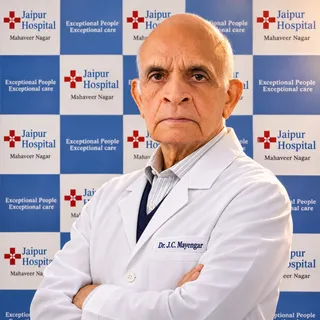
Your orthopaedics doctors
Explore our orthopaedic hospital in Jaipur: every treatment, the doctors and what to expect at your visit.



Frequently asked questions
Questions patients ask about hip resurfacing
What is hip resurfacing?
In short
Hip resurfacing is a bone-conserving operation that replaces the worn surfaces of the hip joint with metal components. At Jaipur Hospital our surgical team trims and caps the femoral head with a metal cap and fits a metal shell into the socket, preserving the femoral neck and more of your natural bone than a total hip replacement.
In detail
The procedure is designed for people with severe hip arthritis who want to keep as much bone as possible. The surgeon prepares the acetabulum and inserts a metal cup with a friction fit, then reshapes the femoral head and cements a metal cap onto it.
This metal-on-metal bearing aims to give a larger head size for stability and a more natural feel. Studies show that in suitable patients, particularly active men with good bone quality, the implant can last ten years or more with low revision rates.
A common belief
Unlike a total hip replacement, which removes the femoral head and neck, resurfacing preserves bone and uses a larger bearing for stability.
What actually happens
It is not suitable for everyone; women and patients with smaller bones or weaker bone quality have higher failure rates.
Your next step at Jaipur Hospital
If you have hip pain that limits daily activity, you can book a consultation with our orthopaedic team. The surgeon will examine your hip, review any x-rays, and discuss whether your bone size and quality make you a candidate. Surgery typically takes two to three hours with a hospital stay of three to five nights.
Which specialist should I see for hip resurfacing?
In short
You should see an orthopaedic surgeon who specialises in hip surgery and has training in hip resurfacing techniques. The surgeon will assess your bone quality, femoral head size and activity level to decide if you are a candidate. Jaipur Hospital has orthopaedic surgeons who perform hip resurfacing.
In detail
Hip resurfacing is a specialised procedure that requires experience with metal-on-metal bearings and precise component positioning. The surgeon must be familiar with the specific implant systems such as Birmingham Hip Resurfacing or Conserve Plus.
Guidelines recommend that hip resurfacing be limited to high-volume hip surgeons who are experienced in the technique or trained at a specialist centre. The surgeon will also discuss the need for long-term monitoring of metal ion levels after surgery.
A common belief
Not every orthopaedic surgeon performs hip resurfacing.
What actually happens
It requires familiarity with metal-on-metal bearings, precise sizing and long-term follow-up protocols. Choosing a surgeon who does the procedure regularly is associated with better outcomes.
Your next step at Jaipur Hospital
Ask your general practitioner for a referral to an orthopaedic surgeon with hip resurfacing experience. At the consultation, bring any previous imaging and a list of medications. The surgeon will examine you, review x-rays and explain the risks and benefits. If you are suitable, surgery can be planned.
What treatment options are available for my hip arthritis?
In short
Treatment options include non-surgical measures such as activity modification, physiotherapy, walking aids and pain relief medication. If these no longer help, surgical options include hip resurfacing or total hip replacement. The choice depends on your age, activity level, bone quality and femoral head size. Jaipur Hospital offers both procedures.
In detail
Hip resurfacing preserves the femoral neck and is suited to younger, active patients with strong bone and a femoral head of at least 46 mm.
Total hip replacement removes the femoral head and neck and inserts a stem into the thigh bone; it is suitable for a wider range of patients including older people and those with weaker bone. Both procedures use metal-on-metal, ceramic-on-ceramic or metal-on-polyethylene bearings.
The surgeon will explain the risks and benefits of each, including the need for long-term metal ion monitoring after metal-on-metal resurfacing.
A common belief
People often think one procedure is better for everyone.
What actually happens
Resurfacing preserves bone and may allow higher activity, but it needs a large femoral head and good bone quality. Total hip replacement works for more patients but removes more bone. The surgeon matches the procedure to your anatomy and goals.
Your next step at Jaipur Hospital
After assessment and imaging, the surgeon will discuss which option fits your situation. If you choose surgery, a date is usually set within a few weeks. Pre-operative checks include blood tests, anaesthesia review and physiotherapy advice. You will stay in hospital for three to five nights after the operation.
What can I safely do at home to manage hip arthritis symptoms before hip resurfacing?
In short
At home you can manage hip arthritis symptoms with regular low-impact exercise, weight control, heat or cold packs, and over-the-counter pain relief as advised by your doctor. Use a walking stick or frame if it reduces joint load. Keep the hip moving within comfortable limits to maintain muscle strength and joint nutrition. Avoid activities that cause sharp pain.
In detail
Evidence supports moderate exercise as pain allows, especially pre-surgery strengthening exercises given by the physiotherapist. Losing weight reduces load on the hip and lowers anaesthetic and surgical risks. Paracetamol and ibuprofen (if you can take it) are standard for flare-ups.
Heat can ease stiffness; cold can reduce swelling after activity. A walking aid on the opposite side offloads the joint. Good sleep, a balanced diet with fruit, vegetables and cereals, and cutting down on sugar and alcohol support overall health.
Stopping smoking improves healing and anaesthetic safety. Do not shave the operation site yourself. Bring all medicines in a bag to every appointment. These measures do not reverse arthritis but can delay worsening and prepare you for surgery if needed.
A common belief
Some people rest completely, thinking it protects the joint.
What actually happens
Inactivity weakens muscles and stiffens the hip further, making recovery harder. Others take herbal mixtures without telling the doctor, which can interact with anaesthesia or blood thinners. Simple, consistent measures work better.
Your next step at Jaipur Hospital
Start the home programme today and track pain and walking distance. Share the log with your surgeon at the next visit. To book a consultation at Jaipur Hospital, call 0141-2551500 or 7414 001 001.
How do I know whether I am ready for hip resurfacing?
In short
You may be ready for hip resurfacing when severe hip pain and stiffness limit daily activities and non-surgical treatments no longer help. At Jaipur Hospital, the orthopaedic team assesses your symptoms, bone quality, hip size, age, activity level and overall health to decide if this bone-conserving procedure suits you.
In detail
Hip resurfacing replaces the worn femoral head surface with a metal cap and the socket with a metal shell, preserving the femoral neck.
Evidence shows it is most suitable for active males with good bone stock and a femoral head larger than 46 mm, typically under 65 years.
Women over 55, patients with renal insufficiency, known metal allergy, or small hip anatomy have higher complication rates and are usually advised against metal-on-metal resurfacing. The surgeon reviews X-rays, blood tests and your medical history to confirm eligibility.
A common belief
Many people think age alone decides eligibility.
What actually happens
In fact, bone quality and femoral head size matter more. Women and older patients often have higher risks with metal-on-metal implants, so the team may suggest a different option.
Your next step at Jaipur Hospital
If hip pain affects walking, sleep or independence, book a consultation at Jaipur Hospital. The surgeon will examine you, review imaging, discuss implant options and explain the typical hospital stay of three to five nights and recovery over three to six months. Bring your medication list and any recent test results.
How will hip resurfacing affect my walking, movement, or independence?
In short
Most people walk with two crutches for up to six weeks after hip resurfacing, then progress to one crutch or a stick before walking unaided. At Jaipur Hospital, the physiotherapy team guides you through this stepwise return to independent movement.
In detail
Evidence shows that after the initial protected weight-bearing phase, patients typically regain a near-normal gait pattern. The preserved femoral neck and large head diameter give a stable joint with a low dislocation rate in men with adequate femoral head size.
You should be able to resume most daily activities, including stairs, driving (usually after six weeks), and low-impact sports such as swimming, cycling and golf by three to six months. High-impact activities like jogging or contact sports are generally discouraged to protect the bearing surface.
Some patients report occasional aching, stiffness or a mild limp that may persist; the team investigates these if they do not improve. Long-term studies in men show over 90 per cent of resurfacings function well at ten years, supporting sustained independence.
A common belief
Patients sometimes expect instant return to running or heavy labour.
What actually happens
The large metal-on-metal bearing is stable but not designed for high-impact loads. A small number of people keep a mild limp or stiffness; the team checks for loosening or soft-tissue causes if it persists.
Your next step at Jaipur Hospital
Before discharge, the physiotherapist ensures you can safely manage stairs, transfers and a home exercise programme. Outpatient follow-up at two weeks checks wound healing and gait. Further reviews at six weeks, three months and one year track progress. You will receive a home exercise sheet and advice on when to wean off walking aids.
Which symptoms or changes should prompt me to seek medical advice for hip resurfacing?
In short
You should seek medical advice if you have persistent hip pain that limits walking, climbing stairs or putting on shoes, stiffness that reduces your range of motion, a limp that does not improve with rest, or pain at night that disturbs sleep. Jaipur Hospital offers orthopaedic consultations to assess these symptoms.
In detail
Osteoarthritis causes the smooth cartilage to become flaky and cracked, the bone underneath to become denser, and bony lumps called osteophytes to form. These changes lead to pain, loss of movement and loss of muscle power.
When non-surgical measures such as activity modification, physiotherapy and pain relief no longer control the symptoms, the surgeon may discuss hip resurfacing as an option. The decision depends on your age, activity level, bone quality and the size of your femoral head.
A common belief
Some people wait until they cannot walk at all.
What actually happens
Earlier assessment allows the surgeon to check bone quality and femoral head size, which are critical for resurfacing. If the bone becomes too weak or the head too small, resurfacing may no longer be an option.
Your next step at Jaipur Hospital
Make a list of your symptoms, how long they have lasted and what makes them better or worse. Bring any previous x-rays or reports to the first visit. The surgeon will examine your hip, assess your walking pattern and order fresh x-rays if needed. You can then discuss whether hip resurfacing or another treatment is appropriate.
What will the doctor ask and check at the first visit for hip resurfacing?
In short
The surgeon will ask about your hip pain, stiffness, walking distance, night pain and how symptoms affect daily activities. They will review your medical history, previous hip problems, medications and allergies. Jaipur Hospital follows a structured assessment to determine if hip resurfacing is appropriate.
In detail
The examination includes checking your hip range of motion, leg length, muscle strength and walking pattern. The surgeon will assess whether you have a femoral head size of at least 46 mm, which is needed for resurfacing.
They will ask about kidney function and any known metal allergy, as these are contraindications. Women of childbearing age will be counselled about pregnancy considerations. The surgeon will also discuss your activity goals and explain the need for long-term metal ion monitoring after metal-on-metal resurfacing.
A common belief
Some patients expect only a quick x-ray review.
What actually happens
The assessment is detailed because bone quality, head size, kidney function and metal allergy all affect whether resurfacing is safe. The surgeon also explains the lifelong follow-up needed for metal ion levels.
Your next step at Jaipur Hospital
Bring a list of all medications, previous x-rays or scan reports, and any referral letter. The surgeon will order fresh x-rays of the pelvis and hip if recent ones are not available. Blood tests may be arranged to check kidney function and blood count.
After the assessment, the surgeon will explain whether you are a candidate for hip resurfacing and discuss the next steps.
Can hip arthritis improve without a procedure or operation?
In short
Hip arthritis cannot be reversed without surgery, but symptoms can often be managed for a time with non-surgical measures. These include activity modification, physiotherapy to strengthen muscles, walking aids, weight loss if needed, and pain relief medication. Jaipur Hospital provides physiotherapy and pain management as part of non-surgical care.
In detail
The cartilage wear and bone changes of osteoarthritis do not heal on their own. Non-surgical treatment aims to reduce pain and maintain function. Physiotherapy improves muscle support around the joint. Weight loss reduces load on the hip.
Painkillers such as paracetamol and anti-inflammatory drugs can control discomfort. Injections may give temporary relief. These measures can delay the need for surgery but do not stop the disease from progressing. When they no longer provide enough relief, the surgeon will discuss hip resurfacing or total hip replacement.
A common belief
Some people believe supplements or alternative therapies can regrow cartilage.
What actually happens
There is no evidence that any non-surgical treatment restores lost cartilage. Non-surgical care buys time and reduces symptoms, but the joint continues to wear. Surgery is considered when these measures are no longer enough.
Your next step at Jaipur Hospital
If you want to try non-surgical management first, the team can arrange a physiotherapy programme and review your pain medication. Regular follow-up allows the surgeon to monitor your symptoms and x-ray changes. When you feel the time is right for surgery, the options will be reviewed again.
Are there foods, activities, or habits I should change before or after hip resurfacing?
In short
Yes. Before and after hip resurfacing at Jaipur Hospital you should stop smoking completely, limit alcohol, eat more fruit, vegetables and cereals, cut down on sugar, and lose weight if you are overweight. Do the pre-surgery exercises your physiotherapist prescribes. Avoid high-impact activities that jar the hip. After surgery you will use two crutches for up to six weeks and follow the physiotherapy programme.
In detail
Smoking increases breathing problems and makes anaesthesia less safe; it also impairs bone and wound healing. Alcohol in excess affects recovery and medication safety. A diet rich in fruit, vegetables and fibre with less sugar supports tissue repair and weight control.
Excess weight raises the load on the new joint and the risk of complications such as dislocation and infection. Pre-surgery exercises maintain muscle strength and joint mobility, which speeds postoperative recovery.
After surgery the protocol is walking with two crutches for up to six weeks to allow soft tissue healing. You will progress to one crutch then a stick as strength returns. High-impact sports and heavy lifting are usually avoided in the early months. Your surgeon will guide the timeline for returning to specific activities based on your healing.
A common belief
Many patients keep smoking or eating poorly, thinking it will not affect the joint.
What actually happens
But smoking delays bone healing and raises anaesthetic risk. Extra weight stresses the new bearing surface. Skipping exercises weakens muscles and slows recovery. These changes are not optional extras; they directly affect how well and how fast you heal.
Your next step at Jaipur Hospital
Start the dietary and exercise changes as soon as surgery is planned. Stop smoking at least several weeks before. Arrange for a walking aid and home modifications such as a raised toilet seat. After discharge, attend physiotherapy sessions and follow the crutch-weaning schedule.
FAQ library
Questions and answers about hip resurfacing
When you contact us
What you get when you contact us
Call or visit our orthopaedic OPD in Jaipur to discuss your hip, review your reports and get a clear plan in plain words.
- A consultation with an orthopaedic surgeon in the OPD
- Your scans and reports reviewed, with tests done in-house if you need them (laboratory, X-ray and imaging)
- Your options explained in plain words, including whether you need surgery at all
- A cost estimate before you decide
- Help with cashless treatment under MAA Yojana, various government health care schemes and empanelled insurers and TPAs
- Follow-up visits after your treatment
Overview
Hip Resurfacing: what to know
What Is Hip Resurfacing?
- Joint type
- Ball-and-socket joint
- What changes
- Cartilage wears, bone rubs
- Surgery difference
- Less bone removed than total hip replacement
- Birmingham design
- Metal cap on ball, metal shell in socket
Hip resurfacing is surgery to repair damage inside your hip joint. Doctors also call it hip resurfacing arthroplasty. It is a type of hip replacement, but it replaces less of your natural hip joint. For some people with severe hip pain and stiffness, it is an alternative to a total hip replacement.
The hip is a ball-and-socket joint. In osteoarthritis, the smooth cartilage becomes flaky and develops small cracks. The bone underneath the cartilage becomes denser. The lining of the joint becomes inflamed and may thicken. In severe wear the bones rub and grate together, the joint space is lost and bony lumps called osteophytes form. These changes cause pain, loss of movement and loss of muscle power.
In hip resurfacing, your surgeon replaces only the socket with a prosthetic piece. The head of your thigh bone is trimmed and reshaped so it fits securely into the new socket.
In the Birmingham Hip Resurfacing design, the surface of the ball and the socket are replaced, but the bone inside the rest of the femur, including the neck, is preserved. The socket is prepared as for a hip replacement and a metal shell is fixed with a friction fit. The worn head is reshaped and a metal cap is applied with cement.
The operation was developed for younger, active people. It was introduced to address concerns about returning to sport, returning to high activity and early wear in young patients who need a standard total hip replacement. Metal-on-metal resurfacing gives low rates of wear by volume and increased stability.
Hip Resurfacing Symptoms and Warning Signs
- Wound redness or leak Call the ward
- New pain in a replaced hip Can mean loosening, seek advice
- Sudden breathlessness or chest pain Possible blood clot or fat embolism
Osteoarthritis of the hip causes pain, loss of movement and loss of muscle power. Severe hip pain and stiffness can make walking and daily tasks hard. Severe pain that stops you walking is a reason to be seen without delay. Hip resurfacing is usually considered when symptoms are severe and other treatment has not helped.
Some signs need care the same day.
- New redness around a hip wound, or a wound that leaks after you leave hospital. Call the ward.
- Swelling that keeps increasing, tenderness in the calf or groin, a temperature or breathing problems. Ask for medical advice the same day.
- New pain in a replaced hip. This can be a sign of loosening, so seek advice from your doctor or the orthopaedic team.
- Sudden breathlessness or chest pain. A blood clot in the leg veins or on the lungs is a known risk after this surgery. A fat embolism is rare, causes breathing problems, and is usually treated with extra oxygen.
Heart attack, stroke or death can occur after hip replacement as with other major surgery, but these are rare. Early movement and blood-thinning injections lower the risk of clots.
Some things are expected and are not a warning. Bruising around the hip and down the leg is common. Swelling is a normal response and settles week by week. The skin on the outer side of the hip can feel numb for up to 12 months while nerve fibres recover, and this is normal.
Causes of Hip Pain and Who Hip Resurfacing Suits
- Main cause
- Osteoarthritis, sometimes rheumatoid arthritis
- Age guidance
- Avoid in men over 65, women over 55
- Bone size rule
- Femoral head must be at least 46 mm
Arthritis is the most common reason people need hip resurfacing. Most people who choose it have osteoarthritis, but some with rheumatoid arthritis may need it too. Surgery is usually suggested when symptoms are severe and do not get better after activity changes, physiotherapy or medicines.
Age matters. The general recommendation is to avoid hip resurfacing in men older than 65 and in women older than 55, depending on how active you are and the quality of your bone. Most surgeons would not put a metal-on-metal hip in a woman who still wants to have a child.
Bone size matters more than sex. Resurfacing should not be done if the femoral head is smaller than 46 mm. The Birmingham design can only be used in male patients with a hip measuring more than 50 mm.
Men usually have larger bones, so they are often better suited, but your bone size is more important than whether you are male or female.
Resurfacing is not advised if you have kidney (renal) insufficiency or a known metal allergy. Women have higher odds of adverse local tissue reaction and of dislocation after metal-on-metal resurfacing than men, and female sex is considered a relative contraindication.
Metal wear is a known concern. Metal ion levels stay raised after metal-on-metal bearings, and the highest levels are seen after hip resurfacing. For this reason all patients with metal-on-metal implants are kept under long-term surveillance. Active men with osteoarthritis are the group most suitable for this treatment.
How Hip Resurfacing Is Diagnosed
Your surgeon will ask about your pain, how far you can walk and what treatment you have already tried. An examination looks at how much movement and muscle power you have.
An X-ray of the hip is the main picture. It can show loss of joint space, bony lumps called osteophytes and other changes of wear. X-ray is done at Jaipur Hospital. Jaipur Hospital has no CT or MRI scanner.
If a CT or MRI is needed, your doctor advises it and reviews the result, and the scan is done at an imaging centre outside the hospital. The same applies to a DEXA bone density scan: the doctor advises it, it is done outside, and our team reviews the result.
Bone strength is checked carefully, because the femur must be strong and healthy enough to be resurfaced. Bone health counts for more here than in a total hip replacement. The size of your hip bones also matters. Blood tests include kidney function, because resurfacing is not done in people with renal insufficiency.
If you already have a metal-on-metal implant, regular standardised monitoring of metal ion levels is advised. Metal ion measurements, MRI and ultrasound are used to detect adverse local tissue reactions, depending on local expertise. Your surgeon will explain which tests you need and why.
Treatment Without Surgery and When Hip Resurfacing Is Advised
- 2 to 3 hours Operation time
- 3 to 5 nights Hospital stay
- 3 to 6 months Full activity return
- ₹3,00,000 to ₹5,50,000 Typical cost range
Not everyone needs an operation. Options include managing pain with medicines or injections, working with a physiotherapist on exercises, and using walking aids. Activity changes, physical therapy and medicines are tried first. Hip resurfacing is usually advised when symptoms are severe and do not improve with these measures.
If surgery is planned, there are things you can do to prepare. Stop smoking, including e-cigarettes, to keep your chest clear for the anaesthetic. If you are overweight, losing weight lowers many of the risks of anaesthesia and surgery. Eat healthily in the days and weeks before your operation, with more fruit, vegetables and cereals and less sugar.
Drink alcohol only in moderation. See your dentist if you have loose teeth or crowns. If you have diabetes, asthma, bronchitis, thyroid, heart or blood pressure problems, ask your doctor whether you need a check-up and bring the results. Tell the team if you are pregnant or breastfeeding. Bring a complete, up-to-date list of your medicines to every appointment, and do the pre-surgery exercises you are given.
Anaesthesia is usually spinal or general. The anaesthetist and a member of the surgical team visit you before surgery. They explain the anaesthetic and how pain will be controlled and you can ask questions. Consent is discussed again before the operation.
The operation usually takes 2 to 3 hours. Most people usually stay 3 to 5 nights. Full activity usually returns in 3 to 6 months. The typical range in India is ₹3,00,000 to ₹5,50,000. The exact cost depends on the implant chosen, how long you stay and your insurance cover. Ask us for an estimate.
Several implant designs are used. The Birmingham Hip Resurfacing is the most established metal-on-metal design. Conserve Plus is another metal-on-metal system. Ceramic-on-ceramic resurfacing has lower wear but limited availability. Hybrid fixation uses a cemented femoral part and an uncemented acetabular part. Your surgeon will advise which option suits you.
After surgery you will usually start walking with two crutches for up to 6 weeks. You go home once the physiotherapist assessment is passed and it is safe. The wound is checked at about 2 weeks. Reported results from groups of patients show that, on average, more than 90% of hip resurfacings in men are still working after ten years.
Active men with osteoarthritis are the group most suitable for this treatment, with reported failure rates of about 0.5 to 2 in 100 at ten years.
Preparing for hip resurfacing at Jaipur Hospital
Do
- Health problems Tell doctor about diabetes, asthma, heart, blood pressure, thyroid
- Pregnancy or breastfeeding Inform the team so a plan can be made
- Dental check See dentist for loose teeth or crowns
- Medicine list Bring complete, up-to-date list to every appointment
- Stop smoking Including e-cigarettes, for clear chest
- Weight and exercise Lose weight if overweight, keep moderate exercise
Hip resurfacing is a planned operation. Your surgeon will first check that it suits you. Your bone strength and the size of your hip bones matter more than anything else. Resurfacing replaces less of your natural joint than a total hip replacement, so the thigh bone must be strong enough to hold the new cap.
Tell your doctor about other health problems. If you have diabetes, asthma or bronchitis, thyroid problems, heart problems or high blood pressure, ask whether you need a check-up, and bring the results with you. Tell the team if you are pregnant or breastfeeding, so a plan can be made. If you have loose teeth or crowns, see your dentist. This lowers the risk of damage to your teeth from the equipment used to support your breathing during anaesthesia.
Your team will tell you which medicines to continue and which to stop. Bring a complete, up-to-date list of all your medicines to every appointment and on admission. Stop smoking, including e-cigarettes, so your chest is clear for the anaesthetic. If you are overweight, losing weight lowers many of the risks of surgery and anaesthesia.
Keep up moderate exercise as your pain allows, and do the pre-surgery exercises you have been given. Eat more fruit, vegetables and cereals, and cut down on sugar. Drink alcohol only in moderation. Keep paracetamol and ibuprofen at home for pain relief after discharge, if you are able to take them.
You will be told when to stop eating and drinking before admission. On the morning of surgery, have a bath or shower and wash your hair. Do not use deodorant, creams or make-up, as you will be asked to remove them. Bring all your medicines with you.
A member of the surgical team will draw an arrow on the leg to be operated on. Do not wash it off.
The anaesthetist and a member of the surgical team will visit you before surgery. They will explain the anaesthetic and how pain will be controlled, answer your questions, and discuss your consent again. You may be given pain relief before the operation so that it is in your bloodstream when surgery starts.
How hip resurfacing is done
In hip resurfacing, only the socket of your hip is replaced with a prosthetic piece. The head of your thigh bone is then trimmed and reshaped to fit the new socket. Because less of your natural joint is replaced than in a total hip replacement, it is called a bone-conserving operation.
The metal-on-metal bearing was designed for low wear and good stability, to help younger, active people return to sport and to higher levels of activity.
Several implant designs are used. Your surgeon will advise which one suits you.
- Birmingham Hip Resurfacing: the most established metal-on-metal design. It replaces the surface of the femoral head and the socket but keeps the bone in the rest of the femur, including the neck. The socket is prepared as for a hip replacement and a metal shell is fitted by friction. The worn head is reshaped and a metal cap is fixed with cement.
- Conserve Plus: another metal-on-metal system, used on the same principle.
- Ceramic-on-ceramic resurfacing: it has lower wear, but availability is limited.
- Hybrid fixation: the femoral part is cemented and the socket part is not.
Anaesthesia is usually spinal or general, and your anaesthetist will advise which is suitable for you. The operation usually takes two to three hours, though it may take more or less time depending on how damaged the joint is and which implant is used.
On the day, you will change into a theatre gown. A member of the team will take you to the changing room and go through safety checks before the theatre team takes over your care. After the operation, the anaesthetist wakes you and you are taken to the recovery area.
Published guidance advises that hip resurfacing is done by surgeons who perform it regularly, in a specialist centre. Our surgical team will explain the plan for your operation and answer your questions.
Risks and complications of hip resurfacing
- Heart attack, stroke, death
- Rare, anaesthetist assesses risk
- Blood clots
- Early movement and exercises lower risk
- Deep infection
- Ultra-clean theatre, antibiotics given, may need further surgery
- Dislocation
- Very small number, may need manipulation
- Bone fracture during surgery
- Seen at time or on check X-ray
- Metal ion issues
- Metallosis can cause pain, may need implant change
All major surgery carries risk. Heart attack, stroke or death can occur after hip replacement, as with other major operations. These are rare, and the anaesthetist will not let the operation go ahead if the risks are much higher than usual.
Blood clots in the leg veins or on the lungs are a known risk. The simplest way to lower this risk is early movement, with the exercises and walking your team gives you.
You will not be sent home until the wound looks satisfactory. Deep infection of the joint most often starts when bacteria enter the tissues during surgery. Operations are done in an ultra-clean air theatre, the surgical team wears sterile clothing, and you are given preventive antibiotics at the time of surgery. Even so, infection can still occur.
An early deep infection, within the first six weeks, may rarely need a further operation to clean the hip resurfacing, and sometimes the implant has to be removed to clear it. A course of antibiotics is likely. If new redness appears around the wound, or the wound leaks after you go home, call the ward.
Dislocation happens in a very small number of patients, and may need a manipulation under anaesthetic to put the joint back in line. Very rarely, the bone can break during surgery. This is almost always seen at the time or on the check X-ray afterwards.
Rarely, the blood supply to the hip is damaged and the bone around the resurfacing fails. This usually means redo surgery to a conventional hip replacement.
Your surgeon will try to make your legs equal in length but cannot promise this. Small differences often cause no problem. A bigger difference can be corrected with a shoe insert or heel raise. Very occasionally, a main nerve near the hip is damaged, which can cause foot-drop or weakness in other muscles of the leg.
The nerve often recovers over months, but the weakness can last. Numbness on the outer side of the hip can last up to 12 months, and this is normal.
New bone can form in the soft tissues around the hip and lead to long-term stiffness. Some patients develop tendinopathy, with pain over the side of the hip or in the groin. Physiotherapy and exercises often help.
Metal-on-metal implants need watching. Small metal particles can rub off and cause inflammation, allergy and damage to soft tissues and bone, a problem called metallosis. It can cause ongoing pain that slowly worsens. The usual treatment is to change the metal bearing to another implant, typically a conventional hip replacement.
Metal ion levels stay raised after these implants, so patients are kept under long-term surveillance. Women have higher odds of an adverse reaction to the metal and of dislocation than men.
If your hip becomes painful or loosens, your surgeon may advise a revision to a total hip replacement. Occasionally, loosening causes no symptoms and is seen only on X-ray.
Bruising around the hip is common in the days after surgery and may spread down the leg. Swelling is a normal response and settles week by week. If swelling increases, or comes with tenderness in the calf or groin, a temperature or breathing problems, ask your doctor for advice.
A blood transfusion is rarely needed, but may be advised if your blood count is very low or you have symptoms of anaemia.
Recovery after hip resurfacing
- Day of surgery Recovery area, oxygen, drip, monitoring
- 2 weeks Wound check, stitches or clips removed if needed
- 6 weeks Crutches usually stopped
- 3 to 6 months Full activity usually returns
At the end of the operation, the anaesthetist wakes you and you are taken to the recovery area. You may have an oxygen mask to help your breathing, a drip in your arm, and monitoring. The drip is removed once you are eating and drinking well.
On the ward, the nursing staff give regular pain relief by injection or tablet as needed. Blood pressure, pulse, breathing rate, oxygen levels and temperature are recorded. Your skin is checked and you are encouraged to change position to prevent pressure sores. You may have significant discomfort after surgery.
Painkillers are given so that you can do your exercises and move the new hip. Take the pain relief you are prescribed, whether you are in pain at that moment or not. The medicines used include paracetamol, ibuprofen-type drugs and morphine-like drugs. At first, you will need stronger painkillers to help you move.
You will start walking with two crutches for up to 6 weeks, to let the soft tissues heal and to get used to the new hip. You go home after the physiotherapist's assessment, when it is safe. Most people stay in hospital for 3 to 5 nights.
Your wound is checked at about 2 weeks, and stitches or clips are removed if needed. Full activity usually returns in 3 to 6 months.
Call the hospital or your doctor if the wound becomes red or leaks, if swelling increases or you have tenderness in the calf or groin, a temperature or breathing problems, or if you have new pain in the hip. Numbness on the outer side of the hip can last up to 12 months.
Most people are very pleased with the result. Some describe aching or stiffness, or a limp that does not improve. This is uncommon and will be looked into.
Results of hip resurfacing
Results are reported for groups of patients, not for one person. In studies, more than 9 in 10 hip resurfacings in men were still working well after ten years. Active men with osteoarthritis of the hip are the group most often treated, and reported failure rates in this group are about 0.5 to 2 in 100 at ten years.
The use of hip resurfacing has fallen worldwide, but specialist centres still advise it for young, active men. The agreement among specialists is that metal-on-metal resurfacing should not be banned, and should be judged separately from metal-on-metal total hip replacement with a large head.
The Birmingham design has kept its original form and remains one of the implants chosen by surgeons who do this operation.
People whose resurfacing works well usually report less pain, better movement and more strength, and a better quality of life. Many return to the physical activities they enjoy. A small proportion of patients develop metallosis, which can cause worsening pain and may need a change of implant.
Cost and insurance for hip resurfacing in Jaipur
The usual range for hip resurfacing in India is ₹3,00,000 to ₹5,50,000. Ask us for an estimate for your case. The figure can change with the implant chosen, how long you stay in hospital, and any extra tests or care you need.
Jaipur Hospital is a NABH-accredited, privately run multispeciality hospital, established in February 1991. It has modular operation theatres, an Intensive Care Unit, an in-house pharmacy, and an in-house diagnostic laboratory with X-ray. If your doctor advises a CT or MRI scan, it is done at an imaging centre outside the hospital, and our team reviews the result. A DEXA bone density scan is also done at an imaging centre outside the hospital.
We work with MAA Yojana, various government health care schemes and a panel of private insurers and TPAs. Bring your scheme card or insurance details when you come for a consultation, so the team can tell you what is covered and how a claim is filed.