

Orthopaedics · Jaipur Hospital
Ilizarov Surgery and Limb Lengthening in Jaipur
Uneven limb length or deformity? Get a clear assessment and a step-by-step plan.
- Serving Jaipur since 1991 (35 years)
- NABH accredited
- 24×7 emergency & ICU
- Cashless: MAA Yojana + 32 insurers
- Operation time
- 2 to 3 hours (frame application)
- Anaesthesia
- General or Spinal anaesthesia
- Recovery
- Lengthening phase 1 mm/day, frame on 3 to 8 months, full weight bearing after removal
- Price
- ₹2,00,000 to ₹5,00,000typical range in India; ask us for an estimate
Life with uneven limbs
One leg or arm is shorter, bent, or does not work right
Daily walking, standing, or using your hands becomes hard. Pain spreads to your back, hip, or shoulder. Work and family life suffer.
-
Walking is uneven
You limp, tire quickly, and get back or hip pain from the imbalance.
-
Arm length difference
Simple tasks like dressing or reaching become awkward and tiring.
-
Old fracture healed crooked
A past injury left the bone shorter or angled, limiting movement.
-
Bone gap from infection
Osteomyelitis or surgery removed bone, leaving a defect that will not fill.
-
Child not growing evenly
A congenital condition or growth plate injury makes one limb fall behind.
Leg length discrepancy places stress on the low back and hip, causing pain and premature osteoarthritis.
Why Jaipur Hospital
You worry about months in a frame, the cost of repeated visits, and whether you will walk normally again.
Your care plan
Your first steps with us
- 1 Call or visit OPD for surgeon consultation
- 2 Review scans and plan the fixation method
- 3 Surgery to apply frame, stay 5 to 7 nights
- 4 Weekly OPD adjustments, physio, frame removal at 3 to 8 months
How the operation is done
The surgeon cuts the bone, applies a circular frame with wires or pins, and you or an attendant turn struts daily to grow new bone at 1 mm per day.
-
Classic Ilizarov Ring Fixator
Rings and wires encircle the limb for tibial or femoral lengthening and deformity correction.
-
Hexapod Frame (Taylor Spatial Frame)
Computer-assisted six-axis struts correct complex multiplanar deformities with precise adjustments.
-
Lengthening Over Nail (LON)
An intramedullary nail combined with an external fixator to shorten frame time.
-
Bone Transport
A bone segment is moved gradually to fill a large defect after trauma or infection.
Why patients trust us
- 1991 Serving Jaipur for 35 years
- NABH Accredited hospital
- 4 Orthopaedics consultants
- 24×7 Emergency, ICU and ambulance
- 33 Cashless schemes and insurers
What research shows about this treatment
-
Mean frame time 17.6 weeks
Patients kept the circular external fixator on for about four months on average.
-
Minor pin-site infection in 54%
Over half of patients had superficial infections around wires, managed with local care.
-
Deep infection rate 4.8%
Serious bone or joint infection occurred in about 1 in 20 cases across studies.
If it is left untreated
Without correction, the limb stays short or bent. Joint stress leads to early arthritis in the knee, hip, or spine. Walking tolerance drops and daily independence decreases.
Life after treatment
Most people regain near-normal walking and activity by one year, with continued strength gains up to two years.
-
Walk without aids
Most people stop using crutches by two to three months after frame removal.
-
Return to sports
By 12 months, most resume walking, running, and competitive activities.
-
Strength returns
Muscle power recovers to within 3% of pre-surgery levels by two years.
-
Daily independence
Self-reported function returns to or improves on pre-surgery values by two years.
Meet the team
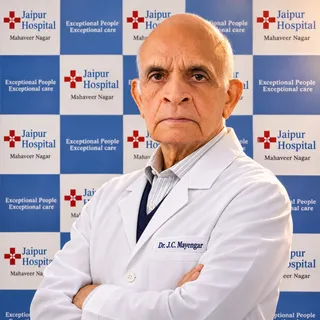
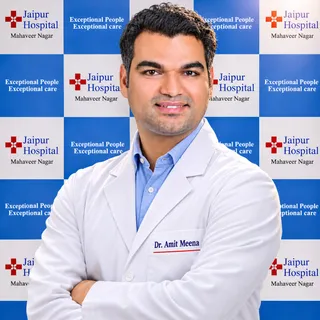
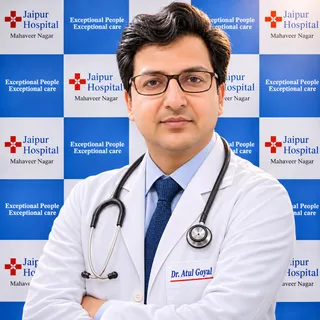
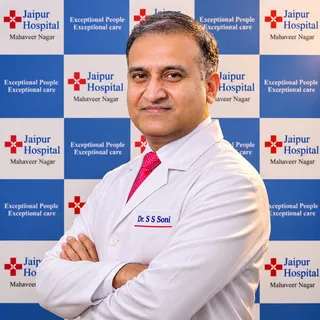
Your orthopaedics doctors
Explore our orthopaedic hospital in Jaipur: every treatment, the doctors and what to expect at your visit.
Frequently asked questions
Questions patients ask about ilizarov surgery and limb lengthening
What does Ilizarov limb reconstruction involve?
In short
Ilizarov limb reconstruction at Jaipur Hospital uses a circular external fixator to correct deformities, lengthen bones, or treat complex fractures. The surgeon applies rings and wires around the limb under general or spinal anaesthesia in an operation that typically lasts two to three hours. You usually stay in hospital for five to seven nights after frame application.
In detail
The procedure works by distraction osteogenesis. After the surgeon cuts the bone, the external fixator is attached with wires and half-pins. You or an attendant turn the struts or nuts four times a day, moving the bone ends apart by one millimetre daily.
New bone forms in the gap. The frame stays on for three to eight months depending on the amount of lengthening or correction needed.
Techniques include the classic Ilizarov ring fixator, hexapod frames for multiplanar deformity, lengthening over nail to reduce frame time, and bone transport for segmental defects. The surgeon chooses the construct based on your anatomy and the deformity pattern.
A common belief
People often think the frame is only for fractures.
What actually happens
In fact it corrects angular deformities, equalises limb length, and transports bone segments to fill defects. The hexapod version even corrects rotation and translation in six axes at once.
Your next step at Jaipur Hospital
After discharge you attend the OPD every one to two weeks for X-rays and frame checks. Physiotherapy starts early to keep joints mobile. Full weight bearing is allowed after the frame is removed. The typical cost range in India is two to five lakh rupees.
Which tests and scans do I need before Ilizarov limb reconstruction?
In short
Before Ilizarov limb reconstruction at Jaipur Hospital, you need standing long-leg X-rays to measure length and alignment, AP and lateral views of the affected segment, and blood tests including haemoglobin, infection markers, and nutritional status. The surgeon may advise a CT scan at an outside imaging centre for three-dimensional planning of the osteotomy and frame.
In detail
Evidence shows pre-operative planning relies on accurate measurement of limb length discrepancy, angular and rotational deformity, and joint orientation angles. Standing long-leg radiographs are the standard.
CT provides cross-sectional detail for complex multiplanar deformities and helps choose between classic ring fixator, hexapod, or lengthening over nail. MRI is rarely needed but may be requested for soft-tissue or nerve assessment; it is also done at an outside centre.
Jaipur Hospital has in-house X-ray and laboratory but no CT, MRI, or DEXA scanner. Blood work screens for anaemia, diabetes control, and infection markers like CRP and ESR, which guide timing if osteomyelitis is suspected. Pre-anaesthesia evaluation includes ECG and chest X-ray as indicated.
A common belief
Patients often expect the hospital to have every scanner.
What actually happens
Jaipur Hospital has X-ray and lab but no CT, MRI, or DEXA machine. Those scans are done at an external imaging centre and the surgeon reviews them here. Do not assume you can get all imaging in one building; plan for a separate visit for CT or MRI if needed.
Your next step at Jaipur Hospital
All X-rays and blood tests can be done at Jaipur Hospital. For CT or MRI, the team refers you to an imaging centre and reviews the images. Bring any previous imaging and reports to the OPD. The pre-operative work-up is coordinated under MAA Yojana, various government health care schemes, and private insurance panels.
How painful is Ilizarov surgery and the early recovery?
In short
Ilizarov surgery causes discomfort during the first week and the lengthening phase. At Jaipur Hospital, pain is managed with prescribed medication, proper stretching, and regular physiotherapy. Most patients describe the pain as moderate and controllable. The frame and pin sites add soreness, especially when turning the struts or wires each day.
In detail
Surgery itself is done under general or spinal anaesthesia, so you feel no pain during the operation. After surgery, the bone is cut and the frame is fixed with wires and half-pins through the skin. This creates surgical pain and pin-site irritation.
During distraction, muscles, nerves, and vessels stretch, causing aching and tightness. Evidence shows that consistent physiotherapy and daily stretching reduce pain scores and prevent joint stiffness. Pain usually lessens once the lengthening phase ends and the bone enters consolidation.
A common belief
Some people believe the frame makes movement impossible.
What actually happens
In fact, early walking with crutches and daily exercises reduce pain and stiffness.
Your next step at Jaipur Hospital
Take pain medicine as prescribed, not only when pain is severe. Do the home exercises two to three times daily. Keep pin sites clean as taught. Report sudden severe pain, increasing redness, or fever early.
How long does recovery usually take after Ilizarov surgery and limb lengthening?
In short
At Jaipur Hospital, recovery after Ilizarov surgery and limb lengthening takes 3 to 8 months with the frame on, followed by further months of rehabilitation. The distraction phase lasts several weeks to a few months at 1 mm per day. Consolidation typically takes about 21 weeks on average, longer in adults. Most patients walk without crutches by 2 to 3 months and return to full activity by 12 months.
In detail
The process has three parts: surgery (2 to 3 hours for frame application), distraction phase (lengthening at 1 mm per day), and consolidation phase (bone hardening). The frame stays on for the whole period, usually 3 to 8 months.
Children heal in roughly half the time of adults. During distraction, you walk with crutches and do daily physiotherapy. After the target length is reached, the bone hardens over months. Studies show muscle strength returns to within 3% of preoperative values by 2 years.
By 9 months most patients regain 90% of prior function. By 12 months most return to walking, running, and sports. The initial hospital stay is 5 to 7 nights. Frequent OPD visits continue throughout. Full weight bearing without support is allowed only after X-rays confirm complete consolidation.
- Studies show muscle strength returns to within 3% of preoperative values by 2 years.
- By 9 months most patients regain 90% of prior function.
A common belief
Patients often think recovery ends when the frame comes off.
What actually happens
In fact, bone consolidation and muscle recovery continue for months after frame removal, and full strength may take up to 2 years.
Your next step at Jaipur Hospital
Plan for 5 to 7 nights in hospital, then daily physiotherapy and home stretching for the frame period. Attend OPD every 1 to 2 weeks during lengthening, then less often. Use crutches until the surgeon allows full weight bearing. Expect gradual return to desk work in 2 to 3 weeks, heavier work later.
How will foot shape, joint alignment, strength, and walking be assessed during Ilizarov treatment?
In short
During Ilizarov treatment at Jaipur Hospital, the surgical team assesses foot shape, joint alignment, strength and walking through regular clinical examinations, X-rays, and physiotherapy assessments. X-rays confirm bone position and regenerate quality. The physiotherapist measures joint range, muscle power and gait pattern at each visit.
In detail
Clinical examination checks for swelling, pin-site condition, foot posture, and joint alignment in standing and lying. X-rays taken every one to two weeks during lengthening show the distraction gap, bone alignment in all planes, and the quality of regenerate bone.
The physiotherapist uses a goniometer for ankle dorsiflexion and plantarflexion, manual muscle testing or a dynamometer for quadriceps and hamstring strength, and observes walking with or without aids. Studies report mean dorsiflexion around 12 degrees and plantarflexion around 25 degrees after frame removal.
Functional tests such as timed walk or stair climb track independence. The surgeon adjusts the frame or lengthening rate based on these findings.
Your next step at Jaipur Hospital
Expect OPD visits every one to two weeks during distraction, then monthly during consolidation. Bring your walking aids and wear loose trousers for easy access. The physiotherapist will give home exercises after each assessment. Report any new pain, numbness or skin changes immediately.
How will Ilizarov treatment affect my walking, movement, or independence?
In short
Ilizarov treatment at Jaipur Hospital temporarily reduces walking and independence during the lengthening phase, but most people regain full function by 12 months. You will use crutches or a walker for several weeks, then gradually bear full weight as the new bone hardens. Daily physiotherapy maintains joint mobility and muscle strength.
In detail
During distraction, the bone is slowly pulled apart at 1 mm per day. You walk with aids and do daily exercises. Studies show muscle strength drops to about 97% of pre-operative value at six months after frame removal, returning to baseline by two years.
Self-reported function and timed tests return to or exceed pre-operative levels by two years. Quadriceps weakness is more marked than hamstrings. Most patients walk without crutches by two to three months after surgery.
Independence for desk work often returns in two to three weeks; standing or walking jobs take longer. The frame stays on for three to eight months total. Consistent physiotherapy is the key to preventing stiffness and regaining a normal gait.
- Studies show muscle strength drops to about 97% of pre-operative value at six months after frame removal, returning to baseline by two years.
Your next step at Jaipur Hospital
Plan for an attendant to help at home for the first two to three weeks. Arrange leave from work if your job needs standing or walking. Follow the home exercise programme two to three times daily. Attend all OPD and physio visits. Full independent walking usually returns a few months after frame removal once X-rays confirm bone consolidation.
Why might my doctor recommend Ilizarov limb reconstruction?
In short
Your doctor may recommend Ilizarov limb reconstruction at Jaipur Hospital for significant limb length discrepancy, angular deformity such as varus or valgus, nonunion or malunion after fracture, bone loss from infection like osteomyelitis, or congenital deficiencies such as fibular hemimelia. The procedure restores alignment, length, and function when other methods are not suitable.
In detail
Evidence shows circular external fixation is preferred for complex tibial plateau fractures due to its biomechanics and percutaneous technique. It allows gradual correction in multiple planes, which internal fixation cannot achieve acutely. In children with open growth plates, external fixation avoids physeal damage.
For segmental defects, bone transport reconstructs the gap without bone graft. Studies report good-to-anatomic reduction in about sixty-three percent of complex cases and excellent functional scores in one-third. The technique also permits weight bearing during treatment, unlike some internal methods. Adults in their sixties have had successful outcomes, though bone healing is slower than in children.
A common belief
Many assume a single operation with plates or a nail fixes everything.
What actually happens
But for multiplanar deformity, open growth plates, or big bone gaps, internal fixation often fails or cannot be used. The Ilizarov frame lets the surgeon adjust alignment in three dimensions over time and allows weight bearing while the bone heals.
Your next step at Jaipur Hospital
The surgeon reviews your X-rays, clinical examination, and any previous surgery records. If you have active infection, it must be controlled first. You need to be medically fit for general or spinal anaesthesia. An attendant must be available for daily frame adjustments and pin-site care. Jaipur Hospital offers pre-operative assessment under MAA Yojana, various government health care schemes, and private insurance panels.
How should I prepare in the days before Ilizarov limb reconstruction?
In short
In the days before Ilizarov limb reconstruction at Jaipur Hospital, stop smoking and all nicotine products because they impair bone healing. Complete any prescribed pre-operative blood tests, ECG, and chest X-ray. Arrange an attendant who can stay with you in hospital and manage daily frame adjustments and pin-site care after discharge. Prepare loose clothing that fits over the frame.
In detail
Evidence identifies nicotine use as incompatible with safe recovery. The surgeon will review your medications; blood thinners may need to be stopped or bridged under medical guidance. Herbal supplements that affect bleeding should be disclosed.
If you have diabetes, optimise blood sugar control to reduce infection risk. The hospital provides a canteen with dietary meals; discuss any special needs. You will need crutches or a walker for early mobilisation; the physiotherapy team can advise on sizing.
Mental preparation is important: the frame stays on for three to eight months, with daily adjustments and frequent OPD visits. Understanding the commitment reduces anxiety and improves adherence.
A common belief
Many patients focus only on the surgery day.
What actually happens
The real work starts after: daily strut turning, pin-site cleaning, physiotherapy, and OPD visits every one to two weeks for months. Without an attendant and a smoke-free environment, healing fails. Nicotine is the single most avoidable risk factor for nonunion and infection.
Your next step at Jaipur Hospital
Admission is usually on the day of surgery or the evening before. Fast from midnight for general anaesthesia; clear fluids may be allowed up to two hours before as per anaesthesia advice.
Bring your regular medicines, investigation reports, insurance cards, and various government health care schemes documents. Jaipur Hospital coordinates pre-admission checks under all empaneled schemes.
What are the common side effects and the less common serious complications of Ilizarov surgery and limb lengthening?
In short
At Jaipur Hospital, common side effects of Ilizarov surgery and limb lengthening include minor soft tissue infection at pin sites, which occurs in about 54% of cases, and temporary stiffness or discomfort during lengthening. Less common serious complications include deep infection (about 4.8%), nerve injury (about 0.5%), malunion (about 12.4%), non-union (about 3.2%), and the need for frame revision or return to theatre (about 4.8%).
In detail
Pin-site infection is the most frequent issue and is usually managed with local care and oral antibiotics. Deep infection is rarer but may need surgical washout or frame adjustment. Nerve injury is uncommon and often temporary.
Malunion means the bone heals in a slightly wrong position; non-union means the bone fails to heal across the gap. Both may require further surgery. Studies show no amputations in the reported follow-up periods. The overall complication rate is about 11.3%.
Children generally heal faster and have fewer complications than adults. The team monitors you closely at frequent OPD visits, using X-rays to check alignment and bone formation, so that any problem is detected early and treated promptly.
- The overall complication rate is about 11.3%.
A common belief
Patients often worry about catastrophic complications.
What actually happens
Data shows the overall complication rate is around 11 percent, most are minor pin-site issues, and no amputations were recorded in large studies. Early detection at regular follow-ups keeps serious problems rare.
Your next step at Jaipur Hospital
Clean pin sites daily as taught by the nursing team. Attend all scheduled OPD visits for X-ray review and frame checks. Report increasing redness, discharge, fever, numbness, or sudden severe pain immediately. Most side effects resolve with early care. Serious complications are uncommon but may need additional surgery.
Which symptoms are expected after Ilizarov surgery and limb lengthening, and which need urgent medical attention?
In short
At Jaipur Hospital, expected symptoms after Ilizarov surgery and limb lengthening include mild swelling in the legs and feet, discomfort during the first week and the lengthening phase, pin-site redness or clear discharge, and stiffness in nearby joints. Urgent symptoms are increasing redness, heat, or pus at pin sites, fever, sudden severe pain, numbness or tingling, inability to move toes or foot, and any sign the frame has shifted or broken.
In detail
Mild swelling is normal, especially after dependency. Discomfort during daily 1 mm distraction is managed with medication and stretching. Pin-site irritation affects over half of patients and is treated with daily cleaning. Stiffness improves with regular physiotherapy.
Warning signs of deep infection include spreading redness, warmth, purulent discharge, and fever above 38°C. Nerve irritation may cause numbness, tingling, or weakness; report it immediately. A loose or bent wire, a cracked ring, or sudden change in frame alignment needs same-day review.
The team advises: any unusual pain, redness, or changes should be reported immediately. Early detection prevents serious complications like deep infection, malunion, or nerve damage.
A common belief
Patients often ignore early pin-site infection or think numbness is just swelling.
What actually happens
Both can signal serious problems that are easy to fix if caught early but dangerous if delayed.
Your next step at Jaipur Hospital
Clean pin sites daily as taught. Take prescribed analgesics and do stretching exercises on schedule. Keep the limb elevated when sitting. Call the hospital or visit the emergency department if you notice fever, spreading redness, pus, sudden severe pain, numbness, or frame damage. Do not adjust the frame yourself unless instructed.
FAQ library
Questions and answers about ilizarov surgery and limb lengthening
When you contact us
Get your assessment and plan
Contact Jaipur Hospital for an OPD consultation, scan review, clear options, a cost estimate, and scheme guidance.
- A consultation with an orthopaedic surgeon in the OPD
- Your scans and reports reviewed, with tests done in-house if you need them (laboratory, X-ray and imaging)
- Your options explained in plain words, including whether you need surgery at all
- A cost estimate before you decide
- Help with cashless treatment under MAA Yojana, various government health care schemes and empanelled insurers and TPAs
- Follow-up visits after your treatment
Overview
Ilizarov Surgery and Limb Lengthening: what to know
What is limb length discrepancy and deformity
- Leg length difference
- More common, affects walking and posture
- Arm length difference
- Causes shoulder and back pain
- Bowleg (varus)
- Leg curves outward at the knee
- Knock knee (valgus)
- Knees angle inward and touch
Limb length discrepancy is a condition where one arm or leg is shorter than the other. It can affect the upper or lower limbs, though leg length difference is more common and often causes more noticeable problems. The difference may be present from birth or develop later after an injury, infection or surgery.
When the difference is small, the body may adapt without you noticing. A larger difference changes how you stand and walk. Having legs of unequal length creates an imbalance in posture and gait that places stress on the low back and hip. This, in turn, causes pain and joint degeneration, which can include premature osteoarthritis.
Having arms of different lengths creates asymmetry, which can lead to back and shoulder pain. Deformities such as bowleg (varus) or knock knee (valgus) may also be present, either alone or together with a length difference. These conditions affect how the limb functions and can limit daily activities.
How limb length discrepancy and deformity happen
The condition can arise in several ways. Some children are born with a congenital limb deficiency, such as fibular hemimelia where the fibula is absent or underdeveloped. Others develop a discrepancy after a severe fracture or trauma that results in malunion (bone healing in a wrong position) or nonunion (bone failing to heal).
Infections like osteomyelitis can destroy bone and lead to significant bone loss. Previous surgeries for tumour removal or corrective osteotomies may also leave one limb shorter than the other. In some cases, the cause is not clear. The mean age of patients presenting for treatment in studies was 41.1 years, but the condition can be identified at any age.
Symptoms of limb length discrepancy and deformity
The most common sign is a visible difference in limb length. You may notice a limp or an uneven walking pattern. Pain in the lower back, hip, knee or ankle on the longer side is frequent because that limb takes more load. The shorter side may develop pain from overstretching or joint strain.
Over time, the abnormal gait can lead to functional scoliosis (a curved spine) and premature osteoarthritis in the hip or knee. In the arm, asymmetry can cause shoulder and back pain. A deformity such as bowleg or knock knee may be visible when you stand. Some people feel tired after walking short distances or have difficulty finding shoes that fit both feet.
Warning signs that need urgent care the same day
- Open wound with bone visible Needs immediate attention
- Signs of infection Spreading redness, warmth, swelling, fever or pus
- External fixator problems Loose pins, broken wires, or sudden frame position change
Sudden severe pain in the limb, especially after a fall or twist, may mean a fracture. An open wound with bone visible needs immediate attention. Signs of infection — spreading redness, warmth, swelling, fever or pus — require urgent care. Sudden inability to move the limb or bear weight, or new numbness and weakness, should be assessed the same day.
If you have an external fixator in place and notice loose pins, broken wires, or a sudden change in the frame position, contact the hospital straight away.
Causes and who is at higher risk
- Congenital conditions
- Fibular hemimelia or congenital short femur
- Post-traumatic causes
- Malunion or nonunion after a fracture
- Infection-related bone loss
- From osteomyelitis
- Nicotine use
- Not compatible with safe recovery
Causes include congenital conditions such as fibular hemimelia or congenital short femur. Post-traumatic causes are malunion or nonunion after a fracture. Infection-related bone loss from osteomyelitis is another cause. Previous surgery for tumour removal or corrective osteotomy can leave a length difference. Angular deformities like varus or valgus may develop from growth disturbances or injury.
Risk factors: children with open growth plates are often more suitable for lengthening because their bones are still growing. Adults in their 20s to 60s can also undergo the procedure safely. Nicotine use of any kind is not compatible with a safe recovery.
Patients who cannot commit to daily frame adjustments, frequent physiotherapy and regular follow-up visits are at higher risk of poor outcomes.
How limb length discrepancy and deformity are diagnosed
- History and examination Measure limbs from bony landmarks
- Gait assessment Watch you walk to check posture and compensation
- Joint and nerve check Range of motion, muscle strength and nerve function
- Standing full-length X-rays Scanograms to measure exact discrepancy
- CT or MRI if needed Done at outside imaging centre, reviewed by surgeon
The surgeon starts with a detailed history and physical examination. They measure each limb from fixed bony landmarks to calculate the true length difference. They watch you walk to assess gait, posture and compensation. Joint range of motion, muscle strength and nerve function are checked.
Standing full-length X-rays of both lower limbs (scanograms) are the standard imaging test to measure the exact discrepancy and plan correction. X-rays also show bone quality, alignment, deformity and the status of growth plates in children.
If a CT or MRI scan is needed to assess the joint surface, soft tissue or bone infection, the surgeon will advise it and review the images; the scan is done at an imaging centre outside the hospital. Blood tests may be ordered to check for infection or nutritional status before surgery.
Treatment options without surgery, and when surgery is advised
Non-surgical management is considered first for small discrepancies. A shoe lift or custom orthotic can equalise leg length up to about 2 cm and improve gait. Physiotherapy helps strengthen muscles, maintain joint mobility and reduce pain from compensation. For larger differences or significant deformity, non-surgical methods are usually not enough.
Surgery is advised when the limb length discrepancy affects your quality of life, causes persistent pain, leads to progressive joint damage, or limits function. Congenital deficiencies, post-traumatic malunion or nonunion, infection-related bone loss, and angular deformities are common indications. The decision also depends on your age, bone health, general fitness and ability to follow the lengthy rehabilitation.
Your surgeon will discuss the expected benefit, the time commitment and the risks so you can decide what suits you.
Preparing for Ilizarov Surgery and Limb Lengthening
Do
- Bring regular medicines And comfortable loose clothing that fits over the frame
- Bring scheme card and pre-authorisation letters If covered under MAA Yojana, various government health care schemes or private insurer on panel
Avoid
- Do not eat or drink For at least six hours before the procedure
Before the operation your surgeon will review your medical history and the imaging you already have. X-rays of the affected limb are taken in our in-house radiology department. If a CT or MRI scan is needed, your doctor will advise it and review the images after they are done at an imaging centre outside the hospital.
Blood tests such as haemoglobin, blood sugar, kidney and liver function, and infection markers are done in our 24-hour laboratory. You will meet the anaesthesia team to discuss whether general or spinal anaesthesia is suitable for you. Tell your doctor about every medicine you take, especially blood thinners, steroids, or any supplements.
Some medicines may need to be stopped or adjusted a few days before surgery; your doctor will give you a clear plan. You must not eat or drink for at least six hours before the procedure. Bring your regular medicines, comfortable loose clothing that can fit over the frame, and any walking aids you already use.
An attendant should stay with you during the hospital stay. If you are covered under MAA Yojana, various government health care schemes or a private insurer on our panel, bring your scheme card and any pre-authorisation letters.
How Ilizarov Surgery and Limb Lengthening Is Done
The operation takes about two to three hours for frame application. Under general or spinal anaesthesia, your surgeon makes a small incision to divide the bone (an osteotomy). The circular external fixator — rings connected by wires and half-pins — is then attached to the bone above and below the cut.
This frame holds the bone segments in place while new bone forms. Several frame types are available. The classic Ilizarov ring fixator uses rings and wires for tibial or femoral lengthening and deformity correction. A hexapod frame (Taylor Spatial Frame) allows computer-assisted six-axis correction for complex multiplanar deformities.
Lengthening over nail (LON) combines an intramedullary nail with the external fixator to shorten the time the frame is worn. Bone transport moves a bone segment to reconstruct a segmental defect. Your surgeon will advise which technique suits your limb, the deformity, and your age. After the frame is fixed, the distraction phase begins.
You or your attendant will turn the adjustment screws on the frame, usually four times a day, to separate the bone ends by one millimetre per day. This gradual separation, called distraction osteogenesis, stimulates new bone to grow in the gap. Soft tissues — muscles, nerves, blood vessels — stretch and adapt at the same time.
The hospital stay for the initial surgery is typically five to seven nights. During this time the team checks pin sites, manages pain, and starts physiotherapy. You will be taught how to adjust the frame and how to care for the pin sites before you go home.
Risks and Possible Complications of Ilizarov Surgery and Limb Lengthening
Studies of circular external fixation report that minor soft-tissue infections around the pins or wires occur in about 54% of cases. These are usually managed with local cleaning and oral antibiotics. Deep infection rates are around 4.8% to 4.9%. Malunion, where the bone heals in a slightly incorrect position, was reported in 12.4% of cases.
Non-union, where the bone does not heal, occurred in 3.2% of cases. Nerve injury was rare, at 0.5%. About 4.8% of patients needed a return to the operating theatre for frame adjustment or revision. Secondary ankle fusion (tibiotalar arthrodesis) was seen in 2.9% of cases after tibial frame treatment. The overall complication rate across large series was 11.3%.
No amputations were recorded in the follow-up periods studied. Pin-site care and regular follow-up reduce the chance of infection becoming serious. Smoking or any nicotine use significantly impairs bone healing and increases complication rates; you must stop before surgery and throughout treatment. Your surgeon will discuss the risks that apply to your specific deformity, bone quality, and general health.
Recovery and Aftercare After Ilizarov Surgery and Limb Lengthening
- Return to light desk work Within two to three weeks
- Full independent walking without aids A few months after frame removal
- High-impact sports restricted Until X-rays confirm complete bone consolidation
After discharge you will visit the OPD frequently, usually every one to two weeks during the lengthening phase. At each visit X-rays are taken in our department to check bone formation and alignment, and the frame is inspected. The distraction phase lasts as long as the planned lengthening; at one millimetre per day, a five-centimetre lengthening takes about 50 days.
The frame remains on the limb for three to eight months in total, including the consolidation phase when the new bone hardens. You will walk with crutches or a walker from the start, bearing weight as advised by your surgeon.
Daily physiotherapy — about one hour a day, five days a week in the clinic plus home stretching — is essential to keep joints mobile and muscles strong. Protein intake, calcium and vitamin D supplements are recommended to support bone formation. Swelling in the leg and foot is common; elevation and ice packs help.
Pain is usually manageable with prescribed medication and regular stretching. You must report any unusual pain, increasing redness, discharge from pin sites, fever, or sudden loss of movement immediately. Most people return to light desk work within two to three weeks. Full independent walking without aids typically returns a few months after frame removal.
High-impact sports are restricted until X-rays confirm complete bone consolidation. Children generally heal faster than adults; in adults the consolidation phase can be considerably longer. A friend, family member or paid caregiver should stay with you for at least the first few weeks after surgery to help with frame adjustments, pin-site care, and daily activities.
Results of Ilizarov Surgery and Limb Lengthening
In studies, approximately one-third of patients achieved good-to-anatomic radiological reduction, and about one-third reported excellent functional outcome scores. In a series of 127 patients, 63% were deemed to have good-to-anatomic results. Meta-analyses show no significant difference in non-union, malunion, superficial infection, deep infection, or secondary arthrodesis rates between circular external fixation and internal fixation for complex tibial plateau fractures.
Excellent results have been achieved with this technique, and it may have a lower complication rate than internal fixation in complex injuries. By nine months, most patients have regained 90% of their prior function. By 12 months, most return to their full range of activity including walking, running, and competitive sports.
Muscle strength and leg power decrease during the first six months after frame removal but improve steadily; by two years they are within 3% of preoperative values. Self-reported function and timed functional tests return to or exceed preoperative levels by two years.
Residual strength deficit is slightly more pronounced in the quadriceps than the hamstrings and does not correlate with the amount of lengthening. These findings come from groups of patients in published studies; individual results vary with age, the bone lengthened, the amount of lengthening, and adherence to physiotherapy.
Cost and Insurance for Ilizarov Surgery and Limb Lengthening in Jaipur
The typical cost range for Ilizarov surgery and limb lengthening in India is ₹2,00,000 to ₹5,00,000. The final amount depends on the bone involved (tibia, femur, or both), the type of frame used (classic ring, hexapod, or lengthening-over-nail), the planned lengthening distance, the number of surgeries needed, and the total duration of frame wear and follow-up visits.
Jaipur Hospital is empanelled under MAA Yojana, various government health care schemes, and a panel of private insurers and TPAs. If you are covered under one of these schemes, bring your card and any pre-authorisation documents.
The hospital has a 24×7 emergency department, in-house pharmacy, and in-house diagnostic laboratory and X-ray; CT, MRI and DEXA scans are done at outside imaging centres and billed separately. Ask our admissions team for an estimate based on your surgeon's plan. खर्च, बीमा और संपर्क की जानकारी देखें।
