

Orthopaedics · Jaipur Hospital
Orthopaedic Assessment and Second Opinion in Jaipur
Unsure about your diagnosis or surgery plan? Get a clear assessment and honest options.
- Serving Jaipur since 1991 (35 years)
- NABH accredited
- 24×7 emergency & ICU
- Cashless: RGHS, MAA Yojana, CGHS + 22 insurers
- Consultation length
- 30 to 45 minutes
- Anaesthesia
- Not needed
- Recovery
- Not applicable
- Price
- ₹1,500 to ₹3,500typical range in India; ask us for an estimate
Doubts about your treatment plan
You have a diagnosis or surgery plan, but you are not confident it is right for you.
You may have been told you need joint replacement, ligament repair, or spine surgery. The words sound serious. You wonder if the diagnosis is correct, if there are other options, or if the risks are worth it. Waiting and worrying does not help.
-
Conflicting advice
Different doctors suggest different treatments and you do not know who to trust.
-
Surgery feels rushed
You feel pushed towards an operation before you understand the alternatives.
-
Unclear risks and costs
No one has explained what could go wrong or how much it will cost you.
-
Symptoms not matching
Your pain or limitation does not seem to fit the diagnosis you were given.
Second opinions are standard medical practice and doctors do it all the time as part of their own process of diagnosing a problem.
Why Jaipur Hospital
You worry that a wrong decision could mean more pain, lost income, or a surgery you did not need.
Your care plan
Your first steps with us
- 1 Book an OPD consultation at a convenient time.
- 2 Bring all your scans, reports and a list of questions.
- 3 Discuss examination findings and imaging with your surgeon.
- 4 Receive a written plan with options, risks and a cost estimate.
How the assessment works
A 30 to 45 minute outpatient consultation includes a detailed clinical examination, review of your imaging, and a discussion of surgical and non-surgical options.
-
Clinical Examination
Detailed joint and neurovascular assessment to confirm the physical findings.
-
Imaging Review
X-ray, MRI, and CT analysis with the surgeon to verify the diagnosis.
-
Surgical Plan Discussion
Options, risks, alternatives, and expected outcomes explained in plain words.
-
Non-surgical Trial Review
Physiotherapy, injection, and bracing options assessed before deciding on surgery.
Why patients trust us
- 1991 Serving Jaipur for 35 years
- NABH Accredited hospital
- 5 Orthopaedics consultants
- 24×7 Emergency, ICU and ambulance
- 25 Cashless schemes and insurers
What research shows about shared decisions
-
25 of 29 studies
Shared decision making decreased decisional conflict for patients choosing elective surgery.
-
17 of 21 studies
Shared decision making increased decisional satisfaction among surgical patients.
-
5 of 5 studies
Shared decision making decreased decisional regret after treatment choices.
If it is left untreated
Without a clear review, you may proceed with surgery that does not match your goals, miss a simpler non-surgical option, or face unexpected complications and costs. Shared decision making reduces decision conflict and improves decision quality for patients making choices about elective surgery.
Life with a clear plan
Most people leave the consultation knowing exactly what is wrong, what their choices are, and what the next step will cost.
-
Confidence in your choice
You understand the pros and cons of each option and can decide without pressure.
-
No surprise bills
A cost estimate is given before you commit to any treatment or admission.
-
A plan that fits your life
Your surgeon considers your work, home support and preferences when suggesting a path.
-
Ongoing support
Follow-up visits are scheduled to track progress and adjust the plan if needed.
Frequently asked questions
Questions patients ask about orthopaedic assessment and second opinion
Which problems are assessed under orthopaedic assessment and second opinion?
In short
An orthopaedic assessment and second opinion at Jaipur Hospital covers joint, bone, muscle, ligament and nerve conditions. The surgeon reviews your diagnosis, imaging and any proposed surgery plan. Common problems include arthritis, sports injuries, fractures, spine disorders and persistent pain. The consultation lasts 30 to 45 minutes and is done as an outpatient visit.
In detail
The assessment uses a detailed clinical examination of the affected joint and neurovascular status. The surgeon reviews your X-rays, MRI or CT scans with you. A surgical plan discussion follows, covering options, risks, alternatives and expected outcomes.
If you have already tried physiotherapy, injections or bracing, those non-surgical trials are also reviewed. This comprehensive approach helps confirm or refine the diagnosis before you decide on treatment.
A common belief
Many people think a second opinion is only for surgery.
What actually happens
In fact, it also reviews non-surgical trials like physiotherapy, injections and bracing to see if they have been adequate before any operation is considered.
Your next step at Jaipur Hospital
Bring all previous imaging films, reports and a list of medicines to the appointment. The typical price range is ₹1,500 to ₹3,500. No anaesthesia or hospital stay is needed.
After the review, your surgeon will explain the next steps, which may include further tests, a non-surgical plan or a surgical schedule.
How will the doctor decide which tests I need for my orthopaedic assessment?
In short
The surgeon decides on tests after listening to your history and performing a clinical examination. At Jaipur Hospital, the choice of X-ray, MRI, CT or blood tests is based on the suspected diagnosis, the joints involved and what previous imaging already shows. The aim is to order only the tests that will change the management plan.
In detail
A focused examination often narrows the possibilities. For example, mechanical locking may need an MRI to assess a meniscal tear, while suspected arthritis may only need weight-bearing X-rays. If you already have recent imaging, the surgeon reviews it first to avoid unnecessary repeats.
Blood tests are ordered only when inflammatory or infective causes are considered. This targeted approach reduces cost, radiation and delay while ensuring the information needed for a sound opinion is obtained.
A common belief
A common belief is that everyone needs an MRI.
What actually happens
In reality, many conditions are diagnosed with a good examination and plain X-rays. Ordering scans that are not indicated adds cost and delay without improving the decision.
Your next step at Jaipur Hospital
Bring all previous imaging films and reports to avoid duplicate tests. The consultation fee of typically ₹1,500 to ₹3,500 covers the clinical review; any new investigations are charged separately. The surgeon will explain why each test is needed and how the result will influence the plan.
How soon should I expect improvement after the chosen orthopaedic treatment?
In short
Improvement timelines depend on the specific condition and whether treatment is surgical or non-surgical. At Jaipur Hospital, the surgeon explains the typical recovery phases during the assessment so you know what to expect at each stage.
In detail
For non-surgical plans such as physiotherapy, bracing, or injections, measurable improvement often begins within weeks, though full benefit may take months of consistent effort.
Surgical recovery follows a phased protocol: initial wound healing and protection in the first two weeks, progressive mobility and strengthening over six to twelve weeks, and functional gains continuing for several months.
Factors like age, comorbidities, adherence to rehabilitation, and the nature of the procedure all influence pace. The surgeon will outline milestones for return to daily tasks, work, and sport based on your individual plan.
A common belief
Patients sometimes expect instant relief after surgery or give up on physiotherapy too early.
What actually happens
Both pathways need time and guided effort; the timeline is individual, not a fixed calendar.
Your next step at Jaipur Hospital
Attend follow-up visits as scheduled to track progress and adjust rehabilitation. Keep a simple log of pain, swelling, and activity levels to share with your team. If improvement stalls or new symptoms appear, contact the hospital promptly.
How does the term "orthopaedic assessment and second opinion" relate to orthopaedic assessment and second opinion?
In short
The terms are identical in meaning; "orthopaedic" is the American spelling and "orthopaedic" is the British spelling used in India. At Jaipur Hospital, the service provides a comprehensive evaluation and expert review of your diagnosis or proposed surgery plan regardless of which spelling you use.
In detail
The assessment includes a detailed clinical examination of the joint and neurovascular structures, thorough imaging review of X-rays, MRI, or CT scans with the surgeon, discussion of surgical and non-surgical options with risks and expected outcomes, and a review of any prior non-surgical trials such as physiotherapy, injections, or bracing.
A second opinion specifically re-evaluates an existing diagnosis or surgical recommendation to confirm the plan or offer alternatives. The consultation lasts 30 to 45 minutes in an outpatient setting.
A common belief
People sometimes think the spelling implies a different level of care or a different service.
What actually happens
It does not. The assessment structure, techniques, and expertise are identical regardless of spelling.
Your next step at Jaipur Hospital
Bring all prior imaging, reports, and a list of treatments tried. The typical fee ranges from ₹1,500 to ₹3,500. No anaesthesia or hospital stay is required. After the review, you receive a clear opinion and suggested next steps.
How can I decide whether to seek advice about musculoskeletal ultrasound?
In short
Consider musculoskeletal ultrasound advice if you have a soft-tissue injury such as a tendon tear, ligament sprain, or muscle strain that needs dynamic assessment, or if you need image-guided injection planning. At Jaipur Hospital, the surgeon evaluates whether ultrasound adds value to your diagnostic pathway during the orthopaedic assessment.
In detail
Ultrasound offers real-time, radiation-free imaging of tendons, ligaments, muscles, and joints during movement. It is particularly useful for diagnosing rotator cuff tears, Achilles tendinopathy, carpal tunnel syndrome, and guiding injections. However, it does not visualise bone marrow or deep joint structures as well as MRI.
The decision depends on your specific clinical question, prior imaging, and whether dynamic or guided information will change management. The surgeon weighs these factors during the consultation and recommends ultrasound only when it is likely to alter the treatment plan.
A common belief
Patients often request ultrasound because it sounds simpler or cheaper.
What actually happens
The real question is whether dynamic imaging or guided injection will alter the plan. If not, it may delay the right test.
Your next step at Jaipur Hospital
Bring any previous X-rays or MRI reports to the 30 to 45 minute consultation. The typical fee ranges from ₹1,500 to ₹3,500. If ultrasound is advised, it can be performed in-house.
Is seeking a second opinion before orthopaedic surgery common?
In short
Yes, seeking a second opinion before orthopaedic surgery is very common and often encouraged by treating doctors. Jaipur Hospital regularly provides second opinion consultations where a senior orthopaedic surgeon reviews your diagnosis, imaging and proposed surgical plan.
In detail
Patients request a second opinion for many reasons: to confirm the diagnosis, to explore non surgical alternatives such as physiotherapy or injections, to understand different surgical techniques, or simply for peace of mind before a major procedure.
The consultation lasts 30 to 45 minutes and includes a detailed clinical examination, imaging review and a discussion of risks, benefits and expected outcomes. No anaesthesia or hospital stay is required.
The surgeon will not pressure you to change your current plan but will give an independent view based on the same evidence.
A common belief
Some people worry that asking for a second opinion offends their first doctor.
What actually happens
In practice, most surgeons welcome an independent review because it helps the patient feel confident about the chosen treatment.
Your next step at Jaipur Hospital
Bring all your X-rays, MRI or CT films, previous consultation notes and a list of medicines. The typical fee ranges from ₹1,500 to ₹3,500. After the review you will receive a written summary that you can share with your primary surgeon.
To arrange a second opinion appointment at Jaipur Hospital, contact the orthopaedic OPD and ask for a comprehensive assessment slot.
How will treatment affect my walking, movement, or independence?
In short
The effect of orthopaedic treatment on your walking, movement and independence depends on the specific condition, the type of surgery or non surgical plan chosen and your baseline health. Jaipur Hospital assesses each patient individually during the orthopaedic assessment to give a realistic picture of expected functional outcomes.
In detail
During the 30 to 45 minute consultation the surgeon examines your joint range, muscle strength, gait pattern and any neurological deficit. Imaging review shows the extent of joint damage or deformity.
Based on this, the surgeon explains what improvement is typical after the proposed procedure, what rehabilitation will involve and what aids or physiotherapy may be needed in the early weeks.
Recovery timelines vary: some patients walk with support within days, others need weeks of guided therapy. The surgeon will also discuss any long term activity modifications that may be advised.
A common belief
Many patients expect to walk normally immediately after surgery.
What actually happens
In reality, most procedures need a period of protected weight bearing and supervised physiotherapy before full independence returns.
Your next step at Jaipur Hospital
Bring any previous physiotherapy reports and a note of your current walking aids. The assessment fee is typically ₹1,500 to ₹3,500. After the visit you will receive a written summary outlining expected milestones. You can then plan your home support and physiotherapy schedule.
Which symptoms should prompt me to see a specialist for an orthopaedic assessment?
In short
You should see a specialist for an orthopaedic assessment when joint pain, swelling, stiffness or instability lasts more than a few weeks despite rest and simple medicines. Other reasons include difficulty bearing weight, reduced range of movement, a limp that does not improve, or a previous injury that still causes trouble. Jaipur Hospital offers a focused outpatient review for these symptoms.
In detail
Persistent symptoms often mean the underlying problem has not been fully diagnosed or the current treatment is not working. The surgeon will perform a detailed clinical examination and review any imaging you have.
This helps separate mechanical problems like ligament tears or cartilage wear from inflammatory or nerve-related causes. A second opinion is also useful if you have been offered surgery and want to understand the alternatives, risks and expected outcomes before deciding.
A common belief
People often wait until the pain becomes severe.
What actually happens
Early assessment can identify treatable causes like a meniscal tear or early arthritis before they worsen, and it can also prevent unnecessary surgery by confirming whether non-surgical options have been fully tried.
Your next step at Jaipur Hospital
Schedule a visit if symptoms affect daily activities, sleep or work. Bring earlier X-rays, MRI reports and a note of treatments tried. The consultation takes 30 to 45 minutes and costs typically ₹1,500 to ₹3,500. No admission is required.
After the assessment, the surgeon will outline a plan that may include further tests, physiotherapy, injections or a surgical option.
How will the results change my care plan after an orthopaedic assessment?
In short
Test results either confirm the working diagnosis, reveal a different problem, or show the severity of the condition. At Jaipur Hospital, the surgeon explains how each finding shifts the balance between non-surgical and surgical options, and whether the timeline or type of intervention needs to change.
In detail
For example, an MRI showing a full-thickness rotator cuff tear with retraction may move the plan from physiotherapy to early surgical repair. Conversely, imaging that shows only mild degeneration despite severe pain may redirect care towards pain management, injections or rehabilitation.
If a second opinion review finds that a proposed surgery is not supported by the imaging, the surgeon will discuss alternative approaches. Every result is interpreted in the context of your symptoms, function and goals.
A common belief
People often assume a scan automatically means surgery.
What actually happens
In many cases, imaging shows less damage than expected, leading to a non-surgical plan. In other cases, it reveals a problem that needs timely surgery to prevent worsening. The surgeon interprets the result in your specific context.
Your next step at Jaipur Hospital
After the tests are available, a follow-up discussion — often by phone or a short review — is arranged to go through the implications. There is no extra charge for this discussion within the consultation episode. The final plan may include a structured physiotherapy programme, an injection, bracing, or a surgical date with pre-operative preparation.
What should I do if symptoms persist or worsen after orthopaedic treatment?
In short
If symptoms persist or worsen after starting treatment, contact the orthopaedic team promptly rather than waiting for the next routine visit. At Jaipur Hospital, the surgeon will reassess the plan, order repeat imaging if needed, and adjust therapy or discuss further options.
In detail
Persistent pain, increasing swelling, new instability, or loss of motion may signal that the current approach needs modification. For non-surgical care, this could mean changing physiotherapy intensity, trying a different injection, or reconsidering bracing.
After surgery, it may indicate delayed healing, infection, or hardware issues requiring clinical evaluation and possibly blood tests or imaging. Early communication allows timely intervention, which often prevents complications from escalating. The hospital's 24×7 emergency department is available for urgent concerns such as sudden severe pain, wound breakdown, or fever.
A common belief
Many patients wait weeks hoping things improve on their own.
What actually happens
Delaying a review can turn a simple plan change into a bigger problem. Early reassessment keeps recovery on track.
Your next step at Jaipur Hospital
Keep a symptom diary noting triggers, timing, and severity. Bring this to your follow-up along with any new reports. Do not stop prescribed exercises or medications without advice.
If you notice red-flag signs like fever, wound discharge, or sudden inability to bear weight, seek immediate care at the emergency department.
FAQ library
Questions and answers about orthopaedic assessment and second opinion
When you contact us
Get your orthopaedic second opinion
Contact Jaipur Hospital to book an assessment and review your options with an orthopaedic surgeon.
- A consultation with an orthopaedic surgeon in the OPD
- Your scans and reports reviewed, with tests done in-house if you need them (laboratory, X-ray and imaging)
- Your options explained in plain words, including whether you need surgery at all
- A cost estimate before you decide
- Help with cashless treatment under RGHS, MAA Yojana, CGHS and empanelled insurers and TPAs
- Follow-up visits after your treatment
Overview
Orthopaedic Assessment and Second Opinion: what to know
What an Orthopaedic Assessment and Second Opinion Covers
- Examine joint Check movement, nerves, blood supply
- Review scans Look at X-rays, MRI, CT you bring
- Explain findings Discuss options and answer questions
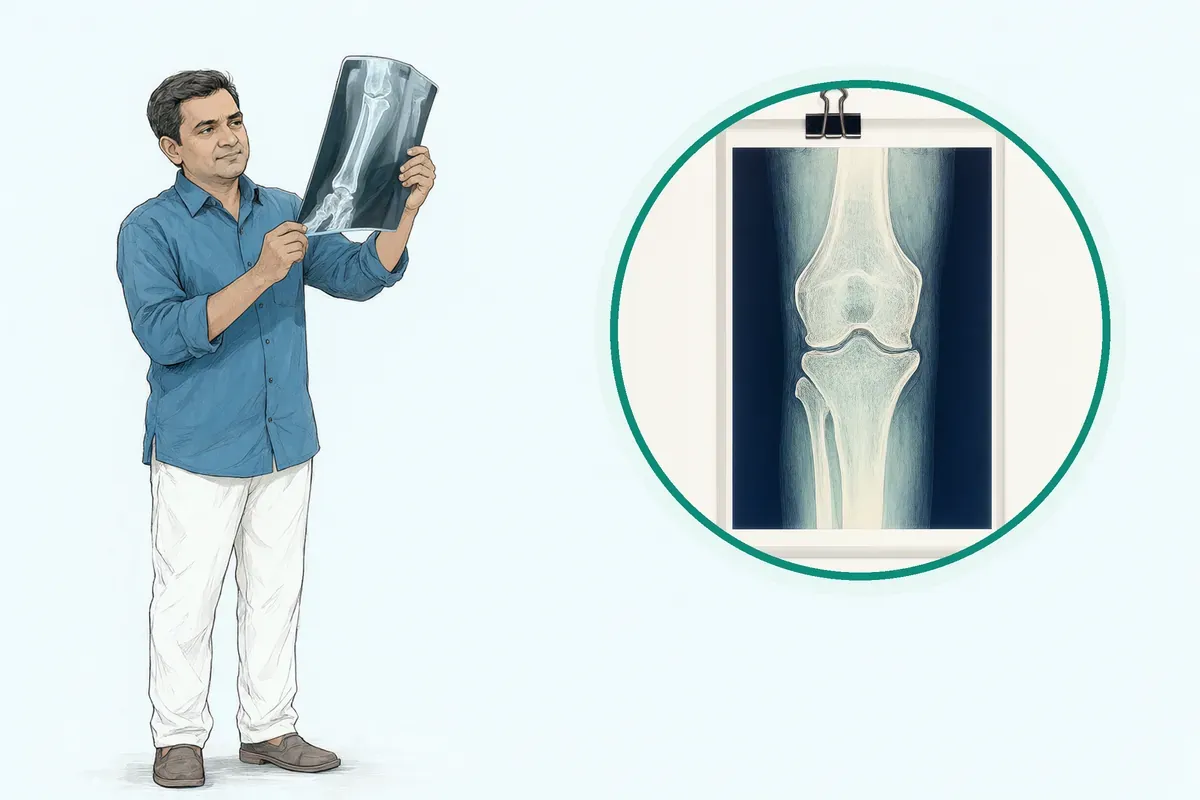
An orthopaedic assessment is a detailed check of your bones, joints, muscles, and nerves. At Jaipur Hospital, the visit takes 30 to 45 minutes and does not need anaesthesia or a hospital stay. You meet a surgeon who examines the painful area, checks how the joint moves, and tests the nerves and blood supply.
The surgeon also looks at any X-rays, MRI, or CT scans you bring. After the examination, the surgeon explains the findings, discusses treatment options, and answers your questions. A second opinion means the same thorough review is done by another specialist to confirm the diagnosis or the proposed surgery plan.
Second opinions are standard medical practice and doctors do it all the time as part of their own process of diagnosing a problem. You can seek a second opinion before starting any invasive treatment or surgery, when you are presented with multiple treatment choices, or when there are unexpected changes in your condition or test results.
Symptoms That Lead to an Orthopaedic Assessment
- Cannot put weight on leg
- Visible deformity of limb or joint
- Redness, warmth, fever around joint
Patients usually come for an assessment when they have:
- Joint pain that does not settle with rest or simple medicines
- Swelling around a joint
- Stiffness that limits daily activities
- A feeling of the joint giving way
- Numbness and tingling in the limbs
Warning signs that need urgent care the same day include sudden severe pain after a fall or injury, inability to put weight on a leg, visible deformity of a limb or joint, loss of feeling or movement in an arm or leg, and signs of infection such as redness, warmth, and fever around a joint.
If you notice any of these, go to the emergency department at Jaipur Hospital, which runs 24 hours a day.
Causes and Who Is at Higher Risk
Orthopaedic problems can come from:
- Wear and tear over time
- Injuries from sports or accidents
- Overuse at work
- Inflammatory conditions like rheumatoid arthritis
- Infections
Age is a common factor; joint wear increases after 50. People with jobs that need heavy lifting, repeated kneeling, or long standing have higher risk. Being overweight puts extra load on knees and hips. A family history of arthritis or certain bone diseases can also raise risk. Previous fractures or surgeries in the same area may lead to problems later. Your surgeon will ask about these factors during the assessment.
How the Condition Is Diagnosed: Examination and Tests
- Clinical examination Look, feel, check movement, test strength, assess nerves and vessels
- Review imaging X-rays, MRI, CT scans you bring
- Blood tests if needed For infection or inflammatory arthritis
- Explain diagnosis In plain words with you
The surgeon starts with a clinical examination:
- Looking at the joint
- Feeling for tenderness or swelling
- Checking range of movement
- Testing muscle strength
- Assessing nerves and blood vessels
This is the clinical examination technique listed in our service. Next, the surgeon reviews any imaging you have brought — X-rays, MRI, or CT scans — and may order new ones if needed. This imaging review is done with you so you can see the findings. Blood tests may be asked for if infection or inflammatory arthritis is suspected.
The surgeon then explains the diagnosis in plain words. If you are here for a second opinion, bring all your earlier reports, test results, and the treatment plan you were given. Tell the second doctor you want an appraisal of the diagnosis and the proposed treatment.
Treatment Options Without Surgery and When Surgery Is Advised
Many orthopaedic conditions improve without surgery.
The surgeon will review non-surgical options first:
- Physiotherapy to strengthen muscles and improve movement
- Medicines for pain and inflammation
- Activity modification
- Weight loss if needed
- Braces or supports
- Injections such as corticosteroids or hyaluronic acid
This non-surgical trial review is part of the assessment.
Surgery is usually advised when non-surgical measures have been tried for a reasonable time and symptoms still limit your daily life, when there is structural damage that will not heal on its own (such as a complete ligament tear or advanced arthritis with bone-on-bone contact), or when there is nerve compression causing weakness.
The surgeon will discuss the surgical plan, including options, risks, alternatives, and expected outcomes. Shared decision-making is used: the surgeon informs you that a decision is needed, explains the pros and cons of each option, discusses your preferences, and supports you in choosing.
Studies show this approach reduces decision conflict and improves decision quality for patients making choices about elective surgery. The typical cost for the assessment and second opinion at Jaipur Hospital ranges from ₹1,500 to ₹3,500; the final amount depends on the complexity of the case and any extra tests needed. Ask us for an estimate.
Preparing for Your Orthopaedic Assessment and Second Opinion
Do
- Bring all medical records and scans
- Write down diagnosis and treatment plan
- List all medicines and allergies
- Wear loose clothing for easy examination
- Bring an attendant if you wish
A second opinion is a standard part of medical practice and doctors do it all the time as part of their own process of diagnosing a problem. Before your visit, gather all your medical records. Bring the results, including tests, from your original consultation.
This includes:
- X-rays
- MRI or CT scans
- Blood reports
- Any discharge summaries if you have already had surgery
Write down the diagnosis you were given and the treatment plan that was proposed. You should tell the second doctor that you want an appraisal of the diagnosis you have been given and the treatment that has been proposed.
Make a list of every medicine you take, including supplements and pain relievers. Note any allergies you have. If you are on blood thinners or diabetes medication, your surgeon will advise if any change is needed before a future procedure, but no change is needed for the assessment itself.
Wear loose clothing that allows easy examination of the joint or spine. Bring an attendant if you wish; they can help you remember what is discussed. The consultation usually lasts 30 to 45 minutes and does not need anaesthesia or fasting.
What Happens During the Orthopaedic Assessment and Second Opinion
- Clinical examination Movement, stability, strength, neurovascular status
- Imaging review X-ray, MRI, or CT explained with you
- Surgical plan discussion Options, risks, alternatives, expected outcomes
- Non-surgical review Physiotherapy, injections, bracing considered
- Shared decision-making You and the surgeon decide together
The visit starts with a detailed clinical examination. Your surgeon checks the joint or spine for movement, stability, strength, and neurovascular status. Next, the surgeon reviews your imaging — X-ray, MRI, or CT — with you, explaining what the pictures show and how they relate to your symptoms.
This is followed by a discussion of the surgical plan you have been offered. The surgeon outlines the options, the risks of each, any alternatives, and the expected outcomes. Non-surgical options are also reviewed, such as physiotherapy, injections, or bracing, to see if a trial of these is appropriate before surgery.
The process follows a shared decision-making approach. This means the clinician and you share the most suitable available evidence, and you are supported to consider options and achieve informed preferences.
The professional informs you that a decision is to be made and that your opinion is important; explains the options and their pros and cons; discusses your preferences and supports you in deliberation; and then you make or defer the decision together.:
- Informs you that a decision is to be made and that your opinion is important
- Explains the options and their pros and cons
- Discusses your preferences and supports you in deliberation
- Then you make or defer the decision together
Studies show that shared decision-making reduces decision conflict and improves decision quality for patients making choices about elective surgery. It also increases knowledge and physician trust. If there is disagreement between two opinions, you should try to understand the reasons for the difference and evaluate the pros and cons of each approach. You can ask the doctors you have consulted to talk to each other, with you present.
Risks and Limitations of an Orthopaedic Second Opinion
- No surgical risks
- Outpatient visit without surgery, anaesthesia, or incisions
- Depends on records provided
- Old imaging or missing reports may need repeat tests
- Consultation time not significantly longer
- Mean difference about 2.23 minutes in studies
- More detail does not mean better
- A confident opinion may not be more accurate
An orthopaedic assessment and second opinion is an outpatient consultation. It does not involve surgery, anaesthesia, or incisions, so there are no surgical risks such as infection, bleeding, or nerve injury from the visit itself. The main limitation is that the second opinion relies on the quality and completeness of the records you provide.
If imaging is old or reports are missing, the surgeon may ask you to repeat tests, which adds time and cost. In studies, shared decision-making consultations did not significantly increase consultation time; the mean difference was about 2.23 minutes.
Another consideration is that a second opinion may sound more detailed or confident, but that does not always mean it is better. If you are not happy going to a doctor from the same hospital for a second opinion, you can ask your doctor for names at a different hospital. If you still do not have enough information after two opinions, a third opinion is reasonable.
After the Assessment: Next Steps and Follow-Up
There is no recovery period after the assessment. You can return to your usual activities immediately. The surgeon will give you a clear summary of the findings and recommendations. Using the second opinion report, you can decide with more confidence whether to proceed with the original plan, modify it, seek a different treatment, or change hospitals.
If further consultations or treatments are recommended afterward, the hospital's billing and insurance team can help you understand your coverage and available benefits.
If you have already had surgery and are seeking a second opinion on recovery, bring your discharge summary and follow-up reports. Specialists can assess your current condition and guide you on rehabilitation, the need for additional treatment, or further review. You should evaluate the pros and cons and follow up with your doctors when deciding between treatment options.
How Well a Second Opinion Works: Evidence from Studies
- 25 of 29 studies Decisional conflict decreased
- 5 of 5 studies Decisional regret decreased
- 17 of 21 studies Decisional satisfaction increased
- 33 of 35 studies Patient knowledge increased
Research on shared decision-making in elective surgery shows consistent benefits. In multiple studies, shared decision-making decreased decisional conflict in 25 of 29 studies, decreased decisional regret in 5 of 5 studies, increased decisional satisfaction in 17 of 21 studies, and increased patient knowledge in 33 of 35 studies.
It also reduced the rate of surgical intervention in 12 of 22 studies. One large trial found that 58% of patients who used a decision aid reached an informed decision during the first visit, compared with 33% in the control group. The intervention group reported higher confidence in knowing what questions to ask.
Surgeons rated the number and appropriateness of patient questions higher in the intervention group. Functional outcomes, measured by KOOS JR, improved by a mean difference of 4.9 points at 4 to 6 months in the intervention group. The choice of surgery itself did not differ significantly between groups.
These results come from groups of patients in studies, mainly in orthopaedics and joint replacement, and show what tends to happen on average, not what will happen for any one person.
Cost of Orthopaedic Assessment and Second Opinion in Jaipur
The typical price range for an orthopaedic assessment and second opinion at Jaipur Hospital is ₹1,500 to ₹3,500. The final cost within this range depends on the complexity of the case, the number of imaging studies to be reviewed, and whether additional tests are needed during the visit. The consultation is an outpatient service with no hospital stay.
Jaipur Hospital is empaneled under:
- RGHS
- MAA Yojana
- CGHS
- A panel of private insurers and TPAs
Coverage for a second opinion consultation varies by scheme and policy; some plans cover specialist consultations, others may require a referral. The hospital's billing team can help you understand your coverage and any out-of-pocket amount before the visit.