

Orthopaedics · Jaipur Hospital
Orthopaedic Emergency and Fracture Clinic in Jaipur
A sudden fracture leaves you anxious about pain and treatment. Jaipur Hospital offers clear assessment, imaging, and a structured care plan.
- Serving Jaipur since 1991 (35 years)
- NABH accredited
- 24×7 emergency & ICU
- Cashless: RGHS, MAA Yojana, CGHS + 22 insurers
- Assessment time
- 30 to 60 minutes
- Anaesthesia
- Local or procedural sedation as needed
- Recovery
- Varies by injurycast care 4 to 8 weeks
- Price
- ₹3,000 to ₹15,000 (initial ER management)typical range in India; ask us for an estimate
Sudden injury and painful uncertainty
You are hurt and do not know what to do next
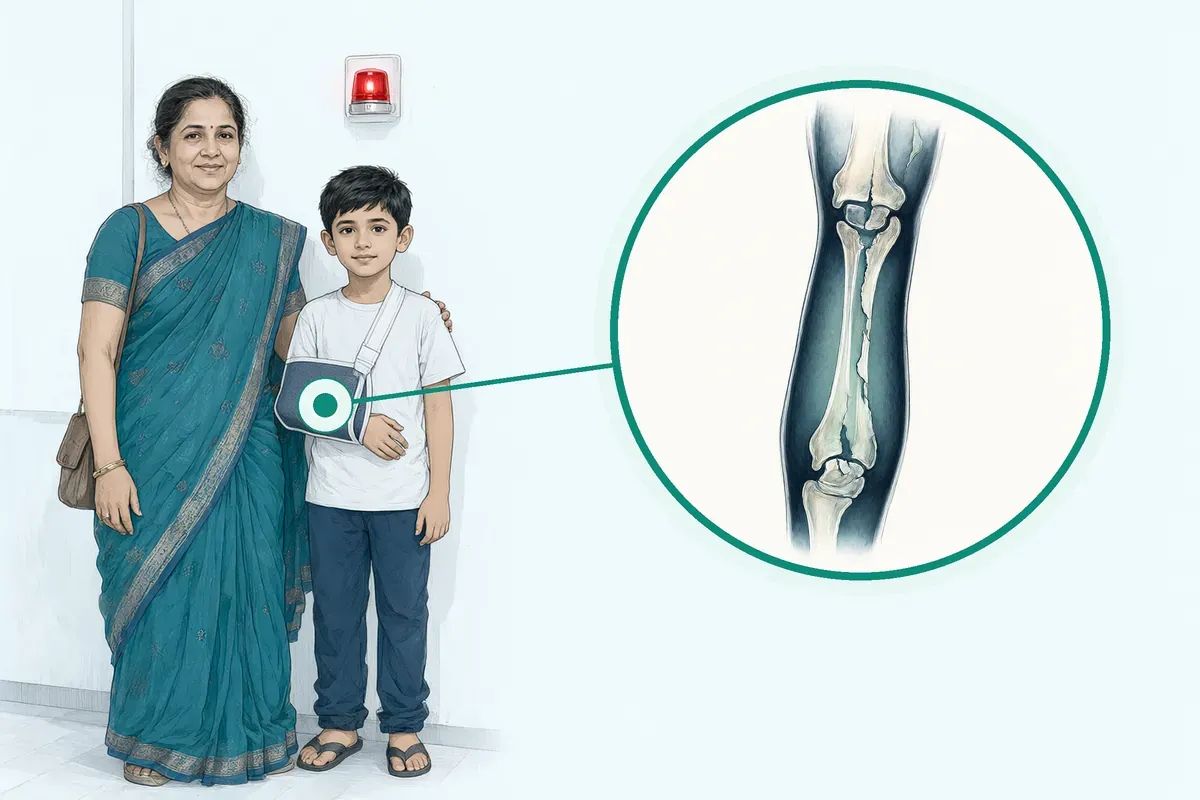
A fall or road accident happens in seconds. You face swelling, intense pain, and worry about whether your bone needs a cast or emergency surgery.
-
Severe pain and swelling
An injured limb swells rapidly, making any movement painful while you wonder about the extent of the damage.
-
Confusion about treatment options
You may not know if you need a temporary splint, a rigid cast, or an urgent operation.
-
Disruption to daily routine
A sudden fracture halts your work, family responsibilities, and mobility without warning.
Fractures are the most common large-organ traumatic injuries in humans.
Why Jaipur Hospital
You worry about sudden pain, unexpected costs, and missing weeks of work while your family manages the emergency.
Your care plan
Your first steps with us
- 1 Arrive at our 24x7 emergency department for triage and pain relief.
- 2 Get evaluated with in-house digital X-ray and clinical assessment.
- 3 Review your treatment options with our orthopaedic surgical team.
- 4 Begin guided recovery with structured cast care or planned surgery.
How your fracture care is managed
Our surgical team evaluates the injury and explains suitable stabilisation options based on bone alignment, swelling, and injury severity.
-
Closed Reduction
Your surgeon realigns bone fragments under sedation without an incision when bones are displaced.
-
POP / Fiberglass Casting
Your surgeon immobilises stable fractures using lightweight fiberglass or moldable plaster materials.
-
External Fixation
Your surgeon provides temporary frame stabilisation outside the limb for severe open fractures.
-
Urgent ORIF Planning
Your surgeon schedules internal fixation with plates or screws within 24 to 48 hours for complex fractures.
Why patients trust us
- 1991 Serving Jaipur for 35 years
- NABH Accredited hospital
- 5 Orthopaedics consultants
- 24×7 Emergency, ICU and ambulance
- 25 Cashless schemes and insurers
Evidence on fracture healing and cast care
-
About 10%
Studies show about 10% of fractures do not heal normally without appropriate stabilisation and care.
-
Six to eight weeks
Most patients in clinical records wear a protective cast for six to eight weeks during healing.
-
15 to 60 minutes
Applying an immobilisation cast typically takes between 15 minutes to around an hour.
If it is left untreated
Untreated or inadequately stabilised fractures can lead to malunion, nonunion, or chronic infection that impairs long-term limb function.
Moving toward recovery
Timely stabilisation and proper immobilisation help your body start the natural bone repair sequence.
-
Stable bone healing
Proper immobilisation protects the fracture site, usually allowing bone bridging over several weeks.
-
Gradual return to activity
Most people gradually resume routine household and desk work as bone healing progresses.
-
Clear follow-up support
Regular check-ups in the OPD allow your surgeon to monitor healing before cast removal.
Frequently asked questions
Questions patients ask about orthopaedic emergency and fracture clinic
Which problems are assessed under orthopaedic emergency and fracture?
In short
Jaipur Hospital assesses fractures, dislocations, and acute injuries of the limbs and pelvis in the orthopaedic emergency and fracture clinic. The 24x7 walk-in service evaluates open and closed fractures, joint dislocations, and suspected bone or soft-tissue trauma. Assessment typically takes 30 to 60 minutes.
In detail
The clinic manages a wide range of acute orthopaedic conditions. According to our usual protocols, the team evaluates fractures of the upper and lower limbs, pelvic injuries, and joint dislocations. Evidence shows that fractures are the most common large-organ traumatic injuries to humans.
The inflammatory response begins immediately after tissue damage and initiates the repair cascade. Immune cells play a major role in the repair phase, interacting with bone cells.
The clinic uses closed reduction under sedation for realignment without incision, POP or fiberglass casting for stable fractures, external fixation for severe open fractures, and urgent ORIF planning for definitive fixation within 24 to 48 hours. The choice depends on fracture pattern, stability, and soft-tissue condition.
Your next step at Jaipur Hospital
You can walk in any time for assessment. After evaluation, the surgeon will discuss whether you need observation for 4 to 6 hours, admission, or a planned procedure. Cast care typically lasts 4 to 8 weeks. The initial ER management cost ranges from ₹3,000 to ₹15,000.
How will the doctor decide which tests I need?
In short
The doctor at Jaipur Hospital decides tests based on your injury mechanism, physical examination findings, and the suspected fracture pattern. X-ray is the first-line imaging for most fractures. CT or MRI may be ordered for complex joint injuries, suspected occult fractures, or to assess soft-tissue and neurovascular status.
In detail
Evidence indicates that fracture fixation stability and blood supply are the main factors influencing healing. Accurate imaging defines the fracture geometry, displacement, and joint involvement. This guides the choice between closed reduction, casting, external fixation, or urgent ORIF planning.
The inflammatory phase begins immediately after trauma, and early imaging helps assess the biomechanical environment. In studies, proper imaging reduces the risk of malunion and nonunion. The team follows a stepwise approach: clinical assessment first, then targeted imaging to avoid unnecessary radiation and cost. The initial ER management cost of ₹3,000 to ₹15,000 typically includes basic imaging.
A common belief
Patients sometimes ask for MRI immediately, but X-ray shows most fractures clearly.
What actually happens
Advanced imaging is used only when X-ray is insufficient for surgical planning.
Your next step at Jaipur Hospital
You will have X-rays during your first visit. If the surgeon needs more detail, CT or MRI will be arranged, often on the same day. Results are discussed with you before any procedure.
How soon should I expect improvement after the chosen treatment for a fracture?
In short
At Jaipur Hospital, pain and swelling usually start to lessen within the first few days after the fracture is immobilised or surgically fixed. You may notice more comfort once the cast or splint is applied and the limb is elevated. Functional improvement such as weight-bearing or movement depends on the fracture type and fixation method, and typically progresses over weeks.
In detail
Evidence indicates that the inflammatory phase of bone healing lasts several days, during which pain and swelling are most intense. After closed reduction and casting or after internal fixation, the bone enters the repair phase where soft callus forms over two to three weeks.
Clinical studies show that early mobilisation within protected limits can improve outcomes, but the timeline varies: stable fractures treated with a cast may allow partial weight-bearing at four to six weeks, while surgically fixed fractures may permit earlier controlled movement as guided by your surgeon. Factors such as age, nutrition, smoking, and systemic conditions like diabetes can slow the process.
A common belief
A common mistake is to think that once the pain goes away, the bone is healed.
What actually happens
In fact, the bone remains weak for several weeks. Putting full weight or stress on it too early can cause the fragments to shift or the metal implants to fail. Improvement in comfort does not mean you can return to normal activity.
Your next step at Jaipur Hospital
Follow the specific weight-bearing and exercise instructions given at discharge. Attend all follow-up appointments for X-ray review, usually at two weeks and then at four to six weeks. Physiotherapy may be started once the surgeon confirms adequate healing. For a personalised recovery timeline, book a consultation at Jaipur Hospital.
How does the term "orthopaedic emergency and fracture clinic" relate to orthopaedic emergency and fracture?
In short
At Jaipur Hospital, the Orthopaedic Emergency and Fracture Clinic is the dedicated 24x7 walk-in service for acute bone and joint injuries. It provides immediate assessment, imaging, reduction, splinting, and admission if needed for fractures, dislocations, and soft tissue trauma. The clinic operates within the main emergency department.
In detail
The term reflects a focused pathway: patients with suspected fractures or dislocations are triaged directly to orthopaedic-trained staff rather than waiting in the general emergency queue. Evidence supports early specialist assessment to reduce time to reduction, improve alignment, and identify neurovascular compromise promptly.
The clinic offers closed reduction under procedural sedation, POP or fiberglass casting, external fixation for severe open fractures, and urgent ORIF planning within 24 to 48 hours. Assessment typically takes 30 to 60 minutes, with observation or admission for 4 to 6 hours or longer.
A common belief
In a general ER, you might see a casualty officer first and wait for an orthopaedic consult.
What actually happens
Here, the orthopaedic team sees you from the start. This means faster pain relief, quicker reduction, and fewer missed injuries like nerve or vessel damage.
Your next step at Jaipur Hospital
You can walk in any time without an appointment. Bring any previous X-rays or referral notes. The team will examine you, order imaging, and start treatment immediately. If surgery is required, it is scheduled urgently. For any acute bone or joint injury, come directly to the Orthopaedic Emergency and Fracture Clinic at Jaipur Hospital.
How will the injury be assessed for displacement, instability, or damage to nerves and blood vessels?
In short
At Jaipur Hospital, the orthopaedic emergency team performs a focused clinical examination within 30 to 60 minutes of arrival. They check for deformity, swelling, bruising, pulses, sensation, and movement, then order X-rays or CT scans to measure displacement, angulation, and joint congruity.
In detail
Clinical assessment includes palpating for bony tenderness and step deformity, testing active and passive range of motion, and evaluating distal neurovascular status — pulses, capillary refill, sensation, and motor function.
Imaging confirms fracture pattern, displacement in millimetres, angulation in degrees, and whether the fracture extends into the joint. For suspected vascular injury, Doppler ultrasound or CT angiography may be used.
Evidence indicates that systematic neurovascular documentation at presentation and after reduction is essential to detect compartment syndrome or arterial injury early. The team repeats the examination after any manipulation or splinting.
A common belief
Some clinics only X-ray and miss a nerve or vessel injury that shows up on careful examination.
What actually happens
Swelling can hide a pulse deficit, so the team re-checks after the cast is on. Missing these signs can lead to compartment syndrome or lasting weakness.
Your next step at Jaipur Hospital
If you notice increasing pain, numbness, or colour change before or after treatment, inform the team immediately. The 24x7 clinic allows rapid re-assessment and cast splitting if needed.
How can I decide whether to seek advice about 24x7 fracture emergency?
In short
Seek immediate care at Jaipur Hospital if you have a visible deformity, inability to move or bear weight on the limb, severe pain not relieved by simple measures, open wounds near the injury, or numbness and colour changes in the fingers or toes. The 24x7 fracture emergency service provides assessment within 30 to 60 minutes, X-ray imaging and initial stabilisation such as splinting, closed reduction under sedation or urgent surgical planning.
In detail
Fractures are the most common large-organ traumatic injuries. Early immobilisation reduces pain, limits further soft-tissue damage and improves outcomes. In India, road traffic injuries account for a large burden of fractures, and delays in definitive care increase the risk of malunion, nonunion or infected nonunion.
The emergency team evaluates neurovascular status, obtains imaging and decides between closed reduction, casting, external fixation or urgent operative fixation within 24 to 48 hours. Observation for 4 to 6 hours or admission follows initial management.
A common belief
Many people wait hoping the pain will settle, but delay raises the risk of malunion, nonunion or infection.
What actually happens
The emergency team assesses you in 30 to 60 minutes, provides X-rays and starts definitive treatment such as reduction, splinting or surgical planning.
Your next step at Jaipur Hospital
Do not wait for swelling to subside before seeking help. Bring any previous X-rays or medical records. An attendant should accompany you for consent and support. The typical initial ER management cost ranges from ₹3,000 to ₹15,000.
How will treatment affect my walking, movement, or independence?
In short
Treatment at Jaipur Hospital aims to restore your pre-injury function, but the timeline depends on the fracture site, fixation method and your overall health. Lower limb fractures often need a period of non-weight-bearing with crutches or a walker, while upper limb injuries may limit self-care activities temporarily. Your surgeon and physiotherapist will guide a stepwise return to walking and daily tasks.
In detail
Fracture repair usually restores the damaged skeletal organ to its pre-injury cellular composition, structure and biomechanical function. However, healing takes weeks to months. Immobilisation in a cast or after surgery causes joint stiffness and muscle wasting. Early protected mobilisation and physiotherapy minimise these effects.
In studies, factors such as diabetes, smoking and poor vascularity can prolong recovery. The surgical team plans fixation to allow the earliest safe movement.
A common belief
Many expect immediate return to normal, but immobilisation causes stiffness and muscle loss.
What actually happens
Healing follows biological phases that cannot be rushed. Protected movement and physiotherapy are essential to regain independence safely.
Your next step at Jaipur Hospital
Follow the weight-bearing and exercise plan given at discharge. Use walking aids until cleared. Attend physiotherapy sessions to regain range and strength. Modify your home environment for safety during recovery. Independence improves gradually as bone unites and muscles recondition.
Which symptoms should prompt me to see a specialist?
In short
You should see an orthopaedic specialist at Jaipur Hospital if you have severe pain, visible deformity, inability to move or bear weight on a limb, swelling that increases rapidly, numbness or tingling, an open wound near a suspected fracture, or a joint that looks out of place. These signs suggest a fracture, dislocation or serious soft tissue injury that needs expert assessment.
In detail
Pain that does not settle with simple analgesics, deformity and loss of function are the most reliable indicators of a significant bony injury. Swelling develops within hours as the inflammatory cascade begins. Numbness or colour change signals possible nerve or vessel injury.
Evidence shows that delayed presentation often leads to malunion, nonunion or infected nonunion. Early specialist review allows timely reduction, stable immobilisation and planning of definitive fixation if required.
Your next step at Jaipur Hospital
Do not wait for symptoms to improve on their own. Attend the 24x7 emergency clinic for assessment within 30 to 60 minutes. Bring an attendant and any regular medicines. The team will arrange imaging, pain relief and a treatment plan.
How will the results change my care plan?
In short
Imaging results at Jaipur Hospital determine whether your fracture is stable or unstable, displaced or undisplaced, and whether the joint surface is involved. Stable, aligned fractures usually need casting. Displaced or unstable fractures may need closed reduction under sedation. Complex intra-articular or open fractures often require urgent ORIF planning within 24 to 48 hours.
In detail
Evidence shows that the course of bone healing is mainly influenced by fixation stability and blood supply. If imaging shows acceptable alignment, a cast provides rigid immobilisation for 4 to 8 weeks. If fragments are displaced, closed reduction realigns them without incision.
For severe open fractures, external fixation provides temporary stabilisation. When internal fixation is needed, metal implants hold the bone while it heals. The repair process follows inflammatory, repair, and remodelling phases.
Accurate imaging ensures the chosen method matches the fracture personality, reducing the risk of malunion or nonunion. About 10% of fractures do not heal normally even with appropriate care.
- About 10% of fractures do not heal normally even with appropriate care.
A common belief
A common belief is that all fractures need surgery.
What actually happens
In fact, many heal well with proper casting if the alignment is acceptable on imaging.
Your next step at Jaipur Hospital
After imaging, the surgeon will explain the findings and the recommended plan. You may go home in a cast, stay for observation, or be scheduled for surgery. Follow-up visits monitor healing.
What should I do if symptoms persist or worsen after fracture treatment?
In short
At Jaipur Hospital, contact the emergency department immediately if your cast becomes tight, pain increases despite elevation and medication, you notice numbness, tingling, colour change, or inability to move fingers or toes, or if the cast cracks, softens, or gets wet. These signs may indicate swelling, nerve or vessel compromise, or cast failure.
In detail
A rigid cast does not expand, so rising tissue pressure from swelling can compress nerves and blood vessels, risking compartment syndrome. Evidence shows that early recognition of worsening pain, paraesthesia, pallor, or pulselessness is critical to prevent lasting damage.
If the cast is damaged, it no longer holds the bone in alignment, which can lead to malunion. The hospital's 24x7 service allows prompt cast splitting, replacement, or surgical review. Never attempt to remove or adjust the cast yourself; only a trained provider can do so safely.
A common belief
Some patients wait hoping it will settle, but pressure under a cast can damage nerves and vessels within hours.
What actually happens
Trying to trim the cast at home often makes it unstable and can cut the skin. Only the hospital team should adjust or replace it.
Your next step at Jaipur Hospital
Return to Jaipur Hospital at any hour for cast check or replacement. Keep the limb elevated above heart level while travelling. Do not insert objects inside the cast. If you have had surgery, watch for increasing wound redness, discharge, or fever.
FAQ library
Questions and answers about orthopaedic emergency and fracture clinic
When you contact us
Consult our orthopaedic emergency team today
Contact Jaipur Hospital for prompt assessment, diagnostic imaging, and clear medical guidance from our orthopaedic team.
- A consultation with an orthopaedic surgeon in the OPD
- Your scans and reports reviewed, with tests done in-house if you need them (laboratory, X-ray and imaging)
- Your options explained in plain words, including whether you need surgery at all
- A cost estimate before you decide
- Help with cashless treatment under RGHS, MAA Yojana, CGHS and empanelled insurers and TPAs
- Follow-up visits after your treatment
Overview
Orthopaedic Emergency and Fracture Clinic: what to know
What is an orthopaedic emergency and acute bone fracture
- Inflammatory phase Immune reaction starts healing
- Repair phase New bone bridges broken ends
- Remodelling phase Bone structure slowly restored
A fracture is a broken bone, which is the most common large-organ injury caused by trauma in humans. In acute injuries, bone fragments may move out of line, or joints may slip out of place. When you arrive with an acute injury at Jaipur Hospital, our assessment typically takes 30 to 60 minutes.
Bone repair is a natural rebuilding process in your body. It moves through three stages: an inflammatory phase, a repair phase, and a slow remodeling phase. In the first stage, tissue damage triggers an immediate immune reaction. Immune cells and local signals begin the healing cascade. During the repair stage, immune cells continue to work closely with bone cells.
Over time, new bone bridges the broken ends, and remodeling slowly restores the bone structure. In most cases, this repair returns the bone to its previous strength and function.
How well a bone heals depends mostly on two factors: the stability of the fracture fixation and the local blood supply to the area. In clinical studies, about 10% of fractures do not heal normally. In India, studies show that many severe injuries reach metropolitan centres only after complications such as nonunion or infected nonunion have developed.
Initial emergency management typically costs ₹3,000 to ₹15,000, depending on the severity of your injury and whether you need observation or admission.
Symptoms of acute fractures and signs that need urgent care
- Severe pain under cast
- Rapid swelling or tightness
- Skin colour or feeling changes
- Open wound with bone visible
Acute bone and joint injuries usually cause sharp pain, swelling, and an inability to bear weight or move the limb. Swelling nearly always begins immediately after an injury occurs. In studies across India, the ratio of deaths to serious injuries requiring hospitalisation to minor injuries is about 1:20:50. Road traffic injuries cause a substantial share of these emergency admissions.
You should visit an emergency clinic immediately if you notice warning signs after an injury or after receiving a splint or cast:
- Severe or worsening pain under your cast or splint
- Rapidly increasing swelling or tightness around an injured limb
- Changes in skin colour or feeling under a cast, which can happen if tissues swell against a rigid cast and compress nerves or blood vessels
- Open wounds where bone has broken through the skin, which carry a risk of infected nonunion
Our team typically monitors acute patients for 4 to 6 hours under observation, or admits you to the hospital ward if your injury requires continuous care.
Causes of bone fractures and risk factors
- 1.5 million New fractures yearly from low BMD
- 50% to 85% BMD variation from genetics
Bone fractures occur when sudden force overpowers the strength of the bone. In India, rapid growth in motor vehicles has led to high numbers of trauma admissions, with road traffic injuries causing significant trauma each year. Severe open injuries can result from road traffic accidents or major falls.
Certain factors increase your risk of sustaining a fracture or having delayed healing:
- Bone mineral density (BMD): Low bone mineral density is the most widely used predictor of fracture risk and is used to diagnose osteoporosis. Studies show that approximately 1.5 million new fracture cases occur each year due to this condition. Family and twin studies show that 50% to 85% of variation in bone mineral density is genetically determined.
- Tissue damage: The extent of injury to the bone, surrounding soft tissues, and blood vessels directly affects how the fracture heals.
- Systemic inflammation: Medical conditions such as diabetes mellitus, rheumatoid arthritis, multiple trauma, or severe infections can prolong healing time and increase the chance of nonunion.
- Unstable fixation: Inadequate mechanical stability at the fracture site alters early inflammation and can impair bone union.
- Untrained interventions: Studies note that many trauma patients in India consult traditional bone setters, which can lead to delayed care, malunion, or infection before hospital care is sought.
How orthopaedic injuries are diagnosed: examination and tests
When you arrive at our 24x7 emergency department, your medical examination starts right away. Our emergency team evaluates your general condition, your limb alignment, your skin condition, and the blood flow around the injury. The full assessment typically takes 30 to 60 minutes.
Our surgical team uses in-house imaging, including 24-hour X-ray, to see the exact pattern of the broken bone. Diagnostic imaging shows whether your bone fragments are undisplaced, displaced, or shattered into multiple pieces. This tells your surgeon whether your bone can be managed with external support or needs surgical reduction.
For complex trauma, our surgical team evaluates the surrounding soft tissues, vascular supply, and internal pressure in the affected limb or abdomen. In critically ill trauma patients, protocolised monitoring may be used to measure pressures and guide resuscitation. Blood tests from our 24-hour laboratory check for infection and help plan anaesthesia if an urgent intervention is required.
Treatment options with and without surgery at our fracture clinic
Not every fracture requires an operation. Non-surgical care is typically chosen when the broken bones stay in an acceptable position for natural healing. Casts hold the injured part of your body still while your bone repairs itself. At Jaipur Hospital, your surgical team will explain the options and advise which technique suits your injury.
Common non-surgical techniques include:
- Temporary splinting: Splints are often used first for acute injuries. Because swelling nearly always occurs immediately after trauma, a splint leaves space for tissues to swell safely without harmful compression. Splints can be made of plastic, metal, plaster, or fiberglass.
- Plaster of Paris (POP) casting: Plaster is easy to shape around your body and can be helpful for holding displaced fractures after they are realigned. Plaster casts typically take a day or two to completely harden.
- Fiberglass casting: Fiberglass casts are lighter, more durable, and porous so air can pass through. Most healthcare providers use fiberglass casts once swelling settles. Fiberglass begins drying immediately and hardens within a few hours. Cast care typically lasts 4 to 8 weeks, depending on bone healing.
- Closed reduction: If bones are displaced, your provider may perform a closed reduction. In this procedure, the team pushes and pulls the limb externally to realign the bones without making a surgical cut. Local anaesthesia or procedural sedation is typically given so you do not feel pain.
Surgical treatment is needed for severe fractures, open injuries, or bones that cannot be held in correct alignment. Surgical options include:
- Urgent ORIF planning: Open reduction and internal fixation is the most common surgery for severe fractures, typically scheduled within 24 to 48 hours. Your surgeon realigns the bone directly and inserts metal plates, screws, or rods to hold it stable while it heals. This is done under general or regional anaesthesia.
- External fixation: For severe open fractures or extensive soft tissue damage, temporary frames are fixed outside the limb using pins into the bone to maintain stability before definitive surgery.
Initial emergency room management typically ranges from ₹3,000 to ₹15,000; the exact cost varies based on whether you need a splint, procedural sedation, casting, or surgical admission.
Preparing for emergency orthopaedic care and fracture surgery
Do
- Have one adult attendant with you
- Discuss blood thinners or diabetes medication
When you arrive at Jaipur Hospital with a sudden injury, our surgical team starts with an emergency check. This assessment typically takes 30 to 60 minutes. Our team examines the injured limb, checks blood flow, and looks at nerve function. Before a healthcare provider puts a cast on your body around the broken bone, they examine your injuries. You will undergo imaging tests such as X-rays through our round-the-clock diagnostic services to see the exact break.
Tell our surgical team about all prescription medicines, over-the-counter tablets, and supplements you take regularly. Discuss whether you take blood thinners or diabetes medication with your doctor. If your injury needs sedation or an urgent operation, you may need to stop eating and drinking. Fasting helps prevent stomach contents from entering your lungs while you are under anaesthesia.
Bring your government identity cards and health scheme documents, such as your RGHS, MAA Yojana, or CGHS card, along with any private medical insurance papers. Bring any recent medical records or previous test reports you have at home. Have one adult attendant come with you to help with paperwork, manage your personal belongings, and assist you during your stay.
How orthopaedic treatments and fracture procedures are done
Depending on which type of fracture you experience, you might need a closed reduction or surgery to set your bone. Your surgeon will examine the break and advise which technique suits your injury. Healthcare providers set or realign your bone to make sure it heals back together correctly before applying a cast.
Depending on your procedure, you will typically receive local anaesthesia or procedural sedation, or general anaesthesia so you sleep through the surgery.
Your surgeon will discuss several treatment options with you:
- Closed Reduction: During a closed reduction, your provider pushes and pulls your body on the outside to line up your broken bones on the inside without an incision. They give you a type of anaesthesia to make sure you do not feel pain during the closed reduction.
- POP / Fiberglass Casting: Healthcare providers use casts to hold an injured part of your body in place and protect it while healing after a bone fracture. Your provider puts a cast on once they have set your bone and it is safe to immobilise it. Plaster of Paris is easier to work with and form around your bone shape, while fiberglass casts are lighter, more durable, and porous so air can pass through.
- External Fixation: For severe open fractures, temporary metal pins are placed into the bone through small skin punctures and connected to a frame outside the body to keep the bone fragments still.
- Urgent ORIF Planning: The most severe fractures need surgery, where open reduction and internal fixation is scheduled within 24 to 48 hours. Your surgeon inserts pieces of metal, such as plates, screws, or rods, into your bone to hold it in place while it heals.
It can take anywhere from 15 minutes to around an hour to apply a cast. Smaller casts on your wrist take less time, and bigger casts on your legs take longer to apply. Many injuries are first treated with a temporary splint to allow swelling to happen safely before a full cast is applied.
After your initial procedure, you typically stay in the hospital for observation for 4 to 6 hours or get admitted to a hospital room.
Risks and possible complications of fracture treatment
Every orthopaedic treatment carries specific risks. In studies, about 10% of fractures will not heal normally. In some cases, broken bones may take longer to unite or fail to join, leading to nonunion or malunion. When bone fragments fail to join, surgeons may need to improve bone-forming factors using bone grafts or bone stimulation therapies to help recovery. Substandard fixation or poor theatre conditions can result in an infected nonunion.
Rigid casts also carry specific risks if swelling continues under the hard shell. If an acute injury is treated with a rigid complete cast, there exists a risk of injury to the skin, nerves, and blood vessels under the cast from too much compression as the tissue expands from swelling. Cast padding can press against your skin if swelling increases suddenly, creating numbness, tingling, or skin sores.
General medical complications can also happen after major bone injuries and operations. In clinical studies, serious cardiovascular adverse events, osteonecrosis of the jaw, and atypical femoral fractures were adjudicated. Ongoing systemic inflammation from conditions such as rheumatoid arthritis, diabetes mellitus, multiple trauma, or sepsis can increase fracture healing time and raise the rate of complications. Insufficient mechanical stability at the fracture site can also impair bone healing.
Recovery and aftercare: the first days, weeks, and cast maintenance
Care begins the moment your cast or splint is placed. Fiberglass casts start drying right away and might only take a few hours, while plaster casts usually take a day or two to completely harden.
Be careful with your cast while it is still drying, because it will not have its full strength or protection until it has hardened all the way. Your provider gives you specific care instructions while the cast dries.
You should rest, keep the injured arm or leg elevated above heart level, and apply ice packs around the cast to reduce swelling.
Take good care of your cast to keep the underlying skin clean and intact. You cannot take a cast off or adjust it while wearing it. Keep your cast completely dry, and do not push objects like rulers or pens inside the cast to scratch itchy skin.
Most people need to wear a cast for six to eight weeks, although typical cast care lasts 4 to 8 weeks and splints or casts may be worn from a few days to a couple of months depending on the break.
Contact our surgical team right away if your cast hurts, especially if the pain is getting worse.
Call our emergency team immediately if you notice:
- Severe swelling
- Bluish skin on your fingers or toes
- Numbness
- Tingling
- A foul smell coming from the cast
- Severe burning under the plaster
Never try to remove the cast at home, as only a trained healthcare provider can safely remove a cast. When your bone has healed, our provider removes the cast using a special oscillating saw that cuts through the hard material without hurting your skin.
Results: how well fracture treatment works in studies
Fracture repair usually restores the damaged skeletal organ to its pre-injury cellular composition, structure, and biomechanical function. Bone repair proceeds through a natural sequence of events involving an inflammatory phase, a repair phase, and a long remodeling phase. After bony bridging joins the fragments together, a slow remodeling process eventually leads to the reconstitution of the original bone structure.
Bone healing depends heavily on the mechanical stability of the fixation and healthy blood supply reaching the trauma site. In clinical settings, casts hold bones in rigid alignment so the body can repair them over weeks or months. In medical research, casts are considered safe and effective tools for holding bones in place. Once the bone has united firmly, it is quick and easy to take off the cast in the clinic.
While most fractures unite well, healing can fail in certain situations. In research studies, approximately 10% of fractures do not heal normally. Bone mineral density is also a recognised predictor of future fracture risk.
In a large meta-analysis of 17 genome-wide studies including 32,961 individuals, 56 genetic loci were associated with bone mineral density, and 14 of these loci were also associated with fracture risk. When healing is delayed or bones do not join, your surgeon may evaluate biological therapies or bone grafts to restore bone union.
Cost of orthopaedic emergency care and insurance in Jaipur
The cost of emergency orthopaedic treatment in India is markedly lower than that in many other countries. In research literature, treatments in India can cost five times less than in the United States and half as much as similar care in Thailand. For initial emergency room management at Jaipur Hospital, the price typically ranges from ₹3,000 to ₹15,000. Ask our team for an estimate based on your specific injury.
The overall cost changes depending on several medical factors. The total depends on whether your fracture requires a simple plaster splint, a lightweight fiberglass cast, procedural sedation, or urgent surgical reduction in an operation theatre.
Costs also vary based on whether you need temporary observation for 4 to 6 hours or formal inpatient room admission, as well as the types of medicines, chemist supplies, and X-ray investigations your injury requires.
Jaipur Hospital works with state and central government healthcare schemes to cover eligible patient care.
We accept:
- Rajasthan Government Health Scheme (RGHS)
- MAA Yojana
- Central Government Health Scheme (CGHS)
We also work with a panel of private insurance companies and Third Party Administrators (TPAs) to assist patients with cashless treatment and claim approvals.