
Orthopaedics · Jaipur Hospital
Scoliosis Surgery in Jaipur
Curved spine causing worry? We assess, explain options and give a clear plan.
- Serving Jaipur since 1991 (35 years)
- NABH accredited
- 24×7 emergency & ICU
- Cashless: MAA Yojana + 32 insurers
- Operation time
- 4 to 6 hours
- Anaesthesia
- General anaesthesia with neuro-monitoring
- Recovery
- School in 4 to 6 weeks, sports in 6 to 12 months
- Price
- ₹3,50,000 to ₹6,50,000typical range in India; ask us for an estimate
Curve progression and daily impact
My child's spine curve is getting worse and I worry about the future
A growing curve can change posture, cause back pain and limit activity. Families fear surgery risks, long recovery and the effect on school and sports.
-
Visible asymmetry
Uneven shoulders, ribs or hips affect confidence and clothing fit.
-
Activity limits
Pain or fatigue stops participation in sports and play.
-
Curve progression
Without treatment, curves may worsen during growth spurts.
-
Future health
Large curves can affect lung function and cause chronic pain later.
Research shows altered bone-forming cells and low bone density in adolescent idiopathic scoliosis patients.
Why Jaipur Hospital
You worry about your child's pain, missing school, the cost of surgery and whether they will run and play like before.
Your care plan
Your first steps with us
- 1 Call or visit OPD for surgeon consultation
- 2 Review scans and plan surgery with neuro-monitoring
- 3 Stay 5 to 7 nights with physiotherapy start
- 4 Return to school in 4 to 6 weeks
How the operation is done
Under general anaesthesia with neuro-monitoring, the surgeon places pedicle screws and rods through a back incision to correct the curve and fuse the vertebrae. Surgery typically takes 4 to 6 hours.
-
Posterior Spinal Fusion (PSF)
Pedicle screws and rods correct the curve in three dimensions; the fused segment becomes solid bone.
-
Anterior Vertebral Body Tethering (VBT)
A flexible cord modulates growth on the convex side; an option for flexible curves in skeletally immature patients.
-
Bracing (Rigo-Cheneau/Boston)
For curves of 25 to 45 degrees in growing children; aims to avoid or delay surgery.
Why patients trust us
- 1991 Serving Jaipur for 35 years
- NABH Accredited hospital
- 4 Orthopaedics consultants
- 24×7 Emergency, ICU and ambulance
- 33 Cashless schemes and insurers
What research shows about this treatment
-
Thoracic Cobb angle correction 62%
Posterior spinal fusion corrected the main thoracic curve by 62% in a comparative study.
-
Rib hump correction 53%
The same study reported 53% correction of the rib hump after posterior fusion.
-
Adjacent segment changes in 47%
Adjacent segment changes occurred in 47% of patients after posterior spinal fusion at long-term follow-up.
If it is left untreated
Untreated large curves can worsen, leading to chronic back pain, reduced lung capacity and visible deformity that affects quality of life.
Life after treatment
Most adolescents return to school within weeks and resume full activity within a year, with a straighter spine and improved self-image.
-
School return
Most children go back to class in 4 to 6 weeks.
-
Sports return
Full contact sports usually resume after 6 to 12 months.
-
Better self-image
Studies show significant improvement in appearance and mental health scores.
-
Stable correction
The fused segment remains stable; long-term follow-up monitors adjacent levels.
Meet the team
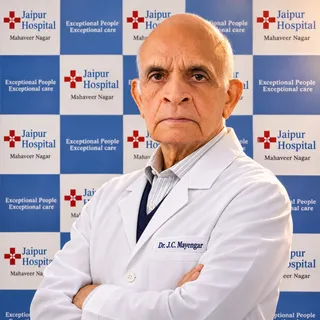
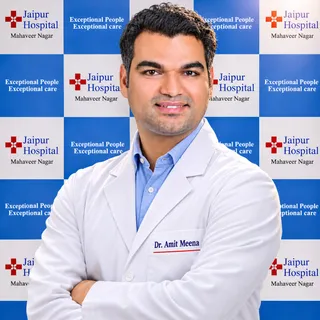
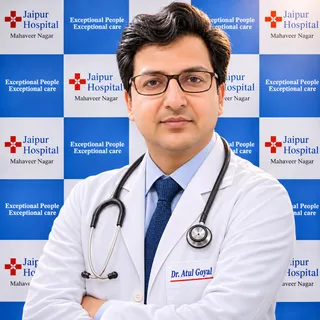
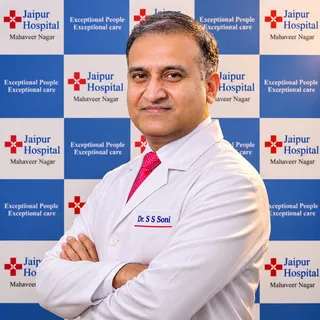
Your orthopaedics doctors
Explore our orthopaedic hospital in Jaipur: every treatment, the doctors and what to expect at your visit.
Frequently asked questions
Questions patients ask about scoliosis surgery
What does adolescent idiopathic scoliosis correction involve?
In short
Adolescent idiopathic scoliosis correction at Jaipur Hospital involves posterior spinal fusion with pedicle screws and rods. The operation takes four to six hours under general anaesthesia with neuro-monitoring. A typical hospital stay is five to seven nights. The surgery links the curved vertebrae so they heal as one solid column, which reduces the curve and the rib hump.
In detail
The surgeon makes an incision along the back, places pedicle screws into the vertebrae of the curve, and connects them with rods that are contoured to achieve three-dimensional correction. The bone surfaces are prepared and bone graft is added so the fused segments grow together.
In studies, posterior spinal fusion corrected the thoracic Cobb angle by about sixty-two percent and the rib hump by fifty-three percent. The fused portion of the spine becomes less flexible, which is expected with this procedure.
A common belief
Many people think the spine becomes completely rigid.
What actually happens
The fused segment does lose movement, but the unfused levels above and below keep much of the normal bending and turning. The goal is to stop the curve from worsening and improve the rib hump, not to make the back perfectly straight.
Your next step at Jaipur Hospital
You will meet the surgical team for a detailed assessment, including standing X-rays and a review of growth remaining. If surgery is advised, a date is scheduled and pre-operative tests are arranged. After discharge, school usually resumes in four to six weeks and sports in six to twelve months.
Which tests and scans do I need before adolescent idiopathic scoliosis correction?
In short
Before adolescent idiopathic scoliosis correction at Jaipur Hospital, you need standing full-spine PA and lateral X-rays, side-bending films to assess flexibility, and a hand-wrist X-ray or Risser sign to determine skeletal maturity. Routine blood tests, a chest X-ray, and an ECG are required for anaesthesia fitness. CT or MRI scans are not done at the hospital; if the surgeon advises them, they are arranged at an outside imaging centre.
In detail
The standing X-rays give the Cobb angle and overall sagittal balance. Side-bending films show how much the curve corrects, which guides the choice of fusion levels. Bone age helps decide if growth-modulating options like vertebral body tethering are still possible.
Blood work includes haemoglobin, coagulation profile, blood group, and infection markers. The anaesthesia team reviews the chest X-ray and ECG.
If the surgeon suspects spinal cord abnormality or needs detailed bony anatomy, an MRI or CT may be requested at an external centre; the hospital team reviews those images. No DEXA scan is available at the hospital; if bone density assessment is needed, it is done outside.
A common belief
People often expect MRI or CT at the hospital.
What actually happens
Jaipur Hospital has X-ray only; advanced imaging is referred out. The surgeon decides if they are needed. Bone density scans are also done outside if required. The key surgical planning images are the standing and bending X-rays.
Your next step at Jaipur Hospital
Bring any previous X-rays, bracing records, and blood reports to the consultation. The surgeon will order any missing tests. Pre-anaesthesia evaluation is scheduled once the surgery date is set.
How painful is the scoliosis surgery and the early recovery?
In short
Scoliosis surgery at Jaipur Hospital is done under general anaesthesia with neuro-monitoring, so you feel no pain during the operation. After surgery, pain is expected and managed with a planned regimen including intravenous medicines, patient-controlled analgesia, and later oral tablets. The surgical team adjusts doses daily. Most patients describe the first few days as uncomfortable rather than severe, and pain lessens steadily over the first two weeks.
In detail
Evidence shows recovery from spinal fusion can be painful, and some amount of pain is common and expected as you heal. The operation involves muscle dissection, bone graft preparation, and instrumentation placement across multiple levels, which causes surgical site pain and muscle spasms.
The hospital uses a multimodal approach: regular paracetamol, anti-inflammatory drugs if kidney function allows, opioid PCA for the first 24 to 48 hours, and sometimes nerve blocks. Physiotherapy starts early with breathing exercises and log-rolling to reduce stiffness. Pain scores guide medication changes before discharge at 5 to 7 nights.
A common belief
Some people believe modern surgery means almost no pain.
What actually happens
In reality, posterior spinal fusion is a major operation on the back muscles and spine; ignoring pain or skipping medication can slow mobilisation and increase complications like chest infection or blood clots.
Your next step at Jaipur Hospital
Expect to take oral pain medicine for 2 to 3 weeks at home, tapering as comfort improves. Keep a pain diary for the first follow-up visit. Report any sudden increase, fever, or new numbness immediately.
How long does recovery usually take after scoliosis surgery?
In short
At Jaipur Hospital, the typical hospital stay after scoliosis surgery is 5 to 7 nights. Most patients return to school or desk work in 4 to 6 weeks. Full return to sports and heavy physical activity takes 6 to 12 months, depending on the number of levels fused and how quickly the bone graft solidifies.
In detail
Recovery follows a step-wise plan. The first 2 weeks focus on wound healing, pain control, and walking with assistance. By 4 to 6 weeks, most patients are off regular pain medication and can sit for classes or light work.
Physiotherapy continues with core strengthening and posture training. Bone fusion matures over 6 to 12 months; contact sports, heavy lifting, and high-impact activities are cleared only after X-rays show solid bridging bone. The surgeon guides the timeline at each visit.
Evidence notes that some people return to life as before, while others have lasting limitations, so the plan is individualised.
A common belief
Many families think recovery is 2 weeks.
What actually happens
The bone graft needs months to become solid. Returning to sport too early risks implant failure or loss of correction.
Your next step at Jaipur Hospital
Plan for an attendant at home for the first 2 weeks. Arrange school leave for 4 to 6 weeks. Keep all physiotherapy appointments. The surgeon will clear specific activities at the 6-month and 12-month X-ray reviews.
Does the clinical examination match the findings on my scan for scoliosis?
In short
At Jaipur Hospital, the surgeon compares your physical examination with the standing X-rays to decide if posterior spinal fusion is needed. The curve size on X-ray, the flexibility of the curve on bending films, and the clinical signs such as rib hump, shoulder height and trunk shift are all reviewed together. No single test alone determines the treatment plan.
In detail
Adolescent idiopathic scoliosis is a three-dimensional deformity. The Cobb angle on X-ray measures the curve in two dimensions, but the clinical examination shows rotation, balance and flexibility.
Evidence from surgical series shows that curves with similar Cobb angles can have very different cosmetic and functional impact. The surgeon uses both sets of information to choose the fusion levels and to discuss the expected correction with you and your family.
A common belief
Patients often think the X-ray number alone decides surgery.
What actually happens
A curve can look moderate on X-ray but cause a large rib hump or imbalance, or vice versa. Both must match for the right surgical plan.
Your next step at Jaipur Hospital
Bring all recent X-rays and any MRI reports to the consultation. The surgeon will examine you standing, bending and lying down. You will receive a clear explanation of how the clinical findings and imaging align.
How will scoliosis surgery affect my walking, movement, or independence?
In short
At Jaipur Hospital, most patients walk with assistance on day one or two after posterior spinal fusion and are independent for indoor mobility by discharge at five to seven days. The fused spinal segments lose some forward bending, but daily activities such as walking, sitting and self-care return to near-normal within four to six weeks. Sports and high-impact activities are restricted for six to twelve months while the fusion solidifies.
In detail
Posterior spinal fusion stiffens the instrumented levels, which reduces spinal flexibility. Evidence from outcome studies shows that patients regain functional independence quickly because the unfused segments compensate. The rib hump and trunk shift often improve, which can make breathing and balance better.
Long-term, the fused portion does not move, so activities requiring extreme spinal flexion may be limited, but most adolescents return to school, college and recreational sports without major restriction.
A common belief
Patients often fear they will be stiff forever.
What actually happens
The unfused spine compensates, so you can still bend at the hips and knees. High-impact sports wait six to twelve months, but walking, sitting and self-care recover quickly.
Your next step at Jaipur Hospital
Plan for a wheelchair or walker for the first few days at home. Arrange help for bathing and dressing for the first two weeks. School usually resumes at four to six weeks. Heavy lifting and contact sports wait until the surgeon confirms solid fusion on X-ray.
Why might my doctor recommend adolescent idiopathic scoliosis correction?
In short
Your doctor may recommend adolescent idiopathic scoliosis correction at Jaipur Hospital when the spinal curve is large, progressing, or causing symptoms that affect daily life. Surgery aims to stop the curve from worsening, improve trunk balance, and reduce pain or breathing difficulty. The decision is based on curve size, growth remaining, and how much the curve impacts you.
In detail
Guidelines suggest considering posterior spinal fusion when the Cobb angle exceeds 45 to 50 degrees in a growing adolescent, or when a curve progresses despite bracing. Large thoracic curves can restrict lung volume over time.
Evidence shows spinal fusion can improve quality of life, ease pain, and improve self-image scores in studies. The fused portion loses flexibility, which is expected, but the untreated curve may lead to worsening deformity and long-term functional limits.
Your surgeon weighs these factors against the risks of surgery such as infection, nerve injury, or the need for revision years later.
A common belief
Some believe surgery is only for cosmetic reasons.
What actually happens
In reality, large curves can reduce lung function and cause chronic pain. Bracing is tried first for curves 25 to 45 degrees in growing children. Surgery is not the first option; it is considered when other measures fail or the curve is too large for bracing.
Your next step at Jaipur Hospital
Bring any recent full-spine standing X-rays and bracing records to the consultation. The surgeon will measure the curve, check flexibility on side-bending films, and assess skeletal maturity with a Risser sign or hand X-ray. If surgery is advised, pre-anaesthesia evaluation and blood tests follow.
How should I prepare in the days before adolescent idiopathic scoliosis correction?
In short
In the days before adolescent idiopathic scoliosis correction at Jaipur Hospital, you attend a pre-anaesthesia check-up, complete routine blood tests, and follow the surgeon's instructions on medicines. You may be asked to stop blood thinners, certain supplements, or herbal products a few days before surgery. The hospital provides a preoperative bathing protocol and fasting guidelines.
In detail
The pre-anaesthesia visit reviews your medical history, allergy status, and current medications. Blood tests typically include haemoglobin, coagulation profile, blood group, and infection screening.
The surgeon will tell you which regular medicines to continue on the morning of surgery with a sip of water and which to hold. Iron supplements may be started earlier if haemoglobin is low.
You should arrange for an attendant to stay with you during the five to seven night hospital stay. The physiotherapy team may teach breathing exercises and log-rolling technique before surgery. Skin preparation with antiseptic wash is usually advised the night before and morning of surgery.
A common belief
Some think they can take all usual medicines up to surgery.
What actually happens
Blood thinners, some painkillers, and herbal products must be stopped days before. The surgeon gives a specific list. Also, the hospital does not provide a free preoperative physiotherapy session; it is part of the admission process. Fasting rules are strict: nothing by mouth after midnight before surgery.
Your next step at Jaipur Hospital
Confirm the surgery date and admission time with the scheduling desk. Bring all medicines, recent test reports, and insurance or scheme cards. The attendant should be ready to assist with mobility and care after surgery.
What are the common side effects and the less common serious complications of scoliosis surgery?
In short
Common side effects after scoliosis surgery at Jaipur Hospital include surgical site pain, temporary numbness near the incision, fatigue, and reduced spinal flexibility in the fused segment. Less common but serious complications are wound infection, deep vein thrombosis, neurological injury, implant loosening or breakage, and the need for revision surgery years later. The surgical team discusses each risk before you sign consent.
In detail
Evidence from large series shows that adjacent segment degeneration occurs in about half of patients over the long term, and disc degeneration in the fused area is also frequent. Progression of scoliosis after fusion is reported in a small minority.
Nerve or spinal cord injury is rare but can cause weakness, numbness, or bowel and bladder changes that need immediate care. Infection symptoms include fever, increasing wound redness, or discharge. Deep vein thrombosis can present as calf swelling or sudden breathlessness.
The hospital uses neuro-monitoring, antibiotic prophylaxis, and early mobilisation to minimise these risks. Some patients need a follow-up surgery years later to address changes that develop over time.
A common belief
Patients often worry about paralysis.
What actually happens
Neuro-monitoring makes nerve injury rare. The more frequent long-term change is adjacent segment wear, which appears in studies in about half of patients over many years.
Your next step at Jaipur Hospital
You will receive a written list of warning signs before discharge. Contact the hospital immediately for fever above 38°C, new weakness or numbness, calf pain, or wound discharge. Routine follow-up at 2 weeks, 6 weeks, and 6 months checks healing and alignment.
Which symptoms are expected after scoliosis surgery, and which need urgent medical attention?
In short
At Jaipur Hospital, expected symptoms after posterior spinal fusion include incisional pain, stiffness, fatigue, mild numbness near the scar and occasional muscle spasms for several weeks. Urgent symptoms are fever above 38°C, wound redness, swelling or discharge, new weakness, numbness, bowel or bladder changes, or sudden severe back pain.
In detail
Evidence lists infection symptoms and nerve or spinal cord symptoms as needing immediate care. The fused segment will feel stiffer, which is normal. Pain should improve steadily after the first two weeks.
Any worsening or new neurological sign suggests a complication such as implant displacement or infection and must be evaluated at once.
A common belief
Patients often dismiss fever or new numbness as part of healing.
What actually happens
The evidence says these are red flags for infection or nerve injury. Pain should trend down after two weeks; if it spikes or new neurological signs appear, do not wait.
Your next step at Jaipur Hospital
Keep the wound clean and dry, take medicines as prescribed, and do the prescribed exercises. If any urgent symptom appears, go to the emergency department or call the surgical team immediately.
FAQ library
Questions and answers about scoliosis surgery
When you contact us
Get a clear surgical plan
Contact Jaipur Hospital for an OPD consultation, scan review, cost estimate and help with cashless insurance approval.
- A consultation with an orthopaedic surgeon in the OPD
- Your scans and reports reviewed, with tests done in-house if you need them (laboratory, X-ray and imaging)
- Your options explained in plain words, including whether you need surgery at all
- A cost estimate before you decide
- Help with cashless treatment under MAA Yojana, various government health care schemes and empanelled insurers and TPAs
- Follow-up visits after your treatment
Overview
Scoliosis Surgery: what to know
What adolescent idiopathic scoliosis is and how it develops
- Sideways curve
- Spine twists and curves sideways
- Rib hump
- Ribs stick out on one side when bending
- Bone cells change
- Bone cells turn into fat cells instead
- Weaker vertebrae
- Lower bone density makes curve progress
Adolescent idiopathic scoliosis is a sideways curve of the spine that appears in children and teenagers, usually between the ages of 10 and 18, without a known cause such as injury or infection.
The spine twists as it curves, so the ribs on one side may stick out more than the other, creating a visible hump when the child bends forward. In most young people the curve is small and only needs regular checks.
When the curve grows larger, the twisted vertebrae can press on the spinal cord or the nerves that branch off it, which may lead to pain, numbness or weakness in the legs.
The condition is called "idiopathic" because the exact trigger is not fully understood, but research shows that the cells that build bone (mesenchymal stem cells) behave differently in these patients. They tend to turn into fat cells instead of bone cells, and several proteins that control bone growth are altered.
This leads to lower bone mineral density and weaker vertebrae, which may allow the curve to progress during the rapid growth of puberty.
Scoliosis surgery at Jaipur Hospital means posterior spinal fusion with instrumentation. The operation joins the curved vertebrae together using pedicle screws and rods so they heal as one solid column. This straightens the spine in three dimensions and stops the curve from getting worse.
The fused segment no longer moves independently, which reduces the deformity but also reduces flexibility in that part of the back.
Symptoms of scoliosis and warning signs that need same-day care
- Leg weakness or numbness Sudden loss of feeling or strength
- Bladder or bowel changes Loss of control needs urgent care
- Severe pain not settling Back pain that does not ease with rest
- Wound infection signs Fever, redness, swelling or discharge
Many adolescents with scoliosis have no pain.
The first sign is often visual:
- One shoulder higher than the other
- A prominent shoulder blade
- An uneven waist
- Ribs that stick out on one side when bending forward
Clothes may hang unevenly. As the curve grows, some teenagers develop back ache, muscle fatigue, or numbness and tingling in the legs if nerves are stretched or compressed.
Certain symptoms need medical attention the same day.
These include:
- Sudden weakness or loss of feeling in the legs
- Difficulty walking
- Loss of bladder or bowel control
- Severe back pain that does not settle with rest
- Signs of infection such as fever, redness, swelling or discharge from a wound if the child has already had surgery
These can indicate pressure on the spinal cord or an infection that must be treated urgently.
Causes and factors that raise the risk of curve progression
- Female sex
- Girls more likely to need treatment
- Larger curve at diagnosis
- Bigger curves progress more often
- Growth remaining
- More growth left means higher risk
- Family history
- Relatives with scoliosis raise risk
The precise cause of adolescent idiopathic scoliosis is not known, but studies point to a combination of genetic, hormonal and cellular factors. Bone-forming cells in these patients show a tendency to become fat cells instead of bone, and several growth-related proteins are expressed at abnormal levels.
Lower bone mineral density is common, which may make the vertebrae more likely to deform during the adolescent growth spurt.
Risk factors for a curve getting worse include:
- Being female (girls are more likely than boys to need treatment)
- A larger curve at the time of diagnosis
- Significant growth remaining (measured by skeletal maturity markers such as the Risser sign)
A family history of scoliosis also increases the chance that a child will develop a curve that needs treatment.
How scoliosis is diagnosed: examination and imaging
- Physical examination Check shoulders, waist and rib hump
- Scoliometer reading Measure trunk rotation angle
- Full-spine X-rays Front and side views for Cobb angle
- CT or MRI if needed Done at external imaging centre
Diagnosis starts with a physical examination. The doctor checks shoulder height, waist symmetry and the rib hump using the Adam's forward bend test. A scoliometer measures the angle of trunk rotation. If the reading is above a threshold, standing full-spine X-rays are taken from the front and the side.
The Cobb angle on these X-rays measures the size of the curve in degrees. Curves above 10 degrees are defined as scoliosis. The X-rays also show skeletal maturity (Risser grade) which helps predict how much growth is left.
At Jaipur Hospital, X-rays are done in-house. If the surgeon needs cross-sectional detail — for example, to plan screw placement or check the spinal canal — a CT or MRI scan is advised and performed at an imaging centre outside the hospital. The surgical team then reviews those images.
Jaipur Hospital does not have a CT or MRI scanner on site. Bone density (DEXA) may also be advised and is done at an external centre.
Non-surgical treatment options and when surgery is advised
For curves between 25 and 45 degrees in a child who is still growing, a custom rigid brace (such as a Rigo-Cheneau or Boston brace) is the standard non-surgical treatment. The brace is worn for many hours each day to hold the spine in a straighter position while the child grows.
It does not permanently straighten the spine, but it can prevent the curve from worsening enough to need surgery. Regular X-rays monitor the curve while bracing continues.
Physiotherapy and specific exercise programmes (such as Schroth method) may be used alongside bracing to improve posture and trunk strength, but they have not been shown to stop curve progression on their own. Pain, if present, is managed with activity modification and simple analgesics under medical guidance.
Surgery is usually advised when the Cobb angle reaches 45 to 50 degrees or more, or when a curve continues to progress despite bracing in a skeletally immature patient. At this stage the risk of the curve worsening into adulthood — leading to chronic pain, reduced lung function, or cosmetic deformity — outweighs the risks of surgery.
The surgeon discusses the expected correction, the number of levels to be fused, and the trade-off between straightness and remaining flexibility. The goal is a balanced spine that stops the curve from progressing and improves appearance and function.
Preparing for scoliosis surgery
Do
- Pre-anaesthesia check-up
- Blood tests, chest X-ray, ECG
- Stop blood thinners as told
- Fast six hours before surgery
- Bring imaging reports and medicines
- Attendant stays with you
Before the operation you attend a pre-anaesthesia check-up where the anaesthetist reviews your general health and any medicines you take. Blood tests, a chest X-ray and an ECG are routine. If you are on blood-thinning medication, your doctor will tell you when to stop it. You must not eat or drink for at least six hours before the scheduled time.
Bring:
- Any recent imaging reports
- Your regular medicines in their original packets
- Comfortable loose clothing
- Personal items for a stay of five to seven nights
An attendant should plan to stay with you during the admission.
How scoliosis surgery is done
The standard operation for adolescent idiopathic scoliosis is posterior spinal fusion with pedicle screws and rods. The surgeon makes an incision along the back, places screws into the vertebrae of the curved segment, and connects them with two rods that correct the curve in three dimensions.
The bone surfaces are prepared and bone graft is added so the fused vertebrae grow together into a solid column. The procedure takes four to six hours under general anaesthesia with continuous neuro-monitoring of the spinal cord.
An alternative technique for flexible curves in children who are still growing is anterior vertebral body tethering. A flexible cord is attached to the front of the spine through small incisions on the side of the chest. The tether modulates growth so the spine straightens as the child grows. Your surgeon will advise whether this option suits the curve pattern and skeletal maturity.
For curves between 25 and 45 degrees in a growing child, a custom rigid brace such as a Rigo-Cheneau or Boston brace may be tried first to avoid or delay surgery. Bracing does not correct an established structural curve but can prevent progression while the skeleton matures.
On the day of surgery you are taken to the preparation area, then to the modular operation theatre. After the anaesthetic takes effect, the team positions you carefully, performs the planned procedure, and closes the incision with sutures or staples. Some sutures dissolve; others are removed at a follow-up visit.
Risks and possible complications of scoliosis surgery
- about 53 percent Adjacent segment degeneration
- about 47 percent Adjacent segment kyphosis or progression
- about 7 percent Progression above or below fusion
In studies of posterior spinal fusion, adjacent segment degeneration occurred in about 53 percent of patients followed long term, and adjacent segment kyphosis or curve progression was seen in about 47 percent. Progression of the scoliosis above or below the fusion was reported in about 7 percent.
Loss of spinal flexibility in the fused segment is expected; the more levels fused, the greater the reduction in forward bending and rotation.
Infection at the wound or around the implants can develop.
Signs include:
- Increasing redness
- Swelling
- Warmth
- Discharge
- Fever
If any of these appear, contact the hospital promptly.
Nerve or spinal cord injury is rare but serious.
New numbness, weakness in the legs, loss of bladder or bowel control, or severe shooting pain need immediate medical attention.:
- New numbness
- Weakness in the legs
- Loss of bladder or bowel control
- Severe shooting pain
Pain after the operation is common and expected. The team manages it with a combination of medicines and early mobilisation, but some discomfort persists for several weeks.
Over the years, a small number of patients need further surgery to extend the fusion, revise implants, or address new degenerative changes.
Recovery and aftercare after scoliosis surgery
After the operation you wake in the recovery area under close monitoring. Pain is controlled with intravenous medication initially, then oral tablets. A urinary catheter and a drain near the incision are usually removed within the first two days. You sit out of bed on day one or two and start walking with assistance soon after. The typical hospital stay is five to seven nights.
Before discharge the physiotherapist teaches you how to move safely, how to roll in bed, and how to protect the healing spine. A brace or support may be prescribed for the first few weeks.
At home you avoid:
- Bending
- Twisting
- Lifting more than a few kilograms
- Strenuous activity for the first six weeks
School or desk work can usually resume in four to six weeks. Light sport such as swimming may start around six months; contact sport and heavy loading are delayed until solid fusion is confirmed, typically nine to twelve months.
Follow-up visits are scheduled at:
- Two weeks
- Six weeks
- Three months
- Six months
- One year
X-rays are taken at each visit to check alignment and fusion progress. Contact the hospital sooner if you develop fever, wound discharge, new numbness or weakness, severe pain not relieved by prescribed medication, or any sudden change in symptoms.
Results of scoliosis surgery in studies
- about 62 percent Posterior fusion thoracic Cobb correction
- about 53 percent Posterior fusion rib hump correction
- about 64 percent Anterior fusion thoracic Cobb correction
- about 61 percent Anterior fusion rib hump correction
In comparative studies, posterior spinal fusion corrected the main thoracic Cobb angle by about 62 percent and the rib hump by about 53 percent. Anterior spinal fusion achieved similar correction of the thoracic curve (about 64 percent) and rib hump (about 61 percent).
Patient-reported outcome scores for pain, self-image, function, mental health and satisfaction improved significantly after surgery in multiple series.
Most people who have spinal fusion surgery report being happy with the results, and the procedure can be effective for many years, though the duration of benefit varies between individuals.
Spontaneous correction of the unfused thoracic curve occurs in both anterior and posterior approaches. The number of fused segments is typically fewer with anterior fusion.
Your surgeon will discuss what degree of correction and functional improvement is realistic for your specific curve pattern and flexibility.
Cost and insurance for scoliosis surgery in Jaipur
The typical price range for posterior spinal fusion with instrumentation in India is ₹3,50,000 to ₹6,50,000. The final amount depends on the number of levels fused, the type of implants used, the length of stay in the intensive care unit, and any additional medical needs during admission.
Jaipur Hospital is empanelled under various government health care schemes and MAA Yojana, and works with a panel of private insurers and third-party administrators.
If you are covered under one of these schemes, bring your scheme card and any pre-authorisation letter at admission. our team will coordinate with the insurer or scheme office for cashless or reimbursement processing as per the applicable rules.