

Physiotherapy · Jaipur Hospital
Geriatric Physiotherapy in Jaipur
You feel unsteady and fear falling; we assess your strength and give you a clear plan.
- Serving Jaipur since 1991 (35 years)
- NABH accredited
- 24×7 emergency & ICU
- Cashless: RGHS, MAA Yojana, CGHS + 22 insurers
- Session length
- 45 to 60 minutes
- Anaesthesia
- Not needed
- Recovery
- Ongoing maintenance, functional gains in 8 to 12 weeks
- Price
- ₹800 to ₹1,500 per sessiontypical range in India; ask us for an estimate
Losing strength and balance
Everyday tasks feel harder and a fall feels close
Muscle loss starts around age 40 and speeds up with inactivity. Weak legs and poor balance make walking, stairs, and getting up from a chair risky. A fall can mean a fracture, a hospital stay, and loss of independence.
-
Muscle loss with age
Sarcopenia reduces strength and mobility, making falls more likely.
-
Falls are common
One in three adults over 65 falls each year, and half fall repeatedly.
-
Joint pain limits movement
Arthritis stiffness reduces activity, which weakens muscles further.
-
Post-stroke weakness
One-sided weakness affects balance and walking confidence.
Frailty and sarcopenia increase the risk of falls, hospitalisation, and loss of independence.
Why Jaipur Hospital
You worry that one slip could change your life and make you depend on others for daily needs.
Your care plan
Your first steps with us
- 1 Call or visit OPD for an assessment
- 2 Get a tailored exercise plan from our team
- 3 Attend supervised sessions 2 to 3 times weekly
- 4 Continue home exercises to maintain gains
How geriatric physiotherapy works
Sessions last 45 to 60 minutes, outpatient, no anaesthesia needed. Functional gains typically appear in 8 to 12 weeks with regular attendance.
-
Balance and Gait Training
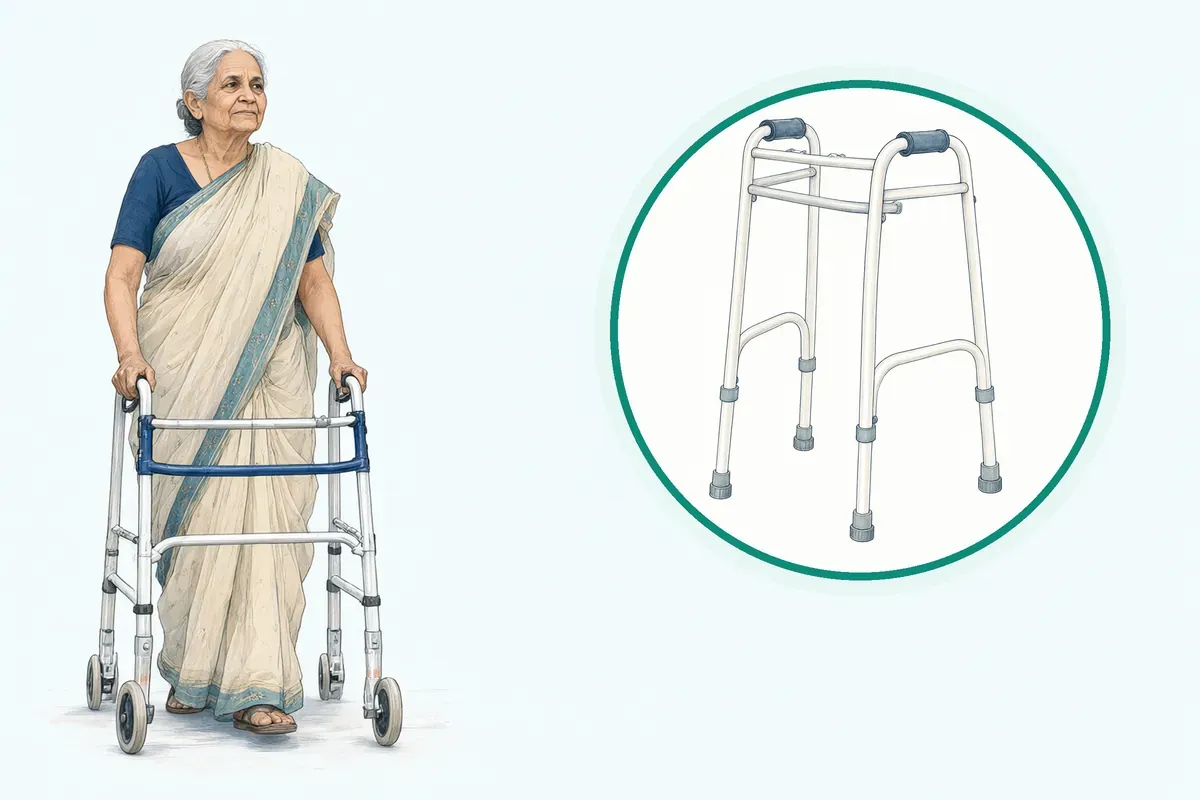
Progressive exercises to improve steadiness and walking aid use for fall prevention.
-
Strength and Conditioning
Resistance exercises to counter sarcopenia and support functional independence.
-
Joint Protection Strategies
Techniques to manage osteoarthritis pain and maintain joint mobility.
-
Cardiopulmonary Rehabilitation
Endurance training for heart and lung health to support daily activity.
Why patients trust us
- 1991 Serving Jaipur for 35 years
- NABH Accredited hospital
- 1 Physiotherapy consultants
- 24×7 Emergency, ICU and ambulance
- 25 Cashless schemes and insurers
What research shows about exercise for older adults
-
Up to 50% reduction in fall rate
Community-dwelling older adults doing strength, balance, and aerobic training saw fall rates drop by up to half.
-
Improved muscle strength and performance
Moderate quality evidence confirms exercise interventions improve muscle strength and physical performance in older people.
-
Fewer injurious falls with multi-component training
Multi-component exercise reduced medically-attended injurious falls and improved mobility and balance.
If it is left untreated
Without intervention, muscle loss and poor balance progress. Falls often lead to fractures, hospital admission, and extended rehab. Frailty raises the risk of losing independence and early mortality.
Life with better strength and balance
Most people feel steadier on their feet, manage daily tasks with less help, and worry less about falling.
-
Walk with confidence
Most people report better balance and less fear of falling during daily walks.
-
Manage stairs and chairs
Leg strength improves so climbing stairs and rising from a chair become easier.
-
Stay independent longer
Regular exercise helps maintain the ability to dress, bathe, and cook without help.
-
Less joint pain with movement
Arthritis stiffness often eases with guided joint protection and strengthening.

Frequently asked questions
Questions patients ask about geriatric physiotherapy
What does geriatric physiotherapy involve?
In short
Geriatric physiotherapy at Jaipur Hospital involves structured exercise programmes designed for older adults to improve strength, balance, mobility and confidence. Sessions focus on fall prevention, walking aid progression, sarcopenia management, osteoarthritis joint protection and cardiopulmonary endurance. Each plan is tailored after a detailed assessment of your current function and medical history.
In detail
The programme uses four main techniques. Balance and gait training reduces fall risk by improving static and dynamic stability.
Strength and conditioning targets sarcopenia, the age-related loss of muscle mass and function that starts from around 40 years and is linked to falls, frailty and loss of independence. Joint protection strategies help manage osteoarthritis pain and maintain joint mobility.
Cardiopulmonary rehabilitation builds endurance for heart and lung health.
Evidence shows multi-component exercise including lower limb strengthening, balance work and aerobic training can reduce fall rates by up to 50% in community-dwelling older adults, improve muscle strength, physical performance and cognitive function, and slow functional decline.
A common belief
Many people think it is just gentle stretching.
What actually happens
In fact, evidence shows supervised resistance exercise and multi-component training are needed to actually rebuild muscle, improve balance and cut fall risk by up to half. Simple walking alone is not enough.
Your next step at Jaipur Hospital
A typical course runs for 8 to 12 weeks with sessions of 45 to 60 minutes each. Functional gains are usually seen within this period, after which ongoing maintenance is recommended.
The physiotherapist will set the frequency based on your assessment, often two to three times per week initially. You can attend as an outpatient with no hospital stay required. To begin, book a consultation at Jaipur Hospital where the team will design your personalised programme.
What happens during the first session?
In short
During the first geriatric physiotherapy session at Jaipur Hospital, the physiotherapist conducts a comprehensive assessment lasting 45 to 60 minutes. This includes reviewing your medical history, medications, previous falls, and current difficulties. Physical tests measure strength, balance, gait speed, joint range, and functional tasks like sit-to-stand and walking. Goals are set jointly based on your priorities and the findings.
In detail
The assessment follows a structured approach. Frailty and sarcopenia screening identifies vulnerability to stressors and muscle loss. Balance evaluation uses static, dynamic and reactive tests to pinpoint fall risk. Gait analysis looks at step length, symmetry and aid use.
Strength testing focuses on lower limbs, which evidence shows are critical for mobility and fall prevention. Joint examination assesses osteoarthritis impact. Cardiopulmonary screening checks endurance and safety for exercise.
The WHO recommends 150 minutes of moderate activity weekly for older adults, and clinical guidelines emphasise multi-component training including gait, resistance and balance exercises.
Your programme is then designed using the four techniques: balance and gait training, strength and conditioning, joint protection strategies, and cardiopulmonary rehabilitation. The physiotherapist explains the plan, expected timeline of 8 to 12 weeks for functional gains, and home exercises to reinforce progress.
A common belief
Many expect to start exercising immediately.
What actually happens
The first visit is primarily evaluation. Without proper baseline measures, the programme cannot be targeted to your specific deficits in sarcopenia, balance or joint function, which evidence shows is essential for reducing falls and improving function.
Your next step at Jaipur Hospital
Wear comfortable clothing and supportive footwear. Bring any walking aid, medical reports, imaging, and a list of medications. An attendant may accompany you. The session is outpatient with no hospital stay.
After assessment, you receive a written home exercise sheet and a schedule for supervised sessions, typically two to three times per week initially.
How soon should I notice an improvement from geriatric physiotherapy?
In short
At Jaipur Hospital, functional gains from geriatric physiotherapy are typically seen in 8 to 12 weeks of regular sessions. Each session lasts 45 to 60 minutes and is done as an outpatient. Early changes such as better confidence while walking or less stiffness may appear sooner, but measurable strength and balance improvements usually need the full period.
In detail
Evidence from randomised trials shows that older adults who exercise three times a week for six months improve muscle strength, physical performance, and cognitive function.
Multi-component programmes that combine balance, gait, and resistance training reduce fall rates by up to 50% in community-dwelling adults when maintained. Resistance training alone improves muscle mass in some studies and physical performance in all three studies that measured it.
The 8 to 12 week window reflects the time needed for neuromuscular adaptation and muscle protein synthesis in older adults.
A common belief
Some expect instant relief, but muscle and nerve adaptation takes time, especially after 60.
What actually happens
Skipping sessions or doing only light activity slows the process.
Your next step at Jaipur Hospital
Your therapist will set short-term goals at the first visit and review them every two to three weeks. You will repeat simple tests such as timed walking, chair stands, or balance holds to track change. If progress is slower than expected, the programme is adjusted.
Could several medical conditions or medicines be contributing to my balance or mobility problem?
In short
At Jaipur Hospital, yes, multiple medical conditions and medicines often contribute to balance and mobility problems in older adults. Conditions such as arthritis, stroke after-effects, heart or lung disease, diabetes, and neurological disorders can each reduce strength, sensation, or coordination. Medicines that lower blood pressure, cause drowsiness, or affect alertness also increase fall risk.
In detail
Frailty is a multisystem decline that raises susceptibility to stressors. Inflammageing links chronic inflammation to cardiovascular disease, kidney disease, diabetes, cancer, depression, dementia, and sarcopenia. Sarcopenia itself is associated with falls, functional decline, frailty, and mortality.
Polypharmacy is common in this group and several drug classes impair balance or cause orthostatic hypotension. Guidelines recommend reviewing medications as part of fall prevention. A comprehensive geriatric assessment identifies which factors are modifiable.
Your next step at Jaipur Hospital
Your physiotherapist will ask for a full medical and drug history at the first visit. If a medicine review is needed, the therapist will liaise with your doctor. Adjustments to therapy are made once the medical picture is clear.
How can I decide whether to seek advice about fall prevention exercise?
In short
Jaipur Hospital recommends seeking advice if you are aged 65 or older, have fallen in the past year, feel unsteady when walking, or take medicines that affect balance. A quick screen by a physiotherapist can clarify your risk.
In detail
One-third of adults over 65 fall each year, and falls are the second leading cause of unintentional injury deaths worldwide. Risk factors include muscle weakness, gait and balance deficits, polypharmacy, vision problems and home hazards.
Clinical guidelines from the American and British Geriatrics Societies advise that fall-risk assessment should include gait, strength and balance evaluation. Physiotherapy screening uses simple tests such as the Timed Up and Go, single-leg stance and gait speed.
If you answer yes to any of the following — recent fall, fear of falling, difficulty rising from a chair, or unsteady walking — a formal assessment is warranted. Early intervention with multi-component exercise reduces fall rates by up to 50 percent and improves mobility.
A common belief
Many wait until a serious fall happens.
What actually happens
Guidelines say early screening — before injury — lets you start targeted exercise that cuts fall risk by half. A simple clinic test takes minutes but can prevent months of rehab.
Your next step at Jaipur Hospital
Call Jaipur Hospital to book a 45-to-60-minute outpatient assessment. The therapist will review medical history, check strength and balance, and discuss a plan. Typical session cost in India ranges from ₹800 to ₹1,500. No anaesthesia or hospital stay is needed.
How will the therapist adapt treatment to my home, work, and activity goals?
In short
At Jaipur Hospital, the therapist begins by asking about your daily routine — stairs at home, walking to the market, temple visits, or light household chores. The 45 to 60 minute assessment includes a home environment review and functional goal setting. Exercises are then chosen and progressed to match those specific tasks.
In detail
Evidence supports individually tailored interventions that preserve independence, physical function and cognition. Multi-component programmes that mimic real-life demands — such as step-ups for stairs, weighted carries for shopping, or uneven surface walking for outdoor paths — improve carryover to daily activities.
The therapist adjusts load, complexity and support level as you improve. For osteoarthritis, joint protection strategies are woven into task practice. For post-stroke rehab, the affected side is integrated into functional patterns. This goal-directed approach increases adherence and meaningful outcomes.
A common belief
Generic gym routines often miss the specific balance and strength patterns needed for your environment.
What actually happens
Task-specific training builds the exact control and confidence you need where you live.
Your next step at Jaipur Hospital
You receive a written home plan with photos and clear repetitions. The therapist may suggest simple home modifications like grab rails or a shower chair. Progress is reviewed every two to four weeks. Session cost typically ranges from ₹800 to ₹1,500.
Who is likely to benefit from this therapy?
In short
Older adults who have experienced falls, feel unsteady while walking, have osteoarthritis joint pain, are recovering from a stroke, or notice declining strength and endurance are likely to benefit from geriatric physiotherapy at Jaipur Hospital. The therapy also helps those with sarcopenia, frailty, or cardiopulmonary conditions that limit daily activities and independence.
In detail
Frailty and sarcopenia increase with age and are linked to falls, functional decline, hospitalisation and mortality. Evidence shows one-third of adults over 65 fall each year, and half of those fall repeatedly.
Sarcopenia prevalence ranges from 1% to 29% in community populations and is higher in hospital settings. Inflammageing, a chronic low-grade inflammation, drives both frailty and sarcopenia and raises risk for cardiovascular disease, diabetes, kidney disease, dementia and premature death.
Physical inactivity is a modifiable risk factor. Supervised multi-component exercise improves muscle strength, physical performance, balance and mobility, and reduces fall rates and fall-related injuries. The WHO recommends at least 150 minutes of moderate activity weekly for adults over 65. Clinical guidelines recommend gait, resistance and balance training for fall prevention.
A common belief
It is not only for those who have already fallen.
What actually happens
Muscle loss starts around age 40 and accelerates with inactivity. Waiting for a fall means losing precious independence. Early intervention preserves function and reduces future hospitalisation risk.
Your next step at Jaipur Hospital
If you are over 65 and have had a fall, feel unsteady, have joint pain, or find daily tasks harder, you should consider an assessment. The physiotherapist will evaluate your strength, balance, gait and medical history to decide suitability. Sessions are outpatient, 45 to 60 minutes each, typically over 8 to 12 weeks for initial gains.
How long does a session last?
In short
Each geriatric physiotherapy session at Jaipur Hospital lasts 45 to 60 minutes. This duration allows time for warm-up, the main exercise component targeting your specific goals, cool-down, and review of home exercises. The session length is consistent whether you are working on balance, strength, joint mobility or cardiopulmonary endurance.
In detail
The 45 to 60 minute structure aligns with evidence-based protocols for older adults. Research shows effective fall prevention programmes use multi-component exercise sessions of sufficient dose to improve lower extremity strength, balance and mobility.
The WHO recommends at least 150 minutes of moderate-intensity activity weekly for adults over 65. Supervised sessions typically occur two to three times per week, contributing to this weekly target.
Within each session, time is allocated for progressive resistance training, which evidence shows improves muscle mass and strength in sarcopenia, balance exercises that reduce injurious fall rates, and aerobic conditioning for cardiopulmonary health.
The physiotherapist adjusts intensity and rest periods based on your response, ensuring safety while providing adequate stimulus for adaptation. Shorter sessions may not provide enough volume for meaningful gains in muscle and balance.
A common belief
Some think 20 minutes is enough.
What actually happens
Evidence shows effective fall prevention and sarcopenia management need sufficient exercise dose. Sessions under 45 minutes often fail to provide the volume needed for muscle adaptation and balance improvement, especially when multiple components are combined.
Your next step at Jaipur Hospital
Sessions are outpatient with no hospital stay required. Most patients attend two to three times per week for 8 to 12 weeks to achieve initial functional gains, then transition to a maintenance schedule.
The exact frequency and total number of sessions depend on your assessment findings and progress. Wear comfortable clothes and bring water. To start, book a consultation at Jaipur Hospital where the team will confirm the schedule for your needs.
How will progress be measured during geriatric physiotherapy?
In short
At Jaipur Hospital, progress in geriatric physiotherapy is measured using standardised functional tests at regular intervals. Your physiotherapist will record walking speed, timed up-and-go, grip strength, balance scores, and joint range of motion. These objective measures show whether strength, balance, and mobility are improving over the 8 to 12 week period when functional gains typically appear.
In detail
Evidence supports the use of lower extremity strengthening exercises that reveal significant effects on strength, balance outcomes, and mobility. Balance exercises reduce the rate of injurious falls and improve static, dynamic, and reactive balance as well as lower extremity strength and mobility.
Multi-component exercise training reduces medically-attended injurious falls and fallers, incidence of falls, and fall-related emergency department visits while improving mobility, balance, and lower extremity strength. Tracking these metrics lets the therapist adjust the programme to your response.
A common belief
Many people rely only on how they feel, but objective measures detect small changes early and guide safe progression.
What actually happens
Without measurement, it is hard to know if the programme is working or needs adjustment.
Your next step at Jaipur Hospital
Measurements are taken at the first session, then typically every two to four weeks. You will receive a simple summary of your scores and what they mean for daily activities such as climbing stairs or rising from a chair. The therapist shares findings with your doctor if needed.
How can geriatric physiotherapy be adapted for frailty, memory problems, or reduced mobility?
In short
At Jaipur Hospital, geriatric physiotherapy is adapted for frailty, memory problems, or reduced mobility by using shorter bouts, simpler instructions, visual cues, and support from an attendant. The therapist may choose seated or supported exercises, reduce resistance, and focus on functional tasks like sit-to-stand or safe turning. Progression is slower and closely monitored to match your capacity.
In detail
Evidence supports individually tailored interventions that preserve independence, physical function, and cognition. The WHO recommends that older adults over 65 perform moderate-intensity physical activity for at least 150 minutes weekly, adapted to ability.
Multi-component exercise training reduces medically-attended injurious falls and improves mobility, balance, and lower extremity strength even in frail older adults. Balance exercises reduce the rate of injurious falls and improve static, dynamic, and reactive balance. Supervised resistance exercise is recommended for sarcopenia, with intensity adjusted for frailty severity.
A common belief
Standard gym programmes often overwhelm frail or cognitively impaired older adults.
What actually happens
Evidence shows that individually tailored, supervised exercise preserves function and reduces falls even in severe frailty, whereas generic exercise may increase risk.
Your next step at Jaipur Hospital
Sessions remain 45 to 60 minutes but may include more rest breaks. The attendant is taught safe assistance techniques for home practice. Cognitive strategies such as repetition, demonstration, and written cues help memory-impaired patients. The therapist reviews the plan every 1 to 2 weeks.
FAQ library
Questions and answers about geriatric physiotherapy
When you contact us
Start your balance assessment today
Contact Jaipur Hospital to book a physiotherapy assessment in the OPD and get a clear plan with a cost estimate.
- A consultation with a physiotherapist in the OPD
- Your scans and reports reviewed, with tests done in-house if you need them (laboratory, X-ray and imaging)
- Your options explained in plain words, including whether you need surgery at all
- A cost estimate before you decide
- Help with cashless treatment under RGHS, MAA Yojana, CGHS and empanelled insurers and TPAs
- Follow-up visits after your treatment
Overview
Geriatric Physiotherapy: what to know
What geriatric physiotherapy treats and how it helps
- Sarcopenia
- Age-related muscle loss starting around 40 years
- Inflammageing
- Chronic low-grade inflammation linked to many diseases
- Frailty
- Low body reserves so a minor illness causes a large decline
Geriatric physiotherapy at Jaipur Hospital supports older adults who are losing strength, balance or mobility. Age-related muscle loss, called sarcopenia, often begins around 40 years and speeds up in later life. It means muscles shrink and work less well because the nerves that control them drop off and are not fully replaced.
At the same time, many older people develop a low-grade, chronic inflammation known as inflammageing. This inflammation is linked to frailty, heart disease, diabetes, kidney disease, cancer, depression and dementia. Frailty is a state where the body's reserves are low, so a minor illness or a fall can cause a large, sudden decline in health. Sarcopenia and frailty often overlap and both raise the risk of falls, disability, hospital admission and death.
Our physiotherapy team works on the problems that drive these risks: muscle weakness, poor balance, stiff joints and low endurance. The goal is to keep you independent in daily tasks such as walking, climbing stairs, using the toilet and dressing. Sessions are outpatient, last 45 to 60 minutes, and do not need anaesthesia.
Functional gains often appear within 8 to 12 weeks of regular attendance, after which many people continue with a maintenance programme.
Symptoms and warning signs that need same-day care
Common reasons people seek geriatric physiotherapy include:
- Feeling unsteady while walking
- Needing furniture or walls for support
- Difficulty rising from a chair or bed
- Joint pain that limits movement
- Getting tired quickly with light activity
You may notice your walking speed has slowed, your steps have become shorter, or you have had a near-fall or an actual fall in the past year. One-third of adults aged 65 or over fall each year, and half of them fall repeatedly. Forty percent of community-dwelling older adults experience a fall annually.
Seek medical care the same day if you have:
- A fall with head injury, loss of consciousness, severe pain, or inability to bear weight on a limb.
- Sudden weakness on one side of the body, slurred speech, or facial drooping (possible stroke).
- Chest pain or sudden shortness of breath.
- A joint that looks deformed, is very hot and swollen, or locks in one position.
- New confusion or drowsiness after a fall.
These signs may mean a fracture, stroke, heart problem or infection that needs urgent hospital assessment before physiotherapy can continue.
Causes and who is at higher risk
Avoid
- Aged 65 or older
- Diagnosed with sarcopenia or frailty
- Multiple medications causing dizziness or drowsiness
Muscle loss and frailty build up over a lifetime. Genetic factors set a baseline, but lifestyle across the life course has a strong influence. Physical inactivity is an independent contributor to falls and fall-related injuries. Poor diet, sedentary habits, multiple long-term conditions (comorbidities) and low socioeconomic position all raise the risk of frailty.
Inflammageing — driven by central obesity, gut permeability changes, microbiota shifts, cellular senescence, NLRP3 inflammasome activation, mitochondrial oxidative stress, immune dysregulation and chronic infections — accelerates the decline.
You are at higher risk if you:
- Are aged 65 or older.
- Have been diagnosed with sarcopenia or frailty.
- Have had a fall or near-fall in the last 12 months.
- Live with osteoarthritis, stroke after-effects, heart or lung disease, diabetes, or Parkinson's disease.
- Take multiple medications that can cause dizziness or drowsiness.
- Spend most of the day sitting or lying down.
- Have unintentional weight loss or low protein intake.
The good news is that these risk factors are modifiable and preventable through exercise.
How geriatric physiotherapy needs are diagnosed
- hand-grip dynamometry Muscle strength
- timed up-and-go test Walking speed
- single-leg stance Balance
- six-minute walk test Endurance
At Jaipur Hospital, assessment starts with a detailed history and physical examination in the physiotherapy OPD. Your therapist will ask about falls, mobility, daily activities, medicines, and other health conditions. They will measure muscle strength (often with hand-grip dynamometry), walking speed, balance (such as the timed up-and-go test or single-leg stance), and endurance (for example, a six-minute walk test).
Sarcopenia is diagnosed using criteria of low muscle mass and low muscle function — either low strength or low physical performance. Frailty screening is recommended in both community and geriatric settings.
If needed, your doctor may order:
- Blood tests (inflammatory markers, vitamin D, thyroid, kidney function)
- A DEXA scan for muscle mass and bone density
- Imaging of a painful joint
The assessment identifies the specific impairments — weakness, balance deficit, joint stiffness, low endurance — so the programme can be tailored to you. Individually tailored interventions that preserve independence, physical function and cognition are the standard we follow.
Non-surgical treatment options and when surgery is considered
Balance and gait training
- Fall prevention and walking-aid progression
Strength and conditioning
- Sarcopenia management and functional independence
Joint protection strategies
- Osteoarthritis pain management and mobility
Geriatric physiotherapy is the primary non-surgical treatment for sarcopenia, frailty, balance impairment and osteoarthritis-related disability. Supervised resistance exercise is recommended for individuals with sarcopenia. The WHO advises older adults to do moderate-intensity physical activity for at least 150 minutes each week. Clinical guidelines for fall prevention recommend gait training, resistance exercise and balance exercises.
At Jaipur Hospital we use four main technique groups, chosen and progressed by your therapist:
- Balance and gait training: fall prevention and walking-aid progression.
- Strength and conditioning: sarcopenia management and functional independence.
- Joint protection strategies: osteoarthritis pain management and mobility.
- Cardiopulmonary rehabilitation: endurance training for cardiac and respiratory health.
Evidence from randomised controlled trials in community-dwelling adults aged 65 and over shows that lower-limb strengthening, balance exercises and multi-component programmes improve lower-extremity strength, balance, mobility and reduce falls and fall-related injuries. Multi-component exercise reduces medically-attended injurious falls, fallers, fall incidence, fall-related emergency visits, and improves mobility, balance and strength.
Exercise three times a week for six months has also been linked to better cognitive function and a general slowing of the ageing process. Resistance training alone improved muscle mass in two of four studies, and physical performance improved in all three studies that measured it. A high-intensity, multi-purpose programme over 18 months improved muscle mass, strength and physical performance.
Surgery is not a treatment for sarcopenia or frailty itself. It may be advised for a specific structural problem that limits physiotherapy — for example, a fractured hip, a severely arthritic joint that needs replacement, or a spinal compression causing nerve symptoms. Your surgeon and physiotherapist will discuss this with you if it becomes relevant. For the vast majority, a consistent, supervised exercise programme remains the cornerstone of care.
Preparing for geriatric physiotherapy sessions
Do
- Bring a list of all medicines
Avoid
- No fasting or special preparation needed
Before your first session at Jaipur Hospital, your physiotherapist will review your medical history and any recent test reports. Bring a list of all medicines you take, including those for blood pressure, diabetes, heart conditions or blood thinners. Your surgeon or physician may advise changes to the timing of certain medicines on session days.
Wear loose, comfortable clothing and flat, non-slip shoes. If you use a walking stick or walker, bring it with you. An attendant can stay with you during the session if you wish. No fasting or special preparation is needed because anaesthesia is not used. Sessions are outpatient and last 45 to 60 minutes.
How geriatric physiotherapy is done at Jaipur Hospital
On the day of your session, you will check in at the physiotherapy department. Your therapist will assess your strength, balance, walking pattern and joint mobility.
Based on this assessment, they will choose from several evidence-based techniques.:
- Balance and gait training focuses on fall prevention and walking aid progression
- Strength and conditioning addresses sarcopenia management and functional independence
- Joint protection strategies help with osteoarthritis pain management and mobility
- Cardiopulmonary rehabilitation builds endurance for cardiac and respiratory health
Your therapist will explain each exercise, guide you through it safely, and adjust the intensity as you progress. The programme is tailored to your goals and reviewed at each visit.
Risks and possible complications of geriatric physiotherapy
- Mild muscle soreness or fatigue
- Usually settles within a day
- Serious adverse events are rare
- Falls during supervised sessions are rare
Geriatric physiotherapy is generally safe. The most common side effect is mild muscle soreness or fatigue after a session, which usually settles within a day. In studies, exercise interventions improve muscle strength and physical performance with moderate quality evidence. Resistance training alone improved muscle mass in two of four studies.
Physical performance improved with resistance training versus control in all three studies assessing this parameter. A high-intensity multipurpose exercise programme over 18 months improved muscle mass, muscle strength and physical performance versus control. Serious adverse events such as falls during supervised sessions are rare. Your therapist monitors vital signs and exertion levels throughout.
If you have uncontrolled blood pressure, recent heart problems or severe joint inflammation, the therapist may modify or pause certain exercises until your doctor clears you.
Recovery and aftercare after geriatric physiotherapy
- After each session Return to usual activities; some tiredness for a few hours
- 8 to 12 weeks Functional gains typically appear with regular attendance
- Ongoing Maintenance sessions may be advised to keep benefits
After each session you can return to your usual activities. Some people feel tired for a few hours; rest and adequate hydration help. Functional gains typically appear over 8 to 12 weeks of regular attendance. Your therapist will give you a home exercise plan to practise between visits. Stick to the prescribed frequency and intensity.
If you notice new or worsening pain, dizziness, shortness of breath, or a fall at home, contact the hospital. The physiotherapy department can be reached through the main hospital numbers. Ongoing maintenance sessions may be advised to keep the benefits. The World Health Organization recommends that older adults do at least 150 minutes of moderate-intensity physical activity each week.
Results of geriatric physiotherapy in studies
In studies of community-dwelling older adults, exercise programmes that combine strength, balance and aerobic training reduce falls by up to 50 percent when training is maintained. Systematic reviews and meta-analyses conclude that exercise as a stand-alone intervention significantly reduces the rate of falls and the risk of falling.
Lower extremity strengthening exercises show significant effects on lower extremity strength, balance outcomes and mobility. Balance exercises reduce the rate of injurious falls, improve static, dynamic and reactive balance, lower extremity strength and mobility. Multi-component exercise training reduces medically-attended injurious falls and fallers, incidence of falls, fall-related emergency department visits, and improves mobility, balance and lower extremity strength.
Physical exercises are effective in improving balance, lower extremity strength, mobility, and reducing falls and fall-related injuries. Older adults who exercised three times a week for six months showed improvements in global and executive cognitive functions as well as a general deceleration of the ageing process. Individual results vary; your therapist will discuss realistic goals with you.
Cost and insurance for geriatric physiotherapy in Jaipur
A typical session at Jaipur Hospital costs between ₹800 and ₹1,500. The exact amount depends on the type of session, the techniques used, and the duration. Prices may vary if specialised equipment or a longer session is needed. Ask the hospital for an estimate before you start.
Jaipur Hospital accepts RGHS, MAA Yojana, CGHS and a panel of private insurers and TPAs. Coverage for physiotherapy varies by scheme and policy; check with your insurer or the hospital's insurance desk about pre-authorisation and any limits on the number of sessions. The hospital is a NABH-accredited multispeciality hospital with in-house pharmacy, diagnostic laboratory and imaging, and 24-hour emergency services.