

Physiotherapy · Jaipur Hospital
Home and Tele Physiotherapy in Jaipur
When travel is difficult after surgery or illness, Jaipur Hospital offers clinical assessment, structured exercises, and a home-based recovery plan.
- Serving Jaipur since 1991 (35 years)
- NABH accredited
- 24×7 emergency & ICU
- Cashless: RGHS, MAA Yojana, CGHS + 22 insurers
- Session length
- 45 to 60 minutes per session
- Anaesthesia
- Not needed
- Recovery
- Continuity of care at homeprogress tracked via app or video review
- Price
- ₹1,000 to ₹2,500 per home visit₹800 to ₹1,500 per tele-sessiontypical range in India; ask us for an estimate
Difficulty travelling for therapy
Reaching the hospital for regular therapy is hard
After a surgery or illness, travelling to an OPD multiple times a week can cause pain and exhaustion. Finding an attendant to travel with you and managing traffic delays often leads to skipped therapy sessions.
-
Pain during travel
Bumpy roads and long car rides can increase soreness and fatigue after surgery or injury.
-
Dependence on attendants
Family members often must take leave from work to arrange transport and assist you to clinic visits.
-
Missed sessions
When travelling becomes too exhausting, patients often postpone appointments, disrupting regular rehabilitation schedules.
Lockdowns, distance, and transport challenges have frequently interrupted face-to-face physiotherapy provision.
Why Jaipur Hospital
You may worry about the physical strain of travel, the disruption to your family's routine, and whether you can recover properly at home.
Your care plan
Your first steps with us
- 1 Book your initial clinical consultation online or via telephone.
- 2 Discuss your medical history and mobility goals with a physiotherapist.
- 3 Receive guided home visits or structured video sessions each week.
- 4 Review your physical recovery progress through regular follow-up evaluations.
How home and tele physiotherapy is provided
Rehabilitation sessions typically last 45 to 60 minutes without anaesthesia. Your physiotherapist will discuss several delivery options to support your recovery at home, tracking progress through structured exercise and regular review.
-
Home Visit Therapy
Your therapist brings portable equipment to your home and conducts a domestic hazard assessment.
-
Video Consultation (Tele-rehab)
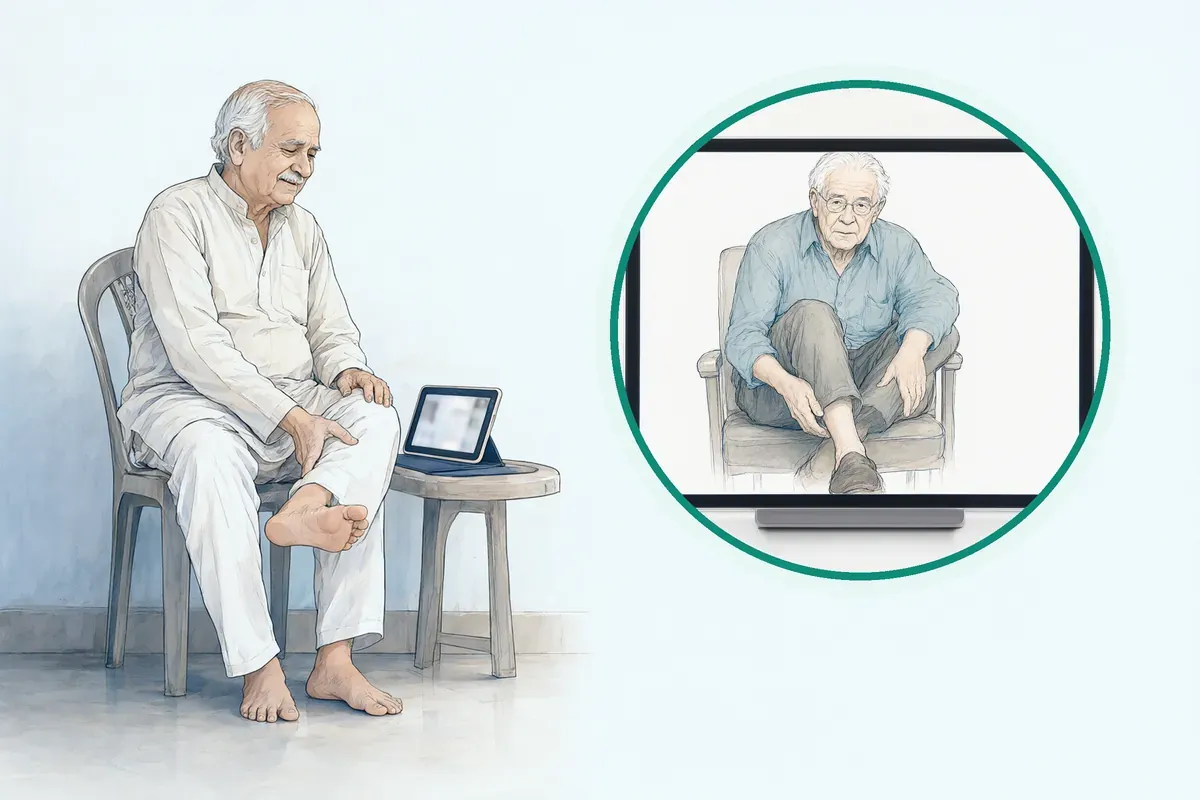
Your therapist conducts real-time guided exercises, education, and movement progression across a secure platform.
-
Remote Monitoring
Your therapist tracks your movement through app-based exercise logs or wearable sensors reviewed weekly.
-
Caregiver Training
Your therapist provides hands-on coaching to family attendants on safe transfers, positioning, and routine exercises.
Why patients trust us
- 1991 Serving Jaipur for 35 years
- NABH Accredited hospital
- 1 Physiotherapy consultants
- 24×7 Emergency, ICU and ambulance
- 25 Cashless schemes and insurers
Clinical evidence on home and tele rehabilitation
-
93% completion rate
In clinical trials, patients receiving telerehabilitation achieved a 93% completion rate compared to 70% for in-person rehabilitation.
-
No serious adverse events
Systematic evaluation of remote rehabilitation programmes noted no serious trial-related adverse events during patient monitoring.
-
Comparable V̇O2 max at 12 weeks
A clinical trial showed aerobic exercise capacity after remote cardiac rehabilitation was comparable to clinic-based rehabilitation at 12 weeks.
If it is left untreated
Reduced or delayed access to health care services can have detrimental effects on health and well-being. Missing planned rehabilitation may delay physical recovery, prolong joint stiffness, and reduce overall muscle strength.
Life after starting home therapy
Patients usually experience steady progress in daily activities and functional independence within their familiar home environment.
-
Convenient home routine
Most patients complete their prescribed therapy sessions without the stress and physical exhaustion of city transit.
-
Supported family attendants
Attendants typically learn safe assistance techniques, helping you perform daily functional movements more securely.
-
Consistent movement progress
Patients usually maintain steady exercise habits, helping restore mobility and balance over the weeks of care.

Frequently asked questions
Questions patients ask about home and tele physiotherapy
What does home and tele physiotherapy involve?
In short
Home and tele physiotherapy from Jaipur Hospital brings guided rehabilitation to your home through therapist visits or secure video sessions. A qualified physiotherapist provides exercise programmes, education and caregiver training using portable equipment or a digital platform. No hospital travel is required.
In detail
The service uses two main techniques. Home Visit Therapy involves a therapist coming to your residence with portable equipment and performing a home hazard assessment. Video Consultation (Tele-rehab) delivers real-time guided exercise and progression via a secure platform.
Both approaches can include Remote Monitoring with wearable sensors or app-based logs reviewed weekly, and Caregiver Training for family members on transfers, positioning and exercises.
Evidence shows telerehabilitation can be comparable to in-person rehabilitation for conditions such as osteoarthritis, low-back pain, hip and knee replacement, multiple sclerosis, and cardiac or pulmonary rehabilitation. Real-time telerehabilitation is effective in improving physical function and appears comparable to conventional delivery for musculoskeletal conditions.
A common belief
Many people think rehabilitation only works in a clinic.
What actually happens
Studies show telerehabilitation can achieve similar improvements in physical function for conditions like knee replacement, back pain and stroke recovery.
Your next step at Jaipur Hospital
You can contact Jaipur Hospital to discuss your needs and check eligibility. The team will arrange an initial assessment, either at home or by video, to design a programme. Sessions typically last 45 to 60 minutes. Costs range from ₹1,000 to ₹2,500 per home visit and ₹800 to ₹1,500 per tele-session.
What happens during the first session of home and tele physiotherapy?
In short
The first session of home and tele physiotherapy at Jaipur Hospital is a comprehensive assessment lasting 45 to 60 minutes. The therapist reviews your medical history, discusses goals, evaluates movement, strength, balance and function, and performs a home hazard assessment if visiting. A personalised exercise plan is created and demonstrated. Caregiver training begins if family members are present.
In detail
Home-based pulmonary rehabilitation typically starts with one home visit by a physiotherapist to establish exercise goals, assess technique and supervise the first session. The therapist uses structured modules to explore motivation and build commitment. Exercise goals are documented in a diary.
For tele-rehab, the first video consultation follows a similar structure: history, movement assessment, goal setting and prescription of initial exercises using household items like chairs, steps and water bottles. Remote monitoring setup may include wearable sensors or app-based logs.
The therapist explains the programme frequency, progression criteria and how to report adverse symptoms. Evidence supports comparable outcomes between telerehabilitation and in-person rehabilitation for various conditions.
A common belief
Many expect just a chat, but the first session is active — you will move, be assessed and start exercises.
What actually happens
The therapist sets up tracking via app or sensors and explains how to progress safely.
Your next step at Jaipur Hospital
Have medical reports, a list of medications and any equipment ready. Wear loose clothing. Ensure a stable internet connection and a quiet, well-lit space for video sessions. The therapist will confirm the schedule and contact method for follow-up. To book your first session, call Jaipur Hospital on 0141-2551500.
How soon should I notice an improvement with home or video physiotherapy?
In short
Many patients report feeling easier movement or less stiffness within two to four weeks of consistent home or video physiotherapy. Jaipur Hospital tracks progress weekly via app logs or video review. The exact timeline depends on your condition, surgery type, and how often you complete the prescribed sessions.
In detail
Evidence shows telerehabilitation produces comparable improvements in physical function and quality of life to in-person care for conditions such as osteoarthritis, joint replacement, low-back pain, and stroke.
Completion rates for home-based programmes are high — around 91% in one pulmonary rehabilitation study — and higher adherence links to earlier gains. Your therapist sets short-term goals at the first visit and reviews them each week.
Functional measures like walk distance, range of movement, or step count are recorded in the app so you can see the trend.
- Completion rates for home-based programmes are high — around 91% in one pulmonary rehabilitation study — and higher adherence links to earlier gains.
A common belief
A common mistake is expecting daily dramatic changes.
What actually happens
Rehab works like compound interest — small, consistent gains add up. Missing sessions slows the curve.
Your next step at Jaipur Hospital
If no measurable change appears after four to six weeks, the therapist reassesses the exercise dose, technique, or frequency and may involve your surgeon. Most programmes run eight to twelve weeks with weekly check-ins.
Is home or video-based therapy suitable for my current needs?
In short
Home or video physiotherapy is suitable if you have mobility limits, live far from the hospital, are recovering from surgery, or prefer supervised exercise in your own environment. Jaipur Hospital offers both options — therapist home visits with portable equipment and hazard assessment, or secure video consultations with real-time guidance — so you can choose the format that fits your situation.
In detail
Evidence shows telerehabilitation is effective and comparable to in-person care for musculoskeletal, cardiac, pulmonary, and neurological conditions. Patients in remote areas, those with transport difficulty, or those shielding from infection benefit most.
The first session includes a detailed assessment via video or home visit to confirm safety — checking space, flooring, seating, and caregiver availability.
If the assessment reveals a need for hands-on manual therapy, specialised equipment, or close vital-sign monitoring that cannot be done remotely, the therapist will recommend clinic-based sessions instead.
A common belief
People assume they need a clinic gym.
What actually happens
Research shows home-based rehab achieves similar gains for many conditions. The key is a proper first assessment to confirm safety.
Your next step at Jaipur Hospital
Contact the physiotherapy department to describe your condition, home set-up, and goals. The team will advise whether a home visit, video session, or hybrid plan is appropriate. Sessions last 45 to 60 minutes. Typical cost ranges are ₹1,000 to ₹2,500 per home visit and ₹800 to ₹1,500 per tele-session.
How can I decide whether to seek advice about a home physiotherapy visit?
In short
Consider a home physiotherapy visit from Jaipur Hospital if you have difficulty travelling to the hospital due to mobility limits, recent surgery, severe pain, or lack of transport. It is also suitable if you prefer to practise exercises in your own environment where you will use them daily. The therapist brings portable equipment and conducts a home hazard assessment during the first session.
In detail
Home visits are designed for patients who cannot easily attend outpatient physiotherapy. Evidence shows that reduced or delayed access to health care services can have detrimental effects on health and well-being. Patients in remote areas or those with transport barriers benefit from telerehabilitation technology.
A home visit allows the therapist to see your actual living space, tailor exercises to your furniture layout, and train caregivers on safe transfers and positioning (Technique: Caregiver Training). The session lasts 45 to 60 minutes and includes progress tracking via app or video review.
If you are unsure, a brief tele-consultation can help the therapist decide if a home visit is the right next step.
A common belief
Some people wait until they can travel, but delaying rehab can slow recovery.
What actually happens
A home visit starts care earlier and trains your family to help you safely.
Your next step at Jaipur Hospital
To decide, ask yourself: Can I travel safely to the hospital two to three times a week? Do I have a caregiver who can assist at home? Is my home environment the main place I need to function? If you answer yes to any of these, a home visit may suit you.
How will the therapist adapt treatment to my home, work, and activity goals?
In short
The therapist from Jaipur Hospital tailors your programme by first understanding your daily routine, home layout, work demands, and personal activity goals. They then select exercises, pacing strategies, and assistive techniques that fit those real-life contexts, whether you need to climb stairs at home, sit at a desk for work, or return to gardening or walking in the park.
In detail
Individualised treatment design is preferred in rehabilitation. The therapist uses the initial assessment to identify specific functional limitations and then builds a programme around meaningful tasks. For home visits, they incorporate your furniture, floor surfaces, and available space into exercise design.
For tele-sessions, they ask you to demonstrate tasks like reaching a high shelf, lifting a laundry basket, or simulating a work posture. Evidence shows that telerehabilitation can create customised physical exercise programmes for physical rehabilitation.
Remote monitoring with wearable sensors or app-based logs allows the therapist to review adherence and adjust intensity weekly (Technique: Remote Monitoring). Caregiver training ensures support persons can assist with goal-specific practice between sessions.
A common belief
Generic exercise sheets often miss the specific movements you need for your own kitchen, bathroom, or workplace.
What actually happens
A tailored plan uses your actual environment so practice transfers directly to real life.
Your next step at Jaipur Hospital
At each session, you review progress toward your stated goals and the therapist modifies the plan as needed. You receive updated exercise sheets or video links via the app. Typical programmes run for four to twelve weeks with two to three sessions per week. To start a goal-directed home or tele physiotherapy plan, book a consultation with Jaipur Hospital.
Who is likely to benefit from this therapy?
In short
Patients who find it difficult to attend hospital-based physiotherapy benefit most from Jaipur Hospital's home and tele service. This includes people with limited mobility after surgery, those with chronic conditions like stroke or COPD, older adults at risk of falls, and anyone living in remote areas where travel is a barrier.
In detail
Evidence identifies several groups who gain from telerehabilitation. Patients in remote or rural locations often have reduced access to specialised physiotherapy services. Those who avoid centre-based programmes due to scheduling conflicts, travel difficulty or reluctance to exercise in groups also benefit.
Studies show telerehabilitation is effective for musculoskeletal conditions such as osteoarthritis and low-back pain, for post-surgical recovery after hip and knee replacement, and for neurological conditions including stroke and multiple sclerosis. Home-based pulmonary rehabilitation improves exercise capacity and completion rates compared with centre-based programmes. Cardiac telerehabilitation produces quality-of-life improvements similar to outpatient programmes.
A common belief
It is often assumed only young or tech-savvy patients can use tele-rehab.
What actually happens
Research shows older adults and those with limited mobility complete home programmes at higher rates than centre-based ones.
Your next step at Jaipur Hospital
If you or a family member struggle to reach the hospital for regular therapy, contact Jaipur Hospital for an eligibility check. The physiotherapy team will review your condition and home setup to decide between a home visit or video sessions. Typical programme length varies by condition.
How long does a session last?
In short
Each home or tele physiotherapy session from Jaipur Hospital typically lasts 45 to 60 minutes. This duration applies to both home visits and video consultations. The time includes guided exercise, education, progression review and any caregiver coaching needed.
In detail
The 45 to 60 minute session length is standard for structured rehabilitation encounters. In research protocols, telerehabilitation sessions are commonly designed within this window to allow sufficient warm-up, supervised exercise sets, feedback and cool-down. Home-based pulmonary rehabilitation programmes schedule similar session lengths for supervised components.
The therapist uses this time to observe technique, adjust load, answer questions and update the exercise plan. Shorter follow-up check-ins may occur via remote monitoring reviews, but the main therapeutic session remains 45 to 60 minutes.
A common belief
People often think a quick 15-minute check-in is enough.
What actually happens
Structured rehabilitation needs time for proper supervision, technique correction and progression — research protocols use 45 to 60 minutes as standard.
Your next step at Jaipur Hospital
Plan for a full hour to allow setup and discussion. For video sessions, log in a few minutes early. For home visits, ensure a clear space is ready. The therapist will confirm the next appointment at the end of each session.
How will progress be measured during home or video physiotherapy?
In short
Progress is measured using functional tests you can do at home — timed walk distance, sit-to-stand repetitions, joint range via phone camera, and pain or fatigue scores. Jaipur Hospital records these in a secure app or during the weekly video review so you and your therapist see the trend over the 45 to 60 minute sessions.
In detail
Studies use measures like the 6-minute walk test, WOMAC score for knee and hip, and patient-reported quality-of-life scales. Your therapist selects the tools that match your condition. For example, after knee replacement they may track knee flexion angle and stair-climbing time.
For cardiac or pulmonary patients, they monitor heart rate response and breathlessness scale during exercise. Wearable sensors or simple pedometers can add objective step counts. All data is reviewed weekly and the programme is progressed, held, or regressed based on the numbers.
A common belief
Patients often think progress is only measured by machines in a gym.
What actually happens
Validated home tests give reliable data without travel. The key is doing them the same way each time.
Your next step at Jaipur Hospital
You will receive a brief progress summary after each weekly review. If goals are not met, the therapist discusses barriers — pain, time, equipment — and adjusts the plan.
What space, equipment, and support should I arrange for a home physiotherapy visit?
In short
For a home physiotherapy visit from Jaipur Hospital, you need a clear floor area of about two by two metres, a sturdy chair or bed for support, and a family member or attendant present for safety. The therapist brings portable equipment such as resistance bands, a therapy ball, and a walking aid if needed. Good lighting and a non-slip surface help the session run smoothly.
In detail
The therapist carries out a home hazard assessment during the first visit, checking for loose rugs, clutter, poor lighting, and uneven flooring that could increase fall risk.
Evidence shows that real-time telerehabilitation is effective in improving physical function and that a safe environment supports better outcomes. The therapist may suggest simple changes like securing mats, adding grab rails in the bathroom, or rearranging furniture to create a safe exercise corridor.
A caregiver or attendant is coached on how to assist with transfers and positioning, which reduces the chance of injury during unsupervised practice.
A common belief
Many people think they need a full gym setup, but the therapist brings portable equipment like resistance bands and a therapy ball.
What actually happens
The key is a safe, clutter-free area so you can move without tripping.
Your next step at Jaipur Hospital
Before the first visit, clear a space near a wall or sturdy furniture, keep a water bottle handy, and wear comfortable clothing. Have any medical reports, discharge summaries, or imaging results ready for the therapist to review.
Sessions last 45 to 60 minutes and usually occur two to three times a week, depending on your plan. To arrange a home visit or discuss your set-up, book a consultation with Jaipur Hospital.
FAQ library
Questions and answers about home and tele physiotherapy
When you contact us
Consult Jaipur Hospital for home rehabilitation
Contact our team to discuss your rehabilitation needs and arrange an assessment with our Physiotherapy department.
- A consultation with a physiotherapist in the OPD
- Your scans and reports reviewed, with tests done in-house if you need them (laboratory, X-ray and imaging)
- Your options explained in plain words, including whether you need surgery at all
- A cost estimate before you decide
- Help with cashless treatment under RGHS, MAA Yojana, CGHS and empanelled insurers and TPAs
- Follow-up visits after your treatment
Overview
Home and Tele Physiotherapy: what to know
What is home and tele physiotherapy
- Connect online Join a secure video call with your therapist
- Guided exercise Therapist watches your movements and adjusts in real time
- Track progress Review goals and logs via app or video review
Telerehabilitation is the delivery of rehabilitation services at a distance using information and communication technology. It is set up as a system for the control or monitoring of remote rehabilitation using telecommunications technologies. Telerehabilitation can be considered as a branch of telemedicine. It offers an alternate way of delivering rehabilitation services outside of standard hospital visits.
Information and communication technologies are used to facilitate communication between the healthcare professional and the patient in a remote location. In these services, the synonymous terms physical therapy and physiotherapy are used only in reference to services that are provided by or under the direction and supervision of a licensed physical therapist or physiotherapist.
To be licensed, a health care professional must meet minimum standards for education, training, and experience. Telehealth includes delivery of assessment and diagnosis, treatment, and preventative and curative aspects of care.
Telehealth can be provided using synchronous real-time methods, or asynchronous store-and-forward methods. Technologies allow the transmission of voice, data, and still or video images over short and long distances without the need for recipients of care or health professionals to be in the same room. A session typically lasts 45 to 60 minutes. Anaesthesia is not needed.
The hospital stay is home-based or virtual, allowing continuity of care at home while progress is tracked via app or video review.
Symptoms and warning signs in remote physical therapy
- Sudden chest pain
- Unexpected shortness of breath
- New neurological weakness
- Acute loss of balance
Patients needing physiotherapy often face physical limitations.
In research studies, the most common outcomes reported include:
- Pain intensity
- Functionality
- Motor function
- Mobility
- Balance
- Activities of daily living
- Health-related quality of life
In chest and heart conditions, the most common reported outcomes relate to exercise capacity, breathlessness, and daily stamina.
Performing accurate physiotherapy assessments using remote methods can be challenging.
Certain evaluations have poor reliability over video, such as:
- Assessments of the shoulder joint and elbow joint
- Nerve tests
- Scar checks
- Lumbar spine posture
- Warning signs requiring urgent medical attention include sudden chest pain, unexpected shortness of breath, new neurological weakness, or acute loss of balance.
In exercise programmes studied with remote sensors, if any programmed safety limits are exceeded during training, the patient is alerted through an icon to reduce the load or immediately abort the exercises. Two clinical studies reported on adverse events, and in studies of remote rehabilitation, no serious trial-related adverse events were reported. No adverse effects of telerehabilitation were noted over and above any reported for in-person rehabilitation or no rehabilitation.
Causes of mobility problems and who is at risk
- 93% Telerehabilitation completion
- 70% In-person completion
Reduced or delayed access to health care services can have detrimental effects on the health and well-being of individuals.
Many patients do not join supervised hospital-based rehabilitation programmes due to:
- Scheduling conflicts
- Difficulties in travelling to the clinic
- A reluctance to perform exercise in a group
Musculoskeletal disorders have a high impact on health care provision. In addition, area lockdowns and distancing requirements have interrupted and limited face-to-face service provision in recent times.
Patients who live in remote places, where traditional rehabilitation services may not be easily accessible, can benefit from telerehabilitation technology. Those living in regional, rural, and remote areas with a lower population density are more likely to encounter reduced access to health care services, including access to physiotherapy services in both the public and private sectors. This access limitation is particularly pronounced for specialised areas of physiotherapy, such as disability and paediatrics.
Telehealth use is increasing due to its ability to overcome service access barriers and provide continued care when disease transmission is of concern. In research on pulmonary rehabilitation, participants were more likely to complete a programme of telerehabilitation, showing a 93% completion rate compared to a 70% completion rate for in-person programmes.
How it is diagnosed: examination and tests
Do
- Swelling check
- Range of movement
- Pain assessment
- Muscle strength
- Balance check
- Gait analysis
A physiotherapy client assessment provides vital information about the need for, and response to, therapeutic interventions. Such assessment is performed at the commencement of service delivery and at regular intervals throughout the intervention. It is essential for treatment plan development, clinical reasoning, intervention selection, and the choice of treatment strategies. Where a physiotherapist is not available for a clinic visit, assessment via telehealth may need to be considered.
Researchers have investigated the validity and reliability of internet-based assessments for musculoskeletal conditions.
Studies show it is feasible to use telehealth systems to assess:
- Swelling
- Range of movement
- Pain
- Muscle strength
- Balance
- Gait
- Functional outcomes in adults
However, video systems may have poor reliability for shoulder and elbow joints, nerve tests, scar checks, and lumbar posture.
Objective tests and monitoring tools are often used in remote care.
In clinical trials, physical activity and functional capacity have been evaluated using tools such as:
- The six-minute walk test
- Pedometers
- Accelerometers worn at the waist
- Armbands
- Instrumented insoles connected wirelessly to a tablet computer
Progress is analysed after these structured checks are completed.
Treatment options and when surgery is advised
Non-surgical physiotherapy can be delivered through several techniques. Your physiotherapist or surgeon will advise which option suits your condition and recovery goals.
- Home Visit Therapy: A physiotherapist visits you at home, brings portable equipment, and carries out a home hazard assessment.
- Video Consultation (Tele-rehab): Real-time guided exercise, patient education, and movement progression delivered across a secure digital platform.
- Remote Monitoring: Wearable sensors or app-based exercise logs reviewed weekly by clinicians.
- Caregiver Training: Hands-on coaching for family members or an attendant on transfers, positioning, and assisted exercises.
In studies, real-time telerehabilitation has been found effective in improving physical function and pain across several musculoskeletal conditions. Trials also show benefits in cardiac and pulmonary rehabilitation, stroke recovery, and multiple sclerosis. In-clinic care can result in higher travel and clinic expenses, whereas remote care can lower overall costs for families.
In India, typical charges range from ₹1,000 to ₹2,500 per home visit, and ₹800 to ₹1,500 per tele-session; you can ask Jaipur Hospital for an estimate based on your session frequency and requirements.
When conservative physiotherapy does not relieve nerve compression, severe joint damage, or major structural injuries, your surgeon may evaluate you at the OPD to advise if surgery is required. Following surgery, home visits and video rehabilitation provide continuity of care to help you regain functional independence.
Preparing for home and tele physiotherapy sessions
Do
- Review medicines with doctor
- Bring prescriptions and reports
- Prepare clear safe area
- Wear loose clothing and supportive footwear
- Have sturdy chair ready
- Keep diary for goals and activity
Before starting home and tele physiotherapy, your initial assessment provides vital information to your therapist about your needs and how you respond to exercises. This baseline review is essential for planning your care and picking suitable treatment strategies. Where an in-person assessment is not possible, your evaluation may take place over a secure video call.
In published research, clinicians have used video links to review swelling, movement range, pain, muscle strength, balance, and walking ability.
Anaesthesia is not needed for physiotherapy sessions. Fasting is not required. You can have your regular meals and drink water normally before your session begins.
Take time to review your current medicines with your doctor or visiting therapist.
Bring your:
- Prescription slips
- Discharge summaries
- Recent test reports
It is helpful to discuss your inhaler technique or daily tablets with your physiotherapist during your first planning visit. Always speak with your doctor or chemist if you have queries regarding your regular medicines.
Prepare a clear, safe area inside your house before the therapist arrives or before your video call starts. Wear loose, comfortable clothing and supportive footwear. Have a sturdy chair ready for sitting exercises. Keep a diary or notebook nearby so you can write down your weekly goals and daily activity. If your doctor has recommended remote tracking tools, have your smartphone, tablet, or pedometer charged and ready.
How home and tele physiotherapy is carried out
Jaipur Hospital provides several therapy options. Your surgeon or physiotherapist will advise which method suits your daily needs and physical condition.
- Home Visit Therapy: A physiotherapist comes to your residence with portable exercise equipment. The therapist examines your living space to check for trip hazards and guides you through exercises in your own rooms.
- Video Consultation (Tele-rehab): You connect with your physiotherapist through a secure digital platform. The therapist watches your movements in real time, guides your posture, educates you on your condition, and adjusts your exercises as you improve.
- Remote Monitoring: You log your completed exercise routines in a mobile application or wear small activity monitors. Your physiotherapist reviews these activity logs and sensor readings weekly to check your consistency.
- Caregiver Training: Your therapist provides direct coaching to your attendant or family members. They learn how to assist you safely with bed transfers, sitting posture, walking support, and daily home exercises.
Sessions typically last 45 to 60 minutes each. You do not need to stay in the hospital, as your care is entirely virtual or based in your home. On the day of a home visit, your therapist checks your resting state, discusses your weekly goals, and supervises your movement routines.
During video sessions, your therapist connects over a live screen to observe your exercise form and adjust your training intensity.
Risks and safety during remote rehabilitation
Home visits and video therapy sessions are structured to keep exercises within safe physical limits. In clinical trials that monitored telerehabilitation, no serious trial-related adverse events were reported. Two clinical studies that monitored safety reported no adverse events occurring in either the home rehabilitation group or the control group. Researchers found that telerehabilitation showed no adverse effects over and above what was observed in traditional in-person care.
Some assessment tasks present technical limits when performed remotely over a screen.
In research studies, video assessments showed lower reliability when checking:
- Elbow and shoulder joints
- Nerve responses
- Surgical scars
- Lower back posture
If your therapist notes that a physical joint exam or posture check cannot be verified accurately over video, they will arrange an in-person evaluation.
Exercising without proper support at home could lead to muscle strain or loss of balance if precautions are skipped. To minimise this, your therapist checks your home setting for hazards and shows your attendant how to stand by during difficult balance routines.
Remote systems can also monitor your heart rate and effort, alerting you to slow down or pause if predetermined limits are exceeded.
Recovery and aftercare at home
- First days Set daily goals, learn safe movements, understand exercise pattern
- First weeks Routine advances to improve functional strength and stamina
- Ongoing Attendants assist with sit-to-stand, balance drills and transfers between sessions
During the first days of home or video physiotherapy, your care focuses on setting realistic daily goals, learning safe movements, and understanding your prescribed exercise pattern. Your therapist typically tracks your continuity of care using a mobile application or regular video reviews. You will be asked to note your walking duration and completed resistance exercises in a home diary.
In the first weeks, your routine advances steadily to improve functional strength and stamina. In research trials, patients participating in home-based programmes maintained an average of five unsupervised exercise sessions each week. Attendants learn how to assist with sit-to-stand movements, balance drills, and everyday transfers so you can practice safely between scheduled sessions.
Contact the hospital or your doctor if you experience:
- Sudden chest pain
- Severe shortness of breath
- Dizziness
- Sharp pain that does not ease with rest
You should also reach out if you have an accidental fall at home, or if you notice unexpected swelling or redness around a surgical wound. Jaipur Hospital operates a 24-hour emergency department and ambulance services for acute medical issues.
Results and long-term progress in clinical studies
- 93% Telerehabilitation completion rate
- 91% Home-based programme completion
- 35% Hospital readmissions at 12 months (home-based)
Clinical studies show that real-time telerehabilitation improves physical function and gives results comparable to traditional in-clinic care. Systematic reviews evaluating patients recovering from joint surgeries, low-back pain, and heart or lung conditions found that telerehabilitation is not inferior to in-person therapy.
In studies tracking exercise capacity through a 6-minute walk test, researchers found little or no difference between telerehabilitation and in-person hospital programmes.
Completion rates are often higher among patients receiving therapy at home. In one clinical trial, 91% of home-based participants completed their full programme, compared to 49% of patients attending centre-based sessions. Another review noted a 93% completion rate for telerehabilitation compared to 70% for in-person rehabilitation.
Home-based participants attended an average of 7.4 out of 8 planned sessions, whereas centre-based attendees completed an average of 8.3 out of 16 scheduled sessions.
Research has also tracked hospital readmissions following home rehabilitation. In a 12-month study, 35% of participants in a home-based rehabilitation group were hospitalised compared with 43% of participants receiving centre-based care. For respiratory-related hospital visits, the home-based group recorded 17 admissions compared with 29 in the centre-based group.
In cardiac studies, participants using remote tele-monitoring achieved exercise capacity comparable to centre-based care at 12 weeks and spent 61.5 fewer minutes per day being sedentary at 24 weeks.
Cost of home and tele physiotherapy in Jaipur
At Jaipur Hospital, the typical price for a home visit ranges from ₹1,000 to ₹2,500 per visit. Video consultations typically range from ₹800 to ₹1,500 per tele-session. You can ask our physiotherapy team for an estimate based on your care plan.
Your overall expenditure depends on several practical factors. These include whether you receive home visits or video consultations, the total number of sessions recommended by your doctor, the duration of your rehabilitation, and whether specialised wearable sensors or remote logging devices are needed.
Clinical studies comparing rehabilitation models show that remote programmes often lower travel expenses and total delivery costs compared to hospital-based clinics.
Jaipur Hospital works with state health schemes and insurance panels.
We are empanelled with:
- Rajasthan Government Health Scheme (RGHS)
- MAA Yojana
- Central Government Health Scheme (CGHS)
We also work with a panel of private health insurance companies and third-party administrators (TPAs). Patients should check with their insurer or scheme coordinator to confirm whether home-based or video physiotherapy sessions are covered under their specific policy.