

Physiotherapy · Jaipur Hospital
Occupational Therapy in Jaipur
When daily tasks feel difficult after an illness or injury, our team helps you with a clear assessment and rehabilitation plan.
- Serving Jaipur since 1991 (35 years)
- NABH accredited
- 24×7 emergency & ICU
- Cashless: RGHS, MAA Yojana, CGHS + 22 insurers
- Session length
- 45 to 60 minutes
- Anaesthesia
- Not needed
- Recovery
- Ongoing over weeks to months
- Price
- ₹800 to ₹1,500 per sessiontypical range in India; ask us for an estimate
Difficulty with daily routines
When everyday tasks become a daily struggle
An injury, illness, or surgery can make routine self-care and work tasks difficult. Managing basic daily activities without help may cause fatigue and worry for you and your family.
-
Self-care challenges
Bathing, dressing, or using the toilet may take extra effort or require help from an attendant.
-
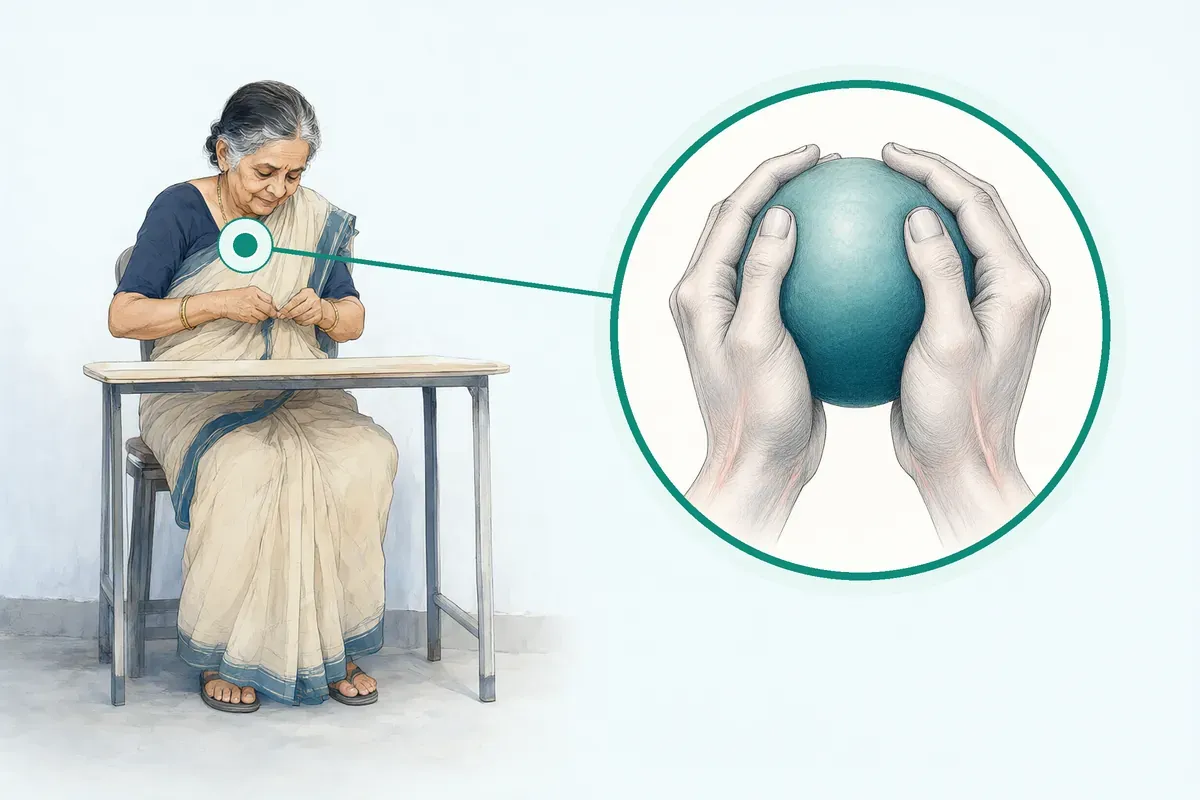
Weak hand grip
Holding utensils, writing, or opening jars can feel difficult after hand trauma or nerve injuries.
-
Work and household limits
Managing kitchen tasks, household errands, or sitting at an office desk may trigger fatigue or discomfort.
About one-third and half of adults with cancer respectively have difficulty or require assistance to perform basic and instrumental ADLs.
Why Jaipur Hospital
You may worry about losing independence, placing extra demands on your family, or needing prolonged time away from work.
Your care plan
Your first steps with us
- 1 Book an initial consultation at our hospital OPD.
- 2 Complete a functional evaluation of your movement and daily routine.
- 3 Attend structured outpatient therapy sessions lasting 45 to 60 minutes.
- 4 Track your progress periodically over weeks to months.
Options your surgeon will discuss
Occupational therapy is outpatient care done without anaesthesia. Sessions typically last 45 to 60 minutes, using practical tasks and adaptations to support daily function.
-
ADL Training
Your therapist guides practice for daily activities such as dressing, bathing, and toileting using practical methods and assistive tools.
-
Hand Therapy
Your therapist uses splinting, strengthening exercises, and fine motor tasks to support hand movement and grip.
-
Cognitive Rehabilitation
Your therapist guides exercises focused on memory, attention, and practical problem-solving for everyday routines.
-
Worksite Ergonomics
Your therapist reviews job simulations and workstation modifications to support your return to workplace tasks.
Why patients trust us
- 1991 Serving Jaipur for 35 years
- NABH Accredited hospital
- 1 Physiotherapy consultants
- 24×7 Emergency, ICU and ambulance
- 25 Cashless schemes and insurers
What research shows about functional rehabilitation
-
14 sessions
Patients with Parkinson's disease showed improved performance in activities of daily living after 14 sessions of balance training.
-
36 sessions
Thirty-four community-dwelling older adults with MCI showed improved cognitive function and IADL after 36 sessions over 12 weeks.
-
45 trials
A review of 45 trials involving 1619 participants found electromechanical and robot-assisted arm training improved activities of daily living scores.
If it is left untreated
Leaving functional limitations unaddressed can lead to worsening dependency in daily living tasks and self-care routines. Low muscle mass was associated with worsening ADL (pooled odds ratio 3.19) and worsening IADL (1.28).
Working toward daily independence
Therapy aims to help you manage everyday routines safely and participate in home and work activities.
-
Managing personal self-care
Most people practice techniques that help them handle bathing, dressing, and grooming with less reliance on attendants.
-
Handling everyday tools
Patients usually practice using household items, kitchen utensils, or assistive equipment safely in daily tasks.
-
Adapting workplace tasks
Most individuals learn workstation adjustments and pacing methods to handle job demands more comfortably.

Frequently asked questions
Questions patients ask about occupational therapy
What does occupational therapy involve?
In short
Occupational therapy at Jaipur Hospital helps you regain the skills needed for daily living and work. The programme focuses on practical tasks such as dressing, bathing, toileting, hand function, memory, attention and workplace ergonomics. Each plan is built around your specific goals and challenges.
In detail
Therapists use four main techniques. ADL training lets you practise dressing, bathing and toileting in a safe setting. Hand therapy includes splinting, strengthening and fine motor tasks to improve grip and coordination. Cognitive rehabilitation uses structured exercises for memory, attention and problem solving.
Worksite ergonomics involves job simulation and workstation modification so you can return to work safely. Evidence shows that a combination of physical and cognitive training improves cognitive function and instrumental activities of daily living in older adults with mild cognitive impairment.
Electromechanical and robot-assisted arm training has been found to improve activities of daily living scores and arm muscle strength. The therapist selects and adapts these techniques based on your condition, whether you are recovering from trauma, surgery, a chronic illness or a disability.
A common belief
Many people think occupational therapy is only about jobs.
What actually happens
In fact, the word occupation means any activity that occupies your time, from brushing your teeth to cooking a meal. The therapy covers all of these, not just work tasks.
Your next step at Jaipur Hospital
Your first step is an assessment where the therapist learns your goals and examines your home or workplace if needed. Sessions last 45 to 60 minutes and are usually held several times a week.
The total number of sessions depends on your progress and may continue over weeks to months. The typical price range is ₹800 to ₹1,500 per session.
What happens during the first occupational therapy session?
In short
The first occupational therapy session at Jaipur Hospital is an assessment. The therapist gets to know you and your family, discusses your goals and identifies barriers you face in daily routines. They may examine your home, workplace or other frequent environments to understand the physical and cognitive demands you encounter.
In detail
During the assessment, the therapist reviews your medical history, surgical notes, imaging and medication list. They observe how you perform tasks such as dressing, bathing, transfers, hand movements and cognitive activities like memory or problem solving.
Standardised tools such as the Katz Index for basic ADLs and the Lawton IADL Scale for instrumental ADLs are commonly used to measure baseline function. Evidence shows these are the most frequently used instruments in research.
Based on the findings, the therapist designs customised interventions which may include ADL training, hand therapy with splinting and strengthening, cognitive rehabilitation exercises or worksite ergonomics modifications. The therapist also explains the expected frequency and duration of sessions.
A common belief
People often expect to start exercises right away.
What actually happens
The first visit is mainly evaluation and planning. The therapist needs this information to choose the right techniques, whether it is hand splinting, memory training or workplace changes, so the programme fits your real life.
Your next step at Jaipur Hospital
The assessment lasts 45 to 60 minutes. Wear comfortable clothing and bring any assistive devices you use. After the session, you will receive a proposed therapy plan with session frequency and the typical price range of ₹800 to ₹1,500 per session.
How soon should I notice an improvement with occupational therapy?
In short
Improvement with occupational therapy at Jaipur Hospital varies by person and condition. Some people notice small changes in daily tasks within a few sessions, while meaningful functional gains often take weeks to months of consistent practice.
In detail
Occupational therapy focuses on retraining skills for daily living, work, and cognition through repeated practice.
Evidence shows that programmes lasting several weeks, such as 12-week VR-based physical and cognitive training, can improve global cognition and instrumental activities of daily living in older adults with mild cognitive impairment. For stroke or trauma, functional independence at 90 days is a common benchmark.
Progress depends on the underlying condition, session frequency, and how regularly you practise home exercises. The therapist adjusts the plan as you improve, targeting dressing, bathing, hand function, memory, or workstation ergonomics.
A common belief
Many expect quick fixes, but therapy works by retraining the brain and body through repetition.
What actually happens
Studies show programmes of 12 weeks or more are often needed for measurable change in cognition and daily function.
Your next step at Jaipur Hospital
Your therapist will review goals at each session and discuss expected timelines during the initial assessment. Most people attend weekly or twice-weekly sessions for several weeks. Keep a simple log of tasks that feel easier. If you see no change after four to six weeks, the therapist may modify the approach.
How far before travel or starting work should I seek occupational therapy advice?
In short
Seek occupational therapy advice at Jaipur Hospital at least four to six weeks before planned travel or a return to work. Earlier is better if your condition is complex or you need equipment or workplace modifications.
In detail
Therapy for travel or work reintegration involves assessing your current abilities, simulating tasks, and arranging aids or ergonomic changes. Evidence shows worksite ergonomics and job simulation improve return-to-work outcomes. If you need a wheelchair, splint, or adaptive tools, ordering and fitting take time.
Cognitive rehabilitation for memory, attention, or problem-solving also requires weeks of practice. For travel, the therapist can advise on airport navigation, luggage handling, and medication management. Starting early allows trial runs and adjustments. The therapist may visit your workplace or review photos of your workstation.
A common belief
Many wait until the last week.
What actually happens
But ordering a splint, modifying a workstation, or training memory takes weeks. Rushing leads to gaps in preparation. Early planning means you travel or work with confidence, not guesswork.
Your next step at Jaipur Hospital
Bring your travel itinerary, job description, or employer's requirements to the first session. The therapist will outline a timeline and set milestones. If time is short, a focused programme can still help with key tasks.
How can I decide whether to seek advice about activities of daily living retraining?
In short
You should consider activities of daily living retraining at Jaipur Hospital if you or a family member struggle with basic self-care — such as dressing, bathing, toileting, walking, or transfers — or instrumental tasks like cooking, shopping, managing medications, or using transport. Difficulty may follow stroke, trauma, surgery, or chronic conditions including Parkinson's disease, cancer, or mild cognitive impairment.
In detail
Evidence shows about one-third of adults with cancer have difficulty with basic ADLs and half need help with instrumental ADLs. Low muscle mass, weak grip strength, poor balance, and slow gait speed are strongly associated with worsening ADL and IADL dependence.
Occupational therapy uses ADL training, hand therapy, cognitive rehabilitation, and worksite ergonomics to rebuild independence. The therapist assesses your specific barriers using tools like the Katz Index and Lawton IADL Scale, then designs customised interventions. Early referral improves the chance of regaining function before dependence becomes entrenched.
A common belief
Many families wait until the patient is fully dependent.
What actually happens
Evidence shows low grip strength and poor balance triple the risk of ADL decline. Early intervention preserves independence and reduces caregiver burden.
Your next step at Jaipur Hospital
If daily tasks take much longer, feel unsafe, or require another person's help, book an occupational therapy assessment at Jaipur Hospital. The therapist will evaluate your performance, set realistic goals, and start a programme typically lasting weeks to months. Sessions are 45 to 60 minutes, outpatient, and cost ₹800 to ₹1,500 each.
How will the therapist adapt treatment to my home, work, and activity goals during occupational therapy?
In short
At Jaipur Hospital, the occupational therapist adapts treatment by first assessing your home, workplace, and activity goals during the initial evaluation. They may visit your environment or review photos and videos to understand barriers. Interventions — ADL training, hand therapy, cognitive rehabilitation, and worksite ergonomics — are then customised to your specific roles, routines, and physical or cognitive demands.
In detail
Evidence shows occupational therapy interventions are tools, resources, or environmental changes that help you complete tasks better. The therapist examines your home, workplace, or other frequent environments to identify hazards, inefficient layouts, or missing equipment.
They may recommend grab rails, raised toilet seats, adaptive cutlery, keyboard modifications, or task restructuring. For cognitive goals, they design memory strategies, attention exercises, and problem-solving practice tied to real-life situations like meal planning or bill payment.
Worksite ergonomics includes job simulation and workstation adjustment to support return to work. The plan evolves as you progress, with re-assessment every four to six weeks.
A common belief
Generic exercise sheets don't address the specific layout of your kitchen, the height of your workbench, or the cognitive load of your job.
What actually happens
Evidence shows environment-based interventions improve carry-over and long-term independence.
Your next step at Jaipur Hospital
Share your daily schedule, job description, hobbies, and photos of key spaces at your first session.
The therapist will set measurable goals — such as independent dressing in two weeks or returning to desk work in six weeks — and adjust the programme at each review. Sessions are 45 to 60 minutes, outpatient, typically ₹800 to ₹1,500 each.
Who is likely to benefit from occupational therapy?
In short
Occupational therapy at Jaipur Hospital benefits adults and children who find daily activities difficult because of injury, surgery, chronic illness or disability. This includes people recovering from stroke, trauma, hand injuries, orthopaedic surgery, neurological conditions such as Parkinson's disease, cognitive impairment, cancer-related fatigue or developmental delays. The therapy aims to improve independence in self-care, home management and work.
In detail
Evidence shows that people with chronic conditions such as stroke, traumatic brain injury, Parkinson's disease, mild cognitive impairment and cancer frequently report limitations in basic and instrumental activities of daily living.
Studies indicate that about one-third to half of adults with cancer have difficulty performing basic and instrumental ADLs. Patients with Parkinson's disease showed improved performance in activities of daily living after balance training.
Older adults with mild cognitive impairment improved global cognition and instrumental ADLs with combined physical and cognitive training. Children with developmental delays or disabilities benefit from paediatric occupational therapy designed for younger patients. The therapist assesses your specific barriers and designs interventions to address them.
A common belief
A common belief is that occupational therapy is only for severe disabilities.
What actually happens
In reality, it helps with a wide range of difficulties, from trouble buttoning a shirt after wrist surgery to memory strategies for early dementia. The goal is independence in whatever activities matter to you.
Your next step at Jaipur Hospital
If you or a family member struggles with dressing, bathing, cooking, memory tasks or returning to work, an occupational therapy assessment can clarify whether the programme will help. Sessions are outpatient, 45 to 60 minutes each, typically costing ₹800 to ₹1,500 per session. The number and frequency of sessions are decided after the initial evaluation.
How long does an occupational therapy session last?
In short
Each occupational therapy session at Jaipur Hospital lasts 45 to 60 minutes. The session length is the same for the initial assessment and for follow-up therapy visits. No anaesthesia is needed and all sessions are conducted on an outpatient basis.
In detail
The 45 to 60 minute window allows the therapist to guide you through a structured set of activities.
A typical session may include warm-up exercises, practice of specific tasks such as dressing or hand coordination drills, cognitive exercises for memory or attention, and education on using assistive devices or modifying your environment.
Evidence from rehabilitation studies shows that repeated, task-specific practice within this time frame supports motor learning and cognitive improvement. The therapist adjusts the intensity and content based on your fatigue level and progress.
Sessions are usually scheduled several times a week, and the overall programme continues over weeks to months depending on your goals.
A common belief
Some people think therapy takes half a day.
What actually happens
In practice, a focused hour is enough to work on several skills without causing excessive fatigue. The therapist paces the session to match your stamina.
Your next step at Jaipur Hospital
Plan to arrive a few minutes early and wear loose, comfortable clothing. The typical price range is ₹800 to ₹1,500 per session. Your therapist will confirm the exact schedule after the assessment.
How will progress be measured in occupational therapy?
In short
Progress in occupational therapy at Jaipur Hospital is measured using standardised tools and your personal goals. Therapists track changes in daily tasks, hand function, cognition, and work readiness at regular intervals.
In detail
The therapist begins with a detailed assessment of your abilities, home or workplace environment, and specific goals. Common measures include the Katz Index for basic activities of daily living and the Lawton IADL Scale for instrumental tasks like shopping and transport.
For hand therapy, grip strength, pinch force, and dexterity tests are used. Cognitive rehabilitation uses tests of memory, attention, and executive function. Worksite ergonomics may involve job simulation and workstation analysis.
Evidence supports practice standards for attention and social-communication deficits after brain injury, and for holistic neuropsychological rehabilitation to reduce disability. The therapist records scores at baseline, mid-point, and discharge to show trends.
A common belief
People often think progress is just feeling better.
What actually happens
In therapy, we need objective scores — like the Katz Index for self-care or grip strength for hand function — to adjust the plan and prove change to insurers or employers.
Your next step at Jaipur Hospital
You will receive feedback at each session and a formal review every few weeks. Bring any previous reports or doctor letters to the first visit. The therapist shares findings with your referring doctor if you wish.
What vaccines, documents, or medical records might I need for occupational therapy?
In short
Occupational therapy at Jaipur Hospital does not require vaccines. Bring any medical records, doctor referral, imaging reports, discharge summaries, and a list of current medicines. If you have insurance, carry your policy card and TPA details.
In detail
The therapist needs a clear picture of your diagnosis, surgery dates, precautions, and current medications to design a safe plan. Records from your treating doctor, surgeon, or neurologist are most useful.
If you are claiming under RGHS, MAA Yojana, CGHS, or a private insurer, the hospital's insurance desk will guide you on pre-authorisation forms.
No specific vaccines are needed for therapy itself, but if you are travelling abroad for work, your doctor may advise travel vaccines separately. Keep a file with all reports, prescriptions, and therapy goals for easy reference.
A common belief
People often arrive empty-handed, delaying the first assessment.
What actually happens
The therapist cannot plan safely without knowing your diagnosis, precautions, or surgery details. A complete file speeds up your start and helps with insurance claims.
Your next step at Jaipur Hospital
Arrive 15 minutes early for your first session to complete registration. The hospital accepts RGHS, MAA Yojana, CGHS, and private TPAs. Ask the front desk for an estimate of session costs, typically ₹800 to ₹1,500 per session.
FAQ library
Questions and answers about occupational therapy
When you contact us
Consult our rehabilitation team in Jaipur
Reach out to Jaipur Hospital to schedule your functional assessment and discuss practical therapy options for your daily routine.
- A consultation with a physiotherapist in the OPD
- Your scans and reports reviewed, with tests done in-house if you need them (laboratory, X-ray and imaging)
- Your options explained in plain words, including whether you need surgery at all
- A cost estimate before you decide
- Help with cashless treatment under RGHS, MAA Yojana, CGHS and empanelled insurers and TPAs
- Follow-up visits after your treatment
Overview
Occupational Therapy: what to know
What is occupational therapy and how it helps daily living
Occupational therapy is a treatment that helps you improve your ability to perform daily tasks. It supports people in overcoming physical, emotional, and social challenges. The word occupation in this therapy does not only mean your job or work.
It covers:
- Self-care
- Routine chores
- The everyday activities you need to live independently
When an illness, injury, or long-term disability affects your body or brain, routine actions can become difficult. You may find it hard to hold objects, move around, or remember steps in a task. Occupational therapy focuses on practical training to help you carry out your daily routine with as much self-reliance as possible.
Care at Jaipur Hospital is typically provided as an outpatient service in our OPD. Anaesthesia is not needed for these sessions. A standard session usually lasts 45 to 60 minutes. Recovery is not immediate, and progress typically takes place over weeks to months.
Symptoms of functional difficulties and warning signs needing urgent care
- Sudden weakness on one side
- Sudden loss of speech
- Facial drooping
- Sudden confusion
You may benefit from occupational therapy if you struggle with basic activities of daily living. In clinical studies, common basic activities that people struggle with include personal hygiene, walking, and transfers, such as getting out of a bed or a chair. You might also notice trouble with wider household tasks, such as cooking, shopping, housework, and using transport.
Physical changes often show up as reduced handgrip strength, poor balance, or trouble standing from a chair. In research studies, low handgrip strength and slower walking speed have been linked to greater difficulty in completing daily self-care tasks. You or your attendant may also notice cognitive difficulties, such as forgetfulness, loss of focus, or trouble planning simple household chores.
Occupational therapy is planned, non-emergency rehabilitation, but sudden physical or nervous system changes require immediate medical attention. If you or your family member notice sudden weakness on one side of the body, sudden loss of speech, facial drooping, or sudden confusion, you must seek emergency care the same day. Jaipur Hospital provides a 24×7 emergency department and 24×7 ambulance service for urgent medical crises.
Causes of functional limitations and who is at higher risk
- Older adults with memory loss
- Risk of losing independence in complex routines
- Long-term nerve conditions
- Parkinson's disease causes movement and balance problems
- Stroke or brain injury patients
- Deficits in attention, communication, daily functioning
- Adults treated for cancer
- One-third struggle with self-care, half with housework and travel
You might need occupational therapy after experiencing physical trauma or an accidental injury. Some people also require occupational therapy to recover strength and movement after surgical operations. In other cases, therapy is needed to manage symptoms that stem from a long-term chronic condition or an existing disability.
Older adults with mild memory loss or cognitive impairment are at higher risk of losing independence in complex daily routines. People living with long-term nerve conditions face similar challenges; for instance, trials have included patients with Parkinson's disease who experienced movement and balance problems. In studies of stroke and traumatic brain injury, patients frequently showed deficits in attention, communication, and overall daily functioning.
Adults being treated for cancer also face functional limitations. In research studies, about one-third of adults with cancer had difficulty with basic daily tasks like self-care, and about half had difficulty with tasks like housework and travel. Reduced muscle mass and low physical performance are strong risk factors that make people more dependent on others for everyday support.
How functional difficulties are diagnosed: examination and tests
- Katz Index
- Measures basic daily living assistance needed
- Lawton IADL Scale
- Measures instrumental daily task assistance needed
- Cognitive tests
- Clock Drawing, Letter Fluency, Trail Making Test Part B
An occupational therapy programme begins with an assessment conducted by an occupational therapist. During this initial assessment, the therapist will get to know you and your attendant, talk through your personal goals, and discuss the difficulties you face in your daily routine. The therapist may also ask about or evaluate your home or work environment to spot physical obstacles.
Clinical assessments commonly evaluate basic activities of daily living and instrumental daily tasks. In published clinical research, tools such as the Katz Index and the Lawton IADL Scale are widely used to measure how much assistance a person needs.
Physical performance tests may measure:
- Handgrip strength
- Balance while standing on one leg
- Time taken to rise from a chair
- Walking speed
Cognitive and thinking skills are also evaluated when needed. In clinical studies, tests such as the Clock Drawing Test, Letter Fluency, and the Trail Making Test Part B showed clear links with how well a person manages daily living tasks and driving ability.
Our in-house diagnostic laboratory and imaging services at Jaipur Hospital assist our medical team when baseline diagnostic investigations are required.
Therapy options without surgery, and when surgery is advised
ADL Training
- ADL Training
Hand Therapy
- Hand Therapy
Cognitive Rehabilitation
- Cognitive Rehabilitation
Worksite Ergonomics
- Worksite Ergonomics
Occupational therapy is entirely non-surgical. Your therapist designs customised interventions to help you meet your daily goals safely. These interventions include practical exercises to build physical strength, balance, and coordination, or strategies to manage fatigue. You may also learn to use assistive tools or mobility equipment, such as walking aids or wheelchairs, to move around safely.
Techniques available in rehabilitation practice include the following options:
- ADL Training: Practice of dressing, bathing, and toileting to regain personal independence.
- Hand Therapy: Splinting, strengthening, and fine motor tasks to restore hand and finger function.
- Cognitive Rehabilitation: Memory, attention, and problem-solving exercises to assist mental processing.
- Worksite Ergonomics: Job simulation and workstation modification to help you return to your work tasks.
Your therapist or doctor will advise which specific techniques suit your individual health needs. In some research studies, specialised balance exercises helped patients with Parkinson's disease improve daily living scores. Studies in stroke rehabilitation also showed that electromechanical and robot-assisted arm training improved arm muscle strength and daily living scores.
In trials with older adults having memory impairment, combining physical and mental exercises with computer tools like virtual reality improved daily functional scores.
Surgery is not part of occupational therapy. However, when functional difficulties are caused by severe joint degeneration, nerve compression, or traumatic bone fractures, our surgical team may evaluate whether surgery is required first. Any decision regarding surgery will be discussed with you by your surgeon.
Occupational therapy usually costs between ₹800 and ₹1,500 per session in India, with the total cost depending on the number of sessions and specific interventions required. You can ask us at Jaipur Hospital for an estimate, and patients can also check their coverage under RGHS, CGHS, MAA Yojana, or private health insurance.
Preparing for occupational therapy
Do
- Bring medical records and test reports
- Bring assistive devices you use
Occupational therapy at Jaipur Hospital is typically an outpatient service. Anaesthesia is not needed for these rehabilitation sessions. You usually do not need to fast before your visit, and you do not need an overnight hospital stay.
Usually, the first time you meet with an occupational therapist, they conduct an initial assessment. During this visit, they get to know you and your attendant, talk about your daily goals, and review barriers in your routine. Your therapist may also discuss or evaluate your home or workplace environment.
Bring any medical records, discharge summaries from previous hospital admissions, and recent test reports to your first OPD appointment. If you use assistive devices such as splints, walking aids, or braces, bring them along so our team can evaluate how you use them. Wear loose, comfortable clothing and supportive footwear that allow free movement during activities and exercises.
Discuss your current health conditions and ongoing medications with your doctor or therapist before starting sessions. Tell our team if you experience severe pain, high fatigue, or memory difficulties so your programme can be planned safely.
How occupational therapy is done
Occupational therapy is typically conducted as an outpatient service at Jaipur Hospital. Sessions usually last 45 to 60 minutes. You work directly with a trained occupational therapist who guides and supports you during each session.
Therapy does not follow a single formula because interventions are customised to your physical, mental, and daily routine goals. Your therapist will advise which technique suits your personal needs. Common techniques include:
- ADL Training: Focused practice of essential daily tasks such as dressing, bathing, and toileting to build personal independence.
- Hand Therapy: Targeted care involving splinting, muscle strengthening, and fine motor tasks to improve upper limb function.
- Cognitive Rehabilitation: Memory, attention, and problem-solving exercises designed to assist thinking skills needed for everyday living.
- Worksite Ergonomics: Job simulation and workstation modifications to support practical tasks and safe physical posture.
During a session, your therapist guides you through practical tasks, movement exercises, or practice with adaptive tools. For example, you may practice moving safely or learning to handle assistive equipment like a wheelchair or prosthetic limb. Exercises may also focus on building physical strength and coordination to assist with daily living.
Risks and complications of occupational therapy
Occupational therapy is non-invasive and does not involve surgery or anaesthesia. Because sessions focus on functional practice and physical or cognitive exercises, serious medical complications are unusual.
Patients may sometimes experience temporary muscle fatigue, mild soreness, or frustration while practicing new routines. Your therapist monitors your safety throughout the session to minimise the risk of overexertion or falls during balance and motor tasks.
In hospital stroke trials comparing medical and endovascular procedures, rates of symptomatic intracerebral haemorrhage were observed at 6.1% in one group and 6.8% in another, showing a difference of -0.8%. These medical complications relate to acute vascular conditions rather than the therapy sessions themselves.
If you ever feel dizzy, breathless, or physically uncomfortable during a task, you can stop immediately and notify our team.
Recovery and aftercare for occupational therapy
- First days Begin small adjustments at home
- Following weeks Therapist reviews progress and adjusts exercises
- Ongoing Practice with adaptive equipment in different settings
Recovery and progress in occupational therapy are ongoing over weeks to months. Because therapy is delivered in the OPD, you return home on the same day after your 45 to 60 minute appointment.
In the first days, you begin incorporating small adjustments and recommended techniques into your routine at home. Your therapist may give you specific practice tasks or safety steps to follow between visits. Attendants and family members play a supportive role by helping you practice these steps safely in your living space.
Over the following weeks, your therapist reviews your progress and adjusts your exercises as your strength, coordination, and independence develop. You may practice using adaptive equipment in different settings to build confidence.
Contact the hospital or your doctor if you experience:
- Sudden chest pain
- Shortness of breath
- A fall
- Severe pain
- Any sudden worsening in your mobility or neurological symptoms
Results and study outcomes for occupational therapy
- 36.7% Cancer patients with basic ADL disability
- 54.6% Cancer patients with instrumental task difficulty
Occupational therapy focuses on helping people live as self-sufficiently as possible. In clinical research, functional independence and daily living skills have been evaluated across various conditions.
In studies involving cancer rehabilitation, 36.7% of patients reported disability in basic activities of daily living such as personal hygiene, walking, and transfers, while 54.6% reported difficulties with instrumental tasks like housework, shopping, and transportation. These findings highlight the need for professionals skilled in occupational assessment and therapy.
Physical performance has also been studied in relation to daily living skills. Low muscle mass was positively associated with dependence in activities of daily living in 5 out of 9 articles, and low physical performance was associated with daily living dependence in 37 out of 49 articles.
In a review of 45 trials involving 1619 participants, electromechanical and robot-assisted arm training improved activities of daily living scores and arm muscle strength.
In a study of 32 patients with Parkinson's disease, participants showed improved performance in activities of daily living after 14 sessions of balance training. In research on older adults with mild cognitive impairment, combined physical and cognitive training, including virtual reality formats, supported improvements in cognitive function and instrumental daily activities.
In an analysis of 49 studies with 3,663 participants, executive function showed a consistent moderate association with activities of daily living and driving ability.
Cost of occupational therapy and insurance in Jaipur
The cost of occupational therapy in India typically ranges from ₹800 to ₹1,500 per session. The overall cost varies depending on the number of sessions prescribed, the total duration of your rehabilitation programme, and the specific evaluations or equipment training required.
You can ask our team at Jaipur Hospital for an estimate based on your recommended treatment plan. Any prescribed supports or splints can be obtained through our in-house pharmacy or chemist.
Jaipur Hospital works with government health schemes including:
- RGHS
- MAA Yojana
- CGHS
We also work with an approved panel of private health insurers and third-party administrators (TPAs). Check with your insurance provider or the hospital desk to confirm whether your outpatient rehabilitation sessions are covered under your policy.