

Physiotherapy · Jaipur Hospital
Post Operative Rehabilitation in Jaipur
Surgery done, recovery slow? We assess and give a clear rehab plan.
- Serving Jaipur since 1991 (35 years)
- NABH accredited
- 24×7 emergency & ICU
- Cashless: RGHS, MAA Yojana, CGHS + 22 insurers
- Session length
- 30 to 60 minutes per session
- Anaesthesia
- Not needed
- Recovery
- Protocol-basedtypically 4 to 12 weeks guided programme
- Price
- ₹700 to ₹2,000 per sessiontypical range in India; ask us for an estimate
Recovery feels stuck
You had surgery but daily tasks still feel hard
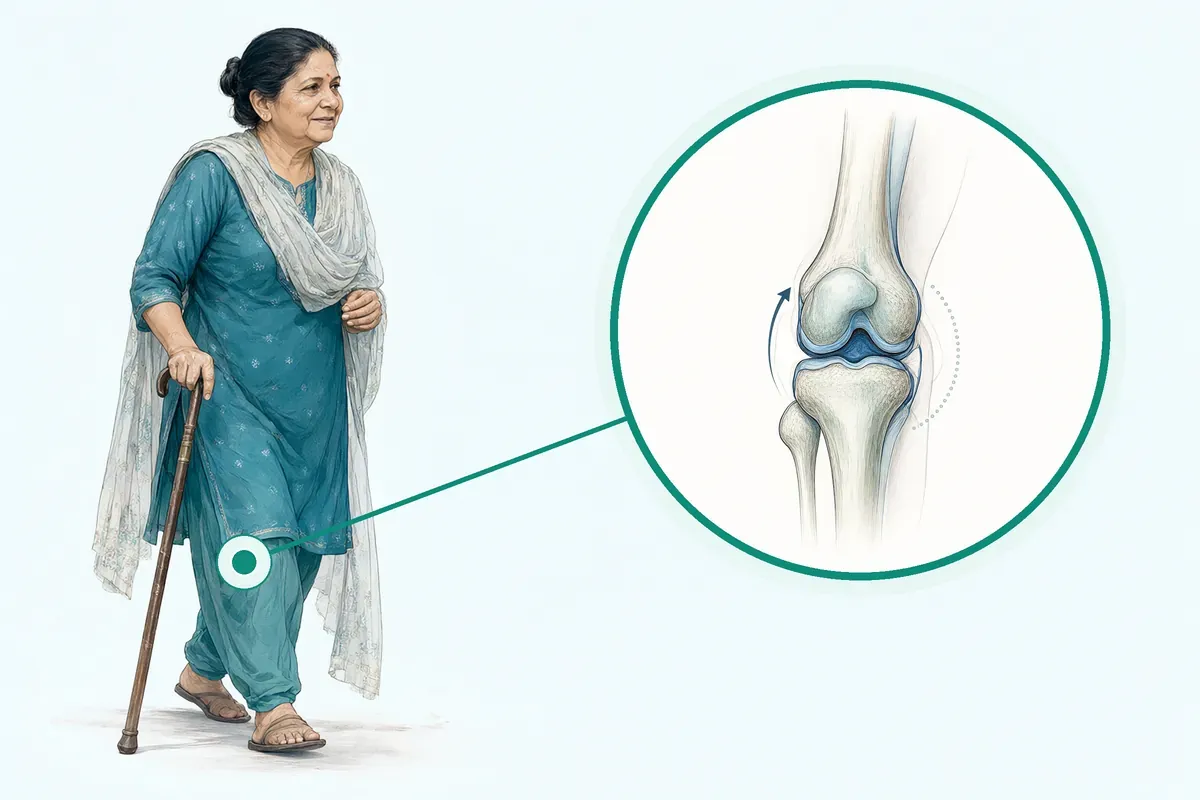
Pain, stiffness, breathlessness or weakness can linger after discharge. Without a structured plan, muscles weaken, joints stiffen and confidence drops. You may worry about returning to work or caring for family.
-
Pain limits movement
Guarded movement after surgery leads to stiffness and muscle loss.
-
Breathlessness on effort
Chest or abdominal surgery can reduce lung expansion and stamina.
-
Unsure what is safe
Fear of doing too much or too little delays progress at home.
-
Slow return to routine
Extended time off work affects income and family responsibilities.
Enhanced recovery protocols reduce complications and shorten hospital stay.
Why Jaipur Hospital
You want to move without fear of harming your stitches or getting breathless climbing stairs.
Your care plan
Your first steps with us
- 1 Call or visit OPD for assessment
- 2 Get a protocol-based rehab plan
- 3 Start guided sessions inpatient or outpatient
- 4 Progress reviewed weekly until goals met
How post operative rehabilitation works
A physiotherapist assesses your surgical protocol, pain and function. Sessions last 30 to 60 minutes. The programme typically runs 4 to 12 weeks, starting in hospital and continuing as outpatient.
-
Early Mobilisation
Bedside sitting, standing and walking from day one per surgical protocol.
-
Chest Physiotherapy
Breathing exercises, incentive spirometry and secretion clearance to protect lungs.
-
Joint ROM & Strengthening
Progressive exercises matched to your specific surgical protocol and healing stage.
-
Scar & Oedema Management
Manual lymphatic drainage, compression and silicone sheets to improve tissue healing.
Why patients trust us
- 1991 Serving Jaipur for 35 years
- NABH Accredited hospital
- 1 Physiotherapy consultants
- 24×7 Emergency, ICU and ambulance
- 25 Cashless schemes and insurers
What research shows about structured rehab
-
30% to 50% shorter hospital stay
ERAS protocols with early mobilisation reduced length of stay across surgical specialties.
-
Reduced overall morbidity
Patients on enhanced recovery pathways had fewer non-surgical complications.
-
Lower readmissions and costs
Structured perioperative pathways decreased readmission rates and total care costs.
If it is left untreated
Without guided rehab, muscle weakness and joint stiffness can become long-term. Reduced lung expansion raises pneumonia risk. Delayed mobility increases blood clot risk. Functional decline may prolong dependence on attendants.
Life after completing rehab
Most people regain the strength and confidence to manage daily activities and return to their usual routine.
-
Walk independently
Most people walk without aids and climb stairs within the programme period.
-
Manage self-care
Bathing, dressing and household tasks usually become manageable again.
-
Return to work
Many resume light duties or desk work as stamina improves.
-
Less pain with movement
Guided exercise typically reduces surgical pain during activity over weeks.
Frequently asked questions
Questions patients ask about post operative rehabilitation
What does post operative rehabilitation involve?
In short
Post operative rehabilitation at Jaipur Hospital is a structured physiotherapy programme that starts in the ward and continues as outpatient care. It includes early mobilisation, chest physiotherapy, progressive joint exercises, and scar and oedema management. Each plan follows the surgical protocol for orthopaedic, cardiac, or abdominal procedures.
In detail
The programme uses four main techniques. Early mobilisation begins with bedside sitting, standing, and walking from day one to prevent complications such as deep vein thrombosis and pneumonia.
Chest physiotherapy uses breathing exercises, incentive spirometry, and secretion clearance to protect lung function after cardiac or abdominal surgery. Joint range of motion and strengthening exercises progress according to the specific surgical protocol.
Scar and oedema management applies manual lymphatic drainage, compression garments, and silicone sheets to improve tissue healing.
Evidence from Enhanced Recovery After Surgery pathways shows that such multimodal, protocol-based care reduces hospital stay by 30 to 50 percent and lowers overall morbidity without increasing readmission rates.
A common belief
Many people think rehabilitation is only exercise.
What actually happens
In fact, it combines breathing training, swelling control, and wound care to reduce complications and shorten hospital stay.
Your next step at Jaipur Hospital
Your surgeon and physiotherapist will agree on the start date, usually within 24 hours of surgery. Inpatient sessions continue daily until discharge, then you attend outpatient sessions two to three times a week for four to twelve weeks. Session length is 30 to 60 minutes. The typical cost range is ₹700 to ₹2,000 per session.
What happens during the first session of post operative rehabilitation?
In short
During the first session at Jaipur Hospital, the physiotherapist reviews your surgical notes, assesses pain, mobility, breathing, and wound status, and sets baseline measurements. You will practise bedside sitting, supported standing, and a few steps of walking if your protocol allows. Breathing exercises and incentive spirometry are taught for chest clearance.
In detail
The initial assessment follows the ERAS principle of early mobilisation within 24 hours of surgery. The therapist checks vital signs, oxygen saturation, and pain scores before and after each activity. For orthopaedic cases, joint range and weight-bearing status are recorded.
For cardiac or abdominal cases, chest expansion, cough effectiveness, and secretion clearance are prioritised. You receive a home exercise sheet with clear pictures and repetition counts. The therapist explains the frequency of sessions, typically daily while inpatient, then two to three times weekly as outpatient.
Goals for the first week are agreed with you and your attendant. Evidence shows that protocol-driven early mobilisation reduces complications such as atelectasis and deep vein thrombosis without increasing readmission rates.
A common belief
Many expect a full workout on day one.
What actually happens
The first session is actually an assessment and safe initiation of mobilisation, not intense exercise.
Your next step at Jaipur Hospital
Wear loose clothing and comfortable footwear. Bring your discharge summary, medication list, and any assistive device you use. The session lasts 30 to 60 minutes. Outpatient follow-up is usually scheduled within one week of discharge.
How soon should I notice an improvement after starting post operative rehabilitation?
In short
At Jaipur Hospital many patients notice small improvements such as easier breathing, less stiffness, or better walking distance within the first one to two weeks of the guided programme. Larger functional gains usually appear over the full 4 to 12 week protocol.
In detail
The programme follows enhanced recovery principles that combine early mobilisation, chest physiotherapy, progressive joint exercises, and scar and oedema management. Studies on these pathways report shorter hospital stay by 30 to 50 percent and reduced overall morbidity.
In a trial of prehabilitation versus rehabilitation, the prehabilitation group improved six minute walk distance by about 45 metres more than the rehabilitation group at eight weeks, and a higher proportion recovered to baseline exercise capacity.
Your own timeline depends on the type of surgery, your baseline fitness, and how closely you follow the home exercise plan between supervised sessions.
A common belief
Some expect instant results, but recovery follows a curve.
What actually happens
Evidence shows walk distance improves steadily over eight weeks, not overnight. Skipping home exercises slows the curve.
Your next step at Jaipur Hospital
You will be reassessed at each 30 to 60 minute session, typically two to three times per week. The therapist adjusts the intensity based on your progress. Sessions cost typically ₹700 to ₹2,000 each.
How can I decide whether to seek advice about post joint replacement therapy?
In short
Seek advice if you have had or are scheduled for a hip, knee, shoulder, or other joint replacement and want a structured programme to regain movement, strength, and walking ability. Jaipur Hospital offers protocol based post operative rehabilitation starting inpatient and continuing outpatient.
In detail
The programme uses early mobilisation, joint range of motion and strengthening exercises, and scar and oedema management tailored to the specific joint replacement protocol. Evidence from enhanced recovery pathways shows that structured rehabilitation reduces complications and readmissions while shortening hospital stay.
If you notice persistent stiffness, weakness, swelling, or difficulty with daily activities such as walking, climbing stairs, or dressing after joint replacement, a physiotherapy assessment can identify gaps and guide a progressive plan. The surgeon and physiotherapist together decide the appropriate start time and progression based on your surgical protocol.
A common belief
Many patients wait until they struggle with daily tasks, but early referral lets the team start mobilisation and strengthening on the correct timeline.
What actually happens
The protocol is specific to the joint replaced and follows surgical milestones, so starting at the right time prevents stiffness and weakness from becoming harder to reverse.
Your next step at Jaipur Hospital
Contact the physiotherapy department or your surgeon's office to request an assessment. Sessions typically last 30 to 60 minutes and the guided programme usually runs for 4 to 12 weeks.
Which specialists are a part of the multidisciplinary team for nursing care of post operative patient?
In short
The multidisciplinary team for post operative nursing care at Jaipur Hospital includes surgeons, anaesthesiologists, physiotherapists, critical care nurses, ward nurses, dietitians, pharmacists, and respiratory therapists. Each specialist contributes to pain control, early mobilisation, nutrition, wound care, and complication prevention according to enhanced recovery protocols.
In detail
Enhanced recovery after surgery pathways rely on coordinated input from multiple disciplines. Evidence shows that structured teamwork reduces complications, shortens hospital stay, and lowers readmission rates. Surgeons and anaesthesiologists manage surgical and perioperative decisions. Physiotherapists deliver early mobilisation, chest physiotherapy, and progressive strengthening.
Critical care and ward nurses monitor vital signs, drains, and wound healing. Dietitians optimise nutritional status. Pharmacists support opioid-sparing analgesia and medication safety. Respiratory therapists assist with incentive spirometry and secretion clearance. Regular team audits ensure protocol compliance and patient safety.
A common belief
Many patients think only the surgeon manages recovery.
What actually happens
Evidence shows coordinated multidisciplinary care reduces complications and shortens hospital stay.
Your next step at Jaipur Hospital
Your surgeon will coordinate the team based on your operation and health needs. Nursing care begins immediately after surgery and continues through the ward and outpatient phases. Physiotherapy sessions typically last 30 to 60 minutes over 4 to 12 weeks. The cost per session usually falls between ₹700 and ₹2,000.
How will the therapist adapt treatment to my home, work, and activity goals?
In short
The therapist at Jaipur Hospital will assess your home environment, job demands, and activity goals during the first session and at regular reviews. Exercises are then selected and progressed to match the specific movements, loads, and endurance you need for daily tasks, work, and leisure.
In detail
Rehabilitation is most effective when it mirrors real-life demands. Evidence from enhanced recovery pathways supports goal-directed, progressive exercise to improve functional capacity. Our physiotherapists use joint range-of-motion drills, strengthening exercises, neuromuscular training, and task-specific practice.
They may simulate work postures, lifting techniques, stair climbing, or sport movements. The programme follows your surgeon's protocol and is adjusted at each 30 to 60 minute session based on your healing stage, pain, and measurable progress toward your stated goals.
A common belief
Generic exercise sheets often miss the specific loads and movements of your work or sport.
What actually happens
Goal-directed rehab closes that gap.
Your next step at Jaipur Hospital
Bring details of your job, home layout, and desired activities to the first appointment. Sessions typically run for 4 to 12 weeks. The cost per session usually falls between ₹700 and ₹2,000.
Who is likely to benefit from post operative rehabilitation?
In short
Patients undergoing orthopaedic, cardiac, or abdominal surgery at Jaipur Hospital are likely to benefit from post operative rehabilitation. This includes those having joint replacement, spinal surgery, coronary artery bypass, valve surgery, colorectal resection, or major abdominal procedures. The programme is designed for anyone who needs guided recovery to regain mobility, breathing capacity, and strength.
In detail
Enhanced Recovery After Surgery protocols show improved outcomes across almost all major surgical specialties. Elderly and frail patients, those with multiple comorbidities, and patients with reduced baseline fitness often see the greatest functional gains.
In studies, prehabilitation and early rehabilitation groups recovered to or above baseline exercise capacity at higher rates than those without structured therapy. The multimodal approach reduces organ dysfunction, lowers complication rates, and shortens hospital stay by 30 to 50 percent.
Patients with psychiatric conditions or special discharge needs also benefit from the structured support. The therapy is not limited to high-risk groups; anyone following a major surgical protocol can achieve faster return to daily activities through progressive, supervised exercise.
A common belief
Some believe only high-risk patients need rehabilitation.
What actually happens
Evidence shows that structured protocols improve recovery for almost all major surgical specialties, not just complex cases.
Your next step at Jaipur Hospital
Your surgical team will assess your suitability before or soon after surgery. If you are scheduled for a major procedure, ask your surgeon about a referral to the physiotherapy department. Outpatient sessions typically run two to three times a week for four to twelve weeks.
How long does a post operative rehabilitation session last?
In short
A post operative rehabilitation session at Jaipur Hospital typically lasts 30 to 60 minutes. Inpatient sessions may be shorter at first and lengthen as your tolerance improves. Outpatient sessions usually use the full hour for progressive exercise, manual therapy, and education.
In detail
Session length depends on the surgical protocol, your clinical stability, and the phase of recovery. Early inpatient sessions focus on bedside mobilisation, breathing exercises, and wound checks, which may take 30 to 40 minutes.
As you progress to strengthening, gait training, and scar management, the session extends toward 60 minutes. The ERAS framework emphasises frequent, supervised activity rather than a single long bout.
Evidence from enhanced recovery pathways shows that multiple short sessions daily in hospital, followed by regular outpatient visits, achieve better functional outcomes than infrequent long sessions. The physiotherapist adjusts duration based on your fatigue, pain scores, and vital sign response. Each session includes warm-up, targeted exercises, cool-down, and home programme review.
A common belief
Patients often think longer sessions mean faster recovery.
What actually happens
Evidence supports frequent, supervised sessions of moderate length over infrequent marathon sessions.
Your next step at Jaipur Hospital
Expect 30 to 60 minutes per visit. Inpatient sessions occur daily; outpatient sessions are usually two to three times a week for four to twelve weeks. The typical cost range is ₹700 to ₹2,000 per session.
How will progress be measured during post operative rehabilitation?
In short
At Jaipur Hospital progress is measured using standardised tools such as the six minute walk test, joint range of motion goniometry, strength grading, pain scores, and wound and oedema assessments. These are recorded at each session and reviewed weekly by the therapy team.
In detail
The enhanced recovery framework recommends audit of process compliance and patient outcomes as a core feature. In research settings the primary outcome is often functional exercise capacity measured by the validated six minute walk test.
Our therapists also track breathing capacity with incentive spirometry, scar pliability, and ability to perform activities of daily living. Objective data lets the surgeon and therapist decide when to advance the protocol, add resistance, or modify the home programme. Regular measurement also detects early plateaus or setbacks so the plan can be changed before a complication develops.
A common belief
Some clinics rely only on how you feel.
What actually happens
Objective tests catch plateaus early. In studies the six minute walk test is the standard measure of functional capacity, and it guides when to safely increase exercise intensity.
Your next step at Jaipur Hospital
You will receive a brief progress summary after each 30 to 60 minute session. A formal review with the surgeon occurs at two weeks, six weeks, and at programme end. Sessions are typically priced ₹700 to ₹2,000.
How can I decide whether to seek advice about post spine surgery mobilisation?
In short
Seek advice if you have had or are scheduled for spine surgery and need guidance on safe movement, posture, core strengthening, and returning to daily activities. Jaipur Hospital provides protocol based post operative rehabilitation that starts inpatient and continues outpatient.
In detail
The programme uses early mobilisation, chest physiotherapy if needed, progressive joint range of motion and strengthening with a focus on core stability and spinal precautions, and scar and oedema management. Evidence from enhanced recovery pathways supports protocol based care that reduces complications and readmissions.
If you experience uncertainty about movement restrictions, persistent pain with activity, difficulty walking, or fear of re injury after spine surgery, a physiotherapy assessment can clarify safe limits and provide a graded exercise plan. The surgeon and physiotherapist coordinate the programme based on your specific spinal procedure and protocol.
A common belief
Patients often restrict movement too much or too little after spine surgery because they are unsure of the precautions.
What actually happens
The protocol defines specific spinal precautions and a graded progression for core stability and walking. Early assessment prevents both overprotection and overload, which can delay recovery or cause setbacks.
Your next step at Jaipur Hospital
Contact the physiotherapy department or your surgeon's office to request an assessment. Sessions typically last 30 to 60 minutes and the guided programme usually runs for 4 to 12 weeks.
FAQ library
Questions and answers about post operative rehabilitation
When you contact us
Start your guided recovery plan
Contact Jaipur Hospital for a physiotherapy assessment and a clear, protocol-based plan with cost estimate.
- A consultation with a physiotherapist in the OPD
- Your scans and reports reviewed, with tests done in-house if you need them (laboratory, X-ray and imaging)
- Your options explained in plain words, including whether you need surgery at all
- A cost estimate before you decide
- Help with cashless treatment under RGHS, MAA Yojana, CGHS and empanelled insurers and TPAs
- Follow-up visits after your treatment
Overview
Post Operative Rehabilitation: what to know
What is Post Operative Rehabilitation
- Inpatient start Begins while you are still admitted
- Outpatient sessions Continues after discharge
- Session length 30 to 60 minutes each
- Programme duration 4 to 12 weeks total
Post Operative Rehabilitation is a structured physiotherapy programme that starts after orthopaedic, cardiac, or abdominal surgery. It helps you regain movement, strength, and breathing capacity in a step-by-step way. The programme follows evidence-based protocols such as Enhanced Recovery After Surgery (ERAS), which are built on systematic reviews, randomised trials, and large cohort studies.
ERAS is a multimodal, multidisciplinary approach that aims to reduce the stress of surgery and keep the body in an anabolic state.
At Jaipur Hospital, rehabilitation begins while you are still an inpatient and continues as outpatient sessions. Each session lasts 30 to 60 minutes and does not need anaesthesia. A typical guided programme runs for 4 to 12 weeks, depending on the type of surgery and your progress.
The physiotherapy team uses techniques such as:
- Early mobilisation
- Chest physiotherapy
- Joint range-of-motion and strengthening exercises
- Scar and oedema management
Your surgeon and physiotherapist will decide which techniques suit you.
Symptoms and warning signs after surgery
- Sudden increase in pain Not relieved by prescribed medicines
- New or worsening shortness of breath Or chest pain
- Redness, warmth, or discharge From the wound
- Calf swelling or tenderness Possible blood clot
- Fever above 38°C
- Inability to move a limb That you could move before
After surgery you may feel pain, stiffness, swelling, fatigue, or shortness of breath. You may find it hard to move the operated area, walk, or take deep breaths. These are common in the first days and usually improve with guided rehabilitation.
Contact your care team the same day if you notice:
- Sudden increase in pain that is not relieved by prescribed medicines
- New or worsening shortness of breath or chest pain
- Redness, warmth, or discharge from the wound
- Calf swelling or tenderness (possible blood clot)
- Fever above 38°C
- Inability to move a limb that you could move before
- Dizziness or fainting when standing
Early reporting helps prevent complications. ERAS pathways have been associated with reduced overall morbidity and non-surgical complications in studies.
Causes and who is at higher risk of slow recovery
- Older age and frailty
- Reduce physical reserve after surgery
- Multiple comorbidities
- Other health conditions complicate healing
- Poor nutrition and smoking
- Delay tissue repair and lung function
- Pre-existing heart or lung disease
- Limit exercise tolerance and breathing
Slow recovery after surgery can result from prolonged bed rest, pain that limits movement, lung secretions, muscle loss, and deconditioning.
Older age, frailty, multiple comorbidities, poor nutritional status, smoking, and pre-existing heart or lung disease increase the risk of a longer or more complicated recovery.:
- Older age
- Frailty
- Multiple comorbidities
- Poor nutritional status
- Smoking
- Pre-existing heart or lung disease
Patients undergoing major abdominal, thoracic, or joint replacement surgery are also at higher risk.
ERAS guidelines identify high-risk patients who may benefit from prehabilitation before surgery. In one trial, prehabilitation improved functional walking capacity before surgery and led to better recovery at 8 weeks compared with rehabilitation alone. However, the evidence for routine preoperative physiotherapy in unselected patients is moderate and the recommendation against it is strong. Your surgical team will assess your risk factors and plan rehabilitation accordingly.
How recovery needs are assessed: examination and tests
Before starting Post Operative Rehabilitation, your physiotherapist checks your surgical wound, pain level, range of motion, muscle strength, walking ability, and breathing pattern.:
- Surgical wound
- Pain level
- Range of motion
- Muscle strength
- Walking ability
- Breathing pattern
They may use a 6-minute walk test to measure functional exercise capacity. In studies, this test showed that prehabilitation improved walking distance by about 45 metres more than rehabilitation alone at 8 weeks.
For cardiac or abdominal surgery, the team also reviews chest expansion, cough effectiveness, and oxygen saturation. Blood tests, chest X-ray, or ECG may be reviewed if the surgeon orders them. The assessment follows the ERAS principle of audit of process compliance and patient outcomes. Local ERAS teams are trained to implement these structured assessments.
Treatment options without surgery and when surgery is advised
- 30% to 50% Hospital stay reduced
- ₹700 to ₹2,000 Session cost range
Post Operative Rehabilitation itself is a non-surgical treatment.
It includes:
- Early mobilisation (sitting, standing, walking from day 1)
- Chest physiotherapy (breathing exercises, incentive spirometry, secretion clearance)
- Progressive joint range-of-motion and strengthening exercises per surgical protocol
- Scar and oedema management (manual lymphatic drainage, compression, silicone sheets)
These techniques are supported by ERAS recommendations for early mobilisation after surgery and by physiotherapy methods such as joint mobilisations, manual therapy, strength training, mobility training, and cardiorespiratory physiotherapy.
Surgery is not a treatment for poor rehabilitation. If recovery stalls because of a surgical complication — such as wound dehiscence, infection, implant failure, or internal fixation loss — your surgeon will decide if a further operation is needed. ERAS protocols have been shown to reduce hospital stay by 30% to 50% and lower complication rates across many specialties.
Complication rates and duration of stay were similar in some comparisons. Readmissions and costs are reduced with structured pathways. The typical cost per session at Jaipur Hospital ranges from ₹700 to ₹2,000; the final amount depends on the type of surgery, session length, and whether you are an inpatient or outpatient.
Preparing for Post Operative Rehabilitation
Preparation for Post Operative Rehabilitation begins before your operation. Your surgical team will review your medical history and current medicines during a pre-operative assessment. You may need blood tests, an ECG, or a chest X-ray depending on the type of surgery and your health.
Bring a list of all medicines you take, including supplements, so your doctor can advise which ones to continue or pause. If you take blood thinners or diabetes medicines, discuss the exact timing with your doctor. Fasting instructions are given by the anaesthesia team; usually you stop solid food six hours before surgery and clear fluids two hours before.
Wear loose, comfortable clothing and bring a pair of supportive shoes or slippers with a back strap. An attendant should plan to stay with you during the initial hospital stay.
How Post Operative Rehabilitation is done
- Day of surgery Pain control and early mobilisation
- Ward visit Gentle exercises and walking
- Before discharge Home exercise plan and follow-up dates
Post Operative Rehabilitation at Jaipur Hospital follows a structured, protocol-based programme that starts while you are an inpatient and continues as an outpatient. The programme is guided by your surgeon and delivered by the physiotherapy team. No anaesthesia is needed for any session. Each session lasts 30 to 60 minutes. The total guided programme typically runs for 4 to 12 weeks, depending on the surgery and your progress.
Your surgeon will advise which techniques suit your operation and recovery stage. Common options include:
- Early Mobilisation: Bedside sitting, standing, and walking starting from day one after surgery.
- Chest Physiotherapy: Breathing exercises, incentive spirometry, and secretion clearance techniques to keep the lungs clear.
- Joint Range of Motion and Strengthening: Progressive exercises tailored to the specific surgical protocol for orthopaedic procedures.
- Scar and Oedema Management: Manual lymphatic drainage, compression therapy, and silicone sheets to manage swelling and scar tissue.
On the day of surgery, the focus is on pain control and early mobilisation as advised by your surgical team. The physiotherapist will visit you in the ward to begin gentle exercises and walking. Before you go home, you will receive a home exercise plan and dates for your outpatient follow-up sessions.
Risks and possible complications of Post Operative Rehabilitation
Post Operative Rehabilitation is generally safe. The main risks relate to the underlying surgery rather than the physiotherapy itself. You may feel muscle soreness, fatigue, or temporary breathlessness during or after a session. The physiotherapist adjusts the intensity to keep you comfortable and safe.
In studies of enhanced recovery pathways, complication rates and duration of hospital stay were similar between groups receiving structured rehabilitation and standard care. The ERAS pathway was associated with a reduction in overall morbidity and non-surgical complications, while the reduction in surgical complications was not significant. Your team monitors vital signs and wound status during each session to detect any issues early.
Recovery and aftercare after Post Operative Rehabilitation
- First days Sit out of bed, walk short distances, breathing exercises
- First weeks Outpatient sessions 2 to 3 times a week, tapering as strength returns
- Ongoing Progress to independent walking and strengthening exercises
Recovery follows a step-wise plan. In the first days after surgery, you will be encouraged to sit out of bed, walk short distances, and perform breathing exercises several times a day. Pain is managed with medicines so you can participate in therapy. An attendant can help you with daily tasks and remind you to do your home exercises.
In the first weeks, outpatient sessions continue 2 to 3 times a week, tapering as you regain strength and mobility. You will progress from assisted walking to independent walking, and from basic range-of-motion exercises to strengthening. Scar and oedema management continues if needed. Keep the wound clean and dry; follow the surgeon's instructions on dressing changes.
Call the hospital or visit the emergency department if you develop a fever above 38°C, increasing wound redness, swelling, or discharge, sudden shortness of breath, chest pain, calf pain or swelling, or if you are unable to bear weight on the operated limb. The 24×7 emergency department at Jaipur Hospital is available for any urgent concerns.
Results of Post Operative Rehabilitation
Structured Post Operative Rehabilitation is part of enhanced recovery pathways that have been studied across many surgical specialties. In studies, these pathways shortened hospital stay by 30% to 50% and reduced overall morbidity. Readmissions and costs are reduced. The ERAS pathway did not increase readmission rates. Improvements in recovery have been shown in general surgical procedures.
In one trial of colorectal surgery patients, a higher proportion of those who received prehabilitation recovered to or above baseline exercise capacity at 8 weeks compared with those who received rehabilitation only (84% vs 62%). Functional walking capacity also improved more in the prehabilitation group.
These results come from groups of patients in studies; your individual recovery depends on the type of surgery, your health before surgery, and how consistently you follow the programme.
Cost and insurance for Post Operative Rehabilitation in Jaipur
- ₹700 to ₹2,000 Cost per session
- RGHS, MAA Yojana, CGHS, private insurers Insurance panels
The typical price range for a Post Operative Rehabilitation session in India is ₹700 to ₹2,000 per session. The final cost depends on the type of surgery, the number of sessions needed, whether the session is inpatient or outpatient, and any specialised equipment or techniques used. Ask us for an estimate based on your specific protocol.
Jaipur Hospital is empanelled under RGHS, MAA Yojana, CGHS, and a panel of private insurers and TPAs. Coverage for physiotherapy sessions varies by scheme and policy; check with your TPA or insurance provider about the number of sessions covered and any pre-authorisation needed. The in-house pharmacy and diagnostic laboratory are available for any medicines or tests prescribed during your rehabilitation.