

Physiotherapy · Jaipur Hospital
Stroke Rehabilitation in Jaipur
When weakness makes daily tasks difficult, our specialist team provides an assessment and a structured therapy plan.
- Serving Jaipur since 1991 (35 years)
- NABH accredited
- 24×7 emergency & ICU
- Cashless: MAA Yojana + 32 insurers
- Treatment length
- 1 to 3 hours daily
- Anaesthesia
- Not needed
- Recovery
- Months to years, ongoing maintenance
- Price
- ₹2,000 to ₹5,000 per day (outpatient)₹60,000 to ₹1,50,000 per week (inpatient)typical range in India; ask us for an estimate
Struggling after a stroke
Why simple tasks feel so difficult
A stroke can affect movement, balance, and communication. Everyday actions like walking or holding objects can feel challenging, and relying on one side often creates fatigue.
-
Weakness in limbs
Weakness on one side of the body can make reaching, lifting, or walking hard.
-
Speech and swallowing issues
Trouble speaking or swallowing can make conversations and eating stressful.
-
Loss of balance
Difficulty with coordination can increase the fear of tripping or falling.
-
Compensating with one side
Using only the stronger side can lead to muscle fatigue and limit overall recovery.
Stroke remains a leading cause of adult disability.
Why Jaipur Hospital
You may worry about losing your independence, burdening your family, or facing long months away from work.
Your care plan
Your first steps with us
- 1 Book an OPD consultation with our specialist team
- 2 Undergo clinical assessment and review of scans
- 3 Follow your personalised daily rehabilitation schedule
- 4 Attend regular follow-up visits to check progress
Insurance and schemes
How cashless works
Cashless treatment under MAA Yojana and with 32 insurers.
-
Tell us when you book
Say you are insured or have a scheme card, and send a photo of the card on WhatsApp so our insurance desk can check it in advance.
-
We get the approval
Once your doctor advises admission, the insurance desk sends the pre-authorisation request to your insurer or TPA; for planned surgery, approval can come before you are admitted.
-
Settled at discharge
The approved amount is settled between the insurer and the hospital; you pay only what the policy does not cover.
How stroke rehabilitation is delivered
Your specialist team usually designs therapy lasting 1 to 3 hours daily. No anaesthesia is needed. Options are tailored to your needs.
-
Task-Specific Training
Your specialist will discuss repetitive practice of daily tasks like walking, reaching, and grasping.
-
Constraint-Induced Movement Therapy
Your specialist will discuss restraining the unaffected limb to encourage use of the affected side.
-
Functional Electrical Stimulation
Your specialist will discuss small electrical currents to activate weak muscles during tasks.
-
Balance and Gait Training
Your specialist will discuss practice using parallel bars, walkers, or treadmills with body weight support.
Why patients trust us
- 1991 Serving Jaipur for 35 years
- NABH Accredited hospital
- 1 Physiotherapy consultants
- 24×7 Emergency, ICU and ambulance
- 32 Cashless insurers, plus MAA Yojana
What research shows about stroke recovery
-
40–60%
In studies, approximately 40 to 60 percent of patients regained self-sustaining daily living skills after rehabilitation therapy.
-
2 to 3 mo
A study found task-specific motor intervention was most effective when initiated within the first 2 to 3 months.
-
36% and 73%
Research shows falls affect between 36 percent and 73 percent of people during their first six months home.
If it is left untreated
Without structured therapy, relying only on the stronger limb can lead to learned nonuse. Over five years, the chance of another stroke can reach 25% to 30% without managed risk factors. Falls affect 36% to 73% of survivors within six months.
Life during and after rehabilitation
Recovery is an ongoing process where therapy helps most people gradually rebuild functional skills.
-
Steadier daily movement
Most people notice improved stability when moving around their home environment.
-
Practical daily skills
Patients typically learn manageable strategies to dress, bathe, and eat with less assistance.
-
Clearer communication
Targeted practice usually supports easier conversation and safer swallowing habits.
Meet the team
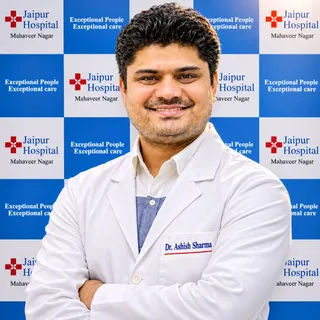
Your physiotherapy doctors
Explore our physiotherapy centre in Jaipur: every treatment, the doctors and what to expect at your visit.
Frequently asked questions
Questions patients ask about stroke rehabilitation
What does stroke rehabilitation involve?
In short
Stroke rehabilitation at Jaipur Hospital involves a structured programme of physical, occupational and speech therapy to help you regain movement, speech and daily living skills after a stroke. The multidisciplinary team plans daily sessions that may include task-specific training, balance and gait work, functional electrical stimulation and constraint-induced movement therapy.
In detail
The programme uses techniques listed in our protocol such as repetitive practice of walking, reaching and grasping, restraint of the unaffected limb to encourage use of the affected side, electrical currents to activate paralysed muscles during tasks, and parallel bars or treadmill with body weight support for balance.
Evidence shows that early, intensive therapy promotes neuroplasticity and functional recovery, with the subacute period (2 to 3 months after stroke) being a sensitive window for motor gains. The team also addresses spasticity, swallowing difficulties, cognitive changes and emotional wellbeing, adapting the plan as you progress.
A common belief
Many people think rehabilitation is only exercises in a gym.
What actually happens
In reality it also covers swallowing therapy, cognitive retraining, emotional support and training for real-life tasks like dressing, cooking and using the toilet. The plan changes as you improve.
Your next step at Jaipur Hospital
You can start with an outpatient assessment or a 2 to 4 week inpatient stay. Sessions run 1 to 3 hours daily. Typical costs in India range from ₹2,000 to ₹5,000 per day for outpatient care and ₹60,000 to ₹1,50,000 per week for inpatient care. Your surgeon will advise the right setting and duration after evaluation.
What happens during the first stroke rehabilitation session?
In short
The first stroke rehabilitation session at Jaipur Hospital focuses on baseline measurement, goal setting and introducing you to the therapy routine. The therapist will repeat key assessments, explain the planned techniques, and start gentle task-specific exercises such as sitting balance, supported standing or reaching practice based on your ability.
In detail
You will meet the physiotherapist, occupational therapist and speech-language pathologist as needed. They will review your medical history, current medications and any precautions. Baseline scores on functional scales are recorded.
The team demonstrates how to use parallel bars, walkers or the treadmill with body weight support if gait training is indicated. If functional electrical stimulation or constraint-induced movement therapy is planned, the therapist explains the sensation and safety rules.
You and your attendant learn home exercise components. The session ends with a clear schedule for the coming days and expected milestones.
A common belief
Many expect a heavy workout on day one.
What actually happens
In reality the first session is careful and diagnostic. The team checks how you respond to each activity before increasing intensity. You also learn what to practise at home with your attendant.
Your next step at Jaipur Hospital
Wear loose clothing and flat shoes. Bring your discharge summary, imaging reports and medication list. The first session lasts 60 to 90 minutes. Subsequent sessions run 1 to 3 hours daily. You can choose outpatient visits or a 2 to 4 week inpatient stay. Typical costs in India range from ₹2,000 to ₹5,000 per day outpatient and ₹60,000 to ₹1,50,000 per week inpatient.
How soon should I notice an improvement from stroke rehabilitation?
In short
Many people see the most noticeable gains in the first three months after stroke, when the brain adapts rapidly. At Jaipur Hospital the team tracks changes from the first week, but the pace varies with stroke severity, how quickly treatment began, and the intensity of rehabilitation. Progress continues more slowly after six months and can carry on for years.
In detail
Studies show that task-specific motor intervention started within two to three months post-stroke produces significantly greater upper extremity improvement than later starts. Spontaneous recovery — a lost skill returning as the brain finds new pathways — often occurs in the first three months.
After six months improvements are still possible but tend to be slower. The rehabilitation team uses standardised measures such as the Fugl-Meyer Assessment and Action Research Arm Test to detect change even when it feels small to you.
A common belief
Some people expect a fixed deadline or plateau at six months, but evidence shows no expiration date for recovery.
What actually happens
Gains depend on stroke severity, early treatment, and therapy intensity, not a calendar.
Your next step at Jaipur Hospital
Expect daily therapy of one to three hours, outpatient or during a two to four week inpatient stay. Typical costs range from ₹2,000 to ₹5,000 per day outpatient and ₹60,000 to ₹1,50,000 per week inpatient. The team reviews goals weekly and adjusts the plan.
Which symptoms should prompt an immediate emergency call after a stroke?
In short
Call emergency services at once if you notice sudden weakness or numbness on one side, slurred speech or trouble understanding, sudden vision loss, severe headache with no known cause, loss of balance or coordination, or new confusion. These may signal a new stroke or a serious complication.
In detail
Stroke survivors face a 25% to 30% chance of another stroke within five years if risk factors are not managed.
Complications such as pneumonia, heart attack, or a second stroke can appear in the months after the first event and may require rehabilitation to be paused. Falls are also common, affecting 36% to 73% of people in the first six months after discharge.
Pain, sudden drowsiness, difficulty swallowing, or a change in consciousness are additional red flags. Early recognition and rapid hospital arrival improve the chance of limiting damage.
A common belief
Many people wait to see if it passes.
What actually happens
That delay can cost brain tissue. Stroke survivors have a 25% to 30% chance of another stroke within five years if risk factors are not controlled. Fast action saves function.
Your next step at Jaipur Hospital
Keep emergency numbers by your phone and teach family members the FAST signs — Face drooping, Arm weakness, Speech difficulty, Time to call. If any of these appear, do not wait. Jaipur Hospital runs a 24×7 emergency department and ambulance service.
How will the therapist adapt stroke rehabilitation to my home, work, and activity goals?
In short
At Jaipur Hospital, the occupational therapist and physiotherapist tailor each session to your personal environment and goals. They ask about your home layout, stairs, bathroom setup, work demands and leisure activities. Therapy then practises the exact tasks you need — dressing, cooking, typing, climbing stairs or returning to a hobby.
In detail
Task-specific training means repeating the movements you use in daily life. If you need to walk to the market, gait training uses surfaces and distances similar to your route.
If you work at a desk, the therapist simulates keyboard and mouse use, sitting posture and reach. Constraint-induced movement therapy may be used to encourage the affected hand during real tasks. Functional electrical stimulation can activate muscles during practised activities.
The team also suggests home modifications — grab rails, ramp access, adapted utensils — and teaches energy-conservation techniques for work stamina. Goals are reviewed weekly and adjusted as you improve.
A common belief
Generic exercises build strength but may not translate to buttoning a shirt or climbing your front steps.
What actually happens
Task-specific practice bridges that gap.
Your next step at Jaipur Hospital
Bring photos or measurements of your home and a description of your work tasks to the first visit. The therapist will set short-term and long-term goals within the first week. Outpatient sessions run 1 to 3 hours daily; inpatient stays are typically 2 to 4 weeks.
Who is likely to benefit from stroke rehabilitation therapy?
In short
Anyone who has had a stroke and has residual weakness, speech difficulty, swallowing problems, balance impairment or difficulty with daily activities can benefit from stroke rehabilitation at Jaipur Hospital. This includes people in the acute, subacute or chronic phase, as recovery can continue for months or years with ongoing therapy.
In detail
Evidence indicates that most noticeable recovery happens in the first three months, but improvements are possible long after. People with more severe strokes may recover at a different pace.
Those who can tolerate at least one to three hours of therapy daily, whether as inpatients or outpatients, are suitable. The multidisciplinary team evaluates medical stability, cognitive ability to participate, and goals for independence. Even patients with chronic impairments can gain functional improvements through task-specific training and neuroplasticity-driven approaches.
A common belief
A common belief is that rehabilitation only helps in the first few months.
What actually happens
Evidence shows the brain keeps adapting for years, and structured therapy can still improve function even in the chronic stage. The key is a programme matched to your current ability and goals.
Your next step at Jaipur Hospital
A referral from your neurologist or physician is helpful but not mandatory; you can contact the hospital directly. The team will assess your current function and medical status to recommend outpatient sessions (1 to 3 hours daily) or a 2 to 4 week inpatient stay. Typical costs in India range from ₹2,000 to ₹5,000 per day outpatient and ₹60,000 to ₹1,50,000 per week inpatient.
How long does a stroke rehabilitation session last?
In short
A stroke rehabilitation session at Jaipur Hospital typically lasts one to three hours each day, depending on whether you attend as an outpatient or stay as an inpatient.
In detail
Outpatient sessions are usually one to three hours daily, five days a week. Inpatient programmes provide therapy spread across the day, totalling up to three hours or more, five to six days a week.
The exact duration is set by the rehabilitation physician based on your medical stability, endurance and therapy goals. Sessions include physical therapy for gait and balance, occupational therapy for daily tasks, and speech-language therapy for communication and swallowing as needed. Rest breaks are built in.
Fatigue is monitored using clinical observation and, when indicated, surface EMG measures such as median power frequency to avoid overexertion. The team adjusts the length and intensity each week as your tolerance improves.
A common belief
Many assume a session is a standard 45-minute appointment.
What actually happens
Stroke rehabilitation is more intensive: it combines multiple therapies in a longer block, with rest periods, to drive neuroplasticity through repetition and task-specific practice.
Your next step at Jaipur Hospital
Plan for up to three hours per visit. Wear comfortable clothing and bring water. The surgeon will review and adjust the schedule at each weekly team meeting.
How will my progress in stroke rehabilitation be measured?
In short
At Jaipur Hospital, progress is measured with standardised clinical scales — such as the Fugl-Meyer Assessment for motor impairment, the Action Research Arm Test for arm function, the Berg Balance Scale, and functional independence measures — plus session-by-session data on repetitions, assistance level, and endurance. The team reviews these scores weekly.
In detail
Evidence supports using validated scales that detect change smaller than what patients notice. The Fugl-Meyer Assessment and Action Research Arm Test have established minimal clinically important differences (ARAT MCID = 5.7 points).
Neurophysiological markers like corticospinal excitability and functional connectivity changes correlate with motor gains in research settings but are not routine clinical tools.
The rehab team also tracks activities of daily living — dressing, toileting, walking distance — and participation goals such as return to work or leisure. Pain, spasticity (Modified Ashworth Scale), and mood screens are recorded at each review to capture barriers to progress.
A common belief
Feeling 'better' is not a reliable measure.
What actually happens
Small but real changes show up on validated scales weeks before you notice them in daily life. That's why we test regularly, not just ask how you feel.
Your next step at Jaipur Hospital
You will receive a brief summary after each weekly review. A formal re-assessment with the full battery occurs at four weeks and at discharge. Outpatients bring their home exercise log to each visit. The therapist explains what the numbers mean for your daily life.
How does the time since stroke symptoms started affect stroke rehabilitation treatment choices?
In short
The time since your stroke shapes the intensity, goals, and setting of rehabilitation at Jaipur Hospital. Early rehabilitation — starting within 24 to 48 hours — focuses on preventing complications and beginning mobility. The first three months are a critical window when the brain adapts most rapidly.
In detail
Evidence shows that extra task-specific therapy given in the subacute period (2 to 3 months after stroke) produces the largest gains in upper limb function, exceeding the minimal clinically important difference.
Therapy started within 30 days (acute) also helps but may not reach the same magnitude. After six months (chronic), the same amount of extra therapy shows no significant benefit over standard care. Most noticeable recovery usually happens in the first three months.
Progress slows after six months but can continue for years with ongoing therapy. The team matches programme intensity — 1 to 3 hours daily — to your phase of recovery.
A common belief
Many believe rehab only works early.
What actually happens
Evidence shows subacute therapy (2 to 3 months) gives the biggest measurable gains. Chronic phase still benefits from maintenance and task-specific work, just at a different pace.
Your next step at Jaipur Hospital
If you are within the first few weeks, inpatient rehabilitation of 2 to 4 weeks with daily sessions is common. Later, outpatient sessions 1 to 3 hours daily continue the work. Typical costs in India are ₹2,000 to ₹5,000 per day outpatient or ₹60,000 to ₹1,50,000 per week inpatient.
What should I do if I am unsure whether I am doing a stroke rehabilitation exercise correctly?
In short
At Jaipur Hospital, stop the exercise and ask your therapist at the next session. Do not guess or repeat a movement that feels wrong. The physiotherapist or occupational therapist will watch you, correct the pattern and give you a simple written or video reminder for home practice. Practising an incorrect pattern can reinforce compensatory movements that limit recovery.
In detail
Compensatory movements — using the trunk, the stronger limb or abnormal joint couplings — can become habitual and reduce the brain's ability to relearn the normal pattern. Studies show dominant use of the unaffected limb leads to learned non-use of the affected side.
The therapist uses cues, mirrors, hands-on guidance and sometimes constraint-induced movement therapy to retrain the correct pattern. If you are doing home exercises, record a short video on your phone and send it to the team for feedback between visits.
A common belief
Repeating a wrong movement trains the brain to use compensatory patterns — like hiking the shoulder or leaning the trunk — which can block true recovery.
What actually happens
Early correction prevents that.
Your next step at Jaipur Hospital
Keep a notebook or phone note of any exercise that feels uncertain. Bring it to every session. The team reviews and corrects it on the spot. Outpatient visits are one to three hours daily, giving plenty of time for supervised practice. To get real-time feedback and a safe home programme, book a consultation at Jaipur Hospital.
FAQ library
Questions and answers about stroke rehabilitation
When you contact us
Start your stroke rehabilitation assessment today
Contact Jaipur Hospital to discuss your therapy plan, review reports, and organise care with our specialist team.
- A consultation with a physiotherapist in the OPD
- Your scans and reports reviewed, with tests done in-house if you need them (laboratory, X-ray and imaging)
- Your options explained in plain words, including whether you need surgery at all
- A cost estimate before you decide
- Help with cashless treatment under MAA Yojana and empanelled insurers and TPAs
- Follow-up visits after your treatment
Overview
Stroke Rehabilitation: what to know
What is stroke rehabilitation and how does recovery happen
Stroke remains a leading cause of adult disability. A stroke happens when blood flow to a region of the brain is disrupted. When brain cells suffer ischaemic damage, normal brain signals to the body are impaired. This disruption can affect speech, thought, and muscle control.
The limb contralateral to the brain injury typically develops hemiparesis, meaning weakness on one side of the body. In many cases, damaged brain cells can recover over time. In other cases, undamaged areas can reorganise to take over lost tasks.
Motor recovery is defined as the reappearance of elemental movement patterns that were present before your stroke. This healing process relies on brain plasticity, which is the capacity of the adult brain to undergo adaptive structural and functional changes. These neuroplastic processes require energy from cellular mitochondria. Rebuilding movement requires re-establishing balance between both hemispheres of the brain.
Without guided therapy, people often develop compensatory movement patterns. Compensatory movement means using different muscles, trunk twisting, or the unaffected limb to complete a task. While these habits help with immediate tasks, they can induce maladaptive plasticity and limit long-term motor recovery.
Stroke recovery is different for everyone, but it is often a long and challenging process. The main aim of multidisciplinary stroke rehabilitation is to restore function as close as possible to prestroke levels. It also teaches safe strategies to help you regain daily independence. Rehabilitation typically begins in the hospital as soon as your acute medical condition is stable.
In studies, about 40% to 60% of people regain the ability to carry out self-sustaining activities of daily living after rehabilitation therapy.
Symptoms of stroke motor impairment and signs needing urgent care
- High fever
- Difficulty breathing
- Sudden severe headache
- Sudden new weakness
A motor stroke leads to reduced motoneuronal recruitment and reduced voluntary muscle activation. You may notice weakness or paralysis affecting your arm, hand, or leg. It is very common for people to develop a compensatory hyperreliance on the unaffected side or trunk. You might notice your body rotating, your shoulder hiking, or your arm turning inward when reaching.
The unaffected limb often tires quickly during daily tasks because it bears extra weight to compensate for the weak side.
Long-term effects can also include:
- Memory problems
- Difficulty communicating
- Difficulty swallowing
Physical pain is common after a stroke and can hinder your rehabilitation progress if left unaddressed. A symptom that causes no pain, such as sudden weakness or a limb that feels numb, is genuine medical information and requires careful clinical attention.
Falls represent a frequent post-stroke complication, affecting between 36% and 73% of people during the first 6 months after discharge from the hospital. In studies, about 35% to 40% of people have limitations in basic activities of daily living 6 months after a stroke. Furthermore, participation in leisure activities is often reduced by 10% to 40%.
Certain warning signs require urgent medical evaluation the same day.
Some people experience post-stroke complications such as:
- Chest pain
- Sudden breathlessness
- Pneumonia
- A heart attack
- Symptoms of a recurrent stroke
If you develop high fever, difficulty breathing, sudden severe headache, or sudden new weakness, you must seek hospital emergency care without delay. In such situations, planned therapy sessions may need to be put on hold until you are medically stable.
Causes of stroke disability and who is at higher risk of complications
- Two-thirds No full upper extremity recovery
- About 40% Moderate to severe impairment
- about 10% Require nursing facility care
- about 25% to 30% Five-year recurrent stroke risk
Stroke disability stems from cellular damage in the brain caused by reduced blood flow and oxygen deprivation. During cerebral ischaemia, cells can die from necrosis, apoptosis, or disordered autophagy. The blood-brain barrier is often disrupted when matrix metalloproteinase-9 rises, which increases vascular permeability. Damage to descending corticospinal motor tracts disrupts normal signals to muscles.
In addition, abnormal competitive interactions between the two cerebral hemispheres can cause interhemispheric inhibition, which weakens motor function on the affected side.
People with significant damage to their descending motor pathways face a higher risk of persistent physical impairment. Two-thirds of people do not recover the necessary upper extremity function for routine daily activities by 6 months, when natural motor recovery often plateaus. About 40% of stroke survivors live with moderate to severe impairments, and about 10% require long-term nursing facility care.
Without managing underlying cardiovascular risk factors, the chance of having another stroke within 5 years is about 25% to 30%.
Certain movement habits also increase the risk of poor motor recovery. Relying solely on the unaffected hand leads to learned nonuse of the weakened limb. Widespread disinhibition in the brain can also trigger competitive interaction between the hand and proximal arm muscles, which leads to incomplete hand recovery. People who experience severe muscle spasticity, persistent joint stiffness, or extreme exercise fatigue face slower progress during therapy.
How stroke motor impairment is evaluated: clinical examination and tests
- Clinical motor assessment
- Measures grasping, gripping, and moving objects with standard arm tests.
- Surface electromyography
- Measures muscle electrical signals and assesses muscle fatigue.
- Motor evoked potentials
- Assesses corticospinal tract conduction to examine nerve signals.
- Resting reflex testing
- Provides information on motor reflex regulation after exercise.
Evaluation begins with a bedside clinical assessment of your strength, reflexes, balance, and voluntary movement. Clinical assessment of motor impairment within a few days of a stroke helps our specialist team evaluate the pattern of brain injury and predict subsequent recovery.
Standard clinical tests, such as the Action Research Arm Test and the Fugl-Meyer Assessment, measure how well your arm and hand can grasp, grip, and move objects. Your ability to walk, balance, and carry out daily tasks is also assessed.
Electrophysiological assessments help measure how nerve signals reach your muscles. Surface electromyography measures muscle electrical signals and assesses muscle fatigue. A decrease in median power frequency on electromyography serves as a biological index of muscle fatigue. Clinicians may also assess motor evoked potentials to examine corticospinal tract conduction. Resting reflex activity and post-exercise reflex responses provide information on motor reflex regulation.
Neurophysiological and neuroimaging biomarkers help predict both motor recovery and functional outcomes. These biological markers help our specialist team plan a personalised rehabilitation programme suited to your condition. Blood pressure, blood sugar, cardiac function, and general laboratory blood tests are reviewed to protect your cardiovascular health. At Jaipur Hospital, our doctors advise diagnostic scans and laboratory tests.
Jaipur Hospital has an in-house laboratory, X-ray, and ECG, but it does not have a CT or MRI scanner. If a CT scan or MRI scan is advised by your doctor, it is done at an outside imaging centre, and our specialist team reviews the imaging.
Treatment options for stroke rehabilitation: therapy and medical management
Physical rehabilitation is the primary intervention to improve sensorimotor function and promote neural plasticity after a stroke. Anaesthesia is not needed for neuro-rehabilitation therapy. Sessions typically take 1 to 3 hours daily, either as an outpatient or during an inpatient hospital stay of 2 to 4 weeks.
In India, typical outpatient rehabilitation costs range from ₹2,000 to ₹5,000 per day, while inpatient care typically ranges from ₹60,000 to ₹1,50,000 per week. Total costs depend on daily therapy hours, room category, and the level of nursing care. You can ask us for an estimate based on your rehabilitation plan.
Rehabilitation techniques include:
- Task-specific training
- Constraint-induced movement therapy
- Functional electrical stimulation
- Balance and gait training
Task-specific training involves repetitive practice of everyday tasks such as grasping, reaching, or walking. In clinical trials, adding 20 extra hours of task-specific motor therapy was most effective when initiated during the subacute window of 2 to 3 months post-stroke. Constraint-induced movement therapy restricts the unaffected arm to overcome learned nonuse and encourage use of the weakened arm.
Functional electrical stimulation applies electrical currents to activate weak muscles during movement. Balance and gait training uses parallel bars, walkers, and treadmills with body weight support to restore walking. Your specialist doctor will advise which techniques suit your stage of recovery.
Therapy is delivered by a multidisciplinary team that may include physiotherapists, occupational therapists, speech therapists, physiatrists, and nurses. Speech therapy treats swallowing difficulties and speech problems. Recreation, leisure, and daily living skills are also practised. Noninvasive brain stimulation techniques, such as repetitive transcranial magnetic stimulation, are being investigated in clinical trials to help restore balance between the brain hemispheres.
Rehabilitation is a non-surgical service; surgery is not part of routine neuro-rehabilitation. If complications such as severe joint contractures or distinct anatomical issues develop, your specialist team will discuss whether a surgical consultation is appropriate. Jaipur Hospital is NABH-accredited and in service since 1991. For cashless hospitalisation, the hospital accepts MAA Yojana along with empanelled private health insurance policies and TPAs.
Your first visit and tests for stroke rehabilitation in Jaipur
- Initial clinical evaluation Doctors assess movement, speech, swallowing, and daily living skills.
- OPD examination Doctors examine muscle strength, reflexes, balance, coordination, and stiffness.
- Reviewing medical records Bring hospital discharge summaries, prescription slips, and previous investigation reports.
- Outside imaging if advised Doctors advise scans done outside, then review the films with you.
Stroke rehabilitation begins with an in-depth clinical evaluation by our doctors to assess how the stroke has affected your movement, speech, swallowing, and daily living skills. Clinical assessment of motor impairment within a few days of a stroke helps our medical team predict your subsequent recovery and design a personalised plan.
The care team reviews what areas of the brain are affected by watching you carry out simple everyday tasks such as grasping objects, brushing hair, or walking. They also screen for memory problems, cognitive difficulties, and emotional challenges that may follow a stroke.
During your first visit to the OPD at Jaipur Hospital, our doctors examine your muscle strength, reflexes, balance, and motor coordination. The team checks for muscle stiffness, known as spasticity, and evaluates your joint movement. When you attend your consultation, please bring all your hospital discharge summaries, current prescription slips, and previous investigation reports.
If brain imaging such as an MRI or CT scan is required to evaluate damaged motor pathways or corticomotor structure, your doctor will advise it. You will have the scan done at an outside imaging centre, and our doctors will review the films and reports with you.
Anaesthesia is not needed for stroke rehabilitation. A family attendant should accompany you to the hospital to discuss home support, daily assistance routines, and long-term rehabilitation goals.
How stroke rehabilitation works and therapy techniques
Task-Specific Training
- Repetitive daily practice Practises reaching, grasping, and walking to relearn functional skills.
Constraint-Induced Therapy
- Restraining unaffected limb Encourages active use of the weakened arm or leg.
Electrical Stimulation
- Targeted electrical currents Activates weak muscles to help rebuild neural connections.
Balance and Gait
- Supported walking training Uses parallel bars and walkers to practise stepping safely.
Stroke rehabilitation works by stimulating the natural capacity of the adult brain to reorganise its connections, a biological process known as neural plasticity. When stroke disrupts motor pathways, physical exercise and repetitive training promote brain plasticity, support new blood vessel growth, and help activate affected muscles.
The multidisciplinary team delivering care may include physical therapists, occupational therapists, speech therapists, and medical specialists who coordinate your recovery. Therapy sessions typically run for 1 to 3 hours daily, depending on whether you attend as an outpatient or stay in the hospital.
Our doctors assess your functional abilities and advise which rehabilitation techniques suit your condition:
- Task-Specific Training: This technique involves repetitive practice of everyday movements, such as reaching, grasping, and walking. Practising real-world actions helps retrain elemental motor patterns and relearn functional skills.
- Constraint-Induced Movement Therapy: This method uses a restraint on your unaffected arm or leg to encourage and force the active use of the affected limb. It is designed to overcome the habit of learned nonuse, where a person relies only on their stronger side.
- Functional Electrical Stimulation: Small electrical currents are applied to activate weak or paralysed muscles while you practise a task. This stimulation assists muscle contraction and helps rebuild connections between the brain and limbs.
- Balance and Gait Training: This training focuses on walking, posture, and stability using equipment such as parallel bars, walkers, and treadmills with body-weight support to help you practise stepping safely.
Your therapy session focuses directly on activities of daily living, including dressing, feeding, and personal hygiene. When full recovery of a limb is not immediately possible, your therapists teach compensatory strategies, such as holding an object steady with one hand while the stronger hand unscrews a cap.
Risks and possible complications during stroke recovery
Do
- Treat physical pain early Unaddressed pain can slow down or inhibit progress during therapy.
Avoid
- Compensatory movement patterns Trunk rotation or shoulder hiking limits long-term motor recovery.
- Learned nonuse Relying only on the nonparetic limb weakens the affected side.
- Unmanaged blood pressure Uncontrolled risk factors increase the chance of a recurrent stroke.
Stroke rehabilitation is non-invasive and safe, but medical complications and physical setbacks can occur during the recovery period. Falls are one of the most common complications after a stroke, affecting between 36% and 73% of people during the first six months after leaving the hospital.
Weakness in an ankle or leg, poor balance, and reduced motor coordination increase the risk of stumbling or falling during movement training.
Pain is another frequent complication that stroke survivors experience, which may slow down or inhibit progress during therapy sessions. When people use the unaffected side of their body to compensate for weakness, they may develop compensatory movement patterns, such as unnatural trunk rotation, shoulder abduction, or scapular elevation.
While these compensatory movements help you carry out immediate tasks, studies show they can lead to maladaptive plasticity and limit the long-term recovery of your affected limb. Dominant use of the nonparetic limb can also cause learned nonuse of the weaker side.
Some individuals experience significant medical setbacks during the months following a stroke, such as chest infections, pneumonia, a heart attack, or a recurrent stroke. Without proper medical management of risk factors like high blood pressure and diabetes, the chance of experiencing a second stroke within five years is about 25% to 30%.
When a major health complication arises, active physical rehabilitation may need to be temporarily paused while your medical team treats the illness.
Recovery and aftercare: the first days and ongoing rehabilitation
- First 24 to 48 hours Therapists begin gentle movement, position changes, and sitting balance.
- First 2 to 4 weeks Inpatient hospitalisation or daily outpatient programme is conducted.
Rehabilitation begins in the hospital as early as possible once your initial medical condition is stabilised, often within the first 24 to 48 hours. In the early days, therapists work at the bedside on gentle movement, position changes, swallowing safety, and sitting balance.
Depending on your functional status and home support, your stay may be organised as an outpatient programme with daily visits or an inpatient hospitalisation lasting typically 2 to 4 weeks.
The most noticeable recovery usually takes place during the first three months after a stroke. During this phase, many individuals experience spontaneous recovery, where brain pathways adapt and skills that appeared lost begin to return. After six months, the rate of motor improvement tends to slow down, but recovery does not have an expiration date. Functional gains can continue for months to years with ongoing maintenance, daily home practice, and regular medical checkups.
After leaving the hospital, your family attendant plays a vital role in supporting your exercises and keeping your living space safe to prevent accidental falls. Attending recreation and leisure activities is also an essential part of overall stroke recovery and emotional well-being.
You should call the hospital or visit our emergency department immediately if you develop sudden new weakness or numbness, slurred speech, facial drooping, breathing difficulty, high fever, chest pain, or an accidental fall.
Results: recovery outcomes and functional independence in studies
The primary goal of stroke rehabilitation is to regain as much physical, cognitive, and daily living independence as possible. Stroke remains a leading cause of adult disability, and recovery varies depending on the initial severity of the stroke and the extent of damage to motor pathways.
In clinical studies, approximately 40% to 60% of stroke patients regain the ability to perform self-sustaining activities of daily living after participating in rehabilitation therapy.
Timing plays an important role in how well motor function returns. In a clinical trial evaluating task-specific upper extremity training, starting therapy within the first 2 to 3 months produced significant improvements in arm function compared with standard care, exceeding the minimal clinically important difference on the Action Research Arm Test.
Therapy initiated within the first 30 days also showed significant gains. However, starting an extra therapy block at 6 months or later did not show a statistically significant difference compared with standard care, confirming a sensitive early window for optimal motor reorganisation.
Long-term outcome data show that about two-thirds of stroke survivors do not recover full arm function for usual activities by 6 months, when motor recovery often reaches a plateau. About 35% to 40% of survivors have ongoing limitations in basic daily activities at 6 months, and about 40% experience moderate to severe impairments.
However, even in the chronic phase, targeted techniques such as functional electrical stimulation have been shown in trials to produce significant gains in muscle strength and motor recovery compared with control therapies, with improvements retained at 6 to 12 months of follow-up.
Cost of stroke rehabilitation and insurance options in Jaipur
The cost of stroke rehabilitation in India typically ranges from ₹2,000 to ₹5,000 per day for outpatient therapy sessions. For inpatient hospital care, the typical cost ranges from ₹60,000 to ₹1,50,000 per week. These figures represent typical price ranges across India; please ask our team directly for a specific estimate based on your clinical needs.
The overall expense of rehabilitation depends on several individual factors. These include whether you receive care as an outpatient or require an inpatient stay, the duration of your hospitalisation, the number of therapy hours prescribed each day, and the specific mix of physical, occupational, and speech therapy required.
The need for medical monitoring, specialised mobility equipment, and treatment for coexisting health conditions like high blood pressure or diabetes also influences the total cost.
Jaipur Hospital is a NABH-accredited multispeciality hospital, and we have been in service since 1991. For cashless hospitalisation and reimbursement support, we accept the government MAA Yojana scheme as well as a panel of approved private insurers and Third Party Administrators (TPAs).
Patients and their family attendants can visit the hospital administration desk in the OPD with their insurance card and policy papers to verify coverage and complete claim documentation.
