

Plastic Surgery · Jaipur Hospital
Aesthetic Consultation and Planning in Jaipur
Unsure which cosmetic option is right for you? Jaipur Hospital offers a calm assessment, clear answers and a plan you can understand.
- Serving Jaipur since 1991 (35 years)
- NABH accredited
- 24×7 emergency & ICU
- Cashless: RGHS, MAA Yojana, CGHS + 22 insurers
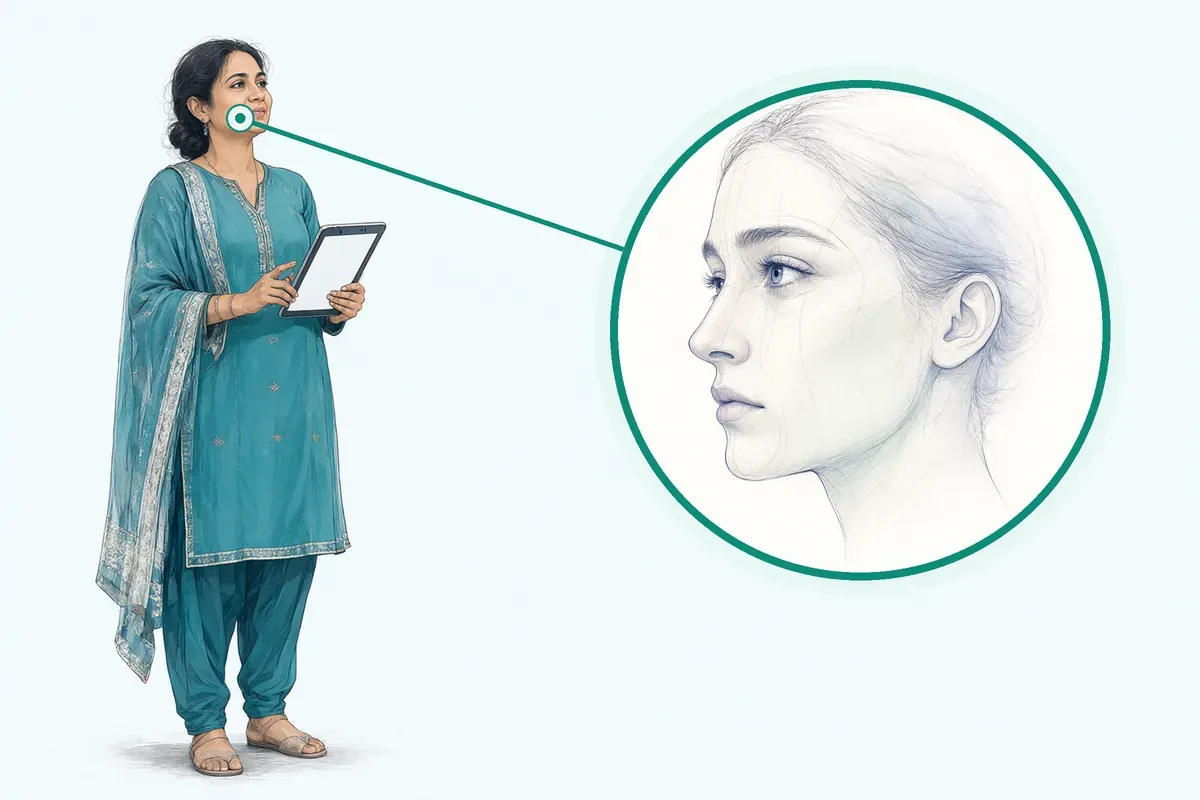
- Session length
- 30 to 60 minutes
- Anaesthesia
- Not needed
- Recovery
- Immediate
- Price
- ₹1,000 to ₹3,000typical range in India; ask us for an estimate
Too many opinions, no clear plan
Everyone has advice. Nobody explains it clearly.
You may feel unsure about a cosmetic concern. Friends suggest one thing, the internet says another. You worry about cost, time off work and what others will think. You want a clear answer, not pressure.
-
Conflicting advice
One person says wait, another says act now. You are not sure whom to trust.
-
Cost feels unclear
You want to know what the consultation and any treatment will cost before you commit.
-
Fear of pressure
You worry the clinic will push you into a procedure you do not want or cannot afford.
-
Time away from work
You are not sure how many visits this needs or how much leave to plan for.
Research finds that people often understand little of the information they are given before a procedure.
Why Jaipur Hospital
You may worry that asking about a cosmetic concern sounds vain, or that you will be pushed into a procedure you cannot afford.
Your care plan
Your first steps with us
- 1 Call or walk in to book an OPD consultation.
- 2 Meet the plastic surgeon for 30 to 60 minutes.
- 3 Review your photographs, scans and options in plain words.
- 4 Decide, get a cost estimate, then follow up as advised.
how the operation is done
The first visit is an assessment, not surgery. It usually takes 30 to 60 minutes. No anaesthesia is needed and you can go home the same day. Your surgeon examines the area, reviews your reports and explains the options that fit your concern.
-
Clinical Photography
Standardised images record a baseline. Your surgeon will discuss whether these help your planning.
-
3D Imaging Simulation
A visual preview of possible results for the nose, breast or face. Your surgeon will discuss if it suits you.
-
Vectra Analysis
Objective measurement of facial volume and symmetry. Your surgeon will discuss whether this adds useful detail for you.
Why patients trust us
- 1991 Serving Jaipur for 35 years
- NABH Accredited hospital
- 1 Plastic Surgery consultants
- 24×7 Emergency, ICU and ambulance
- 25 Cashless schemes and insurers
What research shows about understanding options
-
75.8%
of participants in reviewed studies understood they could stop or withdraw at any time.
-
69.6%
understood the purpose of the study they were joining.
-
54.9%
could name at least one risk after the discussion.
If it is left untreated
Many cosmetic concerns are not harmful to your health. The bigger risk is deciding without clear facts. Research finds that current practices often leave patients with poor understanding of the information they are given, so questions go unasked.
life after treatment
Most people return to their usual routine right after the consultation. If you go ahead with a procedure, your surgeon will explain the expected recovery time for that procedure.
-
Clear next step
Most people leave the consultation knowing what they can do next, and what they can leave alone.
-
Cost before you decide
You usually get an estimate before any treatment, so you can plan your spending.
-
Time to think
You can go home and decide later. Most people are not rushed into a choice.
Frequently asked questions
Questions patients ask about aesthetic consultation and planning
Which problems are assessed under aesthetic consultation and planning?
In short
At Jaipur Hospital, an aesthetic consultation and planning session reviews any cosmetic concern you wish to discuss. Common areas include the face, nose, breasts, abdomen, and body contour. The surgeon listens to your goals, examines the relevant anatomy, and notes skin quality, symmetry, and proportion. This detailed assessment forms the basis of a personalised plan.
In detail
The consultation uses standardised clinical photography to create a baseline record for comparison. Where helpful, 3D imaging simulation gives a visual preview of possible results for the nose, breast, or face. Vectra analysis adds objective measurements of facial volume and symmetry.
These techniques let the surgeon explain what is achievable, discuss limitations, and tailor the plan to your anatomy and expectations. No anaesthesia is required and the session lasts 30 to 60 minutes as an outpatient visit.
Your next step at Jaipur Hospital
Bring any previous medical records and a list of medications. The surgeon will outline the next steps, which may include further investigations or a cooling-off period before any procedure. Typical consultation fees range from ₹1,000 to ₹3,000. To start your assessment, book a consultation at Jaipur Hospital.
How will the doctor decide which tests I need?
In short
At Jaipur Hospital, the surgeon decides on tests based on your medical history, the area being assessed, and the type of procedure under consideration. Routine blood work, imaging such as ultrasound or mammography for breast cases, or allergy testing for non-surgical treatments may be ordered only if they change the surgical plan or safety profile.
In detail
The consultation itself relies on clinical examination, standardised photography, and optional 3D imaging or Vectra analysis for planning. Tests are not routine for every patient.
For example, a patient considering abdominoplasty after massive weight loss may need nutritional markers and hernia imaging, while a patient seeking facial fillers may need no tests at all. The surgeon follows a targeted approach to avoid unnecessary investigations and cost.
A common belief
Patients often expect a full body check-up.
What actually happens
In reality, a healthy adult having a limited procedure may need no tests, while someone with medical comorbidities or planning major body contouring will need targeted investigations for safety.
Your next step at Jaipur Hospital
Any recommended tests can be done at the hospital's in-house diagnostic laboratory and imaging centre. Results are usually available within 24 to 48 hours. The surgeon will review them and adjust the plan if needed.
How soon should I expect improvement after the chosen aesthetic treatment?
In short
Improvement after an aesthetic treatment at Jaipur Hospital depends on the procedure type. Non-surgical options may show changes within days to weeks. Surgical procedures involve swelling and bruising that settle over several weeks, with final results appearing after three to six months. Your surgeon will give a realistic timeline for your specific plan during the consultation.
In detail
The consultation includes 3D imaging simulation and Vectra analysis to demonstrate the expected progression of healing. Evidence from consent studies shows that patients who receive extended discussion with visual timelines retain information better and report higher satisfaction.
The surgical team explains each recovery phase: immediate post-operative care, suture removal if needed, return to light activity, and the gradual refinement of contours. Factors such as skin quality, age, smoking status, and adherence to post-operative instructions influence the speed and quality of healing.
A common belief
A common mistake is expecting the final look immediately after surgery.
What actually happens
Healing happens in phases, and early swelling can mask the result. Studies on informed consent show that patients who see a visual recovery timeline during consultation understand the process better and feel more satisfied with their progress.
Your next step at Jaipur Hospital
After your procedure, follow the surgeon's post-operative instructions closely. Attend all scheduled follow-up visits at Jaipur Hospital so the team can monitor healing and address any concerns early. Avoid strenuous exercise, sun exposure, and smoking during the recovery period. If you have questions about your recovery timeline, book a consultation at Jaipur Hospital.
Are my expectations realistic for my anatomy and health?
In short
The aesthetic consultation and planning session at Jaipur Hospital is designed to answer exactly that question. Using clinical photography, 3D imaging simulation, and Vectra analysis, your surgeon compares your goals with what your anatomy and health safely allow. You receive an honest, personalised assessment.
In detail
During the 30 to 60 minute outpatient session, the surgeon reviews your medical history, examines the area, and listens to your concerns. Standardised photographs create a baseline. 3D imaging shows a visual preview of possible results for the nose, breast, or face.
Vectra analysis measures facial volume and symmetry objectively. These tools reveal structural limits — such as skin elasticity, bone structure, or tissue thickness — that affect outcomes. The surgeon explains what can be achieved, what cannot, and any health factors that may increase risk. Studies show that enhanced consent forms and extended discussions significantly improve patient understanding of realistic outcomes.
A common belief
Social media filters and edited photos create false benchmarks.
What actually happens
Many patients ask for results their bone structure, skin quality, or health cannot support. The consultation replaces guesswork with objective data so you make informed choices.
Your next step at Jaipur Hospital
You leave with a clear written plan, including achievable goals, alternative options, and a cost estimate for any procedure. If your expectations need adjustment, the surgeon discusses this openly so you can decide confidently.
How can I decide whether to seek advice about 3d simulation consultation?
In short
Consider a 3D simulation consultation at Jaipur Hospital if you want a visual preview of expected results for nose, breast, or face procedures before committing to surgery. The 30 to 60 minute outpatient session uses Vectra Analysis to measure facial volume and symmetry, helping you see potential changes from multiple angles.
In detail
The simulation creates a three-dimensional model from standardised clinical photographs, allowing the surgeon to demonstrate different surgical options side by side. Evidence from informed consent research shows that visual aids and extended discussions significantly improve patient understanding of proposed procedures and realistic outcomes.
This is especially useful when you are comparing techniques, unsure about size or shape choices, or need to explain goals to family members. The session requires no anaesthesia, has immediate recovery, and typically costs between ₹1,000 and ₹3,000. You can rotate the 3D image, view profiles, and discuss limitations so expectations match what surgery can deliver.
A common belief
Patients often rely on 2D photos or verbal descriptions, which can lead to mismatched expectations.
What actually happens
Research shows visual aids and extended discussions significantly improve understanding of procedures and realistic outcomes. The 3D model lets you compare options side by side before deciding.
Your next step at Jaipur Hospital
If you have a specific cosmetic concern and want to explore options visually before deciding, book a 3D simulation consultation at Jaipur Hospital. Bring reference photos and a list of questions. The surgeon will review your anatomy, show simulated outcomes, and provide a written plan.
How will appearance, function, and realistic expectations be discussed?
In short
At Jaipur Hospital, appearance, function, and realistic expectations are discussed during the 30 to 60 minute aesthetic consultation using clinical photography, 3D imaging simulation, and Vectra Analysis. The surgeon reviews your goals, examines anatomy, and shows simulated outcomes to align expectations with what surgery can achieve.
In detail
The consultation follows a structured format: first, your concerns and desired changes are recorded; second, standardised photographs create a baseline; third, 3D simulation demonstrates potential results for nose, breast, or face procedures from multiple angles; fourth, Vectra Analysis provides objective measurements of volume and symmetry.
Evidence from informed consent research shows that visual aids and extended discussions significantly improve patient comprehension of procedures, risks, and realistic outcomes. The surgeon explains functional impacts — such as breathing after rhinoplasty or sensation after breast surgery — alongside aesthetic changes.
Limitations, recovery timeline, and the possibility of revision are discussed openly. No anaesthesia is required, recovery is immediate, and the typical cost ranges from ₹1,000 to ₹3,000. You receive a written summary of the discussion and proposed plan.
A common belief
Patients often rely on verbal promises or 2D photos, which can create unrealistic expectations.
What actually happens
Research shows visual aids and extended discussions significantly improve understanding of what surgery can and cannot achieve, including functional changes and the possibility of revision.
Your next step at Jaipur Hospital
Bring reference photos showing your goals and a list of functional concerns. The surgeon will document everything in your personalised plan.
Which symptoms should prompt me to see a specialist?
In short
You should consider a specialist visit at Jaipur Hospital when a visible feature causes you persistent concern, affects your confidence, or limits clothing choices. Common prompts include a nose shape you dislike, breast asymmetry, excess abdominal skin after weight loss, prominent scars, or worsening facial ageing signs that bother you daily.
In detail
These are not medical emergencies but quality-of-life indicators. If you find yourself avoiding photographs, covering up in social settings, or spending significant time trying to camouflage an area, a formal assessment helps clarify whether a surgical or non-surgical approach can address the issue.
The surgeon will also screen for underlying conditions such as skin lesions that need medical attention before any cosmetic plan proceeds.
A common belief
People often wait until a problem becomes severe.
What actually happens
Earlier evaluation allows simpler options, such as injectables or skin treatments, and gives more time to plan surgery if needed, rather than rushing into a procedure.
Your next step at Jaipur Hospital
The consultation is an outpatient appointment of 30 to 60 minutes with no anaesthesia required. Typical cost ranges from ₹1,000 to ₹3,000. Bring a list of your concerns and any previous treatment records.
How will the results change my care plan?
In short
At Jaipur Hospital, test results directly influence whether a procedure proceeds, is modified, or is delayed. Normal results allow the planned surgery or treatment to go ahead as discussed. Abnormal findings such as anaemia, uncontrolled diabetes, thyroid imbalance, or a suspicious imaging finding may lead to medical optimisation, a change in technique, or referral to another specialist before any cosmetic intervention.
In detail
For instance, a raised blood sugar level would require better glycaemic control to reduce infection and wound healing risks. A breast ultrasound showing a indeterminate nodule would need biopsy or surgical oncology review before aesthetic breast surgery.
The surgeon uses results to minimise complications and ensure the aesthetic plan is safe. In some cases, results may reveal a non-cosmetic condition that becomes the priority.
A common belief
Patients sometimes view tests as a formality.
What actually happens
In fact, they are a safety gate; proceeding with surgery despite untreated anaemia or infection significantly raises complication rates, so the plan adapts to the findings.
Your next step at Jaipur Hospital
You will be informed of any result that changes the plan, and the surgeon will explain the next steps and revised timeline. Most test results are available within 24 to 48 hours from the in-house laboratory.
What should I do if symptoms persist or worsen after an aesthetic procedure?
In short
If you have unexpected pain, swelling, redness, fever, or any symptom that worsens after a cosmetic procedure, contact Jaipur Hospital immediately. The 24×7 emergency department and on-call surgical team are available for urgent assessment. Do not wait for a routine appointment if you are concerned.
In detail
The aesthetic consultation and planning session prepares you for what is normal after your specific procedure. You receive written post-operative instructions that list common side effects — such as mild swelling, bruising, or numbness — and how long they usually last.
The instructions also list warning signs: increasing pain not relieved by prescribed medication, spreading redness, hot skin, pus, fever above 38°C, or sudden asymmetry. If any of these appear, call the hospital or visit the emergency department.
Your surgeon may want to see you sooner than the scheduled follow-up to check the wound, adjust medication, or arrange imaging if needed.
A common belief
Some patients try to wait it out or search online for answers.
What actually happens
Delaying care can turn a small issue into a serious complication. The hospital gives you a clear list of warning signs and direct contact numbers so you never have to guess.
Your next step at Jaipur Hospital
Keep the hospital phone numbers and your surgeon's contact details handy. Attend all scheduled follow-up visits so the team can track healing. If you are unsure whether a symptom is normal, it is safer to call and ask.
What qualifications and experience should I look for in the treating surgeon for an aesthetic procedure?
In short
At Jaipur Hospital, your aesthetic consultation and planning session is conducted by a qualified plastic surgeon with recognised training in cosmetic and reconstructive surgery. Look for a surgeon who holds an MCh or DNB in Plastic Surgery, is registered with the National Medical Commission, and has specific experience in the procedure you are considering.
In detail
The consultation uses clinical photography, 3D imaging simulation, and Vectra analysis to plan your treatment. A well-qualified surgeon interprets these tools accurately, explains the surgical options, and discusses risks specific to your anatomy.
Ask how many similar procedures the surgeon has performed, what their complication rates are, and whether they have hospital privileges for that surgery. Membership in the Association of Plastic Surgeons of India or the Indian Association of Aesthetic Plastic Surgeons indicates ongoing professional engagement. The hospital's surgical team follows standardised protocols for safety, consent, and follow-up.
A common belief
Some practitioners offer cosmetic procedures without formal plastic surgery training.
What actually happens
They may lack the depth to manage complications or use advanced planning tools like 3D imaging and Vectra analysis. Choosing a fully qualified surgeon protects your safety and results.
Your next step at Jaipur Hospital
During your consultation, you can ask the surgeon directly about their training, case volume, and outcomes. The hospital provides a written plan with the surgeon's name and credentials. You may also request to speak with the department coordinator for verification.
FAQ library
Questions and answers about aesthetic consultation and planning
When you contact us
Start with a clear consultation
Call Jaipur Hospital or visit the OPD to book a consultation with a plastic surgeon.
- A consultation with a plastic surgeon in the OPD
- Your scans and reports reviewed, with tests done in-house if you need them (laboratory, X-ray and imaging)
- Your options explained in plain words, including whether you need surgery at all
- A cost estimate before you decide
- Help with cashless treatment under RGHS, MAA Yojana, CGHS and empanelled insurers and TPAs
- Follow-up visits after your treatment
Overview
Aesthetic Consultation and Planning: what to know
What Aesthetic Consultation and Planning Means
- Session length 30 to 60 minutes
- Anaesthesia Not needed
- After visit Go home same day
Aesthetic consultation and planning is a detailed assessment of a cosmetic concern and a personal plan for it. It is a discussion, not a procedure. You sit with a member of our surgical team, explain what bothers you, and go through what can and cannot be done. At Jaipur Hospital, this session usually takes 30 to 60 minutes.
No anaesthesia is needed. You go home the same day and can carry on with your usual routine straight away.
The aim is to understand your concern before anything is decided. Your surgeon looks at the area, asks about your health and past treatments, and explains the choices in plain words. You are free to ask questions, and you can take time before you decide.
Understanding matters more than most people expect. In studies, people often understood very little of the information presented to them. Good understanding is central to any valid decision about your own care. That is why this first meeting is given proper time rather than a quick look.
You may bring an attendant with you if that helps you follow the discussion.
Aesthetic Concerns, and When Not to Wait for a Consultation
- Mole changing quickly Size, shape or colour
- New lump appeared Any new lump
- Worsening pain Pain getting worse
- Wound not healing Non-healing wound
Most cosmetic concerns are not emergencies. A concern about the shape of your nose, the size of your breasts, scarring, or the way your skin looks can wait for a planned consultation. Nothing is gained by rushing that decision.
Some situations are different. Usually, our team asks you to be seen the same day if a mole is changing quickly in size, shape or colour, if a new lump has appeared, if you have pain that is getting worse, or if a wound is not healing. These are not planning problems until they have been checked. Jaipur Hospital has a 24x7 emergency department, so you do not have to wait for an OPD slot.
If you have had a procedure recently, usually contact us the same day for:
- Fever
- Redness that is spreading
- Discharge from the wound
- Trouble breathing
These need a review, not a wait-and-see approach.
For anything that feels urgent, use the emergency department rather than an appointment. Bring any previous reports and a list of the medicines you take, including anything from your chemist.
What Causes Aesthetic Concerns, and Who May Need Extra Time to Understand the Plan
- lower chance of understanding key points Lower education
- less likely to understand some key points Low-income countries
- improved understanding more than a standard form alone Extended discussion
Aesthetic concerns rarely have a single cause.
The shape of the face and nose, the amount of facial fat, skin quality, scars from acne or injury, and changes after pregnancy or weight loss all play a part:
- Shape of the face and nose
- Amount of facial fat
- Skin quality
- Scars from acne or injury
- Changes after pregnancy or weight loss
Heredity matters too. Two people with the same concern may need very different plans, which is why an assessment comes before any treatment.
Ageing changes volume and skin tone slowly, and the change is not the same for everyone. Previous surgery in the same area can also affect what is possible. Your surgeon will go through these factors with you.
Some people find it harder to follow a detailed explanation. In studies of how information is given, a lower educational level was linked to a lower chance of understanding key points such as the nature of a procedure and the freedom to withdraw. People from low-income countries were also less likely to understand some key points. This is not about intelligence. It is about how information is shared.
Our team usually slows down when a point is not clear, repeats it in simpler words, and checks that you can explain the plan back in your own words. In studies, extended discussion improved understanding more than a standard form alone.
How Your Assessment Is Done: Examination and Imaging
The assessment starts with a conversation and an examination.
Your surgeon asks:
- What you want changed and why
- What you have tried before
- Your medical history
- Allergies
- Any medicines you take
Old reports and photographs help.
The physical examination looks at skin, soft tissue, and the underlying shape. Symmetry is checked from more than one angle. Measurements may be taken.
Three imaging techniques are commonly used, and your surgeon will advise which suits you.
- Clinical photography uses standardised images taken from fixed angles and lighting. They give a baseline for planning and for comparing later.
- 3D imaging simulation gives a visual preview of an expected result for the nose, breast, or face. It is a planning aid, not a promise of how you will look.
- Vectra analysis measures facial volume and symmetry objectively, so changes can be discussed in numbers rather than impressions.
Seeing an image can make a plan easier to follow. In studies, 56 in 100 audiovisual interventions improved understanding, and 85 in 100 interactive digital interventions did so. These are results from groups of patients in research, not a forecast for you.
No anaesthesia is needed for any of this. The whole visit usually fits within the 30 to 60 minute session.
Non-Surgical Options, Surgery, and What the Consultation Costs
- about 67 in 100 people Understood possible risks
- ₹1,000 to ₹3,000 Consultation fee range
Not every concern needs surgery. Some can be managed with skin care advice, non-surgical treatments, or a wait-and-watch plan. Others are better addressed with an operation. Which one applies to you depends on the concern, your health, and what you hope to change. Your surgeon will advise which option suits you and will explain the trade-offs.
Planning includes the limits. A plan should say what a treatment can reasonably do, what it cannot do, and what recovery involves. It should also cover the risks. In studies, only about 67 in 100 people understood the possible risks and side effects of a procedure, which is why we go through them slowly and invite questions.
Surgery is usually advised when a non-surgical route cannot address the concern, or when the concern is structural, such as the shape of the nose or the size of the breast. The decision is yours, made after you have the information.
The consultation fee is usually ₹1,000 to ₹3,000. This is a typical range in India, and the final amount depends on how long the session runs and how much imaging is included. Ask us for an estimate before you book. The visit is outpatient, and no hospital stay is needed.
Preparing for your aesthetic consultation at Jaipur Hospital
Do
- List of all medicines Include chemist purchases
- Known allergies Any allergies you know about
- Recent reports and photos Of the area that concerns you
- Written questions Questions you have written down
- Spectacles or hearing aids If you use them
An aesthetic consultation at Jaipur Hospital is usually an outpatient visit. The session usually takes 30 to 60 minutes, and you go home the same day. Anaesthesia is usually not needed, so you can eat and drink as usual before you come.
Bring a list of every medicine you take, including anything you buy from the chemist, and any allergies you know about. Bring recent reports, photographs of the area that concerns you, and any questions you have written down. An attendant can come with you and join the discussion if you wish.
You do not usually need special preparation for the visit itself. Wear clothing that lets your surgeon see the area you want to discuss. If you use spectacles or hearing aids, bring them so you can read and follow the conversation.
Write down what bothers you, when it started, and what you hope to change. Clear goals help your surgeon suggest a plan that fits your health and your budget. If another doctor has seen you for the same concern, bring those notes too.
Jaipur Hospital is a NABH-accredited multispeciality hospital. It is privately run and has served Jaipur since February 1991.
How the aesthetic consultation and planning session works
The visit is a detailed assessment, not an operation. Your surgeon will ask about your health, your medicines, past surgery, and what you want to change. They will examine the area and explain what can and cannot be done.
Planning may involve one or more of these common methods. Your surgeon will advise which suits your concern.
- Clinical photography uses standardised images taken from set angles and lighting. These images form a baseline for planning.
- 3D imaging simulation gives a visual preview of expected results for the nose, breast or face. It is a planning aid, not a promise of how you will look.
- Vectra analysis measures facial volume and symmetry in an objective way.
The session is usually an outpatient visit with no anaesthesia and no hospital stay. Recovery is usually immediate, and you can return to your usual day after the visit. You will usually spend part of the time talking, part having photographs or scans, and part reviewing the plan.
Ask how each option would affect your appearance, your recovery and your cost. Ask what happens if you decide to wait. A plan is useful only if you understand it and can follow it.
Risks and limitations of aesthetic planning
- 69.6% Understood purpose of information
- 67.0% Understood potential risks and side-effects
- 54.9% Could name at least one risk
The consultation does not involve anaesthesia or an operation. The main risk is that you leave without fully understanding the plan.
Studies of patient information show that understanding is often low. Comprehension is fundamental to valid consent. In pooled studies, 69.6% of participants understood the purpose of the information, and 67.0% understood potential risks and side-effects. Only 54.9% could name at least one risk.
These figures come from groups of patients in research studies, not from Jaipur Hospital. They show why questions matter. Interactive discussion with test or feedback appears to work better than one-way information. Enhanced consent forms and longer discussions were the most effective methods in one review.
A photograph or a 3D preview is a planning tool, not a picture of your final result. Any later operation has its own risks, and these depend on the operation. Your surgeon will explain the risks that apply to you before you decide.
Tell your surgeon about every medicine you take, including those from the chemist. Do not stop any medicine on your own. Ask your surgeon or treating doctor whether it should be reviewed before any planned procedure.
After your aesthetic consultation: what to expect and when to call
After the aesthetic consultation, you can go home and return to your usual activities. The visit is usually an outpatient appointment with no anaesthesia, so there is no recovery period to plan for.
In the first days, read your plan while the discussion is fresh. Note what you understood and what is still unclear. You may forget parts of a detailed conversation, so write your questions down and bring them to your next meeting. An attendant can help you remember what was said.
If you decide to go ahead with a procedure, the recovery advice will be different. It will depend on the operation. Your surgeon will explain it in detail, and you should follow those instructions rather than the general advice for the consultation.
Call the hospital if you are worried about a symptom, if a medicine is causing a problem, or if you cannot follow your plan. Jaipur Hospital has a 24×7 emergency department and a 24×7 ambulance service. For questions about your plan that are not urgent, ask at your next visit or use the hospital contact details given to you.
How well aesthetic consultation and planning works in studies
- 85% Interactive digital interventions
- 56% Audiovisual interventions
- 43% Written interventions
Studies of aesthetic planning and patient information measure understanding, not satisfaction with appearance. A plan can be explained well and still not promise a result.
In one review of 52 studies, 85% of interactive digital interventions improved patient comprehension. Verbal discussion with test or feedback improved comprehension in all three studies in that group. Audiovisual interventions improved comprehension in 56% of studies, and written interventions in 43%. Some of these groups were small, so read the numbers with care.
Another review found that enhanced consent forms and longer discussions were the most effective ways to improve understanding. Multimedia approaches showed a non-significant change in understanding scores. The same review found that these methods did not reduce satisfaction.
For an aesthetic concern, the useful result of a consultation is a plan you understand: what is realistic, what is not, what it may cost, and what recovery it may need. No consultation can promise how you will look. Ask your surgeon to explain the range of likely outcomes and the limits of the plan.
Aesthetic consultation cost and insurance in Jaipur
The fee for an aesthetic consultation and planning session at Jaipur Hospital is typically ₹1,000 to ₹3,000. This is a typical range in India. The exact amount depends on how long the session runs and which planning methods your surgeon uses. Ask us for an estimate before you come.
The consultation fee is separate from the cost of any later procedure. Published figures for plastic surgery in India start at about ₹33,250, average about ₹80,741, and can go up to about ₹1,70,500. These are broad figures for surgery, not for a consultation. The cost of a procedure would depend on the operation, the hospital stay and your surgeon's advice.
Jaipur Hospital works with:
- RGHS
- MAA Yojana
- CGHS
- A panel of private insurers and TPAs
Coverage depends on your scheme, your policy and the treatment advised. Ask your insurer or scheme what it will pay before you plan a procedure. Keep your policy details and any pre-authorisation papers with you.
The hospital has an in-house diagnostic laboratory and imaging service, and a 24-hour laboratory, X-ray and ECG. These facilities may be used if your surgeon asks for tests before a procedure. The consultation itself is usually an outpatient visit with no hospital stay.