

Plastic Surgery · Jaipur Hospital
Hand Surgery in Jaipur
Your hand hurts, tingles or feels weak, and daily work becomes hard. Jaipur Hospital offers an assessment, clear options and a plan you can follow.
- Serving Jaipur since 1991 (35 years)
- NABH accredited
- 24×7 emergency & ICU
- Cashless: RGHS, MAA Yojana, CGHS + 22 insurers
- Operation time
- 30 min to 3 hours
- Anaesthesia
- Regional block (Bier/axillary) or general
- Recovery
- Hand therapy 6 weeks to 6 months
- Price
- ₹30,000 to ₹2,50,000typical range in India; ask us for an estimate
When your hand stops working
You cannot hold a cup or button your shirt
Hand pain and numbness can make small tasks feel large. You may wake at night with pins and needles, drop objects, or find your grip has weakened. Some people come after a cut, a fall or an old injury that did not heal well.
-
Numb fingers at night
Tingling and pins and needles in the fingers and hand, often worse at night, can disturb your sleep and your work.
-
A weak, dropping grip
Weakness in the hand can occur, and you may find that you drop objects you once held easily.
-
Stiff, aching joints
Arthritis and old injuries can leave the hand and wrist stiff, sore and slow to move during the day.
-
A cut or broken bone
Road and workplace injuries can damage the tendons, nerves or bones of the hand and wrist.
-
A difference since birth
Some children are born with a hand that looks or works differently, and these are assessed early.
In carpal tunnel syndrome, pressure inside the carpal tunnel rises and the median nerve cannot work normally.
Why Jaipur Hospital
You may be worried about the cost, the time away from work, or whether your hand will work the way it did before.
Your care plan
Your first steps with us
- 1 Call us or visit the OPD for a first assessment.
- 2 Meet a plastic surgeon who examines your hand and reviews your reports.
- 3 Get your options explained, including whether surgery is needed at all.
- 4 Start hand therapy and come for follow-up visits as advised.
How the operation is done
Your surgeon will discuss the options with you and choose based on your problem, your age, your work and your general health. Operation time is usually 30 minutes to 3 hours, under a regional block or general anaesthesia. Hospital stay is usually daycare to 2 nights.
-
Carpal tunnel release
Open or endoscopic decompression. Your surgeon will discuss which approach suits you and the risks of each.
-
Tendon repair and tenolysis
Zone-based flexor or extensor repair with early mobilisation, planned around the zone of your injury.
-
Fracture fixation
K-wire, plate or screw fixation after anatomic reduction of metacarpal or phalangeal fractures.
-
Dupuytren's release
Open segmental fasciectomy or percutaneous needle aponeurotomy, discussed with you as options.
Why patients trust us
- 1991 Serving Jaipur for 35 years
- NABH Accredited hospital
- 1 Plastic Surgery consultants
- 24×7 Emergency, ICU and ambulance
- 25 Cashless schemes and insurers
What research shows about hand surgery
-
7.25 days
Pooled analysis found endoscopic release returned people to work about this much earlier than open release.
-
6%
In pooled studies of tendon repair, the unadjusted re-operation rate was 6%.
-
84%
Studies found that adding an epitendinous suture reduced re-operation by 84%.
If it is left untreated
Left untreated, carpal tunnel syndrome can keep you awake at night and make you drop things. Pressure on the median nerve continues, and the hand can feel weaker over time. Surgery is usually reserved for severe symptoms or when other treatment has not helped.
Life after treatment
Recovery is a gradual process. Hand therapy usually runs from 6 weeks to 6 months, and most people return to daily tasks step by step, with follow-up visits to check how the hand is healing.
-
Nights without tingling
After carpal tunnel release, most people no longer have pins and needles, though scar tenderness can last up to six months.
-
Back to daily tasks
Most people return to light activities within about two weeks and build up strength over the months that follow.
-
A stronger grip
Grip strength usually returns over weeks to months, and by six months the hand is used normally again.
-
A plan for work
Return to work depends on your job. Manual work usually needs more time to rebuild strength and confidence.

Frequently asked questions
Questions patients ask about hand surgery
Which problems are assessed under hand surgery?
In short
Hand surgery at Jaipur Hospital covers trauma, nerve compression, arthritis, congenital differences and tendon disorders of the hand and wrist. This includes fractures, carpal tunnel syndrome, trigger finger, Dupuytren's contracture and tendon injuries. Your surgeon will examine you and decide what care you need.
In detail
The service treats a wide range of conditions. Trauma includes metacarpal and phalangeal fractures fixed with K-wires, plates or screws. Nerve compression such as carpal or cubital tunnel syndrome is managed by open or endoscopic release.
Arthritis of the thumb base or finger joints may need joint fusion or replacement. Congenital conditions like syndactyly or polydactyly are corrected in childhood. Tendon disorders include repairs, tenolysis and grafts using zone-based techniques with early mobilisation.
Evidence shows modified Kessler repair with epitendinous suture lowers adhesion risk by 57% and re-operation by 84%. Endoscopic carpal tunnel release gives earlier return to work and less scar pain but slightly higher transient nerve injury rates.
A common belief
People often think hand surgery is only for major injuries.
What actually happens
In fact, common problems like trigger finger or numbness from nerve compression are also treated here.
Your next step at Jaipur Hospital
If you have pain, numbness, stiffness or a hand injury, book an OPD consultation. The surgeon will examine you, order any needed X-rays or nerve studies, and discuss options. Many conditions start with splints, therapy or medicines. Surgery is daycare to two nights, costing typically ₹30,000 to ₹2,50,000.
How will the doctor decide which tests I need?
In short
The surgeon at Jaipur Hospital chooses tests based on your symptoms, examination findings, and the suspected diagnosis. For suspected carpal tunnel syndrome, nerve conduction studies confirm median nerve compression at the wrist. For trauma, X-rays show fracture pattern and displacement. Ultrasound or MRI may assess tendon tears or soft tissue masses. Blood tests check for inflammatory arthritis or infection.
In detail
Clinical assessment guides test selection. If you have night tingling in the thumb, index, and middle fingers with a positive Tinel's sign at the wrist, nerve conduction studies are the standard investigation to confirm carpal tunnel syndrome and grade its severity.
For a swollen painful finger after injury, X-rays in two planes reveal fracture type and whether the joint surface is involved. If a tendon rupture is suspected but the X-ray is normal, ultrasound can show the retracted tendon ends.
For a lump in the palm, ultrasound distinguishes a ganglion cyst from a solid tumour. Inflammatory markers such as ESR and CRP help diagnose rheumatoid arthritis. The surgeon orders only the tests that will change management, avoiding unnecessary investigations.
A common belief
Patients sometimes expect a full panel of scans, but the surgeon avoids unnecessary tests.
What actually happens
A clear clinical picture often needs only one targeted investigation.
Your next step at Jaipur Hospital
Most tests are done in-house at the diagnostic laboratory and radiology department. Nerve studies may need a separate appointment. Results are usually available within a day. The surgeon will review them with you and finalise the treatment plan. To book a consultation at Jaipur Hospital, call 0141-2551500 or visit the hospital on Tonk Road.
How soon should I expect improvement after hand surgery?
In short
Improvement after hand surgery at Jaipur Hospital depends on the condition treated and the procedure performed. For carpal tunnel release, many patients notice reduced tingling within days, while grip strength and full comfort may take several months. Tendon repairs and fracture fixations follow a slower, phased recovery guided by hand therapy.
In detail
Evidence from randomised trials shows that endoscopic carpal tunnel release allows earlier return to work and less scar tenderness than open release, though both give similar symptom relief at six months.
For tendon repairs, early active motion protocols achieve better early range of motion with rupture rates around 5%, while early passive protocols show rupture rates near 4% but more stiffness.
Nerve recovery after decompression proceeds at roughly one millimetre per day, so return of sensation in the fingertips can take months. Your surgeon will outline the expected timeline for your specific operation.
A common belief
Many people expect instant results.
What actually happens
In studies, endoscopic release gave earlier return to work and less scar pain, yet both open and endoscopic methods had similar outcomes at six months. Tendon repairs using early active motion improved early movement but carried a small rupture risk. Nerves regenerate slowly, about one millimetre daily.
Your next step at Jaipur Hospital
You will start hand therapy within days to weeks after surgery, depending on the procedure. Light activities often resume by two weeks for carpal tunnel release, while tendon repairs need protected mobilisation for six weeks or more. Attend all therapy sessions and follow the home exercise programme.
How will tendon, nerve, or muscle damage be assessed before hand surgery?
In short
At Jaipur Hospital, assessment of tendon, nerve, or muscle damage begins with a detailed history and clinical examination. Your surgeon tests finger movement, sensation, strength, and specific signs like Tinel's or Phalen's tests. Findings guide whether further investigations are needed before planning surgery.
In detail
Clinical examination identifies which structures are injured and the severity. For nerve compression such as carpal tunnel syndrome, nerve conduction studies confirm the diagnosis, locate the compression site, and grade severity. Ultrasound or MRI may visualise tendon tears, ganglion cysts, or soft tissue tumours.
X-rays show fractures, joint arthritis, or bony alignment. In tendon injuries, the zone of injury determines the repair approach and rehabilitation protocol. Preoperative opioid counselling may be offered to reduce postoperative consumption.
The surgical team integrates all information to choose the appropriate technique, such as open or endoscopic release for carpal tunnel, zone-based flexor or extensor repair for tendons, or plate and screw fixation for fractures.
A common belief
Some patients think a scan alone gives the answer.
What actually happens
Clinical examination decides which test is needed and interprets the results. A nerve study can be normal in early carpal tunnel syndrome. An MRI might show a tendon tear but not its retraction or zone, which changes the repair plan. The surgeon puts all pieces together.
Your next step at Jaipur Hospital
Bring any previous imaging or nerve study reports to your consultation. The surgeon will explain which tests are needed and why. Most investigations are available in-house at Jaipur Hospital.
How can I decide whether to seek advice about carpal tunnel release?
In short
You should seek advice about carpal tunnel release at Jaipur Hospital when numbness, tingling or weakness in the hand interferes with sleep or daily tasks. Symptoms that persist despite wrist splints, activity modification or steroid injections usually indicate that non-surgical measures have been exhausted. Your surgeon will confirm the diagnosis with nerve conduction studies before recommending surgery.
In detail
Carpal tunnel syndrome occurs when pressure inside the carpal tunnel compresses the median nerve, causing tingling, numbness and pain along the radial side of the hand.
Evidence shows that surgical treatments including open carpal tunnel release (OCTR) and endoscopic carpal tunnel release (ECTR) are generally reserved for patients with severe symptoms or those who experienced conservative treatment failure.
Studies report that the majority of patients no longer experience pins and needles or numbness after release, and if symptoms persist the surgery will have prevented worsening.
Both techniques give similar long-term symptom relief and Boston Carpal Tunnel Questionnaire scores, although endoscopic release may allow earlier return to work and less scar tenderness while carrying a slightly higher risk of transient nerve injury.
A common belief
Many people wait hoping it will resolve on its own, but prolonged compression can lead to long-term nerve damage.
What actually happens
Surgery is not urgent for mild cases, but delaying too long reduces the chance of full recovery.
Your next step at Jaipur Hospital
Book a consultation at Jaipur Hospital for clinical assessment and nerve conduction studies.
The surgeon will explain open versus endoscopic options, typical recovery of two to six weeks for light activities and six months for full strength, and the usual price range of ₹30,000 to ₹2,50,000. You can then decide on timing that suits your work and home commitments.
How will appearance, function, and realistic expectations be discussed?
In short
At Jaipur Hospital, your surgeon will discuss appearance, function and realistic expectations during the pre-operative consultation using clinical examination findings, imaging and validated outcome scores. You will see examples of typical scars, range-of-motion goals and recovery timelines for your specific procedure. The discussion covers what improvement is likely, what limitations may remain, and how rehabilitation influences the final result.
In detail
Evidence from carpal tunnel studies shows that the majority of patients no longer experience pins and needles or numbness after release, and if symptoms persist the surgery will have prevented worsening.
For tendon repair, early active motion protocols yield better motion with rupture rates around 4 to 5 percent. For fracture fixation, anatomic reduction aims to restore alignment and joint congruity, but stiffness can still occur.
Scar tenderness may last up to six months after carpal tunnel release, and pillar pain is the most commonly cited reason for dissatisfaction with either open or endoscopic technique.
Your surgeon will reference these typical outcomes, explain that individual healing varies, and emphasise that adherence to the hand therapy programme is the strongest predictor of a good functional result.
A common belief
Patients often expect immediate normal function, but hand surgery requires months of dedicated therapy.
What actually happens
Scar sensitivity, stiffness and mild weakness can persist for six months even after a technically successful operation. Understanding this upfront prevents disappointment and improves compliance with rehabilitation.
Your next step at Jaipur Hospital
Book a consultation at Jaipur Hospital to receive a personalised discussion.
The surgeon will outline the expected scar appearance, timeline for return to light activities (usually two to six weeks) and full strength (up to six months), and the typical price range of ₹30,000 to ₹2,50,000. You will have the opportunity to ask questions and decide on a surgery date that fits your recovery planning.
Which symptoms should prompt me to see a specialist?
In short
See a hand specialist at Jaipur Hospital if you have persistent tingling or numbness in the fingers, especially at night, weakness causing dropped objects, pain at the wrist or finger joints, a clicking or locking finger, a lump in the palm, or difficulty moving the hand after an injury.
In detail
Carpal tunnel syndrome often starts with night-time pins and needles in the thumb, index, middle and ring fingers. Weakness and dropping things follow as the median nerve stays compressed. Trigger finger causes painful clicking or locking when bending the finger.
Dupuytren's contracture shows as a firm nodule or cord in the palm pulling fingers down. Arthritis gives deep aching pain and stiffness at the thumb base or finger joints.
Tendon injuries present as inability to bend or straighten a finger fully after a cut or jamming injury. Fractures cause immediate swelling, deformity and inability to use the hand. Any symptom lasting more than two weeks or interfering with daily tasks warrants assessment.
A common belief
Many wait until they cannot use the hand at all.
What actually happens
Numbness at night is often dismissed as sleeping position, but it is a classic sign of nerve compression that worsens without care.
Your next step at Jaipur Hospital
Book an OPD appointment for a clinical examination. The surgeon may order nerve conduction studies for numbness, X-rays for arthritis or trauma, or ultrasound for tendon issues. Early review often means simpler treatment.
How will the results change my care plan?
In short
Test results at Jaipur Hospital guide whether you need non-surgical treatment or surgery, which technique is suitable, and the urgency of intervention. For example, severe nerve conduction slowing may favour earlier carpal tunnel release, while a non-displaced fracture may be managed in a cast.
In detail
In carpal tunnel syndrome, electrodiagnostic grading helps confirm surgical indication when conservative measures fail. Fracture X-rays determine if closed reduction and K-wire fixation suffice or if open reduction with plate fixation is needed. Ultrasound showing a full-thickness tendon tear usually leads to surgical repair.
MRI findings may change the approach for a wrist ganglion or ligament tear. The surgeon discusses each result and the resulting options with you.
A common belief
Patients often expect one fixed plan.
What actually happens
In reality, the same condition can be managed differently depending on test severity, your job, and your goals. The surgeon tailors the plan to you.
Your next step at Jaipur Hospital
After tests, you will have a clear plan: splinting, therapy, injection, or a date for surgery. The typical price range for surgery is ₹30,000 to ₹2,50,000. Hand therapy runs six weeks to six months.
What should I do if symptoms persist or worsen after hand surgery?
In short
If symptoms persist or worsen after hand surgery at Jaipur Hospital, contact your surgical team promptly. Increasing pain, swelling, redness, new numbness, or loss of finger movement may signal infection, haematoma, nerve irritation, or tendon rupture. Early assessment allows timely intervention and protects your outcome.
In detail
Postoperative complications, though uncommon, include wound infection, scar tenderness, pillar pain, transient nerve injury, and tendon adhesion or rupture. Studies report re-operation rates around 6%, rupture rates near 4%, and adhesion rates about 4% after tendon repair.
Endoscopic carpal tunnel release carries a higher transient nerve injury rate than open release, while open release has more scar-related pain. Persistent numbness after carpal tunnel release may reflect severe preoperative nerve damage; surgery prevents further worsening even if full recovery is incomplete. Your surgeon will examine the hand, review wound healing, and may order nerve studies or imaging if needed.
A common belief
Some patients hope symptoms will settle on their own.
What actually happens
Evidence shows re-operation rates around 6% after tendon repair, and endoscopic carpal tunnel release has more transient nerve injuries than open release. Persistent numbness may mean the nerve was badly compressed before surgery; the operation stops it getting worse even if full feeling does not return.
Your next step at Jaipur Hospital
Do not wait for the next scheduled visit if you notice warning signs. Call the hospital or attend the emergency department for urgent concerns. Keep the hand elevated, continue prescribed exercises unless told to stop, and take pain relief as advised.
Could nerve tests or imaging help with the diagnosis of my hand condition?
In short
Yes, nerve tests and imaging often help confirm the diagnosis and guide treatment at Jaipur Hospital. Nerve conduction studies are standard for carpal tunnel syndrome and cubital tunnel syndrome. Ultrasound and MRI visualise tendon tears, ganglia, and soft tissue masses. X-rays assess fractures, arthritis, and bony alignment.
In detail
For carpal tunnel syndrome, nerve conduction studies confirm median nerve compression at the wrist, grade severity, and rule out other neuropathies. Ultrasound can measure nerve cross-sectional area and detect space-occupying lesions. MRI is useful for complex wrist pain, suspected ganglion cysts, or tumour evaluation.
X-rays are essential for fractures, joint space narrowing in arthritis, and preoperative planning for fixation. In tendon injuries, ultrasound dynamically assesses tendon continuity and retraction. The choice of investigation depends on the clinical suspicion. Your surgeon orders only tests that change management, avoiding unnecessary investigations.
A common belief
Patients sometimes want every scan available.
What actually happens
A nerve study can be normal in early carpal tunnel syndrome. An MRI might show a tendon tear but not whether it is retracted, which decides if surgery is needed. X-rays do not show soft tissue injuries. The surgeon selects the right test based on examination findings.
Your next step at Jaipur Hospital
If you have previous nerve study reports or imaging, bring them to your appointment. Most tests are available on-site at Jaipur Hospital. The surgeon will explain the purpose of each test and how results influence your treatment options.
FAQ library
Questions and answers about hand surgery
When you contact us
What you get at Jaipur Hospital
Get in touch to book an OPD consultation, have your reports reviewed and hear your options in plain words.
- A consultation with a plastic surgeon in the OPD
- Your scans and reports reviewed, with tests done in-house if you need them (laboratory, X-ray and imaging)
- Your options explained in plain words, including whether you need surgery at all
- A cost estimate before you decide
- Help with cashless treatment under RGHS, MAA Yojana, CGHS and empanelled insurers and TPAs
- Follow-up visits after your treatment
Overview
Hand Surgery: what to know
What is hand surgery and what does it treat?
Hand surgery is the care of problems that affect the hand and wrist.
At Jaipur Hospital, our hand surgery service looks after:
- Injuries
- Nerve compression
- Arthritis
- Conditions present from birth
- Tendon problems of the hand and wrist
Your surgeon will usually explain which structure is affected in your case.
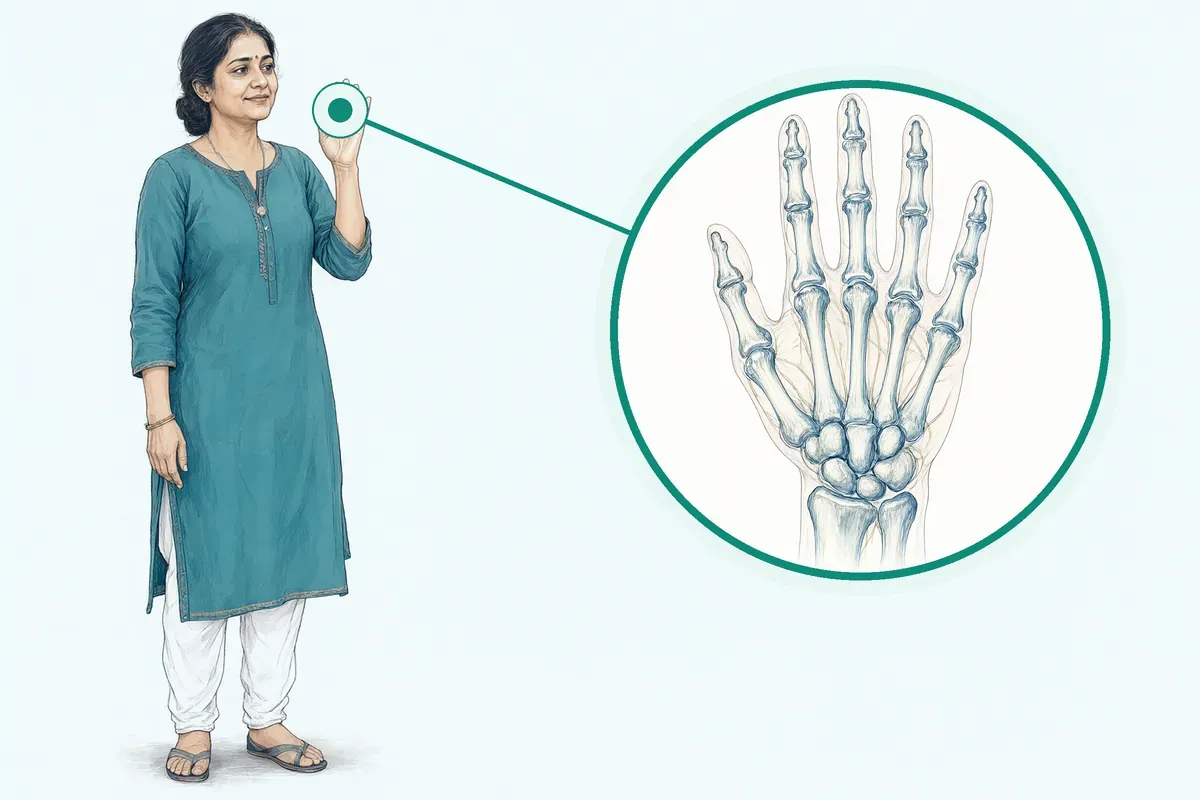
Carpal tunnel syndrome is one of the most common causes of nerve problems in the upper limb. The carpal tunnel is a short passage between the base of your wrist and the bottom of your palm. Tendons pass through this tunnel and glide back and forth to bend your fingers. The median nerve passes through the same tunnel.
Carpal tunnel syndrome happens when pressure inside the tunnel rises. The median nerve is squeezed and cannot work normally. This causes tingling, numbness, and pain along the thumb side of the hand.
Hand surgery can involve repair of tendons, bones, or joints, and release of pressure on a nerve. Hand therapy is usually part of recovery.
Hand surgery symptoms and warning signs
- Heavy bleeding
- Severe swelling
- Hand looks bent out of shape
Common symptoms of carpal tunnel syndrome are tingling or pins and needles in the fingers and hand, especially at night. Numbness and pain may also occur along the thumb side of the hand. The hand may feel weak, and you may drop objects. At first, these symptoms may come and go. They can become more frequent and wake you from sleep.
After a hand injury, it is safer not to wait for a routine OPD slot if there is heavy bleeding, severe swelling, a hand that looks bent out of shape, or loss of feeling or movement in the fingers. Jaipur Hospital has a 24×7 emergency department and ambulance service. If you are not sure how serious an injury is, it is better to get it checked.
For nerve compression, seek advice if numbness becomes constant, weakness gets worse, or you keep dropping things. Your surgeon can examine the hand and decide whether tests are needed. Do not ignore a hand that is losing feeling or strength.
Causes of hand and wrist problems and who is at higher risk
- 30 to 60 years Age group
- Two to three times more common in women Gender difference
Carpal tunnel syndrome happens when pressure inside the carpal tunnel rises. The median nerve is compressed and cannot function normally. In studies, carpal tunnel syndrome occurs most often in people aged 30 to 60 years. It is two to three times more common in women than in men. These findings describe groups of patients. They do not predict what will happen to one person.
Hand injuries are one reason people need hand surgery.
Jaipur Hospital's hand surgery service also covers:
- Arthritis
- Conditions present from birth
- Tendon disorders
The cause and treatment plan vary for these problems. Your surgeon will usually explain what is known about your condition after examination.
Pressure on a nerve is one cause of hand symptoms. Injury is another. Some conditions are present from birth. The right treatment depends on which structure is affected and how much hand function has changed.
How hand problems are diagnosed before hand surgery
- Nerve test if needed Electrodiagnostic test checks median nerve function
- Other tests as decided X-ray, imaging, or lab tests based on your problem
Your surgeon will usually start with your history and an examination.
The surgeon will:
- Look at the shape of the hand
- Check feeling
- Test strength
- See how the fingers and wrist move
For carpal tunnel syndrome, the diagnosis is based on signs found on examination. A nerve test, called an electrodiagnostic test, can support the diagnosis. This test checks how the median nerve is working.
Jaipur Hospital has an in-house diagnostic laboratory, X-ray, ECG, and imaging and radiology services. Your surgeon will decide which tests you need. Not every hand problem needs every test. The surgeon will usually explain why a test is being asked for and what the result means.
Surgery for carpal tunnel syndrome is generally reserved for people with severe symptoms or when conservative treatment has not worked. For other hand problems, your surgeon will usually discuss the findings, the options, and the care you can have without an operation. Ask questions if anything is not clear.
Hand surgery treatment options and when surgery is advised
Not every hand problem needs an operation. For carpal tunnel syndrome, surgery is generally reserved for severe symptoms or when conservative treatment has not worked. Your surgeon will usually explain the non-surgical options that suit your problem.
These can include:
- Changing how you use the hand
- A wrist splint
- Hand therapy
The right choice depends on your symptoms, examination, and test results.
If surgery is advised, the operation is usually done under a regional block or general anaesthesia. A regional block numbs the arm while you stay awake. General anaesthesia makes you sleep during the operation. The operation usually takes 30 minutes to 3 hours, depending on the procedure. Hospital stay is usually daycare to 2 nights.
Hand therapy usually continues for 6 weeks to 6 months. The typical price range in India is ₹30,000 to ₹2,50,000. The final cost depends on the procedure, the anaesthesia, the length of stay, and the hand therapy you need. Ask Jaipur Hospital for an estimate.
For carpal tunnel or cubital tunnel release, the options are open or endoscopic decompression. In studies of carpal tunnel release, the two methods gave similar symptom relief. In the same studies, results at 6 months or later were also similar. Endoscopic release was linked to less scar tenderness and an earlier return to work in some studies.
Endoscopic release was also linked to more temporary nerve injury. A pooled analysis found no significant difference in overall complications. Your surgeon will advise which method suits you.
For tendon repair, tendon release, or tendon graft, the options include repair of the flexor or extensor tendon based on the zone of injury, with early movement. In published studies, a modified Kessler repair with an added stitch around the tendon is supported to reduce complications. In the published data, the added stitch was linked to 84% fewer re-operations.
In the same data, the modified Kessler technique was linked to 57% fewer adhesions, which are bands of scar tissue that can limit movement. In studies, early active movement may give better movement while keeping rupture rates low. Your surgeon will decide the repair and therapy plan for your tendon injury.
For fractures of the hand bones, the options include K-wire, plate, or screw fixation after the bone pieces are put back in place. For Dupuytren's contracture, the options include open removal of the tight tissue or a needle release. Your surgeon will advise which option suits your hand.
Every operation has risks and benefits. Our surgical team will usually discuss the likely recovery, the rehabilitation plan, and the signs to watch for before you decide.
Preparing for hand surgery at Jaipur Hospital
Before hand surgery, your surgeon will usually go through your general health, your reports and every medicine you take, including anything you buy without a prescription. Tell our team about all tablets and creams you use, and about any allergy you have had. This helps your surgical team plan the operation and the anaesthesia safely.
A short talk before surgery about opioid painkillers can help. In studies, patients who received this counselling used fewer opioid tablets afterwards, and their pain levels were not significantly different. Your surgeon or anaesthetist will usually discuss pain relief with you before the day of surgery.
Our team will usually tell you when to stop eating and drinking before your operation. You will also be told which of your usual medicines to take on the morning of surgery. Never stop a medicine on your own. Ask your doctor first.
Please bring your reports and a list of your medicines. One attendant can stay with you. Hand surgery is usually daycare, but some operations need up to two nights in hospital, so pack a small bag in case you stay. Your anaesthetist will usually advise whether a regional block or a general anaesthetic suits you.
How hand surgery is done
Most hand operations take 30 minutes to 3 hours, depending on what needs repair. You may have a regional block, where the arm is numbed and you stay awake, or a general anaesthetic. Your anaesthetist will usually advise which option suits you.
The carpal tunnel is a short passage between the base of your wrist and the palm, and it carries tendons and the median nerve. When pressure rises inside it, the median nerve cannot work normally. Carpal tunnel release divides the band of tissue that forms the roof of the tunnel.
Your surgeon may offer open release, through a small cut in the palm, or endoscopic release, using a camera through a smaller opening. Studies find similar symptom relief with both. Endoscopic release is linked to earlier return to work and less scar tenderness, with a higher chance of temporary nerve irritation. Your surgeon will advise which suits your hand.
For a cut tendon, repair is planned by zone, and may include release of scar tissue or a graft. Modern repair methods and rehabilitation may allow early active movement with low rupture rates. A modified Kessler repair with an epitendinous suture is supported in the literature to reduce complications.
Broken metacarpal or phalangeal bones may be fixed with K-wires, plates or screws once the bone is put back into position. For Dupuytren's contracture, options include open segmental fasciectomy or a needle release through the skin. Each option has a different recovery.
On the day, our team will usually check the hand and the side being operated, then take you to a modular operation theatre. Jaipur Hospital has modular operation theatres and an intensive care unit if you need closer monitoring.
Risks and complications of hand surgery
- About 6 in 100 hands Re-operation rate
- About 4 in 100 hands Rupture rate
- About 4 in 100 hands Adhesion rate
All surgery carries some risk. In pooled studies of tendon repair, re-operation was needed in about 6 in 100 hands, rupture happened in about 4 in 100, and adhesions formed in about 4 in 100. These figures come from groups of patients, so your own risk may differ.
An epitendinous suture was linked to 84% fewer re-operations. Adhesions were 57% lower with the modified Kessler technique. A meta-regression of 29 studies found that core suture technique or an epitendinous suture did not change rupture rates.
For carpal tunnel release, endoscopic surgery has a higher chance of temporary nerve injury than open surgery, and a lower chance of scar tenderness. Pooled data found no significant difference in the overall complication rate between the two methods. Nerve injury that does not settle also showed no significant difference.
Scar or pillar pain is the most commonly cited reason patients do not prefer one technique over the other. Some patients notice short-term worsening of symptoms after endoscopic release. One technique can leave thickened, tender scars over the thenar and hypothenar areas.
After tendon repair, early passive movement was linked to fewer ruptures but more stiffness than early active movement. In pooled data, early passive protocols had 4% ruptures and 9% of fingers with reduced movement, while early active protocols had 5% ruptures and 6% with reduced movement. Rupture rates in published series have fallen over time.
Complication rates are low overall, and reported rates have not changed definitively since 2000. In one trial of preoperative counselling, no major adverse reactions were noted in either group.
Recovery after hand surgery
- 10 to 12 days Stitches removed unless dissolvable
- 14 days Start scar massage, make full fist, light tasks
You will usually go home the same day or stay up to two nights. Your hand will be in a bulky bandage, and you should keep it raised as much as you can. Paracetamol may be enough for pain. Follow the instructions you are given.
Keep your wrist, fingers and thumb moving as much as you can. Light activities are fine. Once the wound is fully closed, you can wash your hands normally.
The bulky dressing is usually discarded within seven days. Stitches are usually removed after 10 to 12 days, unless dissolvable stitches are used, which dissolve over about three weeks.
Scar massage with a plain cream can start about 14 days after surgery, using small firm circles for two to three minutes, three to four times a day. By 14 days you should be able to make a full fist and use the hand for light tasks.
Mild soreness when you press or lean on the scar is common and should pass. Scar tenderness can last up to six months in some patients.
You can drive once you feel safe to do so. By two to three weeks you should be returning to normal function and planning your return to work. Office work is usually easier to return to than heavy manual work, which takes longer for strength and confidence to build.
At six months the scar should be pale, and strength should have returned. Hand therapy usually continues for six weeks to six months, depending on the injury.
Your therapist will usually teach exercises such as:
- Stretching the thumb away from the palm
- Touching the base of the little finger
- Gently bending the wrist forward and back, holding for five seconds each way
If pins and needles or numbness persist after carpal tunnel release, the operation will have prevented them from getting worse. Our team will usually tell you which warning signs to watch for before you go home, and you can call the hospital if you are worried.
Results of hand surgery
- Carpal tunnel release
- Most people no longer have pins and needles or numbness
- Open vs endoscopic
- Similar symptom relief and questionnaire scores
- Tendon injuries
- Low rupture and adhesion rates; early active motion may give better movement
- Results vary
- Study results are not a promise for your case
In studies, most people no longer have pins and needles or numbness after carpal tunnel release. If symptoms do persist, surgery usually stops them getting worse.
Trials comparing endoscopic and open release found similar relief of symptoms and similar questionnaire scores. In patients who had one hand treated with each technique, results at three months were similar. Endoscopic release gave earlier return to work and better early grip strength in some analyses. Pooled data on return to work found no significant difference between the two.
One meta-analysis found higher satisfaction with endoscopic release. Another pooled analysis found no significant difference in satisfaction. Patients often have a personal preference for one technique.
For tendon injuries, pooled rupture and adhesion rates were low, and have fallen over time. How much movement returns depends on the tendon, the zone of injury and hand therapy. Early active motion may give better movement while keeping rupture rates low.
These results come from groups of patients in studies. They are not a promise of what will happen in your case. Your surgeon can tell you what is realistic for your hand.
Hand surgery cost and insurance in Jaipur
- Typical range
- ₹30,000 to ₹2,50,000 in India
- What changes the cost
- Operation, anaesthesia, stay, and therapy length
- Estimate is a guide
- Not a fixed bill; ask for an estimate before planning surgery
The typical range for hand surgery in India is ₹30,000 to ₹2,50,000. Ask us for an estimate for your case.
What changes the cost: the operation itself, the anaesthesia, whether you stay daycare or up to two nights, and how long hand therapy continues, from six weeks to six months. A carpal tunnel release is a shorter operation than complex tendon or fracture work, and this is usually reflected in the estimate.
Jaipur Hospital is a NABH-accredited, privately run multispeciality hospital, established in February 1991.
We work with:
- RGHS
- MAA Yojana
- CGHS
- A panel of private insurers and TPAs
Please bring your scheme card or insurance details to your OPD visit so that your scheme or policy details are on record.
Our hospital has 24x7 emergency and ambulance services, an intensive care unit, an in-house pharmacy, and an in-house diagnostic laboratory and imaging service. These facilities are part of the care around your surgery.
The range is a guide and not a fixed bill. Your estimate will depend on your operation and your stay. Ask your surgeon or our team for an estimate before you plan your surgery.