

Pulmonology · Jaipur Hospital
Lung Health Prevention in Jaipur
You worry about chest infections, smoking, or dust exposure. Jaipur Hospital offers clear assessments, counselling, and preventive screening plans.
- Serving Jaipur since 1991 (35 years)
- NABH accredited
- 24×7 emergency & ICU
- Cashless: RGHS, MAA Yojana, CGHS + 22 insurers
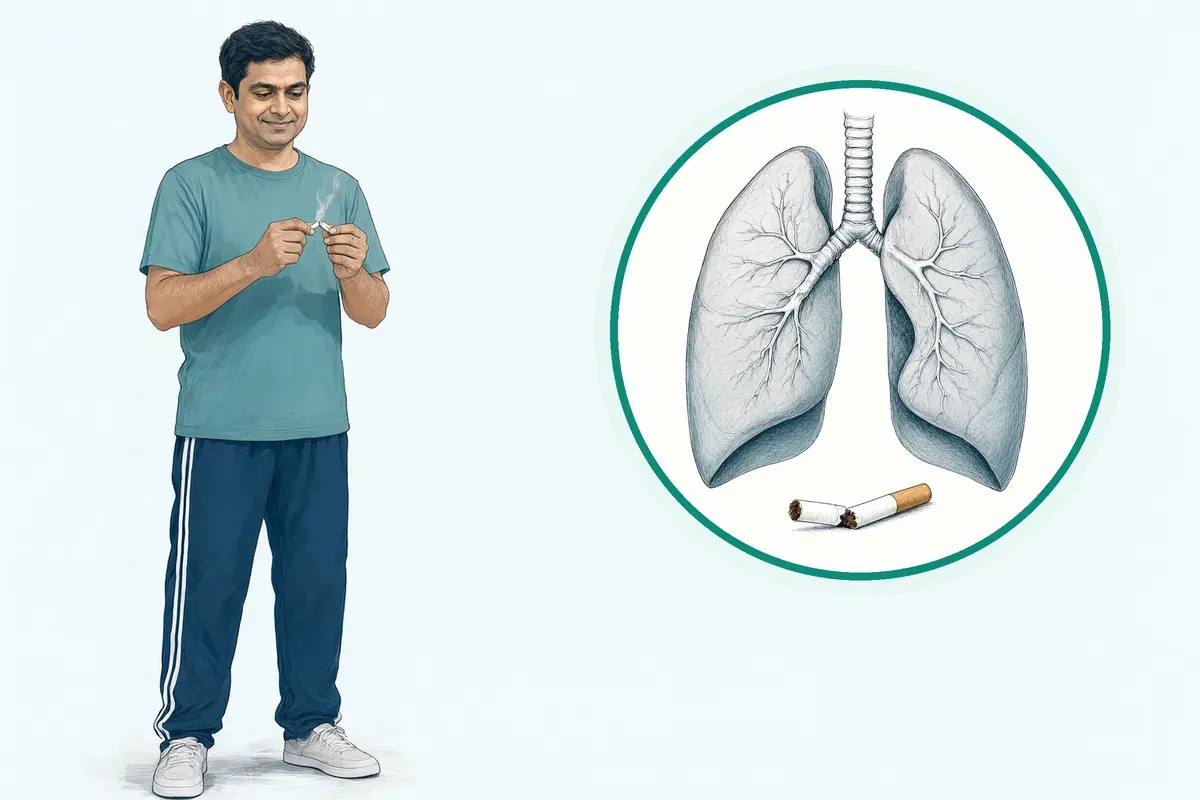
- Session length
- 30 to 45 minutes (counselling)15 minutes (vaccination)
- Anaesthesia
- Not needed
- Recovery
- Immediate
- Price
- ₹500 to ₹2,000 (counselling)₹1,500 to ₹4,000 per vaccine dose · ₹3,000 to ₹8,000 (screening package)typical range in India; ask us for an estimate
Worried about your breathing health
You feel short of breath and wonder about your lungs
A nagging cough, years of smoking, or working in dusty conditions can make you anxious. You may wonder if your lungs are damaged or whether preventive steps can still help.
-
Struggling to quit smoking
Cravings and stress make stopping tobacco difficult, leaving you concerned about long-term chest harm.
-
Frequent seasonal chest infections
Winter illnesses or flu can keep you away from work and cause lingering breathing trouble.
-
Workplace dust and fumes
Daily exposure to silica, asbestos, or factory dust brings nagging questions about hidden lung damage.
Lung cancer is a major cause of cancer-related mortality in India, with most cases diagnosed at advanced stages.
Why Jaipur Hospital
You may worry about the cost of tests, taking time off work, or what a lung scan might show.
Your care plan
Your first steps with us
- 1 Visit our OPD pulmonology consultation to discuss your risks.
- 2 Complete recommended breathing tests, scans, or adult vaccinations in-house.
- 3 Review your plain-language prevention plan with your chest physician.
- 4 Attend planned outpatient follow-up visits to monitor your lung health.
How lung health prevention works
Care is outpatient and usually takes 15 to 45 minutes without anaesthesia. Your chest physician will discuss suitable options based on your personal health history.
-
Smoking Cessation Clinic
Your doctor will discuss behavioural counselling combined with nicotine replacement or varenicline to help you stop smoking.
-
Adult Vaccination
Your doctor will discuss pneumococcal, influenza, and booster shots to lower the risk of severe chest infections.
-
Occupational Lung Screening
Your doctor will discuss spirometry breathing tests and chest scans if you face workplace dust or silica.
-
Low-Dose CT Lung Cancer Screening
Your doctor will discuss annual low-dose chest scans for eligible adults aged 50 to 80 with heavy smoking history.
Why patients trust us
- 1991 Serving Jaipur for 35 years
- NABH Accredited hospital
- 1 Pulmonology consultants
- 24×7 Emergency, ICU and ambulance
- 25 Cashless schemes and insurers
What clinical research shows about prevention
-
85%
Approximately 85% of lung cancers can be attributed to smoking, making quitting an effective preventive step.
-
Less than 5 min
A low-dose computed tomography scan is quick and completed in less than 5 min.
-
38% reduction
In study analysis, combined smoking abstinence and CT screening was associated with a 38% reduction in lung cancer death.
If it is left untreated
Smoking is the preventable cause of illness and premature death worldwide. In study data, about 70% of lung cancer patients are diagnosed with advanced disease, resulting in only 15% surviving 5 years. Screening helps detect changes early.
Life after preventive lung care
Taking planned preventive steps helps you protect your lungs and manage breathing risks with clear professional guidance.
-
Clear personal plan
Most people leave with a straightforward schedule for vaccinations, check-ups, or lifestyle steps.
-
Structured quitting support
People who attend counselling usually find structured medical guidance helpful when working to stop smoking.
-
Regular health tracking
Eligible high-risk individuals typically use routine outpatient scans to catch chest issues early.
Frequently asked questions
Questions patients ask about lung health prevention
Which problems are assessed under lung health prevention?
In short
Jaipur Hospital assesses four main areas under lung health prevention: smoking cessation, adult vaccination, occupational lung screening, and low-dose CT lung cancer screening. Each area targets a specific risk factor or early sign of lung disease. The programmes are run as outpatient services with no hospital stay required.
In detail
Smoking cessation combines behavioural counselling with nicotine replacement or varenicline to help you quit. Adult vaccination covers pneumococcal, influenza and COVID-19 booster doses to prevent respiratory infections. Occupational screening uses spirometry and HRCT for workers exposed to silica, asbestos or dust.
Low-dose CT screening is offered annually to high-risk smokers aged 50 to 80 with a 20 pack-year history. Evidence shows quitting smoking is the most effective way to prevent lung cancer deterioration, and LDCT screening can reduce lung cancer mortality in eligible groups.
Your next step at Jaipur Hospital
You can book a 30 to 45 minute counselling session or a 15 minute vaccination slot. Screening packages take longer and may need prior blood tests.
Prices typically range from ₹500 to ₹2,000 for counselling, ₹1,500 to ₹4,000 per vaccine dose, and ₹3,000 to ₹8,000 for a screening package. Ask for an estimate when you call.
How will the doctor decide which tests I need?
In short
The doctor at Jaipur Hospital decides tests based on your age, smoking history, occupational exposure, symptoms, and vaccination status. Guidelines such as USPSTF criteria for LDCT screening (age 50 to 80, 20 pack-year history, current or former smoker within 15 years) are used alongside clinical judgement.
In detail
For smoking cessation, the doctor assesses nicotine dependence and past quit attempts to choose between behavioural counselling, nicotine replacement, or varenicline. For vaccination, age, comorbidities, and prior doses determine which pneumococcal, influenza, or COVID-19 boosters are due.
Occupational screening with spirometry and HRCT is offered if you have worked with silica, asbestos, or dust. LDCT is recommended only for high-risk smokers meeting eligibility criteria.
The doctor also considers comorbidities that may limit life expectancy or ability to undergo curative surgery, as screening is discontinued in such cases. The goal is to match each test to your specific risk profile and avoid unnecessary investigations.
A common belief
Patients often ask for every test available.
What actually happens
The doctor follows evidence-based criteria: LDCT is only for high-risk smokers aged 50 to 80 with 20 pack-years. Occupational screening is for specific dust exposures. Vaccination follows national schedules. This targeted approach avoids unnecessary radiation and cost.
Your next step at Jaipur Hospital
After the history and examination, the doctor will explain which tests are indicated and why. You will receive a cost estimate for counselling (₹500 to ₹2,000), vaccination (₹1,500 to ₹4,000 per dose), or screening packages (₹3,000 to ₹8,000). Tests are done as outpatient procedures.
How soon should I expect improvement after the chosen lung health prevention treatment?
In short
Improvement depends on the prevention step you choose at Jaipur Hospital. Vaccination gives protection within weeks. Smoking cessation counselling shows measurable quit rates at six months. Low-dose CT screening provides a result on the day of the scan, but its benefit is long-term risk reduction. Recovery is immediate for all these outpatient steps.
In detail
Verified continuous abstinence at six months was 7.3% with nicotine e-cigarettes, 5.8% with nicotine patches, and 4.1% with placebo e-cigarettes. Varenicline and combination nicotine replacement therapy achieve higher long-term abstinence rates than single formulations.
Smoking cessation is associated with reduced anxiety, depression, and stress, and improved psychological quality of life, with effect sizes equal to or larger than antidepressant treatment. Influenza vaccination is recommended annually for risk groups. Low-dose CT screening takes less than five minutes.
The NLST and NELSON trials showed substantial lung cancer mortality reductions in screened high-risk participants. Combined abstinence and CT screening was associated with a 38% reduction in lung cancer death. Quitting smoking at any point during screening trials lowered mortality compared to continued smoking.
- Combined abstinence and CT screening was associated with a 38% reduction in lung cancer death.
A common belief
People often expect instant health changes.
What actually happens
Prevention works over time. Quitting smoking improves mental health and cuts mortality risk gradually. Screening finds early disease but does not change your risk overnight. The benefit builds with each year you stay smoke-free and each screen you complete.
Your next step at Jaipur Hospital
You can expect a counselling session to last 30 to 45 minutes and a vaccination visit about 15 minutes. Screening results are usually available the same day.
Your surgeon will advise the follow-up schedule: annual low-dose CT for eligible smokers, yearly influenza vaccine, and booster doses as recommended.
How can I decide whether to seek advice about smoking cessation?
In short
You should consider seeking advice about smoking cessation at Jaipur Hospital if you smoke cigarettes or bidis and want to quit. The hospital runs a Smoking Cessation Clinic that offers behavioural counselling combined with nicotine replacement therapy or varenicline. Sessions last 30 to 45 minutes and are done as an outpatient visit.
In detail
Smoking is a major risk factor for cancers, heart disease, and lung disease. Evidence shows that behavioural counselling combined with medication increases the chances of quitting compared to minimal advice.
In studies, varenicline increased the odds of quitting compared with placebo, and combination nicotine replacement therapy also outperformed single forms. Counselling that includes follow-up sessions (assist and arrange steps) was associated with a 40 to 46 percent increase in the odds of cessation. The clinic at Jaipur Hospital uses this structured approach to support your quit attempt.
A common belief
Many people try to quit on their own, but studies show that structured counselling with medicines like varenicline or combination nicotine replacement therapy gives much better quit rates than brief advice alone.
What actually happens
The clinic uses this proven method.
Your next step at Jaipur Hospital
If you are ready to stop smoking, you can book a counselling session at the Pulmonology department. The typical cost for counselling is ₹500 to ₹2,000 per session.
Medicines such as nicotine patches or varenicline are prescribed based on your health profile and bought separately at the chemist. Your surgeon or pulmonologist will review your smoking history and suggest a plan at the first visit.
Which changes in breathing, chest symptoms, or oxygen levels need urgent help?
In short
Seek urgent help if you develop sudden severe breathlessness, chest pain, coughing up blood, new confusion, inability to speak in full sentences, or if your oxygen saturation drops below 94% on a pulse oximeter at rest. Jaipur Hospital has a 24×7 emergency department and ambulance service for immediate assessment and treatment.
In detail
Sudden severe breathlessness may indicate pulmonary embolism, pneumothorax, acute heart failure, or severe asthma or COPD exacerbation. Chest pain with breathing can signal pleurisy, pneumonia, or cardiac ischaemia. Haemoptysis (coughing up blood) requires urgent evaluation for infection, tuberculosis, or malignancy.
Oxygen saturation below 94% at rest suggests significant gas exchange impairment needing supplemental oxygen and hospital monitoring. New confusion or drowsiness in a person with lung disease may indicate hypercapnia or hypoxia.
The 24×7 emergency department at Jaipur Hospital provides immediate access to oxygen, non-invasive ventilation, imaging, and blood gas analysis. The in-house diagnostic laboratory and radiology support rapid diagnosis.
A common belief
People often wait hoping symptoms will pass, but these signs can mean life-threatening conditions like pulmonary embolism, heart attack, or severe infection.
What actually happens
Delaying increases the risk of complications. A pulse oximeter at home helps you spot low oxygen early.
Your next step at Jaipur Hospital
If you or your attendant notice any of these warning signs, call the Jaipur Hospital emergency line at 0141-2551500 or 0141-2554139, or use the 24×7 ambulance service at +91-7414-001-001. Do not wait for an OPD appointment.
The emergency team will stabilise you, perform necessary tests, and admit you to the intensive care unit if required. Keep a pulse oximeter at home if you have chronic lung disease.
Which symptoms should prompt me to see a specialist?
In short
You should see a specialist at Jaipur Hospital if you have a persistent cough lasting more than three weeks, coughing up blood, unexplained weight loss, persistent breathlessness, chest pain, or recurrent respiratory infections. These symptoms need evaluation even if you feel otherwise well.
In detail
Lung cancer is a leading cause of cancer-related mortality in India, with most cases diagnosed at advanced stages. Approximately 85% of lung cancers are attributed to smoking. Early symptoms are often subtle and mistaken for common respiratory illnesses.
A persistent cough, haemoptysis, or unexplained weight loss may indicate underlying malignancy or chronic lung disease. Occupational exposure to silica, asbestos, or dust increases risk for interstitial lung disease.
High-risk smokers aged 50 to 80 with a 20 pack-year history should also consider LDCT screening even without symptoms, as screening detects cancer at earlier, more treatable stages.
- Approximately 85% of lung cancers are attributed to smoking.
A common belief
People often wait for severe symptoms before seeking help.
What actually happens
However, lung cancer is frequently diagnosed late in India. Even mild but persistent symptoms in a smoker or someone with occupational exposure deserve early assessment. Screening with LDCT can find cancer before symptoms appear.
Your next step at Jaipur Hospital
Schedule an OPD consultation if you notice any of these symptoms. The visit takes 30 to 45 minutes. Bring prior chest X-rays, CT scans, spirometry reports, and a list of current medicines. Your surgeon will take a detailed history, examine you, and decide if you need spirometry, HRCT, or LDCT.
How will the results change my care plan?
In short
Test results at Jaipur Hospital directly shape your care plan. Normal spirometry and HRCT may mean routine follow-up. Abnormal spirometry can lead to inhaler therapy or further testing. A positive LDCT finding triggers nodule evaluation per Lung-RADS protocols. Smoking cessation outcomes guide medication adjustments.
In detail
If LDCT shows a nodule, the pulmonologist follows structured nodule management protocols such as Lung-RADS to decide on surveillance CT, PET-CT, or biopsy. This reduces unnecessary invasive procedures while catching cancer early. Evidence shows LDCT screening reduces lung cancer mortality.
For occupational screening, abnormal spirometry or HRCT findings may lead to workplace modification advice, regular monitoring, or compensation claims. Smoking cessation counselling combined with varenicline or combination nicotine replacement therapy achieves higher abstinence rates. Vaccination completion reduces risk of severe influenza, pneumococcal pneumonia, and COVID-19.
Mental health improvements after quitting smoking are comparable to antidepressant effects. Your care plan is updated at each visit based on new results.
A common belief
A common fear is that any abnormal finding means surgery.
What actually happens
In reality, most LDCT nodules are monitored with repeat scans using Lung-RADS criteria. Only suspicious nodules proceed to biopsy. This approach balances early detection with avoiding unnecessary procedures.
Your next step at Jaipur Hospital
You will discuss results with your surgeon at a follow-up visit. The plan may include medication changes, repeat imaging intervals, referral for biopsy, or intensified cessation support. All procedures are outpatient. Costs for follow-up tests fall within the typical ranges.
What should I do if symptoms persist or worsen during lung health prevention?
In short
If you develop new or worsening breathing symptoms, contact Jaipur Hospital promptly. This includes persistent cough, blood in sputum, unexplained weight loss, or increasing breathlessness. These may need urgent evaluation even if you are in a prevention programme.
In detail
Prevention programmes do not replace diagnostic care. Screening low-dose CT is for asymptomatic people. If symptoms appear, you need a diagnostic CT or other tests, not a screening scan.
Smoking cessation medicines can cause nausea or vivid dreams; if side effects are troublesome, your surgeon can adjust the dose or switch therapy. Vaccine reactions are rare but seek care for high fever or allergic signs.
A common belief
Some people wait for their next annual scan.
What actually happens
That can delay diagnosis. Screening is for people without symptoms. If symptoms start, you need a proper diagnostic workup right away.
Your next step at Jaipur Hospital
Call the hospital or visit the 24-hour emergency department if symptoms are severe. For milder concerns, book a follow-up OPD appointment. Your surgeon will decide if you need further tests or a change in plan. Keep your screening schedule unless advised otherwise.
How can I decide whether to seek advice about vaping and e-cigarette counselling?
In short
You should seek advice about vaping and e-cigarette counselling if you use e-cigarettes and want to stop, or if you are using them to quit smoking but find yourself dependent on vaping. Jaipur Hospital provides behavioural counselling as part of its Smoking Cessation Clinic, which can address nicotine dependence from any source including e-cigarettes. Sessions last 30 to 45 minutes on an outpatient basis.
In detail
Evidence from a randomised trial shows that nicotine e-cigarettes were modestly effective at helping smokers quit, with verified continuous abstinence at six months of 7.3% for nicotine e-cigarettes compared to 5.8% for nicotine patches and 4.1% for placebo e-cigarettes.
However, the trial had insufficient statistical power to conclude superiority of nicotine e-cigarettes to patches or placebo. Other studies report that odds of quitting cigarettes were 28% lower in those who used e-cigarettes compared with those who did not.
Nicotine vaccines are not yet licensed for use as an aid to smoking cessation or relapse prevention. The clinic uses behavioural counselling plus licensed nicotine replacement therapy or varenicline, which have strong evidence for long-term abstinence.
- Other studies report that odds of quitting cigarettes were 28% lower in those who used e-cigarettes compared with those who did not.
A common belief
Some believe vaping is a safe way to quit smoking.
What actually happens
Evidence shows nicotine e-cigarettes had only modest quit rates at six months, and other studies found lower quitting odds among e-cigarette users. Licensed options like varenicline and combination nicotine replacement have stronger evidence for long-term abstinence.
Your next step at Jaipur Hospital
If you vape daily, feel unable to stop, or have switched from smoking to vaping but want to be free of nicotine entirely, book a counselling session at Jaipur Hospital. The typical price range is ₹500 to ₹2,000 per session.
No anaesthesia or hospital stay is required. Your surgeon will evaluate your nicotine use pattern and recommend a tailored plan that may include nicotine replacement therapy or varenicline with behavioural support.
Could smoking, pollution, workplace exposure, or another illness be contributing?
In short
Yes, smoking, air pollution, workplace dust or chemical exposure, and other illnesses can all contribute to lung symptoms and disease. Jaipur Hospital evaluates these risk factors through detailed history, spirometry, imaging, and occupational screening packages. Your surgeon will assess how each factor may be affecting your lungs.
In detail
Smoking causes about 85% of lung cancers and is the major risk factor for COPD. In India, there are 267 million tobacco users, with 100 million smokers. Indoor air pollution from biomass cooking fuels is associated with lung cancer risk in women.
Occupational exposure to silica, asbestos, and dust causes silicosis, asbestosis, and occupational COPD. Pre-existing illnesses like tuberculosis, bronchiectasis, or interstitial lung disease can worsen with continued exposure.
A study from Chandigarh found 33.5% of participants in a TB-endemic region had a positive LDCT result, and 1.8% were diagnosed with lung cancer.
Nearly 44% of new lung cancers in a north Indian study occurred in non-smokers, highlighting the role of environmental and occupational factors. Your surgeon will consider all these contributors when planning prevention or treatment.
- Smoking causes about 85% of lung cancers and is the major risk factor for COPD.
- Nearly 44% of new lung cancers in a north Indian study occurred in non-smokers, highlighting the role of environmental and occupational factors.
A common belief
Many people blame only smoking or only pollution.
What actually happens
In reality, multiple factors often combine. Nearly 44% of lung cancers in a north Indian study were in non-smokers, showing environment and occupation matter. Indoor biomass smoke particularly affects women. Workplace dust causes irreversible disease that progresses silently.
Your next step at Jaipur Hospital
If you have a chronic cough, breathlessness, or abnormal chest imaging, book an evaluation at Jaipur Hospital. The occupational screening package (₹3,000 to ₹8,000) includes spirometry and HRCT. Vaccination against pneumococcal disease, influenza, and COVID-19 (₹1,500 to ₹4,000 per dose) reduces infection risk.
Smoking cessation counselling (₹500 to ₹2,000 per session) addresses the single largest modifiable risk. Your surgeon will create a personalised plan.
FAQ library
Questions and answers about lung health prevention
When you contact us
Consult our pulmonology team at Jaipur Hospital
Book an OPD consultation to review your lung health and discuss preventive screening options.
- A consultation with a pulmonologist (chest physician) in the OPD
- Your scans and reports reviewed, with tests done in-house if you need them (laboratory, X-ray and imaging)
- Your options explained in plain words, including whether you need surgery at all
- A cost estimate before you decide
- Help with cashless treatment under RGHS, MAA Yojana, CGHS and empanelled insurers and TPAs
- Follow-up visits after your treatment
Overview
Lung Health Prevention: what to know
What is lung health prevention and how does it work
- Stop tobacco use Counselling and medicines help you quit
- Get vaccines Protect against chest infections
- Test workplace exposure Spirometry and HRCT for dust-exposed workers
- Screen high-risk smokers LDCT scan for early lung nodules
Lung health prevention is medical care that helps you protect your lungs before serious illness begins.
It focuses on:
- Stopping tobacco use
- Giving vaccines against chest infections
- Testing people exposed to workplace dust
- Checking high-risk smokers for early lung changes
Smoking remains a major preventable cause of illness and premature death across the world. At Jaipur Hospital, our preventive care aims to find chest problems early or stop them before they harm your breathing.
Your lungs take in oxygen for your entire body. When you inhale cigarette smoke, bidi smoke, or toxic workplace dust, your lung airways become irritated and damaged over time. Stopping tobacco stops this damage from getting worse. Vaccines protect your immune system against severe viral and bacterial chest infections.
For smokers with long tobacco exposure, low radiation dose computed tomography, also called LDCT or low-dose helical CT, takes detailed pictures of your lungs to spot small abnormal nodules while they can still be treated.
Attending a lung health programme typically happens as an outpatient visit in our OPD. Counselling sessions usually take 30 to 45 minutes, while vaccine visits typically take 15 minutes. Anaesthesia is not needed, and your recovery is immediate.
A counselling session typically costs ₹500 to ₹2,000, vaccines typically cost ₹1,500 to ₹4,000 per dose, and a screening package typically costs ₹3,000 to ₹8,000 in India, depending on the tests you need.
Symptoms of lung illness and warning signs that need urgent care
- Cough up blood
- Severe chest pain
- Sudden shortness of breath
Early lung damage and early lung cancer often cause no noticeable trouble at all. Because of this silence, people who smoke or work in dusty jobs may feel completely normal while lung changes develop. When symptoms do appear, they often include a persistent cough, shortness of breath during daily chores, and frequent chest colds that take weeks to clear.
Warning signs should never be ignored. If you cough up blood, suffer severe chest pain, or experience sudden shortness of breath, you must visit an emergency room the same day. At Jaipur Hospital, our emergency department and ambulance service run 24 hours a day to care for sudden breathing distress.
A family attendant can accompany you to our OPD or emergency unit while our team checks your oxygen levels and chest.
Causes of lung disease and who is at higher risk
- about 85% Lung cancers linked to smoking
- 100 million Current smokers in India
- nearly 44 per cent New lung cancers in never-smokers
Tobacco smoking is the major risk factor for serious lung illness and lung cancer. In studies, about 85% of lung cancers are linked to smoking. In India, nearly 130 million adults have smoked tobacco at some point, including 100 million current smokers and 29.7 million ex-smokers.
Daily smokers in India smoke an average of 6.8 cigarettes or 15.1 bidis each day. Because bidis contain less nicotine per stick, 43 bidis per day for one year equals one standard pack-year. In one study, about 1 out of 2 smokers dies from tobacco-related disease.
Non-smokers can also face high risk. In a large North Indian study, nearly 44 per cent of new lung cancers occurred in people who had never smoked. Indoor air pollution from cooking stoves using wood, crop residues, or animal dung is linked to lung cancer in Indian women.
Industrial workers handling silica, asbestos, or heavy dust are also at elevated risk. In addition, older people and chronically ill patients face greater risk of severe illness and death from seasonal influenza.
How lung conditions are diagnosed: examinations and tests
When you visit our OPD, your doctor starts by asking about your breathing symptoms, your daily work environment, and your lifetime tobacco history. Recalling past cigarette or bidi use can sometimes feel hard, but sharing your honest habits helps your medical team assess your true risk. Your doctor will listen to your chest with a stethoscope and check your resting oxygen levels.
For workers exposed to stone dust, asbestos, or factory fibres, tests like spirometry and HRCT scans check lung volume and airway stiffness. For smokers aged 50 to 80 years with a 20 pack-year smoking history who currently smoke or quit within the past 15 years, guidelines recommend annual LDCT screening.
The LDCT scan takes place on a standard CT machine and is completed in less than 5 minutes. It uses a low dose of radiation to check for tiny lung nodules.
In a study from Chandigarh, India, 33.5 per cent of screened people had a positive finding on their first scan, and 1.8 per cent were found to have lung cancer. Your doctor will discuss false-positive findings, as small harmless spots can cause worry and require follow-up scans.
Prevention and treatment options without surgery, and when surgery is advised
Non-surgical prevention is the foundation of lung health care. For smoking cessation, medical programmes combine personal behavioural counselling with approved medicines. In clinical trials, nicotine replacement therapies such as patches, gums, or combination products, as well as oral medicines like varenicline and bupropion, helped smokers achieve long-term abstinence without excess neuropsychiatric adverse events.
Studies also show that quitting smoking lowers anxiety, depression, and daily stress while improving mental quality of life. Medicines can be collected from a chemist after your consultation.
Vaccines are another non-surgical step. Annual influenza vaccines, pneumococcal doses, and COVID-19 boosters protect vulnerable adults from severe chest infections. When lung screening does detect an early, localised tumour, your surgeon will advise whether surgery suits you.
Screening should be stopped if a person has not smoked for 15 years or develops serious health issues that limit their ability or willingness to undergo lung surgery.
Preparing for lung health prevention visits and tests
Do
- Write down tobacco history Age started, daily count, years smoked
- Bring current medicines list Tablets, inhalers, over-the-counter items
- Carry past scan reports Chest scans, TB evaluations, imaging
- Wear loose clothing Easy arm access for injections or spirometry
- Bring ID and insurance papers Government photo ID, hospital card, scheme documents
Avoid
- Stop prescribed medicines on your own Discuss with doctor before any change
Before your appointment at Jaipur Hospital, prepare your medical records and a complete list of your past health checks. If you smoke or used to smoke, write down the age when you started, the number of bidis or cigarettes you smoked each day, and how many years you have smoked.
In daily tobacco users in India, the mean number of cigarettes smoked per day was 6.8, and the mean number of bidis smoked per day was 15.1. Because bidis contain less nicotine, the equivalent pack years for bidis are counted as 43 bidis per day for one year. Knowing these numbers helps your doctor decide whether you qualify for targeted lung screening.
Bring a full list of all current tablets, inhalers, and over-the-counter products you take from the chemist. You should discuss all your existing medications openly with your doctor before starting any counselling, vaccination, or imaging programme. Do not stop taking any prescribed medication on your own.
If you have had previous chest scans, tuberculosis evaluations, or diagnostic imaging, bring those films and reports with you. In a study from Chandigarh in a tuberculosis-endemic region, 33.5 per cent of screened participants had an initial positive finding on their scan. Having previous reports helps your team tell old, healed scars apart from new lung spots.
Fasting is generally not required for lung health prevention appointments. You can usually eat and drink your normal meals before your session. No special dietary restriction or bowel preparation is needed. Wear loose, comfortable clothing that allows easy access to your upper arm for injections or chest movement during spirometry testing.
Carry your government photo identification, hospital registration card if you have visited us earlier, and your health insurance or scheme documents. You are welcome to bring an attendant along to your appointment. Having an attendant sit with you can help you remember advice given during smoking cessation counselling or discussions about screening results.
How lung health prevention procedures are done
Lung health prevention involves outpatient clinical visits, diagnostic screening, or routine shots rather than major operations. General anaesthesia or local numbing is not needed. Care is delivered on an outpatient basis, meaning you walk in for your session and return home the same day.
Several techniques are available, and your surgeon or pulmonologist will advise which suits you most suitable:
- Smoking Cessation Clinic: This approach combines behavioural counselling with medical support such as nicotine replacement therapy or varenicline. A smoking cessation counselling session usually takes 30 to 45 minutes. Your clinician speaks with you in depth about your habits, triggers, and practical ways to step down tobacco dependence.
- Adult Vaccination: Immunisation protects the lungs against common respiratory infections.
Options include:
- Pneumococcal vaccines (PCV20 or PPSV23)
- Influenza vaccines
- COVID-19 booster shots
A vaccination visit typically takes about 15 minutes. The nursing staff gives the shot into the muscle of your upper arm.
- Occupational Lung Screening: This is intended for workers exposed to silica, asbestos, or industrial dust. It combines spirometry lung function tests with high-resolution computed tomography (HRCT) to evaluate airway health and lung tissue.
- Low-Dose CT Lung Cancer Screening: Annual low-dose computed tomography (LDCT) is used for people at high risk of lung disease. The scan uses a standard CT machine to take detailed, cross-sectional pictures of your lungs with a lower amount of radiation. You lie still on a motorised examination table that moves smoothly through the scanner ring. The scan itself is quick and completed in less than 5 minutes. You will be asked to hold your breath for a few seconds while the images are captured.
After completing your injection, counselling session, or scan, you can step out of the clinic and carry on with your routine activities right away.
Risks and possible complications of lung prevention programmes
Medical interventions and screening scans have known limitations and potential side effects that you should understand before deciding.
In lung cancer screening, low-dose CT scans can show false-positive results. A false-positive result means the scan shows a spot or nodule that looks abnormal, but turns out not to be cancer upon further evaluation.
In studies, false-positive results can lead to additional follow-up imaging, unnecessary invasive diagnostic procedures, overdiagnosis of slow-growing spots, incidental findings, increased patient worry or distress, and in rare instances, radiation-induced cancers from repeated exposure.
In a study conducted in Chandigarh, India, 33.5 per cent of participants had a positive finding after their initial round of screening, while 1.8 per cent were actually diagnosed with lung cancer.
Prescription smoking cessation aids can cause side effects, though serious adverse events have been evaluated in large clinical trials. In a serious adverse event meta-analysis of bupropion trials, researchers demonstrated no excess of neuropsychiatric events.
Across 82 included and excluded bupropion trials, the occurrence of seizures was about 1 in 1500, which was lower than the expected rate of 1 in 1000. In a meta-analysis of 14 varenicline clinical trials, researchers found no significant difference in serious adverse events between the varenicline and placebo study arms.
Subgroup analyses of varenicline trials also detected no significant excess of neuropsychiatric events. For other cessation medicines, clinical trials found that clonidine increased the chances of quitting, but this benefit was offset by a dose-dependent rise in adverse events. In trial groups studying nicotine replacement products, researchers found no evidence of an association between adverse events and the study product.
Routine adult vaccines commonly produce mild, temporary side effects such as tenderness, swelling, or redness at the injection site, or a mild fever for a day or two. Serious complications are rare, and studies note that the clinical utility of vaccination rests on balancing individual benefits against these minor risks.
Recovery and aftercare following lung health visits
- Same day Walk out immediately; no drowsiness
- First few days Mild arm soreness after vaccines; cool cloth helps
- First weeks Nicotine withdrawal cravings and mood shifts; counselling helps
Recovery after lung health prevention procedures is immediate. Because no sedation or anaesthesia is used, you will not feel drowsy or sluggish. You are free to walk out of the clinic immediately after your consultation or imaging.
During the first few days after an adult vaccination, you might feel slight soreness or muscle stiffness in your arm. Resting the arm and applying a clean, cool damp cloth over the injection spot can ease discomfort. If you begin nicotine replacement therapy, such as patches, follow the instructions provided by your doctor and your chemist. Place skin patches on clean, dry, hairless skin on your upper body, and rotate the application site daily.
In the first weeks of smoking cessation, you may experience common nicotine withdrawal sensations, such as cravings, restlessness, or mood shifts. Attending scheduled behavioural counselling helps you navigate these feelings. In studies, smokers who received intensive support such as telephone counselling or structured guidance achieved higher verified quit rates than those left without support.
If you underwent a low-dose CT screening, your scan will be reviewed by a radiologist using standard reporting templates. Jaipur Hospital will inform you when your official report is ready.
Contact the hospital OPD or visit our 24x7 emergency department if you experience sudden chest pain, breathing difficulty, a high persistent fever, or signs of an allergic reaction such as widespread hives or swelling around the face and throat.
For routine queries regarding mild arm soreness, test schedules, or cessation support, you can follow up with our outpatient clinic during standard working hours.
Results and prevention outcomes in clinical studies
- 7% to 23% Quitting rates during study periods
- 1.6% to 12% Relapse rates among those who restarted
Preventive lung care measures have been evaluated extensively across multiple global and national clinical trials. In studies, quitting smoking produces clear and lasting health advantages. Smoking cessation is associated with reduced anxiety, reduced depression, reduced mixed anxiety and depression, and reduced stress compared with continuing to smoke.
Studies also show that quitting is associated with improved psychological quality of life and improved positive affect. These mental health improvements were found to be as large for individuals with psychiatric disorders as for those without, and equal to or larger than the effect sizes seen with antidepressant treatment for mood and anxiety disorders.
Cessation support aids have demonstrated success in medical trials. Nicotine replacement therapy, bupropion, and varenicline have each proved superior to placebo in achieving long-term abstinence in randomised trials. Varenicline was superior to single forms of nicotine replacement therapy and superior to nicotine patches alone.
Combination nicotine replacement therapy was equally effective as varenicline and outperformed single formulations in achieving long-term abstinence. In an observational study based on the LUSI trial, the decline in smoking prevalence was 9.6 to 10.4 per cent among participants who attended personalised counselling, compared with 0.8 to 1.6 per cent among non-attenders.
Across clinical studies of baseline smokers, quitting rates during study periods ranged from 7 per cent to 23 per cent, while relapse rates among those who restarted smoking ranged from 1.6 per cent to 12 per cent.
In cancer screening studies, the National Lung Screening Trial (NLST) and the NELSON trial demonstrated substantial lung cancer mortality reductions in screened participants at high risk. In a secondary analysis of the NLST, 7-year smoking abstinence in the control arm was related to a 20 per cent reduction in lung cancer-specific mortality.
Combining smoking abstinence with CT screening was associated with an almost twofold increase in benefit, resulting in a 38 per cent reduction in lung cancer death. In the MILD trial, a 39 per cent reduction in overall mortality was found for former smokers compared with current smokers.
Furthermore, health economics research evaluating LDCT screening in India demonstrated that it yielded 23.71 quality-adjusted life years, making it an economically viable and cost-effective screening approach. However, clinical guidelines emphasise that lung cancer screening is not a substitute for quitting smoking.
Cost of lung health prevention and insurance schemes in Jaipur
- ₹500 to ₹2,000 Behavioural counselling session
- ₹1,500 to ₹4,000 Adult vaccine per dose
- ₹3,000 to ₹8,000 Comprehensive lung screening package
The cost of lung health prevention services depends on the specific tests, counselling, or vaccines you receive. In India, behavioural counselling sessions typically range from ₹500 to ₹2,000. Adult vaccination typically costs between ₹1,500 and ₹4,000 per vaccine dose. A comprehensive lung screening package typically ranges from ₹3,000 to ₹8,000.
These figures represent a typical price range; you can ask our team for a specific estimate based on your clinical needs.
Several factors change the overall cost of your preventive care. The total expense depends on whether you require a single specialist consultation or multiple behavioural follow-up sessions, the type and brand of vaccine chosen, the number of vaccine doses prescribed, and whether additional imaging such as HRCT or spirometry is needed alongside your consultation. Medications such as nicotine patches, gums, or tablets purchased from the in-house chemist will be billed separately.
Jaipur Hospital is a NABH-accredited multispeciality hospital established in February 1991, located in Mahaveer Nagar, Jaipur. We work with major government health schemes including the Rajasthan Government Health Scheme (RGHS), MAA Yojana, and the Central Government Health Scheme (CGHS). We also honour policies through a panel of private insurance companies and third-party administrators (TPAs).
If you hold coverage under any of these schemes or private health plans, speak with our insurance coordination staff during your OPD visit to confirm eligibility and documentation requirements for your preventive check-ups and diagnostic tests.