

Pulmonology · Jaipur Hospital
Sleep Apnea Treatment in Jaipur
Loud snoring and daytime tiredness — we assess your breathing and give you a clear plan.
- Serving Jaipur since 1991 (35 years)
- NABH accredited
- 24×7 emergency & ICU
- Cashless: RGHS, MAA Yojana, CGHS + 22 insurers
- Session length
- Overnight (sleep study)30 min (CPAP titration/trial)
- Anaesthesia
- Not needed
- Recovery
- Immediate symptom relief with CPAP adherence
- Price
- ₹2,000 to ₹5,000 consultation₹8,000 to ₹15,000 for Level 1 Polysomnography · ₹30,000 to ₹80,000 for Auto-CPAP devicetypical range in India; ask us for an estimate
Sleep disrupted, health at risk
You snore, wake up tired, and feel foggy all day
Your airway closes repeatedly at night. Oxygen drops. The brain wakes you briefly — hundreds of times — so you never reach deep sleep.
-
Constant exhaustion
You sleep seven hours but wake up unrefreshed and struggle through the afternoon.
-
Loud snoring
Family members hear gasping or choking sounds while you sleep.
-
Morning headaches
You wake with a dull headache that fades after a few hours.
-
Mood changes
Irritability, poor concentration, or low mood that has no clear cause.
-
Health risks rise
Untreated apnea is linked to high blood pressure, heart disease, stroke, and diabetes.
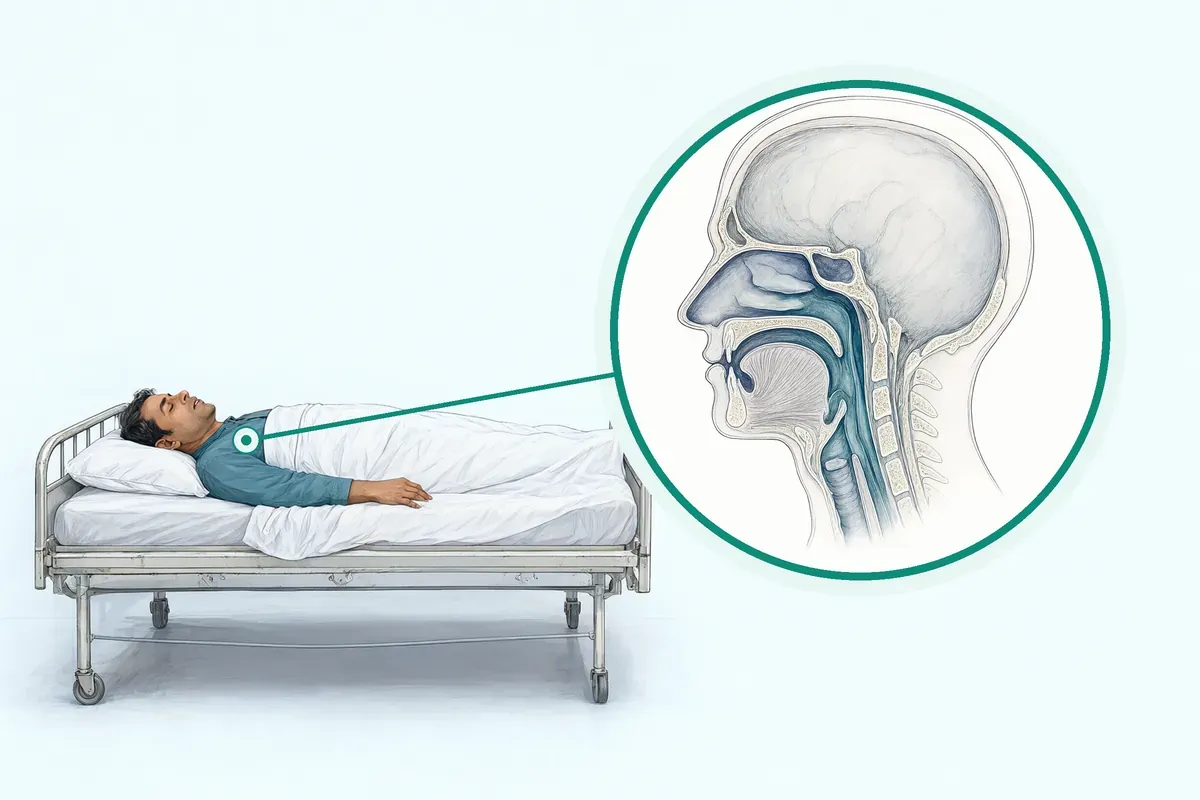
Obstructive sleep apnea causes repeated airway closure, intermittent low oxygen, and sleep fragmentation.
Why Jaipur Hospital
You worry that constant fatigue will cost you your job or make you fall asleep at the wheel.
Your care plan
Your first steps with us
- 1 Call or visit OPD for a pulmonologist consultation
- 2 Undergo overnight sleep study in our lab or at home
- 3 Start CPAP trial with pressure set by our team
- 4 Return for follow-up visits and mask adjustments
how the evaluation and treatment are done
We confirm the diagnosis with a sleep study, then fit and adjust a CPAP device to keep your airway open at night.
-
Level 1 Polysomnography (In-lab)
Attended overnight study with EEG, EMG, airflow, and oximetry sensors.
-
Home Sleep Apnea Test (HSAT)
Portable monitor measuring oxygen, heart rate, respiratory effort, and airflow in your own bedroom.
-
Auto-CPAP / BiPAP Titration
Pressure optimisation session to find the effective therapy level for you.
-
Mandibular Advancement Device
Custom oral appliance that holds the jaw forward, used for mild to moderate cases or CPAP intolerance.
Why patients trust us
- 1991 Serving Jaipur for 35 years
- NABH Accredited hospital
- 1 Pulmonology consultants
- 24×7 Emergency, ICU and ambulance
- 25 Cashless schemes and insurers
what research shows about this treatment
-
AHI reduced from 29 to 3.7 events per hour
In a trial, CPAP lowered the apnea-hypopnea index from 29.0 to 3.7 events per hour on average.
-
CPAP adherence averaged 3.3 hours per night
Participants in a large study used CPAP for a mean of 3.3 hours each night during follow-up.
-
82.7% adherence among patients who bought a device
Of patients who purchased a CPAP machine, 82.7% met adherence criteria in an Indian cohort.
If it is left untreated
Without treatment, repeated oxygen drops strain the heart and blood vessels, raising the risk of hypertension, heart failure, atrial fibrillation, stroke, and type 2 diabetes. Daytime sleepiness also increases the chance of road accidents.
life after treatment
Most people who use CPAP regularly report better sleep, more energy, and improved mood within weeks.
-
Refreshing sleep
You wake feeling rested instead of groggy.
-
Steady energy
Afternoon slumps and unintended naps become rare.
-
Better focus
Concentration at work and while driving improves.
-
Lower health risk
Blood pressure and cardiovascular risk markers often improve with consistent use.
Frequently asked questions
Questions patients ask about sleep apnea treatment
Which problems are assessed under sleep and breathing disorders?
In short
At Jaipur Hospital, our pulmonology team evaluates obstructive sleep apnoea, central sleep apnoea, mixed apnoea, snoring, upper airway resistance syndrome, obesity hypoventilation syndrome and sleep-related hypoventilation. We also assess insomnia, restless legs syndrome and circadian rhythm disorders when they affect breathing during sleep.
In detail
Obstructive sleep apnoea is the most common form, caused by repeated collapse of the upper airway during sleep. Central apnoea occurs when the brain does not regulate breathing properly. Mixed apnoea combines both mechanisms.
Guidelines recommend polysomnography as the standard diagnostic test for adults with suspected obstructive sleep apnoea based on a comprehensive sleep evaluation. Home sleep apnoea testing with a technically adequate device is an option for uncomplicated adults at increased risk of moderate to severe disease.
In patients with significant cardiorespiratory disease, neuromuscular weakness, awake hypoventilation, chronic opioid use, stroke history or severe insomnia, in-lab polysomnography is preferred over home testing.
A common belief
Many people think only loud snoring matters, but breathing can stop without loud noise.
What actually happens
Central apnoea has no airway blockage, and mixed apnoea needs different pressure settings. Home tests miss some conditions that an in-lab study catches.
Your next step at Jaipur Hospital
If you snore loudly, wake gasping, feel excessively sleepy during the day or have been told you stop breathing in sleep, book a consultation at Jaipur Hospital.
The doctor will take a detailed history, examine your airway and decide whether an overnight sleep study or a home test is appropriate. Most studies are completed within one night and results are discussed at a follow-up visit within a week.
How will the doctor decide which tests I need for sleep apnoea?
In short
At Jaipur Hospital, the doctor decides the test based on your clinical probability, symptom severity, and coexisting medical conditions. For uncomplicated adults with high pre-test probability of moderate to severe obstructive sleep apnoea, a home sleep apnoea test may be used. For patients with significant cardiorespiratory disease, neuromuscular weakness, awake hypoventilation, chronic opioid use, stroke history or severe insomnia, in-lab polysomnography is recommended.
In detail
Polysomnography is the standard diagnostic test for adults with suspected obstructive sleep apnoea based on a comprehensive sleep evaluation. It records EEG, EMG, airflow, oximetry and other channels overnight with a technologist present.
Home sleep apnoea testing uses a portable Type 3 monitor measuring oxygen saturation, heart rate, respiratory effort and airflow through nasal prongs. It has a sensitivity of approximately 80 percent. If a single home test is negative, inconclusive or technically inadequate, polysomnography is performed. A split-night protocol may be used during polysomnography when appropriate, allowing diagnosis and CPAP titration in one night.
- It has a sensitivity of approximately 80 percent.
A common belief
A common mistake is assuming a home test works for everyone.
What actually happens
It misses central apnoea, hypoventilation and sleep architecture details. A negative home test does not rule out apnoea; guidelines say a lab study must follow. The doctor follows these rules to avoid missed diagnoses.
Your next step at Jaipur Hospital
After your consultation at Jaipur Hospital, the doctor orders the appropriate test and the team schedules it, usually within a week. Polysomnography requires one overnight stay. Home test equipment is collected from the hospital. Results are reviewed at a follow-up visit where the doctor explains the findings and discusses treatment.
How soon should I expect improvement after sleep apnea treatment?
In short
Improvement after sleep apnea treatment varies by the therapy used. With CPAP therapy at Jaipur Hospital, immediate symptom relief is typical when the device is used correctly and consistently. Oral appliances and surgical options may require an adjustment period of several weeks before you notice reduced daytime sleepiness and better sleep quality.
In detail
Evidence indicates that CPAP significantly reduces snoring and daytime sleepiness and improves health-related quality of life and mood. Treatment with positive airway pressure lowers blood pressure, especially in patients with resistant hypertension.
Consistent CPAP use every time you sleep, including naps and travel, is necessary for the treatment to work. The main benefit is that it reduces breathing interruptions when you sleep. Long-term benefits of consistent use may include better cardiovascular and metabolic health.
A common belief
Some patients expect to feel perfect after one night.
What actually happens
In reality, it takes time to adjust to the mask and find the right pressure. Consistent use every night is what drives improvement.
Your next step at Jaipur Hospital
You should use your CPAP machine every night and track your symptoms. A follow-up sleep study or CPAP data review is usually done after a few weeks to confirm the pressure settings are effective. If symptoms persist, contact your care team. To start treatment and monitor your progress, book a consultation at Jaipur Hospital.
How is an autoimmune condition confirmed in relation to sleep apnea?
In short
Sleep apnea is not an autoimmune condition, so autoimmune testing is not part of standard sleep apnea diagnosis. At Jaipur Hospital, the diagnosis of obstructive sleep apnea relies on sleep studies such as polysomnography or home sleep apnea testing. Autoimmune markers are only checked if your doctor suspects a separate overlapping condition.
In detail
Evidence shows that polysomnography is the standard diagnostic test for the diagnosis of OSA in adult patients in whom there is a concern for OSA based on a comprehensive sleep evaluation.
Home sleep apnea testing with a technically adequate device can be used for diagnosis in uncomplicated adult patients. Obstructive sleep apnea is characterised by recurrent complete and partial upper airway obstructive events, resulting in intermittent hypoxemia, autonomic fluctuation, and sleep fragmentation. There are currently no effective pharmacological therapies for sleep apnea itself.
A common belief
Some patients confuse sleep apnea with conditions like lupus or rheumatoid arthritis that do require autoimmune panels.
What actually happens
Sleep apnea is a mechanical airway problem diagnosed by measuring breathing during sleep.
Your next step at Jaipur Hospital
If you have symptoms like loud snoring, witnessed breathing pauses, or excessive daytime sleepiness, a sleep study is the appropriate first step. Autoimmune tests are not routinely ordered for sleep apnea. To arrange the correct diagnostic test for your symptoms, book a consultation at Jaipur Hospital.
How can I decide whether to seek advice about sleep study polysomnography?
In short
You should consider a polysomnography at Jaipur Hospital if you have loud snoring with witnessed breathing pauses, excessive daytime sleepiness, morning headaches, or uncontrolled hypertension. The in-lab study is the standard attended overnight test that records brain waves, muscle activity, airflow, and oxygen levels. A pulmonologist will decide if it is appropriate after clinical assessment.
In detail
Polysomnography is recommended when detailed sleep architecture data is needed, such as in patients with significant heart or lung disease, neuromuscular weakness, chronic opioid use, prior stroke, or severe insomnia.
It is also used when a home sleep apnoea test is negative but clinical suspicion remains high. The test requires one night in the sleep laboratory with sensors applied by a technologist. Results guide CPAP or BiPAP titration if obstructive sleep apnoea is confirmed.
A common belief
Many people assume a home test is always enough.
What actually happens
Home tests miss some cases and cannot measure sleep stages. In complex patients, the in-lab study gives the complete picture needed for safe treatment planning.
Your next step at Jaipur Hospital
Start with an OPD consultation in the pulmonology department. The doctor will review symptoms, examine the airway, and order the study if indicated. The typical price range for Level 1 polysomnography is ₹8,000 to ₹15,000. Bring any previous reports.
Which changes in breathing, chest symptoms, or oxygen levels need urgent help?
In short
Seek urgent care at Jaipur Hospital if you experience sudden severe shortness of breath, chest pain, confusion, blue lips or fingers, or if a home pulse oximeter shows oxygen saturation below 90% that does not improve with sitting up. These may indicate acute respiratory failure, heart attack, or a severe apnoea-related event. The 24×7 emergency department is equipped for immediate assessment.
In detail
Obstructive sleep apnoea causes repeated oxygen drops and stress on the heart and brain during sleep. Over time this contributes to hypertension, arrhythmias, heart failure, and stroke.
An acute worsening — such as waking gasping with chest tightness, palpitations, or inability to lie flat — needs emergency evaluation. CPAP users who develop sudden mask intolerance, severe air leak, or new morning headaches with confusion should also be reviewed promptly. The hospital has ICU, ventilator support, and cardiology backup.
A common belief
People sometimes wait, thinking it is just a bad night or anxiety.
What actually happens
But sleep apnoea can trigger heart rhythm problems and acute heart failure. CPAP users may blame the machine when the real problem is a new cardiac or lung issue. Do not guess — get checked immediately.
Your next step at Jaipur Hospital
If you are unsure whether symptoms are urgent, call the hospital emergency line or attend the 24×7 emergency department. Bring your CPAP machine and any recent sleep study reports. The team will check oxygen, ECG, and blood tests, and admit if needed.
For non-urgent CPAP issues, book a follow-up in the pulmonology OPD. Jaipur Hospital is ready to help day or night.
Which symptoms should prompt me to see a specialist?
In short
You should see a specialist at Jaipur Hospital if you have loud snoring with witnessed breathing pauses, excessive daytime sleepiness, unrefreshing sleep, morning headaches, or difficulty concentrating. Other clues include frequent night-time urination, mood changes, and resistant hypertension. Many patients with obstructive sleep apnoea have no obvious symptoms, so a high index of suspicion is needed, especially with cardiovascular risk factors.
In detail
The most common presenting symptom of OSA is excessive sleepiness, yet many patients are asymptomatic. Evidence indicates that patients with nocturnally occurring angina, myocardial infarction, arrhythmias, or appropriate shocks from implanted defibrillators are especially likely to have comorbid sleep apnoea.
Guidelines recommend screening for OSA in resistant hypertension, pulmonary hypertension, recurrent atrial fibrillation after ablation, and heart failure with suspicion of sleep-disordered breathing. Overweight individuals, men, and people over 50 carry higher risk. Recognising these symptoms early allows timely testing and treatment.
A common belief
People often wait until they fall asleep at work or while driving.
What actually happens
However, silent apnoea without loud snoring is common, especially in women and older adults. Do not ignore subtle signs like morning fatigue or uncontrolled blood pressure.
Your next step at Jaipur Hospital
Make a list of your symptoms and any witness accounts of your sleep. Bring a list of current medicines and past medical records. At the first visit, the doctor will calculate your pre-test probability and may order a sleep study. A Level 1 polysomnography costs ₹8,000 to ₹15,000 and requires one night in the lab.
How will the sleep study results change my care plan for sleep apnoea?
In short
At Jaipur Hospital, the sleep study results determine whether you have obstructive sleep apnoea, central sleep apnoea or mixed apnoea, and they grade severity by the apnoea-hypopnoea index. This guides the choice of treatment: positive airway pressure therapy, mandibular advancement device, lifestyle measures or referral for surgical evaluation.
In detail
An apnoea-hypopnoea index of five to 14 events per hour indicates mild disease, 15 to 29 moderate, and 30 or more severe. Guidelines recommend continuous positive airway pressure for severe obstructive sleep apnoea.
For mild to moderate disease or CPAP intolerance, a mandibular advancement device can be considered. Auto-CPAP or BiPAP titration optimises pressure settings. Follow-up sleep testing is recommended to assess treatment effectiveness.
Studies show CPAP significantly reduces snoring and daytime sleepiness and improves health-related quality of life and mood. Positive airway pressure lowers blood pressure, especially in resistant hypertension.
Randomised trials have not demonstrated significant benefit on cardiovascular event rates, so treatment focuses on symptom control and quality of life.
A common belief
Some think a diagnosis alone fixes the problem.
What actually happens
But the machine pressure must be titrated, the mask must fit, and adherence must be monitored. Studies show average CPAP use is only 3.3 hours per night. Without follow-up, many stop using it and symptoms return.
Your next step at Jaipur Hospital
After your study at Jaipur Hospital, the doctor reviews the report with you, explains the severity and type of apnoea, and outlines a personalised plan. If CPAP is indicated, a titration session is arranged. Device trials and mask fitting follow. Regular follow-ups track adherence and symptom response.
What should I do if sleep apnea symptoms persist or worsen?
In short
If your sleep apnea symptoms persist or worsen despite treatment, contact your care team at Jaipur Hospital without delay. Persistent snoring, daytime sleepiness, or morning headaches may mean your CPAP pressure needs adjustment, your mask fit has changed, or your condition has progressed. Do not stop using your device without medical advice.
In detail
Evidence shows that CPAP masks may cause skin irritation or redness, and it can take time to get used to a CPAP machine. Using a heated humidifier can often help with dry air side effects.
If you are having difficulties or want to try a different mask, your provider is your go-to resource. Follow-up sleep testing should be performed to assess the effectiveness of treatment.
Untreated obstructive sleep apnea increases risk for high blood pressure, stroke, Type 2 diabetes, and car accidents resulting from daytime fatigue.
A common belief
Many patients stop using CPAP because it feels uncomfortable.
What actually happens
This is risky because untreated sleep apnea raises the chance of heart disease, stroke, and accidents. Most issues can be fixed with a mask change or pressure tweak.
Your next step at Jaipur Hospital
Schedule a follow-up visit to review your CPAP data, mask fit, and pressure settings. Your surgeon may recommend a repeat sleep study or a different mask type. Weight changes, alcohol use, or new medications can also affect therapy. To address persistent symptoms, book a consultation at Jaipur Hospital.
What do antibody tests and inflammation markers mean for sleep apnea treatment?
In short
Antibody tests and inflammation markers such as CRP or ESR do not guide sleep apnea treatment directly. They are used to diagnose or monitor autoimmune or inflammatory conditions that may coexist. At Jaipur Hospital, sleep apnea therapy is based on sleep study results and symptom severity, not on these blood markers.
In detail
Evidence shows that obstructive sleep apnea causes intermittent hypoxia and sleep fragmentation, which can raise systemic inflammation. Treating apnea with CPAP may lower inflammatory markers over time, but the markers themselves do not decide whether you need CPAP.
The decision rests on the apnea-hypopnea index, oxygen desaturation, and symptoms like daytime sleepiness. If an autoimmune disease is present, its treatment follows rheumatology guidelines, while sleep apnea is managed in parallel by our pulmonology team.
A common belief
Inflammation may drop with CPAP use, but the markers do not drive the prescription.
What actually happens
The sleep study does. Treat each condition on its own evidence.
Your next step at Jaipur Hospital
Your surgeon or physician will interpret any blood tests in the context of your overall health. For sleep apnea, bring your sleep study report to Jaipur Hospital. We will set up CPAP titration or discuss alternatives based on that data. If you have an autoimmune condition, continue its treatment as advised.
FAQ library
Questions and answers about sleep apnea treatment
When you contact us
Get your sleep assessed
Contact Jaipur Hospital for a pulmonologist consultation, in-house sleep study, and a clear plan with cost estimate.
- A consultation with a pulmonologist (chest physician) in the OPD
- Your scans and reports reviewed, with tests done in-house if you need them (laboratory, X-ray and imaging)
- Your options explained in plain words, including whether you need surgery at all
- A cost estimate before you decide
- Help with cashless treatment under RGHS, MAA Yojana, CGHS and empanelled insurers and TPAs
- Follow-up visits after your treatment
Overview
Sleep Apnea Treatment: what to know
What sleep apnea is and how it happens
- Throat muscles relax Airway narrows or closes
- Breathing stops Oxygen levels drop
- Brain rouses you Breathing restarts
Sleep apnea is a disorder in which breathing during sleep repeatedly stops and starts. The most common form is obstructive sleep apnea. In this condition, the muscles in the back of the throat relax when you sleep, to the point where they can narrow or close the throat. When the airway narrows or closes, you briefly stop breathing.
This can happen hundreds of times in a single night, leading to a lack of oxygen. The loss of air reduces blood oxygen levels, which signals the brain to rouse you briefly so that breathing restarts. You may not remember these awakenings. Central apnea occurs when the brain does not regulate breathing properly. Mixed apnea is a combination of obstructive and central apneas.
Symptoms of sleep apnea and warning signs that need urgent care the same day
- Chest pain
- Sudden shortness of breath
- Sudden severe headache
The most common presenting symptom of obstructive sleep apnea is excessive sleepiness. Daytime sleepiness is among the most common symptoms, but many patients with obstructive sleep apnea are asymptomatic. Snoring, snorting, or other noises in sleep may occur as a person tries to breathe due to obstructive sleep apnea. Sleep disturbances are common and underdiagnosed among middle-aged and older adults.
Patients with nocturnally occurring angina, myocardial infarction, arrhythmias, or appropriate shocks from implanted cardioverter-defibrillators may be especially likely to have comorbid sleep apnea. Untreated obstructive sleep apnea can lead to mental health disorders, including depression.
It increases risk for:
- Cardiovascular conditions
- High blood pressure
- Liver problems
- Metabolic syndrome
- Stroke
- Type 2 diabetes
It can cause complications with medications and surgery, poor work performance, and car accidents resulting from daytime fatigue. If you have chest pain, sudden shortness of breath, or a sudden severe headache, go to the emergency department the same day.
Causes of sleep apnea and who is at higher risk
- 34% Men (middle-aged)
- 17% Women (middle-aged)
- 40% to 80% Patients with heart conditions
Obstructive sleep apnea happens when the airway relaxes and narrows or closes during sleep. Advancing age, male sex, and higher body-mass index increase obstructive sleep apnea prevalence. Men are at higher risk than women. People over age 50 are at higher risk. Overweight people are at higher risk. Obstructive sleep apnea prevalence was also greater in obese men and women.
The prevalence of obstructive sleep apnea varies by race or ethnicity, sex, and obesity status. Obstructive sleep apnea is associated with an increased risk of cardiovascular events and a 2- to 3-fold increased risk of cardiovascular and metabolic disease.
At five or more events per hour on the apnea-hypopnea index, the overall population prevalence ranged from 9% to 38% and was higher in men. At 15 or more events per hour, the prevalence in the general adult population ranged from 6% to 17%, being as high as 49% in advanced ages.
Obstructive sleep apnea affects 17% of women and 34% of men in the US and has a similar prevalence in other countries. Approximately 34% of middle-aged men meet the diagnostic criteria for obstructive sleep apnea. Approximately 17% of middle-aged women meet the diagnostic criteria.
Obstructive sleep apnea prevalence is as high as 40% to 80% in patients with hypertension, heart failure, coronary artery disease, pulmonary hypertension, atrial fibrillation, and stroke.
How sleep apnea is diagnosed: examination and tests
Polysomnography is the standard diagnostic test for the diagnosis of obstructive sleep apnea in adult patients in whom there is a concern based on a comprehensive sleep evaluation. It is an attended overnight study with EEG, EMG, airflow, and oximetry.
Home sleep apnea testing with a technically adequate device can be used for the diagnosis of obstructive sleep apnea in uncomplicated adult patients presenting with signs and symptoms that indicate an increased risk of moderate to severe obstructive sleep apnea. The home test measures oxygen saturation, heart rate, respiratory effort, and airflow through nasal prongs.
It also measures time spent on the back or side while sleeping. Home sleep tests can diagnose over 70% of patients with sleep apnea. If a single home sleep apnea test is negative, inconclusive, or technically inadequate, polysomnography is performed for the diagnosis.
Polysomnography, rather than home sleep apnea testing, is used for the diagnosis in patients with significant cardiorespiratory disease, potential respiratory muscle weakness due to neuromuscular condition, awake hypoventilation or suspicion of sleep related hypoventilation, chronic opioid medication use, history of stroke, or severe insomnia. A split-night diagnostic protocol may be used when clinically appropriate.
If the initial polysomnogram is negative and clinical suspicion remains, a second polysomnogram may be considered. Machine learning techniques or cluster analytics are used to identify patterns important to health in obstructive sleep apnea. Sleep apnea data may indicate a patient is at high risk for developing heart problems associated with sleep apnea.
Now six or seven severity categories of sleep apnea have been identified. Non-anatomic physiologic traits can include REM-predominant apnea, significant sleep fragmentation, or profound oxygen saturation during sleep. Doctors can often predict who will do well on CPAP therapy and who is likely to have difficulty tolerating it using sleep data analysis.
Home sleep tests can be used on hospitalised patients who are sick with an illness in addition to suspected sleep apnea to enable immediate diagnosis.
Non-surgical treatment options for sleep apnea and when surgery is advised
Lifestyle changes are the first line of defence for mild cases of obstructive sleep apnea, including:
- Cutting back on or avoiding alcohol
- Losing weight
- Quitting smoking
Performing upper airway exercises can strengthen weak muscles that cause sleep apnea and over time eliminate the need for a CPAP machine in some patients. Sleeping on the side or stomach instead of on the back can improve breathing during sleep. A variety of devices are available to help maintain a safe sleeping position.
CPAP machines are the most common sleep apnea treatment. They treat obstructive sleep apnea by keeping the airways open with a continuous flow of air. A CPAP machine takes in room air, filters and pressurises it, and delivers it through a tube into a mask worn over the nose and mouth.
The continuous flow of air gently keeps the tongue, uvula, and soft palate from shifting too far into the airway. For the treatment to work, you must use your CPAP machine every time you sleep, including at home, while travelling, and during naps. You must also clean your mask and tube every day and replace the mask and tube periodically.
Auto-CPAP and BiPAP titration adjust pressure for effective therapy. Oral appliances, which look like a retainer, work by advancing the jaw. They can be considered for those with mild to moderate obstructive sleep apnea or for CPAP-intolerant patients. When a person wearing an oral appliance lies down, their tongue and other tissues will not fall back into the airway.
Hypoglossal nerve stimulation is effective in select patients with a body mass index less than 32. The device requires two incisions, one in the neck below the jaw line and another on the right chest wall. One electrode is attached to the section of the hypoglossal nerve that controls the forward movement of the tongue.
Another electrode is placed between the rib muscles. The electrodes are connected to a generator. The device monitors breathing and stimulates the hypoglossal nerve to help upper airway muscles keep the airway open. No mask is needed with this treatment. Surgery, including common procedures to the nose, tongue, or palate, may help treat obstructive sleep apnea.
There are currently no effective pharmacological therapies. Patients who are asymptomatic, or whose symptoms are minimally bothersome and pose no apparent risk to driving safety, can be treated with behavioural measures such as weight loss and exercise.
Screening for obstructive sleep apnea is recommended in patients with resistant or poorly controlled hypertension, pulmonary hypertension, and recurrent atrial fibrillation after cardioversion or ablation. In patients with heart failure and suspicion of sleep-disordered breathing or excessive daytime sleepiness, a formal sleep assessment is reasonable.
In patients with tachy-brady syndrome, ventricular tachycardia, or survivors of sudden cardiac death in whom sleep apnea is suspected, evaluation should be considered. After stroke, clinical equipoise exists with respect to screening and treatment.
Preparing for Sleep Apnea Treatment
Before you start treatment, your doctor will review any medicines you take. Some drugs, such as sedatives or muscle relaxants, can affect breathing during sleep and may need adjustment. Bring a list of all current medicines, including those from a chemist, to your consultation.
If you are scheduled for an overnight sleep study (Level 1 Polysomnography), you will stay one night at the hospital. Pack comfortable nightwear, your usual toiletries, and any medicine you need to take at bedtime. Avoid caffeine and alcohol on the day of the study. You do not need to fast.
For a Home Sleep Apnea Test (HSAT), you will collect the portable device from the hospital, use it at home for one night, and return it the next day. The team will show you how to attach the sensors. No special preparation is needed beyond your normal routine.
If you are starting Auto-CPAP or BiPAP therapy, a short titration session of about 30 minutes may be done to find the right pressure settings. This is an outpatient visit. Bring your insurance card and any referral letters.
How Sleep Apnea Treatment Is Done
- Arrive in the evening Sensors placed on scalp, face, chest, legs
- Technologist monitors overnight Recording watched through the night
- Sensors removed in morning You can go home
The main treatment for obstructive sleep apnea is positive airway pressure therapy. A CPAP machine takes in room air, filters and pressurises it, and delivers it through a tube to a mask you wear over your nose or nose and mouth.
The continuous flow of air gently keeps your tongue, uvula and soft palate from shifting too far into your airway while you sleep.
Your surgeon will advise which option suits you:
- Level 1 Polysomnography (In-lab): An attended overnight study with EEG, EMG, airflow and oximetry sensors. It is the reference standard for diagnosis.
- Home Sleep Apnea Test (HSAT): A Type 3 portable monitor you use at home. It measures oxygen saturation, heart rate, respiratory effort, airflow and body position. It is used when there is a high pre-test probability of moderate to severe OSA.
- Auto-CPAP / BiPAP Titration: Pressure is optimised during a short session or over several nights so the device delivers the lowest effective pressure.
- Mandibular Advancement Device: A custom oral appliance that holds the jaw forward during sleep. It is an alternative for mild to moderate OSA or if you cannot tolerate CPAP.
On the day of an in-lab study, you arrive in the evening. Sensors are placed on your scalp, face, chest and legs. A technologist monitors the recording through the night. In the morning, the sensors are removed and you can go home. For CPAP titration, a mask is fitted and pressure is adjusted while you sleep.
For a home test, you receive the device with instructions, wear it for one night, and return it for data download.
Risks and Possible Complications of Sleep Apnea Treatment
CPAP therapy is generally safe. The most common issues happen in the first few weeks as you get used to the device. Many people find the mask uncomfortable, claustrophobic or embarrassing at first. It may be difficult to fall asleep initially.
Side effects can include:
- A dry or stuffy nose
- Nosebleeds
- Sore throat
- Skin irritation or redness where the mask touches the face
These typically happen due to cold, dry air. Using a heated humidifier can often help.
Travel with a CPAP machine can be cumbersome. In June 2021, one manufacturer recalled certain CPAP, BiPAP and ventilator devices because the sound‑abating foam could break down, potentially releasing particles or chemicals. Emissions from recalled devices may have toxic or carcinogenic effects, though testing suggests emissions taper off during initial use.
For some patients, stopping use of a recalled or repaired device may involve greater risk than continuing its use. Many people may not need to stop using their device, especially those with serious conditions who rely on ventilators or have severe sleep apnea.
If you do not treat obstructive sleep apnea, studies show increased risks of high blood pressure, stroke, Type 2 diabetes, metabolic syndrome, liver problems, depression, poor work performance and car accidents from daytime fatigue. Untreated OSA can also cause complications with medications and surgery.
Recovery and Aftercare for Sleep Apnea Treatment
There is no surgical recovery for CPAP therapy. Symptom relief can be immediate if you use the machine every time you sleep, including naps and while travelling. The first few nights are often the hardest. It can take time to get used to the mask and the airflow.
Your healthcare team will check the data from the machine (many modern CPAPs have built‑in modems that transmit usage and efficacy data) and may adjust pressure settings remotely.
Daily care: wash the mask and tube with mild soap and water every day. Replace the mask, tube and filters as recommended by the manufacturer or your provider. You will need to see your provider periodically to renew the prescription for supplies.
If you have persistent mask leaks, skin sores, ongoing dryness despite a humidifier, or if you still feel sleepy during the day after several weeks of regular use, call the hospital. Also contact us if the machine makes unusual noises or shows error messages. Follow‑up sleep testing may be performed to assess how well the treatment is working.
Results of Sleep Apnea Treatment
In studies, CPAP significantly reduces the number of breathing interruptions. The mean apnea‑hypopnea index decreased from 29.0 events per hour at baseline to 3.7 events per hour during follow‑up. CPAP also significantly reduces snoring and daytime sleepiness and improves health‑related quality of life and mood. Consistent use lowers blood pressure, especially in patients with resistant hypertension.
Long‑term benefits of regular CPAP use may include better energy, mood and quality of life. However, randomised clinical trials of OSA treatment have not demonstrated a significant benefit on rates of cardiovascular or cerebrovascular events. Whether treatment with continuous positive airway pressure prevents major cardiovascular events is uncertain. Managing asymptomatic OSA to reduce cardiovascular and cerebrovascular events is not currently supported by high‑quality evidence.
Adherence is key. In one large trial, the mean duration of CPAP use was 3.3 hours per night. Overall adherence to CPAP therapy was about 30% in a real‑world cohort, but among patients who bought a device, adherence was 82.7%. Financial constraints are a common reason for not purchasing a device.
Patients without financial constraints had higher odds of buying and using CPAP. Those with more severe disease were more likely to buy and use a device. If you stop using CPAP, the breathing interruptions and symptoms typically return.
Cost and Insurance for Sleep Apnea Treatment in Jaipur
Typical price ranges at Jaipur Hospital:
- Consultation: ₹2,000 to ₹5,000
- Level 1 Polysomnography (overnight in‑lab study): ₹8,000 to ₹15,000
- Auto‑CPAP device: ₹30,000 to ₹80,000 (typical range in India; ask us for an estimate)
What changes the cost:
- The type of sleep study (in‑lab versus home)
- The brand and features of the CPAP or BiPAP machine
- Whether a heated humidifier is included
- The mask style you choose
A home sleep test usually costs less than an in‑lab study. The device price varies with pressure range, data connectivity and comfort features.
Jaipur Hospital is a NABH‑accredited multispeciality hospital. We accept RGHS, MAA Yojana, CGHS and a panel of private insurers and TPAs. Coverage for sleep studies and CPAP devices depends on your specific policy. Bring your scheme or insurance card to the appointment so the admissions team can verify benefits. The hospital has an in‑house pharmacy and diagnostic laboratory for any related tests or supplies.