

Anaesthesia and Critical Care · Jaipur Hospital
Intensive Care Services in Jaipur
Critical illness needs constant monitoring. Jaipur Hospital gives you a clear plan and round-the-clock ICU care.
- Serving Jaipur since 1991 (35 years)
- NABH accredited
- 24×7 emergency & ICU
- Cashless: RGHS, MAA Yojana, CGHS + 22 insurers
- Stay
- Days to weeks as per condition
- Anaesthesia
- Not applicable
- Recovery
- Step-down to ward when stable
- Price
- ₹25,000 to ₹75,000 per daytypical range in India; ask us for an estimate
When every minute matters
You or a loved one is critically ill and needs life support now
Serious illness or injury can shut down vital organs. You need a team that watches every breath and heartbeat around the clock.
-
Breathing fails
Lungs cannot provide enough oxygen without a ventilator.
-
Organs shutting down
Kidneys, heart or brain need machines and drugs to keep working.
-
Infection spreading fast
Sepsis can cause blood pressure to crash within hours.
-
After major surgery
Planned or emergency operations may need ICU monitoring to recover safely.
-
Family feels helpless
You want clear updates and a say in treatment choices.
ICUs care for people who are critically ill with serious, life-threatening health issues.
Why Jaipur Hospital
You are terrified for your loved one and need honest answers about what happens next, not medical jargon.
Your care plan
Your first steps with us
- 1 Call or arrive at 24x7 emergency for immediate triage
- 2 ICU team stabilises breathing, circulation and organ function
- 3 Daily updates and goals-of-care talks with your family
- 4 Step down to ward and plan discharge with follow-up
How intensive care works at Jaipur Hospital
A dedicated intensivist-led team monitors you 24x7 with ventilators, dialysis and vasoactive drugs. Your surgeon will discuss which ICU type fits your condition.
-
Medical ICU
Manages sepsis, poisoning and multi-organ failure with ventilator and dialysis support.
-
Surgical ICU
Post-operative monitoring after major general, neuro, orthopaedic or cardiac surgery.
-
Cardiac ICU
Treats heart attack, arrhythmia and post-catheterisation complications with continuous haemodynamic monitoring.
-
Neuro ICU
Cares for stroke, traumatic brain injury and status epilepticus with intracranial pressure monitoring.
Why patients trust us
- 1991 Serving Jaipur for 35 years
- NABH Accredited hospital
- 1 Anaesthesia and Critical Care consultants
- 24×7 Emergency, ICU and ambulance
- 25 Cashless schemes and insurers
What research shows about ICU care
-
1 nurse for 1 or 2 patients
ICUs typically staff one nurse for every one or two patients to allow constant monitoring.
-
Many people make a good recovery
Studies report that many patients who leave an ICU go on to make a good recovery.
-
Problems can last several months
Weakness, fatigue, memory issues and anxiety may persist for months after ICU discharge.
If it is left untreated
Without intensive care, organ failure can progress to death within hours. Delayed admission raises the risk of irreversible damage and limits treatment options.
Life after the ICU
Most people move to a ward, then home with rehab. Recovery takes time and support.
-
Step-down to ward
You leave the ICU when organs work without life support, usually within days to weeks.
-
Rehab builds strength
Physiotherapy and occupational therapy help you regain mobility and daily skills.
-
Follow-up checks
OPD visits track lung, kidney and brain recovery and adjust medicines.
-
Family returns to routine
Attendants go back to work and home life as your condition stabilises.

Frequently asked questions
Questions patients ask about intensive care services
Which problems are assessed under intensive care services?
In short
Intensive care services assess life-threatening conditions that need continuous monitoring and organ support. At Jaipur Hospital, our medical team evaluates critical illnesses such as severe sepsis, breathing failure, and heart failure. Patients also receive care after major trauma, severe burns, or complex surgery when bodily systems need temporary mechanical assistance.
In detail
Care options depend on your medical needs. A Medical ICU manages sepsis, poisoning, and acute organ failure. A Surgical ICU provides post-operative monitoring following extensive surgery. Cardiac units care for myocardial infarction and arrhythmias, while neuro units treat stroke, traumatic brain injury, and status epilepticus.
In the ICU, teams track heart rate, blood pressure, and oxygen levels continuously. Most people admitted have problems with one or more organs, such as being unable to breathe without support.
Medical devices like heart monitors, artificial ventilators, and intravenous pumps stabilise breathing and blood flow, protecting vital organs while your body recovers under close observation.
A common belief
People often assume an ICU is only for end-of-life care.
What actually happens
In reality, it provides temporary organ support using ventilators, dialysis, and monitors so your body can stabilise and heal.
Your next step at Jaipur Hospital
Hospital stays in critical care are variable, typically lasting 3 to 14 or more days based on illness severity. Once your vital signs stabilise, our team shifts you to a general ward to continue recovery.
Attendants receive regular updates from the care team during scheduled rounds. To discuss critical care needs or planned post-surgical monitoring, please book a consultation at Jaipur Hospital.
How will the doctor decide which tests I need under intensive care services?
In short
Your doctor selects tests based on your physical examination, clinical symptoms, and the specific organs needing support. At Jaipur Hospital, our medical team uses targeted laboratory investigations and imaging to assess infection, monitor oxygen delivery, and track vital organ function during critical illness or major surgery.
In detail
Diagnostic choices follow evidence-based critical care guidelines. If infection or severe sepsis is suspected, guidelines strongly recommend drawing blood cultures before starting antibiotics and running prompt imaging to locate the infection source.
Blood tests assess arterial lactate to measure tissue hypoperfusion, while kidney panels and arterial blood gases check organ stability and oxygen exchange. For breathing difficulties, chest imaging confirms conditions like acute respiratory distress syndrome.
Doctors also monitor continuous arterial blood pressure and heart rhythms at the bedside. Tests are not random; each investigation guides immediate adjustments, such as fluid resuscitation volumes, vasopressor medicines, or mechanical ventilator breathing pressures.
Your next step at Jaipur Hospital
In the ICU, routine blood tests and bedside assessments occur daily, with emergency blood analyses conducted in minutes. Non-invasive monitoring continues around the clock. Your surgeon or intensivist explains test results to your attendant during regular daily updates. To learn more about clinical diagnostic protocols and critical care, please book a consultation at Jaipur Hospital.
How soon should I expect improvement after intensive care services?
In short
Noticeable improvement depends on your underlying illness and usually develops over several days to weeks of treatment. At Jaipur Hospital, our intensive care unit continuously tracks your vital signs, heart rhythm, and organ response to guide each stage of clinical recovery.
In detail
Stabilisation begins immediately upon arrival by managing breathing, blood pressure, and heart rate through intravenous medicines or ventilators. However, full physiological recovery takes time. Evidence shows that critically ill patients may experience lingering weakness, muscle stiffness, fatigue, loss of appetite, and sleep difficulties.
Some patients leave the intensive care unit after a few days, whereas others require weeks of specialised support, including dialysis or mechanical ventilation.
In a Medical ICU or Neuro ICU, recovery timelines differ widely based on whether the condition involves stroke, severe sepsis, or organ failure. Consistent improvements allow patients to gradually step down to general recovery wards.
Your next step at Jaipur Hospital
Vital stabilisation happens over initial hours, while overall recovery typically spans days to weeks. Total hospital stay is variable, typically 3 to 14 days or longer before discharge. The typical Indian price range is ₹25,000 to ₹75,000 per day; ask us for an estimate. You are welcome to book a consultation at Jaipur Hospital for specialised guidance.
How does the term "ICU" relate to intensive care services?
In short
The term ICU stands for Intensive Care Unit, the specialised hospital ward where intensive care services are delivered. At Jaipur Hospital, our intensive care unit provides continuous medical monitoring, life support, and expert nursing care for critically ill patients around the clock.
In detail
Intensive Care Units are also known as critical care units or intensive therapy units. These are specialist hospital wards designed with fewer beds, advanced monitoring equipment, and higher staffing ratios—often one dedicated nurse for every one or two patients.
Evidence explains that intensive care services encompass advanced interventions such as artificial ventilators for breathing support, dialysis for kidney failure, intravenous infusions, and round-the-clock vital sign tracking.
Different specialised units exist, including Medical ICU for severe sepsis, Surgical ICU for post-operative recovery, and Cardiac ICU for heart conditions. In short, the ICU is the dedicated environment where intensive critical care is administered.
Your next step at Jaipur Hospital
Care in the ICU lasts from days to weeks, followed by step-down to a general ward once stable. Typical hospital stays range from 3 to 14 or more days, with daily costs typically between ₹25,000 and ₹75,000 in India; ask us for an estimate.
How can I decide whether to seek advice about medical ICU care?
In short
You should seek medical advice when an acute, severe illness or organ failure requires continuous monitoring and life-support equipment. At Jaipur Hospital, our medical intensive care unit evaluates individuals suffering from severe non-surgical conditions, ensuring prompt clinical intervention when body organs struggle to work on their own.
In detail
Medical intensive care is typically recommended for severe conditions such as sepsis, kidney failure, heart failure, serious chest infections, or poisoning. Patients admitted to a medical unit often experience problems with one or more vital organs, such as being unable to breathe without assistance.
In these situations, life-support machines like artificial ventilators, intravenous pumps, and bedside heart monitors help stabilise bodily functions. Treatment plans are personalised by doctors specialising in critical care alongside bedside nurses who track oxygen levels, blood pressure, and heart rate constantly. Frequent assessments help the clinical team manage complications early and tailor medical therapies as the body gradually recovers.
A common belief
Families often wait hoping a general room will suffice.
What actually happens
However, a medical ICU provides dedicated equipment and one nurse for every one or two beds to manage sudden medical crises.
Your next step at Jaipur Hospital
A patient's stay typically ranges from days to weeks as per condition, with variable hospitalisation from three to fourteen or more days. As your condition improves, you will step down to a routine ward. To discuss clinical indicators for medical intensive care, book a consultation at Jaipur Hospital.
How will my medical history and current medicines affect the intensive care plan?
In short
Your medical history and current medicines directly shape your intensive care plan by guiding how doctors manage chronic illnesses and adjust daily medications. At Jaipur Hospital, the critical care team reviews prior health records to select treatments that safeguard organ function during acute hospitalisation.
In detail
When someone is admitted to an intensive care unit, underlying medical conditions such as heart failure, stroke, kidney problems, or previous operations influence clinical decisions.
Doctors assess all previous prescriptions to prevent harmful drug interactions and to determine which regular medicines should continue through intravenous lines or feeding tubes.
Furthermore, patients with serious infections or respiratory distress may need tailored fluid strategies, specific blood pressure targets, or careful sedation plans depending on their pre-existing organ strength.
Discussing your advance care plans and goals of care early helps the team honour your personal medical wishes, particularly if you become too drowsy or unwell to speak directly.
A common belief
Many believe the ICU only treats the immediate emergency.
What actually happens
In reality, existing illnesses like heart or kidney problems strongly dictate how doctors support your breathing and blood pressure.
Your next step at Jaipur Hospital
Treatment plans are reviewed daily, and hospital stays typically range from three to fourteen or more days depending on recovery. Attendants should bring all current prescription slips to the hospital. To review your medical records with our team, book a consultation at Jaipur Hospital.
Which symptoms should prompt me to see a specialist about intensive care services?
In short
Worsening breathlessness, persistent high fever with confusion, or severe chest pain should prompt specialist evaluation. Jaipur Hospital provides specialist consultations to assess severe infections and chronic organ problems before they become critical emergencies. Prompt review helps identify whether advanced monitoring or hospital admission will be required for your safety.
In detail
Specialists assess indicators of systemic illness and failing organ function. In severe sepsis, an infection leads to widespread body changes, tissue hypoperfusion, and low blood pressure.
Warning signs include a rapid drop in blood pressure, low urine output, extreme lethargy, or sudden confusion known as delirium. In chronic respiratory or heart conditions, increasing shortness of breath and blue lips signal that your lungs need urgent mechanical help.
Evidence shows that early quantitative resuscitation during the initial hours improves patient stability. A specialist review identifies these deterioration signs early, allowing medical interventions like oxygen support or intravenous fluid therapy before organs suffer lasting distress.
Your next step at Jaipur Hospital
If your symptoms are steadily worsening over several days, do not delay medical review. Specialist clinics arrange blood tests, imaging, and bedside checks to decide if hospital admission is appropriate. Your specialist will explain the next clinical steps clearly. If you notice signs of progressive illness or post-surgical weakness, please book a consultation at Jaipur Hospital.
How will the test results change my care plan in intensive care services?
In short
Test results directly guide decisions about medications, life-support settings, and when to transfer you to a general ward. At Jaipur Hospital, our critical care team reviews laboratory and bedside data continuously to refine treatment, ensuring your body receives the exact level of organ support it requires.
In detail
Diagnostic findings dictate immediate therapeutic interventions. For example, evidence shows that elevated blood lactate or persistent low blood pressure prompts rapid fluid resuscitation and norepinephrine administration to keep mean arterial pressure at or above 65 mmHg.
Blood culture results permit doctors to de-escalate broad-spectrum antibiotics to targeted therapies. Oxygen levels and arterial blood gases determine whether ventilator settings need adjustment, such as applying positive end-expiratory pressure or low tidal volumes. Similarly, kidney function tests show whether temporary dialysis is necessary. As laboratory markers normalise and spontaneous breathing returns, sedation is minimised, allowing the team to begin weaning life support.
A common belief
Intensive care treatment is never static.
What actually happens
Continuous test monitoring prevents under-treatment of infections and avoids keeping you on mechanical support longer than your body truly needs.
Your next step at Jaipur Hospital
Doctors evaluate your clinical progress across each shift, updating treatment orders daily. Once vital signs remain stable without mechanical devices, the team plans your step-down to a general ward. Attendants receive clear daily explanations of these changes. If you wish to understand how medical results influence critical recovery, please book a consultation at Jaipur Hospital.
What should I do if symptoms persist or worsen after intensive care services?
In short
If symptoms persist or worsen after leaving intensive care, you must seek medical advice from your doctor immediately. Jaipur Hospital provides continuous clinical support, follow-up OPD clinics, and round-the-clock emergency services to evaluate persistent health issues after hospital discharge.
In detail
Evidence highlights that recovery after intensive care can involve persistent complications lasting several months. These lingering issues include extreme tiredness, muscular weakness, joint stiffness, weight loss, and altered sleep patterns.
Some individuals also experience psychological difficulties such as depression, anxiety, post-traumatic stress, or cognitive troubles like forgetfulness and clouded thinking. If you notice deteriorating breathing, renewed fever, or profound weakness after moving home, prompt clinical re-evaluation is necessary.
You will typically be given discharge instructions and medicines, which must be reviewed with your medical team. Your doctor will assess whether medication adjustments, targeted physiotherapy, or hospital readmission is required to safeguard health.
Your next step at Jaipur Hospital
Contact your doctor promptly whenever complications linger beyond expected recovery milestones. Post-discharge check-ups are typically arranged within one to two weeks following your hospital stay of three to fourteen-plus days.
For transparent pricing, intensive care typically costs ₹25,000 to ₹75,000 per day; ask us for an estimate. Please book a consultation at Jaipur Hospital for ongoing care.
How does the term "critical care" relate to intensive care services?
In short
Critical care and intensive care services refer to the same specialised hospital treatment for people who are critically ill. At Jaipur Hospital, these services provide constant monitoring and life-support systems when vital organs need help to function properly, ensuring patients receive continuous medical attention from experienced healthcare professionals around the clock.
In detail
Intensive care units, also called critical care units, are specialist hospital wards designed for patients facing serious or life-threatening conditions. In an intensive care unit, patients are connected to specialised equipment such as heart monitors and artificial ventilators that support essential bodily functions.
The setting differs significantly from general hospital wards because there are fewer beds and a much higher staff presence, often with one nurse dedicated to every one or two patients. Medical teams including critical care doctors, bedside nurses, and therapists track vital signs continuously.
This close monitoring allows immediate clinical responses to any sudden changes in a patient's physical stability, breathing, or blood pressure.
A common belief
Many people assume these are separate hospital departments.
What actually happens
In reality, both terms refer to the same specialised unit where a nurse looks after one or two patients with continuous bedside monitoring.
Your next step at Jaipur Hospital
Hospital stay in intensive care is variable, typically lasting from three to fourteen or more days depending on your medical condition. Once vital signs stabilise, patients step down to a general ward before leaving for home. If you or a family member need clinical guidance regarding intensive care services, book a consultation at Jaipur Hospital.
FAQ library
Questions and answers about intensive care services
When you contact us
Get an ICU assessment and cost estimate
Contact Jaipur Hospital anytime for a critical care consultation, in-house tests, a plain-word plan and help with cashless schemes.
- A consultation with an anaesthesia and critical care specialist in the OPD
- Your scans and reports reviewed, with tests done in-house if you need them (laboratory, X-ray and imaging)
- Your options explained in plain words, including whether you need surgery at all
- A cost estimate before you decide
- Help with cashless treatment under RGHS, MAA Yojana, CGHS and empanelled insurers and TPAs
- Follow-up visits after your treatment
Overview
Intensive Care Services: what to know
What intensive care is and how it works
- Intensivist
- Makes care decisions, trained in critical care medicine
- ICU nurses
- One nurse for one or two patients, special critical care training
- Respiratory therapists
- Manage breathing support and ventilators
- Dietitians
- Ensure proper nutrition when appropriate
- Physiotherapists
- Help regain physical strength during and after illness
- Occupational therapists
- Help with everyday activities and self-care skills
An intensive care unit (ICU) is a specialist hospital ward that provides treatment and monitoring for people who are very ill. It is also called a critical care unit or intensive therapy unit. Patients in the ICU have serious health issues that can be life-threatening.
The ICU is different from other wards because there are fewer beds, each bed has a lot of equipment, and fewer visitors are allowed. There are fewer patients for each nurse — often one nurse for every one or two patients. In the ICU, patients are closely monitored by teams of specialist health practitioners.
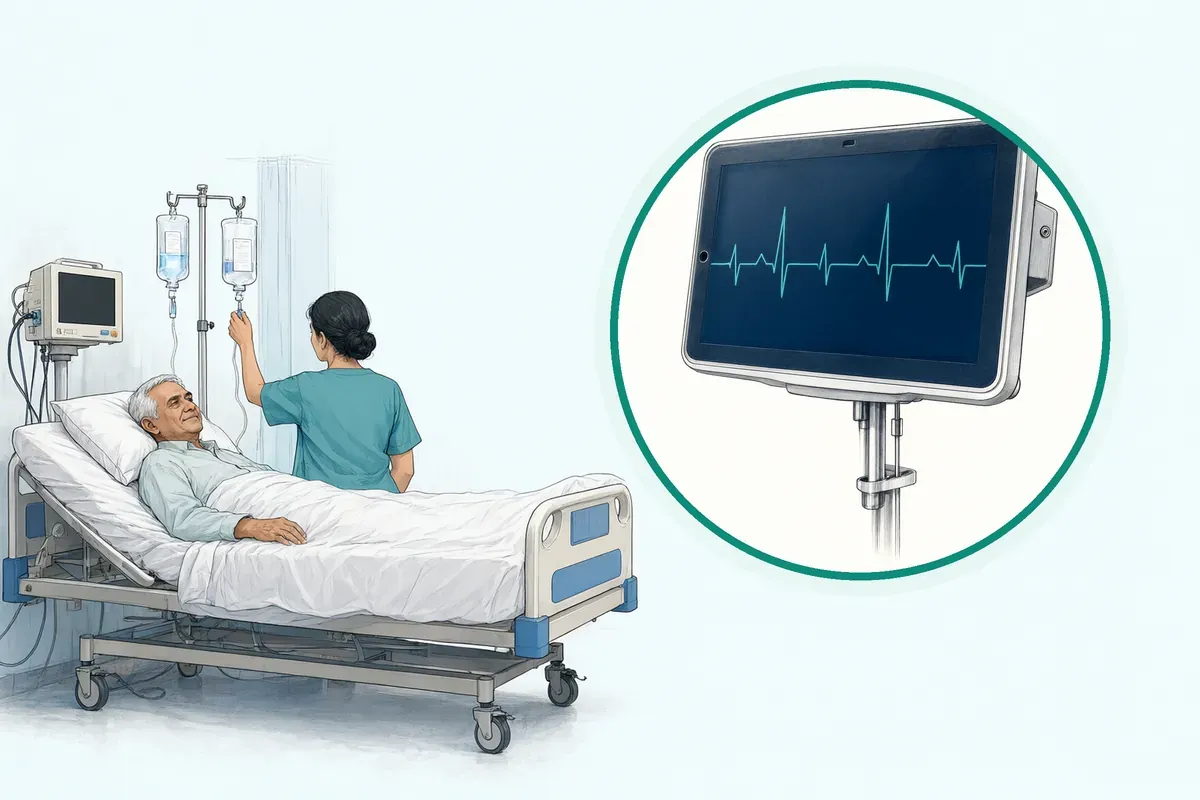
Patients may be connected to heart monitors and artificial ventilators. An artificial ventilator is needed when you cannot breathe for yourself. ICU patients can be connected to different machines; the most common are heart monitors and artificial ventilators. Patients may have several tubes going into or out of their body to give fluid and nutrients and to remove waste fluids.
Each patient usually has a dedicated specialist nurse. The ICU team includes many healthcare providers who are experts in intensive care. The ICU attending makes decisions about the patient's care and is trained in critical care medicine. ICU nurses are registered nurses with special training in critical care nursing.
Respiratory therapists have special training in caring for people with breathing problems. Clinical dietitian nutritionists make sure patients get proper nutrition when it is appropriate. Physical therapists help people get their physical strength back during and after their illness. Occupational therapists help people care for themselves as much as possible and work on the skills they need for everyday activities.
Warning signs that mean you need intensive care right away
- Cannot breathe on your own
- Major surgery complications
Most people in an ICU have problems with one or more organs. For example, they may be unable to breathe on their own. You might need to go to the ICU after major surgery.
You might need to go to the ICU if you have a serious illness such as:
- Heart failure
- Kidney failure
- Stroke
- Heart attack
Common reasons include a serious accident such as:
- A road accident
- A severe head injury
- A serious fall
- Severe burns
Major surgery can be a planned part of your recovery or an emergency measure if there are complications. There are many different conditions and situations that can mean someone needs intensive care.
Intensive care is needed if someone is seriously ill and requires intensive treatment and close monitoring, or if they are having surgery and intensive care can help them recover. ICU care is recommended when a patient requires constant monitoring, life-support systems, immediate medical intervention, or management of critical conditions. People of all ages may need ICU care depending on their condition.
Why people need intensive care and who is at higher risk
You might need to go to the ICU after major surgery.
You might need to go to the ICU if you have a serious illness such as:
- Heart failure
- Kidney failure
- Stroke
- Heart attack
Common reasons include a serious accident such as:
- A road accident
- A severe head injury
- A serious fall
- Severe burns
Major surgery can be a planned part of your recovery or an emergency measure if there are complications. There are many different conditions and situations that can mean someone needs intensive care. Sepsis is defined as the presence of infection together with systemic manifestations of infection. Severe sepsis is sepsis plus sepsis-induced organ dysfunction or tissue hypoperfusion.
Septic shock is sepsis-induced hypotension persisting despite adequate fluid resuscitation. ICU care is recommended when a patient requires constant monitoring, life-support systems, immediate medical intervention, or management of critical conditions. People of all ages may need ICU care depending on their condition.
How doctors decide you need intensive care: checks and tests
- Assess condition Doctors assess patient and record vital signs
- Immediate treatment Begin treatment if needed
- Stabilise vital functions Breathing, heart function and blood pressure
- Create personalised plan Medicines, procedures and monitoring schedules
You are likely to be admitted to an ICU if you are in a critical condition. Intensive care is needed if someone is seriously ill and requires intensive treatment and close monitoring, or if they are having surgery and intensive care can help them recover. Upon arrival, doctors assess the patient's condition and vital signs are recorded.
Immediate treatment begins if needed. The primary goal is to stabilise breathing, heart function, and blood pressure and to prevent further complications. A personalised treatment plan is created, which may include medications, procedures, and monitoring schedules. Patients are closely monitored 24/7 using machines that track heart rate, blood pressure, oxygen levels, and breathing patterns.
ICUs are equipped with life-support systems and critical care devices that can respond quickly to changes in a patient's condition.
Treatments in intensive care without surgery and when surgery is needed
- Ventilator
- Helps breathing via tube in mouth, nose or throat
- Heart monitor
- Tracks heart rate, blood pressure, oxygen levels
- IV lines and pumps
- Give fluids, nutrition and medicines through a vein
- Feeding tubes
- Placed in nose, tummy or vein when eating is not possible
- Drains and catheters
- Remove blood, fluid or urine from the body
In the ICU, patients may need life-support when a major organ such as the heart or lungs needs help to work properly. Patients may be connected to heart monitors and artificial ventilators. An artificial ventilator is needed when you cannot breathe for yourself. ICU patients can be connected to different machines; the most common are heart monitors and artificial ventilators.
Patients may have several tubes going into or out of their body to give fluid and nutrients and to remove waste fluids. Equipment that may be used includes a ventilator — a machine that helps with breathing; a tube is placed in the mouth, nose or through a small cut in the throat (tracheostomy).
Monitoring equipment measures important bodily functions such as heart rate, blood pressure and the level of oxygen in the blood. IV lines and pumps are tubes inserted into a vein to provide fluids, nutrition and medication.
Feeding tubes are placed in the nose, through a small cut made in the tummy or into a vein if a person is unable to eat normally. Drains and catheters are used to remove build-up of blood or fluid from the body; catheters are thin tubes inserted into the bladder to drain urine.
A ventilator is a machine that helps patients breathe when they cannot do so on their own. IV lines and infusion pumps deliver fluids, medications, and nutrition. Oxygen support devices include masks or nasal tubes to maintain oxygen levels. Catheters and tubes are used for urine drainage and feeding in some cases. Intensivists are doctors specialised in critical care.
Nurses provide constant monitoring and support. Respiratory therapists manage breathing support. Physiotherapists help with mobility and recovery. Dietitians ensure proper nutrition.
A typical ICU day may include:
- Regular monitoring of vital signs
- Medication administration
- Diagnostic tests
- Doctor rounds and updates
- Supportive therapies such as oxygen and ventilation
If you have a contagious disease, you need to be cared for in a separate part of the ICU called isolation. In the isolation section, extra precautions are taken by staff to keep infections under control. It is important to stop germs infecting staff or other patients in the ICU.
Isolation can also be needed if you have an infection that is hard to treat. This sometimes happens when germs become resistant to antibiotics.
Preparing for ICU admission
Do
- Bring list of regular medicines
- Bring comfortable clothes and toiletries
- Discuss advance care plan with doctor
Most ICU admissions are unplanned and happen after a serious illness, major surgery, or a sudden event such as a heart attack, stroke, or severe injury. When there is time before a planned ICU stay, your doctor will explain why intensive care is needed and what to expect.
You may be asked about any advance care plan you have, which records your wishes about treatments such as ventilation or cardiopulmonary resuscitation. You can discuss this plan with your doctor at any time and change your mind later. If you take regular medicines, bring a list or the medicines themselves so the ICU team can review them.
Bring comfortable clothes, toiletries, and any glasses, hearing aids, or dentures you use; these can help prevent confusion during your stay. An attendant should carry your identification, insurance or scheme cards, and any recent test reports. The hospital will guide you on fasting if a procedure is planned, but in an emergency this step may not be possible.
How intensive care is provided at Jaipur Hospital
Jaipur Hospital runs a 24×7 Intensive Care Unit with ventilator, dialysis, and multi-organ support as part of its critical care facilities. The ICU is staffed by intensivists, critical care nurses, respiratory therapists, physiotherapists, and dietitians who work together to monitor and support patients.
The unit handles several types of critical illness:
- Medical ICU for sepsis, poisoning, and organ failure
- Surgical ICU for post-operative monitoring after major surgery
- Cardiac ICU for heart attack, arrhythmia, and post-catheterisation care
- Neuro ICU for stroke, traumatic brain injury, and status epilepticus
On admission, doctors assess the patient's condition, record vital signs, and begin immediate treatment to stabilise breathing, heart function, and blood pressure. A personalised treatment plan is then created, which may include medications, procedures, and monitoring schedules. Patients are continuously monitored using machines that track heart rate, blood pressure, oxygen levels, and breathing patterns.
Common equipment includes:
- Ventilators for breathing support
- Heart monitors
- IV lines and infusion pumps for fluids and medicines
- Feeding tubes
- Drains
- Catheters
Each patient usually has a dedicated specialist nurse, and the nurse-to-patient ratio is typically one nurse for every one or two patients. The ICU team provides daily progress updates, and a formal family meeting can be arranged when needed. The team also coordinates with the patient's primary doctor throughout the stay.
Risks and possible complications of ICU care
Avoid
- Infections from lines and tubes
- Swelling, bruises and wounds from procedures
- Drowsiness and confusion from sedatives
Being in the ICU carries risks related to the critical illness itself and the treatments needed. Patients often receive pain medicine and sedatives because tubes and equipment can be uncomfortable. This can cause drowsiness and confusion. Patients may appear swollen or have bruises and wounds from procedures. Many tubes, wires, and cables are attached, which can look alarming.
Infections can develop, especially with lines and tubes; isolation precautions are used when needed to control spread. Some patients develop delirium, a sudden change in thinking and behaviour.
After leaving the ICU, lingering problems can include:
- Weakness
- Stiffness
- Extreme tiredness
- Loss of appetite
- Weight loss
- Sleep problems
- Depression
- Anxiety
- Post-traumatic stress disorder
- Difficulty thinking clearly or remembering
These problems can last several months. If they persist, medical advice should be sought. The ICU team takes steps to reduce these risks, such as early mobility programmes, sedation protocols, and delirium prevention measures like orienting the patient to time and place, ensuring glasses and dentures are available, and promoting a normal sleep cycle.
Recovery and aftercare after ICU
- Transfer to step-down or general ward When condition is stable
- Discharge home With medicines and care instructions
- Follow-up and rehabilitation Appointments and ongoing therapy if needed
- Home care Rest, regular meals, fluids, stay in touch with family
When you no longer need the high level of care in the ICU, you will be moved to a step-down ward or a general ward to continue recovery. This transfer usually happens when your condition is stable.
Some people leave the ICU after a few days, while others may stay for weeks or months depending on the severity of illness, response to treatment, and any complications. Once you are well enough to go home, you will be discharged with medicines and instructions for care at home.
You may need further care or follow-up appointments at the hospital, a clinic, or with your doctor. Some people require ongoing rehabilitation to help them recover. At home, it is important to get rest, eat regular meals, drink plenty of fluids, and stay in touch with family and friends.
Contact the hospital or your doctor if you develop new or worsening symptoms such as fever, breathing difficulty, confusion, wound problems, or if you feel you are not improving as expected.
Results and outcomes of intensive care
Many people who leave an ICU make a good recovery. Outcomes depend on the reason for admission, the severity of illness, age, and other health conditions. In studies of severe sepsis and septic shock, hospital mortality has been reported around 17% for sepsis and 26% for severe sepsis. Research shows that following evidence-based guidelines for sepsis management can improve outcomes.
For example, in one large trial, prone positioning for severe acute respiratory distress syndrome reduced 28-day mortality from 32.8% in the supine group to 16.0% in the prone group. These results come from groups of patients in studies and do not predict what will happen to any individual. Your surgeon and ICU team will discuss what to expect in your specific situation.
Cost and insurance for ICU at Jaipur Hospital
The typical cost range for ICU care in India is ₹25,000 to ₹75,000 per day. The final cost depends on the type of ICU (medical, surgical, cardiac, or neuro), the level of organ support needed such as ventilation or dialysis, the duration of stay, medicines, and any procedures performed.
Jaipur Hospital accepts several government schemes and private insurance panels:
- RGHS
- MAA Yojana
- CGHS
- A panel of private insurers and TPAs
If you are covered under one of these schemes, bring your scheme or insurance card at admission. The hospital's billing team can help you understand what is covered and what you may need to pay. For an estimate specific to your case, please ask the hospital directly.