

Anaesthesia and Critical Care · Jaipur Hospital
Medical ICU in Jaipur
Critical illness needs round-the-clock care. We assess, plan and support you in the ICU.
- Serving Jaipur since 1991 (35 years)
- NABH accredited
- 24×7 emergency & ICU
- Cashless: MAA Yojana + 32 insurers
- Length of stay
- Days to weeks (condition dependent)
- Anaesthesia
- Not applicable
- Recovery
- Step-down to HDU/ward, then rehab if needed
- Price
- ₹25,000 to ₹60,000 per day (level of care dependent)typical range in India; ask us for an estimate
When organs begin to fail
Serious illness can overwhelm the body quickly
Breathing, blood pressure or kidney function may drop without warning. You need a team that watches every minute and acts fast.
-
Breathing failure
Lungs cannot give enough oxygen; a ventilator may be needed.
-
Shock and low pressure
Blood pressure falls; medicines and close monitoring keep organs alive.
-
Kidney shutdown
Toxins build up; continuous dialysis can replace kidney work.
-
Infection spread
Sepsis can damage every organ; early antibiotics and bundles reduce risk.
An ICU is an organised system that provides intensive monitoring and multiple modalities of physiologic organ support for life-threatening organ insufficiency.
Why Jaipur Hospital
You worry whether your loved one will survive the night and what the daily cost will mean for your family.
Your care plan
Your first steps with us
- 1 Call or visit the emergency department
- 2 Admit to ICU for monitoring and support
- 3 Step down to HDU or ward when stable
- 4 Discharge with rehab plan and follow-up
Insurance and schemes
How cashless works
Cashless treatment under MAA Yojana and with 32 insurers.
-
Tell us when you book
Say you are insured or have a scheme card, and send a photo of the card on WhatsApp so our insurance desk can check it in advance.
-
We get the approval
Once your doctor advises admission, the insurance desk sends the pre-authorisation request to your insurer or TPA; for planned surgery, approval can come before you are admitted.
-
Settled at discharge
The approved amount is settled between the insurer and the hospital; you pay only what the policy does not cover.
How the operation is done
The ICU team uses invasive and non-invasive monitoring, ventilator strategies, continuous dialysis and infection bundles tailored to your condition.
-
Invasive Ventilation
Lung-protective low tidal volumes and prone positioning for severe ARDS.
-
Continuous Renal Replacement Therapy
CVVHDF for fluid overload and acute kidney injury in unstable patients.
-
Advanced Hemodynamic Monitoring
Arterial line, central venous pressure, echocardiography and PiCCO guide therapy.
-
Infection Control Bundle
VAP, CLABSI and CAUTI prevention with antibiotic stewardship protocols.
Why patients trust us
- 1991 Serving Jaipur for 35 years
- NABH Accredited hospital
- 1 Anaesthesia and Critical Care consultants
- 24×7 Emergency, ICU and ambulance
- 32 Cashless insurers, plus MAA Yojana
What research shows about this treatment
-
Median recovery time 15 days (IQR 6–30 days)
Critically ill patients on mechanical ventilation had a median ICU recovery of 15 days in a five-year cohort study.
-
42.3% recovered, 33.8% died
Among 376 ventilated ICU patients, 42.3% recovered, 33.8% died and 2.4% remained ventilator-dependent at discharge.
-
Non-traumatic patients recover 69% faster
Non-traumatic ICU patients on ventilation had a 69% faster recovery rate than traumatic patients after adjusting for covariates.
If it is left untreated
Without ICU-level monitoring and organ support, respiratory failure, shock or sepsis can lead to irreversible organ damage or death within hours.
Life after treatment
Most people move from ICU to a ward, then home with a rehab plan. Recovery speed depends on the original illness and any complications.
-
Step-down care
You usually move to HDU or a general ward once organs stabilise.
-
Rehab and strength
Physiotherapy helps regain breathing and muscle strength after long ventilation.
-
Follow-up review
Outpatient checks monitor lung, kidney and cognitive recovery over months.
-
Home planning
The team guides attendants on medicines, tracheostomy care or home oxygen if needed.
Meet the team
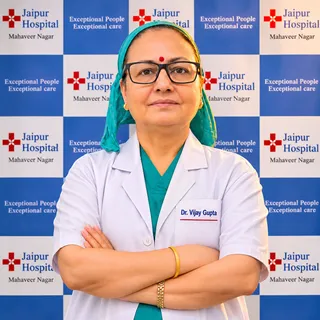
Your anaesthesia and critical care doctors
Explore our anaesthesia and critical care department in Jaipur: every treatment, the doctors and what to expect at your visit.
Frequently asked questions
Questions patients ask about medical icu
What does medical ICU care involve?
In short
Medical ICU care involves continuous monitoring, specialised nursing, and organ support for life-threatening illness. At Jaipur Hospital, our specialist team watches vital signs closely around the clock. Typical stays range from days to weeks, depending on condition. Anaesthesia is not applicable for routine admission, and treatment focuses on stabilising organ failure.
In detail
An intensive care unit is an organised system providing intensive medical and nursing attention. It offers multiple forms of physiologic organ support when vital systems fail. For severe respiratory failure, invasive mechanical ventilation supports or substitutes normal breathing.
In acute respiratory distress syndrome, studies recommend lower tidal volumes of 4 to 8 ml per kg and prone positioning for over 12 hours daily. When acute kidney injury or fluid overload occurs in unstable patients, continuous renal replacement therapy provides continuous clearance.
Arterial lines, central venous pressure, and echocardiography guide circulation support. Infection control bundles prevent ventilator-associated pneumonia and bloodstream infections while antibiotic stewardship directs antimicrobial therapy.
A common belief
Many families think an ICU only provides extra oxygen and quiet rest.
What actually happens
In reality, it delivers advanced life support, including mechanical lung ventilation, continuous kidney dialysis, and constant blood pressure tracking.
Your next step at Jaipur Hospital
Hospitalisation typically lasts between 3 and 14 days on average. Across India, typical ICU charges range from ₹25,000 to ₹60,000 per day depending on the required level of care. Cashless options include MAA Yojana and empanelled private insurers and TPAs. As recovery begins, patients step down to a high dependency unit or ward before rehabilitation.
Will the patient be awake, sedated, or in pain during medical ICU care?
In short
Whether the patient is awake, sedated, or in pain depends on their illness severity and breathing support. At Jaipur Hospital, our specialist team tailors comfort medications carefully. The goal is to keep patients calm, responsive, and free from unnecessary distress while supporting vital organs.
In detail
In medical intensive care, sedation and pain control are balanced to match physiological needs. A patient on mechanical ventilation often requires light sedation and analgesia so the endotracheal tube does not cause distress.
However, medical teams avoid over-sedation to allow regular neurological checks using the Glasgow Coma Scale. When severe lung injury requires prone positioning for more than 12 hours per day, deeper sedation may be used temporarily to ensure safe ventilation.
Invasive lines such as arterial catheters and central venous access are inserted under local anaesthesia to prevent discomfort. Attending doctors review sedation targets repeatedly during daily clinical rounds to encourage prompt recovery.
A common belief
Families frequently worry that ventilated patients are either fully unconscious or suffering severe pain.
What actually happens
Specialists carefully titrate calming medicines so patients stay comfortable while remaining easy to assess.
Your next step at Jaipur Hospital
Comfort levels are reassessed round the clock during typical stays averaging 3 to 14 days. Intensive care in India typically costs ₹25,000 to ₹60,000 per day according to monitoring requirements. Financial coverage is supported by MAA Yojana and empanelled insurance providers. Recovery leads toward waking and stepping down to general wards.
How will the team know when the patient is improving during medical ICU care?
In short
Our medical team knows a patient is improving when vital organ functions stabilise and oxygen levels normalise. At Jaipur Hospital, our specialist team tracks objective bedside markers, neurological responses, and laboratory values continuously. These steady trends show whether organ systems are regaining the ability to function with reduced medical support.
In detail
Improvement in intensive care is measured through consistent physiological trends rather than single readings. Research shows that oxygen saturation at or above 90% is associated with a 60% greater recovery rate among patients receiving mechanical ventilation.
Neurological assessments such as the Glasgow Coma Scale provide clear indications of recovery, with scores between 9 and 12 showing significantly faster recovery rates compared to lower scores.
In conditions like cardiogenic shock, moving from deteriorating stages toward clinical stability confirms that tissues are receiving adequate blood supply. These clinical measurements help our team evaluate breathing strength, blood pressure stability, and kidney output as vital organs gradually recover from critical illness.
A common belief
Recovery in intensive care rarely happens all at once.
What actually happens
Clinicians look for consistent trends over days—such as stable oxygen levels and waking responsiveness—before deciding that a patient is truly recovering.
Your next step at Jaipur Hospital
Daily multidisciplinary rounds track these clinical indicators each morning. When improvements remain stable over consecutive days, the team begins reducing supportive therapies. The typical medical ICU stay ranges between 3 and 14 days, depending on underlying illness.
If you have questions about tracking recovery in intensive care, book a consultation with our specialist team at Jaipur Hospital.
How does the term "medical intensive care unit" relate to medical ICU care?
In short
The term "medical intensive care unit" describes the dedicated hospital department that delivers medical ICU care to critically ill patients. At Jaipur Hospital, our medical ICU provides specialised medical monitoring, vital organ support, and continuous nursing care for serious non-surgical illnesses and acute organ system failure.
In detail
An intensive care unit is defined as an organised hospital system providing intensive medical and nursing care, continuous physiological monitoring, and multiple modalities of life support for life-threatening organ system insufficiency. Intensive care units are classified into distinct tiers.
A level 1 unit provides noninvasive monitoring and oxygen therapy. A level 2 unit provides basic life support and invasive monitoring for limited durations. A level 3 unit offers a comprehensive spectrum of life support technologies, including invasive mechanical ventilation and renal replacement therapy.
Medical ICU care specifically addresses acute medical conditions such as severe respiratory distress, sepsis, and cardiogenic shock, often beginning in emergency departments and continuing into recovery wards.
A common belief
It is not just a room with monitors.
What actually happens
A medical ICU is an organised system of specialist physicians, nurses, and organ-support technologies working together to sustain failing vital organs.
Your next step at Jaipur Hospital
Medical ICU admission is initiated promptly when an emergency assessment confirms a need for close organ monitoring. Hospital stays typically range from 3 to 14 days, depending on condition severity. The typical price across India ranges from ₹25,000 to ₹60,000 per day.
To discuss medical intensive care facilities or arrange clinical assessment, contact Jaipur Hospital to book a consultation with our specialist team.
What is the ICU in a hospital?
In short
An ICU is an organised hospital system that provides intensive medical and nursing care for critically ill patients. At Jaipur Hospital, our intensive care unit delivers continuous physiological monitoring and multiple modalities of organ support to sustain life during periods of life-threatening organ system insufficiency.
In detail
An intensive care unit is designed to care for patients who cannot be managed safely on a regular hospital ward. Clinical evidence defines an ICU as an enhanced facility providing specialised medical observation and physiological life support.
Care protocols include advanced hemodynamic monitoring using arterial lines, central venous pressure, echocardiography, or PiCCO systems. The unit also deploys invasive ventilation using lower tidal volumes, continuous renal replacement therapy, and infection control bundles to prevent hospital-acquired infections.
Specialist teams work continuously at the bedside, titrating medicines, maintaining circulation, and adapting organ support technologies based on minute-to-minute changes in patient condition.
A common belief
People often think an ICU is just a quiet ward with extra machines.
What actually happens
In reality, it is a coordinated life-support system where specialist teams actively manage breathing, blood pressure, and organ function every minute.
Your next step at Jaipur Hospital
Care in the unit begins immediately upon admission from the emergency department or inpatient wards. The average hospital stay typically ranges from 3 to 14 days, depending on recovery. As stability returns, your specialist coordinates a step-down to intermediate care. You can learn more about our critical care facilities by booking a consultation at Jaipur Hospital.
How will my medical history and current medicines affect the medical ICU care plan?
In short
Your medical history and current medicines directly shape your medical ICU care plan from the moment of admission. At Jaipur Hospital, our specialist team reviews all prior health records and prescriptions to tailor organ support, prevent drug interactions, and adjust treatment protocols safely.
In detail
Past health conditions and pre-existing medications significantly influence critical care outcomes. In clinical studies, patients without chronic comorbidities recovered 77.4% faster while receiving mechanical ventilation compared to those with co-existing illnesses.
Furthermore, patients taking antithrombotic medicines, such as anticoagulants or antiplatelet drugs, require careful monitoring; rapid reversal protocols are used in cases of intracranial haemorrhage to limit bleeding expansion. Pre-existing kidney problems also guide decisions regarding continuous renal replacement therapy and drug dosing.
Specialist teams closely adjust antibiotic choices, including polymyxins like colistin, to match organ clearance, minimise toxicity risks, and ensure safe treatment delivery.
- In clinical studies, patients without chronic comorbidities recovered 77.4% faster while receiving mechanical ventilation compared to those with co-existing illnesses.
A common belief
Some think intensive care only treats the sudden emergency.
What actually happens
But existing conditions like diabetes or blood thinners alter how your body responds, requiring specialist adjustments to avoid complications.
Your next step at Jaipur Hospital
When arriving at the hospital, your attendant should share all past discharge summaries, prescription slips, and current medicine strips with the team. This allows your specialist to reconcile prescriptions and monitor organ function accurately. To review your medical records and prepare a coordinated care strategy, book a consultation at Jaipur Hospital.
Why might someone need medical ICU care?
In short
Someone might need medical ICU care when a severe medical condition causes organ failure or life-threatening instability. At Jaipur Hospital, our specialist team admits patients who require invasive monitoring, breathing assistance, or round-the-clock nursing. Common reasons include severe respiratory failure, cardiogenic shock, and severe infections that cannot be managed safely on a general ward.
In detail
Patients enter an intensive care unit when organs cannot function adequately on their own. Studies show that conditions like type two respiratory failure, severe pneumonia, sepsis, and trauma frequently require mechanical ventilation to sustain breathing.
In cardiogenic shock, the heart cannot pump sufficient blood, leading to hypoperfusion and low oxygen supply to tissues. Intensive monitoring tracks arterial pressure and oxygen saturation closely. Studies indicate that patients with oxygen saturation below 90 percent or reduced consciousness need rapid clinical intervention.
Close observation allows the team to deliver targeted therapies, protect the lungs, and support kidney function before further organ collapse occurs.
Your next step at Jaipur Hospital
The duration of medical ICU treatment depends on how quickly the underlying illness responds, typically lasting from 3 to 14 days on average. Recovery often includes step-down care in an HDU followed by rehabilitation.
The typical daily expense in India ranges from ₹25,000 to ₹60,000 based on required interventions. You are invited to book a consultation at Jaipur Hospital to discuss medical ICU admissions.
How will pain, anxiety, and sleep be managed in the medical ICU?
In short
Pain, anxiety, and sleep are managed through regular clinical assessments, targeted medications, and supportive environmental adjustments. At Jaipur Hospital, our specialist team treats discomfort promptly while maintaining physiological stability. Nursing staff evaluate distress regularly so adjustments can be made without causing prolonged grogginess.
In detail
Managing physical and emotional distress in intensive care requires calibrated interventions. Pain relief is delivered using intravenous analgesics tailored to organ function, avoiding unnecessary drops in blood pressure. Anxiety is addressed through reassurance, structured communication, and low-dose sedative agents when required.
Ventilator synchrony is supported to reduce breathing strain, particularly in acute respiratory distress syndrome where lung-protective strategies are critical. To encourage natural sleep cycles, staff minimise nighttime alarms, dim ambient lighting, and group nursing tasks.
Regular reassessment ensures medications do not build up, especially if renal clearance is impaired, aiding earlier mobilisation and preventing long-term physical weakness.
A common belief
People often think heavy sedatives are the only way to manage ICU anxiety.
What actually happens
In truth, modern protocols use minimal effective doses alongside day-night routines to protect sleep and speed healing.
Your next step at Jaipur Hospital
Comfort management continues throughout the admission, which usually spans days to weeks. The standard price for intensive care in India ranges from ₹25,000 to ₹60,000 per day based on treatment intensity. Cashless assistance is available through MAA Yojana and empanelled TPAs. Patients gradually transition to ward-level routines during recovery.
What needs to happen before support can be reduced during medical ICU care?
In short
Before organ support can be reduced, the underlying illness must stabilise and vital signs must remain steady. At Jaipur Hospital, our specialist team evaluates spontaneous breathing capacity, blood pressure stability, and laboratory results before lowering intervention levels. This cautious approach ensures that your body is ready to manage normal physiological work safely.
In detail
Weaning supportive care is a systematic clinical process. For patients receiving mechanical ventilation for respiratory failure, the team checks that oxygen levels remain adequate and that the patient can generate independent breathing effort.
Medical guidelines recommend lung-protective strategies with lower tidal volumes during ventilation, which must be maintained until lung function improves. In circulatory failure, the body must sustain adequate blood pressure and organ perfusion without heavy medication support.
Similarly, continuous renal replacement therapy is adjusted only when kidney function, fluid balance, and blood chemistry begin returning toward baseline. Reducing support requires verified organ stability to prevent sudden clinical setback.
A common belief
Machines cannot simply be turned off at once.
What actually happens
Support is lowered in controlled, step-by-step trials while clinicians closely monitor whether your organs can maintain normal function safely.
Your next step at Jaipur Hospital
Our team performs gradual weaning trials in a step-by-step manner, observing vital signs closely at each reduction. If the patient tolerates lower support levels without distress, further decreases are scheduled. The overall stay in the ICU typically averages 3 to 14 days.
To understand the steps involved in reducing critical care support, schedule a consultation with our specialist team at Jaipur Hospital.
How does the term "MICU" relate to medical ICU care?
In short
The term MICU stands for Medical Intensive Care Unit, which is dedicated to serious medical illnesses. At Jaipur Hospital, our medical ICU provides specialised monitoring and organ support for conditions that do not require surgical operations, such as severe respiratory distress, acute organ failure, and severe infections needing close continuous bedside observation.
In detail
In hospital care, intensive units are organised to manage life-threatening organ system insufficiency. A medical ICU focuses specifically on acute medical crises rather than post-surgical recovery.
Clinical practice uses advanced interventions like invasive ventilation with lung-protective strategies and continuous renal replacement therapy like CVVHDF for fluid overload and acute kidney injury in unstable patients.
Specialist teams monitor vital signs closely, use infection control bundles for ventilator and bloodstream safety, and adapt life support modalities as patient physiology changes.
Evidence shows structured units provide enhanced physiological monitoring, timely organ support, and clear protocols to sustain life through critical episodes of severe illness.
A common belief
Many people assume all ICUs are identical.
What actually happens
In fact, a medical ICU focuses specifically on non-surgical emergencies like lung failure, severe infections, and kidney injury with targeted life support.
Your next step at Jaipur Hospital
Patients typically enter the unit through the emergency department or a hospital ward when vital signs require continuous monitoring. Once breathing and blood pressure stabilise, recovery usually involves a planned step-down to a high dependency unit or general ward, followed by rehabilitation if needed. You can discuss admission criteria and treatment pathways by booking a consultation at Jaipur Hospital.
FAQ library
Questions and answers about medical icu
When you contact us
Get an ICU assessment and cost estimate
Contact Jaipur Hospital for a critical care specialist review, in-house tests, plain explanation of options, a cost estimate and cashless help under MAA Yojana and empanelled insurers and TPAs.
- A consultation with an anaesthesia and critical care specialist in the OPD
- Your scans and reports reviewed, with tests done in-house if you need them (laboratory, X-ray and imaging)
- Your options explained in plain words, including whether you need surgery at all
- A cost estimate before you decide
- Help with cashless treatment under MAA Yojana and empanelled insurers and TPAs
- Follow-up visits after your treatment
Overview
Medical ICU: what to know
What is a Medical ICU and when is it needed
- Organised system
- Intensive medical and nursing care with enhanced monitoring
- Level 3 unit
- Full spectrum of monitoring and life support technologies
A Medical ICU is an organised system for the care of critically ill patients that provides intensive medical and nursing care, enhanced monitoring, and multiple ways to support failing organs when life-threatening organ system insufficiency occurs.
It is a defined geographic area in the hospital, but its activities often extend beyond the physical space to include the emergency department, hospital wards, and follow-up clinics.
At Jaipur Hospital, the ICU is a level 3 unit, which means it provides a full spectrum of monitoring and life support technologies and serves as a regional resource for critically ill patients.
You are admitted to the Medical ICU when a serious medical illness makes it unsafe to stay on a general ward. Common reasons include severe infections such as sepsis, acute respiratory failure, heart failure with low blood pressure, stroke, poisoning, severe electrolyte disturbances, and complications of chronic diseases such as diabetes or kidney failure.
The ICU team gives continuous monitoring of heart rhythm, blood pressure, oxygen levels, and breathing, and can start organ support immediately when needed.
Symptoms and warning signs that need urgent care the same day
The symptoms that lead to ICU admission depend on the underlying illness. You may have severe shortness of breath, confusion or inability to wake fully, cold and clammy skin, very low or very high blood pressure, a fast or irregular heartbeat, or reduced urine output. In respiratory failure, oxygen saturation is often 90% or below. A Glasgow Coma Scale of 8 or below indicates deep impairment of consciousness.
Warning signs that need emergency care the same day include sudden worsening of breathlessness, new confusion or drowsiness, chest pain that does not settle, coughing up blood, severe abdominal pain with vomiting, and any sudden collapse. If you or your attendant notice these, call the 24×7 ambulance service or go straight to the emergency department.
Causes and who is at higher risk
- Infections
- Pneumonia, urinary tract infection, abdominal sepsis
- Heart conditions
- Heart attack, cardiogenic shock stages A to E
- Lung conditions
- COPD exacerbation, acute respiratory distress syndrome
- Higher risk groups
- Over 60, diabetes, chronic kidney or lung disease, heart disease, cancer, weakened immunity
Critical illness can arise from infections (pneumonia, urinary tract infection, abdominal sepsis), heart conditions (heart attack, cardiogenic shock), lung conditions (COPD exacerbation, acute respiratory distress syndrome), stroke, bleeding, poisoning, and major surgery complications. Cardiogenic shock is classified in stages from A (at risk) to E (extremis). Stage C and above mean hypoperfusion is present. Stage D means initial interventions have not restored stability after at least 30 minutes. Stage E is cardiovascular collapse.
People at higher risk include those over 60, patients with diabetes, chronic kidney disease, chronic lung disease, heart disease, cancer, or weakened immunity, and those on long-term steroids or anticoagulants. In one ICU cohort, 38% of patients had comorbidities. Comorbidities reduce the recovery rate by about 77% compared with patients without them.
Low oxygen saturation (90% or below) and a Glasgow Coma Scale of 8 or below are also independent predictors of slower recovery.
How it is diagnosed: examination and tests in the ICU
- Continuous examination
- Consciousness, breathing, heart sounds, pulse, blood pressure, skin perfusion, urine output
- Invasive monitoring
- Arterial line, central venous pressure, PiCCO cardiac output monitoring
- Bedside echocardiography
- Assesses heart function and guides fluid and drug therapy
- Frequent blood tests
- Complete blood count, kidney and liver function, electrolytes, coagulation, lactate, infection markers
Diagnosis in the ICU is continuous. The team examines you repeatedly for level of consciousness, breathing pattern, heart sounds, pulse, blood pressure, skin perfusion, and urine output. Invasive monitoring includes an arterial line for beat-to-beat blood pressure and blood gas analysis, central venous pressure monitoring, and sometimes advanced cardiac output monitoring such as PiCCO. Bedside echocardiography is used to assess heart function and guide fluid and drug therapy.
Blood tests are done frequently: complete blood count, kidney and liver function, electrolytes, coagulation profile, lactate, and infection markers such as procalcitonin and cultures. Chest X-ray is available in-house around the clock; CT and MRI are done at an outside imaging centre and the results are reviewed by the ICU team.
For severe respiratory failure, the type of failure is identified: in one study, 55% of ventilated patients had type II respiratory failure. The team also screens for critical illness-related corticosteroid insufficiency, though no single test reliably diagnoses it.
Treatment options without surgery, and when surgery is advised
- Continuous renal replacement therapy
- CVVHDF for fluid overload and acute kidney injury in unstable patients
- Vasopressors and inotropes
- Support blood pressure and heart function
- Infection control bundles
- Prevent ventilator-associated pneumonia, central line and urinary tract infections
Non-surgical treatment in the Medical ICU focuses on organ support and treating the underlying cause. Mechanical ventilation is life-sustaining support for respiratory failure. For ARDS, strong recommendations are to use lower tidal volumes (4–8 ml/kg predicted body weight) and lower plateau pressures, and to use prone positioning for more than 12 hours a day in severe ARDS.
Higher positive end-expiratory pressure and recruitment manoeuvres are conditional recommendations. High-frequency oscillatory ventilation is strongly recommended against in moderate or severe ARDS.
Continuous renal replacement therapy (CVVHDF) is used for fluid overload and acute kidney injury in haemodynamically unstable patients. Vasopressors and inotropes support blood pressure and heart function. Infection control bundles prevent ventilator-associated pneumonia, central line-associated bloodstream infection, and catheter-associated urinary tract infection, and antibiotic stewardship guides appropriate antibiotic use.
For multidrug-resistant gram-negative infections, polymyxin antibiotics (colistin and polymyxin B) are used as salvage therapy under consensus dosing and monitoring guidelines.
Corticosteroids may be considered in septic shock, ARDS, or major trauma based on multispecialty task force recommendations. Coagulopathy reversal follows evidence-based guidelines for each anticoagulant or antiplatelet agent when bleeding occurs. Shared decision-making is the default approach for goals of care, including decisions about limiting or withdrawing life-prolonging interventions. The team is trained in communication skills to support you and your family.
Surgery is advised when a surgical problem is the cause of critical illness, such as a perforated viscus, necrotising fasciitis, intracranial haemorrhage needing evacuation, or vascular catastrophe. In those cases, the ICU stabilises you for emergency surgery and provides postoperative critical care.
Extracorporeal membrane oxygenation (ECMO) for severe ARDS remains an area where additional evidence is needed for a definitive recommendation. The ICU does not perform surgical procedures itself; it supports you before, during, and after surgery done by the relevant surgical team.
Your first visit and tests in the Medical ICU
Do
- Recent test reports
- List of your medicines
- Insurance or MAA Yojana card
- Attendant for consent and decisions
When you arrive at the Medical ICU, the critical care team assesses you straight away. The doctor asks about your current symptoms, past illnesses, medicines you take, allergies and any recent hospital stays. A physical examination checks your breathing, heart rate, blood pressure, temperature and level of consciousness.
Blood tests are taken for complete blood count, kidney and liver function, electrolytes, blood gases, coagulation profile and infection markers such as procalcitonin or C-reactive protein. A chest X-ray is done at the bedside. An ECG records your heart rhythm. If needed, an echocardiogram is performed to look at heart function.
The team may place an arterial line for continuous blood pressure monitoring and repeated blood gas samples, and a central venous line for giving fluids, medicines and measuring central venous pressure. In some cases a PiCCO monitor is used for more detailed haemodynamic information. All of this helps the team decide the level of support you need.
Please bring any recent test reports, a list of your medicines and your insurance or MAA Yojana card. An attendant should stay available for consent and decisions.
How treatment works in the Medical ICU
- Continuous renal replacement therapy
- CVVHDF for fluid overload or acute kidney injury when unstable
- Advanced haemodynamic monitoring
- Arterial line, central venous pressure, echocardiography, PiCCO
- Infection control bundles and antibiotic stewardship
- Prevent pneumonia, bloodstream and urinary infections
The Medical ICU provides round-the-clock monitoring and organ support for serious medical illness. Your doctor chooses the techniques that match your condition. Invasive ventilation with lung-protective strategy uses lower tidal volumes (4 to 8 ml per kg predicted body weight) and limits plateau pressure; for severe ARDS, prone positioning for more than 12 hours a day is recommended.
Continuous Renal Replacement Therapy (CVVHDF) is used for fluid overload or acute kidney injury when you are haemodynamically unstable. Advanced haemodynamic monitoring includes arterial line, central venous pressure, echocardiography and PiCCO to guide fluid and drug therapy. Infection control bundles are applied to prevent ventilator-associated pneumonia, central line-associated bloodstream infection and catheter-associated urinary tract infection, together with antibiotic stewardship.
The team reviews your progress daily, adjusts support, and involves you or your attendant in decisions about goals of care. A typical day involves continuous vital sign monitoring, regular blood tests, chest X-rays as needed, physiotherapy, nutrition via tube or intravenous route, and skin care to prevent pressure injuries. The nurse-to-patient ratio is kept high for close observation.
Risks and possible complications in the Medical ICU
- Ventilator-associated pneumonia
- Bundle approach aims to reduce it
- Central line and urinary tract infections
- Monitored daily, lines removed when no longer needed
- Barotrauma or volutrauma
- Can cause pneumothorax; lung-protective settings lower chance
- Prone positioning risks
- Pressure sores, tube displacement, haemodynamic changes
Critical illness itself carries risks. Ventilator-associated pneumonia occurs in a significant number of patients on prolonged ventilation; the bundle approach aims to reduce it. Central line-associated bloodstream infection and catheter-associated urinary tract infection are monitored daily and lines are removed as soon as they are no longer needed.
Barotrauma or volutrauma from mechanical ventilation can cause pneumothorax; lung-protective settings lower this chance. Prone positioning is generally safe but can cause pressure sores, endotracheal tube displacement or haemodynamic changes; the team is trained to manage these. Continuous Renal Replacement Therapy may cause bleeding from anticoagulation, electrolyte shifts or circuit clotting.
Arterial and central lines carry a small risk of bleeding, infection, thrombosis or accidental arterial puncture. Critical illness polyneuropathy and myopathy can develop with prolonged stay and deep sedation. Delirium is common and is screened for daily. Thrombosis risk is addressed with prophylaxis unless contraindicated. The team discusses each intervention's risks with you or your attendant before proceeding.
Recovery and aftercare after the Medical ICU
Recovery begins in the ICU as your organs improve. When you no longer need invasive ventilation or vasoactive drugs, you are stepped down to the High Dependency Unit (HDU) or a general ward. The median recovery time for critically ill patients on mechanical ventilation in one study was 15 days (interquartile range 6 to 30 days).
At 60 days, survival was 78.3% at day 5 and 63.9% at day 10. Patients without comorbidities recovered 77.4% faster than those with comorbidities. Higher oxygen saturation (above 90%) was linked to a 60% greater recovery rate. A Glasgow Coma Scale of 9 to 12 predicted nearly double the recovery rate compared with 8 or below.
Tracheostomy was associated with a 72.4% lower recovery rate, reflecting greater illness severity. After the ward, you may need physiotherapy, nutritional support and review by the original medical team. Before discharge, the doctor gives a summary with medicines, follow-up dates and warning signs.
Call the hospital if you develop new breathlessness, fever, confusion, inability to eat or drink, or if your attendant notices worsening drowsiness or reduced urine output. Outpatient follow-up is arranged with the relevant specialist.
Results: how well Medical ICU care works
In a study of 376 critically ill patients on mechanical ventilation, 42.3% recovered, 33.8% died, 2.4% remained ventilator-dependent and the rest were censored. The overall recovery rate was 4.49 per 100 person-days. Non-traumatic medical patients had a 69% faster recovery rate than trauma patients.
Factors linked to better recovery included higher oxygen saturation, absence of comorbidities, higher Glasgow Coma Scale and not needing a tracheostomy. The outcome of cardiogenic shock complicating myocardial infarction has not appreciably changed in the last 30 years despite new mechanical support options. For antithrombotic-associated intracranial haemorrhage, rapid reversal of coagulopathy may limit haematoma expansion and improve outcomes.
Shared decision-making about goals of care, including limiting or withdrawing life-prolonging interventions, is recommended and tailored to patient or surrogate preferences. The ICU team at Jaipur Hospital follows these evidence-based protocols and monitors quality indicators such as infection rates, ventilator days and length of stay.
Cost and insurance for Medical ICU in Jaipur
The typical daily cost for Medical ICU care in India ranges from ₹25,000 to ₹60,000, depending on the level of organ support needed — such as invasive ventilation, renal replacement therapy, multiple vasoactive drugs and advanced monitoring. The average hospital stay is 3 to 14 days, but it can be longer for complex cases.
The final bill depends on the number of ICU days, procedures, medicines, investigations and any implants or consumables. Jaipur Hospital is empanelled under MAA Yojana and works with a panel of private insurers and TPAs for cashless admission. If you have insurance, bring your policy details and ID card; the insurance desk helps with pre-authorisation.
For self-pay patients, the team provides an estimate based on the expected level of care. The hospital has a 24×7 emergency department, ambulance service, in-house pharmacy, laboratory and X-ray (CT and MRI are done at an outside imaging centre). NABH-accredited and in service since 1991.
