

Techniques in depth · Appendix Surgery
Antibiotics or surgery for appendicitis? What decides
Some adults with uncomplicated appendicitis can be treated with antibiotics instead of surgery. The decision depends on imaging findings, whether an appendicolith is present, and your overall health. Your surgeon will explain which option fits your situation.
Treatment at the hospital: Appendix Surgery in Jaipur
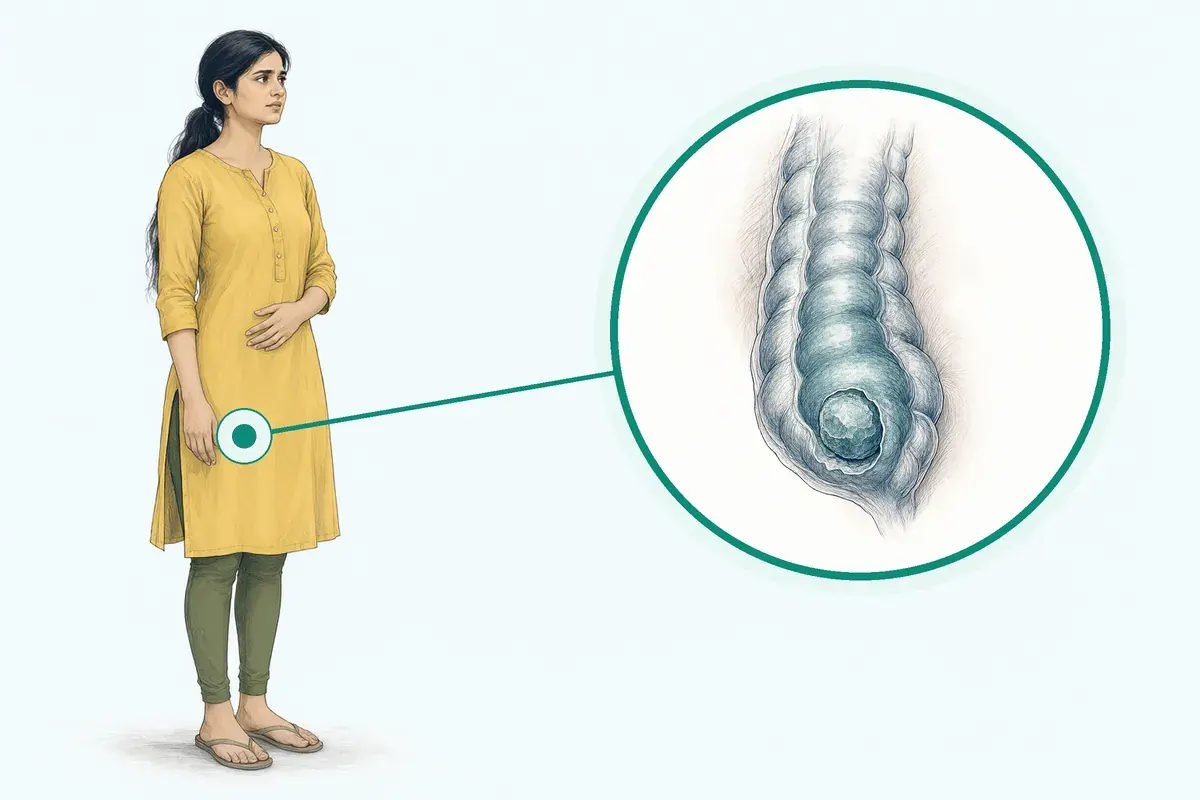
- About 34% Patients needing surgery within one year after antibiotics
- About 49% Patients with appendicolith needing later surgery
- 8.1 Complication rate with antibiotics (per 100 people)
- 3.5 Complication rate with surgery (per 100 people)
What makes appendicitis uncomplicated
- Appendix inflamed
- Not burst, no abscess
- Confirmed by scan
- Ultrasound or CT shows intact appendix
Uncomplicated appendicitis means the appendix is inflamed but has not burst, and there is no abscess or widespread infection in the abdomen. Doctors confirm this with imaging, usually an ultrasound or a CT scan, which shows the appendix is swollen but intact.
If the scan shows a hole in the appendix, a collection of pus, or signs that infection has spread to the lining of the abdomen (peritonitis), the condition is called complicated. Your surgeon will review the images and your examination to decide which group you fall into.
Role of appendicolith in treatment choice
- 49% Surgery within 90 days
- more common Higher complications
An appendicolith is a small, hard stone made of hardened stool that can block the appendix. If imaging shows an appendicolith, the chance that antibiotics alone will fail is higher. In one large study, 49% of patients with an appendicolith needed surgery within 90 days, compared with a lower rate in those without a stone.
Complications such as abscess formation were also more common when an appendicolith was present. Because of this, many surgeons recommend surgery straight away if a stone is seen. Your doctor will discuss what the imaging shows and what it means for your options.
Chance of needing surgery after antibiotics
- 27% to 34% Needed appendectomy
- 70% to 73% Avoided surgery
If you start with antibiotics, there is a real possibility you will still need an operation later. In studies, about 27% to 34% of patients treated with antibiotics for uncomplicated appendicitis needed an appendectomy within one year. Most of those delayed operations were for uncomplicated appendicitis that came back or did not fully settle.
A smaller number turned out to have complicated appendicitis at the time of the later surgery. The remaining patients, roughly 70% to 73%, avoided surgery altogether during the follow-up period. Your surgeon can give you a clearer idea based on your own scan and blood results.
Hospital stay versus home antibiotics
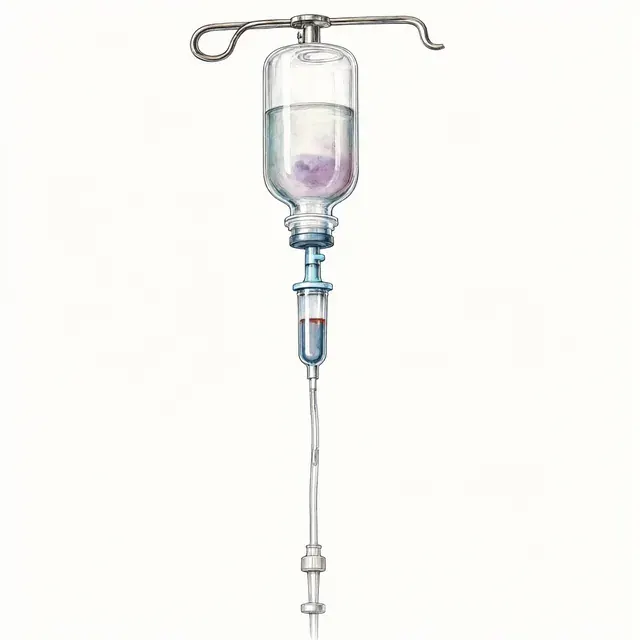 IV antibioticsAntibiotics given through a drip in hospital
 Tablet courseFinish five to seven days of tablets at home
- Start in hospital IV antibiotics, monitor pain and fever
- Return if worse Contact doctor or go to emergency
Antibiotic treatment for appendicitis usually starts in the emergency department with antibiotics given through a drip into a vein. You will need to stay in hospital at first so the team can check that your pain and fever are settling and that there are no signs of worsening infection.
Once you are improving, you may be able to go home and finish the course with tablets. A typical course lasts five to seven days in total. If you are sent home with tablets, it is important to take the full course even if you feel better.
If symptoms return or do not improve, you must contact your doctor or go to the emergency department straight away.
Does delayed surgery become harder
If antibiotics do not settle the infection and you need an appendectomy later, studies show the operation is not more dangerous than having surgery straight away. In one large trial, patients who needed delayed surgery after antibiotics had no intra-abdominal abscesses or other major complications. The overall complication rate at one year was similar between the two groups.
However, the antibiotics group did have a higher rate of complications overall (8.1 per 100 participants) compared with the surgery group (3.5 per 100), and this difference was largely driven by patients who had an appendicolith. For patients without an appendicolith, complication rates were nearly identical.
Your surgeon will assess your condition at the time and choose the safest approach, which may be keyhole or open surgery depending on the inflammation.
Who should not try antibiotics first
Avoid
- Complicated appendicitis
- Appendicolith present
- Very unwell or peritonitis
Antibiotics alone are not suitable for everyone. They are generally reserved for uncomplicated appendicitis — inflammation without rupture, abscess, or peritonitis — confirmed by imaging. If you have an appendicolith (a calcified stone in the appendix), the risk of antibiotic failure and complications is significantly higher. In children, surgery is preferred when an appendicolith is present.
Patients who are very unwell, have signs of a burst appendix, or have widespread infection (peritonitis) need urgent surgery. Frail patients who cannot tolerate surgery may be considered for antibiotics, but this decision is made carefully by the care team. Your doctor will review your imaging, blood tests, and overall health before advising which option is safer for you.
When to seek urgent care
- Severe abdominal pain Starts near navel, moves to lower right
- Signs of burst appendix Worsening pain, high fever, rigid abdomen
- On antibiotics, symptoms worsen Return to hospital at once
Appendicitis is a medical emergency. Go to the emergency department or call 108 for an ambulance if you have severe abdominal pain that starts near the navel and moves to the lower right side, fever, nausea, vomiting, or loss of appetite.
Signs that the appendix may have burst include sudden worsening pain, high fever, a rigid or very tender abdomen, and feeling faint or confused. These symptoms need immediate assessment — do not wait to see if they improve.
Even if you have already started antibiotics, return to hospital at once if your pain gets worse, you develop a high fever, or you feel increasingly unwell. Prompt treatment reduces the risk of serious complications such as peritonitis.
This article was drafted with the assistance of AI tools and thoroughly reviewed, fact-checked, and edited by our editorial team.
