

Recovery & aftercare · Anal Fissure Treatment
Daily fibre, water and toilet habits to ease fissure pain
Soft stools that pass quickly reduce the tearing and spasm that keep a fissure painful. Simple changes in what you eat, how much you drink and how you sit on the toilet can start helping today.
Treatment at the hospital: Anal Fissure Treatment in Jaipur
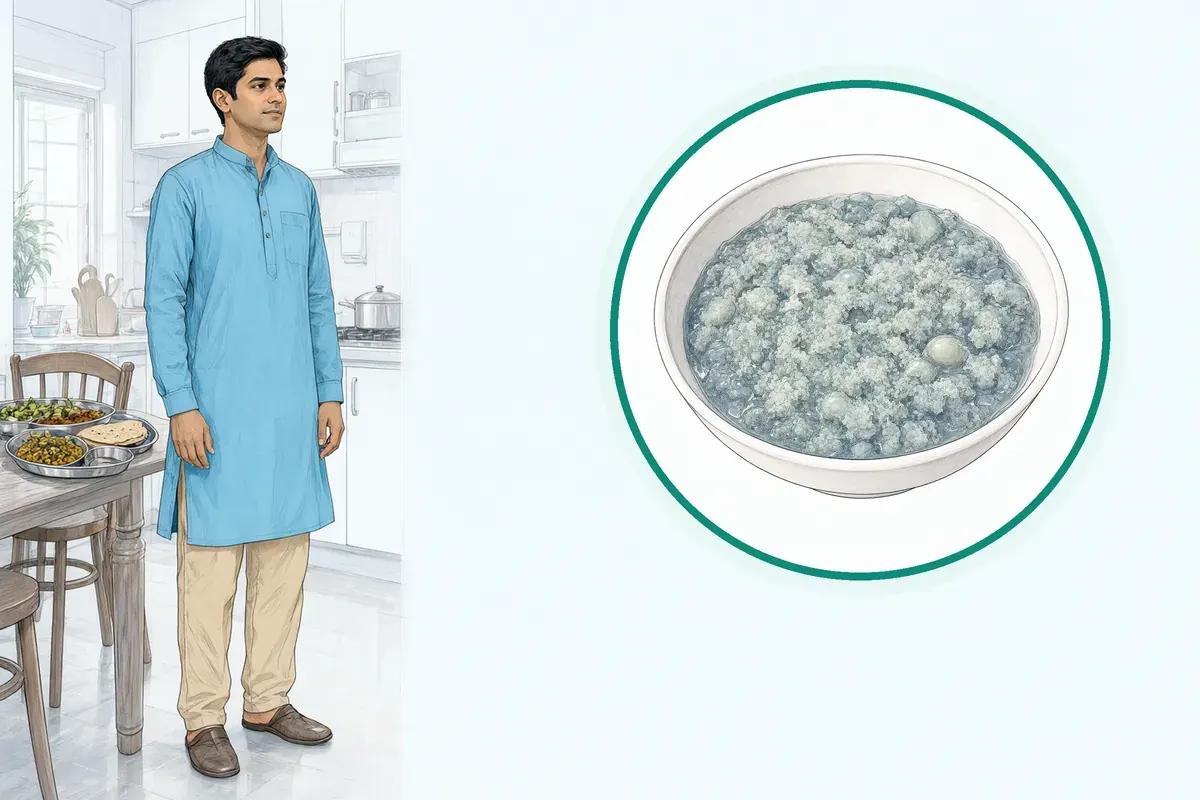
- 8 to 10 Water glasses per day
- 40 to 42 °C Sitz bath temperature
- 3 minutes Sitz bath duration
- more than 8 weeks Chronic fissure threshold
Which Indian dals and vegetables give fibre without bloating
- Soft dals
- Moong and masoor dal give soluble fibre
- Gentle vegetables
- Bottle gourd, ridge gourd, pumpkin, carrots
- Foods to limit
- Whole pulses and raw sprouts cause gas
Soft, well-cooked dals such as moong dal (split green gram) and masoor dal (red lentils) add soluble fibre that forms a gel in the gut and helps stools stay soft without causing much gas.
Cooked vegetables like bottle gourd (lauki), ridge gourd (turai), pumpkin (kaddu) and carrots are gentle on the bowel and easier to digest than raw salads or cruciferous vegetables. If you notice bloating, reduce whole pulses such as chana, rajma and lobia, and avoid raw sprouts; instead, use dehusked dals and pressure-cook them until mushy. Small, frequent meals spaced through the day are better tolerated than large, irregular ones.
How much water to drink in Rajasthan's dry heat
Aim for 8 to 10 glasses of water a day, spaced out from morning to evening rather than drunk all at once. Water, weak tea, buttermilk (chaas) and clear soups all count; limit strong caffeinated drinks and alcohol because they can speed up gut movement and irritate the bowel. Keeping hydrated helps the fibre you eat work properly to soften the stool.
Sitz bath: plain water, salt or betadine
- Use plain warm water Not hotter than 40–42°C
- Soak for 3 minutes Repeat several times a day
- Relax the sphincter Warm water eases spasm and improves blood flow
A sitz bath with plain warm water (not hotter than 40–42°C) for about 3 minutes, repeated several times a day, is the standard recommendation for anal fissure pain. Warm water helps relax the anal sphincter and increases blood flow, which eases the spasm that keeps the fissure open.
Using a footstool on a western commode
Placing a low stool under your feet while you sit on a western commode raises your knees above your hips and mimics a squatting position. This angle straightens the anorectal canal and lets the pelvic floor muscles relax, so you can pass stool with less straining.
Some people find squatting painful; if that happens, a higher seat or leaning forward onto a pillow may feel better.
Can you take isabgol every day
- Start with one teaspoon in water Take at same time daily
- Drink plenty of water with it Helps fibre work properly
- Check stool consistency Soft, passes in minutes
- Adjust dose up or down Until consistency is right
- Discuss long-term use with doctor Especially if on other medicines
Isabgol (psyllium husk) is a bulk-forming fibre that absorbs water and makes stools softer and easier to pass. The goal is a soft stool that passes within a couple of minutes without straining. Your doctor may suggest a fibre supplement, a stool softener, or a mild laxative depending on your pattern.
Start with a small dose, such as one teaspoon in a glass of water, and adjust up or down until the stool consistency is right. Take it at the same time each day with plenty of water so it can work properly.
If you have alternating constipation and diarrhoea, a regular daily dose can still help the bowel settle into a pattern. Always discuss long-term use with your doctor, especially if you are on other medicines.
Toilet routine: timing, posture and not straining
Do
- Go after waking or meals
- Allow unhurried time
Avoid
- Avoid straining
Work with your body's natural rhythm: bowel activity is highest after waking and after meals. Have breakfast at home and allow unhurried time for the toilet.
Sit with your feet supported on a low stool so your knees are higher than your hips; this flexes the hips and mimics a squatting position, which straightens the anal canal and makes passing stool easier. Straining increases anal muscle tension and spasms, which pulls the fissure apart and reduces blood flow. A regular, relaxed routine trains the bowel to empty predictably.
When to see your doctor
- Fresh blood on stool or paper Bright red bleeding
- Fever, swelling or discharge Signs of infection
Most acute fissures heal within a few days to weeks with self-care. Contact your doctor if pain during or after passing stool lasts more than a few weeks, or if you see fresh blood on the stool or toilet paper.
Seek care if you cannot open your bowels, if constipation persists despite fibre and water, or if you develop fever, increasing swelling, or discharge from the anal area. Chronic fissures — those lasting more than eight weeks — often need prescription creams or a minor procedure to relax the sphincter muscle.
Medications have mixed results for chronic fissures, but surgery has a high success rate when needed. Do not wait for the pain to become severe; early review prevents complications. Your doctor will ask about symptoms and may examine the area gently to confirm the diagnosis. If you are unsure whether your symptoms are a fissure or piles, a medical check will clarify the cause.
Most acute fissures heal within a few days to weeks with self-care.
This article was drafted with the assistance of AI tools and thoroughly reviewed, fact-checked, and edited by our editorial team.
