

ENT (Ear, Nose and Throat) · Jaipur Hospital
Oral Cancer Screening in Jaipur
Worried about a mouth sore? Get a clear check-up and a simple plan at Jaipur Hospital.
- Serving Jaipur since 1991 (35 years)
- NABH accredited
- 24×7 emergency & ICU
- Cashless: MAA Yojana + 32 insurers
- Procedure time
- 10 to 15 minutes
- Anaesthesia
- Not needed
- Recovery
- Immediate
- Price
- ₹500 to ₹2,000typical range in India; ask us for an estimate
Mouth changes that stay
A sore or patch that does not go away can be an early sign
White or red patches, a lump, or an ulcer that lasts more than two weeks may signal a problem. Tobacco, alcohol and betel nut use raise the risk. Most early changes cause no pain, so they are easy to ignore.
-
White or red patches
Leukoplakia and erythroplakia are common early changes seen on the cheek, tongue or gums.
-
Lump or thickening
A firm area in the cheek, lip or neck that you can feel with your fingers.
-
Ulcer that will not heal
A sore that bleeds easily or stays open for more than two weeks.
-
Numbness or trouble moving jaw
Loss of feeling in the tongue or lip, or difficulty chewing or swallowing.
Many oral squamous cell carcinomas develop from potentially malignant disorders.
Why Jaipur Hospital
You may worry that a small patch could turn into something serious, or that checking it will mean long waits and high costs.
Your care plan
Your first steps with us
- 1 Call or visit OPD for an appointment
- 2 Specialist examines mouth, face and neck
- 3 Discuss findings and next steps if needed
- 4 Return for routine follow-up as advised
Insurance and schemes
How cashless works
Cashless treatment under MAA Yojana and with 32 insurers.
-
Tell us when you book
Say you are insured or have a scheme card, and send a photo of the card on WhatsApp so our insurance desk can check it in advance.
-
We get the approval
Once your doctor advises admission, the insurance desk sends the pre-authorisation request to your insurer or TPA; for planned surgery, approval can come before you are admitted.
-
Settled at discharge
The approved amount is settled between the insurer and the hospital; you pay only what the policy does not cover.
How the screening is done
A specialist checks the lips, tongue, gums, floor and roof of the mouth by sight and touch. The exam takes 10 to 15 minutes and needs no anaesthesia.
-
Visual and Palpation Exam
Doctor checks lips, tongue, gums, floor of mouth by sight and touch under a bright light.
-
Toluidine Blue Staining
Blue dye applied to highlight abnormal cells that may not be seen clearly.
-
Oral Brush Biopsy
Cells collected from a suspicious area with a small brush for laboratory testing.
-
Autofluorescence Imaging
Special light detects tissue changes not visible to the naked eye during the exam.
Why patients trust us
- 1991 Serving Jaipur for 35 years
- NABH Accredited hospital
- 1 ENT (Ear, Nose and Throat) consultants
- 24×7 Emergency, ICU and ambulance
- 32 Cashless insurers, plus MAA Yojana
What research shows about this screening
-
34% reduction in mortality
In the Kerala trial, high-risk tobacco and alcohol users screened three times had a 34 percent lower oral cancer death rate.
-
21% reduction in advanced cancer
Screened groups had 21 percent fewer stage III or IV oral cancer diagnoses compared with unscreened groups.
-
7.9% malignant transformation rate
Overall, about 7.9 percent of oral potentially malignant disorders transform into cancer over time.
If it is left untreated
Without screening, early changes can progress to invasive cancer that needs more extensive surgery and has lower survival. Most oral cancers start from lesions that can be seen early.
Life after screening
Most people leave with reassurance. If a change is found, early action usually means simpler treatment and better outcomes.
-
Peace of mind
A normal exam means you can stop worrying and return to routine life.
-
Early action
If a lesion is found, a biopsy confirms it and treatment starts while it is small.
-
Simple follow-up
Low-risk changes are watched at regular intervals without major intervention.
Meet the team
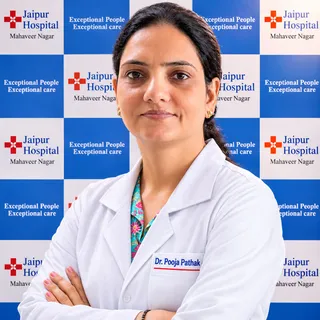
Your ent (ear, nose and throat) doctors
Explore our ENT hospital in Jaipur: every treatment, the doctors and what to expect at your visit.
Frequently asked questions
Questions patients ask about oral cancer screening
What is oral cancer screening, and why has oral cancer screening been recommended?
In short
Oral cancer screening is a short visual and physical check of your mouth to spot early changes. At Jaipur Hospital, our specialist team examines the lining of your mouth, gums and tongue. It is recommended because identifying tissue changes early allows timely medical care before abnormal cells advance further.
In detail
In studies, many oral cancers develop from potentially malignant disorders such as leukoplakia or erythroplakia. Screening looks for these chronic conditions that alter the colour or thickness of the oral lining.
Healthcare providers check the cheeks, gums, lips, tongue and floor of the mouth under bright light, while also feeling your neck and jaw. When abnormal areas are detected early, clinical studies report a shift towards earlier disease stages.
While screening tests do not diagnose cancer directly, they capture unusual tissue changes so your specialist can arrange further testing, such as a biopsy, without avoidable delays.
A common belief
Many people wait for pain before seeing a doctor, but early tissue changes often cause no pain at all.
What actually happens
A screening exam spots red or white patches early, before deeper problems start.
Your next step at Jaipur Hospital
The screening takes place during an outpatient checkup with immediate recovery and no anaesthesia needed. If any unusual patch or lump appears, your specialist may review it after a week or suggest further testing. Results from follow-up tissue tests typically take three to five days. You can book an oral cancer screening consultation at Jaipur Hospital.
Do I need a referral or an appointment for oral cancer screening?
In short
You do not need an outside referral to attend oral cancer screening at Jaipur Hospital. While walk-in visits are accepted through our outpatient department, booking an appointment in advance helps you avoid long waiting times and ensures a specialist is scheduled to examine your mouth.
In detail
In clinical practice, oral screening is typically offered as part of routine health evaluations or targeted outpatient consultations. You can come directly if you notice a mouth ulcer, an unusual patch, or if you chew tobacco or smoke.
Our specialist surgical team conducts the examination using visual inspection and gentle touch. For patients using health insurance or MAA Yojana, carrying your official identification and policy documentation ensures our desk team can verify empanelled coverage smoothly. Booking ahead reserves your consultation time and allows the hospital team to prepare your paperwork efficiently.
A common belief
Some people think you must wait for a dentist's referral note.
What actually happens
In reality, anyone with tobacco habits, red or white patches, or mouth sores can walk in directly for evaluation.
Your next step at Jaipur Hospital
The screening exam is conducted as an outpatient visit and takes only 10 to 15 minutes. There is no hospital stay, and you can resume normal routines immediately afterwards. Our team will guide you through any follow-up steps recommended by your specialist. You can book an oral cancer screening consultation at Jaipur Hospital.
What happens during oral cancer screening?
In short
During oral cancer screening, your specialist conducts a careful visual and physical examination of your entire mouth. At Jaipur Hospital, our surgical team inspects your lips, tongue, gums and cheeks under bright light. The doctor also gently feels your jaw and neck for any hidden lumps.
In detail
Your specialist starts by examining the outer lips and facial symmetry. Inside the mouth, using a mirror and light, the doctor inspects the inner lining of the cheeks, the gums, the roof of the mouth, the tongue borders, and the floor of the mouth.
In studies, these areas are common sites for potentially malignant disorders such as leukoplakia and erythroplakia. The clinician will gently palpate tissues to feel for hardness, swelling, or tender spots.
In some settings, specialised screening aids, such as toluidine blue dye or tissue autofluorescence lights, may be applied to help highlight suspicious areas not clearly visible to the naked eye.
A common belief
Many patients expect a painful or complicated surgical test.
What actually happens
In reality, screening is a gentle, ten-minute physical exam under bright light that requires no injections or anaesthesia.
Your next step at Jaipur Hospital
The procedure requires no anaesthesia and takes only 10 to 15 minutes. Afterwards, your specialist explains the findings immediately. If an unusual lesion is spotted, a follow-up visit or laboratory biopsy may be planned, with test results typically available within three to five days. You can book an oral cancer screening consultation at Jaipur Hospital.
Which oral cancer screening checks are appropriate for my age, symptoms, and family history?
In short
A visual and physical mouth examination is the appropriate screening check for adults. At Jaipur Hospital, our specialist team examines the oral cavity to check for early tissue changes. Screening is especially relevant if you use tobacco or alcohol, as high-risk habits significantly increase the likelihood of developing potentially malignant oral disorders.
In detail
Studies show that although 95% of oral cancers occur in people over 40 years, incidence in younger individuals has increased. Tobacco smoke, alcohol, and infections play notable roles in tissue transformation.
The doctor checks your cheeks, gums, lips, tongue, and floor of the mouth for abnormalities like leukoplakia (white patches) or erythroplakia (red patches). They also palpate the neck for swelling. In studies, targeted screening of high-risk groups shows significant reductions in oral cancer mortality.
Your surgeon evaluates your individual lifestyle history, age, and mucosal appearance to determine whether basic visual inspection or additional optical aids are appropriate.
- Studies show that although 95% of oral cancers occur in people over 40 years, incidence in younger individuals has increased.
A common belief
Many believe oral cancer only affects older individuals, but cases also occur in younger adults, especially those who use tobacco or alcohol.
What actually happens
Regular visual checks catch white or red patches before symptoms even appear.
Your next step at Jaipur Hospital
The examination takes 10 to 15 minutes in the OPD, and recovery is immediate. If a lesion is found, the doctor may recommend a follow-up in a week or a laboratory test. The typical cost in India is ₹500 to ₹2,000. To assess your risk profile with a specialist, book a consultation at Jaipur Hospital.
Could oral cancer affect hearing, balance, breathing, speech, or swallowing?
In short
Yes, an oral condition can affect speech and swallowing, and as it grows, it may impair breathing. At Jaipur Hospital, our specialist team evaluates abnormalities in the mouth, tongue, and throat to detect problems before they interfere with these vital daily functions.
In detail
Oral cancers include malignancies of the mouth, tongue, and jaw. Studies show that over 90% of oral leukoplakias with dysplastic or malignant changes occur on the floor of the mouth, the tongue, and the lip vermilion.
When lesions develop in these mobile tissues, they can cause stiffness, soreness, or mechanical restriction, which directly alters normal speech articulation and swallowing. As tumours enlarge in the oral cavity or oropharynx, they can narrow the airway and compromise breathing.
Physical examinations also check for enlarged neck masses that may press on adjacent structures, highlighting why early detection of abnormal oral mucosal disorders is so critical.
A common belief
People often think mouth cancer only causes a small sore on the cheek.
What actually happens
But when lesions grow on the tongue or under the floor of the mouth, tissue stiffness makes moving the tongue painful and eating difficult. If left to enlarge, these growths can also press on your airway.
Your next step at Jaipur Hospital
If you notice changes in your speech, difficulty swallowing, or a persistent mouth lesion, you should seek medical attention promptly. Our outpatient department provides thorough clinical assessments to evaluate your oral mucosa.
To have your mouth and throat assessed by our specialist team, please contact Jaipur Hospital to book a consultation.
What can oral cancer screening find out?
In short
Oral cancer screening finds abnormal tissue changes, potentially malignant patches and early mouth lesions. At Jaipur Hospital, your specialist checks your oral mucosa for visible irregularities. While the test does not provide a final cancer diagnosis, it identifies areas that need closer review or testing by our surgical team.
In detail
During the examination, healthcare providers inspect the mouth lining for red patches known as erythroplakia and thick white patches known as leukoplakia. In studies, oral potentially malignant disorders have an increased risk of transforming into cancer, with leukoplakia being the most common condition.
The screening also detects oral submucous fibrosis and chronic swelling. Specialists check the cheeks, tongue, gums and floor of the mouth by sight and touch, feeling also for neck lumps. Optical aids or toluidine blue dye may sometimes be used to help highlight abnormal cells and clarify tissue borders.
A common belief
A screening does not provide a direct cancer diagnosis.
What actually happens
Instead, it catches potentially malignant changes early, long before severe symptoms appear, so a specialist can guide your care.
Your next step at Jaipur Hospital
A normal result confirms that your oral mucosa looks healthy today. If the exam reveals a suspicious patch, your specialist may observe it or advise a biopsy to collect cells for laboratory analysis. Tissue test results usually arrive within three to five days. You can book an oral cancer screening consultation at Jaipur Hospital.
Which reports, scans, and medicine details should I bring for oral cancer screening?
In short
Bring any past dental notes, previous mouth biopsy reports, and a list of your current prescriptions. At Jaipur Hospital, our specialist team reviews your complete health record. If you have had external X-rays or blood tests, bringing them helps our clinicians assess your mouth accurately.
In detail
Having your prior medical history helps your specialist understand your oral health. Bring details of all medicines you take from the chemist, including blood thinners or chronic therapies. If you had previous mouth lesions evaluated elsewhere, those records provide useful context.
While screening itself uses visual examination and palpation, any past pathology reports can clarify previous mucosal conditions such as leukoplakia or lichen planus.
If a specialised scan is ever required, our doctors advise it and review the findings from an outside imaging centre, as Jaipur Hospital does not operate CT or MRI scanners.
A common belief
People often leave past dental reports at home thinking the doctor only looks inside the mouth.
What actually happens
Past records help your specialist track how long a patch or lesion has existed.
Your next step at Jaipur Hospital
Keep your documents and government health card organised in a file for registration. The screening consultation takes about 10 to 15 minutes, and you will receive guidance on whether further observation or testing is advised. Biopsy reports typically take three to five days if requested. You can book an oral cancer screening consultation at Jaipur Hospital.
How long will oral cancer screening take?
In short
An oral cancer screening typically takes 10 to 15 minutes to complete. At Jaipur Hospital, the examination is conducted in our outpatient department. Because no anaesthesia or sedation is needed, recovery is immediate, and you can leave the hospital right after discussing your results.
In detail
The checkup is straightforward and efficient. Your specialist spends several minutes systematically checking the inner lining of your cheeks, your gums, the surface and sides of your tongue, and the floor of your mouth.
The doctor also feels along your jawline and neck to check for enlarged lymph nodes or firm swellings. If an adjunct technique is used, such as applying toluidine blue dye or using an autofluorescence light, this adds only a couple of minutes to the evaluation.
Because the test involves neither incisions nor injections, there is no waiting time for recovery or physical rest before you return home.
A common belief
People often worry that a cancer screening requires half a day or hospital admission.
What actually happens
This visual check needs no anaesthesia or bed rest, allowing you to return to work immediately.
Your next step at Jaipur Hospital
You can plan for a brief clinic visit without disrupting your daily working hours. If your specialist observes a suspicious patch and suggests a small biopsy, that procedure is scheduled separately, with tissue reports typically taking three to five days. You can book an oral cancer screening consultation at Jaipur Hospital.
Which oral cancer screening tests are useful, and which might not be necessary for me?
In short
A visual and touch examination is the most useful initial test for oral cancer screening. At Jaipur Hospital, our specialist team inspects your oral cavity under a bright light source. Advanced imaging or tissue biopsies are not necessary for everyone and are reserved only when suspicious lesions are identified.
In detail
The standard screening involves systematically examining the lips, tongue, gums, cheeks, and floor of the mouth, followed by feeling the neck. Diagnostic aids like toluidine blue staining or autofluorescence imaging can assist by highlighting abnormal cells.
In studies, autofluorescence is sensitive for detecting red and white patches, but it can also detect benign inflammation, resulting in false-positive findings. Therefore, specialised optical tools are better suited for specialist clinics evaluating high-risk lesions.
An oral brush biopsy or surgical biopsy is not needed during a routine check unless the doctor observes abnormal tissue that requires laboratory confirmation.
A common belief
You do not need invasive biopsies or complex dye tests right away.
What actually happens
Special stains, lights, or cell collections are only helpful if the specialist identifies an unusual white or red patch that requires closer evaluation.
Your next step at Jaipur Hospital
Your outpatient screening takes 10 to 15 minutes, with immediate recovery and no downtime. If an abnormality is detected, your doctor will advise whether further testing is warranted. The typical price for an oral screening in India is ₹500 to ₹2,000. To find out which tests are right for you, book a consultation at Jaipur Hospital.
Which symptoms mean I should seek a prompt ENT assessment for oral cancer?
In short
You should seek a prompt assessment if you notice persistent mouth sores, red or white patches, unusual bleeding, or a neck lump. At Jaipur Hospital, our specialist team examines your mouth and throat to investigate any troubling symptoms.
In detail
Certain oral symptoms require clinical attention to rule out potentially malignant disorders or malignancy. In scientific literature, red patches known as erythroplakia and thick white patches known as leukoplakia are recognised as significant clinical warning signs.
A lump that causes no pain, mouth ulcers that fail to heal after several weeks, or unexplained oral bleeding should be assessed promptly. Furthermore, evidence shows that a new lump found in the neck can indicate regional involvement. Identifying these signs early allows clinicians to perform visual examinations and diagnostic biopsies before disease advances.
Your next step at Jaipur Hospital
An initial oral screening takes only 10 to 15 minutes in our outpatient department and requires no recovery period. If an abnormality is found, your specialist will advise the next diagnostic steps without delay.
FAQ library
Questions and answers about oral cancer screening
When you contact us
Book your screening visit
Contact Jaipur Hospital to schedule an OPD appointment with an ENT surgeon for a thorough mouth and neck examination.
- A consultation with an ENT surgeon in the OPD
- Your scans and reports reviewed, with tests done in-house if you need them (laboratory, X-ray and imaging)
- Your options explained in plain words, including whether you need surgery at all
- A cost estimate before you decide
- Help with cashless treatment under MAA Yojana and empanelled insurers and TPAs
- Follow-up visits after your treatment
Overview
Oral Cancer Screening: what to know
What oral cancer screening is and how it works
Oral cancer screening is a short examination of the mouth to find early signs of cancer or changes that may become cancer. The doctor looks at and feels the lips, tongue, gums, floor of the mouth, roof of the mouth and the inside of the cheeks. The exam takes about 10 to 15 minutes and needs no anaesthesia. You can return to your usual activities straight away.
Many oral cancers start as visible changes in the lining of the mouth that can be seen during a routine check. These early changes are called oral potentially malignant disorders. They include white patches known as leukoplakia, red patches called erythroplakia, oral submucous fibrosis and oral lichen planus.
Screening does not give a diagnosis. Its purpose is to spot anything abnormal and refer you quickly for further tests if needed.
Symptoms of oral cancer and warning signs that need same-day care
- Growing neck swelling Swelling in the neck that is growing
- Breathing or swallowing difficulty Difficulty breathing or swallowing
- Heavy bleeding Heavy bleeding from the mouth that does not stop with pressure
- Severe pain limiting mouth opening Sudden severe pain that makes it hard to open the mouth
Common signs include:
- A white or red patch in the mouth that does not go away
- A sore or ulcer that does not heal within two weeks
- A lump or thickening in the cheek, tongue or neck
- Difficulty chewing or swallowing
- A feeling that something is stuck in the throat
- Numbness of the tongue or lip
- A change in the voice
Some lesions cause no pain. A lump that causes no pain or bleeding with no pain can still be serious.
Seek care the same day if you have a swelling in the neck that is growing, difficulty breathing or swallowing, heavy bleeding from the mouth that does not stop with pressure, or sudden severe pain that makes it hard to open the mouth. A lump in the neck can be a sign of advanced disease.
Causes and who is at higher risk of oral cancer
- Tobacco
- Cigarettes, bidis, chewing tobacco, gutkha, khaini
- Alcohol
- Adds to risk, especially with tobacco
- Areca nut and betel quid
- Supari and paan chewing linked to fibrosis and cancer
- Other factors
- Sun exposure, HPV, low fruit and vegetable diet, weak immune system
Tobacco in any form — cigarettes, bidis, chewing tobacco, gutkha, khaini — is the single biggest risk factor. Alcohol adds to the risk, especially when combined with tobacco. Areca nut (supari) and betel quid (paan) chewing are strongly linked to oral submucous fibrosis and cancer in South Asia.
Other factors include:
- Long-term sun exposure for lip cancer
- Human papillomavirus infection
- A diet low in fruits and vegetables
- A weakened immune system
Men are affected more often than women, but women with leukoplakia have a higher risk of it turning into cancer. The risk rises with age, most cases occur after 40, yet the number of younger adults with oral cancer is increasing.
If you have a white or red patch, oral submucous fibrosis or lichen planus, your risk of cancer is higher than average. The chance of a potentially malignant disorder turning into cancer varies; overall about 7.9% of these disorders transform, and for leukoplakia the rate is around 9.5%.
How oral cancer is diagnosed: examination and tests
- Visual and palpation exam Bright light, check all mouth areas and neck
- Adjuncts if abnormal Toluidine blue dye or fluorescent light
- Biopsy for confirmation Brush biopsy or surgical biopsy
- Referral if cancer suspected Specialist assessment and staging
The first step is a systematic visual and palpation exam under a bright light. The doctor checks the lips, tongue, gums, floor of mouth, roof of mouth, inside of cheeks and feels the neck for lumps.
If an abnormal area is seen, the doctor may apply toluidine blue dye to highlight suspicious cells or use a special light with a fluorescent mouthwash to show tissue changes not visible to the naked eye. These tools can help define the edges of a lesion and find additional areas.
The only way to confirm cancer is a biopsy — taking a small sample of cells for laboratory testing. This may be done with a brush biopsy or a small surgical biopsy. Results usually take three to five days.
If the screening suggests cancer, you will be referred to a specialist for further assessment and staging.
Treatment options without surgery and when surgery is advised
Treatment depends on the stage and site of the cancer, the type of lesion and your general health. Very early lesions or potentially malignant disorders may be managed with close monitoring, stopping tobacco and alcohol, and treating any infection or irritation. Some early lesions can be removed with laser or cryotherapy, though these are not available at every centre.
Surgery is the main treatment for most oral cancers. The aim is to remove the tumour with a margin of healthy tissue. For early-stage cancers (stage I or II), surgery alone may be enough. For advanced stages (stage III or IV), surgery is usually combined with radiation therapy, and sometimes chemotherapy.
Reconstructive surgery may be needed if a large area is removed. Neck dissection to remove lymph nodes is done when there is a risk of spread. Your surgeon will explain the operation, the likely hospital stay and the recovery time.
Screening programmes in high-risk groups have shown a shift toward earlier stages at diagnosis and a reduction in mortality. In the Kerala trial, mortality fell by 34% after three rounds of screening in tobacco and alcohol users. In Taiwan, screened groups had a 26% reduction in mortality.
Your first visit and tests for oral cancer screening
When you come for oral cancer screening at Jaipur Hospital, the doctor will ask about any tobacco or alcohol use, past mouth problems, and any lump, patch or sore you have noticed. The doctor checks your lips, tongue, gums, floor of mouth, roof of mouth and the inside of your cheeks by sight and touch. The doctor also feels your neck and jaw for any swelling. No special preparation is needed.
Bring any earlier biopsy reports, imaging films or referral notes. If you wear dentures, you will be asked to remove them for the exam. The visit usually takes 10 to 15 minutes and you can return to normal activities at once.
How oral cancer screening is done
- Toluidine blue staining
- Blue dye highlights areas that may need biopsy
- Oral brush biopsy
- Cells collected with a small brush for lab testing
- Autofluorescence imaging
- Fluorescent mouthwash and special light show abnormal tissue
The standard screening is a systematic visual and palpation examination under a bright light. The doctor looks for white patches (leukoplakia), red patches (erythroplakia), mixed red and white areas, ulcers that do not heal, and any lump or thickening.
If an area looks abnormal, the doctor may use one or more adjuncts:
- Toluidine blue staining: a blue dye is applied to the lesion; areas that retain the dye may need a biopsy.
- Oral brush biopsy: cells are collected from the suspicious area with a small brush and sent to the laboratory.
- Autofluorescence imaging: you rinse with a fluorescent mouthwash, then a special light is shone into the mouth; healthy tissue appears dark and abnormal tissue appears white.
Your surgeon will advise which adjunct suits you. If the screening suggests cancer or a potentially malignant disorder, you will be referred to a specialist for a confirmatory biopsy and further assessment.
Risks and possible complications of oral cancer screening
- 50% to 99% Sensitivity
- Above 80% Specificity
The examination itself causes no harm. The main limitations are false-positive and false-negative results. In studies, visual examination sensitivity ranged from 50% to 99%, while specificity was consistently above 80%. This means some cancers or precancerous lesions may be missed, and some benign changes may be flagged as suspicious, leading to extra tests or anxiety.
Adjuncts such as toluidine blue or autofluorescence can increase the number of lesions detected and improve border distinction, but they may also increase false positives. A biopsy is the only way to confirm cancer. Your doctor will explain the chance of needing a biopsy after the screening.
Recovery and aftercare after oral cancer screening
Do
- Eat, drink, speak normally
- Keep follow-up appointment
There is no recovery time. You can eat, drink and speak normally straight away. If toluidine blue was used, your mouth may look blue for a short while; it fades quickly.
If the doctor advises a follow-up visit in one to two weeks to see whether a lesion has changed or healed, keep that appointment. If a brush biopsy or scalpel biopsy was done, results usually take three to five days.
Contact the hospital if you develop new pain, bleeding, a growing lump, or a sore that does not heal within two weeks.
Results: how well oral cancer screening works
- 81% Kerala four rounds mortality reduction
- 46.5% vs 39.6% Early-stage cancers in screened groups
In the Kerala randomised trial, three rounds of screening in high-risk tobacco and alcohol users reduced oral cancer mortality by 34%, and four rounds showed a sustained 81% mortality reduction (95% CI 69–89%) and a 38% reduction in incidence.
In Taiwan, biennial screening of smokers and betel quid chewers lowered mortality by 26% (relative risk 0.74) and reduced incidence in later screens.
Screened groups had more early-stage cancers (stages I and II: 46.5% vs 39.6%) and a 21% reduction in advanced (stage III or IV) diagnoses. A Cuban case-control study also found screening reduced the risk of advanced disease. Five-year survival for oral squamous cell carcinoma remains about 53–57%. Early detection allows less extensive treatment and better functional outcomes.
Cost and insurance for oral cancer screening in Jaipur
The typical price range for oral cancer screening in India is ₹500 to ₹2,000. The exact amount depends on whether adjuncts such as toluidine blue, brush biopsy or autofluorescence imaging are used, and on the laboratory charges for any biopsy. Ask the hospital for an estimate before the visit.
Jaipur Hospital is empanelled under MAA Yojana and works with a panel of private insurers and TPAs for cashless care. Carry your scheme or insurance card and a photo ID. The hospital does not have a CT or MRI scanner; if imaging is needed, the doctor will refer you to an outside centre and review the images.
