

ENT (Ear, Nose and Throat) · Jaipur Hospital
Oral and Oropharyngeal Disease in Jaipur
Throat pain, sores, or trouble swallowing make daily life hard; our surgical team provides thorough assessment and a clear plan.
- Serving Jaipur since 1991 (35 years)
- NABH accredited
- 24×7 emergency & ICU
- Cashless: RGHS, MAA Yojana, CGHS + 22 insurers
- Operation time
- 30 to 90 minutes
- Anaesthesia
- General anaesthesia
- Recovery
- 10 to 14 days for tonsillectomy3 to 5 days for minor procedures
- Price
- ₹40,000 to ₹90,000 (tonsillectomy)₹15,000 to ₹40,000 (minor procedures)typical range in India; ask us for an estimate
Difficulty eating, speaking, or sleeping
Persistent throat pain and mouth sores that do not go away
Repeated throat infections disrupt school and work. Sores make eating difficult, and sleep troubles leave you tired every day.
-
Frequent throat pain
Recurrent infections cause severe discomfort and swelling, making it painful to swallow food or drink liquids.
-
Mouth sores and patches
Ulcers or red and white spots inside the mouth make chewing painful and cause ongoing worry.
-
Nighttime breathing trouble
Enlarged tonsils can block your airway at night, leading to restless sleep and daytime fatigue.
-
Restricted tongue movement
A tight tissue band under the tongue can limit normal speech, eating, and tongue movement.
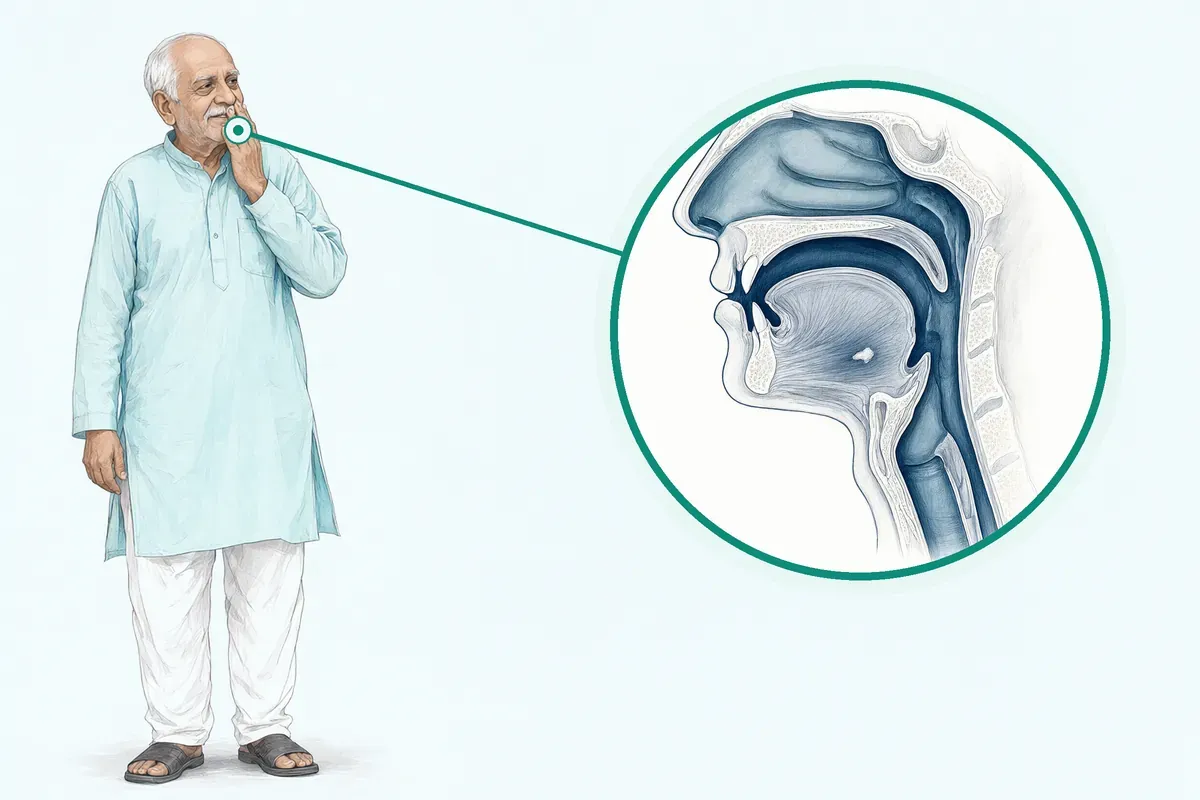
Aphthous ulcers develop only on the moist surfaces inside the oral cavity.
Why Jaipur Hospital
You may worry about post-surgery throat pain, missing work, or finding a clear answer for an unhealed sore.
Your care plan
Your first steps with us
- 1 Visit our Otolaryngology OPD for evaluation
- 2 Complete needed diagnostic tests in-house
- 3 Discuss treatment options with your surgeon
- 4 Recover at home with clear guidance
How the procedure is done
Your surgeon will discuss surgical approaches based on your condition. Procedures usually take 30 to 90 minutes under general anaesthesia.
-
Coblation tonsillectomy
Low-temperature dissection removes tonsillar tissue, which is associated with less postoperative pain.
-
Cold steel tonsillectomy with bipolar diathermy
Traditional surgical dissection paired with bipolar diathermy ensures reliable control of bleeding.
-
Laser or radiofrequency tongue-tie release
Frenuloplasty relieves restricted tongue movement for ankyloglossia with minimal bleeding.
-
Incision and drainage of peritonsillar abscess
Needle aspiration or surgical incision under local or general anaesthesia releases trapped pus.
Why patients trust us
- 1991 Serving Jaipur for 35 years
- NABH Accredited hospital
- 2 ENT (Ear, Nose and Throat) consultants
- 24×7 Emergency, ICU and ambulance
- 25 Cashless schemes and insurers
Clinical findings on oral and throat conditions
-
2 or 3 weeks
Most canker sores inside the mouth typically heal on their own within this period.
-
About 3%
Around this proportion of children having a tonsillectomy face a risk of bleeding during recovery.
-
1 to 2 weeks
Children usually experience a significant sore throat lasting through this period after tonsillectomy surgery.
If it is left untreated
Leaving throat infections or mouth sores unchecked can cause abscess formation or prolonged swallowing difficulties. A spot that grows or does not heal within two or three weeks requires medical assessment to rule out serious conditions.
Life after treatment
With timely care, most patients can expect clearer breathing, easier swallowing, and steady healing at home.
-
Comfortable eating
Most people return to normal eating and drinking within a couple of weeks.
-
Restful sleep
Removing enlarged tonsil tissue usually relieves nighttime airway blockage and improves rest.
-
Diagnostic certainty
Having an oral lesion evaluated provides clear answers about your oral health.
Frequently asked questions
Questions patients ask about oral and oropharyngeal disease
Which problems are assessed under oral and oropharyngeal disease?
In short
Jaipur Hospital assesses a range of oral and oropharyngeal conditions. These include chronic tonsillitis, obstructive sleep apnoea, tongue tie (ankyloglossia), peritonsillar abscess, and suspicious oral lesions that may need biopsy. The service also evaluates recurrent throat infections, difficulty swallowing, and voice changes linked to the tonsils or oropharynx.
In detail
The ENT team examines the mouth, throat, and neck for signs of infection, obstruction, or abnormal growth. Tonsillectomy is considered for frequent infections or airway blockage. Tongue tie release helps feeding or speech issues. Peritonsillar abscess needs drainage to prevent spread.
Oral lesions are biopsied to rule out cancer. Evidence shows tonsil surgery is among the most painful outpatient procedures, so careful selection matters. HPV-related oropharyngeal cancer is rising, making early lesion assessment important.
Your next step at Jaipur Hospital
Your surgeon will take a focused history, examine the oral cavity and neck, and may use a flexible nasendoscope. If surgery is advised, you will receive a typical price range: ₹40,000 to ₹90,000 for tonsillectomy and ₹15,000 to ₹40,000 for minor procedures. Recovery is 10 to 14 days for tonsillectomy and 3 to 5 days for minor procedures.
How will the doctor decide which tests I need?
In short
The doctor at Jaipur Hospital decides tests based on your symptoms, examination findings, and suspected diagnosis. Common tests include blood counts, coagulation profile, and imaging like ultrasound neck or CT scan if a deep space infection or tumour is suspected. A biopsy is planned for any suspicious lesion. Sleep study may be advised for suspected obstructive sleep apnoea.
In detail
If peritonsillar abscess is clinically clear, drainage may proceed without imaging. For a neck mass or asymmetric tonsil, contrast-enhanced CT or MRI helps stage and plan surgery. Evidence shows HPV-positive oropharyngeal cancer has distinct staging, so imaging and p16 testing on biopsy guide treatment.
For tongue tie, clinical assessment usually suffices. Pre-anaesthesia checks (ECG, chest X-ray, blood sugar) are routine before general anaesthesia. The surgeon follows a stepwise approach: only tests that change management are ordered.
Your next step at Jaipur Hospital
You will be told which tests are needed and why. Most blood tests and ECG are done in-house at our 24-hour laboratory. Imaging is scheduled promptly. Biopsy results typically take three to five working days. The surgeon will review results with you and finalise the care plan.
How soon should I expect improvement after oral and oropharyngeal surgery?
In short
After surgery at Jaipur Hospital, improvement depends on the procedure. For tonsillectomy, throat pain typically lasts 10 to 14 days, with gradual improvement after the first week. For minor procedures such as tongue tie release or biopsy, recovery is usually three to five days. Most patients notice meaningful relief once the initial healing phase passes.
In detail
Evidence shows tonsillectomy is one of the most painful outpatient surgeries, with moderate to severe pain lasting several days. Children often need regular pain medicine for up to two weeks. Alternating paracetamol and ibuprofen every three to six hours helps maintain comfort and hydration.
Ibuprofen does not increase bleeding risk after tonsillectomy. For tongue tie release, laser or radiofrequency techniques minimise bleeding and discomfort, allowing quick return to feeding. Biopsy sites heal within a few days. Peritonsillar abscess drainage brings rapid relief once pus is evacuated. Your surgeon will prescribe a multimodal pain plan and advise on diet, starting with cool liquids and soft foods.
A common belief
Many expect a quick bounce-back after tonsillectomy, but the throat remains very sore for at least a week.
What actually happens
Stopping pain medicine too early can lead to dehydration. Minor procedures heal much faster.
Your next step at Jaipur Hospital
Plan for 10 to 14 days off school or work after tonsillectomy, and three to five days after minor procedures. Keep follow-up appointments so your surgeon can check healing. Contact the hospital if pain prevents drinking, if you see bright red bleeding, or if fever develops.
When does a mouth ulcer, white patch, or restricted mouth opening need specialist assessment?
In short
A mouth ulcer, white patch, or restricted mouth opening needs specialist assessment at Jaipur Hospital if it does not heal within two to three weeks, if it grows larger, bleeds, or develops a lump underneath. White or red patches that persist, or difficulty opening the mouth fully, should also be evaluated promptly by an ENT or oral surgeon.
In detail
Evidence shows a small spot that grows, a white spot that turns red, or a lesion that bleeds when it did not before are signs to see a doctor. Aphthous ulcers usually heal on their own within two to three weeks.
Lesions that persist beyond this may represent leukoplakia, erythroplakia, or early oral cancer. Restricted mouth opening can indicate submucous fibrosis, often linked to tobacco, gutkha, or areca nut use, or it may signal a tumour involving the jaw muscles.
Oral cancers often have a tiny lump or bump under the lesion that can be felt. Early biopsy gives a definitive diagnosis and improves treatment outcomes. Your surgeon will examine the lesion, assess risk factors, and recommend biopsy or imaging if needed.
A common belief
Many people dismiss a long-standing ulcer as a simple canker sore or ignore a white patch.
What actually happens
But persistent lesions can be early cancer. Restricted opening is not just stiffness; it can mean fibrosis or a tumour.
Your next step at Jaipur Hospital
Do not wait if a mouth sore lasts more than two to three weeks, if you notice a persistent white or red patch, or if you cannot open your mouth fully.
Book an OPD consultation at Jaipur Hospital for a thorough examination and timely biopsy if indicated. Early assessment leads to better outcomes.
How can I decide whether to seek advice about oral submucous fibrosis treatment?
In short
You should seek advice for oral submucous fibrosis if you notice progressive difficulty opening your mouth, a burning sensation when eating spicy food, or thickening and whitening of the inner cheeks. At Jaipur Hospital, the ENT team assesses the stage of fibrosis and recommends appropriate management to prevent worsening.
In detail
Oral submucous fibrosis is a precancerous condition strongly linked to areca nut and tobacco use. It causes fibrosis of the submucosal tissues, leading to trismus (limited mouth opening), mucosal blanching, and burning sensation.
Early stages may be managed with cessation of habits, physiotherapy, and medications to reduce inflammation. Advanced cases with severe trismus may require surgical release of fibrous bands followed by physiotherapy. Evidence indicates that continued exposure to areca nut increases malignant transformation risk.
Regular surveillance is essential because the condition carries a risk of progression to oral cancer. The surgeon evaluates mouth opening, mucosal changes, and symptoms to stage the disease and tailor treatment.
A common belief
Many users of areca nut or tobacco ignore early stiffness until eating becomes difficult.
What actually happens
Evidence shows continued use raises cancer risk. Early care with habit cessation, exercises, and medication can slow progression. Surgery is reserved for advanced trismus.
Your next step at Jaipur Hospital
If you experience reduced mouth opening, burning sensation, or notice white patches inside your cheeks, schedule a consultation at Jaipur Hospital.
The ENT surgeon will perform a clinical examination, assess the severity, and discuss a personalised plan including habit cessation support, medical therapy, or surgical options if needed. Early intervention preserves function.
Could an oral or oropharyngeal problem affect hearing, balance, breathing, speech, or swallowing?
In short
Yes, oral and oropharyngeal conditions can affect breathing, speech, and swallowing directly. At Jaipur Hospital, the ENT team evaluates how lesions, swelling, or structural changes impact these functions. Hearing and balance are less commonly affected but may be involved if the eustachian tube is obstructed.
In detail
The oropharynx includes the tonsils, base of tongue, soft palate, and pharyngeal walls. Large tonsils, peritonsillar abscess, or tumours can obstruct the airway, causing breathing difficulty or sleep apnoea. Swelling or masses can impair tongue movement, affecting speech articulation and swallowing.
Evidence shows tonsillectomy successfully treats nighttime airway obstruction like obstructive sleep apnoea. Peritonsillar abscess can cause trismus, limiting mouth opening and swallowing. Oral lesions may cause pain on speaking or eating.
Eustachian tube dysfunction from nasopharyngeal or oropharyngeal swelling can lead to middle ear effusion, affecting hearing. Balance is rarely affected unless infection spreads. The surgeon assesses each function during examination.
A common belief
Patients often attribute voice changes or swallowing difficulty to a simple sore throat.
What actually happens
Evidence shows persistent obstruction can lead to sleep apnoea or malnutrition. Eustachian tube blockage may cause hearing loss. A thorough ENT exam identifies the cause and guides treatment.
Your next step at Jaipur Hospital
If you experience difficulty breathing, swallowing, speaking, or notice hearing changes, book a consultation at Jaipur Hospital. The ENT surgeon will examine the oral cavity and oropharynx, assess airway patency, and recommend appropriate treatment. Timely intervention prevents complications.
Which symptoms should prompt me to see a specialist?
In short
You should see a specialist at Jaipur Hospital if you have a sore throat that lasts more than two to three weeks, a lump in the neck, difficulty or pain when swallowing, voice change lasting over three weeks, unexplained weight loss, or a white or red patch in the mouth that does not heal. Recurrent tonsillitis (five to seven episodes a year) and loud snoring with breathing pauses also warrant review.
In detail
Evidence highlights that a lesion which does not heal within two or three weeks needs medical assessment. A growing spot, a white area turning red, or a lesion that bleeds easily are warning signs. Oral cancers often have a palpable lump under the surface.
Peritonsillar abscess presents with severe one-sided throat pain, trismus, and fever. Tongue tie in infants shows as feeding difficulty or poor weight gain. In adults, it may cause speech issues. HPV-related oropharyngeal cancer often lacks early symptoms, so persistent signs are taken seriously.
A common belief
People often wait too long, thinking a sore throat will pass.
What actually happens
But a lesion that does not heal in two to three weeks or a neck lump needs prompt review to rule out serious disease.
Your next step at Jaipur Hospital
At your visit, the surgeon will examine the oral cavity, oropharynx, and neck nodes. A flexible nasendoscopy may be done. If a lesion looks suspicious, a biopsy is arranged. For recurrent tonsillitis, the frequency and severity guide the decision for tonsillectomy. Typical hospital stay is daycare to one night.
How will the results change my care plan?
In short
Test results at Jaipur Hospital directly shape your care plan. A benign biopsy may mean observation only. A malignant result leads to staging scans and multidisciplinary discussion for surgery, radiotherapy, or both. Positive sleep study confirms obstructive sleep apnoea, supporting tonsillectomy or adenotonsillectomy. Negative imaging for abscess may shift management to antibiotics alone.
In detail
Evidence shows HPV-positive oropharyngeal cancer has better prognosis and distinct staging, so p16 status on biopsy changes the treatment algorithm. For peritonsillar abscess, if imaging shows a large collection, incision and drainage is done; if small, needle aspiration may suffice.
Tonsillectomy is advised when recurrent infections meet frequency criteria or cause airway obstruction. The surgeon explains how each result alters options, risks, and recovery. Typical recovery after tonsillectomy is 10 to 14 days; minor procedures need 3 to 5 days.
A common belief
Patients often fear the worst, but many lesions are benign.
What actually happens
The surgeon uses results to avoid over-treatment — operating only when criteria are met — and to tailor the approach for cancer based on HPV status.
Your next step at Jaipur Hospital
You will receive a clear explanation of results and the recommended next step. If surgery is advised, you will get a typical price range and details on hospital stay (daycare to one night). The team coordinates any referrals to oncology, radiotherapy, or speech therapy.
What should I do if symptoms persist or worsen after oral and oropharyngeal surgery?
In short
If symptoms persist or worsen after surgery at Jaipur Hospital, contact the hospital immediately. Warning signs include bright red bleeding from the throat or nose, inability to swallow liquids, fever above 38.5°C, severe pain not controlled by prescribed medicines, or increasing swelling. Do not wait for the next scheduled visit if these occur.
In detail
Postoperative bleeding after tonsillectomy occurs in about three percent of children and can happen up to two weeks after surgery. Dehydration is a common reason for emergency visits when pain prevents drinking. Evidence shows inadequate pain control increases morbidity and prolongs recovery.
Your surgeon will give a discharge summary with emergency contact numbers and clear instructions. For minor procedures, worsening pain, pus, or fever may indicate infection. If an oral lesion biopsy result requires further treatment, your surgeon will discuss next steps at the follow-up appointment. Always keep your attendant informed so they can help you reach the hospital quickly.
A common belief
Some patients try to manage bleeding or dehydration at home, which can become dangerous.
What actually happens
Bleeding after tonsillectomy can occur up to two weeks later. Dehydration creeps up when swallowing hurts too much to drink.
Your next step at Jaipur Hospital
Save the hospital emergency numbers: 0141-2551500, 0141-2554139, +91-7414-001-001. Go to the 24×7 emergency department if you cannot reach your surgeon. Bring your discharge summary and medicine list. Follow-up is usually scheduled within one week.
Could tobacco, gutkha, or areca nut be contributing to my oral condition?
In short
Yes, tobacco, gutkha, and areca nut are major risk factors for oral lesions, submucous fibrosis, and oral cancer. At Jaipur Hospital, your surgeon will ask about these habits during assessment because they directly influence diagnosis, treatment planning, and prognosis. Stopping use improves healing and reduces recurrence risk.
In detail
Evidence links areca nut and gutkha to oral submucous fibrosis, which causes progressive restricted mouth opening, burning sensation, and white patches. Tobacco in any form, smoked or smokeless, increases the risk of leukoplakia, erythroplakia, and squamous cell carcinoma. Alcohol combined with tobacco multiplies the risk.
Human papillomavirus (HPV) is also a recognised cause of oropharyngeal cancer, particularly in non-smokers. Your surgeon will examine for signs of fibrosis, pre-cancerous patches, or malignancy. Biopsy of suspicious lesions is the standard next step.
Continued use during treatment worsens outcomes, delays healing, and raises the chance of second primary tumours. Counselling for cessation is part of comprehensive care.
A common belief
Some users think only smoking is harmful.
What actually happens
Smokeless forms like gutkha and khaini are equally dangerous for the oral mucosa. Continuing use during treatment makes surgery less successful and recurrence more likely.
Your next step at Jaipur Hospital
Be honest about your habits so your surgeon can give accurate advice. If you use tobacco, gutkha, or areca nut, discuss cessation support at your consultation.
FAQ library
Questions and answers about oral and oropharyngeal disease
When you contact us
Consult our surgical team in Jaipur
Visit Jaipur Hospital to discuss your throat or oral symptoms with an ENT specialist.
- A consultation with an ENT surgeon in the OPD
- Your scans and reports reviewed, with tests done in-house if you need them (laboratory, X-ray and imaging)
- Your options explained in plain words, including whether you need surgery at all
- A cost estimate before you decide
- Help with cashless treatment under RGHS, MAA Yojana, CGHS and empanelled insurers and TPAs
- Follow-up visits after your treatment
Overview
Oral and Oropharyngeal Disease: what to know
What oral and oropharyngeal diseases are
- Recurring tonsil infections
- Long-standing infections treated with tonsillectomy
- Tongue tie
- Ankyloglossia treated with laser or radiofrequency release
- Peritonsillar abscess
- Collections of pus near the tonsils
- Mouth sores and growths
- Includes canker sores, precancerous lesions, and oropharyngeal squamous cell carcinoma
Oral and oropharyngeal diseases affect your mouth, tongue, and the back of your throat.
These problems include:
- Recurring infections of the tonsils
- Tongue tie
- Collections of pus near the tonsils
- Mouth sores or abnormal growths
Tonsillectomy is the total surgical removal of the tonsils. It is one of the most common surgeries performed in children, treating long-standing infections and airway obstruction during sleep. A partial procedure called tonsillotomy removes part of the tonsillar tissue while leaving the surrounding capsule and muscles intact.
Other conditions involve the tissues lining your mouth and throat. Aphthous ulcers, also known as canker sores, are painful little sores that develop only on the moist surfaces inside the oral cavity. Other sores can appear on the lips or as blister clusters around the mouth. Some lesions represent dysplastic or precancerous changes, or oropharyngeal squamous cell carcinoma. Medical staging systems separate human papillomavirus-positive from human papillomavirus-negative oropharyngeal cancers because their tumour characteristics and behaviours differ.
Symptoms of oral and oropharyngeal disease and urgent warning signs
- Spot inside mouth growing larger
- White spot turning red
- Lesion starting to bleed
- Severe throat pain preventing drinking
- Bleeding after tonsil surgery
Symptoms depend on the specific problem in your mouth or throat. Canker sores appear as painful sores inside your mouth, often with red and angry edges caused by inflamed tissue. Painful cracks can also develop in the corners of your mouth. Oral cancers often present with a tiny lump or bump that you can feel under the lesion.
Tonsil conditions can cause chronic throat pain or breathing obstruction during sleep. Tonsil surgery itself is known to cause moderate to severe pain for several days.
Some warning signs require you to see a doctor promptly at an OPD or emergency department:
- A mouth sore that fails to heal within two to three weeks
- A small spot inside your mouth that grows larger over time
- A white spot in the oral cavity that turns red
- Any mouth lesion that begins to bleed when it did not bleed before
- Severe throat pain that prevents you or your child from drinking enough liquids, which can lead to dehydration
- Any bleeding after tonsil surgery, which occurs in about 3 percent of children during recovery
Causes of oral disease and who is at higher risk
- 71% HPV causes USA cases
- 51.8% HPV causes UK cases
- 85% to 96% Cases caused by HPV-16
Many different factors cause sores, infections, and growths in the mouth and throat.
Common non-cancerous mouth sores can arise from:
- Chickenpox
- Shingles
- Lichen planus
- Hand, foot and mouth disease
Sores that form on the lips or around the mouth as clusters of blisters are usually caused by the herpes virus. Cancer patients receiving chemotherapy also frequently develop mouth ulcers as a direct side effect of their treatment.
For oropharyngeal squamous cell carcinoma, human papillomavirus infection is a major cause. The virus accounts for 71% of all cases in the USA and 51.8% in the UK. In studies, 85% to 96% of these virus-linked cases are caused by HPV-16.
Sexual behaviour is an established risk factor, with a strong link observed between the number of lifetime oral sex partners and disease rates. An increased risk is also associated with more oral and vaginal sex partners in the previous three months.
Historically, most human papillomavirus-positive throat cancers have occurred in men. While disease rates have shifted toward older men, most cases remain in people younger than 65 years of age. In the USA, studies report a higher prevalence among white individuals.
Although this cancer is more common among people who do not consume tobacco or alcohol compared to virus-negative cases, a substantial history of tobacco and alcohol use is still prominent and is linked to worse outcomes.
A registry report published in 2021 also showed a substantially higher risk in individuals who are not vaccinated against HPV compared with those who are vaccinated.
How our surgical team diagnoses oral and throat conditions
When you visit Jaipur Hospital, your surgeon examines your lips, tongue, oral lining, and throat. Oropharyngeal squamous cell carcinoma often produces no symptoms in its early stages, which means it is frequently detected only at an advanced stage. Because early detection significantly increases the chances of successful treatment and recovery, careful clinical assessment is essential.
Your surgeon inspects any visible:
- Spots
- Cracks
- Swellings
If you have an ulcer, your surgeon will check its location and feel for any tiny lump or bump underneath the tissue. Any lesion that has lasted for more than two or three weeks, has grown larger, has turned red, or bleeds warrants close evaluation.
For suspicious oral lesions or enlarged tonsillar tissue, a biopsy may be performed to examine the tissue sample under a microscope and check for cancer or precancerous changes. For throat cancers, testing the tissue sample with p16 immunohistochemistry helps confirm whether the tumour is human papillomavirus-positive.
Treatment options without surgery and when surgery is advised
Non-surgical care is appropriate for several mild or self-limiting conditions. Most canker sores heal on their own within two to three weeks without an operation. There is some evidence suggesting that a medication called sucralfate can coat raw areas in the throat to help increase healing and decrease pain.
For oral cancer, radiation therapy is a non-invasive option often used instead of or alongside surgery, requiring several sessions over weeks rather than a single operation. In a large trial of patients with low-risk HPV-positive oropharyngeal cancer, standard radiation combined with cisplatin gave better survival than radiation combined with cetuximab.
Surgery is advised when medications or observation are not enough. Tonsillectomy is performed for chronic infections or airway blockage during sleep.
Common surgical techniques include:
- Coblation tonsillectomy
- Cold steel tonsillectomy with bipolar diathermy
- Laser or radiofrequency tongue-tie release
- Incision and drainage of a peritonsillar abscess
Your surgeon will advise which procedure suits your condition.
At Jaipur Hospital, tonsillectomy is typically performed under general anaesthesia and usually takes 30 to 90 minutes. Patients typically stay 1 night in the hospital, and recovery usually takes 10 to 14 days. Minor procedures usually take 30 to 90 minutes under general anaesthesia, involve a daycare stay up to 1 night, and need 3 to 5 days for recovery.
In India, tonsillectomy typically costs ₹40,000 to ₹90,000, while minor procedures typically cost ₹15,000 to ₹40,000; the exact cost varies depending on the procedure and whether an attendant stays overnight, and you can ask us for an estimate. For extensive oral cancer, a Commando operation provides immediate tumour removal for localised disease, or when radiation has not controlled the tumour. Surgery may also be advised for precancerous lesions to prevent progression.
Preparing for oral and oropharyngeal surgery
Before planning an operation, you meet your surgeon in the OPD to review your general health. Candidates for oral cancer surgery should be in good health to withstand the operation and recovery. Your doctor checks whether any lesion is localised or whether a precancerous condition needs excision.
You must discuss all regular medicines with your surgeon ahead of time. Talk to your doctor about pain medicines, as codeine is strictly advised against in children due to safety risks. Tell your surgeon if you or your child have breathing problems during sleep or other health conditions.
Oral and oropharyngeal operations are typically performed under general anaesthesia. You will be given fasting instructions telling you when to stop eating and drinking before surgery.
Plan to bring your:
- Identity cards
- Past medical reports
- Current prescriptions
An attendant should accompany you to Jaipur Hospital to stay with you during admission and assist you on the day of surgery.
How oral and oropharyngeal surgery is done
On the day of surgery, our surgical team admits you to Jaipur Hospital and prepares you for the modular operation theatre. The operation usually takes 30 to 90 minutes under general anaesthesia.
Several surgical options exist depending on your condition, and your surgeon will advise which suits you:
- Coblation tonsillectomy: Low-temperature dissection that aims for less postoperative pain.
- Cold steel tonsillectomy with bipolar diathermy: A traditional technique that offers reliable haemostasis.
- Laser or radiofrequency tongue-tie release: Frenuloplasty for ankyloglossia designed for minimal bleeding.
- Incision and drainage of peritonsillar abscess: Needle aspiration or incision under local or general anaesthesia.
Tonsillectomy involves the total removal of tonsillar tissue. A partial tonsillectomy, or tonsillotomy, removes subtotal tonsillar tissue while leaving the capsule and surrounding muscle intact. For oral lesions, immediate surgical removal may be done, whereas radiation therapy is a non-invasive option delivered in several sessions over weeks for advanced cases.
After the operation, your surgical team monitors you until the anaesthesia wears off. The hospital stay typically ranges from daycare to 1 night, with tonsillectomy usually requiring 1 night in hospital.
Risks and possible complications of oral and oropharyngeal surgery
- about 3 percent Children with bleeding
- 13 percent to 15 percent Children contacting services for pain
- 26 percent Adults contacting services for pain
Every surgical procedure carries potential risks. In studies, tonsil surgery is known to cause moderate to severe pain lasting several days. Oral surgery can also cause swelling and potential scarring.
Postoperative bleeding is a recognised risk. In one study, about 3 percent of children having a tonsillectomy experienced bleeding during recovery. Studies have shown that using ibuprofen after tonsillectomy is safe and does not increase the risk of bleeding.
Pain after tonsil surgery is often significant at home. In studies, 13 percent to 15 percent of children and 26 percent of adults contacted healthcare services due to pain after tonsillectomy. Inadequate pain management can delay recovery and cause distress. Severe pain may also make swallowing liquids difficult, and in rare cases, dehydration requires medical evaluation.
Codeine carries dangerous risks because individuals break it down differently in the liver. In rapid metabolisers, too much morphine enters the body and can cause breathing to stop, which has resulted in reported deaths in children. Opioids can also cause nausea and constipation.
Recovery and aftercare: the first days and weeks
- Tonsillectomy recovery 10 to 14 days
- Minor procedure recovery 3 to 5 days
- Sore throat in children 1 to 2 weeks after tonsillectomy
- Pain medicine into second week Normal to need pain medicine
Recovery typically takes 10 to 14 days after tonsillectomy, and 3 to 5 days after minor procedures. For minor procedures, hospital stay is usually daycare to 1 night, while tonsillectomy typically requires 1 night. Children having a tonsillectomy often have a sore throat for 1 to 2 weeks.
In the first days, regular pain relief helps maintain hydration. At home, paracetamol combined with a COX inhibitor like ibuprofen is commonly used. In studies, doctors frequently advise alternating paracetamol with ibuprofen to control pain and reduce the need for narcotics. This helps reduce swelling and helps you or your child eat.
It is normal to need pain medicine into the second week of recovery. Any prescribed medicines can be collected from the in-house pharmacy or a local chemist.
Rest at home is necessary during the recovery period. Your attendant should assist you with meals, fluids, and scheduled medicines. Soft foods and plenty of liquids help soothe the raw throat.
Contact Jaipur Hospital immediately or visit our 24x7 emergency department if you notice:
- Fresh bleeding from the mouth
- Signs of dehydration
- Inability to drink liquids
- Severe pain that does not settle with prescribed medicines
Results and long-term outcomes in studies
- 84.6 percent 5-year overall survival (cisplatin)
- 78.4 percent 5-year progression-free survival (cisplatin)
- 9.9 percent 5-year local tumour recurrence (cisplatin)
Clinical studies show clear benefits for surgical treatments of oral and throat conditions. Tonsillectomy successfully treats recurring infections and nighttime airway blockage such as obstructive sleep apnea in children. Minor mouth sores, such as aphthous ulcers, typically heal on their own within two to three weeks.
For oral and oropharyngeal tumours, early detection provides higher chances of successful treatment. In a large phase 3 trial of patients with low-risk HPV-positive advanced oropharyngeal cancer, standard radiotherapy plus cisplatin achieved an estimated 5-year overall survival of 84.6 percent, compared with 77.9 percent for radiotherapy plus cetuximab. In the same trial, 5-year progression-free survival was 78.4 percent with cisplatin compared with 67.3 percent with cetuximab.
The rate of local tumour recurrence in that trial was 9.9 percent over 5 years in the cisplatin group, compared with 17.3 percent in the cetuximab group. In another study of patients with low-risk HPV-positive disease, 2-year overall survival was 97.5 percent with cisplatin chemoradiotherapy compared with 89.4 percent with cetuximab. These trial outcomes reflect specific patient groups and guide how our surgical team evaluates your treatment plan.
Cost of oral and oropharyngeal surgery and insurance in Jaipur
The cost of oral and oropharyngeal procedures depends on the nature of the condition and the technique required. In India, the typical price ranges from ₹40,000 to ₹90,000 for tonsillectomy, and from ₹15,000 to ₹40,000 for minor procedures. For complex oral cancer operations such as the Commando procedure, costs in India typically range from ₹1,50,000 to ₹3,00,000.
The total cost varies based on whether your procedure is daycare or requires overnight admission, the type of surgery, diagnostic laboratory tests, and medicines prescribed during your stay. You can ask our team in the OPD for an estimate based on your clinical assessment.
Jaipur Hospital accepts government health schemes including:
- RGHS
- CGHS
- MAA Yojana
We also work with a panel of private insurers and TPAs to support cashless claims and reimbursement. You can check your scheme documents or policy details with our team during your OPD visit.