

Understanding & candidacy · Gallbladder Stone Surgery
Why ERCP is done before gallbladder surgery
If a gallstone has moved into the bile duct, doctors usually clear the duct with an ERCP before taking out the gallbladder. This two-step approach makes the keyhole surgery safer and simpler.
Treatment at the hospital: Gallbladder Stone Surgery in Jaipur
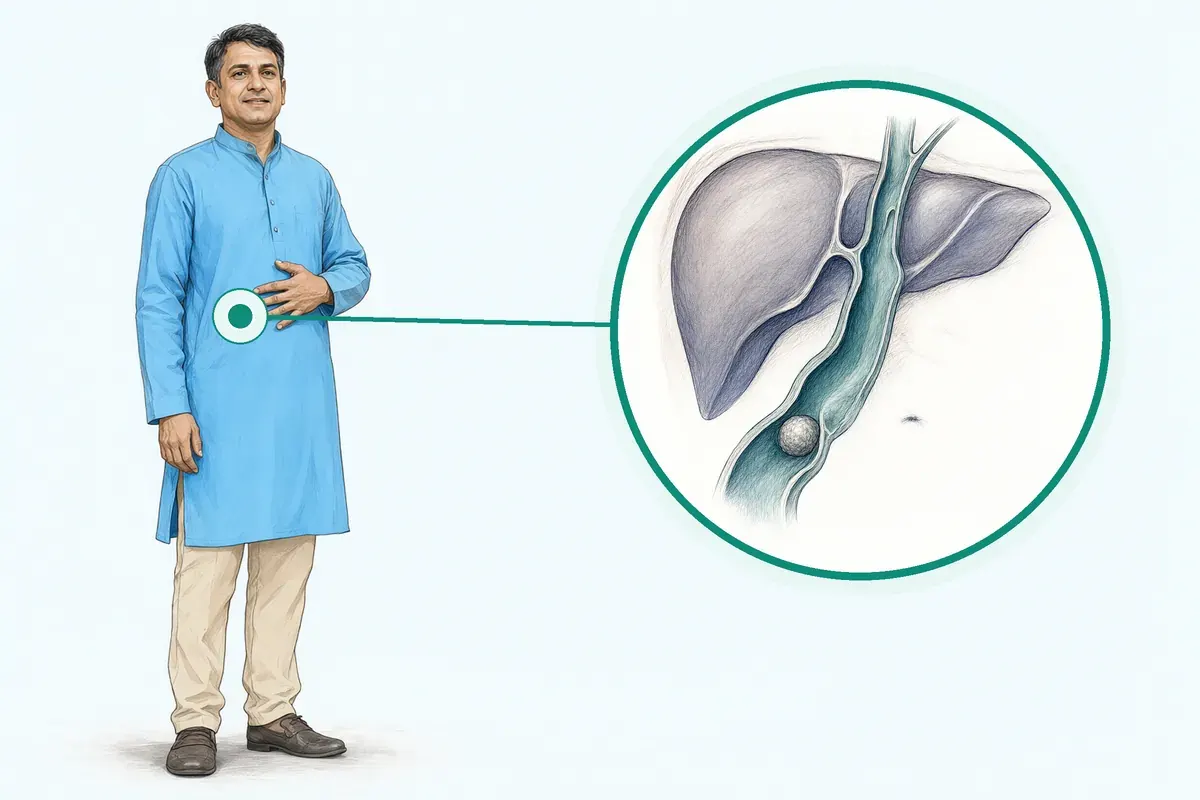
- 6% to 15% of cases ERCP adverse event rate
- about 1 in 200 (0.5%) ERCP 30-day mortality
- up to 1 in 12 cases ERCP pancreatitis rate
- within 72 hours Typical interval to surgery after ERCP
What ERCP does for bile duct stones
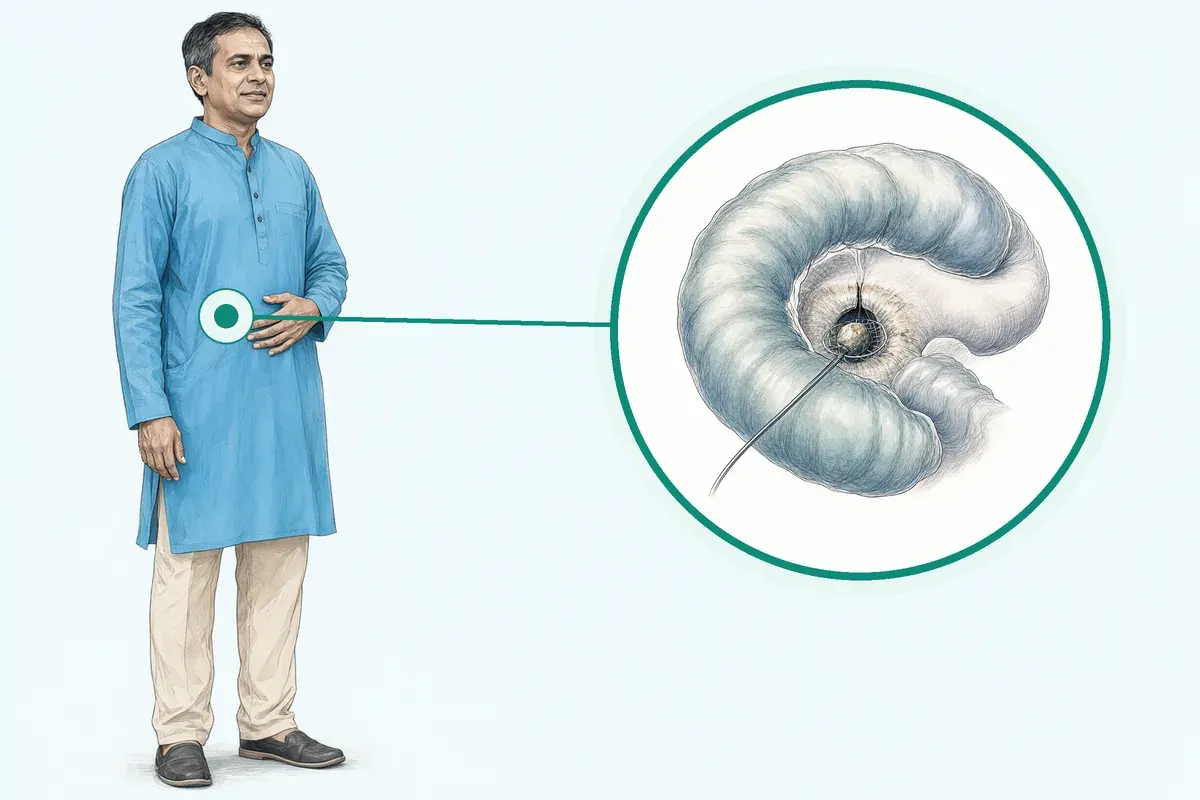
- Reach the bile duct Tube passed through mouth to small intestine
- Inject dye for X-ray Ducts show up on X-ray
- Remove stones if found Small cut at duct opening, stones pulled out
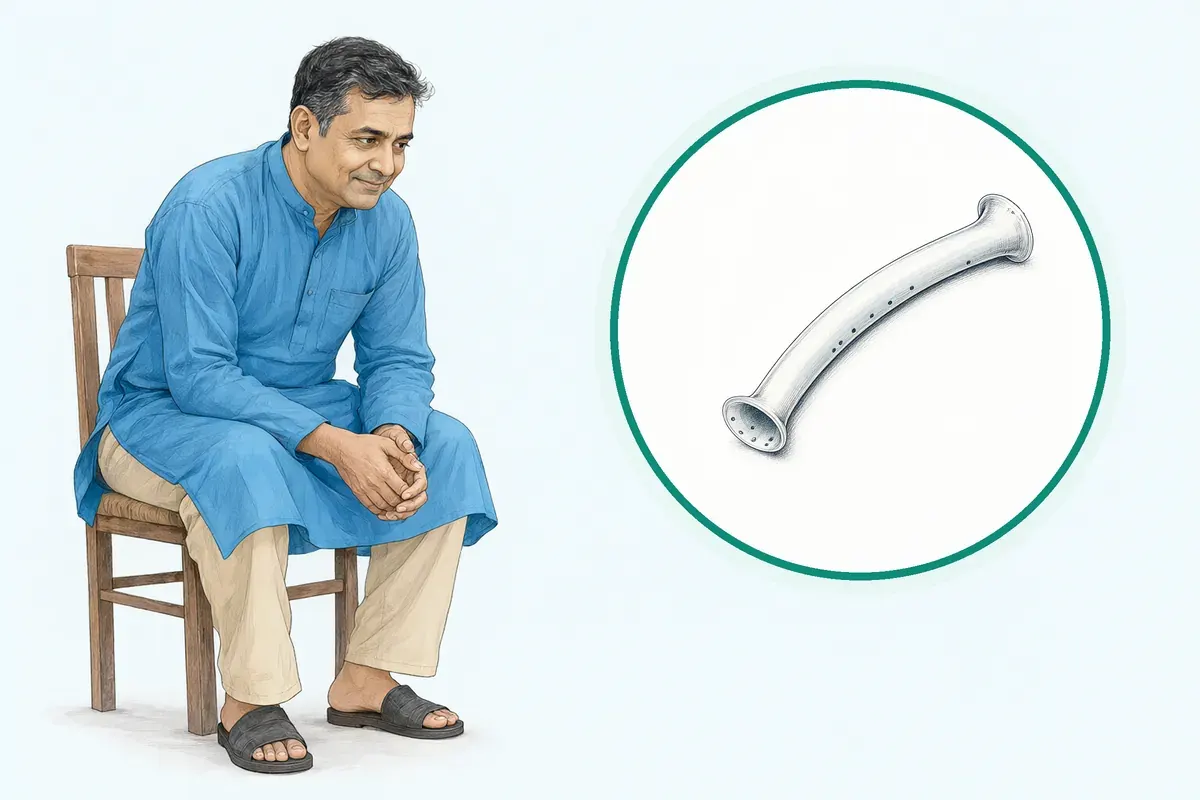
- Place stent if needed Keeps duct open for bile flow
ERCP stands for endoscopic retrograde cholangio-pancreatography. It is a procedure that lets a doctor reach the bile duct through the mouth, down the food pipe and stomach, into the first part of the small intestine. A flexible tube with a camera on the end is used to find the opening of the bile duct.
Dye is injected so the ducts show up on X-ray. If stones are seen, a small cut can be made at the duct opening and the stones are pulled out with a tiny basket or balloon. A small plastic or metal tube called a stent may be left in place to keep the duct open and let bile flow. ERCP is not surgery in the traditional sense because no cut is made through the skin.
You will usually have a blood test before the procedure to check clotting and blood counts. You must not eat for at least six hours beforehand so the stomach is empty. An antibiotic is often given before the procedure starts. The procedure is done under sedation or sometimes a general anaesthetic.
After ERCP you may have some tummy pain, bloating or discomfort when swallowing for a few days. Simple painkillers such as paracetamol can help. You should tell any doctor you see afterwards that you have had an ERCP so they can contact the specialist team if needed.
ERCP is not surgery in the traditional sense because no cut is made through the skin.
Why the bile duct is cleared before gallbladder surgery
Common bile duct stones are gallstones that have moved out of the gallbladder and become stuck in the main bile duct. Clearing the duct first with ERCP makes the later keyhole surgery to remove the gallbladder less urgent and usually more straightforward. The operation then focuses only on taking out the gallbladder.
If the duct is not cleared beforehand, the surgeon may need to deal with the stones during the operation. This can make the keyhole procedure longer and more complex. A planned two-step approach avoids this.
Can the surgeon remove bile duct stones during keyhole surgery
- How stones are removed
- Through cystic duct or common bile duct
- X-ray check during operation
- Cholangiograms used to find stones
- Possible complications
- Infection, tube issues, retained stones, narrowing
Surgeons can remove stones from the common bile duct during keyhole surgery by operating through the cystic duct or the common bile duct itself. Special X-rays called cholangiograms are used during the operation to check for stones.
The evidence lists specific complications of bile duct exploration during surgery, including infection around the tube, difficulty removing the tube, retained stones in the duct, and narrowing of the duct needing further treatment.
If stones are found unexpectedly during the gallbladder operation, the surgeon may deal with them then, or may finish the gallbladder removal and arrange a separate ERCP afterwards. Your doctor will advise which approach suits your situation.
Risks of ERCP compared with gallbladder surgery
- up to 1 in 12 cases Pancreatitis
- 6% to 15% Adverse events
- about 1 in 200 Death within 30 days
ERCP is not surgery in the traditional sense because no cut is made through the skin. However, it carries specific risks. Pancreatitis (inflammation of the pancreas) is the most common complication and occurs in up to 1 in 12 cases; it usually causes abdominal pain for 24 to 48 hours. Severe pancreatitis can also happen.
Other risks include bleeding, especially if a small cut (sphincterotomy) is made to widen the bile duct opening, infection in the bile ducts (cholangitis), and a hole (perforation) in the wall of the small intestine. Studies report adverse events in 6% to 15% of ERCP cases. The chance of dying within 30 days of ERCP is about 1 in 200.
Keyhole gallbladder removal has its own risks, such as bile duct injury, bile leak, wound infection, and diarrhoea. Both procedures are done under general anaesthesia. Your doctor will explain which risks apply most to you based on your health.
Can both procedures happen in the same hospital stay
After ERCP for common bile duct stones, laparoscopic cholecystectomy may be performed early, defined as within 72 hours. Your surgical team will decide the safest schedule for you. In some cases, the surgeon may remove duct stones during the operation, or you might need another procedure later. Ask your doctor what is planned for your admission.
What happens if a stone is missed and stays in the duct after surgery
A stone that remains in the common bile duct after gallbladder removal is called a retained stone. It can cause pain, jaundice (yellow skin or eyes), or infection (cholangitis). If this happens, you will need another procedure, usually an ERCP, to remove the stone. Special X-rays (cholangiograms) during the operation help the surgeon check for stones in the ducts.
When to contact your doctor
- After ERCP Severe pain, fever, vomiting, black or bloody stools
- After gallbladder surgery Jaundice, pain not helped by medicines, wound infection, bile leak
After ERCP, contact your doctor or go to the emergency department if you have:
- Severe abdominal pain that does not settle
- Fever and chills
- Vomiting
- Black or bloody stools
Let any doctor you see know you had an ERCP so they can contact the specialist team for advice.
After gallbladder surgery, seek urgent care for:
- Yellow skin or eyes (jaundice)
- Pain not helped by medicines
- Persistent vomiting
- Signs of wound infection such as spreading redness or pus
- Symptoms of a bile leak like worsening pain and feeling unwell
For any emergency, call 108 for an ambulance.
This article was drafted with the assistance of AI tools and thoroughly reviewed, fact-checked, and edited by our editorial team.
