

General & Laparoscopic Surgery · Jaipur Hospital
Incisional Hernia Repair in Jaipur
A bulge at an old scar causing pain? We assess, explain options, and plan your repair.
- Serving Jaipur since 1991 (35 years)
- NABH accredited
- 24×7 emergency & ICU
- Cashless: RGHS, MAA Yojana, CGHS + 22 insurers
- Operation time
- 1 to 3 hours, depending on size
- Anaesthesia
- General anaesthesia
- Recovery
- Desk work in 2 to 4 weeksheavy lifting after 6 to 8 weeks
- Price
- ₹70,000 to ₹2,00,000, depending on size and meshtypical range in India; ask us for an estimate
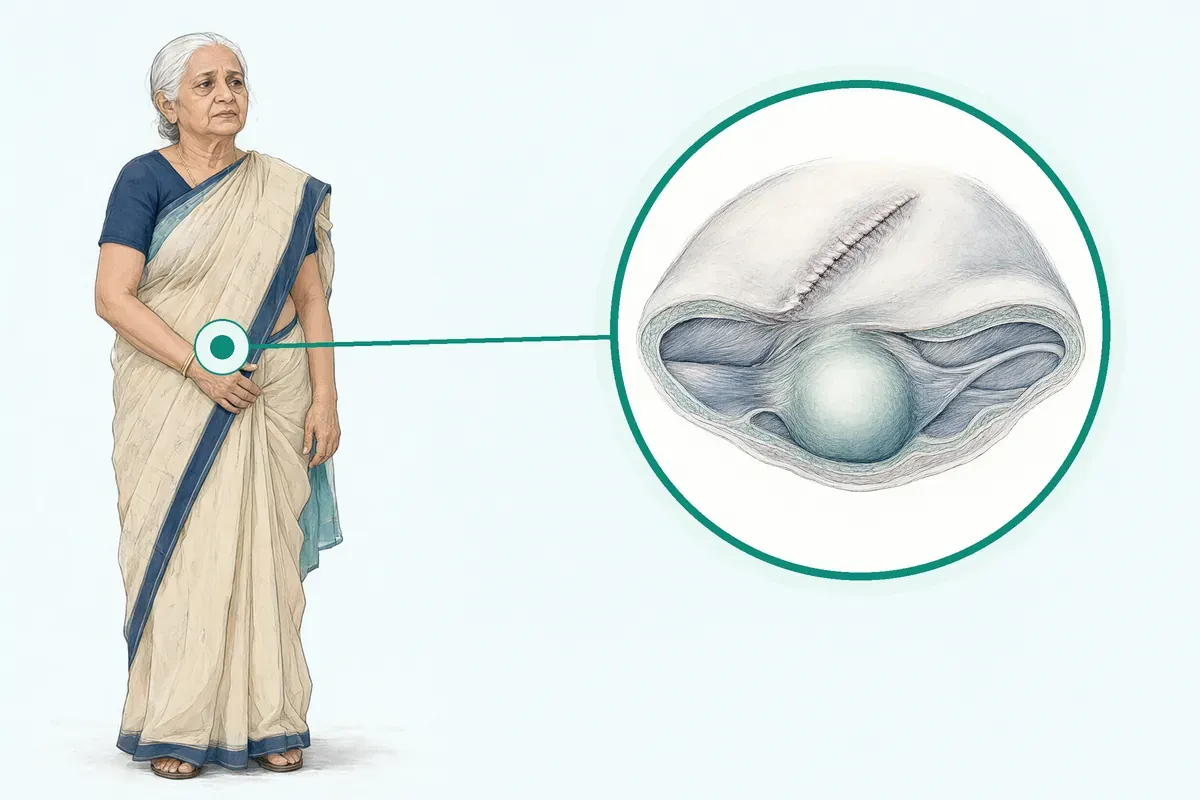
Bulge at an old scar
A lump at your old operation site that hurts or grows
Incisional hernias appear at old surgical scars. They can cause pain, discomfort, or a visible bulge that gets worse with activity or standing.
-
Pain and discomfort
Pressure or ache at the scar, worse when you cough, lift, or stand for long periods.
-
Risk of strangulation
Bowel can get trapped in the gap, cutting off blood supply. This needs emergency surgery.
-
Interferes with daily work
Lifting, bending, or long shifts become difficult. Many people put off chores or take leave.
-
Won't heal on its own
The muscle gap does not close without surgery. Waiting usually makes the hernia larger.
Incisional hernias occur in 9 to 20 percent of people within a year after open abdominal surgery.
Why Jaipur Hospital
You worry the bulge will get stuck, the pain will stop you working, or the cost will stretch your family budget.
Your care plan
Your first steps with us
- 1 Call or visit OPD for a surgeon consultation
- 2 Get scans and blood tests done in-house
- 3 Review mesh and technique options with your surgeon
- 4 Schedule surgery and recover with follow-up visits
How the operation is done
Under general anaesthesia, the surgeon returns the tissue to the abdomen and places a mesh to reinforce the wall. The approach depends on hernia size and your health.
-
Laparoscopic mesh repair (IPOM)
Mesh placed inside the abdomen through small cuts. Usually shorter hospital stay and less early pain.
-
Open mesh repair (sublay / Rives-Stoppa)
Mesh placed between muscle layers through a longer cut. Often used for larger or complex hernias.
-
eTEP and component separation
Advanced techniques for large or recurrent hernias to rebuild the abdominal wall.
Why patients trust us
- 1991 Serving Jaipur for 35 years
- NABH Accredited hospital
- 3 General & Laparoscopic Surgery consultants
- 24×7 Emergency, ICU and ambulance
- 25 Cashless schemes and insurers
What research shows about this treatment
-
5 to 20 percent recurrence after previous repair
Studies report recurrence rates in this range for patients who had a prior incisional hernia repair.
-
About 16 percent need re-operation within 10 years
A large study found roughly 16 in 100 patients required another surgery for recurrence within a decade.
-
17 percent overall complication rate after hernia repair
Pooled data shows about 17 in 100 patients experience a complication such as seroma, infection, or pain.
If it is left untreated
Without repair, the hernia usually grows larger and more painful. Bowel can become trapped (obstruction) or lose blood supply (strangulation), which is a life-threatening emergency needing immediate surgery.
Life after treatment
Most people return to desk work in a few weeks and heavy lifting after a couple of months, with the bulge gone and pain reduced.
-
Back to desk work
Most people return to office or light duties within 2 to 4 weeks, depending on recovery.
-
Heavy lifting later
Strenuous activity and heavy lifting usually resume after 6 to 8 weeks, guided by your surgeon.
-
Bulge and pain improve
The visible lump disappears and discomfort at the scar typically settles as you heal.
-
Follow-up for peace of mind
Scheduled OPD visits let your surgeon check healing and answer any questions.
Frequently asked questions
Questions patients ask about incisional hernia repair
What does incisional hernia repair involve?
In short
Incisional hernia repair at Jaipur Hospital involves pushing the protruding tissue back into the abdomen and strengthening the weak spot in the muscle wall. The operation usually takes one to three hours under general anaesthesia. Most patients stay in the hospital for one to three nights depending on the size of the hernia and the technique used.
In detail
Surgeons use mesh to reinforce the repair and lower the chance of the hernia returning.
The main techniques are laparoscopic mesh repair (IPOM) with small cuts, open mesh repair (sublay or Rives-Stoppa) placing mesh between muscle layers, and eTEP or component separation for large or complex hernias.
Evidence shows laparoscopic and open repairs have equivalent short and long-term outcomes, though laparoscopic surgery usually involves less pain medicine and a quicker recovery. Mesh infection, seroma, wound infection, and recurrence are known complications. The majority of incisional hernias do not return after repair.
A common belief
Many people think the hernia can heal on its own or that a truss will fix it.
What actually happens
Evidence shows incisional hernias do not heal without surgery and a truss only manages symptoms. Mesh repair lowers recurrence compared to stitches alone.
Your next step at Jaipur Hospital
Before surgery you will have a physical examination and tests to check you are fit for anaesthesia. Your surgeon will explain which technique suits your hernia size and health. Plan for desk work in two to four weeks and heavy lifting after six to eight weeks.
Which tests and scans do I need before incisional hernia repair?
In short
Before incisional hernia repair at Jaipur Hospital, you will usually need a physical examination and basic fitness tests for general anaesthesia. These typically include blood tests, chest X-ray, and ECG. Imaging such as ultrasound or CT scan of the abdomen may be ordered to define the hernia size, contents, and relation to previous mesh or scar tissue.
In detail
Evidence shows a physical exam is the first diagnostic step. Imaging is especially useful for large, recurrent, or complex hernias to plan the surgical approach. The surgeon checks for risk factors like obesity, diabetes, and smoking that affect complication rates.
Blood tests assess haemoglobin, kidney function, and clotting. ECG and chest X-ray screen for heart or lung conditions that could affect anaesthesia safety. If you have other medical conditions, additional clearance from a physician or cardiologist may be needed. The hospital's in-house laboratory and radiology allow these tests to be done conveniently.
A common belief
Patients sometimes think only the hernia bulge needs checking.
What actually happens
In fact, your overall health determines anaesthesia safety. Undiagnosed diabetes or heart issues can raise complication risk significantly.
Your next step at Jaipur Hospital
Your surgeon will give you a specific list of required tests at your consultation. Most tests can be completed in one visit. Fasting may be needed for blood work. Plan to bring any previous imaging or operation notes.
How painful is incisional hernia repair and the early recovery?
In short
You will be asleep under general anaesthesia during incisional hernia repair at Jaipur Hospital, so you will not feel pain during the operation. After surgery, most people have soreness for the first 72 hours. The surgical team will give you a plan to manage this discomfort with medicines.
In detail
Evidence shows that general anaesthesia keeps you free of pain during the procedure. In the first few days after surgery, pain or soreness is common and usually managed with over-the-counter drugs such as acetaminophen or ibuprofen.
Studies report that minimally invasive repairs tend to cause less post-operative pain than open repairs, but individual experience varies. Your surgeon will prescribe a pain management plan tailored to the size of your hernia and the technique used.
A common belief
Many people expect severe pain, but studies show most patients control discomfort with over-the-counter medicines.
What actually happens
Laparoscopic repairs often mean less pain than open surgery, though every person heals differently.
Your next step at Jaipur Hospital
Plan to rest for the first 24 hours after you go home. Light walking is encouraged the next day. Most people return to desk work in two to four weeks and avoid heavy lifting for six to eight weeks. Keep your follow-up appointment so the team can check your healing.
How long does recovery usually take after incisional hernia repair?
In short
Recovery after incisional hernia repair at Jaipur Hospital usually takes two to four weeks for desk work and six to eight weeks before heavy lifting. Hospital stay is typically one to three nights. Full return to strenuous activity depends on hernia size and repair technique.
In detail
Evidence shows most patients walk the day after surgery. Light activity resumes in days. Desk workers often return in two to four weeks. Heavy physical work or lifting usually waits six to eight weeks.
Laparoscopic repair may allow a slightly quicker return to normal activity than open repair, but both need a similar protection period for the mesh to integrate. Pain typically improves over the first 72 hours and is managed with simple analgesia.
A common belief
Many expect a quick bounce-back.
What actually happens
The mesh needs time to integrate, so the six-to-eight-week lifting restriction is real even if you feel fine earlier. Laparoscopic surgery may feel easier sooner, but the deep healing timeline is similar.
Your next step at Jaipur Hospital
Plan for an attendant to help at home for the first few days. Follow the specific activity ladder your surgeon gives you. Do not lift more than 5 kg for the first six weeks. Attend your follow-up visit.
Can an incisional hernia get better on its own?
In short
No, an incisional hernia will not get better on its own. At Jaipur Hospital, the surgical team explains that the defect in the abdominal wall remains open unless it is repaired. Evidence states incisional hernias do not heal on their own and require surgical treatment to repair.
In detail
The hernia is a gap in the scar tissue where muscle and fascia have failed to knit together. Over time, the gap tends to enlarge as abdominal pressure pushes more tissue through.
Studies show the incisional hernia rate increases from about 12.6% at one year to 22.4% at three years after the original operation.
Waiting allows the hernia to grow, makes the repair more complex, and raises the risk of incarceration or strangulation, where bowel becomes trapped and its blood supply is cut off. Surgery pushes the contents back, removes scar tissue, and places mesh to close the defect permanently.
A common belief
Some people hope a support belt or weight loss will heal it.
What actually happens
Those measures may ease symptoms but cannot close the defect. Only surgery with mesh can repair it reliably.
Your next step at Jaipur Hospital
If you notice a bulge at an old scar, do not wait for it to disappear. See a surgeon for an assessment and discuss repair timing. Early repair is usually simpler and has a lower recurrence risk.
How will the surgeon decide whether an operation is necessary for incisional hernia repair?
In short
At Jaipur Hospital, your surgeon decides on surgery after a clinical examination and a review of your symptoms. The decision depends on whether the hernia causes pain, limits daily activity, or carries a risk of complications such as obstruction or strangulation. Your overall health and fitness for anaesthesia are also assessed before a recommendation is made.
In detail
Evidence shows that incisional hernias do not heal on their own and usually worsen over time. Surgery is the only way to remove the hernia and the pain it causes.
Your surgeon will check for a bulge at the old scar site, ask about discomfort during activity, coughing or standing, and may order imaging to define the defect size. If the hernia is symptomatic or at risk of strangulation, surgery is advised.
Even asymptomatic hernias may be repaired to prevent future complications. The final decision balances the hernia size, symptom burden, and your medical fitness for general anaesthesia.
A common belief
Some people think a small, bulge that causes no pain can be ignored.
What actually happens
However, hernias tend to enlarge and can trap bowel, which becomes an emergency. Waiting often makes the repair more complex.
Your next step at Jaipur Hospital
You will attend an OPD consultation where the surgeon examines you and may request blood tests or imaging. After reviewing the results, the surgeon explains whether surgery is recommended and which technique suits your case. You can then schedule the procedure at a convenient date.
Why might my doctor recommend incisional hernia repair?
In short
Your doctor may recommend incisional hernia repair at Jaipur Hospital if the hernia causes pain, discomfort, or interferes with daily activities. Surgery is the only way to remove the hernia and the symptoms it causes. Even without pain, repair may be advised to prevent future complications such as obstruction or strangulation of the bowel.
In detail
Incisional hernias occur after previous abdominal surgery when the scar tissue weakens. Strenuous activity, weight gain, or pregnancy can increase stress on the healing tissue.
Evidence shows the prevalence of incisional hernia after midline incision is around 12.8% at a mean follow-up of 23.7 months, rising to 22.4% at three years. About half of hernias become symptomatic and over a third eventually undergo repair.
Risk factors for complications after repair include obesity, diabetes, smoking, and other comorbidities. Obese patients have 2.7 times higher risk of complications and diabetic patients 2.8 times higher risk compared to those without these conditions.
A common belief
Some people wait hoping the hernia will shrink or stay the same.
What actually happens
Studies show hernias usually grow larger over time and become harder to repair. Delaying can lead to emergency surgery if the bowel gets stuck.
Your next step at Jaipur Hospital
If you notice a bulge at an old scar that grows or hurts when you cough, lift, or stand, see your surgeon. They will examine you and may order imaging. Early repair is usually simpler than emergency surgery for a strangulated hernia.
How should I prepare in the days before incisional hernia repair?
In short
At Jaipur Hospital, your surgical team will give you written instructions a few days before incisional hernia repair. You will usually have blood tests, an ECG, and a chest X-ray to check you are fit for general anaesthesia. Stop smoking if you can, because smoking raises the risk of wound infection and slows healing.
In detail
Evidence shows that incisional hernia is a frequent long-term complication after abdominal surgery and that wound infection, seroma, and mesh infection are known complications of hernia repair. Optimising your health before surgery helps reduce these risks.
Patients with diabetes, obesity, or other comorbidities have a higher chance of postoperative complications, so your surgeon may ask for tighter blood-sugar control or a medication review before the operation. The hospital's pre-anaesthesia clinic will review your regular medicines and advise which to continue or pause.
A common belief
Many people think they can just show up on the day of surgery.
What actually happens
In reality, patients with diabetes, high blood pressure, or extra weight have a higher complication rate, so the pre-anaesthesia clinic often adjusts medicines and asks for better sugar control before the operation.
Your next step at Jaipur Hospital
Plan to arrive at the hospital on the morning of surgery after an overnight fast. Bring an attendant who can stay with you for the one to three nights you may need in the ward.
Arrange leave from work for two to four weeks if you have a desk job, or six to eight weeks if your work involves heavy lifting.
What are the common side effects and the less common serious complications of incisional hernia repair?
In short
Common side effects after incisional hernia repair at Jaipur Hospital include wound seroma, wound infection, and pain at the incision site. Less common but serious complications can include mesh infection, mesh removal, wound haematoma, injury to the intestines, blood clots, or heart and lung problems.
In detail
In studies, about 17 percent of patients experienced a complication after hernia repair. Seroma occurred in roughly 3 percent, wound infection in about 6 percent, and persistent pain in 4 percent.
Mesh infection was seen in under 2 percent, and mesh removal in about 1.5 percent. Open repair carries a higher wound infection rate than laparoscopic repair. Serious events such as bowel injury, deep vein thrombosis, or sepsis are rare but require immediate medical attention.
- In studies, about 17 percent of patients experienced a complication after hernia repair.
A common belief
People often worry only about the hernia coming back.
What actually happens
Data shows wound problems like seroma and infection happen more often, while life-threatening events are uncommon. Open surgery has higher wound infection rates than keyhole surgery.
Your next step at Jaipur Hospital
Watch for increasing redness, swelling, fever, sudden severe pain, or shortness of breath. Contact your surgeon promptly if any of these appear. Most side effects settle with simple care. Your team will explain warning signs before discharge.
Which symptoms are expected after incisional hernia repair, and which need urgent medical attention?
In short
After incisional hernia repair at Jaipur Hospital, you can expect some soreness, swelling, and bruising around the cuts for the first few days. You may also feel tired and have mild discomfort when moving or coughing. These are normal and usually improve within a week. However, certain signs need urgent medical attention.
In detail
Normal symptoms include mild to moderate pain at the wound site, a small amount of clear or blood-tinged fluid on the dressing, and a firm ridge along the incision. You may also notice numbness around the cuts.
Evidence shows that seroma (fluid collection) occurs in about 3 percent of patients, wound infection in about 6 percent, and persistent pain in about 4 percent after hernia repair.
Urgent signs include fever above 38 degrees Celsius, increasing redness or warmth around the wound, thick yellow or green discharge, sudden severe pain not relieved by prescribed tablets, vomiting, inability to pass urine, or a rapidly growing swelling at the repair site.
These may indicate infection, bleeding, mesh problems, or a blood clot in the leg. If you notice any of these, contact the hospital or go to the emergency department immediately.
A common belief
But fever, spreading redness, pus, sudden severe pain, or a fast-growing lump are not normal.
What actually happens
They can mean infection, bleeding, or a blood clot. Do not wait; call the hospital or go to the emergency department.
Your next step at Jaipur Hospital
Before you leave, the nursing team will give you a written list of warning signs and a phone number for the surgical ward. Keep the dressing clean and dry for the first 48 hours unless told otherwise. Take pain tablets as advised.
Most patients have their first follow-up within seven to ten days. At that visit, the surgeon checks the wound, removes any stitches or clips, and answers your questions.
FAQ library
Questions and answers about incisional hernia repair
When you contact us
Get your assessment and plan
Contact Jaipur Hospital for a surgical consultation, in-house tests, a clear explanation of options, a cost estimate, and help with cashless schemes.
- A consultation with a general and laparoscopic surgeon in the OPD
- Your scans and reports reviewed, with tests done in-house if you need them (laboratory, X-ray and imaging)
- Your options explained in plain words, including whether you need surgery at all
- A cost estimate before you decide
- Help with cashless treatment under RGHS, MAA Yojana, CGHS and empanelled insurers and TPAs
- Follow-up visits after your treatment
Read more
Read more about incisional hernia repair
- Hernia Symptoms and When Surgery Is Needed
Learn about hernia symptoms, warning signs, and when surgery is recommended. Plain guide from Jaipur Hospital. Explained in plain words for patients and families.
- Hernia Surgery Cost and Mesh Options in Jaipur
Understand hernia surgery costs, mesh types, and insurance coverage at Jaipur Hospital. Plan your treatment with clear pricing factors.
- Recurrent Hernia Repair Results and Long Term Outlook
What to expect after recurrent hernia surgery, recovery timelines, and the chance of another recurrence explained. A patient guide from Jaipur Hospital, Jaipur.
- Open Mesh Inguinal Hernia Repair Surgery in Jaipur
Learn about the Lichtenstein open mesh repair for groin hernia, including who it suits, how it is done, recovery time, risks and comparison with keyhole surgery.
- Femoral Hernia Repair Surgery in Jaipur
Learn about femoral hernia repair techniques, recovery time, risks, and when surgery is needed. Plain language guide for patients.
- Epigastric and Ventral Hernia Repair: Techniques and Recovery
Understand repair options for epigastric and ventral hernias, including open and keyhole surgery, mesh use, recovery time, and risks.
Overview
Incisional Hernia Repair: what to know
What an incisional hernia is and how it happens
- 12.8 per cent Prevalence at 23.7 months
- 5.2 per cent Risk of needing repair
An incisional hernia is a bulge that forms at the site of an old surgical scar. With a hernia, an organ or tissue pushes through the muscle or tissue wall that holds it in place. Incisional hernias are a type of abdominal wall hernia that typically occur at the front of the abdomen. In most cases, only the abdominal lining protrudes through the gap.
After abdominal surgery, the cut in the muscle wall is closed with stitches. Over time, that repair can weaken and leave a gap. Incisional hernia is the most frequent long-term complication after visceral surgery. The prevalence of incisional hernias after midline incision was 12.8 per cent at a weighted mean follow-up of 23.7 months. The estimated risk of needing a repair after midline laparotomy was 5.2 per cent.
The hernia does not heal on its own. It usually gets larger over time and can become painful. Surgery is the only way to get rid of it and the pain it causes.
Symptoms of incisional hernia and warning signs that need urgent care the same day
- Sudden severe pain
- Bulge hard or changes colour
- Feel sick or vomit
- Cannot pass stool or gas
The characteristic bulge of an incisional hernia can often be seen or felt when you stand upright or do physical activity such as heavy lifting. You may feel discomfort, pressure, or pain at the site of the old scar. Over time, hernias can grow and become painful. You may feel more pain with physical activity, or when you cough, sneeze, or stand up.
Sudden and severe hernia pain or tenderness can be a warning sign that the hernia is stuck or strangulated. This is life-threatening and you will need emergency hernia surgery.
Go to the emergency department immediately if you have:
- Sudden severe pain
- The bulge becomes hard or changes colour
- You feel sick or vomit
- You cannot pass stool or gas
Causes of incisional hernia and who is at higher risk
- 2.737 times higher risk Obesity
- 2.786 times higher risk Diabetes
- 1.992 times higher risk Comorbidities
- 2.567 times higher risk Recurrent hernia
Incisional hernias can occur after prior surgeries. Strenuous activity, substantial weight gain, or pregnancy can put excessive stress on healing abdominal tissue and should be avoided during the healing window after abdominal surgery. People who had abdominal surgery are at risk for developing incisional hernias. People are especially susceptible three to six months following abdominal surgery.
Independent risk factors include older age and infectious complications after the first surgery. Obesity, diabetes mellitus, and the presence of other comorbidities increase the risk of complications after hernia repair. Obese individuals have a 2.737 times higher risk of complications compared to normal-weight individuals. Patients with diabetes have a 2.786 times higher risk of complications compared to those without diabetes.
Patients with comorbidities have a 1.992 times higher risk. A recurrent hernia is associated with a 2.567 times higher risk of complications.
Smoking, diabetes, and being overweight also increase your risk of complications after hernia surgery.:
- Smoking
- Diabetes
- Being overweight
How incisional hernia is diagnosed: examination and tests
Your doctor will do a physical exam to feel for a gap in the abdominal wall at the site of the old scar. The bulge may be more obvious when you stand or strain. You may need tests to see if you are healthy enough for surgery and anaesthesia.
These tests can include blood tests, a chest X-ray, an ECG, and imaging of the abdomen such as an ultrasound or CT scan to check the size of the hernia and the condition of the muscle layers.
One year of clinical follow-up is not sufficient to detect all incisional hernias. Studies suggest follow-up for at least three years should be mandatory when evaluating hernia rates after midline laparotomy. The incisional hernia rate increased significantly from 12.6 per cent at one year to 22.4 per cent at three years after surgery.
Treatment options without surgery and when surgery is advised for incisional hernia repair
Not all hernias require immediate treatment, but most eventually do since they usually worsen over time. If a hernia causes symptoms or puts you at risk of a complication, you may need surgery. Even if the hernia does not cause pain, surgery can be considered in some cases to prevent future complications. Many hernias will eventually need surgery.
Surgery is the most common treatment for a hernia. It allows your surgeon to push the organ and herniated tissue back into place and reinforce the barrier holding it there using stitches or surgical mesh. Another name for hernia surgery is herniorrhaphy.
Your surgeon will discuss which approach suits you based on the hernia's type and size and your other health issues. Larger hernias often require open surgery.
You may not be a candidate for hernia surgery if you have certain health concerns, and you will need to discuss these with your surgeon.
Preparing for incisional hernia repair surgery
Do
- Attend pre-anaesthesia check
- Bring medicines in original packets
- Arrange attendant for first night
Before your operation, the surgical team will ask you to come for a pre-anaesthesia check. This usually includes blood tests, a chest X-ray and an ECG to make sure you are fit for general anaesthesia.
If you take blood thinners, diabetes tablets or insulin, or any regular medicine, tell the anaesthetist and your surgeon so they can advise which ones to stop or continue. You will be asked to fast for about six hours before the procedure; clear fluids may be allowed up to two hours before.
Bring your regular medicines in their original packets, a list of allergies, your insurance or scheme cards (RGHS, MAA Yojana, CGHS or private TPA), and comfortable loose clothing to wear home.:
- Regular medicines in their original packets
- A list of allergies
- Your insurance or scheme cards (RGHS, MAA Yojana, CGHS or private TPA)
- Comfortable loose clothing to wear home
An attendant should plan to stay with you for the first night after discharge.
How incisional hernia repair is done
The operation is performed under general anaesthesia, so you will be asleep and feel no pain during surgery. The surgeon pushes the protruding tissue back inside the abdomen and reinforces the weak area of the abdominal wall. Surgical mesh is commonly used to lower the chance of the hernia returning. Your surgeon will discuss which technique suits your hernia size, previous scars and overall health. The main options are:
- Laparoscopic mesh repair (IPOM): several small cuts are made; a camera and instruments are inserted and the mesh is fixed on the inner surface of the abdominal wall.
- Open mesh repair (sublay or Rives-Stoppa): a single longer cut is made through the old scar; the mesh is placed between the muscle layers.
- eTEP and component separation: used for large or complex hernias to bring the muscle edges together before placing mesh.
The procedure typically takes one to three hours depending on the size and complexity of the hernia. You will wake up in the recovery room where nurses monitor your vitals until you are fully alert.
Risks and possible complications of incisional hernia repair
- 17 in 100 patients Any complication
- 6 in 100 patients Wound infection
- 3 in 100 patients Seroma
- 4 in 100 patients Persistent pain
All surgery carries some risk. In studies of hernia repair, about 17 in 100 patients experienced a complication of any kind. The most common issues are seroma (a collection of clear fluid under the wound) which occurred in about 3 in 100 patients, and wound infection in about 6 in 100 patients.
Mesh infection was seen in about 2 in 100 patients, and roughly 1.5 in 100 needed the mesh to be removed. Wound haematoma (blood collection) occurred in about 1 in 100 patients, and persistent pain lasting beyond the early recovery period was reported in about 4 in 100 patients.
In one large trial comparing mesh positions, seromas were more frequent with onlay mesh (placed above the muscle) than with sublay mesh (placed between muscle layers) or primary suture alone. Wound infection rates were similar between primary suture, onlay and sublay mesh groups. Laparoscopic repair tends to have a lower wound infection rate than open repair.
Other recognised complications include:
- Injury to the bowel
- Bleeding
- Blood clots in the legs (deep vein thrombosis)
- Heart or lung problems related to anaesthesia
The hernia can come back after either open or laparoscopic repair. Long-term pain (post-herniorrhaphy neuralgia) lasting more than three months is a known but uncommon outcome. Your surgical team will discuss the risks that apply to your situation and the steps taken to reduce them.
Recovery and aftercare after incisional hernia repair
Most patients stay in hospital for one to three nights. You will be encouraged to walk within a few hours of surgery. Pain or soreness is usual for the first 72 hours and is managed with tablets; laparoscopic repair generally causes less pain than open repair.
Before you go home, the nursing team will show you how to care for the wound, when you can shower, and what to do if a drain was placed. For the first 24 hours at home, rest and have an attendant with you. Light walking can be increased gradually each day.
Desk work is usually possible after two to four weeks; heavy lifting or strenuous exercise should wait six to eight weeks. Your surgeon will give you a follow-up appointment, typically within two weeks, to check the wound and your progress.
Call the hospital or visit the emergency department if you develop:
- A fever
- Increasing redness or swelling around the wound
- Sudden severe pain
- Vomiting
- Inability to pass urine
- Calf swelling and shortness of breath (signs of a blood clot)
Results of incisional hernia repair: recurrence and long-term outcomes
Hernia surgery is considered a safe procedure that repairs the defect and prevents recurrence in most people. In studies, laparoscopic and open repairs have shown equivalent short-term and long-term outcomes, with similar recurrence rates. The majority of incisional hernias do not return after being repaired.
However, recurrence rates in published series range from 5 to 20 percent in patients who have had a previous repair. A large trial found that at three years, the incisional hernia rate was about 22 percent after primary suture alone, compared with about 13 percent with onlay mesh and even lower with sublay mesh.
Mesh repairs using newer materials and techniques have improved recurrence rates and recovery times. Laparoscopic and robotic approaches usually involve less scarring, fewer pain medicines and a quicker return to normal activity than open surgery. Your surgeon will explain the expected results for your specific hernia size and the technique chosen.
Cost and insurance for incisional hernia repair in Jaipur
At Jaipur Hospital, the typical price range for incisional hernia repair is ₹70,000 to ₹2,00,000. The final cost depends on the size of the hernia, the type of mesh used, whether the operation is open or laparoscopic, and the length of hospital stay. Open surgery generally has lower expenses than laparoscopic surgery.
Published Indian cost ranges show open hernia repair at ₹25,000 to ₹55,000 and laparoscopic repair at ₹40,000 to ₹85,000, but complex or large incisional hernias with component separation can be higher. Jaipur Hospital is a NABH-accredited multispeciality hospital established in 1991 with modular operation theatres, ICU, in-house pharmacy, laboratory and imaging.
We accept:
- RGHS
- MAA Yojana
- CGHS
- A panel of private insurers and TPAs
Please bring your scheme or insurance card at admission so the billing team can verify coverage and process cashless or reimbursement claims as per your policy.