

General & Laparoscopic Surgery · Jaipur Hospital
Intestinal Obstruction Surgery in Jaipur
Severe belly pain and vomiting? We assess, explain options, and plan your care.
- Serving Jaipur since 1991 (35 years)
- NABH accredited
- 24×7 emergency & ICU
- Cashless: RGHS, MAA Yojana, CGHS + 22 insurers
- Operation time
- 1 to 3 hours
- Anaesthesia
- General anaesthesia
- Recovery
- 4 to 6 weeks before normal activity
- Price
- ₹1,00,000 to ₹3,00,000typical range in India; ask us for an estimate
When your bowel stops working
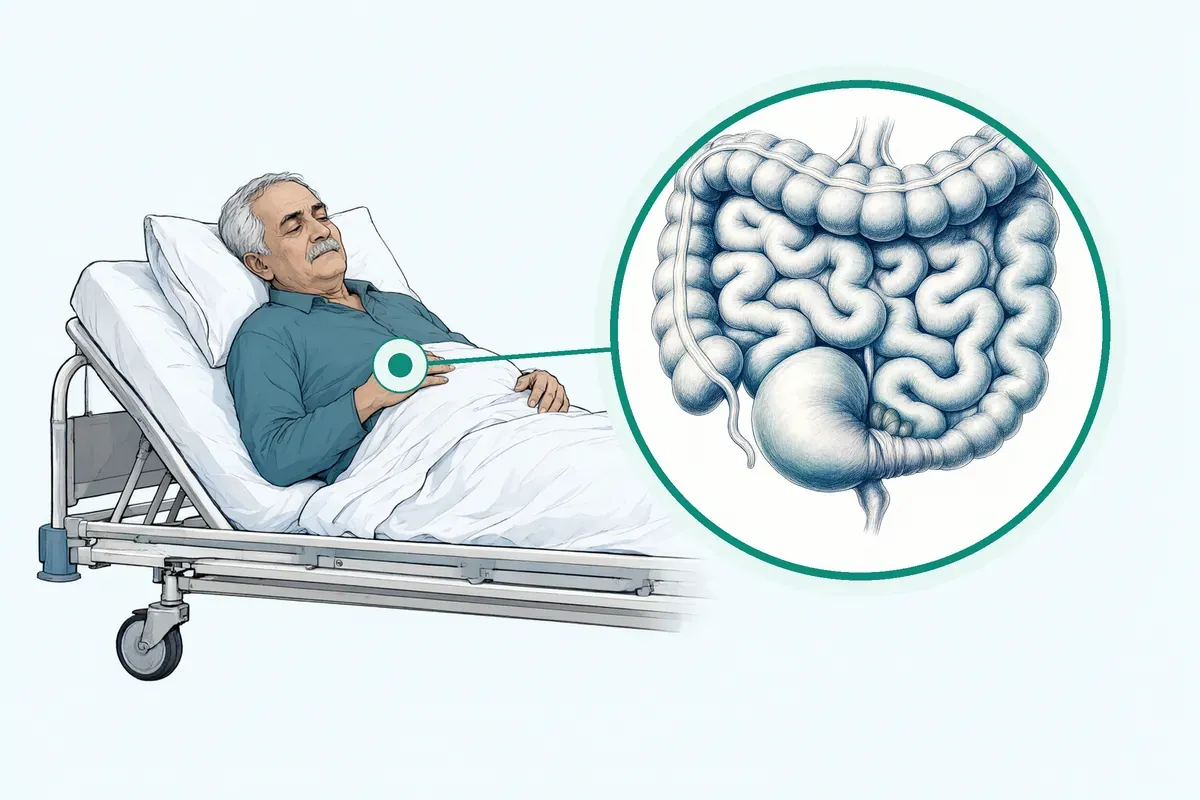
A blocked bowel causes severe pain, vomiting, and swelling that will not go away on its own
Food, fluid, and gas cannot pass through. The belly becomes tight and painful. You may stop passing gas or stool. This can become life-threatening if blood flow to the bowel is cut off.
-
Severe cramping pain
Comes in waves as the bowel tries to push past the blockage.
-
Vomiting and nausea
Stomach contents back up because they cannot move forward.
-
Bloated, tender belly
Gas and fluid build up, making the abdomen tight and painful to touch.
-
No gas or stool
A complete blockage stops everything from passing through.
-
Risk of bowel damage
Pressure can cut off blood supply, causing the bowel to die.
Adhesions from previous surgery cause about 65% of small bowel obstructions.
Why Jaipur Hospital
You are in pain, worried about surgery, and wondering how long you will be off work and what it will cost.
Your care plan
Your first steps with us
- 1 Call or visit our 24x7 emergency for immediate assessment.
- 2 Get scans and blood tests done in-house the same day.
- 3 Discuss conservative care or surgery options with your surgeon.
- 4 Recover in hospital 5 to 10 days, then follow up in OPD.
How the operation is done
Under general anaesthesia, the surgeon finds the blockage, frees the bowel, and removes any dead tissue. The healthy ends are joined or a stoma is made. Operation takes 1 to 3 hours.
-
Conservative care (drip and suck)
IV fluids and a nose tube to decompress the bowel. Many adhesive blockages settle without surgery within a few days.
-
Laparoscopic adhesiolysis
Scar tissue bands are cut through keyhole cuts. Used for selected simple adhesive obstructions.
-
Open laparotomy
A larger cut to free or remove a damaged section of bowel. Needed for complex cases or when keyhole is not safe.
Why patients trust us
- 1991 Serving Jaipur for 35 years
- NABH Accredited hospital
- 3 General & Laparoscopic Surgery consultants
- 24×7 Emergency, ICU and ambulance
- 25 Cashless schemes and insurers
What research shows about this treatment
-
5 to 10 days hospital stay
Typical stay after surgery for adhesive obstruction; non-operative cases average 5 days.
-
16% to 20% recurrence at 5 years
Adhesive obstruction comes back in about 1 in 5 patients treated without surgery, slightly lower after surgery.
-
About 1 in 10 develop stoma complications
Studies report ostomy-related problems including prolapse, retraction, and skin irritation after bowel resection.
If it is left untreated
Without treatment, the blocked bowel can swell until its blood supply is cut off. Dead bowel leaks bacteria into the belly, causing severe infection and organ failure. Mortality rises sharply once perforation occurs.
Life after treatment
Most people return to normal activity in 4 to 6 weeks. Bowel habits may change for a while but usually settle into a new pattern.
-
Eating normally again
Start with liquids and soft foods, then slowly add fibre over a week or two as the bowel wakes up.
-
Moving without pain
Walk a little more each day. Avoid heavy lifting for 2 to 4 weeks after open surgery.
-
New bowel routine
Some people find their pattern changes permanently; most adjust with diet and time.
-
Back to work and family
Plan 2 to 4 weeks off work depending on the surgery type and how you feel.


Frequently asked questions
Questions patients ask about intestinal obstruction surgery
What does intestinal obstruction surgery involve?
In short
Intestinal obstruction surgery at Jaipur Hospital relieves a blockage in your bowel. The operation takes one to three hours under general anaesthesia. Your surgeon makes a cut in your abdomen to reach the intestine, finds the blocked segment, and either frees it or removes the damaged part. The healthy ends are then joined together or, if needed, brought out as a stoma.
In detail
The procedure can be done through a larger open cut or through several small keyhole cuts using a laparoscope. In studies, laparoscopic adhesiolysis is a viable alternative to open laparotomy for selected simple adhesive obstructions.
Non-operative care with a nose tube and intravenous fluids settles many adhesive blockages without surgery. If surgery is needed, the surgeon may perform adhesiolysis to cut scar bands, a resection to remove a damaged segment, or a strictureplasty to widen a narrowed area. The choice depends on the cause, the extent of damage, and your overall health.
A common belief
Many people think every blockage needs a big open operation.
What actually happens
In fact, many adhesive obstructions settle with a drip and a nose tube alone. When surgery is required, keyhole surgery is often possible for simple cases, which can mean a shorter stay.
Your next step at Jaipur Hospital
You will typically stay in hospital for five to ten days. Full recovery before normal activity takes four to six weeks. The typical price range in India is ₹1,00,000 to ₹3,00,000; ask us for an estimate. Your surgeon will explain the exact steps planned for you at the consultation.
Which tests and scans do I need before intestinal obstruction surgery?
In short
Before intestinal obstruction surgery at Jaipur Hospital, you will need blood tests and imaging to confirm the diagnosis and assess your fitness for anaesthesia. Standard blood work includes a full blood count, kidney and liver function, electrolytes, clotting profile, and lactate. A CT scan of the abdomen with oral and intravenous contrast is the key imaging test to locate the blockage, identify the cause, and check for signs of bowel ischaemia or perforation.
In detail
A plain abdominal X-ray may be done first to look for dilated bowel loops and air-fluid levels, but CT is far more informative.
It shows the transition point, the cause such as adhesions, hernia, or tumour, and signs of strangulation like bowel wall thickening, lack of enhancement, or free fluid.
Water-soluble contrast studies are sometimes used if the diagnosis is uncertain after CT; they can also help the obstruction resolve by drawing fluid into the bowel.
An ECG and chest X-ray are routine for anaesthesia assessment, especially if you are over forty or have heart or lung disease. If you have other medical conditions, additional tests like echocardiography or pulmonary function tests may be requested.
Blood grouping and cross-matching are done in case transfusion is needed. The anaesthetist will review all results and may ask for further investigations based on your health.
A common belief
Some patients expect only an X-ray.
What actually happens
An X-ray can suggest obstruction but cannot reliably show the cause or whether the bowel is ischaemic. CT is the standard because it changes management in many cases.
Your next step at Jaipur Hospital
Most tests are completed within a few hours of admission. The CT scan is usually the first priority. If surgery is indicated, it proceeds once you are resuscitated and the anaesthetist clears you. The operation takes one to three hours.
How painful is intestinal obstruction surgery and the early recovery?
In short
At Jaipur Hospital, intestinal obstruction surgery is done under general anaesthesia so you feel no pain during the operation. After surgery, pain is managed with regular medication given through a drip or by mouth. Most patients describe the discomfort as moderate and it improves steadily over the first few days. The team adjusts pain relief to keep you comfortable enough to walk and breathe deeply.
In detail
Evidence notes that abdominal discomfort after bowel surgery is normal and may come from the wound or from colic-type bowel activity. Laparoscopic cuts usually cause less pain than a larger open incision. Pain scores typically fall significantly by day two or three.
You will receive a combination of paracetamol, anti-inflammatory drugs and, if needed, short-term opioids following WHO analgesic ladder principles. Good pain control helps prevent chest infections and allows early mobilisation, which speeds bowel recovery.
A common belief
Some expect severe pain for weeks.
What actually happens
In reality, keyhole surgery and modern pain protocols keep discomfort manageable so you can walk and recover faster.
Your next step at Jaipur Hospital
Take the prescribed painkillers on time for the first 48 hours, then reduce as you feel able. Walking short distances several times a day helps ease wind pain and restores bowel function. If pain suddenly worsens or is not controlled by tablets, contact the ward or your surgeon.
How long does recovery usually take after intestinal obstruction surgery?
In short
At Jaipur Hospital, hospital stay after intestinal obstruction surgery is typically 5 to 10 days. Full recovery to normal activity usually takes 4 to 6 weeks. Laparoscopic surgery often allows a shorter stay and faster return to daily tasks than open surgery. The exact timeline depends on your overall health, whether bowel was removed, and if a stoma was created.
In detail
Evidence shows average hospitalisation after surgical treatment of adhesive obstruction is around 16 days in some series, but 5 days after non-operative care. In other data, surgical patients averaged 5.4 days observation.
Recovery at home continues for several weeks; energy levels and bowel habit may take 2 to 3 months to fully settle. Driving is advised after 2 weeks for keyhole and 4 weeks for open surgery. Return to work is usually 2 to 4 weeks depending on the job.
A common belief
Patients often think they will bounce back in a few days.
What actually happens
Full energy and regular bowel pattern can take two to three months, and that is normal.
Your next step at Jaipur Hospital
Plan for help at home for the first 1 to 2 weeks. Start with short walks and increase distance daily. Avoid lifting more than a full kettle for 2 to 4 weeks. Eat small, frequent, low-fibre meals at first. Attend your follow-up at 2 to 4 weeks for wound check and 6 to 8 weeks for routine review.
Could I need part of my bowel removed during intestinal obstruction surgery?
In short
Yes, if a section of bowel is damaged, dead, or cannot be safely unblocked, the surgeon may remove that segment during intestinal obstruction surgery at Jaipur Hospital. This is called a bowel resection. The healthy ends are then joined together with stitches or staples in a process called anastomosis.
In detail
During the operation, the surgeon assesses the bowel's colour, blood supply, and viability. Evidence shows that if the obstruction has cut off blood flow for too long, the tissue can die and must be removed to prevent life-threatening leakage or infection.
Resection may also be needed for tumours, strictures from Crohn's disease, or severe adhesions that cannot be safely divided. The procedure can be done through keyhole cuts or a larger open incision, depending on the findings and your condition.
A common belief
Many patients assume the surgeon just unblocks the bowel.
What actually happens
In reality, if blood supply has been cut off, the tissue cannot recover and must be taken out to avoid dangerous leaks later.
Your next step at Jaipur Hospital
If a resection is performed, your hospital stay may be slightly longer and the dietary progression more gradual. A stoma (bag) is sometimes created temporarily to protect the join, but the surgeon will explain this before surgery if it is a possibility. Follow-up is usually within two to four weeks.
How will the surgeon decide whether an operation is necessary for intestinal obstruction?
In short
The surgeon at Jaipur Hospital decides on surgery based on your symptoms, examination findings, and imaging — usually a CT scan with contrast. Emergency operation is indicated if there are signs of peritonitis, strangulation, ischaemia, fever, high white cell count, rapid heart rate, metabolic acidosis, or continuous severe pain. If these danger signs are absent, a trial of non-operative treatment with a drip and a nose tube is usually attempted first.
In detail
Evidence shows that most adhesive small bowel obstructions resolve with conservative management — nil by mouth, nasogastric decompression, intravenous fluids, and antibiotics. The key is early diagnosis with CT, aggressive resuscitation, and close monitoring for deterioration.
Surgery is reserved for failed medical therapy, signs of bowel death, or perforation. In selected cases of simple adhesive obstruction, a laparoscopic approach may be used. The decision balances the risk of operating against the risk of waiting. Your overall health, previous surgeries, and nutritional status also influence the plan.
A common belief
A common belief is that every blockage needs immediate surgery.
What actually happens
In fact, most adhesive obstructions settle without an operation if the bowel still has blood supply. The surgeon watches closely and operates only if conservative treatment fails or the bowel is at risk.
Your next step at Jaipur Hospital
If you arrive with a suspected obstruction, expect blood tests, a CT scan, and a period of observation — typically two to twelve hours — while the team watches for improvement or warning signs. If surgery is needed, it is usually done promptly. If not, you may stay in hospital for several days on drip and tube drainage.
Why might my doctor recommend intestinal obstruction surgery?
In short
Your doctor at Jaipur Hospital may recommend intestinal obstruction surgery when the blockage does not settle with a drip and a nose tube, or when there are signs that the bowel is dying. Emergency surgery is needed for a complete obstruction, perforation, severe ischaemia, or clinical deterioration. Planned surgery may be advised for a single-level blockage in a patient who is otherwise fit.
In detail
In studies, non-operative treatment with intravenous fluids, nasogastric decompression, and antibiotics resolves most adhesive small bowel obstructions. However, between twenty and thirty percent of patients ultimately need an operation.
Surgery is indicated when there is peritonitis, strangulation, ischaemia, fever, leukocytosis, tachycardia, metabolic acidosis, continuous pain, or imaging evidence of bowel compromise. For malignant obstruction, stenting or a venting gastrostomy may be considered when surgery is too risky.
The surgeon weighs the risks of waiting against the risks of an operation, which include a re-obstruction rate of about forty-eight percent after surgery for malignant obstruction.
A common belief
Some patients expect surgery for every blockage.
What actually happens
In reality, many adhesive obstructions get better with just fluids and a nose tube over a few days. Surgery is kept for cases that do not settle or show signs of bowel damage.
Your next step at Jaipur Hospital
If you have vomiting, a swollen tender belly, no passage of gas or stool, or worsening pain, seek care immediately. The emergency department at Jaipur Hospital is open twenty-four hours. For a planned assessment, book a consultation with our general and laparoscopic surgery team.
How should I prepare in the days before intestinal obstruction surgery?
In short
Preparation for intestinal obstruction surgery at Jaipur Hospital depends on whether the operation is emergency or planned. For emergency surgery, preparation happens in hospital over a few hours: IV fluids to correct dehydration, a nasogastric tube to decompress the bowel, antibiotics if infection is suspected, and blood tests. For planned surgery, you may be asked to follow a low-residue diet for a day or two, take bowel preparation if advised, and stop certain medicines.
In detail
In the emergency setting, the priority is resuscitation. You will be kept nil by mouth. A nasogastric tube drains stomach contents and reduces vomiting. IV fluids replace lost water and electrolytes.
Broad-spectrum antibiotics are started if there are signs of sepsis or if bowel ischaemia is suspected. Blood is grouped and cross-matched. The anaesthetist assesses you and may optimise heart or lung conditions.
For planned cases, your surgeon may advise a low-fibre diet for twenty-four to forty-eight hours before admission. Mechanical bowel preparation with laxatives is sometimes used for colonic surgery but is less common for small bowel obstruction.
You should bring a list of all medicines, supplements, and herbal products. Blood thinners, diabetes medicines, and certain supplements may need to be stopped or adjusted days in advance. Smoking cessation even for a few days helps wound healing. An attendant should be arranged to stay with you during the hospital stay of five to ten days.
A common belief
Patients often think they need strong bowel prep like for colonoscopy.
What actually happens
For small bowel obstruction, full bowel prep is rarely used because the bowel is already decompressed by the nose tube. The focus is on hydration and correcting electrolytes.
Your next step at Jaipur Hospital
On the day of surgery, you will fast for at least six hours for solids and two hours for clear fluids. The anaesthetist will confirm the fasting time. The operation takes one to three hours under general anaesthesia. Recovery is four to six weeks.
What are the common side effects and the less common serious complications of intestinal obstruction surgery?
In short
At Jaipur Hospital, common side effects after intestinal obstruction surgery include wound soreness, bruising, numbness or itching around the incision, temporary bloating, wind, loose stools or constipation, and feeling tired for several weeks. Less common but serious complications can include wound infection, anastomotic leak, bowel obstruction from new scar tissue, damage to nearby organs, bleeding, blood clots, and chest infection.
In detail
Studies report postsurgical morbidity in malignant bowel obstruction around 50 percent. Re-obstruction rates after surgery for malignant obstruction range from 39 to 57 percent. For adhesive obstruction, recurrence after operative treatment is about 8 percent at one year and 16 percent at five years.
Anastomotic leak is a recognised risk that may need re-operation. Stoma-related problems can occur if an ostomy is created. The surgical team uses careful technique, early mobilisation and antibiotic prophylaxis to lower these risks.
- Studies report postsurgical morbidity in malignant bowel obstruction around 50 percent.
A common belief
People often think any pain means something is wrong.
What actually happens
Some discomfort is expected. The red flags are fever, worsening pain, vomiting or no bowel movement for a day.
Your next step at Jaipur Hospital
Watch for increasing wound redness, pus, fever, severe abdominal pain, vomiting, or no passage of gas or stool for more than 24 hours. These need urgent review. Most side effects settle with time, diet adjustment and gentle walking.
Attend your follow-up appointment at 2 to 4 weeks for wound check and at 6 to 8 weeks for routine review.
Which symptoms are expected after intestinal obstruction surgery, and which need urgent medical attention?
In short
At Jaipur Hospital, expected symptoms after intestinal obstruction surgery include wound soreness, bruising, numbness or tingling around the incision, abdominal bloating, wind, irregular bowel motions (loose or constipated), poor appetite, and feeling tired or weak for 2 to 3 months. Urgent symptoms are fever, increasing wound redness or pus, severe or worsening abdominal pain, persistent vomiting, no passage of gas or stool for 24 hours, and heavy bleeding from the wound.
In detail
Evidence describes normal post-operative experiences: wound discomfort, colic-type bowel pain, bruising, numbness, and unpredictable bowel habit that settles over weeks. Serious complications such as anastomotic leak, wound infection, or new obstruction present with fever, severe pain, vomiting and abdominal distension.
Paralytic ileus (temporary bowel paralysis) can cause similar symptoms and is monitored in hospital. The team teaches you the difference before discharge.
A common belief
Many people ignore vomiting or no stool thinking it is just slow recovery.
What actually happens
Those are the exact signs of a new blockage or leak and need same-day assessment.
Your next step at Jaipur Hospital
If any urgent symptom appears, go to the emergency department or call your surgeon immediately. Do not wait for the next clinic appointment. Keep the discharge summary and medication list handy.
FAQ library
Questions and answers about intestinal obstruction surgery
When you contact us
Get your assessment and plan today
Contact Jaipur Hospital for a surgeon consultation, in-house tests, clear options, a cost estimate, and help with cashless schemes.
- A consultation with a general and laparoscopic surgeon in the OPD
- Your scans and reports reviewed, with tests done in-house if you need them (laboratory, X-ray and imaging)
- Your options explained in plain words, including whether you need surgery at all
- A cost estimate before you decide
- Help with cashless treatment under RGHS, MAA Yojana, CGHS and empanelled insurers and TPAs
- Follow-up visits after your treatment
Overview
Intestinal Obstruction Surgery: what to know
What intestinal obstruction is and how it happens
- 65% Adhesions
- 10% Hernias
- 5% Tumours
- 5% Crohn's disease
- 15% Other causes
Intestinal obstruction means the contents of your intestine cannot pass through and leave your body. A complete blockage is a surgical emergency. The bowel swells above the blockage mainly from swallowed air and then from fluid collecting inside. In studies, adhesive small bowel obstruction is a common surgical emergency that causes high morbidity and some mortality. It is one of the main reasons people need emergency operations.
The most frequent cause is bands of scar tissue called adhesions. These adhesions are typically the footprints of previous abdominal operations. Post-operative adhesions account for 60% of small bowel obstructions.
In one large review, adhesions caused 65% of cases, hernias 10%, tumours 5%, Crohn's disease 5%, and other causes 15%.:
- Adhesions caused 65% of cases
- Hernias 10%
- Tumours 5%
- Crohn's disease 5%
- Other causes 15%
Long-term inflammation and repeated tissue damage can also block the movement of food, fluids, air or stool and cause a complete or partial blockage.
Symptoms and warning signs that need urgent care the same day
- Vomiting or nausea
- Fever or chills
- Blood in the stool
- Swollen or tender belly
- Chronic diarrhoea
The classic signs are abdominal pain, nausea and vomiting, a swollen belly, and not passing stool or gas. On examination, a doctor may see restlessness, signs of dehydration, fast heart rate, fever, dry mouth, low blood pressure, a swollen abdomen and quiet bowel sounds. Severe tenderness, guarding, rigidity and rebound tenderness suggest an advanced blockage.
High white cell count, lactic acidosis and other blood changes also point to a serious obstruction. In malignant bowel obstruction, more than 80% of patients have continuous pain and intense colic.
You should seek medical care the same day if you have:
- Vomiting or nausea
- Fever or chills
- Blood in the stool
- A swollen or tender belly
- Pain that will not go away or gets worse
- Chronic diarrhoea
- Little or no passage of gas or stool
Causes and who is at higher risk
- Heart and lung disease
- Significant heart disease or advanced lung disease
- Uncontrolled diabetes
- Diabetes not well managed
- Active infection
- Any current infection in the body
- Severe malnutrition
- Very poor nutritional state
- Bleeding disorders
- Conditions that affect blood clotting
- Severe obesity
- Very high body weight
Adhesions from past abdominal surgery are the most common cause. Other causes include hernias, tumours, Crohn's disease and long-standing inflammation. People who have had many abdominal operations may form more scar tissue and are more likely to have bowel obstructions in the future. One in ten patients develops at least one episode of small bowel obstruction within three years after colectomy.
Younger patients have a higher lifetime risk of recurrent adhesive obstruction. Older adults (65 years and above) and those with other health problems may need longer hospital stays after bowel surgery.
Significant heart disease, uncontrolled diabetes, advanced lung disease, active infection, severe malnutrition, bleeding disorders, severe obesity, extensive scar tissue from previous surgeries, poorly controlled inflammatory bowel disease and pregnancy can make surgery riskier or require it to be delayed.:
- Significant heart disease
- Uncontrolled diabetes
- Advanced lung disease
- Active infection
- Severe malnutrition
- Bleeding disorders
- Severe obesity
- Extensive scar tissue from previous surgeries
- Poorly controlled inflammatory bowel disease
- Pregnancy
Age, advanced disease, malnutrition and poor general condition are linked to worse outcomes even when surgery is technically possible. Previous pelvic or abdominal radiotherapy is associated with higher surgical complication rates and operative mortality in gynaecological cancers.
How intestinal obstruction is diagnosed: examination and tests
The doctor will ask about your symptoms and examine your abdomen for swelling, tenderness and bowel sounds. When the cause is unclear or there may be reasons not to manage without surgery, a CT scan is the test of choice. A CT scan with oral and intravenous contrast is highly sensitive and specific for detecting and characterising small bowel obstruction.
Multi-detector CT with multiplanar reconstructions gives more clinically useful information than plain X-rays. Water-soluble contrast studies can be considered if you do not improve after 48 to 72 hours, both to diagnose and sometimes to help clear the blockage.
The doctor will also consider other conditions that can look similar, such as:
- Postoperative ileus
- Narcotic bowel
- Colonic pseudo-obstruction
- Mesenteric ischaemia
- Large bowel obstruction
Treatment options without surgery and when surgery is advised
- 6.9 days Average observation period
- 2 to 12 days Range
Non-operative treatment works for most patients with adhesive small bowel obstruction. The principles are nothing by mouth, a tube through the nose or a long tube to decompress the bowel, and intravenous fluids and electrolytes.
Medical resuscitation includes:
- Intravenous hydration
- Correcting electrolyte abnormalities
- Intravenous antibiotics
- Nothing by mouth
- Naso-enteral suction
With close monitoring, most patients with small bowel obstruction due to postoperative adhesions can tolerate supportive treatment and recover well, on average within one week. The average observation period for patients managed medically was 6.9 days, ranging from 2 to 12 days. Some patients need more than 10 days of observation.
Surgery is advised when there is generalised peritonitis, strangulation or ischaemia. Patients with fever, high white cell count, fast heart rate, metabolic acidosis, continuous pain or evidence of ischaemia on imaging should undergo timely exploration. Surgery is also considered for unremitting total obstruction, bowel perforation, severe ischaemia or clinical deterioration with medical therapy.
In the initial stages with a single level of blockage and preserved general status, surgery should be considered. When operative treatment is required, a laparoscopic approach may be beneficial for selected cases of simple adhesive obstruction. Less invasive approaches such as duodenal or colonic stenting should be considered when surgery is contraindicated in obstructions at a single level.
As a bridge to surgery, self-expanding metal stents have higher successful primary anastomosis and lower overall stoma rates, with no significant difference in complications or mortality. The remainder of patients can safely undergo initial non-operative management for both partial and complete small bowel obstruction.
Preparing for intestinal obstruction surgery
Do
- Bring regular medicines in original packets
- Bring insurance or scheme cards
- Bring change of comfortable clothes
Before surgery, your surgical team will review your medical history and current medicines. You will usually have blood tests, an ECG and a chest X-ray to check your fitness for general anaesthesia.
A CT scan of the abdomen with contrast is the standard imaging test to confirm the site and cause of the blockage and to look for signs of strangulation or perforation. If you take blood thinners or medicines for diabetes, your surgeon and anaesthetist will tell you which ones to stop and when to restart them.
You must not eat or drink for at least six hours before the operation; this is called nil per os and is part of the preparation to keep your stomach empty for anaesthesia. Bring your regular medicines in their original packets, your insurance or scheme cards, and a change of comfortable clothes for discharge. An attendant should plan to stay with you during the hospital admission.
How intestinal obstruction surgery is done
- Conservative care (drip and suck) IV fluids and nasal tube to decompress bowel
- Laparoscopic adhesiolysis Small cuts, camera and instruments to divide scar tissue
- Open laparotomy Larger cut for damaged bowel or dense scar tissue
The operation is performed under general anaesthesia, so you are asleep and feel no pain. The choice of technique depends on the cause of the blockage, whether the bowel looks healthy, and your overall condition. Your surgeon will discuss the approach that suits you.
- Conservative care (drip and suck): Many blockages caused by adhesive bands settle without an operation. You receive intravenous fluids and electrolytes, and a thin tube is passed through the nose into the stomach to decompress the bowel. This is tried first when there are no signs of peritonitis, strangulation or ischaemia.
- Laparoscopic adhesiolysis: If surgery is needed and the blockage is from simple adhesive bands, the surgeon may use a laparoscope. Several small cuts are made in the abdomen. A camera and long instruments are inserted to find and divide the scar tissue causing the obstruction.
- Open laparotomy: A larger cut is made when the bowel is damaged, when there is dense scar tissue from previous operations, or when the surgeon needs a full view of the abdomen. The blocked segment is freed. Any dead or unhealthy bowel is removed and the healthy ends are joined together with stitches or staples; this is called an anastomosis. If the ends cannot be joined safely, one or both ends are brought out through the abdominal wall as a stoma.
The operation usually takes one to three hours. On the day of surgery, you will be taken to the modular operation theatre, given anaesthesia, and monitored throughout. After the procedure you go to the recovery area and then to a ward or the intensive care unit depending on your condition.
Risks and possible complications of intestinal obstruction surgery
- about 50% (range 9% to 90%) Postsurgical morbidity (malignant obstruction)
- 48% (39% to 57%) Re-obstruction rate after surgery
- around 3% In-hospital mortality (adhesive obstruction)
- 25% (9% to 40%) 30-day mortality (malignant obstruction)
All surgery carries risks. General anaesthesia risks include reactions to medicines, breathing problems, bleeding, blood clots and infection. Specific risks of bowel obstruction surgery include damage to nearby organs, formation of new scar tissue (adhesions) that can cause a future blockage, and leakage from the joined ends of the bowel (anastomotic leak) which can be life‑threatening.
Temporary paralysis of the bowel (paralytic ileus) is common after abdominal surgery and usually resolves with time. Wound infection may appear as redness, swelling or pus at the incision.
In studies of patients operated for malignant bowel obstruction, postsurgical morbidity was reported in about 50% of cases (range 9% to 90%). The rate of re‑obstruction after surgery was 48% (39% to 57%). In a series of admissions for adhesive small bowel obstruction, intestinal complications occurred in 9.2% of all admissions.
Mortality in hospital for adhesive small bowel obstruction episodes is around 3%; overall mortality rises to 30% when bowel necrosis or perforation is present. In a surgical series of malignant bowel obstruction, 30‑day mortality was 25% (9% to 40%). Older adults and those with other health problems have higher mortality and longer stays. Your surgical team will explain which risks apply most to you.
Recovery and aftercare after intestinal obstruction surgery
After the operation you will have a drip for fluids and may have a nose tube and a urinary catheter for a short time. Pain relief is given regularly; you should continue the prescribed painkillers at home until you can do normal activities without significant discomfort. The wound may be closed with staples or glue. You can shower once the wound is healing well; pat it dry carefully and avoid soaking in a bath.
Eating starts with sips of water and clear fluids such as tea or broth.
The team will advance you to a liquid‑only diet for a few days, then to soft, low‑fibre foods like:
- White rice
- Mashed potatoes
- Well‑cooked vegetables
- Eggs
- Fish
- Bananas
- Peeled apples
Eat small frequent meals and chew well. If certain foods cause wind or bloating, reduce fibre for a while and reintroduce it slowly over a week or two. Drink plenty of fluids throughout the day.
You will be encouraged to walk short distances from the first day after surgery. Increase the distance a little each day. Do not lift anything heavier than a full kettle for the first two to four weeks. Build up activity as you feel able. You can resume sexual activity when you feel comfortable.
Driving is usually allowed after two weeks if you had laparoscopic surgery and after four weeks if you had open surgery. Most people need two to four weeks off work.
It is normal to feel tired and weak for two to three months. Bowel habit may be unpredictable at first; you may pass loose stools or have constipation, and a gentle laxative may be given. Some people find their bowel pattern never returns exactly to what it was before.
A follow‑up appointment is usually arranged at three weeks if the operation was for cancer, or at six to eight weeks for non‑cancer conditions.
Call the hospital or attend the emergency department if you develop fever or chills, increasing abdominal pain, vomiting, wound redness or discharge, no passage of wind or stool for more than 24 hours, or any other worrying symptom.
Results of intestinal obstruction surgery and chance of recurrence
The outcome is usually good if the obstruction is treated before the bowel blood supply is affected. Most people do well after surgery, but any operation carries a risk of complications. In studies, non‑operative treatment resolves the blockage in most patients with adhesive small bowel obstruction.
For those who need surgery, the average hospital stay after surgical treatment is about 16 days, compared with 5 days for non‑operative management.
Recurrence is common. After non‑operative treatment, 12% of patients are readmitted within one year and 20% within five years. After operative treatment the risk is slightly lower: 8% at one year and 16% at five years. In trials, the incidence of re‑operation for adhesive obstruction was 1.4% after laparoscopic colorectal surgery and 3.8% after open colorectal surgery.
Laparoscopic colorectal surgery is associated with a lower incidence of future adhesive obstruction than open surgery (odds ratio 0.62). Adhesion barriers used during surgery can reduce the rate of re‑operation. For malignant bowel obstruction, median survival after surgery is around seven months (two to twelve months). Your surgeon will discuss what these figures mean for your situation.
Cost and insurance for intestinal obstruction surgery in Jaipur
The typical price range for intestinal obstruction surgery in India is ₹1,00,000 to ₹3,00,000. The final cost depends on whether the operation is laparoscopic or open, the length of hospital stay (usually five to ten days), whether a stoma is created, the need for intensive care, and any additional treatments such as antibiotics or nutritional support.
Jaipur Hospital is a NABH‑accredited multispeciality hospital with modular operation theatres, a 24×7 emergency department, intensive care unit, in‑house pharmacy, laboratory and imaging.
The hospital accepts:
- RGHS
- MAA Yojana
- CGHS
- A panel of private insurers and TPAs
Please ask the admissions team for an estimate based on your planned procedure and your insurance or scheme coverage.