

General & Laparoscopic Surgery · Jaipur Hospital
Paediatric Surgery in Jaipur
Your child needs surgery. We give you a clear assessment and a simple plan.
- Serving Jaipur since 1991 (35 years)
- NABH accredited
- 24×7 emergency & ICU
- Cashless: MAA Yojana + 32 insurers
- Operation time
- 30 minutes to 2 hours, depending on the operation
- Anaesthesia
- General anaesthesia given by an anaesthetist experienced with children
- Recovery
- Back to school in 3 to 10 days for most children
- Price
- ₹30,000 to ₹1,50,000typical range in India; ask us for an estimate
Surgery worries for your child
Your child has a lump, pain or feeding trouble and you do not know what comes next
A swelling in the groin, severe tummy pain or difficulty feeding can mean your child needs an operation. You worry about anaesthesia, recovery time and whether surgery is the only option.
-
Groin swelling or hernia
A bulge that appears when your baby cries or strains may be an inguinal hernia, a common condition in infants.
-
Sudden severe tummy pain
Pain that moves to the lower right side often means appendicitis, the most common surgical emergency in children.
-
Feeding or speech difficulty
A tight band under the tongue (tongue-tie) can make breastfeeding hard for babies or affect speech later.
-
Vomiting in a young baby
Forceful vomiting after feeds may signal a narrowed stomach outlet (pyloric stenosis) that needs surgery to allow normal feeding.
Acute appendicitis is the most common surgical emergency in children.
Why Jaipur Hospital
You are scared for your child and want clear answers without medical jargon.
Your care plan
Your first steps with us
- 1 Call or visit OPD for a surgeon consultation
- 2 Get scans and tests done in-house if needed
- 3 Review the plan and cost estimate with your surgeon
- 4 Admit for surgery and recover with follow-up visits
Insurance and schemes
How cashless works
Cashless treatment under MAA Yojana and with 32 insurers.
-
Tell us when you book
Say you are insured or have a scheme card, and send a photo of the card on WhatsApp so our insurance desk can check it in advance.
-
We get the approval
Once your doctor advises admission, the insurance desk sends the pre-authorisation request to your insurer or TPA; for planned surgery, approval can come before you are admitted.
-
Settled at discharge
The approved amount is settled between the insurer and the hospital; you pay only what the policy does not cover.
Treatments
Types of paediatric surgery
-
Child Hernia and Hydrocele Surgery
Day-care repair of hernia and hydrocele in children
-
Pyloric Stenosis Surgery in Babies
Open or laparoscopic pyloromyotomy for infantile hypertrophic pyloric stenosis
-
Intussusception Treatment in Children
Non-surgical reduction or surgery for bowel blockage in children
-
Appendicitis in Children
Laparoscopic appendix removal for acute appendicitis in children
How the operation is done
Your surgeon will explain the method suited to your child. Most operations take 30 minutes to 2 hours under general anaesthesia given by an anaesthetist experienced with children. Stay is usually day care to 2 nights.
-
Hernia and hydrocele repair
Closing the open passage in the groin, usually as a day-care procedure.
-
Appendicectomy
Keyhole or open removal of the appendix, depending on the findings.
-
Tongue-tie release
A quick snip of the tight tissue under the tongue, often done quickly.
-
Pyloromyotomy
Relieves a narrowed stomach outlet in babies so they can feed and grow.
Why patients trust us
- 1991 Serving Jaipur for 35 years
- NABH Accredited hospital
- 3 General & Laparoscopic Surgery consultants
- 24×7 Emergency, ICU and ambulance
- 32 Cashless insurers, plus MAA Yojana
What research shows about these treatments
-
About 9 in 10 children
In studies of children aged 5-15 with uncomplicated appendicitis, non-operative treatment with antibiotics succeeded initially in about 90% of cases.
-
About 1 to 2 cases per 100,000
Rotavirus vaccines carry a low-level risk of intussusception (bowel telescoping) of roughly 1 to 2 cases per 100,000 vaccinated infants.
-
Less than 1% in Asia
Case-fatality from intussusception in Asia is reported as less than 1% when treated in hospital.
If it is left untreated
If a hernia traps bowel, blood supply can be cut off. Untreated appendicitis can burst, causing widespread infection. Untreated intussusception may be fatal.
Life after treatment
Most children return to normal activity within days. Feeding improves, pain goes, and growth resumes.
-
Back to school quickly
Most children return to school in 3 to 10 days depending on the operation.
-
Feeding becomes easier
Babies with tongue-tie or pyloric stenosis usually feed better soon after surgery.
-
Pain and swelling settle
Hernia bulges and appendix pain typically resolve after the operation.
-
Normal growth resumes
With the blockage or defect fixed, your child can gain weight and grow as expected.
Meet the team
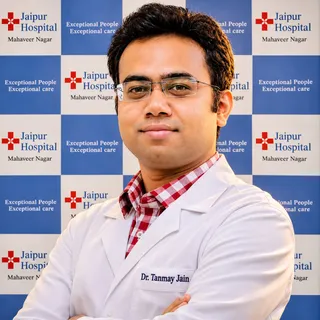
Your general & laparoscopic surgery doctors
Explore our general and laparoscopic surgery department in Jaipur: every treatment, the doctors and what to expect at your visit.


Frequently asked questions
Questions patients ask about paediatric surgery
Which problems are assessed under paediatric surgery?
In short
Paediatric surgery at Jaipur Hospital assesses congenital defects, developmental abnormalities, injuries and acquired diseases in children that cannot be managed by medication or non-invasive techniques. Common conditions include inguinal hernia, hydrocele, acute appendicitis, tongue-tie, pyloric stenosis, undescended testicles, intussusception and anorectal malformations. The surgical team evaluates each child to decide if an operation is needed.
In detail
Evidence shows that inguinal hernia is one of the most common surgical conditions in infants and children, and acute appendicitis is the most common surgical emergency in children. Intussusception is the most common cause of bowel obstruction in infants.
Tongue-tie release, pyloromyotomy for pyloric stenosis and orchiopexy for undescended testicles are standard procedures. The team also manages rare conditions such as Amyand's hernia, where the appendix lies inside a hernia sac. Each problem is assessed with history, examination and appropriate imaging to confirm the diagnosis before any operation is planned.
A common belief
Many parents think only major birth defects need a surgeon, but common problems like a groin swelling that comes and goes or repeated abdominal pain also need surgical assessment.
What actually happens
Delaying can lead to complications such as bowel obstruction or perforation.
Your next step at Jaipur Hospital
If your child has a swelling in the groin, persistent vomiting, abdominal pain that moves to the right lower side, feeding difficulty or any congenital anomaly noted at birth, bring them to the paediatric surgery OPD.
The surgeon will examine your child, order tests if needed and explain whether surgery is required. Most operations take 30 minutes to 2 hours under general anaesthesia given by an anaesthetist experienced with children. Hospital stay ranges from day care to two nights. Recovery to school is usually three to ten days.
How will the doctor decide which tests my child needs?
In short
The paediatric surgeon at Jaipur Hospital decides tests based on your child's symptoms, age and examination findings. Common tests include ultrasound for suspected hernia, intussusception or appendicitis, blood tests for infection markers and sometimes X-ray for abdominal distension or obstruction. The surgeon follows clinical prediction rules and guidelines to avoid unnecessary radiation while ensuring accurate diagnosis.
In detail
Evidence shows that emergency department point-of-care ultrasound has a positive likelihood ratio of 9.24 for acute appendicitis and can rule it in without CT or MRI. A negative ultrasound does not rule out appendicitis completely.
For intussusception, radiographic modality diagnoses 95 to 100 percent of cases in most regions. Inguinal hernia is usually diagnosed clinically; ultrasound helps if the swelling is not obvious. Blood tests such as white cell count and C-reactive protein support the diagnosis of appendicitis.
The surgeon selects tests that change management: if the diagnosis is already clear clinically, imaging may be skipped. If uncertain, targeted imaging confirms the plan. This approach reduces unnecessary tests and delays.
A common belief
Some parents expect a CT scan for every belly pain.
What actually happens
CT gives radiation. Ultrasound is often enough and safer for children. The surgeon orders only what will change the plan. That protects your child from extra tests.
Your next step at Jaipur Hospital
During the consultation, the surgeon will explain which tests are recommended and why. Most tests are done in-house at the 24-hour laboratory and radiology department. Ultrasound and blood results are usually available within a few hours.
If CT or MRI is needed, it will be arranged promptly. The surgeon will review results with you and finalise the treatment plan. No test is done without your understanding.
How soon should my child expect improvement after the chosen paediatric surgery treatment?
In short
After paediatric surgery at Jaipur Hospital, most children start feeling better within a few days. For day-care procedures like hernia or hydrocele repair, tongue-tie release, or laparoscopic appendicectomy, children often resume light activity in three to five days. Open appendicectomy or pyloromyotomy may need a slightly longer recovery, but most return to school within three to ten days.
In detail
The speed of improvement depends on the operation. Hernia repair is usually a day-care procedure with minimal pain managed by simple analgesics. Laparoscopic appendicectomy involves smaller cuts and faster return to normal diet. Tongue-tie release shows immediate feeding improvement in many babies.
Pyloromyotomy allows the baby to keep feeds down within twenty-four to forty-eight hours. Evidence indicates that children discharged the same day after hernia repair have uneventful recoveries. The surgical team gives specific guidance on wound care, bathing, and activity restrictions before discharge.
A common belief
Parents sometimes expect instant recovery or fear weeks of bed rest.
What actually happens
The reality is in between. Pain is usually mild and controlled with syrup. Children can move around the house the next day. Heavy play and sports wait for the surgeon's clearance at follow-up.
Your next step at Jaipur Hospital
Your child will be reviewed before discharge and given a follow-up appointment, usually within one to two weeks. Watch for fever, increasing pain, redness, or vomiting and contact the hospital if these occur. An attendant should stay with the child at home for the first few days.
How does the term 'paediatric surgery' relate to paediatric surgery?
In short
The terms 'paediatric surgery' and 'paediatric surgery' mean exactly the same specialty. 'Paediatric' is the American spelling and 'paediatric' is the British and Indian spelling. At Jaipur Hospital, the department is called Paediatric Surgery and treats children up to 12 years of age.
In detail
Both spellings refer to the surgical care of infants, children, and adolescents for conditions such as hernia, hydrocele, appendicitis, tongue-tie, pyloric stenosis, undescended testicles, and congenital anomalies. The training, qualifications, and scope of practice are identical regardless of spelling.
In India, medical colleges and hospitals use the 'paediatric' spelling. International journals and some private clinics may use 'paediatric'. When you search online, using either spelling will bring you to the same information about surgical conditions in children. The surgical team at Jaipur Hospital follows standard Indian and international guidelines for every procedure.
A common belief
People sometimes think they are two different specialties or that one is more advanced.
What actually happens
They are the same. In India, all medical degrees and hospital departments use paediatric. Do not be confused by the spelling.
Your next step at Jaipur Hospital
If you see either spelling on a website, prescription, or insurance form, it refers to the same specialty. Bring any referral or report to the OPD at Jaipur Hospital. The surgeon will evaluate your child and explain the treatment plan.
How can my child decide whether to seek advice about paediatric hernia and hydrocele surgery?
In short
A child cannot decide alone; parents or guardians decide when to seek advice for paediatric hernia and hydrocele surgery. At Jaipur Hospital, the surgeon examines the child and explains whether an operation is needed based on the findings.
In detail
An inguinal hernia appears as a swelling in the groin that may come and go. It does not close on its own and can trap bowel, which becomes an emergency.
A hydrocele is a fluid-filled sac around the testicle that often resolves by age one to two years. If the swelling persists beyond that age, is large, or causes discomfort, repair is considered.
The surgeon checks if the swelling reduces on lying down, if it is tense or tender, and whether the child has pain or vomiting. Ultrasound may be used to confirm the diagnosis.
Hernia repair is usually a day-care procedure closing the open passage in the groin. Hydrocele repair is similar. Both are done under general anaesthesia by an anaesthetist experienced with children.
A common belief
Some parents wait hoping it will disappear.
What actually happens
A hernia never closes on its own and can strangulate. A hydrocele usually resolves by age two; if it persists, surgery is simple and safe. Early review avoids an emergency.
Your next step at Jaipur Hospital
If you notice a groin swelling in your child, especially one that appears on crying or straining, bring the child to the OPD for evaluation. Do not wait for it to become painful or irreducible. The surgeon will advise on timing and technique. Most children go home the same day and return to school in 3 to 5 days.
What are the common diseases to approach a paediatric surgeon?
In short
Common conditions treated by the paediatric surgical team at Jaipur Hospital include inguinal hernia and hydrocele, acute appendicitis, intussusception, hypertrophic pyloric stenosis, undescended testicles, tongue-tie, hypospadias, anorectal malformations and cleft lip and palate. Surgery becomes necessary when these cannot be managed by medication or non-invasive techniques.
In detail
Inguinal hernia is one of the most common surgical conditions in infants and children; repair is often a day-care procedure. Acute appendicitis is the most common surgical emergency in children. Intussusception is the most common cause of bowel obstruction in infants.
Hypertrophic pyloric stenosis presents with projectile vomiting in young babies. Undescended testicles require orchiopexy, usually before one year of age. Tongue-tie release is a quick snip of the tight tissue under the tongue. Hypospadias repair is typically done between six and eighteen months.
Anorectal malformations may need staged corrective surgeries. Cleft lip is usually repaired within the first few months and palate within the first year. These conditions are congenital defects, developmental abnormalities or acquired diseases that need surgical correction.
A common belief
Parents sometimes wait hoping the child will outgrow a hernia or that tongue-tie will stretch.
What actually happens
Hernias can trap bowel and become emergencies. Tongue-tie can affect feeding and speech. Early surgical review prevents complications.
Your next step at Jaipur Hospital
If your child has any of these conditions, visit the paediatric surgery OPD at Jaipur Hospital. The surgeon will examine your child, order any needed tests, and explain the treatment plan.
Most procedures take 30 minutes to two hours, with hospital stay from day care to two nights. Recovery to school is usually three to ten days.
How will the surgeon decide whether an operation is necessary?
In short
The surgeon at Jaipur Hospital decides on surgery after a clinical examination, reviewing your child's symptoms, and using tests such as blood work, ultrasound or CT scan, done at an imaging centre outside the hospital, when needed. Surgery is recommended when the condition cannot be managed safely by medication or observation alone.
In detail
For appendicitis, the surgeon looks for migratory pain to the right lower quadrant, cough or hop pain, Rovsing's sign, and uses scoring systems like the Paediatric Appendicitis Score. A score of nine or higher has a positive likelihood ratio of 5.26.
Point-of-care ultrasound has a positive likelihood ratio of 9.24. For intussusception, imaging confirms the diagnosis in 95 to 100 percent of cases. For hernias, the surgeon checks if the lump is reducible and whether there are signs of incarceration.
In Amyand's hernia, where the appendix is inside the hernia sac, preoperative diagnosis is uncommon and often mistaken for a strangulated hernia; CT or ultrasound may detect the appendix. For pyloric stenosis, ultrasound shows a thickened pylorus.
The surgeon also considers whether non-operative treatment is appropriate, such as antibiotics for uncomplicated appendicitis without appendicolith, but explains that failure rates are higher with appendicolith and recurrence occurs in about 20 percent.
- The surgeon also considers whether non-operative treatment is appropriate, such as antibiotics for uncomplicated appendicitis without appendicolith, but explains that failure rates are higher with appendicolith and recurrence occurs in about 20 percent.
A common belief
A scan alone does not decide.
What actually happens
Some children with appendicitis have a negative ultrasound but still need surgery based on clinical signs. Conversely, not every hernia needs immediate repair. The surgeon weighs the risks of waiting against the benefits of operating.
Your next step at Jaipur Hospital
Bring your child for a consultation at Jaipur Hospital. The surgeon will take a detailed history, examine your child, order the necessary investigations, and discuss whether an operation is needed, what it involves, and the expected recovery. Most children go home within two nights and return to school in three to ten days.
Which symptoms should prompt my child to see a specialist?
In short
Symptoms that should prompt a visit to a paediatric surgeon at Jaipur Hospital include a visible or palpable swelling in the groin or scrotum that may appear when the child cries or strains, persistent vomiting especially if bile-stained, abdominal pain that starts around the navel and moves to the right lower side, difficulty feeding or poor weight gain in a baby, a tongue that appears tethered or heart-shaped at the tip, and an undescended testicle not felt in the scrotum by six months of age.
In detail
Evidence indicates that inguinal hernia presents as a groin or inguinoscrotal swelling. Acute appendicitis commonly shows migratory pain to the right lower quadrant, nausea, vomiting and tenderness there.
Intussusception typically occurs between four and ten months with intermittent severe crying, drawing up of legs, vomiting and sometimes red currant jelly stool. Pyloric stenosis presents with projectile non-bilious vomiting in a baby around three to six weeks.
Tongue-tie may cause breastfeeding difficulty, poor latch or speech issues later. An undescended testicle is usually identified on routine checks. These symptoms warrant surgical evaluation to confirm the diagnosis and plan treatment.
A common belief
Parents often wait hoping a swelling will disappear or vomiting will settle.
What actually happens
A hernia can trap bowel, appendicitis can burst and intussusception can cut off blood supply. These become emergencies quickly. Early review prevents that.
Your next step at Jaipur Hospital
If you notice any of these symptoms, book an appointment at the paediatric surgery OPD. The surgeon will take a detailed history, examine your child and may order an ultrasound or blood tests. Most consultations last 20 to 30 minutes.
If surgery is needed, the team will explain the procedure, anaesthesia, expected hospital stay of day care to two nights and recovery of three to ten days before returning to school. Early assessment helps avoid complications.
How will the results change my child's care plan?
In short
Test results at Jaipur Hospital directly shape the care plan. A positive ultrasound for appendicitis or intussusception leads to urgent surgery. A normal appendix on imaging with persistent symptoms may still need diagnostic laparoscopy. Negative tests with resolving symptoms allow observation. Blood markers guide antibiotic use and timing of operation. The surgeon integrates results with clinical findings to decide between emergency surgery, planned surgery or continued monitoring.
In detail
Evidence shows that point-of-care ultrasound can rule in appendicitis without CT, moving the child straight to operation. For intussusception, imaging confirms the diagnosis and may guide non-operative reduction if appropriate, though surgery prevalence varies by region.
In Amyand's hernia, CT or ultrasound showing appendix in the hernia sac changes the operation from simple hernia repair to include appendectomy if the appendix is inflamed.
Histopathology after surgery confirms the diagnosis; studies show some children operated for recurrent pain have normal appendix on microscopy. The surgeon uses results to avoid unnecessary operations and to act fast when needed. Each result is discussed with you before the next step.
A common belief
Families sometimes think a normal scan means nothing is wrong.
What actually happens
Early appendicitis or intermittent intussusception can be missed. The surgeon combines the scan with your child's story and examination. That is why clinical review after tests is essential.
Your next step at Jaipur Hospital
After tests, the surgeon will meet you to explain the findings and the revised plan. If surgery is needed, you will get details on the procedure, anaesthesia, hospital stay of day care to two nights and recovery of three to ten days.
If observation is chosen, a follow-up date is set. All results are available in the in-house laboratory and radiology system. The team coordinates with the anaesthetist and ward staff for smooth admission if required.
What should my child do if symptoms persist or worsen after paediatric surgery?
In short
If your child develops fever, increasing pain, redness or swelling at the wound, persistent vomiting, or cannot pass urine after paediatric surgery at Jaipur Hospital, contact the hospital immediately or visit the 24-hour emergency department. These signs may indicate infection, bleeding, or another complication that needs prompt assessment.
In detail
After discharge, the surgical team provides a written list of warning signs. For hernia repair, watch for a new swelling or severe groin pain. After appendicectomy, worsening abdominal pain or fever could suggest an abscess. Following pyloromyotomy, continued vomiting may need review.
Tongue-tie release rarely causes bleeding, but any active bleeding should be pressed gently and the hospital informed. The 24-hour emergency department has an anaesthetist and surgical cover at all times. Do not give any new medicine without asking the surgeon first.
A common belief
Some families wait to see if it settles.
What actually happens
In children, infections can spread fast. A small wound infection can become an abscess. Vomiting after pyloromyotomy might mean the muscle needs more time or a review. It is safer to call early than to wait.
Your next step at Jaipur Hospital
Keep the discharge summary and follow-up appointment card handy. If you are unsure whether a symptom is serious, call the hospital numbers and ask to speak with the surgical team. An attendant should stay with the child for the first week.
FAQ library
Questions and answers about paediatric surgery
When you contact us
Get a clear plan for your child
Contact Jaipur Hospital for a surgeon consultation, in-house tests, a plain-word explanation of options, a cost estimate and help with cashless schemes.
- A consultation with a general and laparoscopic surgeon in the OPD
- Your scans and reports reviewed, with tests done in-house if you need them (laboratory, X-ray and imaging)
- Your options explained in plain words, including whether you need surgery at all
- A cost estimate before you decide
- Help with cashless treatment under MAA Yojana and empanelled insurers and TPAs
- Follow-up visits after your treatment
Overview
Paediatric Surgery: what to know
What paediatric surgery is and how the conditions happen
Paediatric surgery treats conditions in babies and children that need an operation, such as inguinal hernia, appendicitis, tongue-tie and pyloric stenosis. A hernia happens when a groin passage stays open after birth, letting intestine push through. Appendicitis starts when the appendix gets blocked, swells and can burst if not treated.
- Inguinal hernia
- Open groin passage lets intestine push through
- Appendicitis
- Blocked appendix swells and may burst
- Intussusception
- Bowel slides into itself like a telescope
- Tongue-tie
- Tight tissue under tongue restricts movement
- Pyloric stenosis
- Narrowed stomach outlet blocks milk
Paediatric surgery covers operations for babies and children when a problem cannot be managed with medicine or non-invasive techniques alone.
At Jaipur Hospital our surgical team treats common conditions such as:
- Inguinal hernia
- Appendicitis
- Tongue-tie
- Pyloric stenosis
Inguinal hernia is one of the most common surgical conditions in infants and children. It happens when a passage in the groin stays open after birth, allowing a loop of intestine or fluid to push through and form a swelling. Appendicitis is the most common surgical emergency in children.
It starts when the inside of the appendix becomes blocked, usually by swollen lymphoid tissue in younger children or by a hard piece of stool called a faecolith in older children. The blockage causes pressure to build up, the appendix swells and bacteria such as Escherichia coli and Klebsiella pneumoniae multiply inside.
If the appendix bursts, infection can spread through the abdomen (peritonitis) or collect as an abscess. Intussusception is the most common cause of bowel obstruction in infants. It happens when one part of the intestine slides inside the next part, like a telescope closing. The cause in most infants is not known.
Tongue-tie is a tight band of tissue under the tongue that restricts movement. Pyloric stenosis is a narrowing of the stomach outlet that stops milk from passing into the intestine. Both are present from birth and are corrected with a short operation.
Symptoms and warning signs that need urgent care the same day
A hernia shows as a soft groin swelling that appears when the baby cries; if it becomes hard, red or painful, it is an emergency. Appendicitis pain often starts near the navel and moves to the lower right side with fever and vomiting. Intussusception causes sudden severe crying, leg drawing and sometimes red-currant-jelly stools.
- Hernia Hard, painful, red swelling that does not reduce
- Appendicitis Pain moves to lower right abdomen with fever and vomiting
- Intussusception Sudden severe crying, leg drawing, vomiting, red-currant-jelly stools
- Pyloric stenosis Forceful projectile vomiting after feeds, baby stays hungry
A hernia shows as a soft swelling in the groin or scrotum that may appear when the baby cries or strains and disappear when relaxed. If the swelling becomes hard, painful, red or does not go back in, the blood supply to the trapped intestine may be cut off. This is an emergency.
Appendicitis usually begins with pain around the navel that moves to the lower right side of the abdomen. The child may have nausea, vomiting, fever and pain when coughing or hopping. Pressing on the left side may cause pain on the right (Rovsing's sign).
In neonates the signs are different:
- Abdominal distension in 60 to 90 percent
- Vomiting in about 59 percent
- A palpable mass in 20 to 40 percent
- Irritability or lethargy in 22 percent
- Sometimes redness of the abdominal wall
Intussusception typically appears between 4 and 10 months of age. The baby has sudden episodes of severe crying and drawing up the legs, with vomiting and sometimes red-currant-jelly stools. If the intussusception is not relieved the bowel can lose its blood supply and perforate. Tongue-tie may cause difficulty latching during breastfeeding, poor weight gain or speech problems later.
Pyloric stenosis shows as forceful projectile vomiting after feeds, usually starting at 2 to 6 weeks of age, with the baby staying hungry and losing weight. Any of these warning signs need assessment in the emergency department the same day.
Causes and who is at higher risk
A hernia develops because the natural groin opening does not close before birth and is more common in boys and premature babies. Appendicitis in young children is often due to swollen lymphoid tissue after infections; in older children a hard stool stone is more common. Pyloric stenosis is more common in first-born boys.
- 1 to 2 cases per 100,000 vaccinated infants Rotavirus vaccine intussusception risk
- Less than 1 percent of hernias Amyand's hernia frequency
A hernia develops because the natural opening in the groin does not close before birth. It is more common in boys and in premature babies.
Appendicitis in preschool children is usually due to lymphoid hyperplasia, which can follow:
- Gastroenteritis
- Respiratory infection
- Measles
- Infectious mononucleosis
In older children a faecolith is more often the cause. Having an appendicolith (a stone in the appendix) makes antibiotic treatment more likely to fail. Intussusception risk may be influenced by infant diet, breastfeeding, maternal antibodies and the prevalence of gut infections.
A small increased risk of intussusception (about 1 to 2 cases per 100,000 vaccinated infants) has been seen after the first dose of rotavirus vaccine in some countries. Amyand's hernia, where the appendix sits inside a hernia sac, is rare (less than 1 percent of hernias). It is more common in boys and has a peak in infancy.
Pyloric stenosis is more common in first-born boys. Tongue-tie can run in families. Knowing these factors helps the surgeon plan the right timing and approach for each child.
How paediatric surgical conditions are diagnosed: examination and tests
The surgeon uses history and examination first; for appendicitis a Paediatric Appendicitis Score of 9 or more makes it much more likely. Point-of-care ultrasound can confirm appendicitis without a CT or MRI, though a negative scan does not rule it out. Intussusception is diagnosed by ultrasound in 95 to 100 percent of cases.
- 95 to 100 percent of cases Intussusception ultrasound diagnosis
- 9 or more Paediatric Appendicitis Score threshold
The surgeon starts with a careful history and examination. For appendicitis, pain that has moved to the right lower quadrant, pain on coughing or hopping and Rovsing's sign are strong pointers. A Paediatric Appendicitis Score of 9 or more makes appendicitis much more likely.
Emergency department point-of-care ultrasound is very useful: a positive scan can confirm appendicitis without needing a CT or MRI, but a negative scan does not rule it out completely. For hernia, the swelling is usually obvious on examination. If the diagnosis is unclear, ultrasound can show the hernia contents.
Amyand's hernia is often mistaken for a stuck or strangulated hernia; ultrasound or CT may show the appendix inside the sac before surgery. Intussusception is diagnosed by ultrasound in 95 to 100 percent of cases in most regions. In some settings clinical examination or surgery is used when imaging is not available.
Tongue-tie is diagnosed by looking at the tongue movement and the tight band. Pyloric stenosis is confirmed by ultrasound showing a thickened stomach muscle. Blood tests may show infection markers. The surgeon chooses the tests needed for your child.
Treatment options without surgery and when surgery is advised
Many children with simple appendicitis improve with antibiotics first, though some need surgery later. An enema can fix intussusception without surgery in many cases. Hernia, tongue-tie and pyloric stenosis need an operation.
- About 90 percent of children aged 5 to 15 years Antibiotics initial improvement for appendicitis
- About 8 percent Appendectomy needed during first admission
- Another 20 percent Second admission for recurrence
Some conditions can be watched or treated without an operation at first. For uncomplicated appendicitis without an appendicolith, antibiotics alone can settle the infection in many children. In studies, about 90 percent of children aged 5 to 15 years improved with antibiotics initially.
However, about 8 percent need an appendectomy during the first admission and another 20 percent may need a second admission for recurrence. The risk of failure is much higher if an appendicolith is present. For intussusception, an air or contrast enema under imaging guidance can push the bowel back into place without surgery in many cases.
If the enema fails or the bowel looks damaged, surgery is needed. Hernia in infants and children does not close on its own and carries a risk of trapping the bowel, so surgical repair is advised. Tongue-tie that affects feeding or speech is released with a quick snip.
Pyloric stenosis always needs surgery (pyloromyotomy) to open the narrowed outlet so the baby can eat and grow. Your surgeon will explain the options for your child and recommend surgery when the benefits outweigh the risks.
Preparing for paediatric surgery at Jaipur Hospital
The surgeon and anaesthetist will meet you before surgery to explain the plan. Your child must fast, usually no solid food for six hours and clear fluids up to two hours before. Pack comfortable clothes, a favourite toy, nappies and any regular medicines.
Your surgeon will explain the operation and answer your questions before the day of surgery. The anaesthetist will meet you and your child to check their health and plan the anaesthetic. General anaesthesia is given by an anaesthetist experienced with children.
You may be asked to bring any recent blood reports, X-rays or ultrasound images. If your child takes regular medicines, tell the surgical team so they can advise which ones to continue or pause on the day of surgery. Do not stop any medicine unless your doctor tells you to.
Fasting instructions will be given by the anaesthesia team. Usually, no solid food or milk for six hours before the operation, and clear fluids such as water may be allowed up to two hours before. Follow the exact times given to you.
Pack a small bag with:
- Comfortable clothes for your child
- A favourite toy or blanket
- Nappies or spare underwear
- Any regular medicines
One attendant can stay with your child in the ward. The hospital has a canteen with dietary meals and an in-house pharmacy if you need anything on the day.
How paediatric surgery is done at Jaipur Hospital
The operation depends on the condition; hernia and appendix surgery may be keyhole or open. Tongue-tie release takes a few minutes. Surgery lasts 30 minutes to two hours and most children stay from day care up to two nights.
- Hernia and hydrocele repair Close open groin passage, usually day-care
- Appendicectomy Remove appendix by keyhole or open surgery
- Tongue-tie release Quick snip of tight tissue under tongue
- Pyloromyotomy Cut thickened stomach muscle so baby can feed
The operation your child needs depends on the condition. Your surgeon will advise which technique suits your child.
- Hernia and hydrocele repair: The surgeon closes the open passage in the groin. This is usually done as a day-care procedure.
- Appendicectomy: The appendix is removed, either by keyhole (laparoscopic) surgery or by an open cut. Keyhole surgery uses small cuts and a camera. Open surgery uses a slightly larger cut. Both are accepted methods.
- Tongue-tie release: A quick snip of the tight tissue under the tongue. This takes only a few minutes.
- Pyloromyotomy: The surgeon cuts the thickened muscle at the stomach outlet so the baby can feed normally.
On the day of surgery, your child is taken to the modular operation theatre. The anaesthetist gives the anaesthetic and monitors your child throughout. The operation time ranges from 30 minutes to 2 hours, depending on the operation. After surgery, your child goes to the recovery area and then to the ward. Most children stay in hospital from day care up to 2 nights.
Risks and possible complications of paediatric surgery
All surgery carries some risk such as wound infection or, for a burst appendix, spread of infection inside the tummy. Antibiotics for appendicitis fail in about 8 in 100 children during the first stay. Untreated intussusception can be fatal.
- About 8 in 100 cases Antibiotic treatment failure during first stay
- About 20 in 100 children Second hospital stay for recurrent appendicitis
All operations carry some risk. The surgical team takes steps to keep risks low.
For hernia repair, wound infection is a known complication. Studies show the rate of wound infections is higher after open hernia repair compared with laparoscopic hernia repair, especially in infants. Other complications were also significantly higher for open hernia repair compared with laparoscopic repair.
For appendicectomy, if the appendix has burst (perforated), infection can spread inside the tummy. This is called peritonitis. Diffuse peritonitis is more common in younger children because the protective fatty layer (omentum) is not fully developed. A burst appendix can also form a localised abscess.
If your child is being treated with antibiotics for uncomplicated appendicitis instead of surgery, studies show that non-operative management does not statistically increase the perforation rate. However, antibiotic treatment may fail during the first hospital stay in about 8 in 100 cases. About 20 in 100 children might need a second hospital stay for recurrent appendicitis later. The risk of failure is higher if a hard stone (appendicolith) is present in the appendix.
For intussusception (when one part of the bowel slides into another), if it is not relieved the blood supply to the bowel can be cut off, leading to damage or a hole in the bowel. Untreated intussusception may be fatal.
Your surgeon will discuss the specific risks for your child's operation before you sign the consent form.
Recovery and aftercare after paediatric surgery
Your child is watched in recovery until fully awake and given regular pain relief. Most children drink fluids within hours and eat light meals the same or next day. Hernia repair often goes home the same day; appendicectomy usually stays one to two nights.
After the operation, your child is watched in the recovery area until they are fully awake. Pain relief is given regularly. Most children can drink fluids within a few hours and eat light meals the same day or the next day.
For hernia repair, many children go home the same day. For appendicectomy or other operations, the stay is usually 1 to 2 nights. The surgical team will check the wound and your child's comfort before discharge.
At home, keep the wound clean and dry. You will be told when your child can have a bath. Give pain medicine as advised by the doctor. Your child can move around the house as they feel able. Avoid rough play, cycling or contact sports for about two weeks, or as your surgeon advises.
Most children are back to school in 3 to 10 days. The exact time depends on the operation and how your child feels.
Call the hospital or visit the 24×7 emergency department if your child has a high fever, increasing pain that medicine does not help, redness or swelling around the wound that spreads, vomiting that does not stop, or if they are not passing urine or stool as usual.
Results of paediatric surgery: how well it works
Surgery treats the condition effectively for most children. Hernia repair shows no significant difference in recurrence between laparoscopic and open methods. Appendicectomy resolves infection; antibiotic treatment avoids surgery in about 62 of 100 children but has a higher failure rate.
| Condition | Key result | Notes |
|---|---|---|
| Hernia repair | No significant recurrence difference between laparoscopic and open | No recurrence detected in 9-month follow-up in one series |
| Appendicectomy | Removes inflamed appendix and resolves infection | All surgery cases had confirmed appendicitis on lab examination |
| Intussusception | Case-fatality in Asia less than 1 in 100 when treated in hospital | Substantially higher in Africa at 9.4 percent |
Surgery treats the condition effectively for the great majority of children.
For hernia repair, studies show no significant difference in recurrence rates between laparoscopic and open repair. In one series, no recurrence was detected during a follow-up period of 9 months.
For appendicectomy, the operation removes the inflamed appendix and resolves the infection. In a pilot trial comparing surgery with antibiotics for uncomplicated appendicitis in children, all children in the surgery group had confirmed appendicitis on laboratory examination of the removed appendix. The postoperative course was uneventful in all cases in another study.
For children treated with antibiotics instead of surgery for uncomplicated appendicitis, about 9 in 10 had initial resolution of symptoms. Of those, about 5 in 100 had a recurrence during follow-up. Overall, about 62 in 100 children avoided an appendectomy during the follow-up period. However, the failure rate of antibiotic treatment is higher than for appendectomy, mainly when an appendicolith is present.
For intussusception, case-fatality in Asia is less than 1 in 100 when treated in hospital. The proportion of children who died after presenting to hospital was substantially higher in Africa (9.4%) compared to Asia (0.2%).
Your surgeon will explain what result to expect for your child's specific condition.
Cost and insurance for paediatric surgery in Jaipur
Typical price range for paediatric surgery in India is ₹30,000 to ₹1,50,000 depending on the operation and stay. Jaipur Hospital is NABH-accredited and in service since 1991. It accepts MAA Yojana and a panel of private insurers and TPAs.
The typical price range for paediatric surgery in India is ₹30,000 to ₹1,50,000. The final cost depends on the type of operation, whether it is done as day care or needs an overnight stay, the kind of anaesthesia, any implants or mesh used, and how many nights your child stays in hospital.
Jaipur Hospital is a NABH-accredited multispeciality hospital established in February 1991. It is located at S16A-17, Mahaveer Nagar, Near Gopalpura Flyover, Main Tonk Road, Jaipur, Rajasthan 302018. The hospital has modular operation theatres, a 24×7 emergency department, intensive care unit, in-house diagnostic laboratory and imaging, and an in-house pharmacy.
The hospital accepts:
- MAA Yojana
- A panel of private insurers and TPAs
If you are covered under one of these schemes, bring your card and any pre-authorisation letters. The billing team can help you understand what is covered and what you may need to pay. Ask the hospital for an estimate before admission.
