

General & Laparoscopic Surgery · Jaipur Hospital
Wound Stitching and Dressing in Jaipur
Deep cuts need proper closure. We assess, explain options, and stitch with care.
- Serving Jaipur since 1991 (35 years)
- NABH accredited
- 24×7 emergency & ICU
- Cashless: MAA Yojana + 32 insurers
- Procedure time
- 20 to 45 minutes
- Anaesthesia
- Local anaesthesia (infiltration or nerve block)
- Recovery
- Suture removal in 7 to 14 daysscar maturation in months
- Price
- ₹2,000 to ₹8,000typical range in India; ask us for an estimate
Open wounds need safe closure
A cut that will not stop bleeding or gapes open worries you
You need the wound cleaned, closed properly, and dressed so it heals without infection or a wide scar.
-
Bleeding that will not stop
Pressure and a clean cloth do not control the bleeding after several minutes.
-
Deep or gaping wound edges
The cut goes through the skin into fat or muscle and the edges stay apart.
-
Dirt or debris inside the cut
You cannot clean the wound fully at home and worry about infection.
-
Face, hand or joint area
Cosmetic result and movement matter; you want a technique that minimises scar tension.
-
Tetanus or health concerns
You are not sure of your tetanus status or have diabetes that slows healing.
Surgical site infection occurs in about 1.9 percent of cases overall.
Why Jaipur Hospital
You worry the cut will leave a bad scar, get infected, or keep you off work longer than necessary.
Your care plan
Your first steps with us
- 1 Call or visit emergency for immediate assessment
- 2 Receive local anaesthesia and layered closure
- 3 Get sterile dressing and written home-care plan
- 4 Return for suture removal in one to two weeks
Insurance and schemes
How cashless works
Cashless treatment under MAA Yojana and with 32 insurers.
-
Tell us when you book
Say you are insured or have a scheme card, and send a photo of the card on WhatsApp so our insurance desk can check it in advance.
-
We get the approval
Once your doctor advises admission, the insurance desk sends the pre-authorisation request to your insurer or TPA; for planned surgery, approval can come before you are admitted.
-
Settled at discharge
The approved amount is settled between the insurer and the hospital; you pay only what the policy does not cover.
How the operation is done
Under local anaesthesia, the wound is cleaned, explored, and closed in layers with absorbable deep sutures and a cosmetic surface technique, then covered with a sterile dressing.
-
Simple Interrupted Sutures
Standard closure for most linear lacerations; each stitch is tied separately for easy removal.
-
Layered Closure (Deep + Superficial)
Absorbable deep sutures reduce tension on the skin edges for a better cosmetic outcome.
-
Subcuticular (Intradermal) Sutures
No external suture marks; ideal for cosmetic areas such as the face.
-
Tissue Adhesive (Dermabond) or Steri-Strips
For small, low-tension wounds; no suture removal needed and adhesive sloughs off in days.
Why patients trust us
- 1991 Serving Jaipur for 35 years
- NABH Accredited hospital
- 3 General & Laparoscopic Surgery consultants
- 24×7 Emergency, ICU and ambulance
- 32 Cashless insurers, plus MAA Yojana
What research shows about this treatment
-
5 to 10 days
Tissue adhesive generally sloughs off as the wound re-epithelialises within this period.
-
3 to 14 days
Sutures or staples are typically removed depending on wound size, depth and location.
-
1 to 2 months
Absorbable sutures may take up to this long to dissolve completely in the body.
If it is left untreated
Untreated deep cuts can develop infection, wound dehiscence, or evisceration in abdominal wounds, which carries a mortality rate up to 45 percent.
Life after treatment
Most people heal well, return to daily activities, and see the scar fade over months with simple care.
-
Wound closed and protected
Sterile dressing stays in place; you receive clear shower and activity guidance.
-
Suture removal on schedule
Non-dissolvable stitches come out in 7 to 14 days; absorbable ones dissolve on their own.
-
Scar matures over months
Redness and firmness improve gradually; sunscreen helps after full healing.
-
Back to normal routine
Most people resume light work in days; strenuous effort waits until the surgeon clears you.
Meet the team
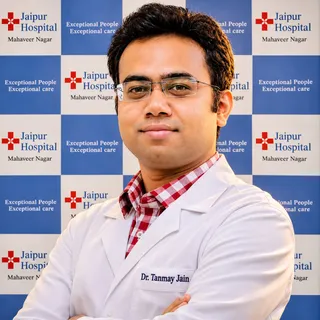
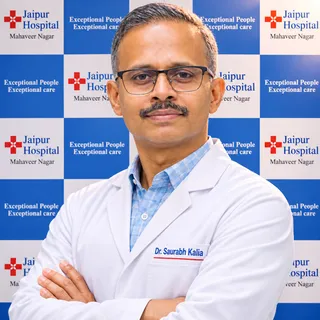
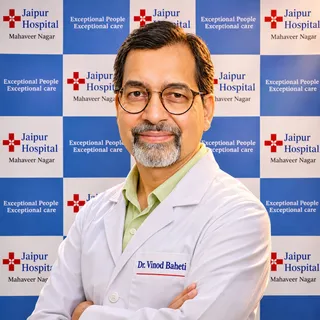
Your general & laparoscopic surgery doctors
Explore our general and laparoscopic surgery department in Jaipur: every treatment, the doctors and what to expect at your visit.
Frequently asked questions
Questions patients ask about wound stitching and dressing
What is wound suturing and dressing?
In short
Wound suturing and dressing is the primary closure of an acute cut using layered stitches and a sterile cover. At Jaipur Hospital, the procedure takes 20 to 45 minutes under local anaesthesia and is done as day care. The surgeon cleans the wound, closes deep and superficial layers with absorbable or non-absorbable sutures, and applies a sterile dressing. You go home the same day.
In detail
The aim is to bring wound edges together so healing occurs by primary intention. Layered closure with deep absorbable sutures reduces tension on the skin, which improves the cosmetic result.
For low-tension cuts, tissue adhesive or Steri-Strips may be used instead of external stitches, avoiding suture marks and removal. Evidence shows tissue adhesives give comparable infection and dehiscence rates to sutures, with good cosmetic outcomes, and are easier for children. The technique chosen depends on wound location, tension, contamination and your health factors such as diabetes or steroid use.
A common belief
People often think all cuts need visible stitches.
What actually happens
For small, low-tension wounds, tissue adhesive or Steri-Strips can close the skin without external sutures, giving a similar cosmetic result with no suture marks or removal.
Your next step at Jaipur Hospital
Sutures are usually removed in 7 to 14 days; absorbable deep stitches dissolve over weeks.
Keep the dressing dry and clean, change it as advised, and watch for increasing redness, swelling, pain, warmth, yellow or green discharge, bleeding that does not stop with pressure, bad odour, or the wound opening. Scar maturation takes months. The typical cost range in India is ₹2,000 to ₹8,000; ask us for an estimate.
Which specialist should I see for wound suturing and dressing?
In short
For wound suturing and dressing, see a general surgeon or a plastic surgeon. At Jaipur Hospital, the General and Laparoscopic Surgery department and the Plastic Surgery department both manage acute lacerations and surgical wound closure. The choice depends on wound location, complexity and cosmetic concern. The emergency department provides initial assessment and referral 24×7.
In detail
General surgeons handle most traumatic cuts, surgical incisions and wound complications such as infection or dehiscence. Plastic surgeons are involved for wounds on the face, hands, or other cosmetically sensitive areas, or when complex layered closure, tissue rearrangement or scar revision is needed.
Both specialists use layered closure with deep absorbable sutures to reduce tension, and may choose simple interrupted, subcuticular, tissue adhesive or Steri-Strips based on wound tension and location.
Evidence shows tissue adhesives give comparable infection and cosmetic outcomes to sutures for low-tension wounds, and are easier for children. The surgeon also considers your risk factors such as diabetes, steroid use, obesity or malnutrition, which affect healing.
A common belief
People often go to a general practitioner for stitches, but layered closure and proper tension management need surgical training.
What actually happens
Plastic surgery input improves cosmetic results on the face and hands. The emergency team at Jaipur Hospital triages and calls the right specialist 24×7.
Your next step at Jaipur Hospital
Visit the 24×7 emergency department at Jaipur Hospital for immediate assessment. The on-call surgeon will evaluate the wound, decide on the closure method, and arrange follow-up for suture removal in 7 to 14 days.
If the wound is on the face, hand, or a joint, or if you have healing risk factors, a plastic surgery opinion may be sought. The typical cost range in India is ₹2,000 to ₹8,000; ask for an estimate.
What treatment options are available for my situation?
In short
Treatment options for acute laceration closure include simple interrupted sutures, layered closure with deep absorbable and superficial stitches, subcuticular intradermal sutures, tissue adhesive such as Dermabond, or Steri-Strips. At Jaipur Hospital the surgeon selects the method based on wound location, depth, tension and cosmetic requirements.
In detail
Simple interrupted sutures are standard for most linear cuts and are easy to remove. Layered closure reduces tension on the skin edges and improves cosmetic outcome. Subcuticular sutures leave no external suture marks and are ideal for the face or other visible areas.
Tissue adhesive and Steri-Strips suit small, low-tension wounds and avoid suture removal. Evidence shows tissue adhesives give comparable cosmetic results to sutures and may reduce infection rates in some settings, while adhesive tape is the fastest and most cost-effective for suitable wounds. The surgeon does not use platelet injections, lasers, or robotic devices for wound closure.
A common belief
Patients often think all cuts get the same stitches.
What actually happens
In fact each technique has specific indications: layered closure for deep wounds, subcuticular for cosmetic areas, adhesive or tapes for small low-tension cuts. The wrong choice can lead to dehiscence or a wider scar.
Your next step at Jaipur Hospital
The procedure takes 20 to 45 minutes under local anaesthesia as day care. Aftercare includes keeping the dressing dry for 24 to 48 hours, gentle showering, and avoiding soaking or strenuous activity until healed.
Non-dissolvable stitches are removed in 7 to 14 days; absorbable stitches dissolve over one to two months. The typical cost range in India is ₹2,000 to ₹8,000.
What can I safely do at home to manage symptoms after wound stitching and dressing?
In short
Keep the dressing clean and dry for the first 24 to 48 hours. Take paracetamol for pain if needed. Apply an ice pack wrapped in cloth for 15 to 20 minutes every few hours to reduce swelling. Avoid soaking the wound in water. Jaipur Hospital gives written home-care instructions after the procedure.
In detail
After local anaesthesia wears off, mild pain, swelling, and bruising are normal. Paracetamol is usually enough; avoid aspirin or ibuprofen unless the surgeon says otherwise, as they can increase bleeding. Leave the original dressing in place unless it becomes soaked or loose.
If Steri-Strips are used, do not pull them off; they fall off on their own in about a week. Trim curled edges with scissors. Clean around the wound with saline or mild soap and water once the doctor allows, then pat dry.
Do not apply ointment over tissue adhesive. Watch for increasing redness, warmth, pus, worsening pain, or fever above 38°C. Raise the injured limb on a pillow when resting to lessen swelling. Avoid stretching or straining the area until sutures are removed.
A common belief
A common mistake is putting ointment on glue or pulling off Steri-Strips early.
What actually happens
Both can weaken the closure. Another mistake is soaking the wound in a bath or pool, which raises infection risk. Gentle cleaning with saline or mild soap is allowed once the doctor says so. Raising the limb on a pillow helps reduce swelling.
Your next step at Jaipur Hospital
Change the dressing as instructed, usually daily or every two days. Keep the wound covered and dry. Return for suture removal in seven to fourteen days, or as the surgeon advises. If you notice any signs of infection or the wound opens, come to the emergency department immediately.
Why is the wound not healing after stitching and dressing?
In short
A wound may heal slowly because of infection, poor blood supply, diabetes, smoking, or tension on the stitches. At Jaipur Hospital the surgeon checks for these factors at every follow-up. The team looks for redness, swelling, discharge, or wound edges that have pulled apart.
In detail
Evidence lists several reasons a closed wound can fail to heal. Technical issues include sutures cutting through tissue or knots slipping. Patient factors such as uncontrolled diabetes, malnutrition, obesity, or compromised immunity make healing harder.
Infection is a common cause: it increases inflammation, breaks down new tissue, and can lead to dehiscence or evisceration. Poor perfusion from vascular disease or pressure on the wound also slows the process. The surgeon examines the wound, may order blood tests or a swab, and adjusts the dressing or antibiotics accordingly.
A common belief
Many people think a wound just needs time.
What actually happens
But if the edges are red, hot, smelly, or opening up, waiting lets infection spread. Early review lets the team change dressings, add antibiotics, or ease tension before the problem gets worse.
Your next step at Jaipur Hospital
If your wound shows increasing pain, redness, warmth, yellow-green discharge, a bad smell, or the edges gaping open, contact the hospital the same day. The surgeon may change the dressing type, start antibiotics, or remove a few sutures to relieve tension. Do not wait for the next scheduled visit.
How will the surgeon decide whether an operation is necessary for my wound?
In short
The surgeon at Jaipur Hospital decides on operation based on wound depth, contamination, tissue loss, and stability of vital structures. A clean, straight laceration with good edges usually needs only primary closure under local anaesthesia. Deep cuts involving tendon, nerve, vessel, or joint, or wounds with crush injury or foreign material, may need exploration in the operation theatre.
In detail
Primary closure is the standard for acute lacerations that can be approximated without tension. The surgeon assesses: can the edges be brought together easily? Is there damage to deeper structures? Is the wound heavily contaminated or devitalised?
Evidence shows that technical factors like sutures cutting through tissue or inadequate splinting lead to dehiscence. If the wound is too tense for safe closure, or if dead tissue must be excised, a formal debridement and layered repair in the theatre is planned.
The hospital's modular operation theatres are available for such cases. The decision is made at the first examination, often in the emergency department.
A common belief
Patients often assume every deep cut needs major surgery.
What actually happens
But many lacerations are safely closed under local anaesthesia in the emergency department. Only when structures are damaged or the wound cannot be closed cleanly does the surgeon book the theatre.
Your next step at Jaipur Hospital
If the emergency doctor suspects deeper injury, you will be referred to the surgical team immediately. The surgeon explains the findings, the proposed procedure, and the expected recovery. Most simple closures are done as day care in 20 to 45 minutes. Complex repairs may need a short stay.
Which symptoms or changes should prompt me to seek medical advice?
In short
You should seek medical advice if you notice increasing redness or swelling around the wound, worsening pain, skin that feels hot or hard, bright yellow or green drainage, a bad smell, bleeding that does not stop after 30 minutes of firm pressure, the wound edges opening, a fever of 38 °C or higher, or a new rash or blisters. At Jaipur Hospital the emergency department is open 24 hours for such concerns.
In detail
These signs suggest a surgical site infection or wound dehiscence. Evidence shows infections increase hospital stay and treatment cost, and dehiscence can lead to evisceration in deep wounds.
Premature sloughing of tissue adhesive may occur if ointments are applied or the wound is cleaned too often. Patients with diabetes, obesity, compromised immunity or on blood thinners are at higher risk for delayed healing and infection.
Early review allows the doctor to clean the wound, adjust dressings, start antibiotics if needed, or re-suture before the problem worsens.
A common belief
Many people think a little redness is normal and wait.
What actually happens
But evidence shows early signs of infection or dehiscence can progress quickly, especially in patients with diabetes or on blood thinners. Prompt review prevents deeper complications and longer hospital stays.
Your next step at Jaipur Hospital
If any of these symptoms appear, do not wait for your scheduled follow-up. Come to the emergency department or call the hospital for an urgent review. Bring a list of any medicines you take, especially blood thinners.
The doctor will examine the wound, may take a swab for culture, and will advise on dressing changes or further treatment.
What will the doctor ask and check at the first visit for wound suturing?
In short
The doctor will ask how and when the injury happened, whether there was glass, dirt or a bite involved, your tetanus status, any allergies to anaesthetic or adhesive, and medical conditions like diabetes, steroid use, bleeding disorders or blood-thinning medicines. They will examine the wound for length, depth, contamination, foreign bodies, neurovascular status, and tension on the edges.
In detail
The assessment determines whether primary closure is safe or if the wound needs delayed closure, debridement, or specialist referral.
Evidence shows tissue adhesives are contraindicated if there is infection, gangrene, ulceration, bleeding, oedematous edges, tension requiring sutured approximation, partial-thickness loss, burns, animal bites, mucosal surfaces, high moisture, dense hair, or high-tension areas like joints.
They are also avoided in patients at risk for delayed healing such as diabetics or those with collagen vascular diseases, and in those allergic to cyanoacrylate.
The surgeon checks for signs of compartment syndrome, tendon or nerve injury, and decides on anaesthesia (local infiltration or nerve block), closure technique (layered sutures, subcuticular, tissue adhesive or Steri-Strips), and tetanus prophylaxis.
A common belief
People think the doctor just stitches and sends you home.
What actually happens
In fact, the choice of closure method depends on contamination, tension, location and your health. Tissue adhesive cannot be used on bites, burns, high-tension areas, or if you have diabetes or allergy to it. Missing a foreign body or tendon injury leads to complications.
Your next step at Jaipur Hospital
After assessment, the wound is cleaned, closed and dressed. The procedure takes 20 to 45 minutes under local anaesthesia as day care. You receive instructions on dressing care, bathing, activity restriction, and suture removal timing (7 to 14 days). The typical cost range in India is ₹2,000 to ₹8,000; ask for an estimate.
Can a wound that needs stitching improve without a procedure or operation?
In short
A fresh cut that gapes open usually needs medical closure at Jaipur Hospital. Small, shallow cuts with edges that stay together may heal on their own with cleaning and a sterile dressing. Deeper or longer lacerations that gape, bleed steadily, or lie over a joint typically need sutures, tissue adhesive or Steri-Strips to heal well and reduce infection risk.
In detail
The evidence shows that primary closure brings wound edges together so healing occurs by primary intention, which is faster and leaves a finer scar than healing by secondary intention.
Tissue adhesives such as OCA have a good safety record, inhibit bacterial growth and are easier for children. Adhesive tapes are the fastest and cheapest method for low-tension wounds.
However, adhesives and tapes are contraindicated when there is infection, oozing, high tension, dense hair, mucosal surfaces or patient factors such as uncontrolled diabetes or allergy to cyanoacrylate. In those situations, layered sutures remain the standard.
A common belief
People often think glue or tape works for every cut.
What actually happens
Evidence shows adhesives and strips are not safe on infected, oozing, high-tension or hairy areas, or if you have uncontrolled diabetes or a glue allergy. In those cases, layered sutures are the standard.
Your next step at Jaipur Hospital
Clean the wound gently with soap and water, apply a sterile dressing and keep it dry.
If the edges gape, bleeding does not stop with pressure, or the cut is deep, long or over a joint, visit the 24×7 emergency department at Jaipur Hospital for assessment. The surgical team will examine the wound and advise the safest closure method.
Are there foods, activities, or habits I should change after wound stitching and dressing?
In short
Eat a balanced diet with enough protein, vitamin C, and zinc to support healing. Stop smoking, as it reduces blood flow and raises infection risk. Avoid alcohol while on pain medicines. Limit strenuous activity, heavy lifting, and stretching the wound area until sutures are removed. Jaipur Hospital advises each patient based on wound location and health.
In detail
Good nutrition helps collagen formation and tissue repair. Protein sources such as dal, eggs, curd, and lean meat are useful. Vitamin C from citrus, guava, or amla aids healing. Zinc from nuts and seeds supports skin recovery.
Smoking narrows blood vessels, slowing healing and increasing wound separation and infection rates. Alcohol can interfere with medicines and dehydration harms tissue repair. Avoid gym workouts, running, or lifting heavy objects for at least two weeks or until the surgeon clears you.
If the wound is on the face, neck, or scalp, avoid repeated bending at the waist. For arm or leg wounds, keep the limb raised above heart level when sitting or lying down.
Do not swim, use a hot tub, or soak in a bath until the wound is fully healed and sutures are out.
A common belief
Many people think they can resume normal exercise right away.
What actually happens
In reality, strain on the wound can cause it to reopen. Smoking is a major risk for poor healing and infection. Alcohol can affect pain medicines and dehydrate you. Swimming or soaking the wound before it is healed introduces bacteria. Keep the limb raised when resting to reduce swelling.
Your next step at Jaipur Hospital
Follow the specific activity limits given by your surgeon. Keep the dressing dry during showers by covering it with a plastic sheet. Return for suture removal in seven to fourteen days. If you have diabetes, keep blood sugar controlled to aid healing.
FAQ library
Questions and answers about wound stitching and dressing
When you contact us
Assessment, closure and follow-up
Contact Jaipur Hospital for prompt wound evaluation, layered stitching or adhesive closure, sterile dressing, and a clear recovery plan with suture-removal scheduling.
- A consultation with a general and laparoscopic surgeon in the OPD
- Your scans and reports reviewed, with tests done in-house if you need them (laboratory, X-ray and imaging)
- Your options explained in plain words, including whether you need surgery at all
- A cost estimate before you decide
- Help with cashless treatment under MAA Yojana and empanelled insurers and TPAs
- Follow-up visits after your treatment
Overview
Wound Stitching and Dressing: what to know
What wound stitching and dressing is and how it happens
- Primary intention
- Edges brought together, small gap
- Haemostasis
- Bleeding stops
- Inflammation
- Area is cleaned
- Proliferation
- New tissue forms
- Remodelling
- Scar strengthens
Wound stitching and dressing is the primary closure of an acute laceration using layered sutures and a sterile dressing. A laceration is a cut or tear in the skin caused by a sharp object, a fall, or blunt force.
When the edges of a cut are brought together, the wound heals by primary intention, meaning the skin edges are adjacent to each other and the gap is small.
The body then moves through the normal stages of healing:
- Haemostasis to stop bleeding
- Inflammation to clean the area
- Proliferation to build new tissue
- Remodelling to strengthen the scar
The procedure usually takes 20 to 45 minutes under local anaesthesia, given as an infiltration or a nerve block, and is done as day care so you go home a few hours later. Sutures remain the common wound closure technique, and the choice of method depends on the wound site, depth, tension, and cosmetic needs.
Symptoms and warning signs that need urgent care the same day
- Bleeding not stopping After 30 minutes firm pressure
- Deep, long or gaping cut Edges far apart
- Face, joint or hand wound Movement pulls edges apart
- Numbness or tingling May mean nerve injury
- Cannot move finger or toe Possible tendon injury
- Dirty, rusty, animal or human bite High infection risk
A fresh laceration usually bleeds, hurts, and shows a visible gap in the skin edges. You may also see swelling and bruising around the cut.
Some signs mean you should seek care the same day:
- Bleeding that does not stop after firm pressure with a clean gauze pad for 30 minutes
- A cut that is deep, long, or gaping open
- A wound on the face, over a joint, or on the hand where movement pulls the edges apart
- Numbness or tingling beyond the cut, which may mean a nerve is injured
- Inability to move a finger or toe normally
- A wound caused by a dirty or rusty object, an animal bite, or a human bite
- Any wound in a person with diabetes, poor circulation, or a weakened immune system
After the procedure, watch for increasing redness or swelling, increasing pain or discomfort, skin that feels hard, warm, or hot to the touch, bright yellow or green drainage, a bad smell, the wound appearing to have opened, a rash or blistering, drainage soaking through the bandage, or a fever of 38 degrees Celsius or higher. If any of these develop, contact your surgeon or the emergency department without delay.
Causes and who is at higher risk
- Age and nutrition
- Advanced age, malnutrition
- Medical conditions
- Diabetes, heart disease, weak immunity
- Medicines
- Blood thinners increase bleeding
- Smoking
- Reduces blood flow to skin edges
Lacerations happen from cuts with knives or glass, falls on sharp edges, road traffic injuries, sports impacts, and workplace accidents. Certain factors make a wound harder to heal or more likely to develop problems. Advanced age, malnutrition, uncontrolled diabetes, cardiovascular disease, compromised immunity, and morbid obesity are patient-related risk factors for delayed healing.
Diabetes mellitus and a higher preoperative C-reactive protein level are associated with wound complications. Medicines that thin the blood make it harder for blood to clot and may increase bleeding. Smoking reduces blood flow to the skin edges.
Wounds under high tension, over joints, or in areas of dense hair or high moisture are more difficult to close with adhesive alone. Infection, gangrene, ulceration, active bleeding or oozing, partial-thickness skin loss, burns, animal bites, and mucosal surfaces are contraindications for tissue adhesive closure.
How a laceration is diagnosed: examination and tests
- Clinical examination
- Length, depth, location, nerve and vessel check
- Neurovascular test
- Checks feeling and blood flow beyond wound
- X-ray if needed
- For suspected glass or fracture
- Blood tests rarely
- Only if infection signs or healing condition
The surgeon examines the wound to assess its length, depth, and location, checks for damage to nerves, tendons, blood vessels, or joints, and looks for foreign material such as glass or dirt. The neurovascular status distal to the wound is tested. Most acute lacerations are diagnosed by clinical examination alone.
An X-ray may be ordered if a foreign body like glass is suspected or if there is a possibility of an underlying fracture. The hospital has an in-house X-ray facility; CT and MRI scans are not done on site and are not needed for routine laceration assessment.
Blood tests are not routine but may be advised if there are signs of infection or if you have a medical condition that affects healing. The surgeon then decides whether the wound is suitable for primary closure or needs a different approach.
Treatment options without surgery and when surgery is advised
Very small, low-tension wounds with clean edges may be managed with tissue adhesive or adhesive strips without formal suturing. Tissue adhesives are easier to use, especially in children, and have a good safety record with no reports of adverse effects or carcinogenicity.
They can inhibit bacterial growth and prevent Gram-positive wound infections, and may be a good choice for patients at risk of keloid or hypertrophic scar formation. Adhesive paper tape is fast, cheap, and cost-effective, and microporous strips allow gas and water vapour to pass, making the environment less suitable for bacterial proliferation.
However, adhesives and strips are not suitable for wounds under tension, over joints, in areas of high moisture or dense hair, or if there is active bleeding, infection, or a bite wound.
Surgical closure with sutures is advised when the wound is deep, gaping, over a joint, on the face where a fine scar matters, when bleeding needs to be controlled by tying off vessels, or when deeper layers must be approximated to reduce tension on the skin. Layered closure with absorbable deep sutures reduces tension and gives a better cosmetic outcome.
Subcuticular sutures leave no external suture marks and are ideal for cosmetic areas. Simple interrupted sutures are the standard for most linear lacerations and are easy to remove. The surgeon will advise which technique suits your wound.
Preparing for wound stitching and dressing
Do
- Bring medicine list Especially blood thinners
- Tell doctor about diabetes Uncontrolled sugar slows healing
- Wear loose clothing Easy access to injured area
- Eat and drink normally No fasting for local anaesthesia
When you arrive at the emergency department or the minor procedure room, the doctor will ask how the injury happened, when it occurred, and whether you have any allergies to local anaesthetic, antiseptic solutions or adhesive tapes.
Bring a list of any medicines you take regularly, especially blood thinners such as aspirin, clopidogrel, warfarin or newer oral anticoagulants, because these can increase bleeding during the procedure. If you have diabetes, tell the doctor; uncontrolled blood sugar can slow wound healing. The doctor will also ask about your tetanus vaccination status.
If your last booster was more than five years ago, a tetanus shot is usually given at the same visit.
No special fasting is needed for local anaesthesia. You can eat and drink normally before you come. Wear loose clothing that gives easy access to the injured area. If the wound is on a hand or foot, bring a slip-on shoe or an open sandal so you do not have to force a tight shoe over the dressing afterwards.
An attendant can stay with you throughout the visit. The procedure itself takes about 20 to 45 minutes, and you will be able to go home the same day after a short observation period.
How wound stitching and dressing is done
- Clean wound Saline or antiseptic removes dirt and bacteria
- Numb the area Infiltration or nerve block
- Close the wound Sutures, layered, subcuticular, adhesive or strips
- Apply dressing Non-stick pad and padded bandage
The doctor cleans the wound thoroughly with sterile saline or an antiseptic solution to remove dirt, debris and bacteria. Local anaesthetic is injected around the edges of the wound (infiltration) or, for larger areas, a nerve block may be used to numb a wider region. You will feel a brief sting from the needle, then the area becomes numb.
The choice of closure technique depends on the size, depth, location and tension of the wound. Your surgeon will explain which option suits you:
- Simple interrupted sutures: individual stitches placed along the wound edges. This is the standard method for most straight cuts and allows easy removal of each stitch later.
- Layered closure (deep and superficial): absorbable stitches are placed in the deeper layer to take tension off the skin edges, then fine stitches or adhesive strips close the surface. This gives a better cosmetic result, especially on the face or over joints.
- Subcuticular (intradermal) sutures: a continuous absorbable stitch runs just under the skin surface, leaving no external suture marks. It is often chosen for cosmetic areas such as the face, neck or hands.
- Tissue adhesive (Dermabond) or sterile adhesive strips (Steri-Strips): used for small, low-tension wounds where the edges line up well. No suture removal is needed; the adhesive sloughs off naturally in about 5 to 10 days. Adhesive strips are not suitable for areas of high moisture, dense hair or high tension such as joints.
After the wound edges are approximated, a sterile non-stick dressing is applied, followed by a padded bandage to protect the area. You will receive written instructions on wound care, signs of infection and when to return for suture removal.
Risks and possible complications of wound stitching and dressing
- Infection
- About 1.9% in clean wounds
- Dehiscence
- Wound edges pull apart
- Evisceration
- Wound opens completely, needs urgent repair
- Adhesive or strip issues
- Early sloughing, blisters, allergy
Most wounds closed with sutures, adhesive or strips heal without problems. The overall incidence of surgical site infection in clean wounds is about 1.9%. Infection can delay healing, increase pain and may need antibiotics or, rarely, reopening of the wound.
Signs to watch for are increasing redness or swelling, increasing pain, skin that feels hot or hard, yellow or green discharge, a bad smell, bleeding that does not stop after 30 minutes of firm pressure, or a fever of 38°C or higher.
Dehiscence (the wound edges pulling apart) can happen if sutures break, cut through tissue or knots slip, or because of patient factors such as infection, obesity or uncontrolled diabetes. If the wound opens completely with exposure of deeper tissues, this is called evisceration and needs urgent surgical repair. The mortality rate when evisceration occurs can be as high as 45%.
Tissue adhesive may slough off early if ointments are applied or the wound is cleansed frequently. Adhesive strips can cause blisters if tension is not distributed evenly along the tape. Some people develop an allergic reaction to the adhesive or to the suture material, causing a rash or blistering.
People with diabetes, collagen vascular diseases, malnutrition, compromised immunity or morbid obesity are at higher risk of delayed healing. If you take blood-thinning medication, bleeding may be more difficult to control.
Recovery and aftercare after wound stitching and dressing
Keep the dressing dry and intact for the first 24 to 48 hours unless your doctor tells you otherwise. You may shower after that time; let water run gently over the wound and pat it dry with a clean gauze pad or cloth.
Do not soak the area in a bath, swimming pool or hot tub until the sutures are removed and the wound is fully healed.
If you have Steri-Strips, leave them in place; they will curl at the edges and fall off on their own within two weeks. You can trim the curled edges with scissors rather than pulling them off. Surgical glue will dry and fall off in 5 to 10 days; avoid direct sunlight on the area while the glue is in place.
Mild pain, swelling and bruising are common and usually settle within a few days. Paracetamol can be taken for discomfort; avoid aspirin or NSAIDs unless your doctor says they are safe for you.
Apply an ice pack wrapped in a cloth for 15 to 20 minutes every hour while awake during the first 1 to 2 days to reduce swelling and bruising.
If the wound is on an arm or leg, keep the limb raised above heart level when sitting or lying down for the first 48 hours to reduce swelling. If the wound is on the face, scalp or neck, sleep with the head of the bed raised on extra pillows for the first few nights.
Avoid strenuous exercise, heavy lifting or repeated bending at the waist (for face, neck or scalp wounds) until the sutures are removed.
Non-dissolvable sutures are usually removed in 7 to 14 days depending on the site; your doctor will tell you the exact day. Dissolvable stitches may take 1 to 2 months to disappear completely. A pink or red scar is normal for up to a year after the procedure.
Once the wound is fully healed, apply a broad-spectrum sunscreen with SPF 30 or higher to the scar when outdoors.
Return to the hospital or call us if you notice any signs of infection listed above, if the wound opens, if bleeding does not stop with firm pressure for 30 minutes, or if you have any unexpected problems.
Results of wound stitching and dressing
Primary closure of acute lacerations with layered suturing gives strong, reliable healing in the great majority of cases. In studies, tissue adhesive produced cosmetic results comparable to standard sutured closure, with similar rates of wound infection and dehiscence. Adhesive closure was associated with fewer wound infections than sutures in some trials. Subcuticular sutures avoid the "railroad track" marks that can occur with external stitches.
Adhesive paper tape was found to be the fastest, cheapest and most cost-effective method for suitable low-tension wounds. In children with facial lacerations, adhesive tape gave equivalent cosmetic results to tissue glue at lower cost. Tissue adhesive may be a good option for patients prone to keloid or hypertrophic scarring.
Negative pressure wound therapy is not used for routine primary closure of acute lacerations; it is reserved for complex, open or high-risk wounds such as open fractures, diabetic foot ulcers or after clean surgery in obese patients.
Studies comparing negative pressure therapy with standard dressings for closed incisions found uncertain effects on surgical site infection, dehiscence, seroma, haematoma and reoperation rates. Blistering was more common with negative pressure therapy.
Scar maturation continues for many months. The final appearance depends on the wound location, tension, your skin type and how well the wound was protected during healing. Most scars fade significantly over 6 to 12 months.
Cost and insurance for wound stitching and dressing in Jaipur
The typical price range for wound stitching and dressing in India is ₹2,000 to ₹8,000.
Final cost depends on:
- Size and depth of the wound
- Closure technique chosen (sutures, layered closure, subcuticular stitches, tissue adhesive or adhesive strips)
- Type of anaesthesia used
- Whether tetanus vaccination or antibiotics are needed
Jaipur Hospital is a NABH-accredited multispeciality hospital in service since 1991. We provide day-care treatment; you are admitted for a few hours and discharged the same day.
Cashless treatment is available under MAA Yojana and through our panel of private insurers and TPAs. If you are covered by one of these schemes, bring your scheme card and a photo ID. For self-pay patients, we can give an estimate after the doctor assesses the wound. The in-house pharmacy and diagnostic laboratory are available on site.
X-ray is available in the hospital; CT, MRI and DEXA scans are done at an imaging centre outside the hospital if the doctor advises them.
For an appointment or estimate, call 0141-2551500, 0141-2554139 or 7414 001 001, or email [email protected]. The hospital is at S16A-17, Mahaveer Nagar, Near Gopalpura Flyover, Main Tonk Road, Jaipur, Rajasthan 302018. खर्च, बीमा और संपर्क की जानकारी देखें।
