

General & Laparoscopic Surgery · Jaipur Hospital
Minor Surgical Procedures in Jaipur
A lump, an abscess or a cut that will not settle: we offer assessment, a clear plan and a cost estimate.
- Serving Jaipur since 1991 (35 years)
- NABH accredited
- 24×7 emergency & ICU
- Cashless: RGHS, MAA Yojana, CGHS + 22 insurers
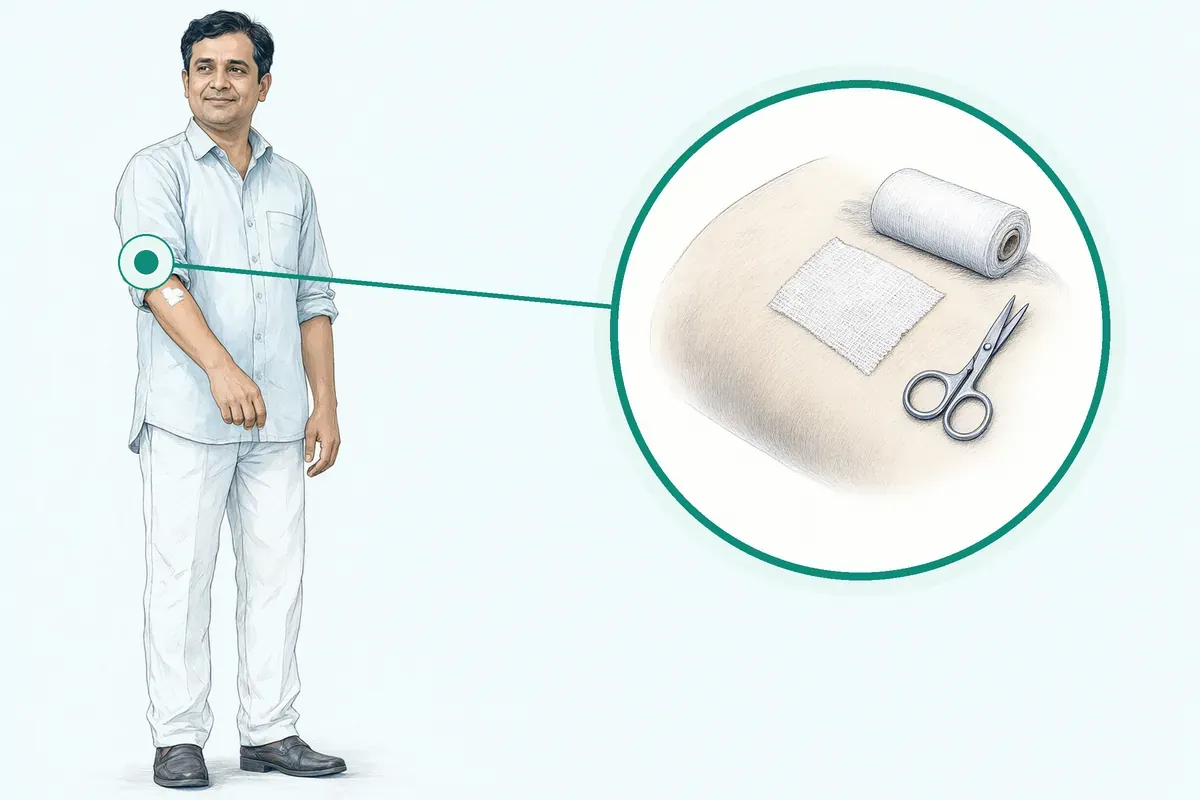
- Procedure time
- 15 to 45 minutes
- Anaesthesia
- Local anaesthesia
- Recovery
- Back to normal activity in 1 to 3 days for most patients
- Price
- ₹3,000 to ₹25,000typical range in India; ask us for an estimate
A lump you keep touching
The lump, the abscess, the cut that will not heal
You may feel a hard lump under the skin, or a tender swelling that makes sitting or walking awkward. A cut may keep catching on clothes. You wonder if it is serious, whether it will settle, and how much time off work it will take.
-
A lump that worries you
A cyst or lipoma is often harmless, but it can grow or become painful. You may want it looked at and removed.
-
An abscess that hurts
A tender, warm swelling can make work and sleep hard. Draining it through a small cut is a common option your surgeon will discuss.
-
A cut that needs stitches
A cut may be closed even many hours after injury, depending on the wound. Cleaning and stitching help it heal.
-
An ingrown toenail
Pain at the edge of the toe, often from footwear or nail care habits. Mild cases may settle with other care, and surgery is an option.
Cysts are usually harmless bumps under the skin, and many do not need treatment unless they bother you.
Why Jaipur Hospital
You may be putting this off because you are not sure it is worth the time, the leave from work or the cost.
Your care plan
Your first steps with us
- 1 Call us or walk in to the OPD.
- 2 Meet a general and laparoscopic surgeon for assessment.
- 3 Get a plan and a cost estimate before you decide.
- 4 Have the procedure and follow up as advised.
How the operation is done
Your surgeon will explain the options for your case. Most of these procedures are done under local anaesthesia and usually take 15 to 45 minutes. Many are day care, and you can usually go home the same day.
-
Incision and drainage
Draining an abscess through a small cut. Your surgeon will discuss whether this suits your swelling.
-
Excision
Removing a cyst, lipoma or skin lump. The tissue is usually sent for testing.
-
Wound suturing and dressing
Cleaning and stitching a cut, then dressing the wound and checking it as it heals.
-
Ingrown toenail surgery
Removing part of the nail and treating the nail bed. Your surgeon will discuss the options.
Why patients trust us
- 1991 Serving Jaipur for 35 years
- NABH Accredited hospital
- 3 General & Laparoscopic Surgery consultants
- 24×7 Emergency, ICU and ambulance
- 25 Cashless schemes and insurers
What research shows about these treatments
-
2 to 4 weeks
Expected healing time for partial nail removal without chemical application in the guidance studied.
-
2 to 3 hours
How long a local anaesthetic usually takes to wear off after nail surgery.
-
3.6% and 2.8%
Share of patients who developed a complication within 30 days after minor procedures in one clinic study.
If it is left untreated
If an abscess or infected cyst is left, infection can spread and become harder to treat. A cyst that is painful or growing is worth checking. Never try to pop or cut out a cyst at home, as this can cause infection or scarring. After a procedure, spreading redness, more pain or a bad smell should be reported.
Life after treatment
Most people return to normal activity in 1 to 3 days. You will have clear instructions for dressing changes and a follow-up visit, and you can ask questions at any point.
-
Back to your routine
Most people return to normal activity in 1 to 3 days, depending on the procedure and your work.
-
Care you can follow
You will usually be shown how to change dressings and keep the area clean and dry.
-
A follow-up visit
Most people have a follow-up to check healing and, where needed, remove stitches.
Frequently asked questions
Questions patients ask about minor surgical procedures
Which problems are assessed under minor procedures and surgical OPD at Jaipur Hospital?
In short
At Jaipur Hospital, the surgical OPD assesses skin and soft tissue problems that can be treated with minor procedures under local anaesthesia. These include abscesses needing drainage, sebaceous cysts, lipomas, other benign lumps, cuts requiring stitches, and ingrown toenails. The surgeon examines the site, checks for signs of infection, and decides if a day-care procedure is appropriate.
In detail
Minor surgical procedures cover a defined set of conditions. Evidence lists soft tissue mass excision, abscess incision and drainage, skin lesion excision, skin tag removal, and lymph node excision as typical minor surgeries.
Ingrown toenail surgery is used for moderate to severe cases when nonsurgical measures such as footwear changes, soaking, cotton wicks, gutter splints, or nail braces have not helped. Cysts that are painful, infected, restrict movement, or cause concern are candidates for removal.
Lipomas are benign fatty lumps removed through small incisions. All these are usually done under local anaesthesia and take 15 to 45 minutes.
A common belief
Many people think every lump needs major surgery or a long hospital stay.
What actually happens
In fact, most of these conditions are dealt with in 15 to 45 minutes and you go home the same day.
Your next step at Jaipur Hospital
If you have a lump, swelling, non-healing wound, or painful toenail, book a surgical OPD consultation at Jaipur Hospital. The surgeon will examine you, explain the options, and schedule the procedure if needed. Most patients go home the same day and return to normal activity in one to three days.
How will the doctor decide which tests I need before a minor surgical procedure?
In short
The surgeon at Jaipur Hospital decides on tests based on the type of lump or wound, your medical history, and the planned anaesthesia. For most minor procedures under local anaesthesia, routine blood tests are not mandatory. Tests are ordered only if the examination or history suggests a need, such as infection markers for an abscess, imaging for a deep lump, or coagulation studies if you take blood thinners.
In detail
Evidence shows the provider reviews the site and history to confirm the diagnosis before proceeding. For a superficial cyst or lipoma, clinical examination is often enough. An ultrasound may be requested if the lump is deep, large, or the diagnosis is uncertain.
For abscesses, blood tests like white cell count and CRP help gauge infection severity. If you are on anticoagulants or have a bleeding disorder, coagulation profiles are checked. Tetanus status is assessed for wounds. The surgeon avoids unnecessary tests to keep the process simple and cost-effective for day-care surgery.
A common belief
Patients often expect a full panel of blood tests before any surgery.
What actually happens
For local anaesthesia day-care procedures, unnecessary tests add cost and delay without improving safety.
Your next step at Jaipur Hospital
At your consultation, the surgeon will tell you if any tests are needed and arrange them at the in-house laboratory. Most results are available within a few hours. Once cleared, the procedure can be scheduled, often on the same day. Bring any recent test reports you already have.
How soon should I expect improvement after a minor surgical procedure like abscess drainage, cyst removal, or ingrown toenail surgery?
In short
After a minor procedure at Jaipur Hospital, most patients return to normal activity in 1 to 3 days. Pain and swelling are usually mild. Abscess drainage brings quick relief. Cyst or lump excision wounds heal in days to weeks depending on size. Ingrown toenail surgery takes 2 to 12 weeks for full healing depending on technique.
In detail
Our usual protocols state recovery to normal activity in 1 to 3 days for most patients. Evidence shows small cysts without stitches heal in a few days to a couple of weeks, while larger excisions may take several weeks.
For ingrown toenails, partial nail removal without chemical matrixectomy heals in 2 to 4 weeks; full removal with phenol takes 8 to 12 weeks. A green or yellow discharge at 7 to 10 days is normal healing, not pus. The surgical team guides you through each stage.
A common belief
Patients often worry when they see yellow discharge at one week.
What actually happens
That is normal healing, not infection. True infection shows spreading redness, worsening pain, bad smell, or fever. Knowing the difference saves unnecessary panic.
Your next step at Jaipur Hospital
Keep the wound clean and dry, follow dressing instructions, and avoid heavy exercise until cleared. Over-the-counter pain medicine may help. A follow-up visit is usually scheduled at 7 to 10 days for stitch removal and wound check.
Contact Jaipur Hospital if you notice spreading redness, increasing pain, bad smell, or fever. Book your follow-up with us.
How can I decide whether to seek advice about minor surgical procedures?
In short
You should seek advice at Jaipur Hospital when a lump, bump or wound causes pain, grows, limits movement or shows signs of infection such as redness, warmth or discharge. Even small skin changes that bother you cosmetically are a valid reason to consult our surgical team for an assessment.
In detail
Evidence shows that many cysts are harmless and may not need treatment unless they become painful, infected or affect daily activities. Lipomas are benign fatty lumps that can be safely removed if they cause discomfort or concern.
Abscesses usually require drainage because antibiotics alone often do not resolve the pus collection. Ingrown toenails that are moderate to severe typically need a surgical approach to prevent recurrence.
Wounds that are deep, gaping or older than several hours may still be closed safely depending on the site and contamination level. The surgeon evaluates size, location, symptoms and your overall health to recommend the appropriate minor procedure.
A common belief
Many people wait hoping a cyst or ingrown nail will go away on its own.
What actually happens
Evidence shows cysts can become infected and ingrown nails often recur without proper surgical treatment. Home drainage risks infection and scarring.
Your next step at Jaipur Hospital
Book an OPD consultation at Jaipur Hospital for a clinical examination. The surgeon will review your medical history, examine the area and explain whether a day-care procedure under local anaesthesia is suitable.
Most minor procedures take 15 to 45 minutes and you go home the same day. Recovery to normal activity is usually 1 to 3 days. Ask for a cost estimate during the visit.
How will the surgeon decide whether an operation is necessary?
In short
The surgeon at Jaipur Hospital decides based on clinical examination, your symptoms, the size and location of the lesion, and whether it causes pain, infection, functional limitation or cosmetic concern. They also review your medical history and any medications that affect bleeding or healing.
In detail
For cysts, guidelines suggest removal if they are painful, restrict movement, become infected or cause distress. Some cysts are watched if small and asymptomatic. Lipomas are removed when symptomatic or for diagnosis. Abscesses usually need drainage because antibiotics alone are often insufficient.
Ingrown toenails require surgery when conservative measures fail or recurrence is likely. Wounds are assessed for depth, contamination, time since injury and structures involved.
The surgeon explains the findings, discusses non-surgical alternatives where they exist, and recommends a procedure only when the expected benefit outweighs the small risks of local anaesthesia and minor surgery.
A common belief
Patients sometimes expect surgery for every lump or want to avoid it entirely.
What actually happens
The surgeon follows evidence: many cysts can be watched, but abscesses need drainage, and recurrent ingrown nails need nail surgery. The decision is shared, not automatic.
Your next step at Jaipur Hospital
Attend an OPD consultation at Jaipur Hospital. The surgeon will examine you, explain the reasoning and outline the procedure steps, anaesthesia, recovery timeline and costs. You can ask questions and take time to decide.
Most minor procedures are day care under local anaesthesia, lasting 15 to 45 minutes, with return to normal activity in 1 to 3 days.
Which symptoms should prompt me to see a specialist for a minor surgical problem?
In short
You should see a specialist at Jaipur Hospital if you notice a lump that is growing, painful, or changing in appearance; a swelling that is red, hot, or discharging pus; a cut that is deep, gaping, or won't stop bleeding; or a toenail edge that is digging into the skin with pain, redness, or discharge. These signs suggest the problem may need a minor procedure.
In detail
Evidence indicates cysts should be evaluated when they are painful, affect movement, become infected, or cause concern. Lipomas are usually harmless but may need removal if they grow or press on nearby structures. Abscesses typically present with throbbing pain, swelling, warmth, and sometimes fever.
Ingrown toenails most often affect the great toe and cause pain, redness, and discharge along the nail fold. Wounds that are deep, have foreign material, or are older than 18 hours still may be closed but need assessment for infection risk and tetanus status. Any lesion that changes rapidly or bleeds should be examined promptly.
A common belief
People often wait until a lump is very large or an abscess bursts.
What actually happens
Earlier review means simpler treatment, less risk of infection spread, and quicker healing.
Your next step at Jaipur Hospital
If you have any of these symptoms, schedule a consultation at Jaipur Hospital. The surgeon will examine the area, decide if a procedure is needed, and explain the steps. Most minor procedures are done on the same day or scheduled soon after. Bring any previous reports or medication lists.
How will the test results change my care plan for a minor surgical procedure?
In short
Test results at Jaipur Hospital help the surgeon confirm the diagnosis, assess infection severity, check bleeding risk, and ensure you are fit for local anaesthesia. If results show active infection, antibiotics may be started before drainage. Abnormal coagulation may need medicine adjustment or a haematology opinion. Imaging that suggests an unusual lump may change the procedure from simple excision to a wider excision or referral.
In detail
Evidence indicates the provider reviews the site and history to confirm the diagnosis. Ultrasound can differentiate a cyst from a lipoma or a vascular lesion, which changes the surgical approach.
Blood tests showing raised inflammatory markers support the need for abscess drainage and guide antibiotic choice. Coagulation abnormalities may require holding or bridging blood thinners before the procedure.
If a lump appears suspicious on imaging, the surgeon may plan a formal excision with margins or refer to a specialist clinic. Normal results allow the planned day-care procedure to proceed as scheduled.
A common belief
Some patients think tests are just a formality.
What actually happens
In reality, an unexpected result like a high INR or a suspicious ultrasound finding directly changes the timing or type of procedure for your safety.
Your next step at Jaipur Hospital
The surgeon will discuss the results with you and adjust the plan if needed. Most adjustments are minor, such as timing of medicine changes or adding a short antibiotic course. You will be informed of any change before the procedure date. Bring your reports to the consultation at Jaipur Hospital so the team can finalise your care plan promptly.
What should I do if symptoms persist or worsen after a minor surgical procedure?
In short
If symptoms persist or worsen after your minor surgical procedure at Jaipur Hospital, contact the hospital promptly. Warning signs include significant increase in redness or swelling, redness tracking up the limb, increasing pain, a bad smell from the wound, or flu-like symptoms such as fever. These may indicate an infection that needs medical attention.
In detail
Evidence shows that post-procedure complications occur in a small percentage of patients. Normal healing includes some mild pain, swelling, and a greenish-yellow discharge around days seven to ten, which is not pus.
However, if redness spreads beyond the wound edges, pain increases instead of decreasing, or you develop fever, these are not normal. For ingrown toenail surgery, you must not drive for 24 hours after local anaesthetic.
You should continue dressing changes as instructed, typically every two days, keeping the area dry between changes. Do not touch or wipe away discharge, as this can prolong healing. Avoid foot baths, prolonged soaking, and scrubbing the area.
A common belief
Patients often confuse normal healing discharge with infection, or they wait too long hoping it will improve.
What actually happens
Delaying care for a true infection can lead to deeper tissue involvement. Knowing the difference between normal yellowish discharge and signs of infection helps you act at the right time.
Your next step at Jaipur Hospital
Call the hospital or visit the emergency department if you notice any warning signs. The 24×7 emergency department at Jaipur Hospital is available for urgent concerns. Do not wait for your scheduled follow-up if symptoms are worsening. Early treatment of infection prevents more serious problems. Keep your follow-up appointment, usually within seven to ten days, for stitch removal and healing assessment.
How can I decide whether to seek advice about abscess incision and drainage?
In short
Seek advice at Jaipur Hospital when you notice a painful, swollen, warm lump that may have pus or fluid leaking from it, especially if you also have fever or feel unwell. An abscess usually needs a small cut under local anaesthesia to drain the pus and relieve pressure.
In detail
An abscess is a collection of pus caused by infection. Evidence shows incision and drainage is the standard treatment to achieve clinical resolution. Antibiotics alone are often not enough once a cavity has formed. The procedure takes 15 to 45 minutes.
Local anaesthetic with epinephrine is safe for most sites. You may feel a brief pinch during the injection but should not feel pain during drainage. After the procedure, the wound is dressed and you go home the same day.
Recovery to normal activity is typically 1 to 3 days. Signs of spreading infection such as increasing redness, tracking lines, severe pain, bad smell or flu-like symptoms need urgent review.
A common belief
Some people try antibiotics alone or wait for the abscess to burst.
What actually happens
Evidence shows a formed abscess cavity usually needs incision and drainage for proper healing. Delaying can let the infection spread deeper or into the bloodstream. Home squeezing risks pushing bacteria further into tissue.
Your next step at Jaipur Hospital
Visit the surgical OPD at Jaipur Hospital for assessment. Bring a list of current medicines. The surgeon will examine the abscess, explain the drainage procedure and give a cost estimate within the typical range of ₹3,000 to ₹25,000. You will receive dressing instructions and a follow-up plan. Most patients resume routine within 1 to 3 days.
Can I discuss a non-surgical option or a less invasive approach?
In short
Yes, at Jaipur Hospital you can always discuss non-surgical or less invasive options with the surgeon during your surgical OPD consultation. The surgeon will explain when watchful waiting, medicines, dressings or minor office procedures are appropriate alternatives to formal surgery.
In detail
Evidence supports non-surgical management for many conditions. Small, asymptomatic cysts can be observed safely. Mild to moderate ingrown toenails often improve with footwear changes, soaking, topical steroids, cotton wicks or gutter splints.
Superficial wounds in low-tension areas may be closed with tissue adhesives or adhesive strips instead of stitches. Abscesses that are small and pointing may sometimes be managed with needle aspiration and antibiotics, though incision and drainage remains standard for larger collections.
The surgeon will review your specific case, explain the pros and cons of each approach, and respect your preference. No procedure is done without your informed consent.
A common belief
Some patients assume a lump always means surgery.
What actually happens
Evidence shows many cysts need no treatment. Ingrown nails often settle with simple care. Small wounds may only need glue or strips. The surgeon will explain why a less invasive choice may be better or why surgery is still advised.
Your next step at Jaipur Hospital
Book a surgical OPD appointment at Jaipur Hospital to discuss your condition. Bring any previous reports and a list of medicines.
The surgeon will outline all suitable options, including non-surgical ones, and give a cost estimate within the typical ₹3,000 to ₹25,000 range if a procedure is chosen. You decide together on the plan.
FAQ library
Questions and answers about minor surgical procedures
When you contact us
What you get when you contact us
Call us or visit the OPD and we will assess your problem, explain your options and give you a cost estimate.
- A consultation with a general and laparoscopic surgeon in the OPD
- Your scans and reports reviewed, with tests done in-house if you need them (laboratory, X-ray and imaging)
- Your options explained in plain words, including whether you need surgery at all
- A cost estimate before you decide
- Help with cashless treatment under RGHS, MAA Yojana, CGHS and empanelled insurers and TPAs
- Follow-up visits after your treatment
Overview
Minor Surgical Procedures: what to know
Minor surgical procedures in Jaipur: what they are
- Abscess drainage
- Small cut to let fluid out
- Cyst or lipoma removal
- Cut out the lump under the skin
- Ingrown toenail surgery
- Remove part or all of the nail
Minor surgical procedures are short procedures for small problems on or just under the skin.
They include:
- Draining an abscess
- Removing a cyst or lipoma
- Stitching a cut
- Treating an ingrown toenail
At Jaipur Hospital, these procedures usually take 15 to 45 minutes and are done under local anaesthesia. Most people go home the same day.
A cyst is a fluid-filled bump under the skin. Cysts can appear anywhere on your body. Most cysts are harmless and are not cancer. Some cysts go away on their own, while others stay or slowly get bigger. A lipoma can be removed as a minor procedure.
An abscess can be drained through a small cut. A cyst can also be drained through a small cut if it fills with fluid. An ingrown toenail is a problem where the nail edge presses into the skin fold and causes irritation. The great toe is affected most often. Nail surgery removes part or all of a problem toenail.
Local anaesthesia is used to numb the area. You may feel a quick pinch or sting when the injection is given. After that, you should not feel pain during the procedure. For nail surgery, the numbness usually wears off in about 2 to 3 hours.
Symptoms of a skin lump or ingrown toenail, and warning signs
- Bad smell from the area
- Flu-like symptoms
Cysts often feel like small bumps under the skin and cause no trouble. See your surgeon if a cyst is painful, affects your movement, or makes you feel self-conscious. Also get advice if a cyst grows quickly, causes pain, or starts to bother you. A cyst that becomes infected needs treatment.
An ingrown toenail can be painful. The great toe is affected most often. The edge of the nail can press into the skin and cause irritation. A large increase in redness, swelling, or pain around the nail needs attention.
After any minor procedure, contact your surgeon the same day if you notice signs of infection. These signs include redness spreading up the toe, foot, or leg, a bad smell from the area, or flu-like symptoms. After nail surgery, a green or yellow discharge can appear around 7 to 10 days.
Some people mistake this for pus or infection, but it can happen as the wound heals. If you are not sure, ask your surgeon.
Causes and risk factors for minor surgical problems
- Ingrown toenails
- Linked to nail care habits and footwear
- Cysts can return
- If the sac remains after drainage
- Medicines and supplements
- Some can cause extra bleeding
Ingrown toenails are often linked to nail care habits and footwear. They are more common in young men. About 20 in every 100 foot problems in primary care are ingrown toenails. The great toe is most often affected. The shoes you wear can add to the problem.
Some cysts come back, especially after drainage. If the sac is still there, the cyst can fill up again over time. A cyst can appear anywhere on the body. Some stay small, while others slowly get bigger.
Some medicines and supplements can cause extra bleeding. Tell your surgeon about everything you take.
How Jaipur Hospital checks a lump or minor surgical problem
Your surgeon will meet you before the procedure to go over your medical history and look at the area. For a cyst, this is to confirm that the lump is a cyst. Tell your surgeon about all medicines and supplements you take, as some can cause extra bleeding. Your surgeon may ask you to stop or change certain medicines before the procedure.
You probably will not need to stop eating the night before. Cyst removal is usually done as day care, so you can go home the same day. At Jaipur Hospital, minor procedures are usually day care.
For a cyst, the steps depend on the type of removal, the size, and where the cyst is. Your surgeon will explain the plan and answer your questions. It is okay to ask questions and take your time.
For an ingrown toenail, surgical treatment is used for moderate and severe cases. For a lump, your surgeon can remove the tissue and send it for testing. Your surgeon will advise which procedure suits your problem.
Treatment options for minor surgical procedures and when surgery is advised
- Change footwear Wear shoes that do not press on the toe
- Treat sweating or fungal infection Medical treatment for underlying causes
- Soak the toe Warm water soaks to soften the nail
- Apply steroid cream Reduces inflammation at the nail fold
For an ingrown toenail, mild to moderate cases are usually treated without surgery.
Options include:
- Changing footwear
- Treating excessive sweating or fungal nail infection
- Soaking the toe
- Applying a steroid cream
- Placing cotton or dental floss under the nail edge
A gutter splint can separate the nail from the skin and give quick pain relief. A cotton nail cast or taping the nail fold can also help. Your surgeon will advise which option suits you.
When the problem is moderate or severe, surgery may be advised. Surgery aims to remove the contact between the nail and the skin fold. The most common operation is partial removal of the side of the nail. In studies, surgery was better than nonsurgical care at preventing the nail from growing back.
In studies, removing the nail matrix, the area the nail grows from, further reduced the chance of the nail coming back. After partial nail removal without a chemical, healing can take 2 to 4 weeks. Full removal with a chemical can take 8 to 12 weeks. The chemical phenol is applied to the nail bed and matrix to stop the nail growing back.
If a cyst is small and not bothering you, your surgeon may suggest watching it. Some cysts go away on their own. A cyst may be removed if it is painful, affects movement, or makes you feel self-conscious. Removal can also be advised if there is infection or to check for other problems.
Removing the cyst can help prevent serious problems from infection. Deciding to remove a cyst is a personal choice. Never try to pop or cut out a cyst at home. This can cause infection or scarring.
An abscess can be drained through a small cut. In one large trial, more abscesses cleared when an antibiotic was added to treatment than when people received a placebo. Your surgeon will decide if you need an antibiotic.
A cut can often be closed with stitches. The aim is to stop bleeding and get a good result in how the scar looks without raising the risk of infection. Depending on the wound, closure may be possible even 18 or more hours after injury.
A moist wound heals faster, so a dressing that keeps the wound moist may be used. A tetanus injection is given if needed. Stitches are removed based on where the wound is. Skin glue or adhesive strips can be used on areas where the skin is not pulled tight.
After cyst removal, you may have mild pain or swelling. Your surgeon may suggest a pain medicine you can buy from a chemist. Most people return to normal activity in 1 to 3 days. You cannot drive for 24 hours after local anaesthesia.
Preparing for minor surgery at Jaipur Hospital
Most minor procedures at Jaipur Hospital are usually planned as day care. You come in, have the procedure, and go home the same day. For a cyst or lump removal, your surgical team will go over your medical history and look at the site before the procedure. Use this visit to ask about the procedure, recovery and cost.
Tell your surgeon about every medicine and supplement you take. Some can cause extra bleeding. Your surgeon may ask you to stop or change certain medicines before the procedure. Ask your surgeon before you change any medicine on your own.
For cyst removal, you probably will not need to stop eating the night before. If your surgeon wants you to fast, the team will tell you clearly.
Bring your previous reports and a list of your medicines. You cannot drive for 24 hours after a local anaesthetic, so arrange for an attendant to take you home.
Jaipur Hospital has an in-house diagnostic laboratory and imaging service. Your surgeon will decide which tests you need, and these can usually be done at the hospital.
How minor surgical procedures are done
Common options for minor surgery include drainage, excision, wound repair and nail surgery. Your surgeon will choose the one that suits your problem and explain its benefits and limits.
Incision and drainage. Your surgeon makes a small cut and lets the fluid out of an abscess. Abscess incision and drainage is a minor procedure.
Excision. Your surgeon cuts out a cyst, lipoma or skin lump. The tissue can be sent for testing. Lipoma removal is a minor procedure, and it is done through small incisions of 3 to 4 mm.
Wound suturing and dressing. For a cut, the aim is to stop bleeding and get a good cosmetic result without raising the risk of infection. Depending on the wound, your surgeon may close it even 18 or more hours after the injury. Moist or occlusive dressings may be used because wounds heal faster in a moist environment.
Tetanus prevention is given if needed. Suture removal depends on the location and is based on expert opinion and experience.
Ingrown toenail surgery. Nail surgery involves removing a piece or all of a problematic toenail. A common approach is partial removal of the side edge of the nail. Your surgeon may treat the nail bed and matrix with phenol, which stops that part of the nail from growing back. A local anaesthetic injection numbs the toe first.
On the day, the area is cleaned and numbed. You may feel a quick pinch or sting from the injection. After that, you should not feel pain during the procedure. The anaesthetic wears off in about 2 to 3 hours. The procedure usually takes 15 to 45 minutes. You will usually go home the same day.
Risks and complications of minor surgery
- 3.6% Resident clinic
- 2.8% Attending clinic
Studies describe cyst removal as safe, with possible risks that are uncommon. Studies describe lipoma surgery as generally safe with minimal risks.
You may have some mild pain or swelling after the procedure. Infection is possible. Contact your surgeon if you notice signs of infection.
Signs include:
- A clear increase in redness and swelling
- Redness spreading up the toe, foot or leg
- A clear increase in pain
- A bad smell
- Flu-like symptoms
After nail surgery, a green or yellow discharge can appear at 7 to 10 days. Some people mistake this for pus or infection.
Some cysts come back, especially after drainage. If the cyst sac is still there, it can fill up again over time. For ingrown toenails, there is a small chance the nail grows back. This can often be managed with light regular filing or further treatment if it causes problems.
In one study of minor procedures, 3.6% of patients in a resident clinic and 2.8% in an attending clinic had a complication within 30 days. There was no significant difference between the groups.
Recovery and aftercare after minor surgery
- Return to normal activity 1 to 3 days for most procedures
- Partial nail removal without chemical Heals in 2 to 4 weeks
- Full nail removal with chemical Heals in 8 to 12 weeks
- Nail regrowth if allowed Up to 18 months
- Small cyst removal without stitches A few days to a couple of weeks
- Larger cyst removal with stitches Several weeks to months
Most patients can return to normal activity in 1 to 3 days. The exact time depends on the procedure and your healing. Avoid a lot of exercise or contact sports until your surgeon clears you.
Keep the area clean and dry, and follow your surgeon's instructions. After nail surgery, you will usually change your own dressing while the wound heals. A common plan is to change it every 2 days and keep it dry on the day in between.
On the day you change it, you can let the area get wet in a bath or shower. Dry yourself, remove the old dressing, let the area air dry, then cover it with a new dry dressing. Do not touch the wound. Avoid foot baths, prolonged soaking and scrubbing. Do not wipe away discharge; continue dressing as normal. It will dry and form a scab, and wiping it can slow healing.
You may take an over-the-counter pain medicine if your surgeon recommends it.
For nail surgery, partial removal without a chemical usually heals in 2 to 4 weeks. Full removal with a chemical usually heals in 8 to 12 weeks. If the nail is allowed to regrow, this can take up to 18 months. If the aim is to stop regrowth, the area heals over with normal skin that toughens slightly over time.
After cyst removal, small cysts that do not need stitches usually heal in a few days to a couple of weeks. Larger cysts with bigger cuts may take several weeks or even months to fully heal. You may have a follow-up visit 7 to 10 days later to remove stitches and check healing.
Call the hospital if you notice increasing redness or swelling, pain that gets worse, a bad smell, or flu-like symptoms. Do not try to pop or cut out a cyst at home. This can cause infection or scarring.
Results of minor surgery and the chance of the problem coming back
Most cyst removals are quick and simple. Removing a cyst can help prevent serious problems from infection.
Drainage lets fluid out, but a cyst can fill again if the sac remains. Excision removes the cyst itself. Your surgeon will advise which approach is suitable.
For ingrown toenails, surgical approaches are better than nonsurgical ones for preventing the nail from coming back. Removing the nail matrix gives further protection against the nail returning. Even after surgery, a small number of nails grow back. If this happens, light regular filing or further treatment can often help.
These results come from studies of groups of patients. They cannot tell you exactly what will happen in your case. Your surgeon will talk to you about what is likely, based on the size, site and type of problem.
Cost of minor surgery in Jaipur and insurance
The typical price range for minor surgical procedures at Jaipur Hospital is ₹3,000 to ₹25,000. This is a typical range in India, not a fixed bill. Ask us for an estimate.
The price is not the same for every procedure. It changes with the type of procedure, the size and number of lumps or cysts, tests, dressings, and follow-up visits.
Jaipur Hospital is an NABH-accredited, privately run multispeciality hospital.
It works with:
- RGHS
- MAA Yojana
- CGHS
- A panel of private insurers and TPAs
Cover depends on your scheme and policy. Ask your insurer or TPA what they will pay before you plan the procedure.
The hospital has an in-house diagnostic laboratory and imaging service, with a 24-hour laboratory, X-ray and ECG. Keep your bills, reports and insurance papers together.