

Obstetrics and Gynaecology · Jaipur Hospital
Adenomyosis Treatment in Jaipur
Heavy periods and pelvic pain? Get a clear assessment and a simple plan at Jaipur Hospital.
- Serving Jaipur since 1991 (35 years)
- NABH accredited
- 24×7 emergency & ICU
- Cashless: MAA Yojana + 32 insurers
- Treatment length
- Varies: medical (months), UAE (1-2 hrs), surgery (2-3 hrs)
- Anaesthesia
- Medical: noneUAE: conscious sedation · Surgery: general/spinal
- Recovery
- Medical: ongoingUAE: 1 week · Surgery: 4 to 6 weeks
- Price
- ₹2,000/month (medical) to ₹1,50,000 (surgery/UAE)typical range in India; ask us for an estimate
Periods that disrupt your life
Heavy bleeding and pelvic pain that won't settle
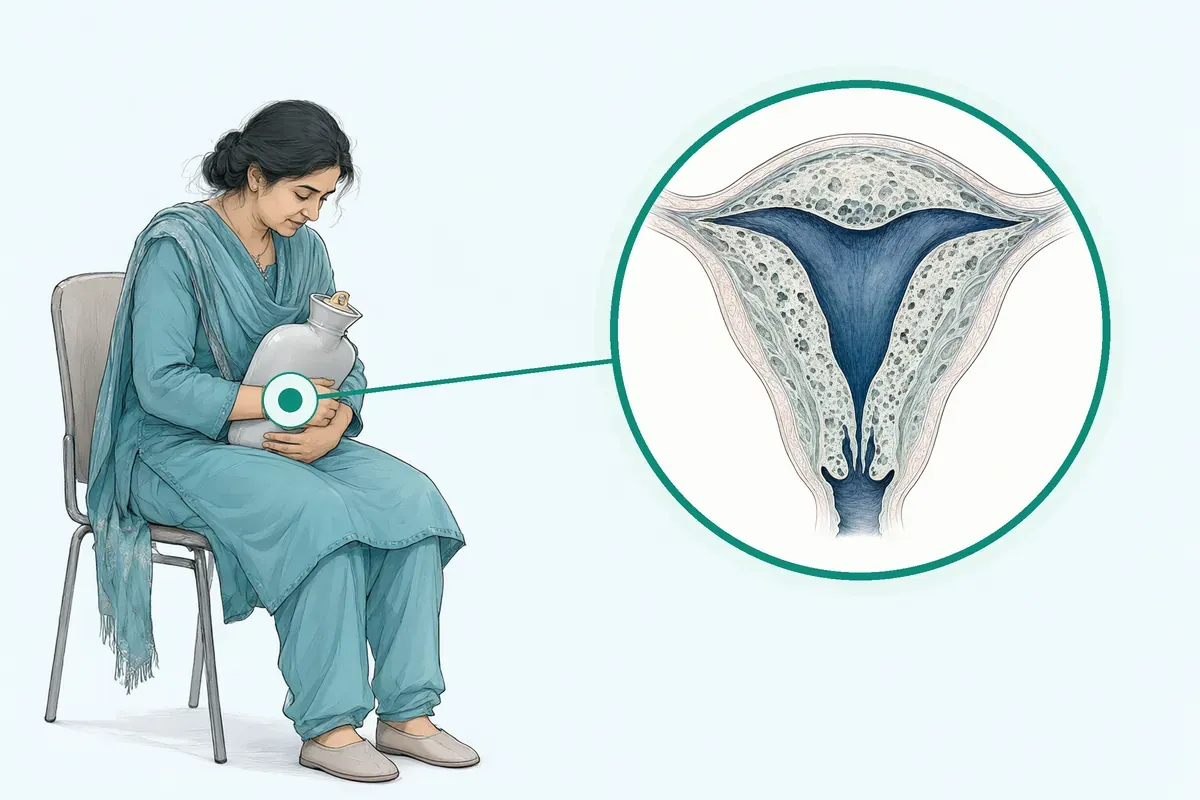
Adenomyosis means the lining of the womb grows into the muscle wall. It can cause heavy periods, strong cramps and a feeling of heaviness. Up to 30% of women with it have no symptoms.
-
Heavy periods
Bleeding soaks through pads quickly and may last longer than a week.
-
Strong cramps
Pain starts before the period and can spread to the back or thighs.
-
Pelvic pressure
A constant heavy feeling in the lower abdomen between periods.
-
Fertility worries
Adenomyosis is linked to a higher chance of miscarriage.
Adenomyosis is a benign condition where endometrial tissue is found inside the uterine muscle.
Why Jaipur Hospital
You worry that the next period will keep you from work or family duties, and you want a straight answer without pressure.
Your care plan
Your first steps with us
- 1 Call or visit OPD for an appointment
- 2 Gynaecologist reviews scans and advises tests
- 3 Choose medical, UAE or surgical option
- 4 Treatment done, then follow-up visits
Insurance and schemes
How cashless works
Cashless treatment under MAA Yojana and with 32 insurers.
-
Tell us when you book
Say you are insured or have a scheme card, and send a photo of the card on WhatsApp so our insurance desk can check it in advance.
-
We get the approval
Once your doctor advises admission, the insurance desk sends the pre-authorisation request to your insurer or TPA; for planned surgery, approval can come before you are admitted.
-
Settled at discharge
The approved amount is settled between the insurer and the hospital; you pay only what the policy does not cover.
How the operation is done
Surgery removes the adenomyosis or the uterus. UAE blocks blood supply to the tissue. Medical therapy uses hormones to control symptoms.
-
Medical (LNG-IUS / Dienogest / GnRH agonist)
First-line to control bleeding and pain. Taken as a tablet, injection or a coil placed in the womb. No hospital stay needed.
-
Laparoscopic adenomyomectomy
Focal lesion removed through keyhole cuts. Fertility-sparing option. Usually 2 to 3 nights in hospital.
-
Laparoscopic hysterectomy
Uterus removed through keyhole cuts. Definitive option if family is complete. Usually 2 to 3 nights in hospital.
Why patients trust us
- 1991 Serving Jaipur for 35 years
- NABH Accredited hospital
- 3 Obstetrics and Gynaecology consultants
- 24×7 Emergency, ICU and ambulance
- 32 Cashless insurers, plus MAA Yojana
What research shows about this treatment
-
89.6% short-term improvement
In pure adenomyosis, 89.6% of patients improved after UAE in a systematic review.
-
94.3% short-term improvement
With adenomyosis and fibroids, 94.3% improved after UAE in the same review.
-
More urinary tract injuries
Laparoscopic hysterectomy had more urinary tract injuries than abdominal hysterectomy in studies.
If it is left untreated
Without treatment, heavy bleeding can lead to anaemia and tiredness. Chronic pain may affect daily work and sleep. Adenomyosis is linked to a higher risk of miscarriage.
Life after treatment
Most women find periods become lighter and pain eases. Recovery time depends on the option chosen.
-
Lighter periods
Medical therapy or UAE usually reduces bleeding within a few cycles.
-
Less pain
Cramps and pelvic pressure typically improve after treatment.
-
Return to routine
After UAE most people resume normal activity in about a week; after surgery in 4 to 6 weeks.
-
Fertility clarity
Your surgeon will discuss how each option affects future pregnancy plans.
Meet the team
Your obstetrics and gynaecology doctors
Explore our gynaecology and maternity hospital in Jaipur: every treatment, the doctors and what to expect at your visit.



Frequently asked questions
Questions patients ask about adenomyosis treatment
What is adenomyosis treatment?
In short
Adenomyosis treatment at Jaipur Hospital aims to control heavy bleeding and pelvic pain. Options include medical management with hormonal devices or tablets, uterine artery embolisation (UAE), and surgery such as laparoscopic adenomyomectomy or hysterectomy. The choice depends on symptom severity, fertility wishes and your general health.
In detail
Medical treatment is usually the first step. A levonorgestrel-releasing intrauterine system (LNG-IUS), dienogest or a GnRH agonist can reduce bleeding and pain over several months.
UAE is a radiology procedure done under conscious sedation; it blocks the blood supply to the adenomyotic tissue and typically needs one night in hospital. Surgery is considered when medical therapy and UAE are not suitable or have not helped.
Laparoscopic adenomyomectomy removes focal lesions while keeping the uterus, which may preserve fertility. Laparoscopic hysterectomy removes the uterus and is a definitive option when the family is complete.
Evidence shows hysterectomy remains the definitive treatment for adenomyosis, while UAE has shown initial promising results as a non-invasive option. Robotic-assisted hysterectomy has no proven benefit over conventional laparoscopic hysterectomy.
A common belief
Many people think a hysterectomy is the only answer.
What actually happens
In fact, medical management and UAE can control symptoms for many women, and focal adenomyomectomy can keep the uterus intact when fertility is a priority.
Your next step at Jaipur Hospital
Your gynaecologist will review your symptoms, ultrasound or MRI findings and fertility plans before recommending a pathway. Medical therapy can start at the first visit. UAE and surgery need pre-operative assessment and scheduling. Recovery after UAE is about one week; after laparoscopic surgery it is four to six weeks.
Which specialist should I see for adenomyosis?
In short
You should see a gynaecologist for adenomyosis. At Jaipur Hospital, the gynaecology department handles diagnosis, medical management, and surgical treatment including laparoscopic adenomyomectomy and hysterectomy. If uterine artery embolisation (UAE) is considered, the gynaecologist coordinates with an interventional radiologist.
In detail
Adenomyosis is a gynaecological condition defined by endometrial tissue within the myometrium. The gynaecologist is the primary specialist who evaluates symptoms, orders imaging such as transvaginal ultrasound or MRI, and prescribes first-line medical therapy including LNG-IUS, dienogest or GnRH agonists.
When medical therapy is insufficient, the gynaecologist discusses UAE or surgical options. Laparoscopic adenomyomectomy and laparoscopic hysterectomy are performed by the gynaecological surgical team.
Evidence supports that the surgical approach to hysterectomy should be discussed and decided by the woman with her surgeon, considering the relative benefits and hazards.
The vaginal approach is preferred among minimally invasive routes when feasible; laparoscopic hysterectomy is a preferable alternative when vaginal hysterectomy is not indicated. For UAE, the gynaecologist refers to an interventional radiologist who performs the procedure under conscious sedation. The gynaecologist continues to manage follow-up and symptom review after any intervention.
A common belief
You do not need to see multiple specialists on your own.
What actually happens
The gynaecologist arranges the radiologist for UAE and the surgical team for laparoscopic procedures. All care stays within the gynaecology department at Jaipur Hospital, so your records and follow-up are in one place.
Your next step at Jaipur Hospital
Start with a gynaecology OPD appointment at Jaipur Hospital. Bring any previous ultrasound or MRI reports. The doctor will assess your symptoms, fertility goals and imaging to recommend the next step. Medical treatment can begin at the first visit. UAE or surgery will be scheduled after pre-operative checks.
What treatment options are available for my adenomyosis situation?
In short
Treatment options for adenomyosis at Jaipur Hospital include medical management, uterine artery embolisation (UAE) and surgery. Medical options are a levonorgestrel-releasing intrauterine system (LNG-IUS), dienogest tablets or a GnRH agonist. Surgical options are laparoscopic adenomyomectomy for focal lesions and laparoscopic hysterectomy when the family is complete.
In detail
Medical therapy is usually first-line to control bleeding and pain. The LNG-IUS is inserted in the OPD and works for several years. Dienogest is taken daily. GnRH agonists are used for short periods.
UAE is a radiology procedure done under conscious sedation with one night in hospital; it aims to induce necrosis in the adenomyotic tissue. Evidence shows UAE has initial promising results as a non-invasive option, but the QUESTA trial is still evaluating its role.
Desire for future fertility is a relative contraindication to UAE. Laparoscopic adenomyomectomy removes focal lesions and may preserve fertility. Laparoscopic hysterectomy is the definitive treatment when fertility is not desired. Evidence confirms hysterectomy remains the definitive treatment for adenomyosis.
The surgical route is discussed with you; vaginal hysterectomy is preferred when feasible, laparoscopic when vaginal is not possible. Robotic-assisted hysterectomy has no proven benefit over conventional laparoscopic hysterectomy. The choice depends on symptom severity, lesion type, uterus size, fertility wishes and your preference.
A common belief
Some people think hysterectomy is the only real fix.
What actually happens
But many women get good control with medical treatment alone. UAE avoids surgery but is not advised if you want children later. Focal adenomyomectomy can keep the uterus. the most suitable choice depends on your symptoms, lesion type and fertility plans, not on a one-size-fits-all rule.
Your next step at Jaipur Hospital
Your gynaecologist at Jaipur Hospital will explain each option, the expected recovery and the typical cost range in India. Medical therapy starts at about ₹2,000 per month. UAE and surgery typically range up to ₹1,50,000. Recovery is ongoing for medical therapy, about one week for UAE and four to six weeks for laparoscopic surgery.
What can I safely do at home to manage symptoms of adenomyosis?
In short
At home, you can use heat packs on the lower abdomen, take over-the-counter pain relievers like ibuprofen or mefenamic acid during periods, track your menstrual cycle, and maintain adequate iron intake if bleeding is heavy. At Jaipur Hospital, the gynaecology team advises these measures alongside prescribed treatment, not as a replacement.
In detail
Heat therapy improves blood flow and reduces cramping for many women. Non-steroidal anti-inflammatory drugs (NSAIDs) taken regularly during heavy flow days can lower prostaglandin levels, reducing both pain and blood loss by 20 to 30 percent.
Tranexamic acid, if prescribed, helps clot formation and reduces bleeding volume. Iron-rich foods — green leafy vegetables, jaggery, lentils, red meat — support haemoglobin levels. Regular moderate exercise may improve pelvic congestion and mood.
Good sleep and stress management help because stress hormones can worsen pain perception. Avoiding excessive caffeine and alcohol during periods may lessen bloating and irritability. These steps complement medical therapy (LNG-IUS, dienogest, GnRH agonists) or bridge the gap until a procedure.
They do not shrink adenomyotic tissue or stop the disease process. If bleeding soaks a pad in under an hour, you feel dizzy, or pain is not controlled, seek medical attention promptly.
A common belief
Some people try herbal teas or special diets hoping to shrink the adenomyosis.
What actually happens
There is no evidence that any food or supplement reduces the tissue growing in the uterine muscle. Home care helps you cope day to day; medical or procedural treatment addresses the cause.
Your next step at Jaipur Hospital
Keep a symptom diary noting bleeding days, pad count, pain scores, and medication use. Share this at your next OPD visit. The doctor may adjust your medical plan or discuss UAE or surgery if home measures and current treatment are not enough.
How does the term "uterine adenomyosis" relate to adenomyosis treatment?
In short
The term uterine adenomyosis describes the same condition as adenomyosis. It means endometrial tissue is found inside the uterine muscle wall. At Jaipur Hospital, the gynaecology team uses this diagnosis to guide whether you need medical management, uterine artery embolisation, or surgery such as adenomyomectomy or hysterectomy.
In detail
Adenomyosis is a benign uterine disorder where endometrial glands and stroma exist within the myometrium. The diagnosis is now made by non-invasive imaging such as ultrasound and MRI, which identify diffuse or focal phenotypes.
This imaging helps the surgeon decide if medical therapy with LNG-IUS, dienogest, or GnRH agonists is suitable, or if a procedure like UAE or laparoscopic surgery is needed. The choice depends on your symptoms, desire for fertility, and the extent of disease seen on scans.
A common belief
Some people think the word "uterine" means a separate or more serious condition.
What actually happens
It does not. The treatment options are exactly the same: medicines, embolisation, or surgery, chosen according to your symptoms and whether you want to keep your fertility.
Your next step at Jaipur Hospital
Your gynaecologist will review your imaging and symptoms, then discuss the options that fit your goals. Medical treatment starts in the OPD. UAE needs one night in hospital. Surgery needs two to three nights.
Can endometriosis be present even if an ultrasound is normal?
In short
Yes. A normal transvaginal ultrasound does not rule out endometriosis, especially superficial peritoneal disease or small ovarian deposits. At Jaipur Hospital, the gynaecology team combines your symptom history, clinical examination, and imaging to decide whether further evaluation such as diagnostic laparoscopy is needed.
In detail
Endometriosis lesions can be too small or too flat to be seen on routine ultrasound. Superficial peritoneal implants, early ovarian endometriomas, and deep infiltrating disease behind the uterus may be missed.
Adenomyosis, by contrast, is often visible on ultrasound or MRI as junctional zone thickening or myometrial cysts. Studies show that endometriosis consistently reduces oocyte yield and fertilisation rates, and milder forms affect fertilisation and implantation.
Because imaging can be normal, guidelines recommend that a thorough history of cyclical pelvic pain, dysmenorrhoea, pain during intercourse, and infertility should prompt specialist assessment even when scans appear clear.
A common belief
Many people believe a clear scan means no disease.
What actually happens
In reality, ultrasound is good for ovarian cysts and adenomyosis, but it can miss peritoneal implants or early deep disease. Your symptom pattern matters as much as the image.
Your next step at Jaipur Hospital
If you have persistent pelvic pain or infertility despite a normal scan, discuss it with your gynaecologist. A detailed examination and, if indicated, a diagnostic laparoscopy can confirm the diagnosis.
How could adenomyosis or its treatment affect future pregnancy?
In short
Adenomyosis itself increases the risk of miscarriage and may lower clinical pregnancy rates after IVF. Treatment choices also matter: medical therapy and fertility‑sparing surgery aim to preserve pregnancy potential, while hysterectomy ends it. UAE is a relative contraindication if you plan to conceive. At Jaipur Hospital, the gynaecology team counsels you on these risks before deciding.
In detail
Studies show women with adenomyosis have a 28% reduction in clinical pregnancy likelihood at IVF compared to those without. Miscarriage rates are higher — about 32% versus 14% in controls. Pregnancy complications such as preterm delivery, placental abnormalities, and caesarean section are also more common.
Medical management with LNG‑IUS or dienogest can be used while trying to conceive, though the LNG‑IUS must be removed first. GnRH agonists are stopped before conception attempts. Laparoscopic adenomyomectomy preserves the uterus but carries surgical risks including uterine scarring. Hysterectomy is definitive but ends fertility.
UAE may compromise uterine and ovarian blood flow, so guidelines consider future fertility a relative contraindication. Women with adenomyosis and endometriosis should receive pre‑natal counselling and are considered higher risk during pregnancy and delivery.
- Studies show women with adenomyosis have a 28% reduction in clinical pregnancy likelihood at IVF compared to those without.
A common belief
Many assume treatment is the main threat.
What actually happens
The disease itself alters the uterine environment, making implantation harder and miscarriage more likely. Treating it appropriately can actually improve pregnancy outcomes.
Your next step at Jaipur Hospital
Discuss your pregnancy timeline with your surgeon. If you plan to conceive soon, medical therapy or fertility‑sparing surgery may be preferred. A pre‑conception review of uterine cavity and ovarian reserve is advised.
Which symptoms or changes should prompt me to seek medical advice for adenomyosis?
In short
You should seek medical advice if you have heavy or prolonged menstrual bleeding, severe period pain that interferes with daily life, chronic pelvic pain outside your periods, pain during intercourse, or difficulty getting pregnant. These are the typical symptoms of adenomyosis and they can worsen over time if not evaluated.
In detail
Adenomyosis commonly presents with menorrhagia, chronic pelvic pain and dysmenorrhoea. Up to 30 percent of patients with adenomyosis are asymptomatic, but when symptoms appear they often affect quality of life. Heavy bleeding can lead to anaemia and fatigue.
Chronic pelvic pain may limit work, exercise and sleep. Pain during intercourse can strain relationships. Infertility or recurrent miscarriage may be the first clue in some women.
Studies show an increased risk of miscarriage in adenomyosis, with one meta-analysis reporting a miscarriage rate of 31.9 percent in women with adenomyosis versus 14.1 percent without.
Early evaluation allows the doctor to confirm the diagnosis, rule out other conditions and start treatment that can reduce bleeding, relieve pain and protect fertility options.
A common belief
Some women think heavy or painful periods are normal and just put up with them.
What actually happens
But adenomyosis can cause anaemia, affect fertility and reduce quality of life. Up to 30 percent of women with adenomyosis have no symptoms at all, so the absence of pain does not rule it out.
Your next step at Jaipur Hospital
If you notice any of these changes, book an appointment at Jaipur Hospital. The gynaecologist will take a detailed history, perform a pelvic examination and usually order a transvaginal ultrasound or MRI.
Early diagnosis means more treatment choices, including medical management that can start quickly. Do not wait for symptoms to become severe.
What will the doctor ask and check at the first visit for adenomyosis?
In short
At the first visit, the gynaecologist at Jaipur Hospital will ask about your menstrual pattern, bleeding heaviness, pain severity and timing, pain during intercourse, fertility history and any previous uterine surgery. A pelvic examination will check uterine size, tenderness and mobility.
In detail
The doctor needs a detailed symptom profile because adenomyosis presents with menorrhagia, chronic pelvic pain and dysmenorrhoea, but up to 30 percent of patients are asymptomatic. The history helps distinguish adenomyosis from fibroids, endometriosis or other causes of abnormal uterine bleeding.
The pelvic examination often reveals a uniformly enlarged, boggy, tender uterus. The doctor will also ask about your desire for future pregnancy, as this influences treatment choice. Current guidelines consider desire for future fertility a relative contraindication to UAE.
The QUESTA trial exclusion criteria included current or future desire to conceive. Your medical history, current medications and allergies are recorded. If you have previous imaging reports, bring them; they help the doctor decide whether further scans are needed.
A common belief
Many women expect an immediate scan, but the history and examination guide which scan is needed and whether treatment can start right away.
What actually happens
Your fertility wishes are crucial because they rule in or rule out certain options like UAE. Bring old reports to avoid repeat tests.
Your next step at Jaipur Hospital
After the history and examination, the doctor usually orders a transvaginal ultrasound or MRI to confirm the diagnosis and characterise the phenotype as diffuse or focal. Medical treatment such as LNG-IUS insertion or a prescription for dienogest can start at the same visit if appropriate. For UAE or surgery, pre-operative blood tests and anaesthesia review are arranged.
Can adenomyosis improve without a procedure or operation?
In short
Adenomyosis symptoms can often be controlled without a procedure or operation. Medical management with a levonorgestrel-releasing intrauterine system (LNG-IUS), dienogest or a GnRH agonist reduces heavy bleeding and pain for many women. At Jaipur Hospital, medical therapy is the usual first step and can continue for months or years.
In detail
Adenomyosis is an oestrogen-dependent condition. Hormonal treatments suppress the cyclical growth and bleeding of the ectopic endometrial tissue within the myometrium. The LNG-IUS delivers progestin locally, thinning the endometrium and reducing uterine bleeding. Dienogest is an oral progestin with anti-inflammatory and anti-angiogenic effects.
GnRH agonists create a temporary low-oestrogen state. These treatments do not remove the adenomyotic tissue but they can make symptoms manageable. Up to 30 percent of patients with adenomyosis are asymptomatic and may not need any treatment.
Symptoms often improve naturally after menopause when oestrogen levels fall. However, without treatment, heavy bleeding can cause anaemia and chronic pain can affect quality of life.
The decision to avoid a procedure depends on symptom severity, fertility plans and how well medical therapy works for you.
A common belief
Medical treatment does not remove the adenomyosis tissue, but it can shrink the symptoms enough to avoid surgery.
What actually happens
Some women think medicines only mask the problem, but they actually target the hormonal drive behind the condition. If medicines fail or you cannot take them, UAE and surgery remain options.
Your next step at Jaipur Hospital
If you prefer to avoid surgery or UAE, discuss medical options at your consultation at Jaipur Hospital. The doctor will review your ultrasound or MRI, check your haemoglobin and prescribe the most suitable medication. Follow-up visits monitor response and side effects. If medical therapy does not give enough relief, UAE or surgery can be considered later.
FAQ library
Questions and answers about adenomyosis treatment
When you contact us
A clear plan for your adenomyosis
Contact Jaipur Hospital for a gynaecology OPD consultation, scan review and a cost estimate before you decide.
- A consultation with a gynaecologist in the OPD
- Your scans and reports reviewed, with tests done in-house if you need them (laboratory, X-ray and imaging)
- Your options explained in plain words, including whether you need surgery at all
- A cost estimate before you decide
- Help with cashless treatment under MAA Yojana and empanelled insurers and TPAs
- Follow-up visits after your treatment
Overview
Adenomyosis Treatment: what to know
What adenomyosis is and how it happens
- Misplaced lining
- Tissue like the uterine lining grows inside the muscle wall
- Monthly bleeding
- Trapped blood thickens the wall and enlarges the uterus
- How it starts
- Lining may push into muscle after injury or from misplaced embryonic cells
Adenomyosis is a benign uterine disorder where tissue similar to the lining of the uterus grows inside the muscular wall of the uterus. This misplaced tissue still responds to the monthly hormone cycle, so it thickens, breaks down and bleeds with each period.
The trapped blood causes the uterine wall to thicken and the uterus to enlarge, which leads to pain and heavy bleeding.
For many years the condition was only confirmed after a hysterectomy, usually in women in their forties who had heavy periods or pelvic pain. Today, better imaging means it can be diagnosed without surgery, often at a younger age.
The exact reason the tissue grows into the muscle is not fully understood. One common theory is that the inner lining pushes into the muscle layer after injury or normal repair processes. Another theory suggests the tissue comes from embryonic cells that were misplaced during development.
Research also shows that processes similar to those seen in wound healing and cell migration may play a part in how the condition starts and spreads.
Symptoms of adenomyosis and warning signs that need urgent care
- Very heavy bleeding Soaks a pad in an hour or less
- Large clots Passing large clots with bleeding
- Sudden severe pain Pelvic pain not settling with usual pain relief
- Faint or dizzy With heavy bleeding
- Fever with pelvic pain May point to infection
Typical symptoms include:
- Heavy menstrual bleeding (menorrhagia)
- Long-lasting pelvic pain
- Painful periods (dysmenorrhoea)
Some women also feel pressure or fullness in the lower abdomen because the uterus is enlarged. Pain during intercourse and difficulty getting pregnant can also occur.
Up to 30 percent of women with adenomyosis have no symptoms at all. When symptoms do appear, they often get worse over time if not treated.
Warning signs that need medical attention the same day include:
- Very heavy bleeding that soaks through a pad in an hour or less
- Passing large clots
- Sudden severe pelvic pain that does not settle with usual pain relief
- Feeling faint or dizzy with heavy bleeding
- A fever with pelvic pain
These can point to severe blood loss or infection and should be assessed in the emergency department without delay.
Causes and who is at higher risk of adenomyosis
- Oestrogen driven
- Most common in reproductive years, improves after menopause
- Previous uterine surgery
- Caesarean or myomectomy may allow lining to invade muscle
- Age
- Highest prevalence in women in their forties
- Co-existing conditions
- Often with endometriosis or fibroids
The condition depends on oestrogen, so it is most common during the reproductive years and usually improves after menopause. The underlying mechanisms involve hormone imbalance, inflammation, scarring and the growth of new nerves and blood vessels in the uterine wall.
Factors that may raise the risk include previous uterine surgery such as a caesarean section or myomectomy, which can cause tissue injury and repair that allows the lining to invade the muscle. Age is a factor; prevalence is highest in women in their forties.
Studies show a wide range in how common it is, from 5 to 70 percent, depending on how it is diagnosed.
Adenomyosis often exists together with endometriosis or fibroids. Women who have both adenomyosis and endometriosis are considered at higher risk for complications during pregnancy and delivery, and they should ideally receive counselling before pregnancy. There is also an increased risk of miscarriage linked to adenomyosis.
How adenomyosis is diagnosed: examination and tests
- History and examination
- Enlarged, bulky, tender uterus on pelvic exam
- Transvaginal ultrasound
- 2D and 3D identify diffuse or focal patterns
- MRI
- Detailed picture of junctional zone and depth of invasion
- Integrated approach
- Combine symptoms, exam, risk factors and imaging
Diagnosis starts with a detailed history of your periods, pain and any fertility concerns, followed by a pelvic examination. The uterus may feel enlarged, bulky and tender.
Imaging is the main way to confirm the condition without surgery. Transvaginal ultrasound (2D and 3D) and MRI can identify the different patterns of adenomyosis, whether it is spread throughout the wall (diffuse) or in a localised area (focal). MRI gives a detailed picture of the junctional zone and the depth of invasion.
Because the appearance on imaging can vary and the diagnosis on biopsy samples sometimes differs between observers, an integrated approach is recommended. This means combining your symptoms, examination findings, risk factors and imaging results to reach a reliable diagnosis. The development of these non-invasive tools has been a major advance, allowing earlier and more accurate identification.
Non-surgical treatment options for adenomyosis and when surgery is advised
First-line treatment is medical management to control bleeding and pain. Options include a levonorgestrel-releasing intrauterine system (LNG-IUS), oral dienogest, or a GnRH agonist. These medicines thin the uterine lining and reduce the hormone drive that fuels the condition. Medical treatment is ongoing and typically costs around ₹2,000 per month in India.
Uterine artery embolisation (UAE) is a non-surgical procedure done under conscious sedation. A catheter is passed through the artery in the groin or wrist to block the blood supply to the adenomyotic tissue, aiming to cause shrinkage. It usually takes 1 to 2 hours and involves one night in hospital. Recovery is about one week.
Current guidelines consider a desire for future pregnancy a relative contraindication to UAE. The QUESTA trial is comparing UAE with hysterectomy, and its results will clarify the role of UAE further. Short-term improvement has been reported in about 90 percent of patients in recent reviews.
Surgery is advised when medical treatment and UAE are not suitable, have not worked, or when the symptoms are severe and the family is complete. Laparoscopic adenomyomectomy removes the focal lesion while keeping the uterus, which may be an option for women who wish to preserve fertility. Laparoscopic hysterectomy removes the uterus and is the definitive treatment for adenomyosis.
The surgical route (vaginal, laparoscopic or abdominal) depends on the size and shape of the uterus, access, any other pelvic disease, surgeon experience and your preference. Minimally invasive approaches are preferred when feasible because they are linked to faster recovery and fewer wound infections compared to open surgery. Vaginal hysterectomy is associated with the quickest return to normal activities.
Robotic-assisted hysterectomy has shown no benefit over standard laparoscopic hysterectomy. Surgery takes 2 to 3 hours under general or spinal anaesthesia, with a hospital stay of 2 to 3 nights and recovery of 4 to 6 weeks. The typical cost range in India for surgery or UAE is ₹1,50,000; ask us for an estimate.
Preparing for adenomyosis surgery
Do
- Bring recent reports Ultrasound, MRI, blood tests, medicine list
- Tell doctor about blood thinners Doctor will advise when to stop them
- Fast for six hours No food or drink before operation
- Pack comfortable clothes and pads Also regular medicines and an attendant
Avoid
- Surgery if fever, cough or infection Tell surgeon so date can be reviewed
Your surgeon will ask about your periods, pain pattern, previous operations and any medicines you take, including blood thinners and hormonal tablets. Bring recent ultrasound or MRI reports, blood test results and a list of current medicines.
Routine pre-operative tests usually include:
- Complete blood count
- Coagulation profile
- Blood group
- Liver and kidney function tests
- Chest X-ray or ECG if you are over 40 or have other medical conditions
If you take blood thinners, your doctor will tell you when to stop them before surgery. You will be asked to fast for at least six hours before the operation. Pack comfortable clothes, sanitary pads, any regular medicines, and an attendant to stay with you. The hospital provides a gown and basic toiletries.
If you have a fever, cough or any infection in the days before surgery, tell your surgeon so the date can be reviewed.
How adenomyosis surgery is done
- Admission and anaesthesia Admitted in morning, anaesthetist explains general or spinal
- Urinary catheter placed After you are asleep in the operating theatre
- Recovery room then ward Monitored after surgery, catheter removed next morning
The choice of operation depends on whether you wish to keep your uterus, the size and location of the adenomyosis, and your general health. Your surgeon will explain the options and help you decide.
- Laparoscopic adenomyomectomy: The surgeon removes the focal adenomyosis lesion through small cuts in the abdomen using a camera and instruments. The uterus is repaired and preserved. This is offered when the disease is localised and you want future pregnancy.
- Laparoscopic hysterectomy: The uterus is removed through small abdominal cuts. The ovaries are usually kept unless there is a separate reason to remove them. This is the definitive treatment when your family is complete and medical management or UAE have not helped or are not suitable.
On the day of surgery you are admitted in the morning. An anaesthetist sees you and explains the anaesthesia: general or spinal for hysterectomy, general for adenomyomectomy. In the operating theatre a urinary catheter is placed after you are asleep. The operation takes about two to three hours.
After surgery you go to the recovery room for monitoring, then to a ward. The catheter is usually removed the next morning. Most patients stay two to three nights.
Risks and possible complications of adenomyosis surgery
- Urinary tract injury
- More with laparoscopic than abdominal hysterectomy
- Bleeding may need transfusion
- Infection of wound or pelvis also possible
- Bowel or bladder injury
- Blood clots in legs or lungs
- Anaesthesia risks
- Allergy, breathing problems, heart rhythm changes
- Recurrence after adenomyomectomy
- Uterine scar may affect future pregnancy
All operations carry some risk. In studies, laparoscopic hysterectomy had more urinary tract injuries compared to abdominal hysterectomy, although the overall number of adverse events was low. Other possible complications include bleeding that may need a blood transfusion, infection of the wound or pelvis, injury to the bowel or bladder, and blood clots in the legs or lungs.
Anaesthesia risks include allergy, breathing problems or heart rhythm changes. After adenomyomectomy there is a chance the adenomyosis comes back, and the uterine scar may affect a future pregnancy.
Your surgeon will discuss the risks that apply to you and the steps taken to reduce them, such as antibiotics at the time of surgery, compression stockings and early walking to prevent clots.
Recovery and aftercare after adenomyosis surgery
In the first days you will have some abdominal and shoulder-tip pain from the gas used during laparoscopy. Pain relief is given regularly by mouth or injection. You are encouraged to sit up and walk a few steps on the day of surgery or the next morning. The urinary catheter is removed once you are mobile.
Vaginal bleeding like a light period is common for one to two weeks. Use sanitary pads, not tampons. Keep the small wounds clean and dry; they are usually closed with glue or dissolvable stitches.
In the first weeks avoid heavy lifting, strenuous exercise and sexual intercourse for four to six weeks. Most people return to light work after two to three weeks and to full activity by six weeks.
In studies, vaginal hysterectomy was associated with a shorter return to normal activities and more rapid recovery with fewer febrile episodes compared to abdominal hysterectomy, and laparoscopic hysterectomy also showed more rapid recovery and fewer wound infections than open surgery.
Call the hospital or come to the emergency department if you have:
- Heavy bleeding that soaks a pad in an hour
- Fever above 38°C
- Severe pain not relieved by prescribed medicines
- Foul-smelling discharge
- Redness or swelling around the wounds
- Calf pain or swelling
- Difficulty passing urine
Results of adenomyosis surgery
Hysterectomy remains the definitive treatment for adenomyosis and removes the source of bleeding and pain completely. After adenomyomectomy, symptoms improve in most women, but the condition can recur because the remaining uterus still has the potential to develop new lesions.
In a systematic review and meta-analysis, short-term improvement was achieved in 89.6% of patients with pure adenomyosis and 94.3% of patients with adenomyosis with fibroids. Fertility after adenomyomectomy varies; pregnancy is possible but the uterine scar needs careful monitoring.
The QUESTA trial is comparing uterine artery embolisation with hysterectomy and will report quality of life and symptom outcomes at six months and two years. Your surgeon will discuss what result you can expect based on your type of adenomyosis and the operation planned.
Cost and insurance for adenomyosis treatment in Jaipur
The typical cost range in India for adenomyosis treatment is ₹2,000 per month for medical management to ₹1,50,000 for surgery or uterine artery embolisation. The final amount depends on the type of procedure, length of stay, implants or mesh if used, and any additional tests or complications. Medical management is an OPD expense. UAE usually needs one night in hospital.
Surgery typically needs two to three nights. Jaipur Hospital is empanelled under MAA Yojana and works with a panel of private insurers and TPAs for cashless admission. Bring your insurance card and any pre-authorisation letter. The hospital does not issue fixed packages or written estimates in advance; the billing team will explain the expected range at admission. For a personal estimate, contact the hospital on 0141-2551500, 0141-2554139 or 7414 001 001.
