

Obstetrics and Gynaecology · Jaipur Hospital
Contraception and Family Planning in Jaipur
You need clear contraception choices. We give you counselling, assessment and a simple plan.
- Serving Jaipur since 1991 (35 years)
- NABH accredited
- 24×7 emergency & ICU
- Cashless: RGHS, MAA Yojana, CGHS + 22 insurers
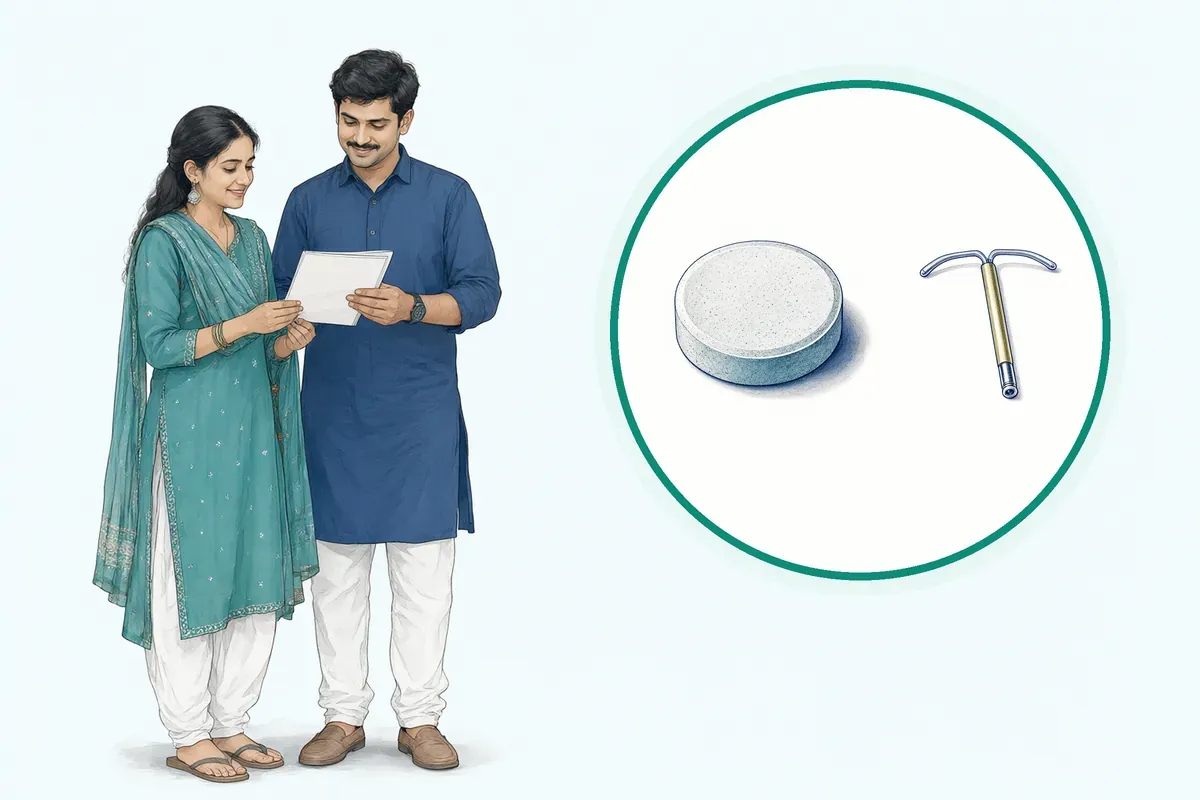
- Procedure time
- 15 to 30 minutes
- Anaesthesia
- Local or none
- Recovery
- Same day return to normal activity
- Price
- ₹500 to ₹15,000typical range in India; ask us for an estimate
Unplanned pregnancy worry
You are not sure which contraception fits your life
Choosing a method can feel confusing. You may worry about side effects, cost, or how a method affects future pregnancy. You want clear facts without pressure.
-
Too many options
Pills, devices, implants and surgery each work differently. It is hard to compare them alone.
-
Side effect fears
You may have heard about weight gain, bleeding changes or mood shifts. You want honest information.
-
Future fertility
You wonder if a method will delay pregnancy later. You need to know what is reversible.
-
Emergency need
After unprotected sex you need a reliable option fast. You want to know the time limits.
Long-acting reversible methods such as intrauterine devices or implants have the highest effectiveness.
Why Jaipur Hospital
You want a method that fits your routine and budget without surprise side effects or judgment.
Your care plan
Your first steps with us
- 1 Call or visit OPD for a counselling appointment
- 2 Discuss health history and preferences with a gynaecologist
- 3 Choose a method and schedule insertion or procedure
- 4 Return for follow-up and any adjustments needed
How the methods are provided
A gynaecologist reviews your health, explains each option, and performs the chosen procedure in the OPD or day-care theatre. Most procedures take 15 to 30 minutes with local or no anaesthesia.
-
IUCD Insertion
A copper T or hormonal IUS is placed inside the uterus. It works for years and can be removed anytime.
-
Subdermal Implant
A hormone-releasing rod is inserted under the skin of the upper arm. It lasts up to three years.
-
Tubal Ligation
Laparoscopic or minilap surgery blocks the fallopian tubes. It is a long-term sterilisation method.
-
Emergency Contraception
An oral pill or copper IUCD can be used within five days of unprotected sex to prevent pregnancy.
Why patients trust us
- 1991 Serving Jaipur for 35 years
- NABH Accredited hospital
- 3 Obstetrics and Gynaecology consultants
- 24×7 Emergency, ICU and ambulance
- 25 Cashless schemes and insurers
What studies show about contraception
-
More than 99% effective
IUDs and implants prevent pregnancy in over 99 of 100 women each year.
-
Less than 1% failure per year
Long-acting methods such as intrauterine devices and implants have failure rates below 1% annually.
-
85% effective
Emergency contraceptive pills prevent pregnancy in about 85 of 100 women when taken correctly.
If it is left untreated
Without contraception, unintended pregnancy can occur. This carries health risks, especially for adolescents, and may limit education or work opportunities.
Life with a method that suits you
Most people find a method that fits their routine and gives them control over pregnancy timing.
-
Predictable routine
You know your protection is in place without daily effort for long-acting methods.
-
Manageable periods
Hormonal options often make periods lighter or less painful over time.
-
Reversible when ready
Removing an IUD or implant lets fertility return quickly for most people.
-
Peace of mind
You can focus on work, study or family without constant pregnancy worry.



Frequently asked questions
Questions patients ask about contraception and family planning
Which problems are assessed under contraception and family planning?
In short
Contraception and family planning at Jaipur Hospital covers prevention of unintended pregnancy, spacing of births, and management of menstrual health concerns. The service includes counselling, intrauterine device insertion, subdermal implants, sterilisation procedures, and emergency contraception. Each method is matched to your health profile and reproductive goals.
In detail
The assessment begins with a review of your medical history, current medications, and any conditions such as hypertension, diabetes, or clotting disorders that influence method choice.
Evidence shows copper IUDs suit most patients while hormonal IUDs may reduce heavy bleeding but require evaluation of thrombosis risk. Combined hormonal methods are generally avoided if you have risk factors for venous thrombosis.
Long-acting reversible methods such as IUDs and implants have the highest effectiveness with failure rates below one percent per year. The team also addresses side effects like menstrual changes, which are common and usually not harmful, and screens for sexually transmitted infections when indicated.
A common belief
Many people think family planning is only about stopping pregnancy.
What actually happens
In fact, hormonal IUDs can treat heavy periods and endometriosis, while copper IUDs work as emergency contraception within five days of unprotected sex. The right choice depends on your health, not just convenience.
Your next step at Jaipur Hospital
You can attend the gynaecology OPD for a counselling session where the doctor will explain each option, typical duration, and cost range of five hundred to fifteen thousand rupees.
Most procedures take fifteen to thirty minutes under local or no anaesthesia with same-day return to normal activity. Bring any previous medical records and a list of current medicines.
How will the doctor decide which tests I need for contraception and family planning?
In short
The doctor at Jaipur Hospital decides tests based on your medical history, age, and the method you are considering. Routine tests are not required for every method. Blood pressure, weight, and a pelvic examination are common before starting hormonal methods or inserting an IUD.
In detail
If you have risk factors for thrombosis such as obesity, smoking over age thirty-five, or a family history of clots, the doctor may order coagulation studies or liver function tests before prescribing combined hormonal contraception.
Evidence shows progestin-only methods and copper IUDs are safer in these situations and usually need no extra tests. For IUD insertion, a pregnancy test is done to rule out existing pregnancy.
Screening for sexually transmitted infections may be offered if you are at risk, as undiagnosed infection increases the chance of pelvic inflammatory disease after insertion.
Women with irregular bleeding may need thyroid function tests, haemoglobin, or ultrasound to exclude fibroids or polyps before choosing a hormonal IUD. The in-house laboratory at Jaipur Hospital provides same-day results for most basic tests.
A common belief
Many women think they need a full panel of blood tests before any contraception.
What actually happens
In fact, healthy women starting a copper IUD or implant often need only a pregnancy test. Combined pills need more checks because oestrogen raises clotting risk. The doctor tailors tests to you, not a fixed list.
Your next step at Jaipur Hospital
The doctor will explain why each test is suggested and what the results mean for your options. Most tests are done on the same visit or within a day. You can discuss any concerns about cost or discomfort. No procedure is done without your informed consent.
How soon should I expect improvement after the chosen contraception treatment?
In short
Improvement depends on the method chosen. For copper IUCD, contraception works immediately. Hormonal IUCD and implant may need up to seven days for full effect if inserted after the first five days of your period. Jaipur Hospital will give you clear guidance at insertion.
In detail
Non-contraceptive benefits such as lighter periods or less pain with hormonal IUCD usually develop over three to six months. Studies show menstrual bleeding and pain often decrease gradually. The implant can cause unpredictable spotting in the first months before settling.
Copper IUCD may increase bleeding and cramping initially, which often improves with time. Emergency contraception with copper IUCD works immediately and can stay in place for ongoing protection. Your surgeon will explain what to expect for your specific method.
A common belief
A common belief is that all methods work instantly and periods improve immediately.
What actually happens
In reality, hormonal methods often cause irregular spotting at first, and copper IUCD can make periods heavier before they settle. Knowing the timeline helps you plan.
Your next step at Jaipur Hospital
Track your bleeding pattern and any symptoms in the first few months. Attend the routine follow-up visit, usually after your first period post-insertion. If bleeding is heavy, painful, or you have concerns, contact Jaipur Hospital sooner. Most methods require no special rehabilitation. Your surgeon will advise on when to resume intercourse and any backup contraception needed.
Which contraception method fits my health, preferences, and pregnancy plans?
In short
The method that fits you depends on your health, whether you want children later, and your tolerance for bleeding changes. Jaipur Hospital provides counselling to match you with a suitable option. Your surgeon will review medical history, lifestyle, and future pregnancy plans before recommending a method.
In detail
Long-acting reversible methods such as copper IUCD, hormonal IUCD, and subdermal implant have the highest effectiveness and suit many women. Copper IUCD is hormone-free and lasts up to ten years. Hormonal IUCD reduces heavy bleeding and pain over time.
Implant lasts up to five years and stops ovulation. Tubal ligation is long-term and suits those certain they do not want future pregnancy. Combined hormonal methods may help acne or endometriosis but carry higher thrombosis risk in some conditions. Progestin-only methods are safer with certain health issues. Your surgeon will discuss each option's benefits, side effects, and duration.
A common belief
People often pick a method based on what a friend uses.
What actually happens
But medical history, such as clotting risk or migraine, changes what is safe. Also, some methods improve heavy periods while others worsen them. A personal review avoids mismatches.
Your next step at Jaipur Hospital
Bring a list of current medicines, past surgeries, and any allergies to the consultation. Think about how important menstrual regularity is to you and when you might want pregnancy. The surgeon may suggest a trial of a method with a follow-up review. You can switch methods if needed.
How can I decide whether to seek advice about IUCD insertion and removal?
In short
Consider IUCD if you want long-acting reversible contraception for three to ten years, prefer a non-hormonal or low-hormone option, or need emergency contraception that continues working. Jaipur Hospital offers both copper and hormonal IUCDs with counselling on suitability.
In detail
Evidence shows intrauterine devices are more than ninety-nine percent effective and last three to ten years depending on type. The copper IUCD releases no hormones and can stay for up to ten years.
The hormonal IUS releases progestin, reduces heavy bleeding and lasts three to eight years. Both are safe for most women including those breastfeeding. Insertion takes fifteen to thirty minutes under local anaesthesia or none. Removal is quick and fertility returns immediately.
You may want advice if you have heavy periods, want to avoid daily pills, have a condition like endometriosis, or need emergency contraception within five days of unprotected sex. The doctor checks for uterine anomalies, active infection or unexplained bleeding before insertion.
If you experience severe pelvic pain, fever, unusual discharge or feel the device in the vagina after insertion, seek removal advice promptly.
A common belief
Some women wait until they have side effects from pills or miss doses.
What actually happens
IUCDs avoid user error but need a clinician for placement and removal. Delaying advice can mean an unplanned pregnancy or untreated side effects.
Your next step at Jaipur Hospital
Write down your menstrual pattern, medical history and preferences. Visit the gynaecology OPD for a brief examination and counselling. The doctor will explain the procedure, check eligibility and schedule insertion.
Can I request a female clinician or a chaperone for an intimate examination?
In short
Yes, you can request a female clinician or a chaperone for any intimate examination or procedure. Jaipur Hospital respects your comfort and will arrange a female doctor or a trained attendant to be present during IUCD insertion, implant placement or any gynaecological check.
In detail
Hospital policy supports patient dignity and choice. You may ask for a female gynaecologist when booking your appointment. If a male doctor is on duty, a female nurse or attendant will act as a chaperone during the examination.
This applies to all procedures including IUCD insertion, implant insertion or removal, pelvic examination and counselling sessions. You can also bring your own attendant such as a family member or friend. The staff will explain each step before proceeding and pause if you feel uncomfortable. Your consent is taken before any intimate procedure. The hospital follows standard protocols for privacy, draping and respectful communication.
A common belief
Some patients hesitate to ask, thinking it may cause delay or offence.
What actually happens
The hospital expects such requests and has female staff and trained attendants ready. Not asking can make you uncomfortable during a sensitive procedure.
Your next step at Jaipur Hospital
When you call or visit for an appointment, mention your preference for a female clinician or chaperone. The reception will note it and schedule accordingly. You can also ask the nurse on arrival.
Which symptoms should prompt me to see a specialist?
In short
See a gynaecologist at Jaipur Hospital if you have heavy or painful periods, irregular cycles, acne linked to your cycle, or want to start, change or stop contraception. Also seek advice if you think you may be pregnant or need emergency contraception.
In detail
Symptoms such as heavy menstrual bleeding, severe period pain, irregular or absent periods, and cyclical acne often indicate hormonal conditions like endometriosis or polycystic ovary syndrome that contraception can help manage.
If you are using a method and notice the IUD strings are missing, feel the device in the cervix or vagina, have severe pelvic pain, unexplained fever, unusual vaginal discharge, or signs of pregnancy such as a missed period or positive home test, these may signal a problem with the device.
The copper IUD can make periods heavier in the first months, while hormonal IUDs and implants often cause irregular spotting that usually settles over time. Any new or worsening symptom after starting a method should be reviewed.
A common belief
Some people wait until a method fails.
What actually happens
But early review can catch an expelled IUD, an infection, or a method that does not suit your health. Hormonal IUDs and implants often cause irregular bleeding at first, which is normal, but persistent heavy bleeding or pain needs checking. The copper IUD may increase period flow initially.
Your next step at Jaipur Hospital
Call the gynaecology OPD to schedule a review. Bring any records of your current method. The doctor will examine you, check the device if needed, and adjust your plan. Most reviews are quick and done as an outpatient visit.
How will the results change my care plan for contraception and family planning?
In short
Test results at Jaipur Hospital directly shape which contraceptive methods are safe and suitable for you. Normal results usually allow all options. Abnormal findings such as high blood pressure, abnormal clotting, anaemia, or active infection may limit combined hormonal methods or delay IUD insertion until the issue is managed.
In detail
If blood pressure is elevated or coagulation studies show increased thrombosis risk, combined pills, vaginal ring, and patch are generally avoided. Evidence supports progestin-only methods, copper IUD, or implant as safer alternatives.
If haemoglobin is low, the doctor may treat anaemia first because copper IUDs can increase menstrual bleeding. A positive pregnancy test means IUD insertion is postponed and pregnancy options are discussed.
If sexually transmitted infection screening is positive, treatment is given before any intrauterine procedure to reduce pelvic inflammatory disease risk. Ultrasound showing fibroids distorting the uterine cavity may make IUD placement difficult, so the implant or injectable may be preferred. The doctor reviews each result with you and adjusts the plan accordingly.
A common belief
Some women fear abnormal results mean they cannot use any contraception.
What actually happens
That is not true. There is almost always a safe option. Progestin-only methods, copper IUDs, and implants work well for most medical conditions. The plan adapts to your body, not the other way around.
Your next step at Jaipur Hospital
You will receive a clear explanation of how each result affects your choices. The care plan is updated at the same visit or at a short follow-up. Most adjustments involve switching to a safer method rather than stopping contraception altogether. The team ensures you leave with an effective option that matches your health status.
What should I do if symptoms persist or worsen after contraception treatment?
In short
If you have severe pelvic pain, unexplained fever, unusual vaginal discharge, feel the device in the cervix or vagina, or suspect pregnancy, contact Jaipur Hospital promptly. These symptoms may indicate a problem needing evaluation. Your surgeon will advise whether removal or further care is required.
In detail
Evidence lists warning signs that the IUCD might need removal: severe pelvic pain, fever, abnormal discharge, feeling the device, or signs of pregnancy such as a positive test or missed period.
For implants, persistent pain at the insertion site, signs of infection, or suspected pregnancy also need review. Serious complications are rare but can include expulsion, perforation, or infection, usually soon after insertion.
Bleeding changes are common and often settle, but heavy or prolonged bleeding should be assessed. Your surgeon will check the device position and rule out infection or pregnancy.
A common belief
Some people wait, hoping symptoms will pass.
What actually happens
But fever or severe pain can mean infection or displacement. Early review prevents complications. Bleeding changes alone are often normal, but when combined with pain or fever they need attention.
Your next step at Jaipur Hospital
Do not try to remove the device yourself. Call Jaipur Hospital during working hours or visit the emergency department if symptoms are severe. Bring your insertion card if you have one. The surgeon may perform an examination or ultrasound.
Most issues are managed with medication or simple removal. Follow-up is usually within a few days. Keep a record of your symptoms to share at the visit.
How effective is the contraception method with typical use?
In short
Effectiveness varies by method. Intrauterine devices and implants are more than 99% effective with typical use. Copper IUCD as emergency contraception is also more than 99% effective. Emergency contraceptive pills are around 85% effective. Sterilisation is more than 99% effective. Jaipur Hospital will provide the typical-use rates for each option during counselling.
In detail
Evidence shows IUDs and implants have failure rates below 1% per year. Copper IUCD works immediately and lasts five to ten years. Hormonal IUCD lasts three to eight years depending on brand. Implant lasts up to five years.
Oral contraceptive pills are up to 99% effective with perfect use but about 93% with typical use due to missed doses. Condoms are up to 98% effective with perfect use, lower with typical use.
Emergency contraceptive pills: ulipristal acetate up to five days, levonorgestrel up to four days; effectiveness decreases with delay. Your surgeon will explain how typical-use rates apply to your chosen method.
A common belief
People often quote perfect-use numbers.
What actually happens
Typical use matters more — missed pills lower effectiveness. Long-acting methods remove user error, so their typical and perfect rates are nearly the same.
Your next step at Jaipur Hospital
During counselling you will receive the typical-use effectiveness for each method. Consider how consistently you can use a method — daily pills need routine, while IUDs and implants work without daily action. Follow-up visits ensure continued protection.
FAQ library
Questions and answers about contraception and family planning
When you contact us
Get your contraception plan today
Contact Jaipur Hospital for a gynaecology OPD consultation, in-house tests if needed, a clear explanation of options, a cost estimate, cashless scheme help and follow-up care.
- A consultation with a gynaecologist in the OPD
- Your scans and reports reviewed, with tests done in-house if you need them (laboratory, X-ray and imaging)
- Your options explained in plain words, including whether you need surgery at all
- A cost estimate before you decide
- Help with cashless treatment under RGHS, MAA Yojana, CGHS and empanelled insurers and TPAs
- Follow-up visits after your treatment
Overview
Contraception and Family Planning: what to know
What contraception and family planning means
Contraception protects you from pregnancy by preventing an egg from being fertilised by sperm. Family planning allows people to attain their desired number of children and determine the spacing of pregnancies. It is achieved through use of contraceptive methods and the treatment of infertility. Access to contraception supports the fundamental human right to decide freely and responsibly the number and spacing of children.
Many different contraceptive options are available to prevent unintended pregnancy, including both temporary (reversible) and long-acting methods. Implants, intrauterine devices (IUDs), injections, pills, vaginal rings, barrier methods, sterilisation, emergency contraception and natural methods are available. Long-acting reversible contraception (LARC) gives safe, effective contraception over a number of years.
The copper IUD releases copper into the uterus and does not contain hormones. It is approved for up to 10 years of use. The hormonal IUD releases a hormone called progestin into the uterus and is approved for up to 3 to 8 years depending on the brand.
The birth control implant is a flexible, plastic rod about the size of a matchstick inserted just under the skin in the upper arm. It releases progestin and is approved for up to 5 years of use. Sterilisation is a method of contraception that involves a surgical procedure. Condoms are the only method that can prevent both pregnancy and the transmission of sexually transmitted infections, including HIV.
Symptoms and warning signs that need urgent care the same day
- Severe pelvic pain
- Unexplained fever
- Unusual vaginal discharge
- IUD felt in cervix or vagina
- Signs of pregnancy
When you use an IUD, changes in menstrual bleeding are normal and not harmful. With the copper IUD, painful periods and bleeding may increase during the first months of use. Hormonal IUDs may cause frequent spotting, more days of bleeding, and heavier bleeding in the first months of use. The implant can cause changes in menstrual bleeding; the most common change is unpredictable bleeding.
Call your doctor if you have any of the following:
- Severe pelvic pain
- Unexplained fever
- Unusual vaginal discharge
- Feeling the IUD in the cervix or vagina
- Signs of pregnancy such as a positive home pregnancy test, missed menstrual period, nausea or breast tenderness
In the rare case that a pregnancy happens with the IUD in place, there is a higher chance that it will be an ectopic pregnancy. This is a serious condition that needs medical attention right away. If you get pregnant while the implant is inserted, there is a slightly increased risk of ectopic pregnancy.
Causes of unintended pregnancy and who is at higher risk
- 35 years and over Smoking age limit
- over 35 kg/m2 BMI limit
Unintended pregnancy can happen when no contraception is used, or when a method fails or is used incorrectly. No method of contraception is completely effective against pregnancy. Effectiveness of each method varies. Contraceptive effectiveness is determined by a combination of drug or device efficacy, individual fecundability, coital frequency, and user adherence and continuation.
Vomiting, severe diarrhoea and some medications can affect how well the pill works. Some medications including natural remedies can interfere with the pill and stop it from working. Some medications and natural therapies may interfere with the effectiveness of vaginal rings. Natural family planning methods are overall not as effective as other forms of contraception.
Some of these methods rely on having a regular menstrual cycle. If you have irregular periods, you have a higher chance of getting pregnant. The withdrawal method is not recommended due to the risks of sperm being present in the pre-ejaculate or not withdrawing the penis in time. Emergency contraceptive pills are not recommended as your usual method of contraception.
Certain health conditions affect which methods are suitable.
The combined pill may not be a good option for people who:
- Smoke (35 years and over)
- Have a BMI over 35 kg/m2
- Are at risk of deep vein thrombosis, heart disease or stroke
- Have severe liver disease
- Have received treatment for breast cancer
The vaginal ring has similar restrictions. Oestrogen-containing methods increase the risk of venous thrombosis. In women with positive antiphospholipid antibodies, contraception with combined hormones should be discouraged. Progestin-only and nonhormonal methods are associated with rare serious risks. Long-acting reversible methods such as intrauterine devices or implants can be good choices for adolescents depending on their needs and preferences.
IUDs can be offered to all patients unless there is a gynaecological contraindication. IUDs are safe during breastfeeding and are not affected by other medications.
How contraception needs are assessed: examination and tests
Choosing the right method depends on each individual's health, preferences, and needs. When choosing a method of contraception that is right for you, it is important to have accurate information.
Possible side effects, ease of use, cost, general health, lifestyle and relationships, safety and risk of STI, desire to get pregnant, ability to stop the method, and effort and time involved are factors to consider.:
- Possible side effects
- Ease of use
- Cost
- General health
- Lifestyle and relationships
- Safety and risk of STI
- Desire to get pregnant
- Ability to stop the method
- Effort and time involved
Reasons for needing contraception may include hormonal benefits such as for:
- Heavy menstrual bleeding
- Skipping periods
- Endometriosis
- Acne
Hormonal contraceptives can improve medical conditions associated with hormonal changes related to the menstrual cycle, such as acne, endometriosis, and premenstrual dysphoric disorder. Combined oral contraception can be used to treat heavy menstrual bleeding, polycystic ovary syndrome (PCOS), endometriosis and acne.
The progestogen only pill usually suits people who have side effects when they take oestrogen or cannot take oestrogen for health reasons. The progestogen only pill can be used while breastfeeding and is safe to start after the birth of a baby. Check with your doctor, nurse or pharmacist to find out what options will work for you.
Health worker advice can help people identify appropriate contraceptive methods. All contraceptive methods included in the WHO guidelines have undergone rigorous testing for safety, efficacy, and effectiveness, and are considered safe for most individuals. Modern contraceptive methods do not cause infertility.
Non-surgical and surgical contraception options
- more than 99% IUDs and implants
- around 85% Emergency contraceptive pill
- more than 99% Copper IUD as emergency contraception
- up to 98% Condoms (male)
Intrauterine devices and subdermal implants have the highest effectiveness. IUDs and implants are the most effective (more than 99%) contraception available to prevent pregnancy. The implant lasts for 3 years and is more than 99% effective. The copper IUD is approved for up to 10 years of use.
Hormonal IUDs are approved for up to 3 to 8 years depending on the brand. Over time, the hormonal IUDs help decrease menstrual period pain and heavy menstrual bleeding. The copper IUD can also be used as emergency contraception. The copper IUD is the most effective method (more than 99%) of emergency contraception.
It can be inserted within 5 days of unprotected sex. The emergency contraceptive pill is around 85% effective in preventing pregnancy. It should be taken as soon as possible after unprotected sex.
Oral contraceptive pills, if used correctly, are very effective (up to 99%) at preventing pregnancy. If you make a mistake such as forgetting a pill, effectiveness reduces to 93%. The vaginal ring is at least 99% effective when used correctly. Condoms are up to 98% effective when used the right way.
Internal condoms are 95% effective if used the right way each time. Barrier methods of contraception stop sperm from getting into the uterus to prevent pregnancy. Condoms are the most suitable available protection against sexually transmissible infections (STIs). LARC methods do not protect you from STIs. Injections do not protect you and your partners from STIs.
The pill does not protect you from STIs so use barrier protection such as condoms when having sex. The vaginal ring does not provide protection against STIs so use barrier protection such as condoms when having sex. The diaphragm does not protect you or your partners from STIs. Natural methods do not protect you from STIs.
Sterilisation involves having a surgical procedure and is more than 99% effective. Tubal ligation is usually performed as a keyhole procedure called a laparoscopy under general anaesthetic. A surgeon places a clip on each fallopian tube to block the sperm and egg from meeting. Vasectomy is a quick and easy procedure usually done under local anaesthetic.
It involves cutting the tubes that carry sperm from the testes to the penis. Use another form of contraception during this time and have sperm tests with your doctor. The IUD can be inserted immediately after an abortion, a miscarriage, or childbirth. It can be used while breastfeeding.
The implant can be inserted at any time during your menstrual cycle as long as it is reasonably certain that you are not pregnant. If you want to get pregnant or if you want to stop using it, you can have the IUD removed. You can start trying to get pregnant right after removal.
Using an IUD does not affect your ability to get pregnant in the future. The implant can easily be removed and won't stop you from getting pregnant in the future. An IUD can easily be removed by a doctor or nurse and won't stop your chance of getting pregnant in the future. If you stop injections, it may take a while for your fertility to return.
Preparing for contraception and family planning procedures
Before any procedure, you will have a counselling session with a doctor or nurse.
They will ask about your:
- Medical history
- Current medicines
- Allergies
- Whether you might be pregnant
If you take blood thinners or have a bleeding disorder, tell the team so they can plan safely. For intrauterine device (IUCD) insertion or a subdermal implant, no special fasting is needed. For laparoscopic tubal ligation, you will usually be asked not to eat or drink for six hours before the procedure.
Bring a list of your medicines, any recent test reports, and your insurance or scheme card if you have one.:
- A list of your medicines
- Any recent test reports
- Your insurance or scheme card
Wear loose, comfortable clothing and arrange for an attendant to take you home, especially if you are having a laparoscopic procedure under general anaesthesia.
How contraception and family planning procedures are done
- IUCD insertion Speculum placed, cervix cleaned, device passed into uterus; about 15 minutes, usually no anaesthesia
- Subdermal implant Arm numbed, flexible rod placed under skin with inserter; takes a few minutes
The method used depends on what you choose after counselling. For IUCD insertion, a speculum is placed in the vagina, the cervix is cleaned, and the copper T or hormonal IUS is passed through the cervix into the uterus. The procedure takes about 15 minutes and usually needs no anaesthesia.
For a subdermal implant, a small area on the inner upper arm is numbed with local anaesthetic and the flexible rod is placed under the skin with a special inserter; this takes a few minutes.
For laparoscopic tubal ligation, small cuts are made in the abdomen, a camera and instruments are inserted, and a clip is placed on each fallopian tube to block the sperm and egg from meeting. This is done under general anaesthesia and takes about 30 minutes.
For emergency contraception, a copper IUCD can be inserted within five days (120 hours) of unprotected sex, or an emergency contraceptive pill can be taken as soon as possible. All procedures are done as day care; you go home the same day.
Risks and possible complications of contraception and family planning procedures
- Headaches
- May occur with hormonal methods
- Nausea
- May occur with hormonal methods
- Breast tenderness
- May occur with hormonal methods
- Mood changes
- May occur with hormonal methods
Serious complications from IUCDs are rare. In a small number of cases the device may come out of the uterus, either fully or partly; the risk is higher in teenagers, women with heavy menstrual bleeding, and when inserted immediately after childbirth.
The IUCD can go through the wall of the uterus during placement; this happens in about 1 out of every 1,000 placements and the device will need to be removed. Pelvic inflammatory disease after insertion happens very rarely; women with an undiagnosed sexually transmitted infection at the time of insertion are more likely to develop it.
With the copper IUCD, painful periods and bleeding may increase during the first months of use. Hormonal IUCDs may cause frequent spotting, more days of bleeding, and heavier bleeding in the first months; over time the amount of bleeding and period pain usually decrease and periods may stop completely.
The implant can cause unpredictable bleeding; periods may be less frequent and stop completely, or in some cases become more frequent and last longer.
Other side effects may include:
- Headaches
- Nausea
- Breast tenderness
- Mood changes
- Digestive difficulties
- Breast pain
- Weight gain
- Acne
If pregnancy occurs with an IUCD in place, there is a higher chance of ectopic pregnancy, which needs urgent medical attention. With the implant, if pregnancy occurs there is a slightly increased risk of ectopic pregnancy. For laparoscopic tubal ligation, as with any surgery there is a small risk of injury.
Oestrogen-containing methods increase the risk of venous thrombosis from 2 to 10 events per 10,000 women-years to 7 to 10 events per 10,000 women-years. Progestin-only and non-hormonal methods are associated with rare serious risks.
Recovery and aftercare after contraception and family planning procedures
- Same day Return to normal activity after IUCD or implant
- About a week Avoid heavy lifting and strenuous exercise
After IUCD insertion or implant placement, you can usually return to normal activity the same day. You may have mild cramping or bruising; over-the-counter pain relievers can help. After laparoscopic tubal ligation, you may feel sore at the incision sites and have shoulder tip pain from the gas used during surgery; this settles in a day or two.
Avoid heavy lifting and strenuous exercise for about a week. Keep the insertion or incision sites clean and dry. For IUCDs, you will be shown how to feel for the strings; if you cannot feel them or feel the hard plastic of the device, contact the hospital.
If you have severe pelvic pain, unexplained fever, unusual vaginal discharge, feel the IUCD in the cervix or vagina, or have signs of pregnancy such as a positive home pregnancy test or missed period with nausea or breast tenderness, call the hospital or visit the emergency department.
The IUCD and implant can be removed at any time by a doctor or nurse; fertility returns quickly after removal. After stopping injections, it may take a while for fertility to return. For tubal ligation, the procedure is intended to be irreversible; discuss this fully before choosing it. Use condoms if you need protection against sexually transmitted infections, as these methods do not protect against them.
Results: how well contraception and family planning methods work
- More than 99% IUDs and implants
- More than 99% Copper IUD as emergency contraception
- Around 85% Emergency contraceptive pill
- About 93% Combined oral contraceptive pills (typical use)
Intrauterine devices and subdermal implants have the highest effectiveness among reversible methods, with failure rates of less than 1% per year. In studies, IUDs and implants are more than 99% effective at preventing pregnancy.
The copper IUCD is the most effective form of emergency contraception; when inserted within five days of unprotected sex it is more than 99% effective and can then be left in place for ongoing contraception. The emergency contraceptive pill is around 85% effective in preventing pregnancy, with ulipristal acetate more effective than levonorgestrel.
Combined oral contraceptive pills, if used correctly, are up to 99.5% effective; with typical use effectiveness reduces to about 93%. Contraceptive injections are more than 99% effective when given on time. Condoms are up to 98% effective when used correctly. Tubal ligation is more than 99% effective.
Long-acting reversible methods such as IUCDs and implants are also good choices for adolescents depending on their needs and preferences. Using an IUCD does not affect your ability to get pregnant in the future after it is removed.
Cost and insurance for contraception and family planning in Jaipur
The typical price range for these services in India is ₹500 to ₹15,000. The exact cost depends on the method chosen (copper IUCD, hormonal IUS, subdermal implant, or laparoscopic tubal ligation), the type of device or consumables used, whether anaesthesia is needed, and any pre-procedure tests. Jaipur Hospital is a NABH-accredited multispeciality hospital established in February 1991.
It accepts patients under:
- RGHS
- MAA Yojana
- CGHS
- A panel of private insurers and TPAs
The hospital has 24×7 emergency and ambulance services, in-house pharmacy, in-house diagnostic laboratory and imaging, modular operation theatres, and intensive care facilities. For a personal estimate, contact the hospital on 0141-2551500, 0141-2554139, or +91-7414-001-001, or email [email protected]. The hospital is located at S16A-17, Mahaveer Nagar, Near Gopalpura Flyover, Main Tonk Road, Jaipur, Rajasthan 302018.