

Obstetrics and Gynaecology · Jaipur Hospital
Heavy Periods Treatment in Jaipur
Heavy bleeding disrupting life? Get a clear assessment and a simple plan at Jaipur Hospital.
- Serving Jaipur since 1991 (35 years)
- NABH accredited
- 24×7 emergency & ICU
- Cashless: MAA Yojana + 32 insurers
- Treatment length
- Medical: monthsSurgical: 30 to 90 minutes
- Anaesthesia
- Medical: noneSurgical: spinal or general
- Recovery
- Medical: 1 to 2 cyclesAblation: 1 to 2 weeks · Hysterectomy: 4 to 6 weeks
- Price
- ₹500 to ₹3,000 per month (medical)₹40,000 to ₹1,50,000 (surgical)typical range in India; ask us for an estimate
Periods that take over life
Heavy bleeding that stops you living normally
You soak through pads, pass clots, feel exhausted, and miss work or family events. Iron levels drop and anaemia sets in.
-
Soaking through protection
Needing to change pads or tampons every hour or two, even at night.
-
Passing large clots
Clots bigger than a coin that come with sudden heavy flow.
-
Constant tiredness
Feeling breathless, dizzy or pale because blood loss lowers iron.
-
Life on hold
Avoiding travel, exercise or social plans because bleeding is unpredictable.
Heavy menstrual bleeding affects 10 to 35% of women and can severely affect quality of life.
Why Jaipur Hospital
You worry that the next period will keep you home from work, drain your savings on pads and medicines, and leave you too tired to care for your family.
Your care plan
Your first steps with us
- 1 Call or visit OPD for a gynaecology consultation
- 2 Review scans and reports; do blood tests and ultrasound in-house
- 3 Choose medical or surgical option with a clear cost estimate
- 4 Have treatment and attend follow-up visits for recovery
Insurance and schemes
How cashless works
Cashless treatment under MAA Yojana and with 32 insurers.
-
Tell us when you book
Say you are insured or have a scheme card, and send a photo of the card on WhatsApp so our insurance desk can check it in advance.
-
We get the approval
Once your doctor advises admission, the insurance desk sends the pre-authorisation request to your insurer or TPA; for planned surgery, approval can come before you are admitted.
-
Settled at discharge
The approved amount is settled between the insurer and the hospital; you pay only what the policy does not cover.
How the operation is done
Surgical options are done through the vagina or keyhole incisions under spinal or general anaesthesia. Medical options are taken at home.
-
Tranexamic Acid and NSAIDs
Non-hormonal tablets taken only on heavy bleeding days to reduce flow.
-
Levonorgestrel IUS (Mirena)
A small device placed in the uterus that releases hormone locally; first-line long-term option that reduces bleeding by 90% at 6 months.
-
Endometrial Ablation (Novasure or Rollerball)
Destroys the uterine lining using heat or energy; for women who have completed their family and want to avoid hysterectomy.
-
Laparoscopic Hysterectomy
Keyhole removal of the uterus; definitive treatment with faster recovery than open surgery.
Why patients trust us
- 1991 Serving Jaipur for 35 years
- NABH Accredited hospital
- 3 Obstetrics and Gynaecology consultants
- 24×7 Emergency, ICU and ambulance
- 32 Cashless insurers, plus MAA Yojana
What research shows about this treatment
-
1 to 2 weeks
Most people return to usual activities within 48 hours after endometrial ablation; full benefit seen over several months.
-
4 to 6 weeks
Recovery after laparoscopic hysterectomy typically takes four to six weeks before normal routine resumes.
-
90% at 6 months
Levonorgestrel IUS reduces menstrual bleeding by about 90% at six months in clinical studies.
If it is left untreated
Untreated heavy bleeding often leads to iron deficiency anaemia, causing fatigue, breathlessness and reduced capacity for work and daily tasks.
Life after treatment
Most women find periods become manageable, energy returns, and they can plan life without bleeding dictating the schedule.
-
Predictable cycles
Most people have lighter, regular periods or stop bleeding altogether after treatment.
-
Energy returns
Iron levels rebuild over a few months, reducing tiredness and breathlessness.
-
Freedom to plan
You can travel, work and exercise without worrying about sudden heavy flow.
-
Fewer clinic visits
Long-acting options like the IUS or surgery mean less frequent medication changes.
Meet the team
Your obstetrics and gynaecology doctors
Explore our gynaecology and maternity hospital in Jaipur: every treatment, the doctors and what to expect at your visit.



Frequently asked questions
Questions patients ask about heavy periods treatment
What is heavy menstrual bleeding treatment?
In short
Heavy menstrual bleeding treatment at Jaipur Hospital includes medical and surgical options. Medical treatment uses tranexamic acid, NSAIDs or a levonorgestrel intrauterine system (Mirena) to reduce bleeding. Surgical options are hysteroscopic endometrial ablation and laparoscopic hysterectomy. The choice depends on your age, family plans and the cause of bleeding.
In detail
Medical treatment is usually tried first. Tranexamic acid and NSAIDs are taken only on heavy bleeding days. The levonorgestrel intrauterine system releases hormone locally and reduces bleeding by about 90 percent at six months in studies.
If medical treatment does not help, endometrial ablation destroys the uterine lining using heat or radiofrequency energy. This is a daycare procedure under spinal or general anaesthesia. Laparoscopic hysterectomy removes the uterus and is a definitive option for women who have completed their family. Evidence shows surgery controls bleeding more effectively at one year, while the intrauterine system avoids surgery for many women.
- The levonorgestrel intrauterine system releases hormone locally and reduces bleeding by about 90 percent at six months in studies.
A common belief
Many women think hysterectomy is the only answer.
What actually happens
In fact, the intrauterine system avoids surgery for most women, and ablation is a smaller daycare procedure that preserves the uterus.
Your next step at Jaipur Hospital
Your gynaecologist will assess your bleeding pattern, check for anaemia and may advise an ultrasound or hysteroscopy. Medical treatment can start the same day. Surgical procedures need pre-operative tests and a short hospital stay.
Recovery is one to two cycles for medical treatment, one to two weeks for ablation and four to six weeks for hysterectomy.
Which specialist should I see for heavy menstrual bleeding?
In short
You should see a gynaecologist for heavy menstrual bleeding. At Jaipur Hospital, the Gynaecology department evaluates bleeding patterns, orders relevant tests, and offers both medical and surgical treatments including hysteroscopic endometrial ablation and laparoscopic hysterectomy.
In detail
A gynaecologist is the specialist trained to diagnose and manage heavy menstrual bleeding. The first visit includes a detailed menstrual history, general and pelvic examination, and a plan for investigations such as haemoglobin, iron studies, thyroid function, coagulation screen and pelvic ultrasound.
If medical treatment is chosen, the gynaecologist prescribes tranexamic acid, NSAIDs or inserts a levonorgestrel intrauterine system in the OPD. If surgery is needed, the same team performs hysteroscopic ablation as a daycare procedure or laparoscopic hysterectomy with a two to three night stay. The department works with anaesthesia and critical care for safe perioperative care.
A common belief
Some women go to a general physician first.
What actually happens
A gynaecologist can insert the IUD or plan surgery in the same visit, saving time and avoiding extra referrals.
Your next step at Jaipur Hospital
Book an OPD appointment in the Gynaecology department. No referral is needed. Bring any previous blood reports or ultrasound images. The doctor will assess you and discuss a treatment plan on the same visit.
What treatment options are available for my heavy menstrual bleeding?
In short
Treatment options at Jaipur Hospital include medical therapy with tranexamic acid, NSAIDs or a levonorgestrel intrauterine system (Mirena), and surgical options such as hysteroscopic endometrial ablation or laparoscopic hysterectomy. The choice depends on the cause, your age, family plans and preference.
In detail
Medical treatment is usually first-line. Tranexamic acid and NSAIDs are taken only on heavy bleeding days. The levonorgestrel IUS is first-line long-term therapy; it reduces bleeding by about 90 percent at six months and avoids surgery for most women.
If medical treatment fails or is not suitable, endometrial ablation destroys the uterine lining using heat or radiofrequency. It is a daycare procedure under spinal or general anaesthesia for women who have completed their family.
Laparoscopic hysterectomy removes the uterus through keyhole incisions and gives definitive control of bleeding but ends fertility. Evidence shows surgery controls bleeding more effectively at one year, while satisfaction rates between surgery and the IUS become similar over time. The gynaecologist will discuss the pros and cons of each option for your situation.
- The levonorgestrel IUS is first-line long-term therapy; it reduces bleeding by about 90 percent at six months and avoids surgery for most women.
A common belief
Many think hysterectomy is the only surgery.
What actually happens
Ablation is a smaller daycare procedure that keeps the uterus and works well for women who have completed their family.
Your next step at Jaipur Hospital
Medical treatment can start at the first visit; the IUS is inserted in the OPD. Surgical procedures need preoperative blood tests, fitness check and a planned admission. Ablation is daycare; hysterectomy needs two to three nights stay.
Recovery is one to two cycles for medical treatment, one to two weeks for ablation, and four to six weeks for hysterectomy.
What can I safely do at home to manage symptoms of heavy periods?
In short
At home you can track your bleeding, use prescribed medication correctly, and manage pain and fatigue. Jaipur Hospital advises simple measures while you wait for or undergo treatment. These steps support your comfort and health.
In detail
Keep a menstrual diary noting pad or tampon changes and clot size; this helps the doctor assess blood loss. Take tranexamic acid or NSAIDs exactly as prescribed during heavy days. Use a heating pad or hot water bottle for cramps.
Maintain good hydration and rest when bleeding is heaviest. Iron-rich foods such as green leafy vegetables, lentils, and jaggery support haemoglobin; your doctor may also prescribe iron supplements if you are anaemic. Avoid aspirin as it can increase bleeding.
If you feel dizzy, very tired, or pass large clots, contact the hospital. These self-care steps complement medical or surgical treatment but do not replace it.
Your next step at Jaipur Hospital
Start a period diary today and bring it to your next appointment. If you are already on medication, take it as directed and report any side effects.
How does the term "heavy periods" relate to heavy menstrual bleeding treatment?
In short
Heavy periods is the everyday name for heavy menstrual bleeding, a condition that affects many women in Jaipur. At Jaipur Hospital, the gynaecology team uses this term to start the conversation about assessment and treatment options. The words mean the same thing and both point to the same clinical pathway.
In detail
Heavy menstrual bleeding is classically defined as blood loss of 80 mL or more per cycle, though the practical definition includes periods that soak through protection, last longer than seven days, or disrupt daily life.
Studies show it affects 10 to 35% of women and can severely affect quality of life.
The term heavy periods helps patients describe the symptom so the doctor can look for structural causes such as fibroids or adenomyosis, hormonal imbalances, or functional bleeding with no clear cause. Accurate naming leads to the right investigations and a treatment plan that matches the severity and the patient's goals.
A common belief
Many women think heavy bleeding is normal or something to put up with.
What actually happens
In fact, it can lead to anaemia and affect work, sleep and confidence. Naming it correctly is the first step to getting the right treatment.
Your next step at Jaipur Hospital
If your periods feel heavy, book a consultation at Jaipur Hospital. The gynaecologist will take a history, examine you, and may order blood tests or an ultrasound to find the cause.
Treatment can start with medication or a hormonal device, and surgical options are available if needed. Call 0141-2551500 or 7414 001 001 to arrange your visit.
What could cause irregular, absent, heavy, or painful periods?
In short
Many conditions can cause irregular, absent, heavy, or painful periods. At Jaipur Hospital, the gynaecology team looks for structural problems such as fibroids or adenomyosis, hormonal disorders like thyroid disease or polycystic ovary syndrome, coagulation problems, and functional bleeding with no clear structural cause. The cause guides the treatment plan.
In detail
Studies identify the main structural causes of heavy bleeding as adenomyosis and fibroids. Non-structural causes include coagulopathies and iatrogenic factors such as medications. In a substantial proportion of women, the underlying cause remains unknown and is called functional heavy menstrual bleeding.
Irregular or absent periods often point to hormonal conditions such as thyroid dysfunction, polycystic ovary syndrome, or perimenopause. Painful periods may be due to endometriosis, adenomyosis, or primary dysmenorrhoea.
The gynaecologist takes a detailed history, examines you, and orders blood tests and ultrasound to identify the cause. Accurate diagnosis ensures the treatment targets the right problem, whether it is medical therapy, a hormonal device, or surgery.
A common belief
Many women assume painful or heavy periods are normal.
What actually happens
They are not. Untreated heavy bleeding can lead to anaemia and fatigue. Finding the exact cause means you get the right treatment instead of trial and error.
Your next step at Jaipur Hospital
If your periods are irregular, absent, heavy, or painful, book a consultation at Jaipur Hospital. The gynaecologist will assess you, order the needed tests, and explain the options. Early evaluation can prevent anaemia and improve quality of life. Call 0141-2551500 or 7414 001 001 to arrange your visit.
How could heavy menstrual bleeding or its treatment affect future pregnancy?
In short
Heavy menstrual bleeding itself does not usually prevent pregnancy, but the underlying cause such as fibroids or adenomyosis may affect fertility. At Jaipur Hospital, the gynaecology team discusses fertility plans before starting treatment because some options preserve fertility and others do not. Your reproductive goals guide the choice.
In detail
Medical treatments such as tranexamic acid, NSAIDs, combined oral contraceptives, or a levonorgestrel intrauterine system are reversible and do not impair future fertility. The levonorgestrel intrauterine system reduces bleeding by about 90% at six months and can be removed when you wish to conceive.
Endometrial ablation destroys the uterine lining and is not recommended if you want future pregnancy; pregnancy after ablation is dangerous with higher risks of miscarriage and complications. Hysterectomy removes the uterus and ends fertility permanently.
The gynaecologist explains each option's effect on fertility so you can decide. If fertility preservation is important, medical therapy or the levonorgestrel intrauterine system are usually tried first. Structural causes like fibroids may be treated with myomectomy to preserve the uterus.
- The levonorgestrel intrauterine system reduces bleeding by about 90% at six months and can be removed when you wish to conceive.
A common belief
Some women choose ablation not realising pregnancy afterwards is dangerous.
What actually happens
Others delay treatment fearing infertility, but untreated fibroids or adenomyosis can also reduce fertility. Discussing your plans upfront ensures you get the right option.
Your next step at Jaipur Hospital
If you plan to have children, tell the gynaecologist at your consultation at Jaipur Hospital. The team will recommend fertility-sparing options first and explain the timeline for trying to conceive after stopping treatment. Call 0141-2551500 or 7414 001 001 to book your visit.
Which symptoms or changes should prompt me to seek medical advice for heavy menstrual bleeding?
In short
You should see a doctor at Jaipur Hospital if your periods soak through a pad or tampon every hour for several hours, last longer than seven days, or you pass clots larger than a coin. Other reasons are bleeding between periods, after sex, or after menopause, and feeling tired, dizzy or short of breath from anaemia.
In detail
Heavy menstrual bleeding affects 10 to 35 percent of women and can severely affect quality of life. Blood loss of 80 ml or more per cycle is the clinical definition.
Regular loss around 60 ml leads to iron depletion, and around 120 ml leads to anaemia. Painful cramps, bloating and worry about leaks are common. If your cycle changes suddenly or stops you from doing normal activities, it is time for an evaluation.
The gynaecologist will check for structural causes like fibroids or adenomyosis, hormonal imbalance, coagulation disorders or medication effects. In many women no structural cause is found, which is called functional heavy menstrual bleeding.
A common belief
Some women think heavy periods are normal or just part of ageing.
What actually happens
But losing that much blood regularly causes anaemia and can signal fibroids, adenomyosis or hormonal problems that need treatment.
Your next step at Jaipur Hospital
Book a gynaecology consultation at Jaipur Hospital. The doctor will ask about your bleeding pattern, duration, clots and impact on daily life. A pelvic examination and blood tests for haemoglobin and iron are usually done first.
An ultrasound may be advised to look at the uterus and ovaries. Early assessment helps prevent worsening anaemia and guides treatment. Call us to schedule your visit.
What will the doctor ask and check at the first visit for heavy menstrual bleeding?
In short
At the first visit to Jaipur Hospital, the gynaecologist will ask about your menstrual pattern, duration, clot size, pad or tampon frequency, bleeding between periods or after sex, medication history, and impact on daily life. A pelvic examination will be done to check the uterus size and look for any visible cause.
In detail
The doctor needs to know if blood loss exceeds 80 ml per cycle, which is the clinical threshold for heavy menstrual bleeding. Questions cover cycle regularity, pain, family history of bleeding disorders, and current medications such as tamoxifen or anticoagulants.
The examination assesses uterine size, tenderness and any cervical or vaginal lesions. Blood tests for haemoglobin, ferritin and coagulation are usually ordered. An ultrasound scan of the pelvis is the standard first imaging test to identify fibroids, adenomyosis or polyps.
Further tests like hysteroscopy or endometrial biopsy are considered only if the ultrasound is unclear or if there are risk factors for hyperplasia or cancer.
A common belief
Women often think a scan is done immediately.
What actually happens
The history and examination come first because they decide which tests are needed and whether the cause is structural, hormonal or functional.
Your next step at Jaipur Hospital
Bring a record of your last three to six cycles if possible. The consultation takes about 20 to 30 minutes. Blood can be drawn at the in-house laboratory the same day. Ultrasound may be done at the hospital or an imaging centre. Results are usually available within a day. The doctor will then discuss medical or surgical options.
Can heavy menstrual bleeding improve without a procedure or operation?
In short
Yes, heavy menstrual bleeding often improves with medical treatment alone. At Jaipur Hospital, tranexamic acid, NSAIDs or a levonorgestrel intrauterine system (Mirena) are used first. The IUS reduces bleeding by about 90 percent at six months in studies and avoids surgery in most cases. Many women do not need a procedure.
In detail
Medical treatment is the usual first step. Tranexamic acid and NSAIDs are taken only during heavy bleeding days. The levonorgestrel IUS works locally on the endometrium, causing thinning and glandular atrophy without suppressing ovulation.
Evidence shows oral medication suits a minority of women in the long term, but the IUS provides a better alternative to surgery in most cases.
In studies, 59 percent of women randomised to oral medication had surgery within two years, while 46 percent of those assigned to the IUS had hysterectomy by ten years. This means more than half of IUS users avoid surgery long term. The doctor will assess if medical treatment is appropriate for your cause and preferences.
A common belief
A common belief is that heavy periods always end in hysterectomy.
What actually happens
In reality, the hormone IUS is effective long term and more than half of users avoid surgery for ten years or more.
Your next step at Jaipur Hospital
If you prefer to avoid surgery, discuss medical options at your consultation. The IUS can be inserted in the OPD. Follow-up is needed at one to three months to check bleeding pattern and side effects. If medical treatment does not control bleeding adequately, surgical options remain available.
FAQ library
Questions and answers about heavy periods treatment
When you contact us
A clear plan and cost estimate
Contact Jaipur Hospital for a gynaecology consultation, review of your reports, plain-language options, a cost estimate before you decide, and help with cashless insurance.
- A consultation with a gynaecologist in the OPD
- Your scans and reports reviewed, with tests done in-house if you need them (laboratory, X-ray and imaging)
- Your options explained in plain words, including whether you need surgery at all
- A cost estimate before you decide
- Help with cashless treatment under MAA Yojana and empanelled insurers and TPAs
- Follow-up visits after your treatment
Overview
Heavy Periods Treatment: what to know
What heavy periods are and how they happen
- 80 ml or more per cycle Medical definition
- around 60 ml per cycle Iron stores fall
- around 120 ml per cycle Anaemia often develops
- 10 to 35 percent Women affected
Heavy menstrual bleeding means losing more blood than is typical during a period. In medical terms it is often defined as blood loss of 80 millilitres or more in one cycle. That amount is hard to measure at home, so doctors also look at how the bleeding affects daily life.
You may need to:
- Change a pad or tampon every one to two hours
- Pass clots larger than a coin
- Bleed for more than seven days
The bleeding can be so heavy that it keeps you from work, school or normal activities.
When blood loss is regularly around 60 millilitres per cycle, iron stores begin to fall. At around 120 millilitres, anaemia often develops. Anaemia can make you feel tired, short of breath, dizzy or cold. It may also cause pale skin and a fast heartbeat. Heavy periods are common: studies suggest they affect roughly 10 to 35 percent of women of reproductive age.
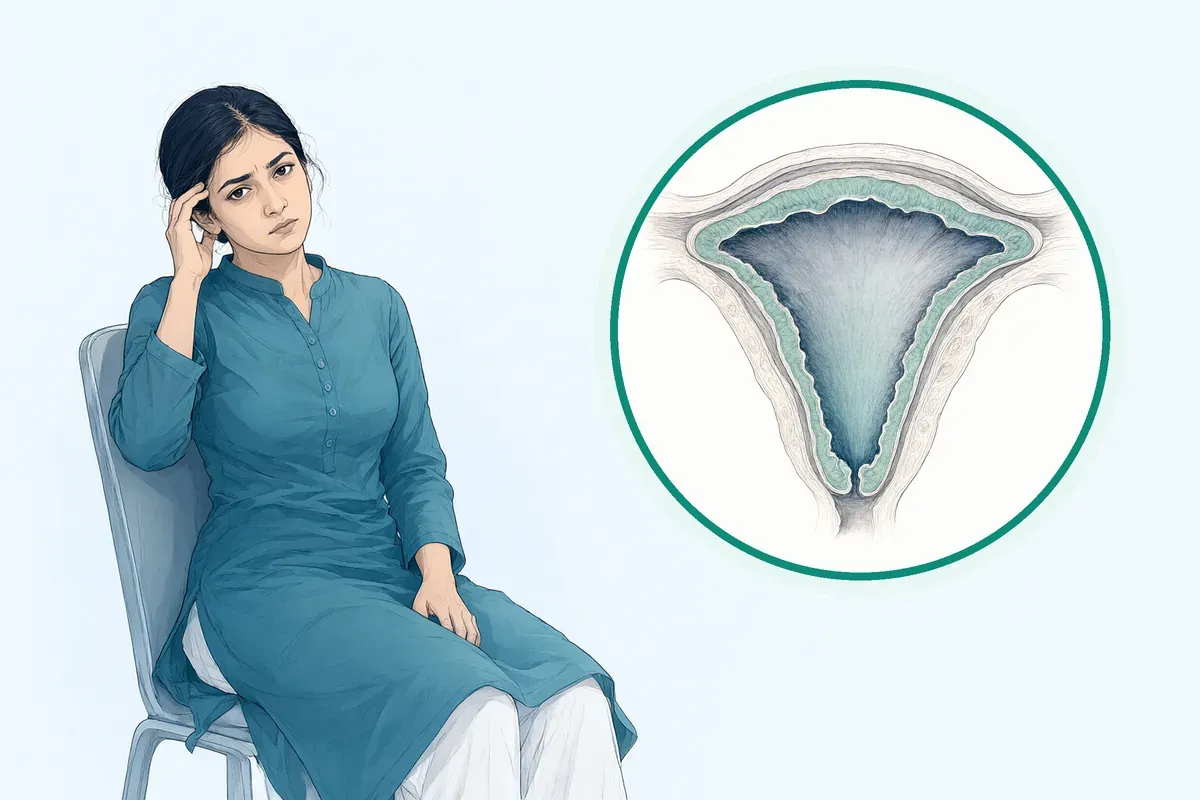
The lining of the uterus, called the endometrium, thickens each month under the influence of hormones. If pregnancy does not occur, the lining breaks down and leaves the body as menstrual blood. In heavy periods this process is excessive. Sometimes the uterus does not contract well enough to limit the flow.
Sometimes the lining is thicker than usual because of hormonal imbalance or growths inside the uterus. In a substantial proportion of women no structural or hormonal cause is found; this is called functional heavy menstrual bleeding.
Symptoms of heavy periods and warning signs that need urgent care the same day
- Feel faint Cannot catch your breath
- Severe abdominal pain Not relieved by simple pain relief
Common symptoms include:
- Soaking through one or more pads or tampons every hour for several hours in a row
- Needing double protection (pad plus tampon)
- Waking at night to change protection
- Passing large clots
- Bleeding for more than seven days
You may also have painful cramps, bloating and a constant worry about leaks that affects your mood and confidence.
Signs that suggest anaemia include:
- Unusual tiredness
- Shortness of breath on mild exertion
- Dizziness
- Palpitations
- Pale skin
- Cold hands or feet
If you feel faint, cannot catch your breath, have severe abdominal pain that does not settle with simple pain relief, or are soaking a pad in less than an hour and it continues for more than two hours, seek medical care the same day. These can mean the blood loss is acute and needs prompt assessment.
Causes of heavy periods and who is at higher risk
- Adenomyosis
- Lining grows into muscle wall
- Fibroids
- Non-cancerous growths in uterus
- Polyps
- Small overgrowths of the lining
- Clotting disorders
- Coagulopathies affect bleeding
- Hormonal imbalance
- Thyroid disorders and PCOS
- Functional bleeding
- No clear cause found
Heavy periods can be caused by structural problems in the uterus or by hormonal and systemic factors. The main structural causes are adenomyosis, where the uterine lining grows into the muscle wall, and fibroids (leiomyomas), which are non-cancerous growths in the uterus. Polyps, which are small overgrowths of the lining, can also increase bleeding.
Non-structural causes include blood clotting disorders (coagulopathies) and effects of certain medicines or devices, such as copper intrauterine devices or anticoagulants. Hormonal imbalances, including thyroid disorders and polycystic ovary syndrome, may lead to irregular or heavy bleeding. Some women on tamoxifen for breast cancer develop heavier periods, endometrial polyps or hyperplasia.
In many women no clear cause is found despite thorough investigation; this is called functional heavy menstrual bleeding. Risk increases with age, especially in the 30s and 40s, and with a family history of heavy periods or fibroids. Being overweight can also raise the risk because fat tissue affects hormone levels.
How heavy periods are diagnosed: examination and tests
- Detailed history Bleeding pattern and daily impact
- Pelvic examination Checks uterus size and masses
- Blood tests Full blood count, iron, thyroid, coagulation
- Ultrasound scan Transvaginal, shows lining and growths
- Hysteroscopy if needed Direct view and biopsy
The doctor begins with a detailed history: how many days you bleed, how often you change protection, whether you pass clots, and how the bleeding affects your daily life. A pelvic examination checks the size and shape of the uterus and feels for any masses. A speculum examination allows the doctor to see the cervix and check for polyps or other visible causes.
Blood tests usually include a full blood count to check for anaemia and iron studies to measure iron stores. Thyroid function tests and a coagulation screen may be ordered if a hormonal or clotting disorder is suspected. A pregnancy test is done to rule out pregnancy-related bleeding.
An ultrasound scan, usually transvaginal, is the first imaging test. It shows the thickness of the endometrium and detects fibroids, polyps or adenomyosis. If the ultrasound is unclear, a hysteroscopy may be advised.
This is a thin telescope passed through the cervix into the uterine cavity; it gives a direct view of the lining and can also take a small tissue sample (biopsy) if needed. In some cases an MRI of the pelvis is used to map fibroids or adenomyosis more precisely before planning treatment.
Treatment options without surgery for heavy periods, and when surgery is advised
Treatment usually starts with medical options. Non-hormonal tablets such as tranexamic acid are taken only on heavy bleeding days to help the blood clot and reduce flow. Non-steroidal anti-inflammatory drugs (NSAIDs) like ibuprofen or mefenamic acid can also lessen bleeding and ease cramps. These are simple, outpatient treatments with no anaesthesia needed.
Hormonal options include the levonorgestrel-releasing intrauterine system (LNG-IUS), often known by the brand name Mirena. It is a small device placed inside the uterus that releases a low dose of hormone locally. The hormone thins the uterine lining, which reduces bleeding by about 90 percent at six months in many women. It also provides contraception.
The device can stay in place for up to five years. Studies show it improves quality of life more than usual medical treatment and has a lower discontinuation rate than some other hormonal methods. Common side effects in the first months are irregular spotting and hormonal symptoms such as breast tenderness or mood changes.
Oral hormonal tablets (combined pills or progestogens) are another choice, but evidence suggests oral medication suits a minority of women in the long term.
Surgery is considered when medical treatment does not give enough relief, when a structural problem such as a large fibroid or polyp needs removal, or when you and your surgeon decide a definitive approach is appropriate.
Surgical options include:
- Hysteroscopic removal of polyps or fibroids
- Endometrial ablation (destroying the uterine lining)
- Hysterectomy (removing the uterus)
Ablation is usually offered to women who have completed their family, as pregnancy after ablation carries high risks. Hysterectomy is a definitive treatment but carries a risk of serious surgical complications for a minority of women. Your surgeon will discuss the benefits and risks of each option so you can decide what fits your circumstances.
How heavy periods treatment works at Jaipur Hospital
- Confirm diagnosis Pelvic exam, blood tests, ultrasound
- Hysteroscopy if needed Look inside uterus and take biopsy
- Medical options first Tranexamic acid, NSAIDs, pills, Mirena
Your doctor will first confirm the diagnosis with a pelvic examination, blood tests for haemoglobin and thyroid function, and an ultrasound scan. If the scan shows fibroids, polyps or a thickened lining, a hysteroscopy may be done to look inside the uterus and take a small tissue sample. These steps are usually completed in the OPD or as a short daycare visit.
Treatment is then matched to your age, whether you wish to have children, and how much the bleeding affects daily life. Medical options are tried first for most women. Tranexamic acid tablets are taken only on heavy bleeding days to reduce blood loss by helping clots form.
Non-steroidal anti-inflammatory drugs such as mefenamic acid can be taken at the same time to ease cramps. Combined oral contraceptive pills or a progestogen-only pill thin the lining and make periods lighter and more regular.
The levonorgestrel intrauterine system (Mirena) is a small T-shaped device placed inside the uterus during a brief OPD procedure. It releases a low dose of hormone directly onto the lining, which becomes thin and inactive. In studies, bleeding falls by about 90 percent at six months and many women stop having periods altogether.
The device is licensed for five years and can be removed at any time if you wish to conceive. Your doctor will explain the insertion steps, what to expect in the first few weeks, and when to return for a check-up.
If medical treatment does not control the bleeding, or if you prefer a one-time procedure, surgical options are discussed. Endometrial ablation destroys the uterine lining using heat or radiofrequency energy. Techniques include Novasure (bipolar radiofrequency) or rollerball ablation under hysteroscopic vision. The procedure takes about 30 to 90 minutes under spinal or general anaesthesia and is usually done as daycare. Ablation is suitable only when your family is complete, because pregnancy afterwards carries high risks.
Laparoscopic hysterectomy removes the uterus through small keyhole incisions. It is a definitive treatment that stops periods permanently. The operation takes 60 to 90 minutes under general anaesthesia and usually needs a stay of two to three nights. Your surgeon will explain the steps, the small scars, and the recovery timeline.
The choice between ablation and hysterectomy depends on the size and shape of the uterus, any associated conditions such as adenomyosis or large fibroids, and your preference.
Risks and possible complications of heavy periods treatment
- Tranexamic acid
- Mild nausea or stomach upset
- Hormonal pills
- Breast tenderness, headache, mood changes
- Laparoscopic hysterectomy
- Injury to bladder, bowel, ureters; bleeding needing transfusion; infection; blood clots
Medical treatments are generally well tolerated. Tranexamic acid may cause mild nausea or stomach upset in some women. Hormonal pills can cause breast tenderness, headache or mood changes in the first few cycles. The levonorgestrel intrauterine system often causes irregular spotting or light bleeding in the first three to six months; this usually settles.
Hormonal side effects such as acne, breast discomfort or mood shifts occur in a minority of users and often improve with time. Serious systemic effects are rare because the hormone level in the blood stays low.
Endometrial ablation carries the usual risks of any procedure under anaesthesia: infection, bleeding, or a small chance of injury to the uterus, bowel or bladder. In studies, second-generation techniques such as Novasure have fewer operative complications than older methods and are quicker to perform.
After ablation, most women have lighter periods or no periods, but a small number see no change or a return of heavy bleeding over time. Pregnancy after ablation is dangerous and contraception is essential.
Laparoscopic hysterectomy is major surgery.
Complications include:
- Injury to the bladder, bowel or ureters
- Bleeding needing transfusion
- Infection
- Blood clots in the legs or lungs
In studies, the surgical group had fewer adverse events at four months compared with medical treatment, but hysterectomy carries a small risk of serious long-term complications for a minority of women. Your surgeon will discuss these risks in detail before you decide.
Recovery and aftercare after heavy periods treatment
After medical treatment starts, you may notice lighter periods within one to two cycles. With the levonorgestrel intrauterine system, spotting is common in the first few weeks and usually reduces by three to six months. A follow-up visit is scheduled at six weeks to check the device position and your symptoms.
After endometrial ablation, you go home the same day once the anaesthesia wears off. You may have cramping like period pain and a watery or blood-stained discharge for a few days. Most women return to usual activities within 48 hours. You are advised to avoid sex and tampons for about a week. Full benefit on bleeding may take two to three months to appear.
After laparoscopic hysterectomy, you stay in hospital for two to three nights. Pain is managed with regular tablets. You will be encouraged to walk the next day. Vaginal bleeding or spotting may last for a few weeks. Heavy lifting, strenuous exercise and sex are avoided for four to six weeks. Most women feel near normal by four weeks and fully recovered by six weeks.
Call the hospital or your doctor if you develop:
- Fever above 38°C
- Heavy bright red bleeding that soaks a pad in an hour
- Severe pain not relieved by prescribed medicines
- Foul-smelling discharge
- Swelling and redness in a leg
These symptoms need prompt assessment.
Results of heavy periods treatment in studies
- more women satisfied at 12 months Mirena satisfaction
- nearly half at 10 years Long-term hysterectomy rate
In a large randomised trial, women using the levonorgestrel intrauterine system reported a significantly greater improvement in quality of life scores at six months compared with those on usual medical treatment (oral medication). At 12 months, more women in the device group were satisfied with their bleeding pattern than those using other medical options.
However, oral medication alone suits only a minority of women in the long term. By 10 years, nearly half of women initially assigned to the device had undergone hysterectomy.
Endometrial ablation controls bleeding effectively in most women. In studies comparing second-generation techniques with first-generation methods, the newer devices were at least as effective, quicker, and less likely to need general anaesthesia. At five years, there was no clear difference in bleeding control between ablation and hysterectomy, though the evidence is of very low quality.
Laparoscopic hysterectomy gives objective control of bleeding in virtually all women because the uterus is removed. Satisfaction rates are high at one and two years after surgery. Quality of life at five and 10 years is similar between women who had hysterectomy and those who used the levonorgestrel intrauterine system.
Both the device and conservative surgery (ablation or resection) appear to be safe, acceptable and effective options. Your doctor will help you weigh the likelihood of long-term control against the invasiveness of each option.
Cost and insurance for heavy periods treatment in Jaipur
Medical treatment with tablets typically costs ₹500 to ₹3,000 per month in India. The levonorgestrel intrauterine system device cost is included in the surgical price range below. Surgical treatment — endometrial ablation or laparoscopic hysterectomy — typically ranges from ₹40,000 to ₹1,50,000 in India.
The final amount depends on the type of procedure, the anaesthesia used, the length of hospital stay, any additional tests or medicines, and whether you have associated conditions such as large fibroids or adhesions.
Jaipur Hospital is empanelled under MAA Yojana and works with a panel of private insurers and TPAs for cashless admission. If you are covered, bring your scheme card or insurance ID and a photo ID at admission. The hospital’s billing team will verify eligibility and process the pre-authorisation. For self-pay patients, an estimate can be shared after the doctor’s assessment.
The hospital has an in-house pharmacy and diagnostic laboratory; X-ray and ECG are available on site. CT, MRI and DEXA scans are done at an outside imaging centre and billed separately.
