

Obstetrics and Gynaecology · Jaipur Hospital
Menstrual Disorders in Jaipur
Irregular, heavy or painful periods disrupting life; Jaipur Hospital offers clear assessment and a simple plan.
- Serving Jaipur since 1991 (35 years)
- NABH accredited
- 24×7 emergency & ICU
- Cashless: RGHS, MAA Yojana, CGHS + 22 insurers
- Consultation length
- 20 to 30 minutes
- Anaesthesia
- Not needed
- Recovery
- Immediate
- Price
- ₹800 to ₹2,500typical range in India; ask us for an estimate
Periods that disrupt your life
When periods are irregular, heavy or painful
You may soak through protection every hour, pass large clots, bleed for more than seven days, or miss work and social plans. Cycles may come too early, too late, or not at all.
-
Heavy flow
Changing pad or tampon every one to two hours, using two products together, or bleeding through clothes.
-
Long bleeding
Periods lasting more than seven days or needing night changes.
-
Irregular cycles
Cycles shorter than 21 days, longer than 38 days, or varying by more than 21 days.
-
Pain and fatigue
Severe cramps, avoiding daily activities, feeling tired or short of breath.
-
Bleeding between periods
Spotting or bleeding after sex or between cycles.
Heavy menstrual bleeding is defined as excessive blood loss that interferes with physical, social, emotional or material quality of life.
Why Jaipur Hospital
You worry that the bleeding will not stop, that you will feel exhausted at work, or that the cost of tests and treatment will stretch your budget.
Your care plan
Your first steps with us
- 1 Call or visit OPD for a 20 to 30 minute consultation.
- 2 Complete blood tests and ultrasound in our diagnostic centre.
- 3 Review options with your gynaecologist and agree a plan.
- 4 Start treatment or schedule a day-care procedure and follow up.
How evaluation and treatment work
A gynaecologist takes a structured history, examines you, and orders blood tests and transvaginal ultrasound. Further imaging or hysteroscopy may be used to confirm the cause before treatment starts.
-
Hormonal therapy
Combined oral pills or progestogens to regulate cycles and reduce bleeding; your surgeon will discuss suitability.
-
Tranexamic acid
Non-hormonal tablets taken only on heavy bleeding days to reduce blood loss by about 30 to 55 percent.
-
Hysteroscopy
A thin scope checks the uterine cavity for polyps or fibroids and can remove them in the same sitting.
-
Endometrial ablation
Day-care procedure that destroys the uterine lining to stop or reduce heavy bleeding; not for women wanting future pregnancy.
Why patients trust us
- 1991 Serving Jaipur for 35 years
- NABH Accredited hospital
- 3 Obstetrics and Gynaecology consultants
- 24×7 Emergency, ICU and ambulance
- 25 Cashless schemes and insurers
What studies show about these treatments
-
about 50 percent reduction in blood loss
Tranexamic acid taken during menses reduces menstrual blood loss by roughly half in women with chronic heavy bleeding.
-
up to 97 percent less bleeding
The levonorgestrel intrauterine system reduces menstrual blood loss by up to 97 percent after one year of use.
-
90 percent patient satisfaction
Second-generation endometrial ablation techniques report around 90 percent patient satisfaction and a 25 percent amenorrhea rate.
If it is left untreated
Untreated heavy bleeding can lead to iron-deficiency anaemia, causing tiredness, shortness of breath and increased heart strain. Persistent irregular bleeding may hide endometrial hyperplasia or cancer, especially after age 40.
Life after treatment
Most women find their periods become predictable and manageable, letting them return to normal routines without constant worry.
-
Predictable cycles
Periods arrive on a regular schedule with a flow you can manage using normal protection.
-
Less fatigue
Iron levels improve as heavy blood loss stops, so you feel less exhausted day to day.
-
Back to routine
You no longer need to plan life around bathroom access or miss work and social events.
-
Clear follow-up
You know when to return for a check-up and who to call if anything changes.

Frequently asked questions
Questions patients ask about menstrual disorders
Which problems are assessed under menstrual disorders?
In short
At Jaipur Hospital, menstrual disorders cover irregular cycles, heavy bleeding, painful periods and bleeding between periods or after sex. The gynaecology team evaluates structural causes such as fibroids, polyps, adenomyosis and malignancy, and non-structural causes such as ovulatory dysfunction, coagulopathy, endometrial disorders and iatrogenic factors.
In detail
The FIGO PALM-COEIN classification guides assessment. PALM includes polyp, adenomyosis, leiomyoma (fibroids) and malignancy, which are assessed visually by imaging or histopathology. COEIN includes coagulopathy, ovulatory disorders, endometrial causes, iatrogenic factors and not otherwise classified.
Common contributors are polycystic ovary syndrome, thyroid dysfunction, obesity, stress, extreme exercise, medications such as anticoagulants, and copper intrauterine devices. Heavy menstrual bleeding is defined as blood loss that interferes with physical, social, emotional or material quality of life.
A common belief
Many people think only heavy bleeding matters, but irregular timing, pain and intermenstrual bleeding are also assessed.
What actually happens
Structural causes like fibroids and polyps, and non-structural causes like hormonal imbalance or clotting disorders, are all evaluated.
Your next step at Jaipur Hospital
Your surgeon will take a detailed menstrual history and perform a clinical examination. Initial tests usually include blood counts, iron studies, thyroid function and transvaginal ultrasound. Further imaging or hysteroscopy may be advised based on findings.
How will the doctor decide which tests I need?
In short
At Jaipur Hospital, your surgeon selects tests based on your menstrual history, examination findings, age, medical comorbidities and fertility goals. A structured bleeding history and pelvic examination guide whether the cause is likely structural (PALM) or non-structural (COEIN). Transvaginal ultrasound is the first-line imaging for all.
In detail
If history suggests heavy regular bleeding with a normal uterus, blood tests for anaemia, thyroid function and coagulopathy screen are prioritised. Irregular cycles prompt hormonal assays such as FSH, LH, prolactin, testosterone and glucose metabolism tests for polycystic ovary syndrome.
Intermenstrual or postcoital bleeding, or an abnormal ultrasound, leads to saline infusion sonography or outpatient hysteroscopy to evaluate the endometrial cavity.
Women aged 40 years or older with persistent symptoms, or younger women with risk factors such as obesity or polycystic ovary syndrome, may need endometrial sampling to exclude hyperplasia or malignancy. MRI is reserved for complex fibroid mapping or suspected adenomyosis when ultrasound is inconclusive.
A common belief
Patients often expect the same tests for everyone.
What actually happens
But a woman with regular heavy bleeding needs different tests than one with irregular cycles or bleeding after sex. The history and examination direct the workup.
Your next step at Jaipur Hospital
Your surgeon will explain the rationale for each test. Most blood tests and ultrasound are available in-house and can be done on the same day. Hysteroscopy or biopsy may be scheduled separately. Results typically return within 24 to 48 hours.
How soon should I expect improvement after the chosen treatment for menstrual disorders?
In short
Improvement after treatment for menstrual disorders at Jaipur Hospital varies by the type of therapy. Medical treatments such as hormonal pills or tranexamic acid often reduce bleeding within one to three cycles. Procedural treatments like hysteroscopy or endometrial ablation usually show effect by the next period. Your surgeon will set realistic expectations at the consultation.
In detail
Combined oral contraceptive pills and progestogens typically need one to three months to stabilise the endometrium and reduce flow. Tranexamic acid and NSAIDs work during the days they are taken, so you may notice less bleeding from the first treated cycle.
After hysteroscopic removal of a polyp or fibroid, the next period is often lighter. Endometrial ablation can take two to three months for the full effect as the lining heals; some women have watery discharge for a week or two.
If a hormonal intrauterine system is placed, bleeding patterns may be irregular for three to six months before improving. Response also depends on the underlying cause, such as adenomyosis or coagulopathy, which may need longer management.
A common belief
Some women expect instant results, but the endometrium needs time to respond to hormones or heal after a procedure.
What actually happens
Stopping treatment too early can make it seem like it failed when it just needed more time.
Your next step at Jaipur Hospital
Keep a simple menstrual diary for three cycles after starting any new treatment. Note the number of pads or tampons used, clot size, and days of bleeding.
If there is no clear improvement after three months of medical therapy, or if procedural recovery seems delayed, return to Jaipur Hospital for a review. The surgeon may adjust the dose, switch therapy, or consider further investigation.
What could cause irregular, absent, heavy, or painful periods?
In short
Many conditions can cause irregular, absent, heavy, or painful periods. At Jaipur Hospital, the gynaecology team uses the FIGO PALM-COEIN system to identify structural causes like polyps, adenomyosis, fibroids, and malignancy, and non-structural causes like coagulopathy, ovulatory disorders, endometrial factors, iatrogenic causes, and other rare conditions. A detailed history and ultrasound guide the diagnosis.
In detail
Structural causes include endometrial polyps, adenomyosis where the lining grows into the muscle, uterine fibroids which are common benign tumours, and rarely endometrial or cervical cancer.
Non-structural causes include ovulatory disorders such as polycystic ovary syndrome, thyroid dysfunction, hyperprolactinaemia, and hypothalamic dysfunction from stress, weight change, or excessive exercise. Coagulopathies like von Willebrand disease affect about 13 percent of women with heavy bleeding.
Iatrogenic causes include copper intrauterine devices, anticoagulants, and hormonal contraceptives. Endometrial causes involve local abnormalities in prostaglandins, fibrinolysis, or vascular fragility. Painful periods may also arise from endometriosis, pelvic inflammatory disease, or adenomyosis.
The clinician takes a structured menstrual history, performs examination, and orders transvaginal ultrasound as the first-line investigation. Blood tests may check haemoglobin, iron studies, thyroid function, and coagulation screen if indicated.
- Coagulopathies like von Willebrand disease affect about 13 percent of women with heavy bleeding.
A common belief
Many women assume heavy periods are just normal for them, but they often signal a treatable condition.
What actually happens
Bleeding between periods or after sex should always be investigated, even if the flow is light.
Your next step at Jaipur Hospital
If your periods have changed in frequency, duration, or flow, or if you bleed between periods or after sex, book an evaluation at Jaipur Hospital. Bring a record of your last six months of cycles. The surgeon will assess for structural and hormonal causes and recommend appropriate tests and treatment.
How can I decide whether to seek advice about PCOS management?
In short
Consider seeking advice at Jaipur Hospital if you have irregular or absent periods, unwanted hair growth, acne, weight gain or difficulty getting pregnant. These features suggest polycystic ovary syndrome. A gynaecology consultation of 20 to 30 minutes can confirm the diagnosis and discuss options such as lifestyle changes, hormonal pills or fertility support.
In detail
PCOS is a common ovulatory disorder that falls under the FIGO PALM-COEIN classification as AUB-O. Evidence links it to unopposed oestrogen effects on the endometrium, leading to heavy or unpredictable bleeding. It often co-exists with insulin resistance, obesity and thyroid dysfunction.
Diagnosis relies on menstrual history, clinical signs of hyperandrogenism and ultrasound findings of polycystic ovaries. Management is tailored to your goals: combined oral pills regulate cycles and reduce androgen effects; metformin may help insulin resistance; ovulation induction is used when fertility is desired. Regular exercise and a healthy BMI improve symptoms.
A common belief
Many women wait years thinking irregular periods are normal.
What actually happens
Evidence shows untreated PCOS increases the risk of endometrial hyperplasia and metabolic problems. Early advice prevents long-term complications.
Your next step at Jaipur Hospital
If your periods are fewer than eight per year, you have persistent acne or hirsutism, or you have been trying to conceive for 12 months without success, book a consultation. The team will order relevant blood tests and ultrasound, usually completed in one visit.
How could menstrual disorders or their treatment affect future pregnancy?
In short
At Jaipur Hospital, the effect on future pregnancy depends on the specific condition and the treatment chosen. Many medical treatments such as tranexamic acid, NSAIDs, and combined oral contraceptives do not affect long-term fertility. Hormonal therapy can regulate cycles and improve fertility in conditions like PCOS. Procedures such as hysteroscopic removal of polyps or fibroids may improve pregnancy chances. Endometrial ablation is not recommended if you want future pregnancy because it destroys the uterine lining and increases pregnancy risks.
In detail
Evidence shows that fertility desire is a key factor in treatment selection. Medical options like tranexamic acid and NSAIDs are non-contraceptive and do not impair future fertility. Combined oral contraceptives and progestins regulate cycles and can be stopped when pregnancy is desired.
The levonorgestrel intrauterine system reduces bleeding but fertility returns quickly after removal. Hysteroscopic myomectomy for submucosal fibroids can improve pregnancy rates. Endometrial ablation is contraindicated in women who desire future fertility because of high risks of miscarriage, preterm birth and abnormal placentation if pregnancy occurs. Hysterectomy ends fertility permanently. Your surgeon will discuss fertility implications before any treatment.
A common belief
A common belief is that all period treatments affect fertility.
What actually happens
In fact, most medical treatments are reversible and some surgical options like hysteroscopic fibroid removal can actually help fertility. Only definitive procedures like endometrial ablation or hysterectomy prevent future pregnancy.
Your next step at Jaipur Hospital
If you plan to have children, tell your gynaecologist during the consultation at Jaipur Hospital. The 20 to 30 minute visit includes a discussion of your fertility goals. You will receive a treatment plan that respects your reproductive wishes.
Which symptoms should prompt me to see a specialist?
In short
You should see a specialist at Jaipur Hospital if you soak through a pad or tampon every hour for several hours, need double protection, pass clots larger than 2.5 cm, bleed for more than seven days, bleed between periods or after sex, or avoid daily activities because of your period. Severe period pain and feeling tired or short of breath also warrant evaluation.
In detail
Heavy menstrual bleeding is defined as excessive blood loss interfering with quality of life. Clinical signs include changing protection every one to two hours, using two products together, periods lasting over seven days, passing large clots, flooding clothes or bedding, and restricting activities.
Associated symptoms such as fatigue or breathlessness may indicate iron-deficiency anaemia. Intermenstrual or postcoital bleeding can signal polyps, fibroids, infection or, rarely, malignancy. Severe dysmenorrhoea may suggest endometriosis or adenomyosis. Guidelines recommend seeing a clinician when periods affect your life.
A common belief
Some women think heavy periods are normal, especially at certain ages.
What actually happens
But bleeding that disrupts your life, causes anaemia, or occurs between periods should be investigated. Pain that limits activity is also not normal.
Your next step at Jaipur Hospital
Keep a menstrual diary noting flow, duration, clots and impact on activities for at least two cycles. Bring this record to your appointment. Your surgeon will review the history, examine you and order initial blood tests and ultrasound.
How will the results change my care plan?
In short
At Jaipur Hospital, test results directly shape your treatment. Structural findings such as fibroids, polyps or adenomyosis may lead to hysteroscopic removal, medical management or endometrial ablation depending on size, location and fertility wishes. Non-structural causes like ovulatory dysfunction, thyroid disease or coagulopathy are treated with hormonal therapy, tranexamic acid, NSAIDs or referral for haematology input.
In detail
If ultrasound shows submucosal fibroids or polyps, hysteroscopic resection is often offered. Intramural or subserosal fibroids without cavity distortion may be managed medically or with uterine artery embolisation. Adenomyosis may respond to hormonal therapy or levonorgestrel intrauterine system.
Endometrial hyperplasia requires progestin therapy or ablation with strict follow-up. Normal imaging with heavy bleeding points to endometrial dysfunction or coagulopathy; tranexamic acid and NSAIDs are first-line non-hormonal options. Combined oral contraceptives or progestins regulate cycles and reduce flow.
Levonorgestrel intrauterine system reduces blood loss by up to 96 percent at one year. Endometrial ablation is considered when medical therapy fails and fertility is complete. Each plan is individualised.
A common belief
A common belief is that heavy periods always need surgery.
What actually happens
In fact, many causes respond well to medication. Surgery is reserved for structural lesions not helped by medical therapy, or when fertility is complete.
Your next step at Jaipur Hospital
Your surgeon will discuss results, explain options and agree a plan with you. Medical treatments start promptly. Procedures such as hysteroscopy or ablation are scheduled as day-care. Follow-up is arranged to assess response.
What should I do if symptoms persist or worsen after treatment for menstrual disorders?
In short
If your menstrual symptoms persist or worsen after starting treatment at Jaipur Hospital, contact the gynaecology department promptly. Do not stop prescribed medication without advice. Heavy bleeding that soaks a pad every hour, large clots, dizziness, or new pain need urgent assessment. The surgeon may adjust the dose, order repeat tests, or discuss a different approach.
In detail
Medical therapies such as hormonal pills, progestogens, or tranexamic acid are usually given a trial of three months. If bleeding remains heavy, becomes irregular, or you develop anaemia symptoms like fatigue or breathlessness, the treatment plan needs review.
Persistent intermenstrual bleeding or bleeding after sex also warrants re-evaluation to exclude polyps, infection, or endometrial changes. After a procedure like hysteroscopy or ablation, increasing pain, fever, or offensive discharge may indicate infection and should be reported immediately.
The surgeon may repeat ultrasound, check haemoglobin and iron studies, or perform endometrial sampling if you are over 40 or have risk factors. A change in medication, addition of a second agent, or referral for surgical management may be recommended based on the findings.
A common belief
Many women wait too long hoping things will settle, but persistent heavy bleeding can lead to anaemia.
What actually happens
Bleeding between periods or after sex should never be ignored, even if the flow seems lighter.
Your next step at Jaipur Hospital
Keep a record of pad or tampon changes, clot size, and any new symptoms. If you soak more than one pad per hour for several hours, feel faint, or have severe pain, go to the emergency department at Jaipur Hospital.
For less urgent concerns, call the OPD to book a review within one week. Bring your medication list and menstrual diary to the appointment.
Could pregnancy, thyroid disease, or another hormonal condition explain the symptoms?
In short
Yes, pregnancy, thyroid disease, and other hormonal conditions are common causes of menstrual changes. At Jaipur Hospital, the gynaecology team routinely checks for these during evaluation. Early pregnancy can cause spotting or missed periods. Thyroid disorders, polycystic ovary syndrome, hyperprolactinaemia, and stress-related hormonal shifts can all lead to irregular, heavy, or absent periods.
In detail
A urine or blood pregnancy test is the first step when periods are irregular or absent, even if contraception is used. Thyroid stimulating hormone (TSH) is measured because both hypothyroidism and hyperthyroidism affect menstrual regularity and flow.
Polycystic ovary syndrome is a frequent cause of irregular or absent periods and may also cause heavy bleeding when periods occur. Hyperprolactinaemia from pituitary adenomas or medications can suppress ovulation.
Significant weight loss, excessive exercise, or severe stress disrupt the hypothalamic-pituitary-ovarian axis, leading to anovulatory cycles. Perimenopausal transition in women over 40 causes fluctuating cycles. The clinician will ask about medication history, including hormonal contraceptives, anticoagulants, and antipsychotics, which can alter bleeding patterns. Blood tests typically include TSH, prolactin, FSH, LH, and sometimes androgen levels based on clinical suspicion.
A common belief
Women often blame stress alone, but treatable conditions like thyroid disease or PCOS are frequently missed.
What actually happens
A simple blood test can identify the cause and guide effective treatment.
Your next step at Jaipur Hospital
If you suspect pregnancy, do a home test and then see a doctor promptly for confirmation and to rule out ectopic pregnancy. For other hormonal concerns, book a consultation at Jaipur Hospital. Bring a three to six month menstrual calendar. The surgeon will order targeted blood tests and ultrasound to identify the hormonal cause and start appropriate treatment.
FAQ library
Questions and answers about menstrual disorders
When you contact us
Get a clear plan for your periods
Contact Jaipur Hospital for a gynaecology consultation, in-house tests, plain-language options, a cost estimate and cashless insurance help.
- A consultation with a gynaecologist in the OPD
- Your scans and reports reviewed, with tests done in-house if you need them (laboratory, X-ray and imaging)
- Your options explained in plain words, including whether you need surgery at all
- A cost estimate before you decide
- Help with cashless treatment under RGHS, MAA Yojana, CGHS and empanelled insurers and TPAs
- Follow-up visits after your treatment
Overview
Menstrual Disorders: what to know
What menstrual disorders are and how they happen
- Structural causes
- Fibroids, polyps, adenomyosis, malignancy
- Non-structural causes
- Coagulopathy, ovulatory disorders, endometrial, iatrogenic
- Hormone imbalance
- Unopposed oestrogen thickens womb lining
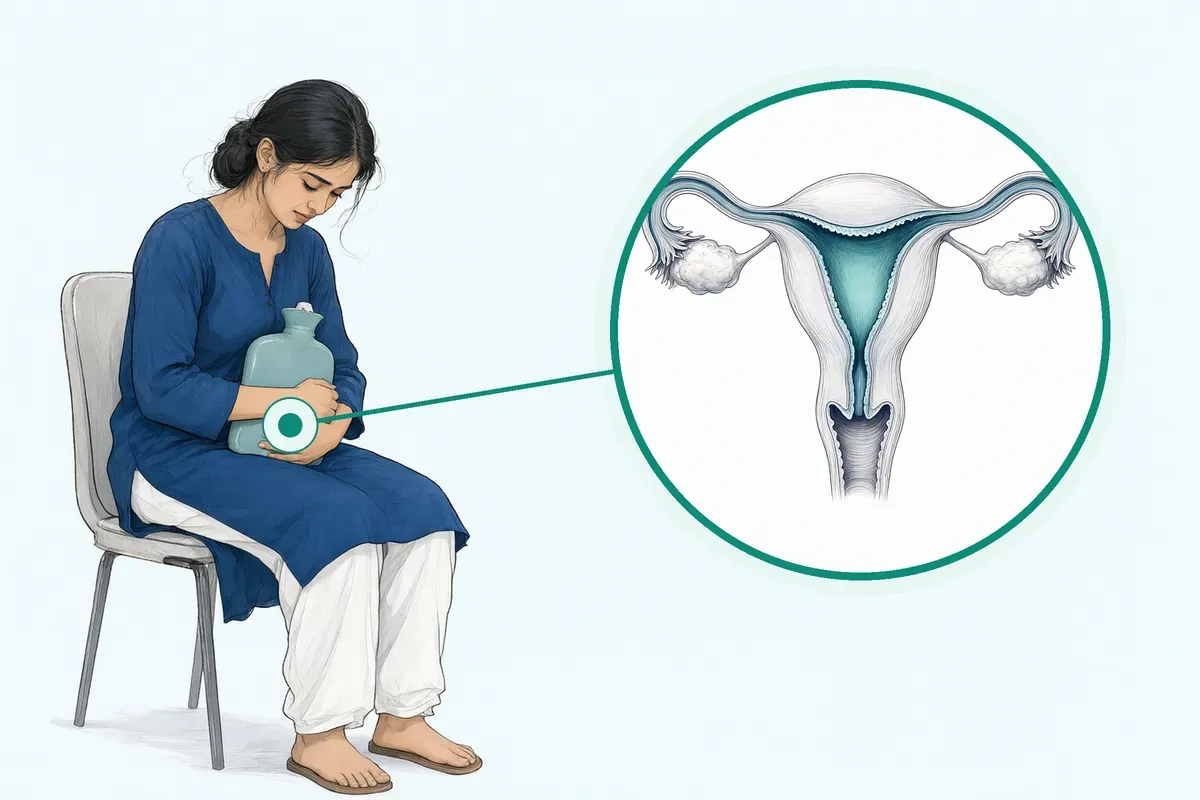
Menstrual disorders cover irregular, heavy or painful periods that affect daily life. Heavy menstrual bleeding means blood loss that interferes with your physical, social, emotional or material quality of life. It is not normal and can be a sign of an underlying health problem that needs treatment.
A normal cycle comes every 21 to 35 days and lasts up to 7 days. When cycles fall outside 38 days or vary by more than 21 days, it suggests an ovulatory disorder.
The FIGO PALM-COEIN system groups causes into structural problems — polyp, adenomyosis, leiomyoma (fibroids), malignancy — and non-structural problems — coagulopathy, ovulatory disorders, endometrial causes, iatrogenic (treatment-related) and not otherwise classified.
The lining of the womb (endometrium) thickens each month under the influence of oestrogen. If ovulation does not occur, progesterone is not produced to stabilise the lining. Unopposed oestrogen leads to marked proliferation and thickening, resulting in heavy bleeding with altered frequency.
Hypoxia, inflammation, haemostasis and angiogenesis all play crucial roles in the normal shedding and scarless repair of the endometrium; perturbation of these processes can cause abnormal bleeding.
Many women with fibroids or polyps have no symptoms at all. When symptoms appear, they reflect the size, number and location of these growths. Fibroids are hormone-responsive tumours; by age 50, almost 70% of white women and over 80% of black women will have developed at least one fibroid. Adenomyosis is associated with increasing age and may co-exist with fibroids. The incidence of polyps and fibroids both increase with age and they frequently co-exist.
Symptoms of menstrual disorders and warning signs that need urgent care the same day
- Bleeding between periods or after sex
- Persistent intermenstrual bleeding
You may have heavy menstrual bleeding if you need to change your pad or tampon every 1 to 2 hours, or use two types of period product together such as a pad and a tampon.
Other signs include:
- Periods lasting more than 7 days
- Passing blood clots larger than about 2.5 cm (the size of a 10p coin)
- Bleeding through to clothes or bedding
- Needing to change pads or tampons during the night
You may also avoid daily activities like exercise or take time off work because of your periods, or feel tired or short of breath a lot.
Bleeding that soaks through one or more tampons or pads every hour for several hours in a row, or needing to wear more than one pad at a time, are also signs of heavy menstrual bleeding. Menstrual flow with blood clots as big as a quarter or larger is another sign.
Irregular cycles — periods that come too often, too rarely, or unpredictably — suggest an ovulatory disorder. Painful periods that affect your life also need evaluation.
Warning signs that need urgent care the same day include bleeding between periods or after sex, severe pain during periods that is not relieved by usual painkillers, heavy bleeding with dizziness, fainting or shortness of breath (which may indicate severe anaemia), and heavy periods with other symptoms such as pain when passing urine, passing stool or during sex. Persistent intermenstrual bleeding should be evaluated promptly as it can be an early sign of endometrial cancer.
Causes of menstrual disorders and who is at higher risk
- Age
- Fibroids and polyps increase with age
- Obesity
- High BMI raises risk of ovulatory dysfunction
- Ethnicity
- Black women have twofold fibroid risk
- Medical history
- Tamoxifen, pelvic radiation, inherited disorders
Structural causes include fibroids, polyps, adenomyosis and malignancy. Fibroids and polyps can cause heavy menstrual bleeding. Adenomyosis can also cause heavy bleeding. Endometrial cancer is the most common gynaecological malignancy in the western world and heavy menstrual bleeding can be an early sign. Uterine sarcoma is rare but may cause abnormal bleeding.
Non-structural causes include coagulopathies (bleeding disorders), ovulatory disorders, endometrial causes and iatrogenic causes. Coagulopathies affect about 13% of women presenting with heavy menstrual bleeding; the majority have Von Willebrand disease. Irregular ovulation can cause heavy bleeding. Polycystic ovary syndrome (PCOS) and hypothyroidism are medical conditions that can cause heavy menstrual bleeding.
Obesity, anorexia, weight loss, mental stress and extreme exercise can also affect ovulation:
- Obesity
- Anorexia
- Weight loss
- Mental stress
- Extreme exercise
Endometrial causes occur in a structurally normal uterus with regular cycles and no coagulopathy; they likely reflect local problems with clotting, inflammation or blood vessel formation. The copper intrauterine device (IUD) can cause heavier menstrual bleeding, especially during the first year of use. Some medicines, including anticoagulants and chemotherapy, can cause heavy periods. Blood thinners and aspirin can also cause heavy bleeding.
Pregnancy-related causes include ectopic pregnancy and miscarriage. Pelvic inflammatory disease can cause heavy bleeding. Endometriosis can also cause heavy menstrual bleeding.
Higher risk factors include age — fibroids and polyps increase with age; obesity — a high BMI increases the risk of ovulatory dysfunction and heavy or irregular menstrual loss; Black women have an approximately twofold increased risk of fibroids; long-term use of tamoxifen, previous pelvic radiation therapy and rare inherited disorders increase the risk of uterine sarcoma; and a structured history can identify 90% of women with systemic bleeding disorders.
How menstrual disorders are diagnosed: examination and tests
- History and structured screen Cycle dates, flow amount, illnesses, birth control, coagulopathy screen
- Physical examination General and pelvic examination
- Transvaginal ultrasound (first-line imaging) Identifies fibroids, polyps, adenomyosis
When you see your gynaecologist about menstrual disorders, you will be asked about your menstrual cycle — the dates your period started, how long bleeding lasted, and the amount of flow. You will also be asked about past and present illnesses, surgical procedures, and your birth control method. A structured screen for coagulopathies identifies 90% of women with disorders of systemic haemostasis.
A physical examination is done. Transvaginal ultrasound (TV-USS) remains the most acceptable and validated first-line investigation. It helps identify fibroids, polyps and adenomyosis, though fibroids may be confused for focal adenomyosis and vice versa using conventional imaging. Saline infusion sonohysterography (SIS) and selected hysteroscopy improve sensitivity and specificity for diagnosis of polyps and submucosal fibroids.
An ultrasound exam uses sound waves to make a picture of the pelvic organs. A hysteroscopy uses a thin, lighted scope inserted into the uterus through the cervix to see the inside of the uterus. Sonohysterography places fluid in the uterus through a thin tube while ultrasound images are made.
MRI plays a role in selected patients with fibroids and in assessment for uterine artery embolisation, though it is relatively poor at ruling out sarcomatous change.
Blood tests may be ordered to check for iron deficiency anaemia and other underlying conditions. An endometrial biopsy removes a sample of the lining and looks at it under a microscope to rule out malignancy or premalignant changes.
Endometrial sampling is recommended in women with persistent intermenstrual bleeding or aged 45 years or older with treatment failure; some guidelines lower this age to 40. Clinical judgement is used for women under 40 with risk factors such as obesity and PCOS. The endometrium should be properly sampled and evaluated before any surgery to rule out malignancy.
Treatment options without surgery for menstrual disorders and when surgery is advised
Medical therapy is tailored to the individual. Non-hormonal options include tranexamic acid and NSAIDs (such as mefenamic acid), which are the only fully non-contraceptive medical options. Tranexamic acid is an antifibrinolytic that prevents the breakdown of clots; it is taken during heavy bleeding days, typically 1 g three to four times daily for about 4 days per month.
It reduces bleeding by 30–55% in chronic abnormal uterine bleeding. NSAIDs reduce prostaglandin levels and achieve a 25–50% reduction in blood loss. They can be used together but should be stopped after 3 months if there is no improvement; if beneficial, they may be continued indefinitely.
Hormonal options include combined oral contraceptive pills (COCP), which suppress ovulation and reduce blood loss by about 50% while regulating bleeding. The vaginal ring and transdermal patch work similarly but require less frequent administration. Progestin therapy (such as norethisterone 5 mg three times daily from day 5 to 26 of the cycle) reduces blood loss by over 80%.
The levonorgestrel-releasing intrauterine system (LNG-IUS) decreases menstrual loss by up to 96% after one year. Depot medroxyprogesterone acetate (DMPA) is an injection given every 12–14 weeks and can induce amenorrhoea in up to 50% of users.
GnRH agonists induce a temporary medical menopause and are effective but limited to short-term use due to side effects on bone density; add-back hormone therapy is used after 6 months.
Surgical management is considered when medical therapy fails to alleviate symptoms, or for structural causes such as fibroids or polyps. Hysteroscopy can be diagnostic or operative to remove polyps or fibroids. Endometrial ablation destroys the lining of the uterus to stop or reduce menstrual bleeding. It is typically considered after medication or other therapies have not worked.
It should not be used if you desire future fertility, have known or suspected premalignant or endometrial carcinoma, or for the sole treatment of fibroids or polyps. Contraception is recommended after ablation in premenopausal women.
Other surgical options include myomectomy (removing fibroids without removing the uterus), uterine artery embolisation (blocking blood flow to fibroids), and hysterectomy (removal of the uterus) when other treatments have failed or are not an option. Your surgeon will advise which option suits you based on your fertility wishes, the underlying cause, and your overall health.
Your first visit and tests for menstrual disorders
- History taking Cycle details, medical history, birth control
- Physical examination Clinical assessment by gynaecologist
- Tests ordered Blood tests, ultrasound, possible biopsy
Your first visit usually takes 20 to 30 minutes. Your doctor will ask about your menstrual cycle, including the dates your period started, how long bleeding lasted, and the amount of flow. You will be asked about past and present illnesses, surgical procedures, and your birth control method.
The doctor will also ask whether heavy periods are affecting your daily life, if you have severe pain, bleeding between periods or after sex, or other symptoms such as pain when passing urine or during sex.
A physical examination is done. Blood tests are often ordered to check for iron deficiency anaemia and other underlying conditions. An ultrasound exam uses sound waves to make a picture of the pelvic organs and is the first-line imaging test.
If needed, your doctor may suggest a hysteroscopy, where a thin, lighted scope is inserted through the cervix to see inside the uterus.
An endometrial biopsy may be taken to look at the lining under a microscope, especially if you are aged 40 or above with risk factors such as obesity or polycystic ovary syndrome, or if you have persistent intermenstrual bleeding. Other tests such as sonohysterography or MRI may be used in selected cases. Please bring any previous medical records, imaging reports, and a list of medicines you are taking.
How menstrual disorder treatment works
Treatment is tailored to the cause of your bleeding, your age, other medical conditions, and whether you wish to have children in the future. Your doctor will discuss the options with you.
Medical options are often tried first. Non-hormonal tablets such as tranexamic acid reduce heavy bleeding by helping blood clot; it is taken only on heavy bleeding days, typically 1 g three to four times a day for up to five days. NSAIDs such as mefenamic acid are also used during the first days of the period.
Combined oral contraceptive pills regulate cycles and reduce blood loss by about 50 percent in studies. Progestogen tablets such as norethisterone 5 mg three times daily from day 5 to 26 of the cycle can reduce blood loss by more than 80 percent. The levonorgestrel-releasing intrauterine system reduces menstrual loss by up to 96 percent after one year.
Other hormonal options include:
- The vaginal ring
- Transdermal patch
- Depot medroxyprogesterone acetate injection every 12 to 14 weeks
- The etonogestrel implant
GnRH agonists or antagonists may be used for short periods before surgery to shrink fibroids.
If medical treatment does not help, or if there are structural causes such as polyps or fibroids, your doctor may refer you for a hysteroscopy. This can be diagnostic or operative to remove polyps or fibroids. Endometrial ablation is a day-care procedure that destroys the lining of the uterus to stop or reduce menstrual bleeding.
It is considered only after medication or other therapies have not worked and is not suitable if you want future pregnancy. Contraception is recommended after ablation until menopause. Other surgical options such as myomectomy, uterine artery embolisation, or hysterectomy may be discussed depending on your situation. Your surgeon will advise which technique suits you.
Risks and possible complications of menstrual disorder treatments
All treatments carry some risks.
With combined oral contraceptive pills, common side effects include:
- Breast tenderness
- Breakthrough bleeding
- Nausea
- Weight gain
Serious but rare risks include blood clots, stroke, and cardiovascular disease, particularly in women over 35 who smoke, have hypertension, migraine with aura, or a personal or family history of venous thromboembolism. Progestogen-only pills can cause irregular and unpredictable bleeding.
Depot medroxyprogesterone acetate may cause:
- Weight gain
- Headaches
- Oedema
- Depression
- A temporary reduction in bone mineral density with long-term use
The etonogestrel implant often causes breakthrough bleeding. GnRH agonists and antagonists create a low-oestrogen state that can lead to hot flushes, vaginal dryness, bone loss, and reduced HDL cholesterol; add-back hormone therapy is used after six months to protect bone. Danazol can cause male characteristics such as acne and voice changes.
Tranexamic acid is generally well tolerated; gastrointestinal symptoms are the most common side effect. NSAIDs should be avoided if you have a peptic ulcer, kidney disease, or allergy.
Hysteroscopy carries risks of uterine perforation, infection, and Asherman syndrome (scar tissue inside the uterus). Endometrial ablation risks include uterine perforation, infection, vaginal or skin burns, and incomplete ablation of the cavity. Pregnancy after ablation is rare but carries a greatly increased risk of serious complications.
If fibroids are large or the cavity is distorted, some ablation devices cannot be used. Your doctor will explain the risks that apply to your chosen treatment.
Recovery and aftercare for menstrual disorder treatment
- Medical treatments start working Within one or two cycles
- Intrauterine system fitted Cramps and spotting for a few weeks
- After hysteroscopy or ablation Go home same day; watery discharge for about a week
- Avoid heavy lifting and strenuous exercise For a few days
- Review if no improvement After three months
Most medical treatments start working within one or two cycles. Tranexamic acid and NSAIDs are taken only during heavy bleeding days, usually about four days a month. Hormonal tablets are taken daily or cyclically as prescribed. The intrauterine system is fitted in the clinic; you may have cramps and spotting for a few weeks.
If cramps are not eased with routine painkillers, contact the hospital. If the threads are not visible, an ultrasound is done to check the position.
After hysteroscopy or endometrial ablation, you usually go home the same day. You may have watery vaginal discharge for about a week. Use sanitary pads, not tampons, for two weeks. Avoid heavy lifting and strenuous exercise for a few days. Your doctor will advise when you can return to work and normal activities. Contraception must be continued after ablation until menopause.
Call the hospital if you develop:
- Heavy bleeding that soaks a pad in an hour
- Fever
- Severe abdominal pain
- Foul-smelling discharge
- Feel faint
Regular follow-up is important to check haemoglobin levels and treatment response. If medical treatment shows no improvement after three months, your doctor will review the plan. Maintaining a healthy weight and regular exercise can help reduce ovulatory dysfunction.
Results of menstrual disorder treatments
- 30 to 55 percent Tranexamic acid reduction in blood loss
- 25 to 50 percent NSAIDs reduction in blood loss
- 50 percent Combined oral contraceptive pills reduction
- more than 80 percent High-dose progestogen reduction
- up to 96 percent after one year Levonorgestrel intrauterine system reduction
- about 25 percent Endometrial ablation amenorrhoea rate
In studies, tranexamic acid reduces menstrual blood loss by 30 to 55 percent and improves quality of life. NSAIDs such as mefenamic acid reduce blood loss by 25 to 50 percent. Combined oral contraceptive pills give an estimated 50 percent reduction and regularise cycles.
High-dose progestogen (norethisterone 5 mg three times daily from day 5 to 26) reduces blood loss by more than 80 percent. The levonorgestrel intrauterine system decreases menstrual loss by up to 96 percent after one year, with amenorrhoea in up to 90 percent of users at one year in some trials.
GnRH agonists achieve amenorrhoea in up to 90 percent of women but are limited to short-term use due to side effects.
Endometrial ablation results in amenorrhoea in about 25 percent of women and a 90 percent patient satisfaction rate in studies. Microwave endometrial ablation has shown higher satisfaction rates in some studies. Hysteroscopic removal of polyps or fibroids improves bleeding in most women.
Outcomes vary depending on the underlying cause, age, and whether other conditions such as adenomyosis or coagulopathy are present. About one in five women may have persistent bleeding despite treatment. Your doctor will discuss what results you can expect based on your diagnosis.
Cost and insurance for menstrual disorder treatment in Jaipur
The typical price range for evaluation and treatment of menstrual disorders in India is ₹800 to ₹2,500. The final cost depends on the reason for the problem. If it is due to hormonal issues, the cost covers certain tests and medication.
If it is due to fibroids or ovarian cysts, the cost depends on the line of treatment chosen, such as hysteroscopy or endometrial ablation.
Jaipur Hospital is a NABH-accredited multispeciality hospital established in February 1991. It accepts RGHS, MAA Yojana, CGHS, and a panel of private insurers and TPAs. If you have an individual health insurance policy, inpatient treatment is usually covered after a waiting period of two years from the policy start date.
If you are covered under a company-provided policy, surgery may be covered from day one. Please check the terms of your policy for room rent capping and co-payment details to avoid financial surprises. The hospital has an in-house pharmacy, diagnostic laboratory, and imaging facilities. For an estimate, please contact the hospital on 0141-2551500, 0141-2554139, or +91-7414-001-001.