

Obstetrics and Gynaecology · Jaipur Hospital
Menopause and Midlife Health in Jaipur
Hot flushes, sleep loss and bone worry — clear assessment and a simple plan.
- Serving Jaipur since 1991 (35 years)
- NABH accredited
- 24×7 emergency & ICU
- Cashless: RGHS, MAA Yojana, CGHS + 22 insurers
- Consultation length
- 30 to 45 minutes
- Anaesthesia
- Not needed
- Recovery
- Not applicable
- Price
- ₹1,000 to ₹5,000typical range in India; ask us for an estimate
Midlife changes disrupt daily life
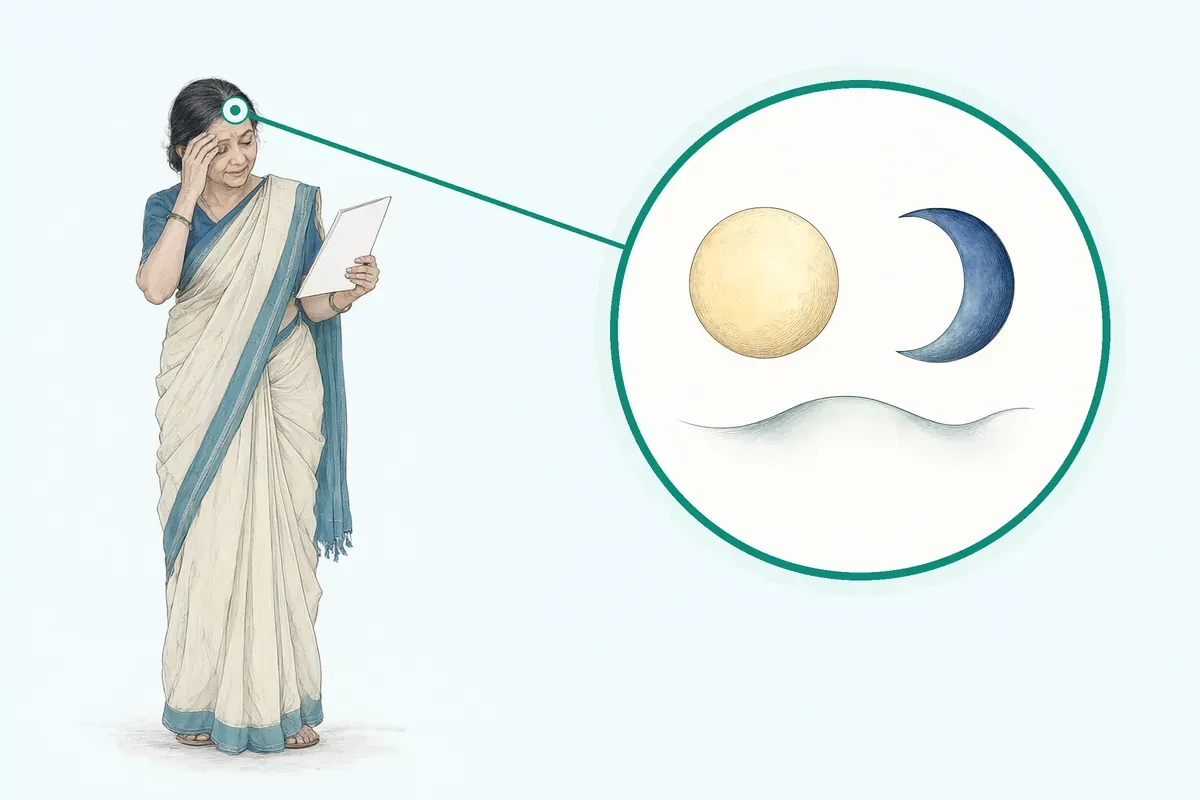
You feel the change but do not know what to do
Periods become irregular. Heat rises in your face at night. Sleep breaks. Joints ache. You worry about bone loss and heart risk. The information online is confusing.
-
Vasomotor symptoms
Hot flushes and night sweats disturb sleep and concentration.
-
Vaginal discomfort
Dryness and pain during sex affect intimacy.
-
Bone health worry
Oestrogen loss speeds bone thinning, raising fracture risk.
-
Heart risk rises
Cholesterol and blood pressure often change after menopause.
-
Mood and memory
Anxiety, low mood and brain fog appear without warning.
Ovarian hormone production falls rapidly at menopause, driving symptoms and bone loss.
Why Jaipur Hospital
You want to feel like yourself again without guessing which treatment is right for you.
Your care plan
Your first steps with us
- 1 Call or visit OPD for an appointment
- 2 Consult a gynaecologist for 30 to 45 minutes
- 3 Get blood tests, DEXA scan and cardiac screening in-house
- 4 Start your personalised plan with follow-up visits
how the assessment and treatment are done
A gynaecologist reviews your history, orders tests and discusses options. No anaesthesia or hospital stay is needed.
-
Menopausal Hormone Therapy
Oral, transdermal or vaginal oestrogen with or without progestogen; your surgeon will discuss suitability.
-
Non-Hormonal Options
SSRIs, gabapentin and lifestyle changes for vasomotor symptoms; your surgeon will discuss suitability.
-
Bone Health Management
DEXA scan, calcium, vitamin D and bisphosphonates if indicated; your surgeon will discuss suitability.
-
Cardiovascular Risk Screening
Lipid profile, blood pressure, glucose and lifestyle counselling; your surgeon will discuss suitability.
Why patients trust us
- 1991 Serving Jaipur for 35 years
- NABH Accredited hospital
- 3 Obstetrics and Gynaecology consultants
- 24×7 Emergency, ICU and ambulance
- 25 Cashless schemes and insurers
what research shows about these treatments
-
less than 1 in 1,000
Combined hormone therapy linked to a small breast cancer risk increase in large studies.
-
6.8% to 34.9%
Osteoporosis prevalence rises from 6.8% at ages 50–59 to 34.9% over 80.
-
two to four times
Perimenopausal women are two to four times more likely to have a significant depressive episode.
If it is left untreated
Untreated symptoms can lead to ongoing sleep loss, bone fractures, cardiovascular events and reduced quality of life.
life after treatment
Most women find their symptoms become manageable and they return to usual activities.
-
Better sleep
Night sweats usually reduce, so sleep improves.
-
Stronger bones
Bone density loss typically slows with treatment and exercise.
-
Steady mood
Anxiety and low mood often settle as hormones stabilise.
-
Comfort restored
Vaginal dryness and pain usually improve with local therapy.

Frequently asked questions
Questions patients ask about menopause and midlife health
Which problems are assessed under menopause and midlife health?
In short
At Jaipur Hospital, the menopause and midlife health service assesses vasomotor symptoms, urogenital changes, bone health, cardiovascular risk, and mood or sleep disturbances. A consultation lasts 30 to 45 minutes in the OPD and does not need anaesthesia or hospital admission.
In detail
The assessment covers hot flashes, night sweats, vaginal dryness, pain during sex, and urinary symptoms that commonly arise when ovarian oestrogen production falls. Bone health is evaluated through DEXA scanning and fracture risk calculation because oestrogen loss accelerates bone resorption.
Cardiovascular screening includes lipid profile, blood pressure, and glucose testing, as the menopause transition is linked to adverse changes in these markers.
Mood changes, anxiety, and sleep disruption are also reviewed, since peri-menopausal and early postmenopausal women are two to four times more likely to experience a significant depressive episode.
Your next step at Jaipur Hospital
You can book an OPD appointment for a 30 to 45 minute consultation. Bring any recent blood reports or DEXA results. The typical price range is ₹1,000 to ₹5,000; ask for an estimate when you schedule. Your surgeon will advise a personalised care plan after the assessment.
How will the doctor decide which tests I need?
In short
The doctor at Jaipur Hospital selects tests based on your symptoms, age, time since menopause, personal and family medical history, and examination findings. Tests are not routine for everyone; they target your individual risk profile.
In detail
If you are within 10 years of menopause and have vasomotor symptoms, hormone levels may not be needed for diagnosis. A DEXA scan is considered if you have fracture risk factors such as prior fracture, parental hip fracture, low body weight, or long-term steroid use.
Lipid profile, fasting glucose, and blood pressure are checked for cardiovascular risk assessment, especially if you have hypertension, diabetes, or a family history of early heart disease. Thyroid function may be tested if fatigue or weight changes are prominent.
The clinician follows guideline-based algorithms to avoid unnecessary investigations while identifying treatable causes of symptoms or silent risk factors like osteoporosis.
A common belief
Many women expect a full hormone panel, but guidelines say hormone levels are not needed to diagnose menopause if you are over 45 with typical symptoms.
What actually happens
Tests like DEXA, lipids, or glucose are ordered only when your history shows specific risk factors.
Your next step at Jaipur Hospital
Tests are usually done at the in-house diagnostic laboratory. Results are typically available within a day. The typical consultation price range is ₹1,000 to ₹5,000; test costs are separate. Your surgeon will explain which tests are advised and why at your consultation.
How soon should I expect improvement after the chosen treatment for menopause?
In short
Improvement timing depends on the treatment chosen at Jaipur Hospital. Systemic hormone therapy often reduces hot flushes and night sweats within a few weeks. Vaginal oestrogen for dryness may take four to twelve weeks for full effect. Non-hormonal options such as certain antidepressants or gabapentin can show benefit in two to four weeks. Bone protection with hormone therapy or bisphosphonates works over months to years and is monitored with DEXA scans.
In detail
Evidence shows that oestrogen replacement restores hormone levels and relieves vasomotor symptoms quickly for most women. Local vaginal oestrogen acts directly on urogenital tissue and needs consistent use for several weeks. Non-hormonal agents modulate central thermoregulation and may need dose adjustment.
Lifestyle changes — regular weight-bearing exercise, adequate calcium and vitamin D, smoking cessation — support long-term bone and heart health but do not give immediate symptom relief. Your doctor will review progress at follow-up, typically after four to six weeks, and adjust the plan if needed.
A common belief
Bone protection takes months to years and is checked with DEXA scans.
What actually happens
Lifestyle changes help long-term but do not give quick symptom relief.
Your next step at Jaipur Hospital
Keep a simple symptom diary for the first month and share it at your follow-up visit. If there is no meaningful change after six weeks, your doctor may alter the dose, switch the route or add another option.
Are my symptoms due to menopause or another medical problem?
In short
Many symptoms overlap between menopause and other conditions, so a proper assessment at Jaipur Hospital is needed to tell them apart. Hot flushes, irregular periods, vaginal dryness and mood changes are typical of perimenopause and menopause. However, thyroid disorders, anaemia, depression, infections or malignancies can cause similar complaints. Your doctor will take a detailed history, examine you, and order targeted tests to confirm the cause.
In detail
Evidence shows that perimenopause begins in the mid-40s with fluctuating hormone levels, leading to irregular cycles and vasomotor symptoms. Menopause is confirmed after twelve consecutive months without a period. Thyroid dysfunction can mimic flushes, fatigue and menstrual irregularity. Iron deficiency anaemia causes tiredness and palpitations.
Endometrial or cervical pathology may cause abnormal bleeding. A focused work-up — including TSH, haemoglobin, pelvic ultrasound and, if indicated, endometrial sampling — distinguishes menopause from these conditions. Accurate diagnosis ensures you receive the right treatment and avoid unnecessary hormone exposure.
A common belief
Guessing can lead to wrong treatment.
What actually happens
A focused history, examination and simple blood tests like TSH and haemoglobin, plus ultrasound if needed, give a clear answer.
Your next step at Jaipur Hospital
Book a consultation at Jaipur Hospital for a structured evaluation. Bring a record of your periods and symptoms. The doctor will order the necessary tests and explain the results. You will leave with a clear diagnosis and a tailored plan. Call us to schedule your visit.
How can I decide whether to seek advice about menopause?
In short
Consider seeking advice when menopause symptoms affect your daily life, sleep, mood, or relationships. At Jaipur Hospital, our gynaecology team helps you understand whether your symptoms are typical for perimenopause or menopause and what options exist. A consultation lasts 30 to 45 minutes in the OPD and costs typically ₹1,000 to ₹5,000.
In detail
Perimenopause often begins in the mid-40s with irregular periods, hot flushes, night sweats, vaginal dryness, sleep disturbance, and mood changes. If these symptoms disrupt work, sleep, or quality of life, professional guidance can clarify the cause and outline management choices.
Early discussion also allows timely bone health and cardiovascular risk screening. Your personal and family medical history influences which treatments are appropriate.
A common belief
Many women wait years before mentioning symptoms, thinking they must simply endure them.
What actually happens
In reality, early consultation allows symptom relief, bone protection, and cardiovascular risk assessment before problems worsen.
Your next step at Jaipur Hospital
Track your symptoms for a few weeks, noting frequency and severity. Then book an OPD consultation at Jaipur Hospital. Bring a list of medications and any recent blood tests. The gynaecologist will review your history, discuss hormonal and non-hormonal options, and arrange follow-up.
Can I request a female clinician or a chaperone for an intimate examination?
In short
Yes. At Jaipur Hospital, you can request a female gynaecologist or a chaperone for any intimate examination. Our gynaecology department respects your comfort and dignity. A 30 to 45 minute OPD consultation allows time to discuss this preference when booking or on arrival.
In detail
Clinical guidelines and hospital policy support patient choice for gender of examiner and presence of a chaperone during intimate examinations. A chaperone may be a trained nurse or staff member. This applies to pelvic examinations, transvaginal ultrasound, and any procedure requiring exposure.
Inform the reception or your doctor at the start of the visit. The hospital ensures a female clinician is available whenever possible.
A common belief
Some patients hesitate to ask, fearing it may cause offence or delay.
What actually happens
In fact, it is a standard right. The hospital routinely accommodates such requests and schedules female clinicians or chaperones as part of normal practice.
Your next step at Jaipur Hospital
When booking your OPD appointment at Jaipur Hospital, mention your preference for a female gynaecologist or a chaperone. The team will schedule accordingly. The consultation lasts 30 to 45 minutes and typically costs ₹1,000 to ₹5,000. Your comfort and consent are prioritised throughout.
Which symptoms should prompt me to see a specialist?
In short
You should see a specialist at Jaipur Hospital if you have hot flashes, night sweats, vaginal dryness, pain during sex, sleep problems, mood changes, or irregular periods that disrupt daily life. These are common signs of the menopause transition.
In detail
Vasomotor symptoms such as hot flashes and night sweats occur when oestrogen levels fall and can persist for years. Urogenital symptoms including vaginal dryness, dyspareunia, and urinary frequency result from thinning of the vaginal and urethral tissues.
Sleep disturbance and mood changes are also frequent; evidence shows peri-menopausal women are two to four times more likely to experience a significant depressive episode. Irregular periods signal perimenopause, which typically starts around age 45.
If these symptoms affect your quality of life, a consultation helps clarify whether hormone therapy, non-hormonal options, or lifestyle changes are appropriate.
A common belief
Some women wait years thinking symptoms are just normal ageing, but untreated vasomotor symptoms can last a decade and urogenital changes worsen without local oestrogen.
What actually happens
Early review opens more treatment options.
Your next step at Jaipur Hospital
Schedule an OPD visit for a 30 to 45 minute consultation. No preparation is needed, but a symptom diary can help. The typical price range is ₹1,000 to ₹5,000; ask for an estimate when you book. Your surgeon will advise on next steps after the assessment.
How will the results change my care plan?
In short
Test results at Jaipur Hospital directly shape whether hormone therapy, non-hormonal options, bone-specific treatment, or cardiovascular prevention are recommended. Each result refines the risk-benefit discussion for your situation.
In detail
If DEXA shows osteopenia (T-score -1 to -2.5) or osteoporosis (T-score below -2.5), calcium, vitamin D, weight-bearing exercise, and possibly bisphosphonates are added. If lipid profile or glucose is abnormal, lifestyle counselling intensifies and referral to a cardiologist or physician may be made.
If hormone levels confirm menopause and you have no contraindications, systemic hormone therapy (oral, transdermal, or vaginal oestrogen with progestogen if the uterus is intact) may be offered for vasomotor symptoms.
If contraindications exist — such as prior breast cancer, stroke, heart attack, blood clots, or liver disease — non-hormonal options like SSRIs, gabapentin, or vaginal moisturisers are prioritised. The plan is reviewed annually.
A common belief
A normal DEXA does not mean you ignore bone health; weight-bearing exercise and calcium remain important.
What actually happens
Abnormal lipids do not automatically rule out hormone therapy — transdermal oestrogen may be safer than oral. The plan is always individualised.
Your next step at Jaipur Hospital
You will discuss results at a follow-up OPD visit or by phone. The typical consultation price range is ₹1,000 to ₹5,000; test costs are separate. Your surgeon will adjust the care plan based on the findings and your preferences.
What should I do if symptoms persist or worsen after starting menopause treatment?
In short
If symptoms persist or worsen after starting treatment, contact your doctor at Jaipur Hospital without waiting for the next routine visit. The doctor will review your medication adherence, check the dose and route, and assess whether another condition could be contributing. Adjustments may include changing the hormone dose, switching from oral to transdermal delivery, adding a non-hormonal agent, or ordering further tests such as thyroid function or pelvic ultrasound.
In detail
Evidence indicates that individual response to hormone therapy varies. Some women need a higher or lower dose, or a different progestogen, to control vasomotor symptoms and minimise side effects. Persistent bleeding on combined therapy warrants endometrial evaluation.
Worsening mood, new headaches, or leg swelling should be reported promptly because they may signal a side effect or an unrelated issue. Non-hormonal options like SSRIs or gabapentin can be added or substituted if hormone therapy is contraindicated or poorly tolerated. Regular review ensures safety and effectiveness.
A common belief
Persistent bleeding, new headaches or leg swelling need prompt evaluation.
What actually happens
A dose change, switch to a patch, or adding a non-hormonal medicine often helps.
Your next step at Jaipur Hospital
Do not stop or change your medication on your own. Call Jaipur Hospital to bring forward your appointment. Bring your symptom diary and current medicines. The doctor will examine you, order any needed tests, and revise your plan. Early review prevents complications and keeps you comfortable.
Do I need hormone tests to diagnose menopause?
In short
Hormone tests are not routinely needed to diagnose menopause at Jaipur Hospital. Menopause is confirmed clinically after twelve consecutive months without a menstrual period in a woman over forty-five. Blood tests such as FSH, estradiol or AMH may be ordered if you are under forty-five, have had a hysterectomy, use hormonal contraception, or have an atypical presentation. Your doctor decides based on your history.
In detail
Evidence shows that during perimenopause hormone levels fluctuate widely day to day, so a single FSH or estradiol value is unreliable for diagnosis. The clinical definition — twelve months of amenorrhoea — remains the standard.
In premature ovarian insufficiency (before age forty), hormone tests are essential to confirm the diagnosis and guide long-term hormone therapy. For women on combined oral contraceptives, bleeding patterns are suppressed, so FSH measured during the pill-free interval or after stopping may help.
AMH reflects ovarian reserve but is not a diagnostic test for natural menopause. Your doctor will explain whether testing adds value in your situation.
A common belief
Hormone levels swing wildly during perimenopause, so a single test can mislead.
What actually happens
The clinical history is more reliable. AMH shows ovarian reserve but does not diagnose menopause.
Your next step at Jaipur Hospital
If you are unsure about your menopausal status, book a consultation at Jaipur Hospital. The doctor will review your period pattern, age and symptoms, and order tests only if they change management. You will receive a clear answer and next steps. Call us to arrange your visit.
FAQ library
Questions and answers about menopause and midlife health
When you contact us
Get your personalised midlife health plan
Contact Jaipur Hospital for a gynaecology OPD consultation and clear next steps.
- A consultation with a gynaecologist in the OPD
- Your scans and reports reviewed, with tests done in-house if you need them (laboratory, X-ray and imaging)
- Your options explained in plain words, including whether you need surgery at all
- A cost estimate before you decide
- Help with cashless treatment under RGHS, MAA Yojana, CGHS and empanelled insurers and TPAs
- Follow-up visits after your treatment
Overview
Menopause and Midlife Health: what to know
What Menopause and Midlife Health Means
Menopause is the time in a woman's life when her menstrual period stops for good. It is confirmed after 12 months in a row with no periods. The average age for this change is 51 years. Before menopause, you go through a transition called perimenopause. This usually begins in your mid-40s. During this time, hormone levels go up and down.
The ovaries shrink and stop making as much oestrogen and progesterone. This drop in hormones is what causes the symptoms of menopause. Menopause is a natural biological process that marks the end of the reproductive years.
Common Symptoms and Signs That Need Urgent Care
- Heavy bleeding Soaks a pad in an hour
- Bleeding after 12 months Post-menopausal bleeding
- Chest pain Sudden and severe
- Shortness of breath Sudden onset
- Weakness on one side Possible stroke sign
The fall in oestrogen can cause several symptoms. You may feel sudden heat in the skin, known as hot flashes, or wake up drenched in sweat from night sweats. Vaginal dryness can make sex painful. Sleep problems and mood changes are also common. Some women notice weight gain and muscle loss during this transition.
If you have heavy bleeding that soaks through a pad in an hour, or bleeding after you have not had a period for 12 months, contact your doctor the same day. Sudden severe chest pain, shortness of breath, or weakness on one side of the body also need urgent care.
Why It Happens and Who Is at Higher Risk
- Premature menopause
- Before age 40, higher heart and bone risk
- Smoking
- Linked to earlier menopause
- Overweight after menopause
- Higher breast cancer risk
During your reproductive years, the ovaries make oestrogen and progesterone. As you approach menopause, the ovaries stop producing these hormones in high levels. Not having enough of these hormones causes menopausal symptoms. The loss of oestrogen also affects bones. Oestrogen normally helps bone-forming cells and slows bone breakdown. Without it, bone loss speeds up.
Some women reach menopause early, before age 40. This is called premature menopause. Women who lose oestrogen early are at higher risk for heart disease and bone loss if they do not use hormone therapy.
Your age, family history, personal medical history, and how severe your symptoms are all affect your risk and the choices that suit you:
- Age
- Family history
- Personal medical history
- How severe your symptoms are
Smoking is linked to earlier menopause. Being overweight after menopause is linked to a higher risk of breast cancer.
How Menopause Is Diagnosed: Examination and Tests
- above -1 Normal
- between -1 and -2.5 Osteopenia
- below -2.5 Osteoporosis
Menopause is usually diagnosed based on your age, your symptoms, and your period history. If you are over 45 and have not had a period for 12 months, that is often enough to confirm menopause.
Blood tests to check hormone levels are not routinely needed but may be used if you are younger than 45 or if the diagnosis is unclear. Your doctor will ask about hot flashes, sleep, mood, and vaginal symptoms. A pelvic examination may be done to check vaginal health.
Because the risk of osteoporosis rises after menopause, a DEXA scan to measure bone mineral density is often advised. The scan gives a T-score: normal is above -1, osteopenia is between -1 and -2.5, and osteoporosis is below -2.5.
Blood pressure, lipid profile, and blood glucose are checked to assess cardiovascular risk:
- Blood pressure
- Lipid profile
- Blood glucose
Non-Surgical Treatment Options and When Surgery May Be Considered
Oestrogen-only therapy
- For women with hysterectomy
Combined therapy
- Oestrogen plus progestogen
Treatment focuses on symptom relief and long-term health. Menopausal Hormone Therapy (MHT) replaces the hormones your body no longer makes. There are two main types: oestrogen-only therapy for women who have had a hysterectomy, and combined therapy (oestrogen plus progestogen) for women who still have a uterus to protect the lining of the womb.
Oestrogen can be taken as a tablet, skin patch, gel, or spray (systemic), or as a vaginal cream, tablet, or ring (local) for vaginal symptoms.
Progestogen can be a tablet, vaginal gel, or a hormone-releasing intrauterine device:
- Tablet
- Vaginal gel
- Hormone-releasing intrauterine device
Your surgeon will advise which form suits you. Non-hormonal options include certain antidepressants (SSRIs), gabapentin, and lifestyle changes for hot flashes. Vaginal moisturisers and lubricants help with dryness. For bone health, calcium, vitamin D, weight-bearing exercise, and bisphosphonates may be used. Cardiovascular risk is managed with blood pressure, lipid, and glucose control plus lifestyle counselling.
Surgery is not a treatment for menopause itself. A hysterectomy may be done for other gynaecological reasons; if the uterus is removed, oestrogen-only therapy can be used. The decision to start, continue, or stop hormone therapy is reviewed each year based on your symptoms, risks, and benefits.
Preparing for your menopause and midlife health consultation
Do
- Write down symptoms
- List all medicines
- Carry recent reports
- Wear comfortable clothing
Your first visit to Jaipur Hospital for menopause and midlife health usually lasts 30 to 45 minutes. No anaesthesia is needed and there is no recovery period because this is an outpatient consultation. Before you come, it helps to write down your symptoms, how long you have had them, and any questions you want to ask your doctor.
Bring a list of all medicines and supplements you take, including any herbal products. If you have recent blood reports, a DEXA scan, or imaging, carry those as well.
Your doctor may ask about your personal and family history of breast cancer, heart disease, stroke, blood clots, liver disease, or osteoporosis:
- Breast cancer
- Heart disease
- Stroke
- Blood clots
- Liver disease
- Osteoporosis
Fasting is not routinely required, but your doctor may request a fasting lipid profile or glucose test for cardiovascular risk screening. If so, you will be told in advance. Wear comfortable clothing and bring an attendant if you wish.
How menopause hormone therapy and other treatments are planned
At Jaipur Hospital, your surgeon will discuss the main treatment options with you and advise which suits your symptoms, medical history, and preferences. Menopausal Hormone Therapy (MHT) can be given as oestrogen alone or combined with a progestogen. If you have had a hysterectomy, oestrogen-only therapy is usually recommended.
If you still have a uterus, a progestogen is added to protect the lining of the uterus from the effects of unopposed oestrogen.
Oestrogen can be taken as a tablet, a skin patch, a gel, or a spray:
- Tablet
- Skin patch
- Gel
- Spray
Progestogen can be taken as a tablet, a vaginal tablet or gel, or released from an intrauterine device:
- Tablet
- Vaginal tablet or gel
- Intrauterine device
Two common schedules are continuous-combined therapy, where both hormones are taken every day, and cyclic therapy, where oestrogen is taken daily and progestogen is added for 10 to 14 days each month. Local oestrogen therapy — a vaginal ring, tablet, or cream — is an option if you only have vaginal dryness.
Non-hormonal options include certain antidepressants (SSRIs), gabapentin, and lifestyle changes for hot flushes and sleep problems. For bone health, a DEXA scan may be arranged, and calcium, vitamin D, or bisphosphonates can be prescribed if indicated. Cardiovascular risk screening includes a lipid profile, blood pressure, and glucose check with lifestyle counselling. Your doctor will explain each option and help you decide.
Risks and possible complications of hormone therapy
- Combined therapy risks
- Small rise in breast cancer, heart disease, stroke, clots
- Oestrogen-only therapy risks
- Lower breast cancer risk, similar stroke and clot risk
- Route matters for clot risk
- Patches, sprays, rings may lower clot risk
- Endometrial cancer risk
- Oestrogen alone raises risk if uterus present
Hormone therapy carries benefits and risks that vary from person to person. In the Women's Health Initiative trial, combined oestrogen plus progestin therapy was associated with a small increase in breast cancer, coronary heart disease, stroke, and blood clots (deep vein thrombosis and pulmonary embolism).
Oestrogen-only therapy in women with a prior hysterectomy showed a lower risk of breast cancer but a similar small increase in stroke and blood clots. The risk of blood clots may be lower with patches, sprays, or rings compared with oral tablets. Endometrial cancer risk rises with oestrogen-only therapy in women who have a uterus; adding progestogen reduces this risk.
Gallbladder disease risk is slightly increased, especially with oral oestrogen. Some studies report a small rise in dementia risk when combined therapy is started after age 65.
Common side effects in the first few months include vaginal spotting or bleeding, breast tenderness, headaches, and nausea:
- Vaginal spotting or bleeding
- Breast tenderness
- Headaches
- Nausea
These often settle within a few months. Your doctor will review your personal and family history to see if the benefits outweigh the risks for you.
Recovery and aftercare after starting treatment
- First review A few weeks after starting
- Side effects improve Within three to six months
- Annual review Every year to continue, change, or stop
Because this service is an outpatient consultation, there is no hospital stay and no surgical recovery. After you start hormone therapy or another treatment, your doctor will usually see you again in a few weeks to check how you are doing and adjust the dose or form if needed. Side effects such as spotting, breast tenderness, or headaches often improve within the first three to six months.
If you notice unusual vaginal bleeding, severe headaches, leg swelling or pain, shortness of breath, or any new symptom that worries you, contact the hospital or your doctor promptly:
- Unusual vaginal bleeding
- Severe headaches
- Leg swelling or pain
- Shortness of breath
Annual follow-up is recommended to review whether to continue, change, or stop therapy. At each visit, your symptoms, blood pressure, weight, and any new medical conditions will be checked. Bone health may be monitored with repeat DEXA scans at intervals your doctor advises. Cardiovascular risk factors such as lipids and glucose are reviewed periodically.
Lifestyle measures — regular weight-bearing exercise, adequate calcium and vitamin D, stopping smoking, and limiting alcohol — support both bone and heart health.
Results: how well hormone therapy and other options work
In studies, systemic oestrogen therapy (with or without progestin) is the most effective treatment for hot flushes and night sweats. Both systemic and local oestrogen relieve vaginal dryness and pain during sex. Hormone therapy prevents bone loss and reduces the risk of osteoporotic fractures, including hip fracture, while you are taking it.
The bone protective effect is seen with all preparations, including low-dose and non-oral routes. Combined oestrogen and progestogen therapy may be more effective for bone density than oestrogen alone, especially at low doses continued for longer periods. Adding regular resistance and impact exercise enhances bone density more than either treatment alone.
Some research suggests combined hormone therapy started within 10 years of menopause and before age 60 may lower the risk of heart attacks, and oestrogen alone may have a similar or greater benefit. Combined therapy may also reduce the risk of colon cancer.
Most risks and benefits decrease after stopping therapy, although a small elevation in breast cancer risk may persist. Non-hormonal options such as certain antidepressants, gabapentin, and lifestyle changes can reduce hot flushes and improve sleep, but are generally less effective than oestrogen for severe symptoms. Your doctor will help you weigh the expected benefits against the risks for your situation.
Cost and insurance for menopause and midlife health in Jaipur
A typical consultation and initial work-up at Jaipur Hospital costs between ₹1,000 and ₹5,000.
The final amount depends on the number of visits, the investigations ordered (such as hormone blood tests, lipid profile, glucose, DEXA scan, or ultrasound), the type and duration of hormone therapy prescribed (oral tablets, patches, gels, or vaginal preparations), and how often follow-up and monitoring are needed.
Jaipur Hospital is empanelled under RGHS, MAA Yojana, CGHS, and a panel of private insurers and TPAs:
- RGHS
- MAA Yojana
- CGHS
- Private insurers and TPAs
If you are covered under one of these schemes, bring your card and any required documents. The hospital has an in-house pharmacy and diagnostic laboratory, so tests and medicines can be done on the same day. For a detailed estimate, ask at the billing counter or call the hospital.