

Obstetrics and Gynaecology · Jaipur Hospital
Pessary for Prolapse in Jaipur
Feeling a bulge or pressure? We assess and fit a pessary to support you without surgery.
- Serving Jaipur since 1991 (35 years)
- NABH accredited
- 24×7 emergency & ICU
- Cashless: MAA Yojana + 32 insurers
- Session length
- 20 to 40 minutes
- Anaesthesia
- Not needed
- Recovery
- Immediatefollow-up at 1 to 2 weeks for check
- Price
- ₹2,000 to ₹8,000 (device + fitting)typical range in India; ask us for an estimate
A bulge you can feel
Pelvic organs dropping into the vagina
Weak pelvic floor muscles let the uterus, bladder or bowel push down. You may feel a lump, heaviness, or trouble passing urine or stool. It can affect daily life and confidence.
-
Vaginal bulge or lump
A protrusion you can feel at the vaginal opening, often worse after standing.
-
Pelvic heaviness or dragging
A constant pressure or dragging sensation in the lower abdomen.
-
Urinary leakage or urgency
Leaking urine when coughing, sneezing or exercising.
-
Bowel difficulty
Needing to push the vaginal wall back to empty the bowel.
Pelvic organ prolapse is a protrusion of pelvic organs through the vaginal walls and pelvic floor.
Why Jaipur Hospital
You worry the bulge will get worse, that surgery is your only choice, or that a device will be uncomfortable and limit your routine.
Your care plan
Your first steps with us
- 1 Call or visit OPD for an appointment
- 2 Gynaecologist examines and discusses pessary types
- 3 Fitting done in 20 to 40 minutes
- 4 Follow-up at 1 to 2 weeks then regular checks
Insurance and schemes
How cashless works
Cashless treatment under MAA Yojana and with 32 insurers.
-
Tell us when you book
Say you are insured or have a scheme card, and send a photo of the card on WhatsApp so our insurance desk can check it in advance.
-
We get the approval
Once your doctor advises admission, the insurance desk sends the pre-authorisation request to your insurer or TPA; for planned surgery, approval can come before you are admitted.
-
Settled at discharge
The approved amount is settled between the insurer and the hospital; you pay only what the policy does not cover.
How the fitting is done
The gynaecologist examines you, selects a silicone pessary type and size, places it, and checks comfort while you walk and move. No anaesthesia needed.
-
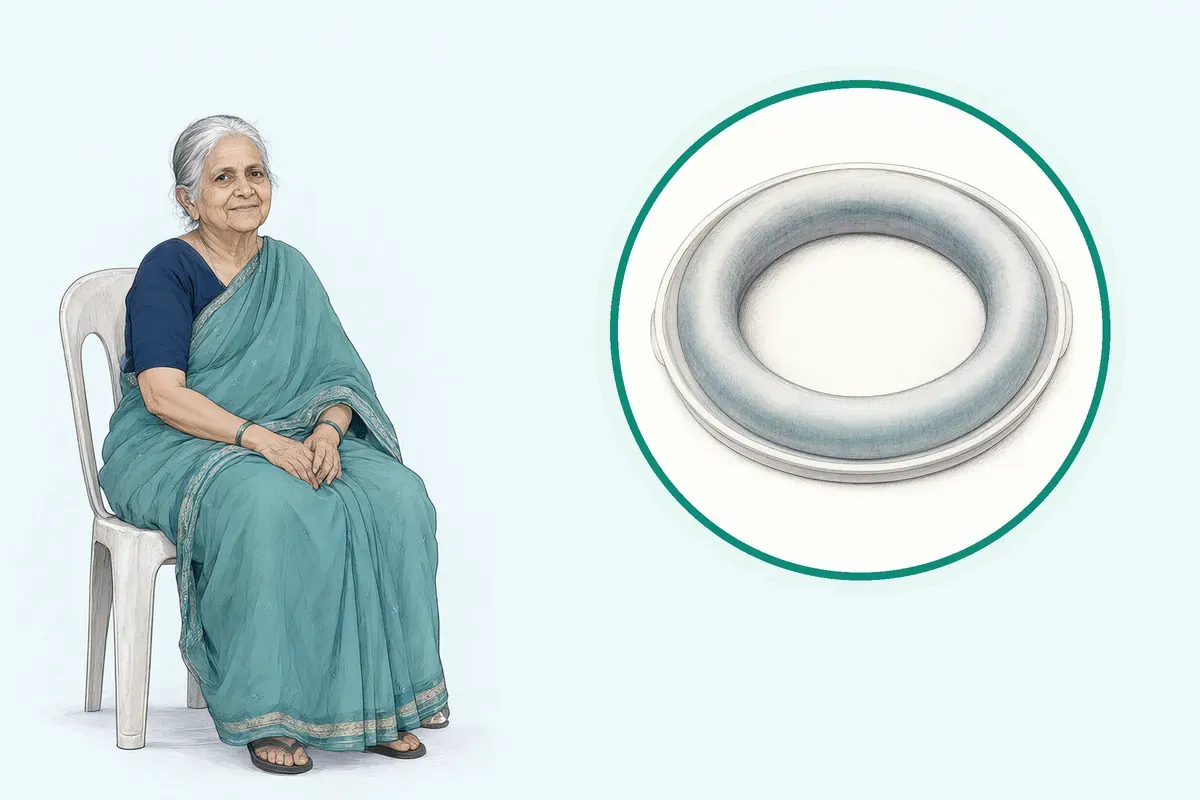
Ring Pessary
First-line for early prolapse; easy for you to remove and reinsert.
-
Gellhorn Pessary
Space-occupying for advanced prolapse; clinician removal usually needed.
-
Cube Pessary
Suction-based for severe prolapse; requires daily self-care and removal.
-
Donut or Inflatable Pessary
Alternative for difficult anatomy or silicone allergy.
Why patients trust us
- 1991 Serving Jaipur for 35 years
- NABH Accredited hospital
- 3 Obstetrics and Gynaecology consultants
- 24×7 Emergency, ICU and ambulance
- 32 Cashless insurers, plus MAA Yojana
What research shows about pessary treatment
-
1 to 2 weeks
Initial follow-up is recommended after 1 to 2 weeks to check fit and comfort.
-
every 3 months
Follow-up every 3 months in the first year, then every 6 months for ongoing care.
-
73% complication rate
One study reported a 73% complication rate, yet over 70% of women were satisfied and kept the pessary.
If it is left untreated
Without support, the prolapse may worsen. The vaginal wall can ulcerate or bleed. Urinary retention, infection, or difficulty with bowel movements can develop. In rare cases, a neglected pessary can become embedded and need surgical removal.
Life after fitting
Most women feel the bulge reduce and daily comfort improve. The pessary supports the organs so you can move, work and manage routine without surgery.
-
Less bulge sensation
Most people feel the vaginal lump disappear or become much smaller.
-
Easier bladder and bowel control
Support often reduces leakage and the need to push to empty the bowel.
-
Return to normal activity
You can walk, sit and do household work without the dragging feeling.
-
Ongoing self-care routine
With regular cleaning and check-ups, the device can be used for years.
Meet the team
Your obstetrics and gynaecology doctors
Explore our gynaecology and maternity hospital in Jaipur: every treatment, the doctors and what to expect at your visit.



Frequently asked questions
Questions patients ask about pessary for prolapse
What concerns can I discuss during an appointment for pessary fitting?
In short
At Jaipur Hospital, you can discuss any symptom related to pelvic organ prolapse or stress urinary incontinence during a pessary fitting appointment. The gynaecology team will ask about bulge sensation, urinary leakage, bowel difficulty, discomfort during daily activity, and sexual function. You may also raise questions about device types, self-care, follow-up schedule, and cost.
In detail
The fitting session lasts 20 to 40 minutes and does not need anaesthesia.
Your surgeon will perform a pelvic examination, assess prolapse stage, and select a ring, Gellhorn, cube, or donut pessary based on severity, whether you have a uterus, sexual activity, and ability to self-manage.
Evidence shows ring pessaries suit stage I–II prolapse and are easy to remove, while space-occupying devices such as Gellhorn or cube are used for stage III–IV. The largest comfortable size is usually most effective.
You will walk, squat, and cough to confirm fit and check for leakage. If you cannot remove the device yourself, the team will schedule clinic visits every three to four months for cleaning and vaginal inspection.
Your next step at Jaipur Hospital
Bring any previous gynaecology reports, imaging, and a list of current medicines. No fasting is needed. An attendant may accompany you. After fitting, a review is set at one to two weeks, then every three months in the first year and six-monthly thereafter. To book a consultation, call 0141-2551500 or 7414 001 001.
Which medical records, previous reports, and medicine details should I bring for a pessary fitting appointment?
In short
For a pessary fitting appointment at Jaipur Hospital, bring any previous gynaecology consultation notes, pelvic examination findings, prolapse staging reports, ultrasound or imaging results, hysterectomy or pelvic surgery records, and a complete list of current medicines including hormone creams, blood thinners, and any vaginal preparations.
In detail
The gynaecology specialist needs to know your prolapse stage, whether you have a uterus, previous pelvic surgeries, and any medications that affect vaginal mucosa or bleeding risk. Postmenopausal women on oestrogen cream may have healthier vaginal tissue, which influences pessary choice and follow-up interval.
Blood thinners increase bleeding risk if the pessary causes erosion. Prior imaging helps confirm the compartment involved—anterior, posterior, or apical. Records of previous pessary use, including size and type, guide the current fitting. The team also asks about allergies to silicone or latex.
A full medicine list avoids interactions if oestrogen cream or acidic vaginal gel is prescribed for discharge or irritation. The fitting itself takes 20 to 40 minutes, needs no anaesthesia, and is done as an outpatient.
Your next step at Jaipur Hospital
Carry the documents in a folder or on your phone. No fasting is required. An attendant may stay with you. After fitting, a review is set at one to two weeks, then every three months in the first year and six-monthly thereafter. To book your consultation, call 0141-2551500 or 7414 001 001.
How will the team explain my diagnosis and treatment choices for prolapse?
In short
At Jaipur Hospital the gynaecology team explains the prolapse stage using the POP-Q system, describes how a pessary supports the pelvic organs without surgery, and outlines the pessary types — ring, Gellhorn, cube or donut — that match your anatomy and lifestyle.
In detail
The clinician shows diagrams or a model to illustrate where the pessary sits. They explain that a ring pessary is first-line for stage I-II and allows self-removal, while a Gellhorn or cube suits advanced prolapse but needs clinician removal or daily self-care.
They also discuss pelvic floor exercises, avoiding heavy lifting, managing constipation and vaginal oestrogen cream for atrophy. The aim is to give you enough information to choose between continuing with a pessary or considering surgery later.
A common belief
Patients often think a pessary is a single device.
What actually happens
In reality ring, Gellhorn, cube and donut pessaries work differently — some you remove yourself, some need a clinician, some need daily cleaning. The explanation covers these practical differences so you can decide what fits your daily life.
Your next step at Jaipur Hospital
You receive a clear verbal summary at the visit. Written instructions on pessary care, removal schedule and warning signs are provided. A follow-up at 1 to 2 weeks checks fit and comfort.
What could be causing discharge, odour, irritation, leakage, or discomfort with a pessary for prolapse?
In short
At Jaipur Hospital, discharge, odour, irritation, leakage or discomfort with a pessary for prolapse are common side effects. Increased vaginal discharge and odour are the most frequent complaints. Bleeding or pain usually means the pessary is rubbing the vaginal wall. Leakage may occur if the pessary shifts or does not fully support the bladder neck.
In detail
Evidence shows the most common complications of wearing a pessary are unpleasant odour, vaginal discharge, bleeding, pain and constipation. A white or yellow discharge is normal; a change in colour may signal infection.
If the pessary is too large it can cause constipation or make existing constipation worse. Pink stains or blood suggest the device is rubbing the vaginal wall. Pain or discomfort means the pessary does not fit correctly.
Leakage of urine can happen if the pessary does not compress the urethra properly against the pubic bone. Postmenopausal women with thin vaginal mucosa are more prone to ulceration and irritation.
A common belief
Many women think any symptom means the pessary is wrong.
What actually happens
In fact, a white or yellow discharge is normal. A change in colour, blood, or pain means the size or type should be reviewed. Constipation can also worsen if the pessary is too large.
Your next step at Jaipur Hospital
Report any new or worsening discharge, odour, bleeding, pain or leakage to your clinician promptly. A follow-up check at one to two weeks after fitting is standard; after that, reviews are usually every three to six months.
The clinician may adjust the size, change the pessary type, or prescribe an oestrogen cream or acidic vaginal gel to reduce irritation and discharge. Do not use antiseptics or harsh cleansers on the device.
How could a pessary for prolapse or its fitting affect future pregnancy?
In short
At Jaipur Hospital, a pessary for prolapse does not fix the prolapse or prevent it from worsening, but it can manage symptoms during a future pregnancy. The pessary is removable and does not damage pelvic structures. If you become pregnant with a pessary in place, the clinician will review the fit early in pregnancy and may change the type or size as the uterus grows. There is no evidence that pessary use harms fertility or pregnancy outcomes.
In detail
Evidence shows a pessary provides support without surgery and can be used in pregnant patients. It does not alter the pelvic anatomy permanently. During pregnancy, the growing uterus changes vaginal dimensions, so the pessary may need resising or removal.
The ring pessary is often preferred in pregnancy because it is easy to remove and does not occupy the whole vaginal space. A cube or Gellhorn pessary may be less suitable as the uterus enlarges. The clinician checks fit at each antenatal visit.
Pessary use for cervical insufficiency (a different indication) has been studied in pregnancy; for prolapse, the principle is the same — temporary mechanical support. No data suggest pessary use affects conception, miscarriage risk or delivery mode.
A common belief
Some women worry a pessary might scar the vagina or block conception.
What actually happens
It does neither. It is a silicone device that sits in the vagina and can be taken out. In pregnancy, the main change is that the fit must be reviewed each trimester.
Your next step at Jaipur Hospital
If you are planning pregnancy, tell the clinician at the fitting visit. The pessary can be removed for conception attempts and refitted if symptoms return. Once pregnant, schedule an early review to check fit.
The device may be removed later in pregnancy as the uterus rises. After delivery, a new fitting is done once healing is complete.
When should I book a consultation for pessary fitting?
In short
You should book a consultation for pessary fitting at Jaipur Hospital when you notice a vaginal bulge, feel pelvic pressure, leak urine on coughing or exercise, have difficulty emptying your bladder or bowel, or wish to avoid or delay surgery. The gynaecology team also sees women who are medically unfit for operation or who want a non-surgical option during pregnancy.
In detail
Pelvic organ prolapse occurs when pelvic floor muscles and connective tissues weaken, allowing organs to drop into the vagina. Risk factors include multiple vaginal deliveries, previous pelvic surgery, chronic constipation, chronic cough, heavy lifting, obesity, and menopause.
A pessary is a silicone device that supports the vaginal walls without surgery. Evidence shows it is a simple, economical, safe, and effective conservative treatment. Ring pessaries are first-line for stage I–II prolapse; Gellhorn and cube pessaries suit advanced stages.
The fitting takes 20 to 40 minutes as an outpatient. No anaesthesia is needed. If you want to avoid surgery, cannot have surgery due to medical problems, or only leak urine with strenuous activity, a pessary is a good option.
The team will assess prolapse severity, incontinence level, sexual activity, and whether you have a uterus before choosing the device.
Your next step at Jaipur Hospital
No special preparation or fasting is required. Bring previous reports, imaging, and a medicine list. An attendant may stay with you. After fitting, a check-up is scheduled at one to two weeks, then every three months in the first year and six-monthly thereafter. To book your consultation, call 0141-2551500 or 7414 001 001.
Should I keep a symptom diary before my appointment for pessary fitting?
In short
Keeping a brief symptom diary before your pessary fitting appointment at Jaipur Hospital helps the gynaecology team understand your pattern. Note the days you feel a vaginal bulge, pelvic heaviness, urine leakage with cough or exercise, difficulty emptying your bladder or bowel, and any discomfort during walking, sitting, or sexual activity.
In detail
A diary gives a clearer picture than memory alone. It shows whether symptoms are constant or only with certain activities, which guides the choice between a ring pessary for mild prolapse and a space-filling Gellhorn or cube for advanced stages.
It also reveals if stress urinary incontinence is the main issue, in which case an incontinence ring or dish pessary may be preferred. The team asks about sexual activity because some pessaries must be removed before intercourse while others can stay in place.
Recording bowel habits is useful because a large pessary can worsen constipation. The fitting takes 20 to 40 minutes, needs no anaesthesia, and you will walk, squat, and cough to test the fit. A symptom diary makes that discussion more precise and helps set the follow-up schedule.
Your next step at Jaipur Hospital
Write notes for at least a week before the visit. Bring the diary along with previous reports and your medicine list. No fasting is needed. An attendant may accompany you.
After fitting, a check-up is set at one to two weeks, then every three months in the first year and six-monthly thereafter. To book your consultation, call 0141-2551500 or 7414 001 001.
What happens if the cause of my symptoms is still unclear after assessment for pessary fitting?
In short
If the examination at Jaipur Hospital does not clearly show which pelvic organ is prolapsing or whether another condition such as a urinary tract infection or vaginal atrophy is causing your symptoms, the clinician may ask for a urine test, a vaginal swab, or a pelvic ultrasound at an outside imaging centre before deciding on a pessary.
In detail
Prolapse symptoms can overlap with stress urinary incontinence, cystitis, or vaginal atrophy. The POP-Q examination grades descent from 0 to 4, but if the bulge is not obvious or you have mixed symptoms, additional tests help separate prolapse from other causes.
The team will not fit a pessary until the diagnosis is certain, because an ill-fitting device can cause pain, bleeding or erosion.
A common belief
Some women expect the pessary to be fitted at the first visit, but placing the wrong device can cause pain, bleeding or pressure sores.
What actually happens
A clear diagnosis protects you from those complications.
Your next step at Jaipur Hospital
Any extra tests are arranged promptly; the ultrasound is done at an external centre and the results reviewed by your surgeon. Once the picture is clear, the fitting visit is scheduled — usually within the same week.
Do I need swabs, urine tests, or an examination before pessary fitting for prolapse?
In short
At Jaipur Hospital, a pelvic examination is always done before pessary fitting for prolapse. The clinician assesses the prolapse stage, vaginal length and tissue quality to choose the right type and size. Swabs or urine tests are not routine but may be ordered if there is abnormal discharge, suspected infection, or urinary symptoms such as burning or frequency.
In detail
The fitting process starts with a complete pelvic examination. The examiner checks the prolapse stage using the POP-Q system, feels the vaginal walls, and measures the vaginal length. This examination guides the choice of pessary style (ring, Gellhorn, cube or donut) and starting size.
If the patient has unusual discharge, a swab may be taken to rule out infection before inserting a pessary. If urinary symptoms are present, a urine test may be done to exclude a urinary tract infection.
In postmenopausal women, the clinician also checks vaginal mucosa thickness, as thin mucosa increases the risk of erosion; oestrogen cream may be advised before or with fitting.
A common belief
Some people think extensive tests are required before a pessary.
What actually happens
In practice, the examination tells the clinician the prolapse stage and vaginal size, which is what decides the pessary type. Tests are added only when symptoms suggest infection or a urine problem.
Your next step at Jaipur Hospital
Expect a pelvic examination at the first visit. The appointment takes about 20 to 40 minutes. If swabs or a urine test are needed, the clinician will explain why and arrange them.
The pessary is then fitted and you will walk and do simple movements to confirm comfort and position. A follow-up is scheduled at one to two weeks.
Can I request a female clinician or a chaperone for an intimate examination for pessary fitting?
In short
At Jaipur Hospital, you can request a female clinician or a chaperone for the intimate examination and pessary fitting. The gynaecology department has female specialists available. A chaperone — usually a nurse or trained attendant — can be present during any examination or procedure. Please mention your preference when booking the appointment so the team can arrange it.
In detail
Pessary fitting requires a pelvic examination to assess prolapse stage, vaginal length and tissue quality, followed by insertion of the device and a check of fit while you stand, walk and bear down. This is an intimate examination.
Hospital policy supports patient dignity: you may ask for a female doctor, and a chaperone will be offered or provided on request. The attendant staying with you (a family member) may also be present if you wish. The clinician will explain each step before proceeding. If you feel uncomfortable at any point, you can ask to pause or stop.
A common belief
Some patients feel they cannot ask.
What actually happens
It is your right. The examination involves checking the prolapse, inserting the pessary, and asking you to move around to test the fit. A female clinician and a chaperone make this more comfortable.
Your next step at Jaipur Hospital
When you call or visit for an appointment, state that you would like a female clinician and/or a chaperone. The front desk will note the request and schedule accordingly. The fitting visit takes 20 to 40 minutes. After fitting, a follow-up is set at one to two weeks.
FAQ library
Questions and answers about pessary for prolapse
When you contact us
Your assessment and fitting plan
Contact Jaipur Hospital for a gynaecology OPD consultation, a clear explanation of your options, and a cost estimate before you decide.
- A consultation with a gynaecologist in the OPD
- Your scans and reports reviewed, with tests done in-house if you need them (laboratory, X-ray and imaging)
- Your options explained in plain words, including whether you need surgery at all
- A cost estimate before you decide
- Help with cashless treatment under MAA Yojana and empanelled insurers and TPAs
- Follow-up visits after your treatment
Overview
Pessary for Prolapse: what to know
What pelvic organ prolapse is and how it happens
- Cystocele
- Bladder bulges into front vaginal wall
- Rectocele
- Rectum bulges into back vaginal wall
- Enterocele
- Sigmoid colon herniates into upper back wall
- Uterine prolapse
- Uterus descends into or out of the vagina
- Vault prolapse
- Top of vagina drops after hysterectomy
Pelvic organ prolapse is a protrusion or herniation of the pelvic organs through the vaginal walls and pelvic floor. It occurs when your pelvic floor muscles and connective tissues weaken, causing your pelvic organs to drop or fall into your vagina. The condition is common and has many contributing factors.
When defined by symptoms it affects about 3 to 6 percent of women, while vaginal examination finds some degree of prolapse in up to 50 percent.
Prolapse can involve:
- Front wall of the vagina (cystocele)
- Back wall (rectocele or enterocele)
- Top of the vagina after hysterectomy (vault prolapse)
- Uterus itself
A cystocele happens when the tissues between the bladder and the vagina weaken, leading to a herniation of the bladder that causes a bulge in the anterior vaginal wall. A rectocele occurs when the fascial layers between the rectum and the vagina become weak, allowing the rectum to herniate and bulge the posterior vagina.
An enterocele is the herniation of the sigmoid colon into the upper posterior vaginal wall; it is a true hernia lined by peritoneum and usually containing small bowel.
Uterine prolapse is classified by degree: in first degree the cervix is visible when the perineum is depressed; in second degree the cervix is visible outside the vaginal introitus while the fundus remains inside; in third degree (procidentia) the entire uterus is outside the vaginal introitus.
A pessary for prolapse is a device that supports the uterine and vaginal walls and keeps them in the vagina. It is a simple, economical, safe and effective conservative treatment for symptomatic pelvic organ prolapse. Pessaries are made from silicone, a soft, non-absorbent material. They are available in many types and sizes.
Ring and similar pessaries work for early-stage prolapse; donut and cube pessaries work well for mid-stage prolapse; Gellhorn or Gehrung pessaries work better for advanced prolapse. The type of pessary that is appropriate for each patient depends on the condition being treated.
Symptoms of prolapse and warning signs that need urgent care
- Sudden severe pelvic pain Seek same-day clinician attention
- Unable to pass urine Seek same-day clinician attention
- Heavy vaginal bleeding Seek same-day clinician attention
- Fever with foul-smelling discharge Signs of infection needing urgent care
- Pessary cannot be removed Seek care immediately if embedded or causing severe pain
- Cervix trapped in ring pessary Can lead to strangulation and tissue death
Common symptoms include:
- Feeling of a bulge or something coming down in the vagina
- Pelvic pressure or heaviness
- Difficulty with bladder or bowel emptying
Some women need to manually reduce a rectocele before defecation. Stress urinary incontinence — involuntary loss of urine during exertion — is also common. Sexual function may be affected.
Warning signs that need the same-day attention of a clinician include sudden severe pelvic pain, inability to pass urine, heavy vaginal bleeding, or signs of infection such as fever with foul-smelling discharge. If a pessary is already in place and you cannot remove it, or if it causes severe pain, bleeding, or the pessary becomes embedded, seek care immediately.
A pessary that is neglected can become embedded in vaginal mucosa and may be difficult to remove; in extreme and rare cases it must be removed surgically. If the cervix and lower uterus herniate through the open centre of a ring pessary and become incarcerated, strangulation and necrosis can follow if not recognised.
Causes and who is at higher risk
- Vaginal deliveries
- Most damage occurs in first two deliveries
- Instrumental delivery
- Forceps increase the risk
- Chronic straining
- Constipation, cough, heavy lifting raise pressure
- Obesity
- Raises intra-abdominal pressure and nerve damage
- Menopause
- Low oestrogen weakens collagen
- Family history
- 2.5-fold higher incidence
Prolapse has a multifactorial etiology. Multiple vaginal deliveries can weaken the musculature of the pelvic floor. Most of the damage to the pelvic floor occurs during the first and second deliveries. Instrumental deliveries, especially forceps, increase the risk. Caesarean section serves as a protective factor if there was no additional vaginal delivery.
Hysterectomy or other pelvic surgery can predispose a woman to weakness of the pelvic floor. The risk of developing an apical prolapse following a vaginal hysterectomy due to prolapse is five-fold higher even if a prolapse correction was performed in the primary surgery.
Conditions that involve repetitive bearing down — chronic constipation, chronic coughing, or repetitive heavy lifting — can predispose a woman to weakness of the pelvic floor. Obesity directly affects symptoms of pelvic organ prolapse; a chronic increase in intra-abdominal pressure, nerve damage and comorbidities of obese individuals all contribute to pelvic floor dysfunction.
Hormonal changes in menopause cause a drop in systemic oestrogen concentrations, and a hypoestrogenic environment in the pelvic organs contributes to alterations in the composition and strength of collagen. Postmenopausal women with thin vaginal mucosa are more susceptible to vaginal ulceration with use of a pessary.
A family history of prolapse is associated with a 2.5-fold increased incidence compared with the general population. Connective tissue disorders such as Ehlers-Danlos syndrome or Marfan syndrome are also risk factors. Parity, vaginal delivery, age, and body mass index are significantly associated with prolapse. The average age of women seeking medical consultation for symptomatic prolapse is 61.
How prolapse is diagnosed: examination and tests
- Pelvic examination
- POP-Q system grades 0 to 4
- Speculum examination
- Identifies which vaginal wall is prolapsing
- Cough stress test
- Checks for stress urinary incontinence
- Additional tests if needed
- Urine test, bladder scan, urodynamics
Diagnosis is made by a pelvic examination. The POP-Q system grades prolapse from 0 to 4, describing the descent from minimal prolapse to the greatest possible descent. POP is often defined as POP-Q stage 2 or more. The examiner assesses each compartment — anterior, posterior, and apical — and notes the stage.
A speculum examination helps identify which vaginal wall is prolapsing. The clinician also checks for urinary incontinence, including stress urinary incontinence, which may be demonstrated by asking you to cough.
In some cases, additional tests may be advised. These can include a urine test to rule out infection, a bladder scan to check how well you empty your bladder, or urodynamic studies if incontinence is complex. Imaging such as ultrasound or MRI is not routine but may be used for surgical planning.
Jaipur Hospital has in-house diagnostic laboratory and X-ray facilities; CT, MRI and DEXA scans are done at an imaging centre outside the hospital and the results are reviewed by your surgeon.
Treatment options without surgery, and when surgery is advised
Non-surgical management includes pelvic floor muscle training, lifestyle changes, and pessary use. Your provider may advise ways to keep your prolapse from increasing, such as avoiding heavy lifting, managing your bowels, and doing pelvic floor exercises. A pessary is a device that manages pelvic organ prolapse without surgery.
It provides support and structure to stop these organs from dropping into the vaginal opening. Pessaries can also be used in the treatment of stress urinary incontinence.
A pessary is a good option if you want to avoid or delay surgery or cannot have surgery due to medical complications.
Good candidates for a pessary trial include:
- A pregnant patient
- An elderly woman in whom surgery would be risky
- A woman whose previous operation for stress incontinence failed
A pessary can also be used by women who only have stress urinary incontinence with strenuous exercise. Your provider will recommend a type of pessary based on incontinence level, prolapse severity, sexual activity, and whether you have a uterus.
Ring pessary (with or without support) is first-line for stage I–II prolapse and allows easy self-removal. Gellhorn pessary is a space-occupying device for advanced prolapse and usually needs clinician removal. Cube pessary uses suction for severe prolapse and requires daily self-care. Donut or inflatable pessary is an alternative for difficult anatomy or allergy to silicone.
Fitting is done by trial and error; the largest pessary that you can wear comfortably is generally the most effective. The appointment takes about 30 minutes. After placement you walk around and do simple exercises to ensure the device fits comfortably.
Surgery is considered when conservative measures do not relieve symptoms, when the prolapse is very advanced, or when there are complications such as urinary retention, recurrent infections, or renal impairment due to obstruction. Surgical options include native tissue repair, mesh-augmented repair, and sacrocolpopexy. Abdominal sacrocolpopexy is considered the most durable prolapse surgery.
However, surgery for prolapse is known to have a high reoperation rate. Mesh repairs carry risks of mesh erosion (reported in 11 to 18 percent in some series), reoperation for mesh exposure, de novo stress urinary incontinence, and increased blood loss and operating time. Your surgeon will discuss the risks and benefits of each approach based on your anatomy, health, and preferences.
Your first visit and tests for pessary fitting
At your first visit, your doctor will ask about your symptoms, such as a feeling of heaviness or a bulge in the vagina, any trouble passing urine or stool, and whether you are sexually active.
They will also ask about your medical history, including the number of vaginal deliveries, any previous pelvic surgery, chronic cough, constipation, or heavy lifting at work or home. A pelvic examination is done to check the type and stage of prolapse using the POP-Q system. The doctor will also look for any vaginal irritation, ulceration, or discharge.
If you are postmenopausal, the vaginal mucosa may be thin, which can increase the chance of ulceration with a pessary. No imaging or blood tests are routinely needed for pessary fitting. Bring a list of any medicines you take and any previous surgical notes. Wear comfortable clothing. The appointment usually takes 20 to 40 minutes.
How pessary fitting works
- Doctor chooses type and size Based on prolapse stage, uterus, incontinence, self-care ability
- Pessary placed and tested Stand, walk, cough, squat, Valsalva to check fit
- Check comfort and urine passage Largest comfortable pessary is most effective
- Adjust size or style if needed Several sizes kept available for the session
A pessary is a silicone device placed in the vagina to support the pelvic organs. It does not fix the prolapse or stop it from getting worse, but it can relieve symptoms without surgery.
Your doctor will recommend a type based on the prolapse stage, whether you have a uterus, your level of incontinence, and your ability to manage the device yourself.
- Ring pessary (with or without support): often the first choice for stage I and II prolapse; it is easy to remove and replace yourself and does not usually affect sexual activity.
- Gellhorn pessary: a space-occupying device used for moderate to severe (stage III-IV) uterine or vaginal wall prolapse; it gives strong support but usually needs a clinician to remove it.
- Cube pessary: held in place by suction, used for severe prolapse even when vaginal tone is poor; it must be removed and cleaned daily because it has no drainage holes.
- Donut or inflatable pessary: an alternative for difficult anatomy or silicone allergy.
During the fitting, the doctor places a pessary of a chosen size and style, then asks you to stand, walk, cough, squat, and perform a Valsalva manoeuvre to check that it stays in place and is comfortable. The largest pessary you can wear comfortably is generally the most effective.
The examiner's finger should pass easily between the pessary and the vaginal wall. If the pessary is for stress urinary incontinence, you will be asked to cough to test for leakage. You should be able to pass urine before leaving. If the pessary falls out after you go home, the doctor will try a different size or style. Several sizes and styles are kept available for the fitting session.
Risks and possible complications of a pessary
- Common side effects
- Discharge, odour, spotting, discomfort, constipation
- Normal discharge
- White or yellow discharge is normal
- Infection sign
- Colour change in discharge needs doctor review
- Embedded pessary
- Rare, may need surgical removal
- Cervix trapped in ring pessary
- Can cause strangulation and tissue death
- No increased cancer risk
- Pessary does not raise vaginal cancer risk
Most complications are linked to long-term wear and improper care.
Common side effects include:
- Increased vaginal discharge and odour
- Vaginal bleeding or spotting
- Discomfort or pain
- Constipation
A white or yellow discharge is normal while wearing a pessary. An acidic vaginal gel or oestrogen cream may be suggested to reduce discharge and irritation. If discharge changes colour, it may signal an infection and you should tell your doctor. Bleeding usually means the pessary is rubbing the vaginal wall; a different size or type may help.
Pain or discomfort means the fit is not right. A pessary should not interfere with bowel movements, but if it is too large it can cause or worsen constipation.
Rare but serious complications include the pessary becoming embedded in the vaginal mucosa, making removal difficult. In extreme cases, surgical removal is needed. With a ring pessary, the cervix or lower uterus can herniate through the centre and become trapped; if not recognised, this can lead to strangulation and tissue death. Vaginal cytology may show inflammatory changes.
The presence of a pessary does not increase the risk of vaginal cancer. Oestrogen cream can make the vaginal lining more resistant to erosion and is often used before or with fitting in postmenopausal women.
Recovery and aftercare after pessary fitting
- Same day Go home, immediate recovery
- 1 to 2 weeks Follow-up to recheck fit and check for irritation
- Self-care users Remove weekly to monthly, clean with mild soap and water
- Clinician-care users Visit every 3 to 4 months for removal, cleaning and reinsertion
- Routine follow-up Every 3 months first year, then every 6 months
There is no hospital stay; you go home the same day. Recovery is immediate. A follow-up visit is usually scheduled at 1 to 2 weeks to recheck the fit and examine the vagina for irritation, pressure sores, or allergic reaction. Having to change the size at least once after the first fitting is not uncommon.
If you can remove and reinsert the pessary yourself, you will be taught to take it out weekly to monthly, clean it with mild soap and warm water, and leave it out overnight. Do not use antiseptics or harsh cleansers. The device may discolour over time; this does not mean it needs replacement.
If you cannot manage the pessary yourself, you will need to visit the hospital every 3 to 4 months for the doctor to remove, clean, and reinsert it. Routine follow-up is typically every 3 months for the first year, then every 6 months.
At each visit the pessary is removed, cleaned, and the vagina is inspected for erosions, pressure necrosis, or cracking of the device. Report any discomfort, difficulty passing urine or stool, unusual bleeding, or change in discharge right away.
Results: how well a pessary works for prolapse
A pessary manages symptoms; it does not heal the prolapse or prevent it from worsening. In studies, many women report satisfaction with pessary use even when complications occur. Success depends on the type of prolapse, the pessary style, and how well you can care for the device.
Ring pessaries are commonly used for mild to moderate prolapse and are easy to manage. Space-occupying pessaries such as Gellhorn or cube are used when supporting pessaries are not effective. Pessaries can also help with stress urinary incontinence by supporting the urethra and bladder neck.
In one study, a pessary was effective for stress urinary incontinence in 83 percent of women. Some women use a cube pessary only during exercise to control leakage. A well-fitted pessary can show what surgical correction might achieve, giving useful diagnostic information. Regular follow-up and proper care help avoid complications and keep the device working well.
Cost and insurance for pessary fitting in Jaipur
The typical range in India for the device and fitting is ₹2,000 to ₹8,000. The final cost depends on the type of pessary (ring, Gellhorn, cube, donut, or inflatable) and whether more than one fitting visit is needed to find the right size.
Jaipur Hospital is empanelled under MAA Yojana and works with a panel of private insurers and TPAs for cashless treatment where eligible. Ask us for an estimate based on the pessary type your doctor recommends.
