

General Medicine · Jaipur Hospital
Fever and Tropical Infections in Jaipur
Unexplained fever? We find the cause and give you a clear treatment plan.
- Serving Jaipur since 1991 (35 years)
- NABH accredited
- 24×7 emergency & ICU
- Cashless: RGHS, MAA Yojana, CGHS + 22 insurers
- Consultation length
- 20 to 40 minutes
- Anaesthesia
- Not needed
- Recovery
- 7 to 14 days for acute phasefatigue may persist weeks
- Price
- ₹800 to ₹2,500 consultation₹25,000 to ₹80,000 for ward admission · ₹1,00,000+ for ICUtypical range in India; ask us for an estimate
Fever that will not break
You have had a high fever for days and do not know why.
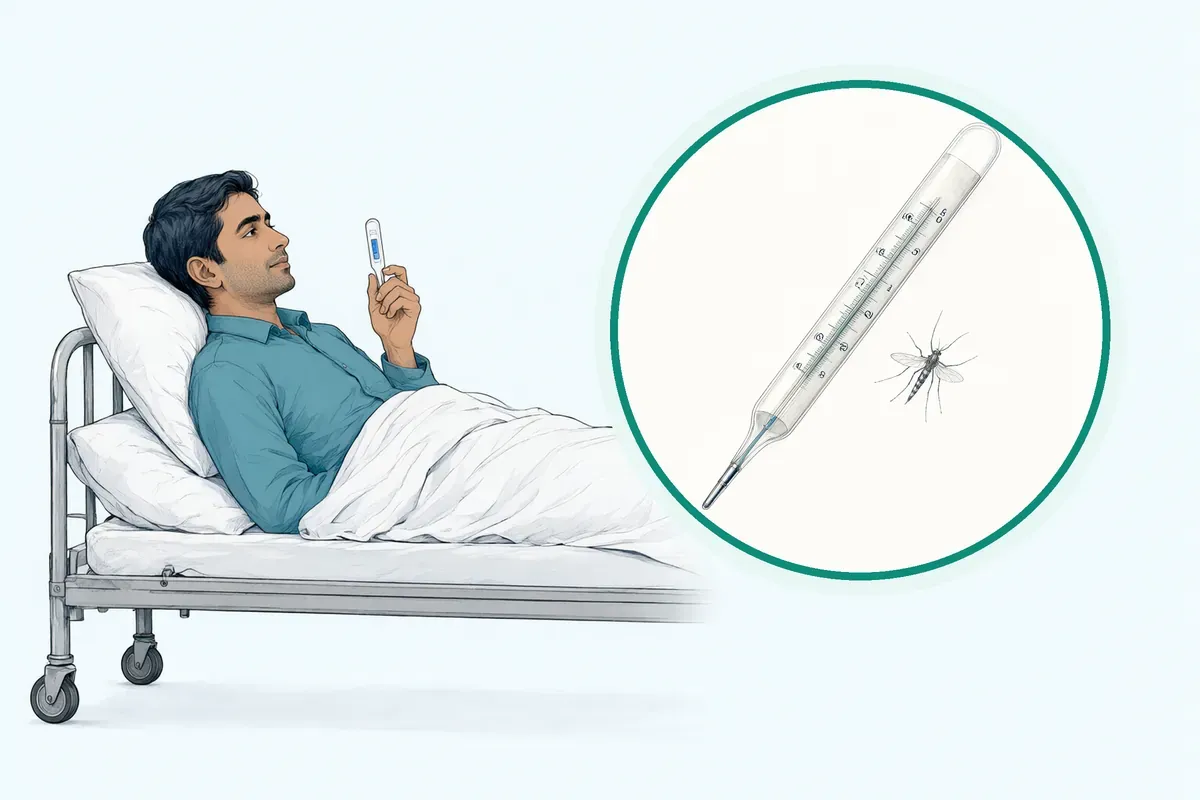
Fever in Jaipur often means dengue, malaria, typhoid, scrub typhus or leptospirosis. Their symptoms overlap, so guessing the cause delays the right treatment. Self-medication with painkillers can be dangerous if it is dengue.
-
Overlapping symptoms
Dengue and typhoid can look the same in the first few days, making self-diagnosis unreliable.
-
Missed leptospirosis
Most leptospirosis patients are not recognised or are misdiagnosed as malaria.
-
Wrong medicine risk
Ibuprofen or aspirin can worsen bleeding if the fever is actually dengue.
-
Co-infections happen
You can have more than one infection at the same time, which makes treatment harder.
-
Monsoon spike
Mosquito breeding and water contamination rise sharply during the rains, increasing all these fevers.
Dengue and typhoid fever may overlap, especially during the first few days of illness and are indistinguishable from many other acute febrile illnesses.
Why Jaipur Hospital
You are tired, worried about missing work, and scared that a simple fever could turn serious without the right tests.
Your care plan
Your first steps with us
- 1 Book an OPD consultation with a physician.
- 2 Get rapid fever panel tests done in-house.
- 3 Start protocol-based treatment or admission if needed.
- 4 Follow up until fever settles and strength returns.
How we diagnose and treat fever and tropical infections
We run a focused fever panel, start protocol-based antimicrobials, manage fluids by WHO guidelines, and monitor for complications daily.
-
Fever Panel & Rapid Diagnostics
NS1, IgM, Malaria antigen, Typhoid IgM, Scrub and Lepto IgM, CBC, LFT and coagulation tests to identify the cause quickly.
-
Protocol-Based Antimicrobial Therapy
Artesunate for severe malaria; ceftriaxone or azithromycin for enteric fever; doxycycline for rickettsial infections — chosen by your surgeon after results.
-
Fluid Management & Organ Support
WHO dengue fluid algorithm; vasopressors and renal replacement if septic shock develops, guided by daily monitoring.
-
Complication Monitoring
Daily hematocrit and platelets for dengue; GCS, urine output and lactate for sepsis to catch deterioration early.
Why patients trust us
- 1991 Serving Jaipur for 35 years
- NABH Accredited hospital
- 1 General Medicine consultants
- 24×7 Emergency, ICU and ambulance
- 25 Cashless schemes and insurers
What studies show about these infections
-
About 1 in 20 progress to severe dengue
Research shows roughly 5% of dengue cases develop severe dengue with bleeding or shock risk.
-
Fever may persist 3 to 5 days on antibiotics
Treated typhoid patients often still have fever for several days, with temperature dropping gradually each day.
-
Leptospirosis case fatality around 7%
Global studies report a mean case fatality ratio of 6.85% for leptospirosis, higher with age and delayed care.
If it is left untreated
Untreated severe dengue can cause internal bleeding, shock and organ damage. Untreated typhoid can lead to intestinal perforation or chronic carriage. Leptospirosis can progress to pulmonary haemorrhage or multi-organ failure.
Life after treatment
Most people recover fully within two weeks, though tiredness may last longer. You return to work and daily routine with no lasting illness.
-
Fever resolves
Most people feel better within a week; fatigue can linger for a few weeks but improves steadily.
-
No lasting complications
Most people recover from dengue without lasting problems if treated in time.
-
Full recovery typical
Most treated typhoid patients make a full recovery with no further problems.
-
Back to normal life
Strength returns gradually; you resume work and family duties without ongoing medication.
Frequently asked questions
Questions patients ask about fever and tropical infections
Which problems are assessed under fever and tropical infections?
In short
Jaipur Hospital assesses dengue, malaria, typhoid, scrub typhus and leptospirosis under its fever and tropical infections service. The team also evaluates acute undifferentiated fevers and co-infections where more than one pathogen may be present. A systematic workup follows national and WHO protocols for each condition.
In detail
The service covers the five major tropical infections seen in this region. Evidence shows dengue and typhoid often overlap in the first days of illness, making them hard to distinguish without testing.
Leptospirosis is increasingly recognised as a cause of undifferentiated fever and can mimic malaria or dengue. Concurrent infections with more than one agent occur and create overlapping symptoms that complicate diagnosis. The hospital uses a structured fever panel and rapid diagnostics to identify the specific pathogen or combination of pathogens.
A common belief
Many people assume a fever is just viral and wait it out.
What actually happens
But dengue and typhoid can look alike early on, and leptospirosis often mimics malaria. Missing a co-infection delays the right treatment.
Your next step at Jaipur Hospital
If you have had fever for more than 48 to 72 hours, book a consultation at Jaipur Hospital. The doctor will take a detailed history, examine you and order the appropriate fever panel. Most consultations last 20 to 40 minutes. Early testing helps start the right protocol-based treatment without delay.
How will the doctor decide which tests I need?
In short
The doctor at Jaipur Hospital selects tests based on your fever pattern, duration, associated symptoms, travel history, exposure to floodwater or animals, and local seasonal trends. The fever panel includes NS1/IgM for dengue, malaria antigen, typhoid IgM, scrub typhus and leptospira IgM, plus CBC, LFT and coagulation studies.
In detail
Dengue NS1 antigen rapid test has higher accuracy with sensitivity of 55 to 82 percent and specificity of 97 to 100 percent. Dengue IgM rapid test sensitivity is 59.7 percent and specificity 40.2 percent.
Typhidot IgG/IgM rapid test has sensitivity of 41.4 percent and specificity of 56.5 percent. Malaria rapid tests are an important addition to microscopy. For leptospirosis, complete laboratory testing is not performed in almost 50 percent of suspected cases, contributing to under-reporting.
Newer diagnostic methods facilitate early diagnosis and antibiotic treatment. Blood culture remains the preferred method for acute typhoid diagnosis, though a single culture is positive in only about 50 percent of cases.
- For leptospirosis, complete laboratory testing is not performed in almost 50 percent of suspected cases, contributing to under-reporting.
- Blood culture remains the preferred method for acute typhoid diagnosis, though a single culture is positive in only about 50 percent of cases.
A common belief
No single test covers everything: dengue NS1 works early, IgM comes later; typhoid blood culture misses half the cases; leptospirosis testing is often incomplete.
What actually happens
That is why a panel matched to your story is used instead of a blanket screen.
Your next step at Jaipur Hospital
Tests are done in the in-house 24-hour laboratory. Results guide protocol-based antimicrobial therapy: artesunate for severe malaria, ceftriaxone or azithromycin for enteric fever, doxycycline for rickettsial infections. Fluid management follows the WHO dengue algorithm.
How soon should I expect improvement after the chosen treatment for fever and tropical infections?
In short
Improvement timing depends on the specific infection and severity. At Jaipur Hospital, fever from malaria often drops within 24 to 48 hours of starting artesunate-based therapy. For typhoid, fever may persist for 3 to 5 days after starting antibiotics, with the maximum temperature decreasing each day. Dengue fever usually settles in 3 to 7 days for mild cases, but fatigue can last weeks. Your doctor will review progress daily.
In detail
Protocol-based antimicrobial therapy targets the causative organism: artesunate for severe malaria, ceftriaxone or azithromycin for enteric fever, and doxycycline for rickettsial infections. Evidence shows parasite clearance half-lives vary and typhoid fever resolution is gradual.
In dengue, there is no specific antiviral; management follows the WHO fluid algorithm while the immune system clears the virus. Leptospirosis responds to antibiotics, but organ dysfunction may prolong recovery.
Daily monitoring of haematocrit, platelets, GCS, urine output and lactate guides escalation or de-escalation of care. Most people recover fully with timely treatment.
A common belief
Patients sometimes feel worse in the first few days of antibiotic treatment for typhoid.
What actually happens
This does not mean the medicine is failing. It is a known pattern. For dengue, the critical phase often starts when the fever goes away, so daily monitoring continues even if you feel better initially.
Your next step at Jaipur Hospital
Expect a daily review by the medical team during admission. If fever does not follow the expected pattern, or if warning signs like bleeding, breathlessness or reduced urine output appear, the plan is adjusted promptly. Outpatient follow-up is scheduled after discharge to ensure complete recovery. For a personalised timeline based on your diagnosis, book a consultation at Jaipur Hospital.
When does a fever need testing or hospital assessment?
In short
A fever needs testing or hospital assessment if it lasts more than 48 to 72 hours without a clear cause, or if you have warning signs like severe headache, pain behind the eyes, rash, bleeding, persistent vomiting, abdominal pain, difficulty breathing, reduced urine output, confusion, or drowsiness. At Jaipur Hospital, our emergency department and fever clinic provide systematic workup with rapid diagnostics and protocol-based treatment. Do not self-medicate with ibuprofen or aspirin until dengue is ruled out, as these can worsen bleeding risk.
In detail
Tropical infections like dengue, malaria, typhoid, scrub typhus and leptospirosis often start with similar undifferentiated fever. Evidence shows co-infections can occur, making clinical diagnosis unreliable.
Early testing within 48 to 72 hours improves detection: NS1 antigen for dengue is most sensitive in the first few days, malaria antigen or smear should be done promptly, and typhoid blood cultures may need repeating.
Leptospirosis and scrub typhus IgM tests become positive later in the illness. Hospital admission is advised for any warning sign, inability to tolerate oral fluids, pregnancy, extremes of age, or comorbidities.
Our protocol includes daily monitoring of haematocrit, platelets, coagulation, GCS, urine output and lactate to guide fluid management and organ support.
A common belief
Many people wait a week or self-medicate.
What actually happens
Early testing catches dengue NS1, malaria antigen and typhoid cultures when they are most sensitive. Co-infections are common, so a single test may miss the full picture. Our fever panel gives a comprehensive view within hours.
Your next step at Jaipur Hospital
If your fever persists beyond 48 hours, or you have any warning sign, come to the OPD or 24×7 emergency department at Jaipur Hospital. Bring a record of your fever pattern and any medicines taken.
The fever panel includes CBC, LFT, coagulation, NS1/IgM, malaria antigen, typhoid IgM, and scrub typhus/leptospira IgM as appropriate. Results are available within hours. For a systematic evaluation, book a consultation at Jaipur Hospital.
How can I decide whether to seek advice about dengue and chikungunya care?
In short
You should seek advice at Jaipur Hospital if you have high fever with severe headache, pain behind the eyes, joint pain, rash, or bleeding signs. Dengue and chikungunya share these symptoms. Early testing helps confirm the diagnosis and start the right supportive care. Warning signs like persistent vomiting, abdominal pain, or bleeding need urgent review.
In detail
Dengue is caused by four virus types spread by Aedes mosquitoes; chikungunya is another virus from the same mosquito. Both cause sudden fever, body ache, and rash.
In studies, dengue can lower platelets and cause plasma leakage, leading to severe dengue in about 1 in 20 people. Chikungunya often causes prolonged joint pain.
There is no specific antiviral for either; care focuses on hydration, paracetamol for fever, and avoiding ibuprofen or aspirin because they increase bleeding risk. Our fever panel includes NS1 antigen, IgM/IgG, and CBC to differentiate the infections and monitor for complications.
A common belief
Many people treat fever at home with painkillers like ibuprofen.
What actually happens
That can worsen bleeding in dengue. Also, chikungunya joint pain can last weeks, so assuming it is just viral fever delays proper monitoring. A fever panel separates the two and checks platelets.
Your next step at Jaipur Hospital
If fever lasts more than 48 hours with the above symptoms, visit our OPD for a 20 to 40 minute consultation. Bring any previous reports. The doctor will order the fever panel and advise home care or admission based on warning signs. Recovery takes 7 to 14 days for the acute phase; fatigue may persist weeks.
Could several medical conditions or medicines be contributing to my symptoms?
In short
Yes, co-infections with dengue, typhoid, malaria, scrub typhus or leptospirosis can occur and overlap, making symptoms harder to interpret. Jaipur Hospital uses a combined fever panel to detect multiple pathogens simultaneously and reviews your current medicines for interactions.
In detail
Evidence shows concurrent infections with more than one agent result in overlapping symptoms that challenge diagnosis. Dengue and typhoid co-infection prevalence has been reported around 19 percent in some studies. Leptospirosis is often misdiagnosed as malaria or dengue.
Chronic conditions like diabetes, hypertension or kidney disease and medicines such as blood thinners, steroids or NSAIDs can alter the presentation and increase complication risk.
Our protocol includes a full blood count, liver and kidney function, coagulation profile and targeted serology for all common tropical pathogens. This systematic approach identifies co-infections and helps adjust antimicrobial therapy and supportive care safely.
- Dengue and typhoid co-infection prevalence has been reported around 19 percent in some studies.
A common belief
Treating only one infection when two are present leads to incomplete recovery.
What actually happens
NSAIDs for fever can be dangerous if platelets are low. A single test for one disease misses the rest. Our panel checks for dengue, malaria, typhoid, scrub typhus and leptospirosis together, and we adjust your regular medicines if needed.
Your next step at Jaipur Hospital
Bring a list of all medicines and past medical records to the OPD. The consultation lasts 20 to 40 minutes and costs ₹800 to ₹2,500. The fever panel gives same-day rapid results for multiple infections. If co-infection or drug interactions are found, the team adjusts treatment and may advise admission for monitoring.
Which symptoms should prompt me to see a specialist?
In short
You should see a specialist at Jaipur Hospital if you have high fever lasting more than 48 to 72 hours, severe headache, pain behind the eyes, joint and muscle pain, rash, chills with rigors, abdominal pain, vomiting, bleeding from gums or nose, or dark urine. These symptoms suggest dengue, malaria, typhoid, scrub typhus or leptospirosis.
In detail
Dengue typically presents with fever, cerebral pain, rash, retro-orbital pain, vomiting, joint pain and thrombocytopenia. Malaria often shows cyclical fever with chills and rigors. Typhoid fever begins with slowly rising temperature, headache, cough, constipation or diarrhoea, and sometimes a faint pink rash.
Leptospirosis presents as nonspecific febrile illness with fever, myalgia and headache, easily confused with influenza or dengue. Scrub typhus may cause an eschar at the bite site with fever and rash. The monsoon period increases mosquito breeding and water contamination, raising the risk of these infections.
Your next step at Jaipur Hospital
Track your fever pattern and note the timing and temperature. Do not self-medicate with ibuprofen or aspirin until dengue is ruled out, as these can worsen bleeding risk. Get tested within 48 to 72 hours if the fever does not break.
How will the results change my care plan?
In short
Test results at Jaipur Hospital directly determine which protocol-based treatment pathway is started. A positive dengue NS1 or IgM triggers the WHO fluid management algorithm and daily haematocrit and platelet monitoring. Malaria antigen positivity leads to artesunate for severe cases or artemisinin-based combination therapy for uncomplicated disease. Typhoid confirmation guides ceftriaxone or azithromycin choice. Scrub typhus or leptospirosis IgM positivity starts doxycycline.
In detail
Each infection has a defined protocol. Severe malaria receives parenteral artesunate, which reduced mortality by 34.7 percent in Asia compared with quinine. Enteric fever is treated with ceftriaxone or azithromycin based on resistance patterns; MDR and XDR typhoid are documented concerns.
Rickettsial infections respond to doxycycline. Dengue has no specific antiviral; care is supportive with fluid balance guided by haematocrit trends. Co-infections — such as dengue with typhoid, seen in nearly 19 percent of dengue-positive cases in one study — require combined antimicrobial and supportive protocols. Results also dictate admission criteria: warning signs or organ dysfunction warrant ward or ICU care.
- Severe malaria receives parenteral artesunate, which reduced mortality by 34.7 percent in Asia compared with quinine.
- Co-infections — such as dengue with typhoid, seen in nearly 19 percent of dengue-positive cases in one study — require combined antimicrobial and supportive protocols.
A common belief
A common belief is that antibiotics treat all fevers.
What actually happens
But dengue is viral and antibiotics do not help; they can cause side effects and resistance. Malaria needs artemisinin-based therapy, not just any antibiotic. The result tells the doctor exactly which pathway to follow.
Your next step at Jaipur Hospital
Results are typically discussed within hours for rapid tests. The doctor will explain the diagnosis, start the matching protocol and advise on admission or outpatient follow-up.
What should I do if symptoms persist or worsen during treatment for fever and tropical infections?
In short
If symptoms persist or worsen, seek medical attention immediately. At Jaipur Hospital, our 24×7 emergency department is equipped to reassess and escalate care. Warning signs include severe abdominal pain, persistent vomiting, bleeding from gums or nose, blood in vomit or stool, difficulty breathing, reduced urine output, confusion, drowsiness, or a fever that returns after settling. Do not wait for the next scheduled appointment.
In detail
Tropical infections can progress rapidly. Severe dengue typically develops a day or two after fever subsides, with plasma leakage leading to shock and bleeding. Typhoid complications like intestinal perforation or peritonitis can appear in the second or third week if untreated or inadequately treated.
Leptospirosis may cause pulmonary haemorrhage or multi-organ failure. Malaria with artemisinin resistance may show delayed parasite clearance. Our protocol includes daily monitoring of haematocrit, platelets, coagulation, GCS, urine output and lactate to detect deterioration early.
If warning signs appear, the team initiates fluid resuscitation, vasopressors, blood products or renal replacement as needed, and involves surgical or critical care consultants without delay.
A common belief
A common mistake is thinking the danger is over when the fever breaks.
What actually happens
In dengue, the critical phase often starts then. In typhoid, complications can appear weeks later. Self-medicating with ibuprofen or aspirin can worsen bleeding risk. Do not wait for a scheduled follow-up if you notice these signs.
Your next step at Jaipur Hospital
Go to the emergency department or call the ambulance service at 0141-2551500 or +91-7414-001-001. Bring any recent test reports and a list of medicines you are taking. An attendant should accompany you.
The team will repeat relevant tests, review the treatment plan, and admit you to the ward or ICU if required. For any concern after discharge, return for a follow-up consultation at Jaipur Hospital.
Which tests are useful at different stages of the illness for fever and tropical infections?
In short
Test choice depends on the day of illness. Jaipur Hospital uses a fever panel tailored to the timeline. NS1 antigen is useful in the first 5 days of dengue. IgM antibodies for dengue, scrub typhus and leptospirosis become detectable after day 5. Malaria antigen and smear are valid throughout. Typhoid blood culture is preferred early; Widal and Typhidot have limitations.
In detail
Evidence indicates NS1 rapid test sensitivity is 55 to 82 percent with specificity 97 to 100 percent in early dengue. Dengue IgM sensitivity is 59.7 percent, specificity 40.2 percent. Typhidot IgG/IgM sensitivity is 41.4 percent, specificity 56.5 percent.
Blood culture for typhoid is positive in only about 50 percent of cases; multiple cultures increase yield. Bone marrow culture raises sensitivity to 80 percent but is invasive. CBC, LFT and coagulation are repeated daily in admitted patients to monitor for plasma leakage, hepatic involvement or coagulopathy.
- Blood culture for typhoid is positive in only about 50 percent of cases; multiple cultures increase yield.
A common belief
Patients often ask for every test at once.
What actually happens
Early antibody tests miss the infection. Late antigen tests turn negative. Ordering the wrong test at the wrong time wastes money and delays correct treatment.
Your next step at Jaipur Hospital
Your doctor will order the appropriate panel based on symptom duration and clinical suspicion. Repeat testing may be needed if early results are negative but suspicion remains. Bring prior reports to avoid duplication.
FAQ library
Questions and answers about fever and tropical infections
When you contact us
Get your fever assessed this week
Contact Jaipur Hospital for an OPD consultation, in-house tests and a clear treatment plan with a cost estimate before you decide.
- A consultation with a physician (internal medicine) in the OPD
- Your scans and reports reviewed, with tests done in-house if you need them (laboratory, X-ray and imaging)
- Your options explained in plain words, including whether you need surgery at all
- A cost estimate before you decide
- Help with cashless treatment under RGHS, MAA Yojana, CGHS and empanelled insurers and TPAs
- Follow-up visits after your treatment
Overview
Fever and Tropical Infections: what to know
What fever and tropical infections are and how they happen
- Dengue
- Viral, spread by Aedes mosquito bite
- Malaria
- Parasite, spread by Anopheles mosquito bite
- Typhoid
- Bacterial, spread by unclean food or water
- Scrub typhus & leptospirosis
- Bacterial, spread by mites or rat urine
Fever and tropical infections include:
- Dengue
- Malaria
- Typhoid
- Scrub typhus and leptospirosis
They are common causes of hospital admission in India, especially during and after the monsoon. Dengue is a viral disease spread by the bite of an infected Aedes mosquito. There are four types of dengue virus, so you can get dengue more than once; a second infection with a different type carries a higher risk of severe illness.
Malaria is a parasite infection of red blood cells transmitted by Anopheles mosquitoes. Typhoid fever is a bacterial disease caused by Salmonella Typhi and Salmonella Paratyphi, usually caught by drinking unclean water or eating food that has not been cooked thoroughly or washed with clean water.
Scrub typhus is caused by a bacterium spread through the bite of infected chiggers (larval mites). Leptospirosis is a bacterial zoonosis spread through contact with water or soil contaminated by the urine of infected animals, especially rats. Heavy rainfall and flooding increase the risk of leptospirosis outbreaks. These infections often cause similar symptoms in the first few days, making them hard to tell apart without tests.
Symptoms and warning signs that need urgent care the same day
- Severe belly pain
- Persistent vomiting
- Bleeding from gums or nose
- Blood in vomit or stools
- Very tired or restless
- Unable to keep fluids down
Most people with dengue have mild or no symptoms, especially the first time they are infected. When symptoms appear, they usually start four to ten days after a mosquito bite and include high fever, severe headache, pain behind the eyes, muscle and joint pain, and a rash.
Warning signs of severe dengue typically begin a day or two after the fever drops and include severe belly pain, persistent vomiting, bleeding from the gums or nose, blood in vomit or stools, and feeling very tired or restless. Severe dengue can be fatal and needs immediate hospital care. Malaria typically causes cycles of fever with chills and sweating.
Typhoid fever often starts with a gradually rising fever, headache, cough, body aches, constipation or diarrhoea, and loss of appetite; some people get a faint pink rash on the trunk. Scrub typhus may present with fever, headache, body aches and a dark scab (eschar) at the bite site.
Leptospirosis usually presents as a sudden fever with severe muscle pain (especially in the calves) and headache, and can be confused with dengue or influenza.
Go to the emergency department the same day if you have any warning sign of severe dengue, if you are unable to keep fluids down, if you notice bleeding, if you become confused or very drowsy, or if you pass very little urine.
Causes and who is at higher risk
- Monsoon season
- More mosquitoes and water contamination
- Adults 20 to 49 years
- Higher leptospirosis risk with rodent exposure
- Urban slum residents
- High rat exposure and leptospirosis risk
- Children under five
- Highest hospitalisation for febrile illness
- Adults over 60
- Higher mortality from severe leptospirosis
- Pregnant women
- Dengue can pass to baby; higher pregnancy risks
Dengue, malaria and scrub typhus are spread by insect bites; typhoid spreads through contaminated food and water; leptospirosis spreads through contact with water or soil contaminated by animal urine. The monsoon season creates breeding sites for mosquitoes and increases the risk of water contamination. Living in or travelling to tropical and subtropical regions raises your risk.
In Jaipur, the risk rises during and after the rains. Adults and males have a higher risk of leptospirosis, particularly those aged 20 to 49 years who work or live in environments with rodent exposure. People living in urban slum areas with poor sanitation and housing are at high risk of rat exposure and leptospirosis.
Previous infection with one dengue type does not protect against the other three types, and a second infection increases the risk of severe disease. Children under five years have the highest rates of hospitalisation for acute febrile illnesses. Older adults, especially those over 60 years, have higher mortality if they develop severe leptospirosis.
Pregnant women with dengue can pass the infection to the baby and face higher risks of miscarriage, low birth weight or premature birth.
How fever and tropical infections are diagnosed: examination and tests
- 55 to 82 percent sensitivity NS1 antigen rapid test
- about 50 percent positive Single blood culture for typhoid
- about 80 percent sensitive Bone marrow culture for typhoid
- 41 percent sensitivity, 57 percent specificity Typhidot rapid test
Your doctor will ask about your fever pattern, travel history, and exposure to mosquitoes, animals or contaminated water. Blood tests are the main way to confirm the diagnosis. For dengue, a blood test can detect the virus (NS1 antigen) or antibodies (IgM, IgG) and can also identify which of the four virus types you have.
The NS1 antigen rapid test has a sensitivity of 55 to 82 percent and a specificity of 97 to 100 percent. For malaria, rapid antigen tests and microscopy of blood smears are used; rapid tests have become an important addition to microscopy.
For typhoid, blood culture remains the preferred method to diagnose acute infection, but a single blood culture is positive in only about 50 percent of cases; multiple cultures increase sensitivity. Bone marrow culture is more sensitive (about 80 percent) and is less affected by prior antibiotic use, but it is more invasive.
Rapid tests for typhoid (such as Typhidot) have limited sensitivity (about 41 percent) and specificity (about 57 percent). The Widal test measures antibody titres but is unreliable and cannot distinguish current infection from past infection or vaccination. For scrub typhus and leptospirosis, IgM antibody tests are used, but the lack of adequate diagnostic tests contributes to under-reporting.
A complete blood count, liver function tests and coagulation studies are done to assess severity and organ involvement. Co-infections (for example dengue with typhoid) can occur and may need a panel of tests.
Treatment options without surgery and when surgery is advised
There is no specific antiviral medicine for dengue; treatment is supportive with careful fluid management guided by the WHO dengue algorithm, monitoring of haematocrit and platelets, and blood transfusion if needed. Do not take ibuprofen or aspirin for pain or fever if dengue is suspected, as these can worsen bleeding risk. Paracetamol is used for fever and pain.
Severe malaria is treated with intravenous artesunate, which has been shown to reduce mortality compared with quinine in both Africa and Asia. Uncomplicated malaria is treated with artemisinin-based combination therapy. Typhoid fever is treated with antibiotics such as ceftriaxone or azithromycin; the choice depends on local resistance patterns. Scrub typhus and leptospirosis are treated with doxycycline or azithromycin.
Early antibiotic treatment improves outcomes. In severe leptospirosis with kidney failure, early dialysis can be life-saving. Patients with severe dengue or septic shock may need intensive care with vasopressors and organ support. Surgery is not a primary treatment for these infections.
It may be needed only if a complication such as intestinal perforation from typhoid or severe internal bleeding requires an operation. Most people treated for typhoid make a full recovery. Most people with severe dengue survive if they are treated immediately in a hospital. Recovery from the acute phase usually takes 7 to 14 days, but fatigue may persist for weeks.
Preparing for admission for fever and tropical infections
Do
- Recent blood reports
- List of current medicines
- Insurance or scheme card
- Wear loose clothing
- Bring an attendant
Most people with dengue, malaria, typhoid, scrub typhus or leptospirosis are managed as outpatients. Admission is needed when warning signs appear, such as persistent vomiting, severe abdominal pain, bleeding, drowsiness, low urine output or a falling blood pressure.
If your doctor advises admission, bring any recent blood reports, a list of medicines you are taking, and your insurance or scheme card (RGHS, MAA Yojana, CGHS or private TPA). Wear loose clothing and bring an attendant who can stay with you.
Fasting is not required for the fever workup, but if a procedure or surgery becomes necessary later, the team will tell you when to stop eating and drinking. Tell your doctor if you are on blood thinners, aspirin, ibuprofen or any antibiotic started elsewhere, because these can affect bleeding risk or culture results.
How treatment is given for fever and tropical infections
- Fever panel review NS1, IgM, malaria antigen, typhoid IgM, scrub or leptospira IgM, CBC, LFT, coagulation
- Start protocol-based therapy Antimicrobials as per national and WHO guidelines
- Adjust fluids and organ support Every few hours for 24 to 48 hours
- Monitor for complications Daily blood counts, GCS, urine output, lactate
Treatment follows national and WHO protocols. The exact medicines depend on the confirmed diagnosis and severity.
- Dengue: no specific antiviral exists. Care focuses on fluid balance using the WHO dengue fluid algorithm, daily monitoring of haematocrit and platelets, and avoidance of aspirin or ibuprofen. Severe cases may need intravenous fluids, blood products or intensive care.
- Malaria: severe falciparum malaria is treated with intravenous artesunate; uncomplicated cases receive artemisinin-based combination therapy. Parasite clearance is monitored.
- Enteric fever (typhoid and paratyphoid): ceftriaxone or azithromycin are used based on local resistance patterns. Fever may persist for 3 to 5 days after starting antibiotics, with the peak temperature falling each day.
- Scrub typhus and leptospirosis: doxycycline is the usual first-line drug. Severe leptospirosis may need intravenous penicillin or ceftriaxone, and organ support such as dialysis if the kidneys fail.
On the day of admission, your surgeon or physician will review the fever panel (NS1, IgM, malaria antigen, typhoid IgM, scrub or leptospira IgM, CBC, LFT, coagulation) and start protocol-based antimicrobial therapy. Fluid management and organ support are adjusted every few hours in the first 24 to 48 hours. Complication monitoring includes daily blood counts for dengue, and Glasgow Coma Scale, urine output and lactate for sepsis.
Risks and complications of fever and tropical infections
- about 1 in 20 Dengue severe progression
- above 50 percent Leptospirosis pulmonary haemorrhage fatality
- above 70 percent Leptospirosis Weil's disease fatality
- up to 10 percent Typhoid relapse
- 1 to 4 percent Typhoid chronic carriage
Complications arise from the infections themselves, not from the hospital stay. In studies, about 1 in 20 people with dengue progress to severe dengue with internal bleeding, dangerously low blood pressure or organ damage. Severe dengue symptoms often start a day or two after the fever falls.
Leptospirosis can cause pulmonary haemorrhage syndrome with a fatality rate above 50 percent, and Weil's disease with a fatality rate above 70 percent. Typhoid fever, if untreated, can lead to intestinal perforation, peritonitis or internal bleeding. Relapse occurs in up to 10 percent of treated typhoid patients within 1 to 3 weeks.
An estimated 1 to 4 percent of treated typhoid patients become chronic carriers, shedding bacteria in stool for 12 months or more. Co-infections (for example dengue with typhoid) are reported and can make diagnosis and management more difficult. Mortality from leptospirosis increases with age, particularly after 60 years. Severe malaria mortality is reduced by parenteral artesunate compared with quinine.
Recovery and aftercare for fever and tropical infections
The acute phase usually lasts 7 to 14 days. Fatigue and low appetite may persist for several weeks after discharge. Most people with dengue recover without lasting complications. Most people treated for typhoid make a full recovery. After severe malaria or leptospirosis, recovery can be longer if organs such as the kidneys or lungs were affected.
While in hospital, you will be monitored daily. Once fever settles, oral intake improves and blood counts stabilise, discharge is planned. At home, rest, adequate fluids and a normal diet are advised. Avoid aspirin and ibuprofen for at least two weeks after dengue. Complete the full antibiotic course even if you feel better.
Attend the follow-up OPD visit, usually within 7 to 10 days, for a repeat blood count and clinical review. Contact the hospital or return to the emergency department if you develop fresh bleeding, persistent vomiting, reduced urine output, drowsiness, breathlessness or fever returning after being afebrile for more than 48 hours.
Results and recurrence of fever and tropical infections
In studies, parenteral artesunate reduced severe malaria mortality by 22.5 percent in Africa and 34.7 percent in Asia compared with quinine. In western Cambodia, a 6-day course of antimalarial therapy achieved a healing rate of 97.7 percent at 42 days where standard 3-day treatments were failing. For typhoid, most treated patients recover fully.
Relapse occurs in up to 10 percent within weeks of initial recovery. Chronic carriage occurs in 1 to 4 percent of treated cases. Dengue has four serotypes; infection with one gives lifelong immunity to that serotype but not to the other three. A second infection with a different serotype carries a higher risk of severe disease.
Leptospirosis reinfection is possible with different serovars. Antibiotic resistance is a growing concern: multidrug-resistant enteric fever isolates range from 9 percent in South Asia to 36 to 59 percent in parts of Africa. Extensively drug-resistant typhoid has been documented in travellers returning from South Asia. Your doctor will choose antibiotics based on current local sensitivity patterns.
Cost and insurance for fever and tropical infections in Jaipur
The typical consultation fee ranges from ₹800 to ₹2,500. If admission is needed, a ward stay of 3 to 5 days usually costs ₹25,000 to ₹80,000. ICU care costs ₹1,00,000 or more.
These are typical ranges in India; the final amount depends on the diagnosis, severity, length of stay, need for organ support (such as dialysis or ventilator), blood products, and the category of room chosen. Investigation costs are higher for dengue (median ₹2,651 in one study) than for other fevers. Medicine costs vary; antibiotics accounted for a median of ₹416 per fever admission in one study.
Jaipur Hospital is empaneled under RGHS, MAA Yojana, CGHS and a panel of private insurers and TPAs. Cashless or reimbursement claims are processed through the hospital's insurance desk. Bring your scheme or policy card at admission. The hospital has an in-house pharmacy and diagnostic laboratory, so tests and medicines are available on site. For a detailed estimate, ask the admission office during working hours.