

General Medicine · Jaipur Hospital
Kidney and Nephrology Medical Care in Jaipur
Kidney disease is silent and costly; we give you a clear assessment and a practical plan.
- Serving Jaipur since 1991 (35 years)
- NABH accredited
- 24×7 emergency & ICU
- Cashless: RGHS, MAA Yojana, CGHS + 22 insurers
- Consultation time
- 20 to 40 minutes
- Anaesthesia
- Not needed
- Recovery
- Ongoing management
- Price
- ₹1,000 to ₹3,000 (consultation)₹2,500 to ₹4,500 per dialysis sessiontypical range in India; ask us for an estimate
Kidney disease is silent and costly
You may not feel sick until the damage is advanced
Kidney disease often has no early symptoms. By the time swelling, fatigue or changes in urination appear, kidney function may be severely reduced. Treatment costs and time off work add to the burden.
-
No early warning signs
Most people have no noticeable symptoms until chronic kidney disease is severe.
-
High treatment costs
Doctor visits, investigations, dialysis sessions and medicines create a heavy financial load for many families.
-
Risk of heart complications
The leading cause of death in chronic kidney disease is heart disease, a known complication.
-
Treatment gaps
Many patients discontinue dialysis within a year due to financial issues or health decline.
Diabetes and high blood pressure cause about two-thirds of kidney failure cases.
Why Jaipur Hospital
You worry about the cost of dialysis, the time it takes away from work, and whether you can keep supporting your family.
Your care plan
Your first steps with us
- 1 Call or visit OPD for a nephrology consultation
- 2 Complete blood, urine and imaging tests in-house
- 3 Start medical management, dialysis or transplant follow-up plan
- 4 Attend regular follow-ups and adjust treatment as needed
how the care is delivered
Care is outpatient or daycare. Your nephrologist reviews history, orders tests, and builds a plan that may include medicines, dialysis access care, or transplant monitoring.
-
CKD Medical Management
Blood pressure control with ACE inhibitors or ARBs, SGLT2 inhibitors where appropriate, and correction of anaemia and bone-mineral disorders.
-
Acute Kidney Injury Care
Fluid balance management, stopping nephrotoxic drugs, and starting renal replacement therapy when indicated.
-
Maintenance Haemodialysis
Thrice-weekly four-hour sessions using an arteriovenous fistula or catheter for blood access.
-
Transplant Follow-up
Regular immunosuppression level checks, rejection surveillance, and infection prophylaxis per protocol.
Why patients trust us
- 1991 Serving Jaipur for 35 years
- NABH Accredited hospital
- 1 General Medicine consultants
- 24×7 Emergency, ICU and ambulance
- 25 Cashless schemes and insurers
what research shows about kidney disease care
-
about two-thirds of cases
Diabetes and high blood pressure together account for roughly two-thirds of kidney failure cases.
-
more than two thirds discontinue
Over two-thirds of patients stop dialysis within one year, mainly due to financial constraints or death.
-
hazard ratio 1.35
At eGFR 45 versus 95, all-cause mortality hazard ratio is 1.35, showing risk rises as kidney function falls.
If it is left untreated
Untreated kidney disease can progress to kidney failure, requiring dialysis or transplant to survive. It also raises the risk of heart disease, stroke, anaemia, bone disease and dangerous potassium levels.
life with managed kidney disease
With regular care, most people continue daily activities, work and family life while keeping kidney function stable for years.
-
Stable kidney function
Many people stay in the same CKD stage for years with proper medical management and follow-up.
-
Routine dialysis schedule
Regular sessions remove waste and fluid, letting most patients plan work and family time around treatment days.
-
Transplant monitoring
Regular blood tests and clinic visits help protect the transplanted kidney and catch issues early.
-
Support for daily life
Family, friends and patient groups help you cope with the demands of long-term kidney care.
Frequently asked questions
Questions patients ask about kidney and nephrology medical care
Which problems are assessed under kidney and nephrology medical care?
In short
Kidney and nephrology medical care covers chronic kidney disease, acute kidney injury, dialysis planning, and transplant follow-up. At Jaipur Hospital, our team assesses conditions that stop your kidneys from filtering blood properly. We evaluate problems related to high blood pressure, diabetes, protein in urine, and electrolyte imbalances during outpatient visits.
In detail
Your kidneys filter wastes, toxins, and extra water from your blood while balancing salt, minerals, and fluid. When kidneys are damaged, wastes build up. In studies, diabetes and high blood pressure cause about two-thirds of kidney failure cases.
Care options include managing chronic kidney disease across its five stages, treating acute kidney injury by balancing fluids and avoiding toxic substances, and initiating renal replacement therapy. For advanced failure, maintenance haemodialysis or kidney transplant follow-up is evaluated.
Transplant follow-up involves monitoring immunosuppression to prevent organ rejection. Conservative care is also an option that focuses on symptom relief and quality of life without dialysis.
A common belief
Many people think kidney care is only for terminal stages or dialysis.
What actually happens
In truth, early medical care controls diabetes, blood pressure, and protein loss to protect kidney function.
Your next step at Jaipur Hospital
A typical outpatient consultation takes 20 to 40 minutes. Anaesthesia is not needed for routine evaluations. In India, a typical consultation fee ranges from ₹1,000 to ₹3,000. If dialysis is needed later, sessions typically cost between ₹2,500 and ₹4,500 each. You can book an appointment at Jaipur Hospital to discuss your kidney health with our medical team.
How will the doctor decide which tests I need for kidney and nephrology assessment?
In short
The doctor decides which tests you need based on your physical examination, current symptoms, and known medical conditions like diabetes. Jaipur Hospital provides complete diagnostic laboratory testing and imaging under one roof. These investigations confirm whether your kidneys are filtering wastes properly and identify underlying tissue damage.
In detail
Kidney disease is formally diagnosed by measuring blood and urine markers. Your doctor will order blood tests to check creatinine, which determines your estimated glomerular filtration rate. Urine tests check for albumin and blood, which do not appear in healthy urine.
In studies, chronic kidney disease is characterised by low estimated filtration rate and high albuminuria. If structural problems or urinary blockages are suspected, imaging such as ultrasound, CT scans, or MRI may be ordered.
When precise tissue diagnosis is required to guide treatment for specific glomerular diseases, a kidney biopsy may be recommended to assess inflammation and damage.
A common belief
Kidney damage cannot be detected by physical feeling alone.
What actually happens
Blood and urine tests are essential because they reveal declining function long before symptoms appear.
Your next step at Jaipur Hospital
Diagnostic planning occurs during your 20 to 40 minute consultation. No anaesthesia is needed for routine laboratory checks. Typical consultation charges in India range between ₹1,000 and ₹3,000. Blood and imaging tests are completed as outpatient procedures. To begin your diagnostic assessment, book an appointment at Jaipur Hospital.
How soon should I expect improvement after treatment for kidney disease?
In short
Improvement in kidney disease depends on your stage of illness and the specific treatment chosen. Jaipur Hospital focuses on ongoing medical management to relieve symptoms, balance fluids, and slow down kidney damage because chronic kidney disease represents long-term organ damage that requires continuous medical monitoring rather than immediate resolution.
In detail
For advanced kidney failure, starting haemodialysis quickly removes excess fluids, acid, and toxins from your blood, often providing symptom relief within days to weeks.
For earlier stages, medical management uses medications such as ACE inhibitors, ARBs, and SGLT2 inhibitors to control blood pressure and protect kidney function over several years.
Evidence shows that with appropriate management, many people with stage 3b disease can stay stable and never advance to stage 4. However, treatment is lifelong, requiring time and patience.
While therapy helps manage complications like anaemia and mineral bone disorders, recovery involves ongoing care rather than an overnight reversal.
A common belief
People often expect kidney damage to disappear quickly with pills.
What actually happens
In reality, chronic kidney disease requires lifelong management to slow progression and keep you stable.
Your next step at Jaipur Hospital
During your initial 20 to 40 minute consultation, our medical team will establish your baseline blood and urine results. Ongoing management means scheduling regular OPD visits and routine lab tests. Typical consultation fees range from ₹1,000 to ₹3,000, while dialysis typically costs ₹2,500 to ₹4,500 per session.
What do my creatinine, eGFR, and urine results mean for kidney disease?
In short
Your creatinine, eGFR, and urine results indicate how well your kidneys are filtering wastes from your blood. At Jaipur Hospital, our medical team uses these tests to diagnose and stage kidney disease. Healthy kidneys filter out creatinine and keep proteins inside your blood.
In detail
Creatinine is a normal waste product from muscle activity. When kidneys are damaged, creatinine builds up in the blood instead of passing into urine. Your estimated glomerular filtration rate, or eGFR, is calculated from your blood creatinine.
Normal eGFR is 90 or higher, representing stage 1 with mild damage. Moderate damage occurs in stage 3, with eGFR between 30 and 59. Stage 5 kidney failure occurs when eGFR drops below 15 for 3 months or more.
Urine tests check for albumin protein and blood. Well-functioning kidneys should not contain either, and protein in urine indicates impaired filtering ability.
A common belief
Many people assume that feeling fine means their test results must be normal.
What actually happens
However, kidney damage develops silently, and an eGFR below 60 or protein in urine reveals damage long before physical symptoms appear.
Your next step at Jaipur Hospital
These diagnostic tests help our team choose the most appropriate medical management. An OPD consultation to evaluate your laboratory reports typically lasts 20 to 40 minutes. Routine consultation charges usually range from ₹1,000 to ₹3,000. Repeating your tests periodically tracks whether kidney function remains stable. Please book a consultation at Jaipur Hospital to review your test results.
How can I decide whether to seek advice about acute kidney injury management?
In short
You should seek urgent medical advice if you notice a sudden drop in urination or rapid swelling. At Jaipur Hospital, our medical team evaluates sudden declines in kidney filtration promptly. Prompt assessment helps identify temporary stressors on your kidneys and prevents further physiological complications.
In detail
Kidneys filter wastes, toxins, and excess water from your circulation. In acute kidney injury, filtration drops suddenly, leading to fluid accumulation and waste retention.
Signs can include urinating less often than usual or not at all, swelling in the legs, ankles, or feet, nausea, and shortness of breath.
Medical management focuses on careful fluid balance, avoiding nephrotoxins such as harmful medications, and initiating renal replacement therapy if filtration fails critically. Because repeat testing is required to distinguish acute injury from chronic damage, professional evaluation is vital. Evidence shows that neglecting acute kidney stress can result in emergency hospitalisation or lasting damage to kidney tissues.
A common belief
Some assume reduced urination is merely mild dehydration and try self-medicating.
What actually happens
Taking unverified painkillers or alternative remedies can actually worsen kidney injury and lead to emergency hospitalisation.
Your next step at Jaipur Hospital
An initial clinical evaluation typically takes 20 to 40 minutes in our outpatient or emergency department. Bring all recent prescriptions from your chemist and any recent blood reports. Your physician will examine your fluid balance and review your medicines immediately.
Could several medical conditions or medicines be contributing to kidney disease symptoms?
In short
Yes, conditions like diabetes and high blood pressure, alongside certain medicines, frequently contribute to kidney disease. At Jaipur Hospital, our medical team conducts comprehensive reviews of your overall health. Identifying all contributing factors is essential to protect your kidneys from additional avoidable strain.
In detail
Diabetes and high blood pressure are the two main causes of kidney failure, accounting for about two-thirds of cases. Additionally, heart disease is closely linked as both a cause and complication of kidney dysfunction. Medications can also place substantial stress on your kidneys.
Evidence shows that when patients face distress, many start alternative medications, which often worsen their kidney disease. Other pharmaceutical agents require strict dose adjustments based on your estimated filtration rate.
Medical management involves reviewing all active prescriptions, avoiding nephrotoxins, and treating interrelated metabolic issues like acidosis and anaemia. A coordinated review ensures that therapies treating one condition do not inadvertently compromise your kidney function.
A common belief
Under emotional pressure, many patients try alternative powders or extra pain remedies.
What actually happens
Medical evidence shows these unverified treatments often accelerate kidney decline rather than helping it.
Your next step at Jaipur Hospital
A comprehensive review consultation typically takes 20 to 40 minutes. Please bring every prescription, over-the-counter medicine, and supplement you obtain from your chemist, along with recent diagnostic reports. Your doctor will examine each medicine carefully.
Which symptoms should prompt me to see a specialist for kidney and nephrology medical care?
In short
You should see a specialist if you notice swelling in your legs, foamy urine, or unexplained fatigue. Jaipur Hospital provides outpatient evaluations to check these signs. Early kidney disease rarely causes noticeable symptoms, so new changes in your urination patterns or fluid retention warrant an assessment by our medical team.
In detail
Kidneys filter out toxins, balance electrolytes, and help make red blood cells. In early stages, kidney disease is often silent. As kidney damage progresses, wastes and fluid build up in the body.
Symptoms can include swelling in your hands, legs, ankles, or feet, itchy skin, and peeing less often or more often. Your urine may look foamy or frothy, which indicates excess protein.
Advanced stages may bring nausea, vomiting, muscle cramps, loss of appetite, shortness of breath, and severe tiredness from anaemia. In studies, lack of awareness and absent early symptoms often delay timely kidney disease diagnosis.
A common belief
People often wait for severe pain, but early kidney disease has no pain at all.
What actually happens
Swelling and foamy urine appear only after damage has already started.
Your next step at Jaipur Hospital
An initial OPD consultation usually takes 20 to 40 minutes. Recovery involves ongoing medical management without needing anaesthesia. A typical consultation in India costs ₹1,000 to ₹3,000, while dialysis sessions typically range from ₹2,500 to ₹4,500.
How will the test results change my kidney and nephrology care plan?
In short
Your test results determine the exact stage of your kidney disease and show whether treatment requires medications, dietary changes, or dialysis. At Jaipur Hospital, our medical team uses your filtration rate and urine protein levels to tailor an ongoing kidney management plan suited to your health.
In detail
Kidney disease has five stages based on your estimated filtration rate. A rate of 90 or higher indicates stage 1, while a rate between 45 and 59 marks stage 3a, the most common stage.
If your rate falls below 15, you have stage 5 kidney failure. Test results showing mild to moderate damage prompt medical management using blood pressure medicines like ACE inhibitors or ARBs, SGLT2 inhibitors, and correction of anaemia or bone-mineral disorders.
In studies, managing blood pressure and blood sugar helps delay disease progression. If tests show advanced kidney failure, your care plan shifts toward haemodialysis planning, kidney transplant evaluation, or comprehensive conservative care.
A common belief
A single abnormal test does not mean you must start dialysis immediately.
What actually happens
Most stages are managed effectively with daily tablets and blood pressure control.
Your next step at Jaipur Hospital
Reviewing test results takes about 20 to 40 minutes in the OPD. Ongoing medical management does not require anaesthesia. Typical specialist consultation fees in India range from ₹1,000 to ₹3,000, while dialysis sessions typically cost ₹2,500 to ₹4,500. To review your reports and establish your care plan, book a consultation at Jaipur Hospital.
What should I do if kidney disease symptoms persist or worsen?
In short
If your symptoms persist or worsen, you should seek prompt medical review rather than waiting. Jaipur Hospital offers a 24-hour emergency department and full diagnostic laboratory services to evaluate warning signs such as increasing oedema, breathing difficulty, extreme tiredness, or reduced urination before serious complications develop.
In detail
Kidney failure can cause dangerous complications including hyperkalaemia, metabolic acidosis, severe anaemia, and heart disease. When kidney function declines, wastes accumulate rapidly, causing nausea, muscle cramps, and fluid overload. Evidence shows that medication non-adherence or delaying care leads to disastrous situations and emergency hospitalisation.
Under pressure, some patients take unverified alternative medicines from a local chemist, which often worsen kidney disease. If you notice frothy urine, swelling in your legs, or chest tightness, our team will run urgent blood and urine tests. Your doctor will advise on fluid balance, medication adjustments, or initiating renal replacement therapy.
A common belief
Some people try unverified home remedies or shop at a chemist without guidance, but alternative products often worsen kidney damage.
What actually happens
Prompt medical testing is essential.
Your next step at Jaipur Hospital
Do not alter your prescription without clinical advice. Bring your attendant, recent investigation reports, and current medication strips to your visit. An OPD consultation typically lasts 20 to 40 minutes and costs ₹1,000 to ₹3,000, while daycare haemodialysis typically costs ₹2,500 to ₹4,500 per session. Please book a medical consultation at Jaipur Hospital so our clinical team can assess your worsening symptoms.
Is the kidney problem temporary or long term?
In short
Kidney disease can be temporary or long term depending on whether you have acute kidney injury or chronic kidney disease. Jaipur Hospital provides thorough diagnostic testing to distinguish sudden, reversible kidney stress from long-standing chronic kidney disease that requires ongoing, lifelong medical care.
In detail
Acute kidney injury happens suddenly due to dehydration, severe infection, or toxic medicines, and kidney function often recovers with fluid balance and medical support. In contrast, chronic kidney disease develops over several years, most commonly caused by diabetes and high blood pressure.
Chronic kidney disease means there is lasting damage to your kidneys. Studies show there is no medical intervention that restores damaged nephrons, but early detection and treatments like blood pressure control and dietary changes slow disease progression. For kidney failure, long-term options include maintenance haemodialysis or kidney transplantation to replace lost filtration function.
A common belief
Many patients assume all kidney problems are quick infections that clear up.
What actually happens
Testing over three months is needed to confirm if the condition is chronic.
Your next step at Jaipur Hospital
Confirming whether damage is long term requires repeat blood tests over three months. A clinical consultation typically takes 20 to 40 minutes and costs ₹1,000 to ₹3,000, while dialysis typically costs ₹2,500 to ₹4,500 per session. Anaesthesia is not needed. Ask us for an estimate. Please book an OPD consultation at Jaipur Hospital to determine the exact nature of your kidney condition.
FAQ library
Questions and answers about kidney and nephrology medical care
When you contact us
Get your kidney care plan
Contact Jaipur Hospital for a nephrology consultation, in-house tests, a clear explanation of options, a cost estimate and help with cashless schemes.
- A consultation with a physician (internal medicine) in the OPD
- Your scans and reports reviewed, with tests done in-house if you need them (laboratory, X-ray and imaging)
- Your options explained in plain words, including whether you need surgery at all
- A cost estimate before you decide
- Help with cashless treatment under RGHS, MAA Yojana, CGHS and empanelled insurers and TPAs
- Follow-up visits after your treatment
Overview
Kidney and Nephrology Medical Care: what to know
What kidney disease is and how it happens
- Stage 1 Very mild damage, kidneys work well
- Stage 3 Kidneys not working as well
- Stage 4 Very poor function, severe damage
- Stage 5 Kidneys almost stopped, may need dialysis or transplant
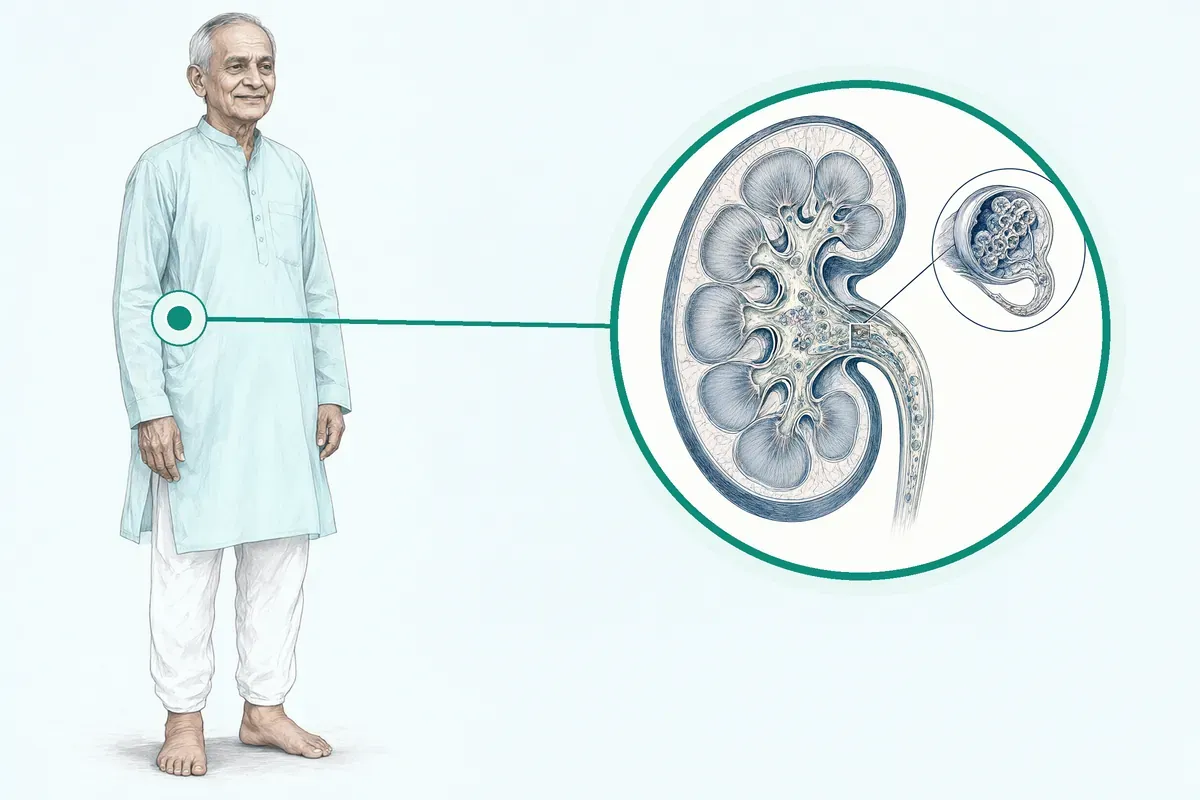
Your kidneys filter waste, toxins and extra water from your blood. They also balance salt, potassium and minerals, make hormones that control blood pressure, make red blood cells and keep your bones strong. When the kidneys are damaged, they cannot filter waste properly and waste builds up in your blood.
Chronic kidney disease means the damage happens slowly over several years. There are five stages, from very mild damage in stage 1 to kidney failure in stage 5. In the early stages your kidneys may still work well but show signs of damage. By stage 3 the kidneys are not working as well as they should.
Stage 4 means very poor function and severe damage. Stage 5 means the kidneys have almost stopped working and you may need dialysis or a transplant. Kidney failure is when the kidneys can no longer keep you alive without replacement therapy. There is no heal for chronic kidney disease, but treatment can slow the damage and manage complications.
Symptoms and warning signs that need urgent care the same day
- Cannot pass urine
- Severe shortness of breath
- Chest pain
- Confusion
- Severe swelling
In the early stages of kidney disease you usually do not have noticeable symptoms.
As the disease worsens, symptoms may include:
- Swelling in your hands and feet
- Itchy skin
- Needing to pass urine more often
Your urine may look foamy or frothy, which means there is excess protein.
In advanced disease you may:
- Pass urine less often or not at all
- Have dry itchy skin
- Feel very tired
- Have trouble concentrating
- Get numbness or swelling in your arms, legs, ankles or feet
- Have achy muscles or cramps
- Feel short of breath
- Have nausea or vomiting
- Lose your appetite
- Have trouble sleeping
Complications such as heart disease, stroke, anaemia, buildup of acid in the blood, bone and mineral disorder, and high potassium can also develop. If you suddenly cannot pass urine, have severe shortness of breath, chest pain, confusion, or severe swelling, go to the emergency department the same day.
Causes and who is at higher risk
- Diabetes and high blood pressure
- Together cause about two-thirds of kidney failure cases
- Heart disease
- Increases risk of chronic kidney disease
- Family history
- Risk factors like diabetes tend to run in families
- Age over 60
- Higher risk with increasing age
The two main causes of kidney failure are diabetes and high blood pressure, which together make up about two-thirds of cases. Other conditions that affect the kidneys can also lead to chronic kidney disease. Anyone can get chronic kidney disease.
You are more at risk if you have:
- Diabetes
- High blood pressure
- Heart disease
- A family history of kidney disease
- Are over 60 years old
Risk factors like diabetes tend to run in families. Lack of awareness and the absence of early symptoms often lead to delayed diagnosis. Socioeconomic factors, difficulty accessing health care, and financial constraints can make it harder to stay on treatment. Defaulting on therapy often leads to progression to end-stage kidney failure.
How kidney disease is diagnosed: examination and tests
- Medical history and examination Doctor reviews history, medicines, and symptoms
- Blood and urine tests Check creatinine, GFR, protein, and blood in urine
- Imaging tests if needed Ultrasound, MRI, or CT to check kidney size and structure
- Kidney biopsy if required Finds exact disease type and damage extent
Your doctor will take your medical history, do a physical examination, ask about your medicines and any symptoms you have noticed. Blood and urine tests are used to check kidney function and decide the stage. A blood test measures creatinine, a waste product, to estimate your glomerular filtration rate (GFR).
Urine tests look for protein (albumin) and blood; healthy kidneys should not have either. Imaging tests such as ultrasound, MRI or CT scans may be ordered to check the size and structure of your kidneys. A kidney biopsy may be done to find the exact type of kidney disease or see how much damage there is.
Chronic kidney disease is defined by a low estimated GFR and high albumin in the urine. In India, CKD is often diagnosed late.
Treatment options without surgery, and when surgery is advised
Medical management aims to slow the disease and treat complications. Depending on the cause, you may be prescribed medicines such as ACE inhibitors or ARBs, SGLT2 inhibitors, and treatments for anaemia and bone-mineral disorder. Controlling blood pressure and blood sugar is essential. A kidney-friendly diet may be advised, and you may need to limit salt, potassium, phosphorus and fluid intake.
Regular appointments, taking medicines as prescribed, and monitoring your blood pressure and blood sugar at home are important. When kidney function falls very low (stage 5), kidney replacement therapy is needed. Dialysis uses a machine to remove waste and extra fluid when your kidneys can no longer do so.
Haemodialysis is usually done three times a week for about four hours per session, using a fistula or a catheter. Peritoneal dialysis uses the lining of the belly and is usually done at home. In India, haemodialysis is the most common form of dialysis therapy.
A kidney transplant replaces the failed kidney with a healthy one from a living or deceased donor. Transplantation is considered the preferred kidney replacement option when a suitable donor is available. After a transplant you will need to take anti-rejection medicines for life. Your surgeon will advise which option suits your condition.
Preparing for kidney and nephrology medical care at Jaipur Hospital
Do
- All prescriptions
- Investigation files
- Insurance or scheme cards
- Dialysis chart and vascular access details
- Immunosuppression record and infection screening reports
Your first visit usually takes 20 to 40 minutes. The nephrologist will review your medical history, current medicines, and any recent blood or urine reports. Bring all prescriptions, investigation files, and your insurance or scheme cards such as RGHS, MAA Yojana, or CGHS. If you are on dialysis, carry your dialysis chart and vascular access details. For transplant follow-up, bring your immunosuppression record and recent infection screening reports.
You may be asked to stop certain painkillers or herbal supplements that can affect kidney function before tests. Fasting is not routinely needed for a consultation, but your doctor will tell you if specific blood work requires it. An attendant can stay with you during the visit.
The hospital has an in-house diagnostic laboratory and imaging centre, so any urgent tests can be done on the same day.
How kidney and nephrology medical care is done at Jaipur Hospital
Medical management of chronic kidney disease focuses on controlling blood pressure and blood sugar, correcting anaemia, and managing bone-mineral disorders. Common options include ACE inhibitors or ARBs and SGLT2 inhibitors. Your surgeon will advise which combination suits you.
For acute kidney injury, care involves careful fluid balance, stopping nephrotoxic medicines, and starting renal replacement therapy when needed. This may be done in the intensive care unit or the dialysis unit.
Maintenance haemodialysis is typically given as thrice-weekly sessions of about four hours each. Access is through an arteriovenous fistula or a catheter. The hospital runs a daycare dialysis unit with 24-hour laboratory and X-ray backup.
Transplant follow-up includes regular monitoring of immunosuppression levels, surveillance for rejection, and infection prophylaxis. Immunosuppression is guided by transplant protocols and any extra-renal manifestations. Repeat biopsy may be considered if there is an incomplete response or a flare. Your nephrologist will coordinate with the urology team for any surgical needs. All care follows KDOQI guidelines and hospital protocols.
Risks and possible complications of kidney and nephrology medical care
Kidney failure can increase the risk of heart disease or stroke. The leading cause of death in people with chronic kidney disease is heart disease.
Anaemia, metabolic acidosis, mineral and bone disorder, and hyperkalaemia are recognised complications of kidney failure.
In studies of patients on haemodialysis with secondary hyperparathyroidism treated with cinacalcet, hypocalcaemia and gastrointestinal adverse events occurred more frequently than with placebo.
Medication non-adherence can lead to serious setbacks.
Emergency hospitalisation before starting dialysis is common because many patients delay elective initiation.
Facilities can become burdened when demand for dialysis rises, which may affect quality.
Long waiting times for deceased donor transplants are a reality.
Financial constraints often cause patients to default on therapy, and many progress to end-stage kidney failure after defaulting.
Recovery and aftercare for kidney and nephrology medical care
Do
- Rest after dialysis
- Take anti-rejection medicines daily
- Keep all medical appointments
Kidney disease management is lifelong. There is no heal for chronic kidney disease, so ongoing care aims to slow progression and manage symptoms.
After each dialysis session you may feel tired. Rest for a few hours and follow the fluid and diet advice given by your dietitian. People on dialysis may need more protein and often have to limit fluid intake.
If you have a transplant, you will need to take anti-rejection medicines every day. These lower the body's ability to reject the transplanted organ. Never stop or change the dose without your doctor's advice.
Keep all medical appointments, take medicines as prescribed, monitor blood pressure and blood sugar, and follow a kidney-friendly diet.
Seek support from family, friends, or patient groups to help you cope with the diagnosis and treatment.
Contact the hospital if you notice sudden swelling, shortness of breath, fever, bleeding from the dialysis access site, or a sharp drop in urine output. The 24×7 emergency department and ambulance service are available at Jaipur Hospital.
Results of kidney and nephrology medical care
Most people who seek treatment for kidney disease and manage their condition never progress to kidney failure or death.
Early detection and appropriate treatment are important in slowing disease progression, with the goal of preventing or delaying kidney failure.
In studies, a 30% decline in estimated GFR over two years was strongly associated with higher risk of end-stage renal disease and mortality.
For patients with a baseline eGFR of 35 mL/min/1.73 m², the adjusted 10-year risk of end-stage renal disease was 64% with a 30% GFR decline, 83% with a 40% decline, and 99% with a 57% decline, compared with 18% with no decline. Corresponding mortality risks were 50%, 60%, and 77% versus 32%.
Mortality risks were 1.2 to 1.9 times higher for participants with diabetes than for those without diabetes across ranges of eGFR and albuminuria.
Transplantation is considered the preferred kidney replacement option in end-stage kidney disease and is cheaper in the long run than dialysis.
Conservative management focuses on quality of life and symptom control without dialysis or transplant. It is also called comfort care or supportive care.
Cost and insurance for kidney and nephrology medical care in Jaipur
- ₹1,000 to ₹3,000 Consultation
- ₹2,500 to ₹4,500 Haemodialysis session
- Approximately ₹30 lakhs Ten years of dialysis
- Corporate may be double public sector cost Corporate vs public hospital dialysis
A consultation typically costs ₹1,000 to ₹3,000. A haemodialysis session typically costs ₹2,500 to ₹4,500. The final amount depends on the type of vascular access, medicines such as erythropoietin injections, and any additional investigations. Fistula surgery, travel, and medications add to the overall expense.
Dialysis costs in a corporate hospital may be double those in a public sector hospital. Ten years of dialysis can cost approximately ₹30 lakhs, which is about 15 years of annual per capita income in India.
Many patients pay for treatment themselves. Government schemes often do not cover the complete therapy requirement. Some insurance schemes pay for a limited number of dialysis sessions, for example 10 per month, while others partially reimburse the whole cost or do not cover medications.
Jaipur Hospital is empanelled under:
- RGHS
- MAA Yojana
- CGHS
- A panel of private insurers and TPAs
Patients should check their specific scheme coverage for dialysis sessions, medicines, and transplant follow-up. Certain quasi-religious and non-governmental organisations may cover the procedure cost for economically poorer patients, but they typically do not support maintenance immunosuppression.
Financial challenges are a major reason why more than two-thirds of patients discontinue dialysis within one year. The hospital's billing team can help you understand what your scheme covers and provide an estimate for planned care.